Category: Uncategorized

  • Second electrical fire brings building’s residents together for another Red Cross shelter

    By Alana Mauger

    It’s one of the hottest days of the summer and your 25-story apartment building just lost power. A firefighter knocks on your door, telling you to evacuate. But how are you going to get your wheelchair down from the 11th floor? Oh, that’s right – the firefighters have a stair chair. It’s a little scary at first – being carried down in what amounts to a seated dolly, but unfortunately, you’ve done this before. You remind the firefighter that your insulin needs to stay refrigerated, and you worry about who will care for your cat.

    Red Cross volunteer Richard Strayves stands with a woman wrapped in a Red Cross blanket on the sidewalk in front of a parking lot.
    Red Cross volunteer Richard Strayves guides a Courtyard Apartments resident to a SEPTA bus as she prepares to leave the shelter. Photo by Alana Mauger / American Red Cross

    For residents of Courtyard Apartments at Riverview in South Philadelphia, the scene is eerily familiar. For the second time in just over a month, a small electrical fire led to the building’s evacuation. Those who couldn’t stay with friends or family were bussed to Kensington High School for the Creative and Performing Arts (Kensington CAPA), where the American Red Cross and Philadelphia Office of Emergency Management (OEM) set up an emergency shelter.

    Red Cross disaster workers operated the first shelter for 11 days, starting overnight June 23rd through July 2nd. Just a few weeks later, many of those same workers were greeted like old friends by many of the same apartment residents as they arrived at Kensington CAPA overnight July 29th.  

    “Here we are again,” one of the residents sighed, greeting a Red Cross volunteer he recognized from his earlier stay. Overall, the sentiment, “I can’t believe this is happening again,” was palpable.

    On a positive note, Red Cross and OEM disaster workers learned a few lessons between shelter operations and already anticipated many of the residents’ needs. From day one, Cantonese and Vietnamese interpreters, licensed practical nurses and fire department EMTs were stationed at the shelter, and vegetarian meal options and SNAP food replacement forms were available.

    On the left side is a photo of two Red Cross volunteers look into a pet crate while talking with a woman in a wheelchair. On the right side is a photo of Nala, a white cay with black spots on her head and back, sits inside a pet crate.
    Left: Red Cross volunteers Rahel Pachter and Roy Landes interact with apartment resident Ann Cope and her cat, Nala, at the Kensington CAPA shelter. Right: Ann’s cat Nala hangs out in her pet crate. Photos by Alana Mauger / American Red Cross

    Red Cross volunteer pet liaison lead Rahel Pachter led the charge to retrieve residents’ pets from their apartments and transport them to the shelter, where OEM and Animal Care and Control (ACCT) Philly provided crates and supplies.

    “I could just kiss you!” apartment resident Ann Cope told Rahel when she was reunited with her beloved cat, Nala.

    Ann was devastated to leave Nala behind during her first shelter stay. At that time, OEM and the apartment management coordinated with ACCT to care for residents’ pets inside their apartments.

    With her wheelchair in front of Nala’s crate on Wednesday, Ann said, “I was sitting right there last night,” pointing across the gymnasium to her cot, “and I watched every move she made.”

    Like Ann, Margaret Alston was happy to have her cat, Oreo, alongside her this time around. Looking for the positive in their situation, she said that being around a lot of people might make Oreo more social.

    “I made new friends – people who live in my building that I didn’t know before staying here the first time,” she said, sitting on the gym floor in front of Oreo’s crate Friday. “Maybe Oreo will become more social, too.” She even ordered him a leash so he can take walks with her around the building when they return.

    On the left side is a photo of Margaret Alston holding her black and white cat Oreo in front of a pet crate inside a school gymnasium. On the right side is a photo of Red Cross volunteer Rahel Pachter pointing to the 25th floor sign in an apartment building stair tower.
    Left: Margaret Alston cuddles with her cat, Oreo, outside of his pet crate at the Kensington CAPA shelter. Photo by Alana Mauger / American Red Cross.. Right: Red Cross Pet Liaison Lead Rahel Pachter climbed all 25 floors with a Philadelphia firefighter to retrieve pets from their apartments during the recent building evacuation. Submitted photo.

    Along with resident Howard Bussey, Margaret presented Red Cross disaster workers with a giant ‘Thank You’ card near the end of their first shelter stay.  

    “It was Howard’s idea, but I bought the card, and we got everyone to sign it,” she said. “We’re just so grateful for everything the Red Cross has done – BOTH times now.”

    Thankfully, their second stay was shorter than their first one. After four days, apartment management moved residents to a nearby hotel, where they will stay until repairs are completed.

    Together, the two operations supported 673 overnight shelter stays, 3,375 meals and 1,910 snacks. Operation partners included the Philadelphia School District, Philadelphia Fire Department, Philadelphia Department of Public Health, Philadelphia Department of Behavioral Health and Intellectual disAbility Services (DBHIDS), Philadelphia Office of Homeless Services, SEPTA, Salvation Army and Animal Care and Control (ACCT) Philly.

    Hugs and handshakes were exchanged Friday, Aug. 1st as residents boarded SEPTA buses for their next destination. “Hopefully we won’t need you again,” one resident said jokingly as he left the shelter.

    Hopefully not – but if they do, the Red Cross will be there.

    See more shelter photos on Flickr.

  • Fraternity brothers donate blood at national Alpha Phi Alpha convention in Philadelphia

    By Jenny Farley

    The goal of Alpha Phi Alpha, Inc., the oldest Black collegiate fraternity in the country, is “Manly deeds, scholarship and love for all mankind.”

    “Love for all mankind” goes hand in hand with the American Red Cross mission to alleviate human suffering.

    Distinguished fraternity members from around the world gathered at the Alpha Phi Alpha, Inc. convention in Philadelphia to put that aim into action by partnering with the Red Cross for a blood drive on July 17.

    The drive collected blood that may go to those who have sickle cell disease, a disease that disproportionately affects people who are Black.

    Sickle cell disease causes red blood cells to be hard and shaped like a crescent. The cells have trouble transporting oxygen throughout the body, which can cause intense pain, create lifelong complications and require numerous blood transfusions.

    On the left side is a photo of Dr. Langston Smith. On the right side is a photo of a sign that reads "You can help patients with sickle cell disease. Donate blood today."
    Left: Dr. Langston Smith is a dentist who attended the Alpha Phi Alpha, Inc. convention in Philadelphia. It meant a lot to him to see people donating blood at the Red Cross drive. He said, “To see people who feel that they can donate, that they can help save lives and to see this outpouring is a tremendous thing.” Right: The drive collected blood that may go to those who have sickle cell disease, a disease that disproportionately affects people who are Black. Photos by Jenny Farley / American Red Cross

    Dr. Langston Smith is a dentist and fraternity member who drove 2 ½ hours to attend the Alpha Phi Alpha, Inc. convention and spoke about the importance of supporting the Red Cross with the blood drive.

    “We realize that there are a number of African Americans who are affected by sickle cell anemia and there is a terrific need for those individuals to have blood. So, we look at that as a responsibility of our health team to help promote blood draws and blood donations to support those patients,” he said.

    Dr. Roosevelt Allen is also a dentist and fraternity brother who attended the convention. He served 32 years in the United States Air Force and has been an Alpha Phi Alpha, Inc. member since he pledged in 1979. As a health care provider, he sees donating blood as a way to help improve health outcomes.

    “There’s always a need for blood so if there’s an opportunity to give back and to help others, I think that’s what life is all about, but it’s also what our fraternity is about. It’s about giving back to the community and supporting the community.”

    Alpha Phil Alpha, Inc. fraternity brother Michael Pierre attended the convention wearing a ribbon that said, “25 year member.” He made a Power Red donation at the blood drive, but he first started donating blood in high school.

    “There was a blood drive and I heard a pretty interesting story about the importance of giving blood where you could, and my attitude was I’m healthy enough to make a donation. Did it once, did it twice, and just kept on doing it. Never really stopped.”

    On the left side is a photo of Dr. Roosevelt Allen sitting on a blood donation table waiting to give blood. On the right side is a photo of Michael Pierre sitting on a blood donation table while rolling up his sleeve and talking with a Red Cross phlebotomist.
    Left: Dr. Roosevelt Allen is a dentist and veteran of the United States Air Force who has been a long time blood donor. He pledged Alpha Phi Alpha, Inc. in 1979. He said, “It’s great to see a lot of old friends, but it’s also an opportunity to get re-engaged, to give back to the community, and to learn about some of the important aspects of the fraternity and what they’re focused on.” Right: Alpha Phi Alpha, Inc. fraternity brother Michael Pierre donated blood at the Red Cross blood drive. He said, “If we all have an opportunity to make a contribution in some way, shape, or form, this is a great way to do it. Low effort, it’s a lot of fun, it builds community, and you always meet some interesting people.” Photos by Jenny Farley / American Red Cross

    D’LaVale Anderson-Reeves has volunteered for the Red Cross for more than 20 years. During the conference, she did “double duty,” as a blood donor ambassador checking in donors, while also manning a table for Volunteer Services as part of the Red Cross Philadelphia Community Outreach Team.

    Before she survived cancer, D’LaVale donated blood, and when she couldn’t donate any more, she decided to help the Red Cross by volunteering. Now, she recruits other people to donate.

    “A lot of people are scared to give blood. They have a misconception of everything. So, it’s good to know that I can talk to them and make them feel comfortable.”

    D’LaVale said she only met one donor at the convention that was a “little scared,” but she said, “A lot of them appreciate the idea that we’re doing it at this event, especially when we have so many folks here, especially young Black men here to give blood.”

    Dr. Brian Turner is the Department Head and Associate Professor of Psychology at Xavier University of Louisiana in New Orleans. As an Alpha Phi Alpha, Inc. fraternity member, he donated blood at the conference to help make sure people have blood when they need it following surgery or emergencies.

    Making time to donate blood between sessions at the convention, he said he gives whenever he can and has some advice for people who are thinking about donating but haven’t done it yet, “One, if you’re afraid of needles it didn’t hurt. Two, it’s always good to give and help others. Giving blood is always a good thing to do.”

    On the left side is a photo of Red Cross volunteer D'LaVale Anderson-Reeves holding up a black T-shirt that reads, "Our Blood Saves Lives." On the right side is a photo of Dr. Brian Turner.
    Left: D’LaVale Anderson-Reeves has volunteered for the Red Cross for more than 20 years. She is a passionate advocate for cancer survivors and the Red Cross and recruits blood donors daily. Right: Dr. Brian Turner is an associate professor of psychology who traveled from New Orleans to the Alpha Phi Alpha, Inc. convention in Philadelphia. He donated blood at the Red Cross blood drive and said, “I’ll always try to give blood when possible.” Photos by Jenny Farley / American Red Cross

    Alpha Phi Alpha, Inc. was founded at Cornell University in 1906. With a fraternity that has existed more than 100 years, Michael Pierre said members like to give back and help their communities with several different programs and initiatives and by working with partners like the Red Cross.

    “It’s a beautiful thing that we have with the Red Cross, so whenever we have an opportunity to be supportive, our brothers like to come out there and give our best.”

    There is always a critical need for blood and you can help. Schedule an appointment to give blood or platelets at RedCrossBlood.org, by calling 1-800-Red Cross, or by using the Red Cross Blood Donor App.

  • Stay safe during this week’s extreme heat

    By Alana Mauger

    Extreme heat is too dangerous to be invisible. Know who’s at risk. Take action. Save lives.

    With emergency heat advisories in place this week for our entire region, communities are bracing for high temperatures and heat indices over 100 degrees. We’ve published several articles over the past few months about Heat Action Day, sun safety and hydration, but safety tips bear repeating when faced with extreme heat.    

    The American Red Cross urges everyone to take three critical actions to stay safe:

    1. Stay hydrated by drinking a cup of water every hour, even if you don’t feel thirsty.Avoid sugary, caffeinated and alcoholic drinks.
    2. Stay cool by spending time in air-conditioned places. If your home is too hot, go to a mall, library or cooling center.
    3. Stay connected by checking on others and asking for help if you need it. Make sure pets have access to fresh water and shade.

    “Knowing what to do to protect yourself and loved ones from extreme heat can save lives,” said Jennifer Graham, CEO, Red Cross Southeastern Pennsylvania Region. “We’re asking everyone to check on friends and neighbors, especially older adults, people with chronic conditions, outdoor workers and athletes. You could make all the difference by sending a text, making a call or knocking on their door.”

    What you should do

    Remind everyone to drink water, even if they don’t feel thirsty. Aim for a cup of water every hour and encourage people to avoid sugary, caffeinated or alcoholic drinks. Babies should be breast-fed or bottle-fed often. Fewer wet diapers or darker urine can be signs of dehydration.

    Encourage athletes and outdoor workers to take breaks in the shade. They should drink a cup of water every 20 minutes and take frequent water breaks.  

    Help those without air conditioning find a safe place to go like a mall, library or cooling center. They can also take cool showers or baths to help cool off. Remind people to wear lightweight, loose-fitting clothes in light colors.

    Never leave a child or pet alone inside a parked car, and make sure pets have access to fresh water and shade.

    Signs of heat illness

    Anyone can become ill during extreme heat if their body can’t cool down properly. It’s critical to act fast as some types of heat illness can be deadly.

    Heat cramps are signaled by heavy sweating and muscle pain. Take action by stopping what you’re doing, resting in a cool place and slowly sipping water. Don’t drink if you feel sick, and get medical help if cramps last over an hour or you have heart problems.

    Heat exhaustion is signaled by heavy sweating, weakness, cool and clammy skin, muscle cramps, dizziness, fainting, nausea or vomiting. Take action by stopping what you’re doing, resting in a cool place and slowly sipping water. Don’t drink if you feel sick. Loosen your clothes and place a cool wet cloth on your body. Get medical help if you don’t feel better, vomit or have heart problems.

    Heat stroke is a deadly condition signaled by high body temperature, rapid heartbeat, confusion, headache, dizziness, fainting, nausea or vomiting. Call 911. Move to a cooler place, remove extra clothing and use a wet cloth or a cool bath to cool down. Don’t drink anything.

    If the power goes out

    When a heat wave and a power outage happen at the same time, it can be even more dangerous. Stay in air conditioning either at home or at a mall, library or cooling center. Keep an ice-filled cooler stocked with food, water and medicine, so that they don’t spoil. More information is available here.

    Be prepared for power outages: Find a cool indoor space. Stay in the shade. Stock up on emergency supplies. Plan ahead for medical needs.

    Info at your fingertips

    Download the free Red Cross First Aid app so you’ll know what to do if emergency help is delayed and the free Emergency app for real-time weather alerts and heat safety information. Content is available in English and Spanish with an easy-to-find language selector. Find both apps in smartphone app stores by searching for the American Red Cross or going to redcross.org/apps.

    Click the links below for heat-related resources for each county:
    Bucks County Cooling Stations
    Chester County Extreme Heat Resources
    Delaware County 2025 Heat Plan
    Montgomery County Code Red Resources
    Philadelphia Resources & Cooling Centers

  • #LeadLikeClara: Michele Fisher supports Red Cross volunteers who help people affected by disasters

    By Judith Weeks

    Red Cross volunteer Michele Fisher with her husband Andy. Submitted photo

    Clara Barton, the founder of the American Red Cross is known for her work bringing assistance to those who suffered from a disaster. March is Women’s History Month, and the American Red Cross is honoring Clara Barton by recognizing women volunteers who “Lead Like Clara.”  Michele Fisher is one of these women.

    “To Lead Like Clara means I am able to make an impact without being on the front line. While my work may not be that glamorous, I like the work supporting the Disaster Action Team members. There is more to be done behind the scenes,” she said.

    Michele volunteered for the American Red Cross during the early stages of the COVID Pandemic. Beginning as a Blood Donor Ambassador, she continues today.  “I meet people who tell their life stories and why they donate. I’ve even converted a couple of donors to be volunteers!”

    She is now a Lead Volunteer for the Disaster Information and Planning Team. Michele and her team support Disaster Action Team (DAT) volunteers in Montgomery, Delaware and Chester Counties. They are responsible for managing the distribution of Client Assistance Cards (CAC cards) to DAT volunteers. The Red Cross provides immediate financial assistance in the form of a debit card (CAC card) to persons affected by a disaster, typically a single family house-fire or a multi-family apartment fire. The DAT volunteer on site records information describing the incident, determines the need for each person, and issues CAC cards.

    Stringent policies must be followed for issuing CAC cards. Each new DAT volunteer meets with Michele to go over the process before receiving CAC cards. She likes infrastructure for all involved. Michele is recognized for writing a comprehensive fifty-page training document for volunteers to learn to use the systems for issuing and tracking CAC cards.

    Everything I do is in the background. I’m always supporting our Disaster Action Team! I just like helping them and hearing about the work they do in the field. It’s all about giving back to people. I really enjoy it! – Michele Fisher

    Michele’s volunteer work is at home in front of a computer. This is a perfect fit because she has a full-time job and can still volunteer on her own schedule. Her challenge is building a team. “It’s hard to get people to work inside. Information Planning is a very special role that allows volunteers to engage with the DAT Team without going out at two in the morning to a house fire. It’s flexible because a volunteer can contribute when they can and still make an impact. Maybe someone who reads this story will want to give it a try.”

    Michele is a full-time engineer with a local company in King of Prussia. She and her husband, Andy, have two cats. “We love them very much!”  They like obstacle course running. In November she completed her 24-hour run and hit her goal of 50 miles!

    Editor’s Note: In commemoration of Red Cross Month and Women’s History Month, we are publishing a series of #LeadLikeClara profiles featuring local women volunteer leaders who emulate the leadership characteristics of Red Cross founder Clara Barton.

  • Tips for staying safe as winter temps plunge

    By Zain Ahmad

    As temperatures drop in the Northeast, it’s crucial to understand the risks associated with extreme cold and how to protect yourself. Younger children, elderly, homeless and people who work outside are particularly vulnerable to cold weather injuries. From the American Red Cross, here is some key information on why the cold weather can be dangerous and how to stay safe during winter weather conditions.

    Red Cross graphic – What’s a winter weather advisory? When winter weather conditions are expected to cause significant inconveniences and may be hazardous.

    Cold-Related Health Risks
    Understanding Health risks and symptoms for illnesses from cold weather is essential to staying safe. Here are some illnesses from the cold and ways to identify them:

    Frostbite
    Frostbite occurs when skin and underlying tissues freeze when a person is exposed to cold temperature for prolonged duration. Signs include:

    • White, grayish-yellow, or waxy-looking skin
    • Numbness or unusually firm skin

    When frostbite occurs:

    • Seek immediate medical care.
    • Immerse affected area in warm (not hot) water.
    • Use body heat to warm frostbitten areas.
    • Avoid rubbing the affected area.
    Red Cross graphic – Signs of Frostbite: 1. Lack of feeling in the affected area. 2. Skin appears waxy, cold to the touch or discolored.

    Hypothermia
    Hypothermia is a dangerous drop in body temperature. Symptoms include:

    • Shivering, confusion, or slurred speech
    • Drowsiness or very low energy

    When hypothermia occurs:

    • Seek immediate medical attention.
    • Move to a warm environment and remove wet clothing.
    • Warm the body’s core using electric blankets or skin-to-skin contact.
    • Provide warm, non-alcoholic drinks.
    Red Cross graphic – Early signs of hypothermia: 1. Shivering. 2. Pale, cold skin. Late signs of hypothermia: 1. Loss of ability to shiver. 2. Disorientation. 3. Glassy Stare. 4. Unresponsiveness.

    Prevention Strategies
    To avoid injuries from cold weather:

    • Limit time outdoors in extreme cold.
    • Stay dry, as wet conditions increase the risk of frostbite.

    Preparing for Cold Weather
    Before cold weather arrives:

    • Inspect and replenish winter gear, including coats, gloves, hats, and boots.
    • Stock up on warm blankets and flashlights for potential power outages.
    • Ensure your phone is fully charged for emergencies
    • Have enough non-perishable food in the house that can help you survive a snowstorm for few days
    Red Cross graphic – Burrrr! Stay warm outside by changing wet clothing frequently to prevent body heat loss.

    Proper Clothing for Cold Temperatures
    Layering is essential for protection against the cold:

    • Wear a hat covering your head and ears, waterproof gloves, and 1-2 pairs of thick socks.
    • Use Insulating material like fleece or wool
    • Having a waterproof and windproof shell on the outer layer is also essential for safety.
    • Keep moving to maintain body heat, but avoid exhaustion

    Emergency Preparedness
    The Red Cross offers free mobile apps for emergency situations:

    • Emergency App: Provides alerts and step-by-step guides for various emergencies, including severe winter weather.
    • First Aid App: Offers instructions for common first aid scenarios, with features such as:
      • Step-by-step guides for emergencies
      • Videos and animations for first aid techniques
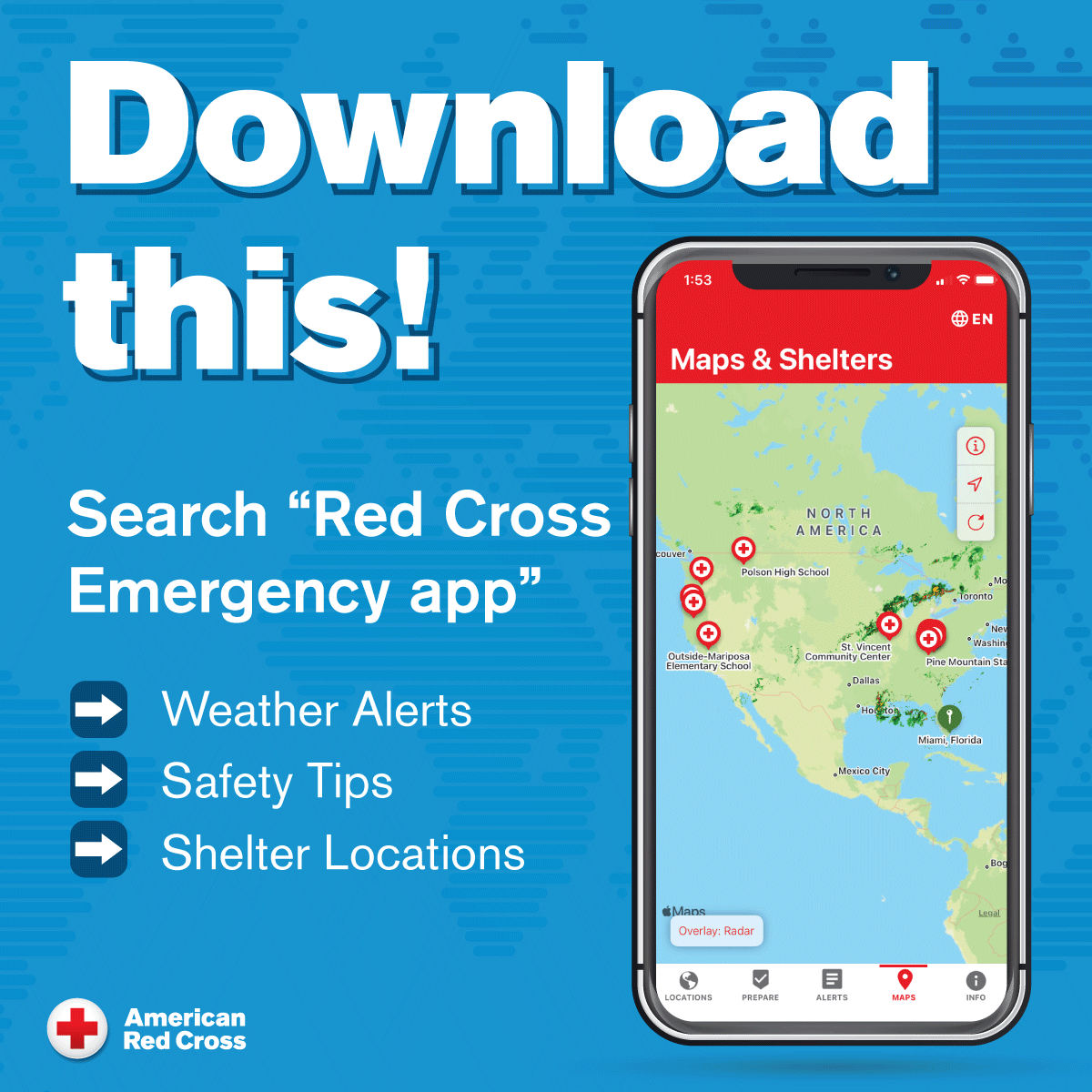
    Red Cross graphic – Download this! Search “Red Cross Emergency app” for weather alerts, safety tips, shelter locations.

    The National Oceanic and Atmospheric Administration’s (NOAA) Winter Storm Severity Index is also a useful tool to watch out for winter storm severity.

    By following these guidelines and utilizing available resources, individuals can better prepare for and respond to cold weather emergencies, reducing the risk of cold-related injuries and illnesses. From the American Red Cross Southeastern PA region, stay safe this winter!

  • November 20th is World Children’s Day

    By Samantha Munro

    Video: Teens and their parents talk about the future – World Children’s Day 2024.

    World Children’s Day, also called Universal Children’s Day, is the annual day of action for children by children, presented by UNICEF, the United Nations Agency for Children. From concerns from climate change, education and mental health to ending racism and discrimination, children and young people are raising their voices on the issues that matter to their generation and calling for adults to create a better future.

    World Children’s Day was first established in 1954 as Universal Children’s Day and is celebrated on November 20th each year, promoting international togetherness and awareness among children worldwide to improve the lives of children.

    November 20th is an important date as it was in 1959 when the UN General Assembly adopted the Declaration of the Rights of the Child. It is also the date in 1989 when the UN General Assembly adopted the Convention on the Rights of the Child.

    So too is the American Red Cross committed to the care and concerns of children, by being true to its mission, vision, and fundamental principles​​, The American Red Cross prevents and alleviates human suffering in the face of emergencies by mobilizing the power of volunteers and the generosity of donors.​

    Due to the power of volunteers and the generosity of donors, the Red Cross provides programs such Prepare with Pedro, a 30-45-minute preparedness education program for grades K-2 that teaches students how to BE PREPARED and TAKE ACTION for either home fires or local hazards. Students learn coping skills by reading a story featuring a penguin named Pedro and receive a storybook to share what they have learned at home.

    To learn more about preparing children for emergencies, visit our website. To learn about volunteer opportunities with the Red Cross, visit redcross.org/volunteer.

  • National CPR + AED Awareness Week: Train for the moments that matter

    By Alana Mauger

    Red Cross CPR & AED Awareness Week graphic – 3 steps to save a life (call 9-1-1, perform CPR and use an AED).

    National CPR + AED Awareness Week takes place June 1-7., and the American Red Cross encourages everyone to enroll in CPR and AED training to help save a life when someone goes into cardiac arrest and minutes matter.

    Each year, more than 350,000 people experience out-of-hospital cardiac arrest in the U.S. and about 90% of them die. Cardiac arrest occurs when the heart suddenly stops beating normally because of abnormal electrical activity. Every second counts, so it’s important for people to be trained in knowing how to perform CPR and use an AED (automated external defibrillator). Immediate CPR delivered by a bystander can nearly double a person’s chance of survival.

    Just last month, we shared stories of two individuals in cardiac arrest whose lives were saved by first responders and a concerned bystander who performed CPR and used an AED.

    “Sudden cardiac arrest can happen to anyone, anywhere and at any time without warning,” said Jennifer Graham, CEO, Red Cross Southeastern Pennsylvania Region. For each minute that defibrillation is delayed, the person’s chance for survival is reduced by about 7-10%. Red Cross training can give you the skills and confidence to act in an emergency.”

    An AED is a device that analyzes the heart’s rhythm and, if necessary, advises the rescuer to deliver a shock, which helps the heart re-establish an effective rhythm. AEDs are intended for use by the general public. They are portable, safe, accurate and easy to use. Voice prompts and lights guide the user through the steps. An AED will never shock a person if it is not needed.

    Visit redcross.org/takeaclass to sign up for online or in-person training classes today.

    Last year, more than 4.8 million people – including 50,371 in Southeastern Pennsylvania – turned to the Red Cross for First Aid, CPR, and AED training. These training programs help provide the confidence and skills to act when moments matter.

    To learn more about CPR and AED skills, revisit last year’s blog story written by Red Cross volunteer and Nursing student Haley Heisley.

  • Red Cross celebrates Medical Laboratory Professionals Week

    By Alana Mauger

    The American Red Cross joins organizations across the U.S. to celebrate the 49th Medical Laboratory Professionals Week, recognizing clinical and public health laboratory professionals for their contributions to the health of our communities. The Red Cross employs more than 2,200 laboratory and manufacturing team members who work at 146 labs and product distribution facilities across the country. Together, they process, test and distribute approximately 6.4 million blood products each year.

    Philadelphia is home to two national Red Cross laboratories – The National Reference Laboratory for Specialized Testing (NRLST) and The National Molecular Laboratory (NML) – as well as one of five Human Leukocyte Antigen (HLA) Testing Labs and one of 45 Immunohematology Reference Laboratories (IRL) in the U.S. All blood products collected in Southeastern Pennsylvania, New Jersey and Delaware are processed in Philadelphia’s Manufacturing Lab, which is one of 22 in the country.

    Meet some of the extraordinary professionals who work in our Philadelphia laboratories.

    Potent Wu-Zheng

    Red Cross Quality Control laboratory supervisor Potent Wu-Zheng

    A former Emergency Medical Technician (EMT), Potent Wu-Zheng has worked at the Red Cross as a Quality Control laboratory supervisor for about two years. In that role, he oversees the manufacturing of blood and platelet products.

    He shared, “What I like most about my job is the satisfaction of manufacturing products that help save lives.”

    Nayara Visco

    National Reference Laboratory assistant Nayara Visco.

    Nayara Visco is a laboratory assistant in the National Reference Laboratory for Special Testing (NRLST). In that role, she is responsible for receiving patient samples, overseeing reagents and laboratory supplies and distributing patient reports. Before coming to the Red Cross, Nayara worked for a government health department in Brazil.

    “I feel a sense of purpose and fulfillment knowing that my work directly contributes to saving lives in an organization with such great values like the American Red Cross,” she shared.

    Daria Buono

    National Molecular Laboratory lead technologist Daria Buono.

    Daria Buono is a lead technologist in the National Molecular Laboratory, where she oversees the workflow of the molecular lab, handles orders from hospitals and writes patient reports. Having a background in biochemistry and chemistry, Daria started at the Red Cross as a molecular technologist before moving into her current role.

    “I like the impact that we make as a lab on the real world and patients,” she said. “I enjoy the oversight of lab functions to make sure we are meeting quality standards.”

    Career Opportunities

    The American Red Cross has a variety of career opportunities in Laboratory Services and Manufacturing. To learn more about available roles, visit the career center at redcross.org.

  • Donate platelets to commemorate Bleeding Disorders Awareness Month

    By Nathan Fligelman

    Graphic: March is Bleeding Disorders Awareness Month

    March is Bleed Disorders Awareness Month, which calls attention to inheritable blood and bleeding disorders like hemophilia and von Willebrand disease.

    Bleeding disorders are conditions in which blood cannot clot properly within a human body. Normal clotting involves the grouping together of platelets, which are critical cellular components within our blood. Platelets form a bandage-like cover to prevent excessive blood loss when a blood vessel is damaged. When you have a cut, platelets are what coagulate (join together) to prevent the blood from leaking out of your body. For people with a bleeding disorder, platelets malfunction, making it hard to prevent blood loss when a body is injured.  

    Hemophilia and von Willebrand disease are the most common bleeding disorders in the U.S. Hemophilia is a rare, inherited bleeding disorder that can range from mild to severe, depending on how much clotting factor is present in the blood. Hemophilia is classified as type A or type B, based on which type of clotting factor is missing. Von Willebrand disease is an inherited condition that results when the blood lacks functioning von Willebrand factor, a protein that helps the blood to clot and also carries another clotting protein, factor VIII.

    Patients with moderate to severe bleeding disorders may require transfusions of blood, platelets or clotting factors. Clotting factors may be donated human blood products or lab-synthesized proteins. Patients with severe bleeding disorders may receive clotting factor transfusions as a preventive measure. While there are no cures at present for bleeding disorders, gene therapies are being developed.

    Platelet donations are often a lifesaving treatment for people with bleeding disorders. During a platelet donation, an apheresis machine collects your platelets along with some plasma, returning your red cells and most of the plasma back to you. A single donation of platelets can yield several transfusable units.

    Platelets are collected at American Red Cross Blood Donation Centers only and are not collected at mobile blood drives. In Southeastern Pennsylvania, you can donate platelets in Horsham, West Chester and Philadelphia. Platelets have a shelf life of only 5 days from donation to transfusion, so they are always in great need. Learn more about platelet donations, then schedule an appointment to donate.

  • Red Cross volunteers make Oxford homes safer on Presidents Day

    By Alana Mauger

    Red Cross volunteers and community partners pose for a photo before breaking into teams to install smoke alarms in Oxford, Chester County. Photo by Bernadette Mathis/American Red Cross

    American Red Cross Home Fire Campaign volunteers joined community partners on Presidents Day, Monday, Feb. 19, to make homes and families safer in Oxford, Chester County.

    More than 50 people met at Penns Grove Middle School before breaking out into teams to install free smoke alarms and provide fire safety education for area families. In total, the teams installed 135 smoke alarms and educated 166 residents, making 58 Oxford homes safer.

    Red Cross volunteers were joined by representatives from Chester County Emergency Services, Oxford Union Fire Department, United Way of Chester County and Oxford SILO. These organizations were instrumental in helping families recover following the large Sept. 13th fire on South Third Street in Oxford that destroyed a city block and displaced close to 100 people.

    Since October 2014, the Red Cross Home Fire Campaign, working with community partners, has saved at least 2,022 lives, including 25 here in Southeastern Pennsylvania, by educating families about fire safety, helping them create escape plans and installing free smoke alarms in high-risk areas across the country. To learn more about the campaign and how you can get involved, visit redcross.org/homefires.

    Visit our Flickr album to view additional event photos.