Category: Safety Tips

  • SEPA braces for Winter Storm Hernando as blizzard warning hits Philadelphia

    By Alana Mauger

    Red Cross Graphic – What should you do during a blizzard? Don’t drink caffeine or alcohol, which can cause dehydration. Check on friends, neighbors or relatives who live alone. Avoid overexerting yourself while you shovel.

    With a powerful winter storm moving into our region today, the American Red Cross urges Southeastern Pennsylvania residents to take precautions now. The National Weather Service office in Mount Holly has issued a Blizzard Warning for Philadelphia from 10 a.m. Sunday through 6 p.m. Monday, citing the risk of heavy snow, strong winds, and dangerous whiteout conditions.

    Current NWS predictions indicate:

    • 12 to 20 inches of snow across much of the Philadelphia region, with the potential for even higher totals in some areas.
    • Snowfall rates could exceed 1–2 inches per hour during the heaviest bands.
    • Wind gusts of 45–50 mph may create near‑zero visibility and drifting snow.

    Stay Inside and Stay Informed

    Officials are urging people to stay off the roads during the height of the storm, especially Sunday night into Monday morning when the heaviest snowfall and strongest winds are expected. Stay informed by downloading our free Red Cross Emergency app for real-time weather alerts and more. You can also sign up for county’s opt-in wireless emergency alerts: Ready Bucks, Ready ChesCo, Delco Ready,  Ready Montco and Ready Philadelphia, or tune in to NOAA Weather Radio.

    Gather Supplies and Charge Devices

    With the combination of heavy snow and strong winds, power outages are possible across the Philadelphia region. Assemble essentials such as non‑perishable food, drinking water, medications, blankets, warm clothes, flashlights, batteries, phone chargers and power banks, and keep your devices fully charged while power is available. Avoid burning candles to reduce fire risk. If you use a generator, keep it outside in a well-ventilated area and away from windows.

    Check out our survival kit checklist for additional ideas. 
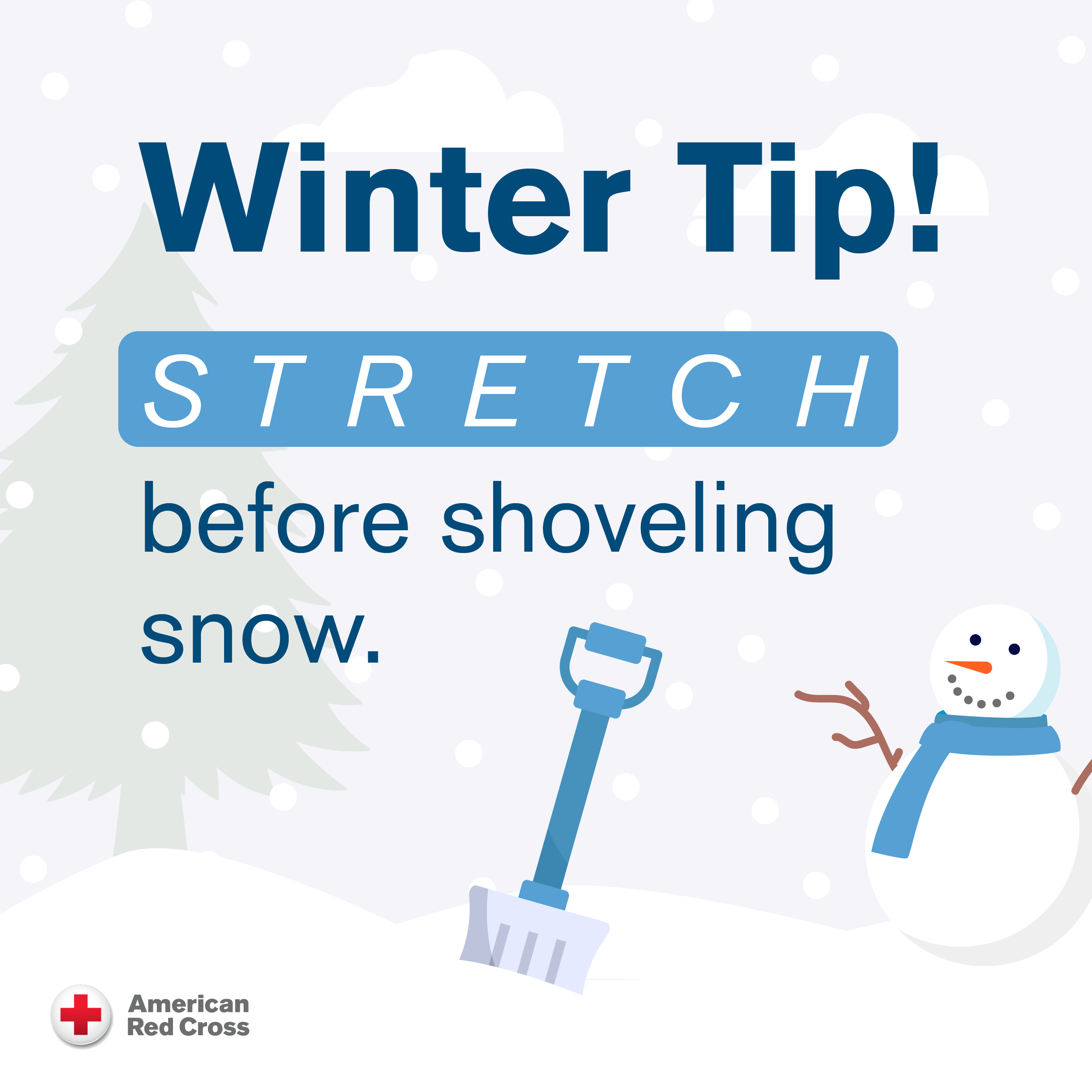
    Red Cross graphic – Winter Tip! Stretch before shoveling snow.

    Shoveling and Snow Blower Safety

    Heavy, wet snow—like the kind expected during Winter Storm Hernando—can create dangerous conditions not only on the roads but also while clearing sidewalks and driveways. The American Red Cross urges everyone in Philadelphia and across Southeastern PA to use caution when removing snow:

    Shoveling Safety

    • Warm up first. Treat shoveling like exercise. Stretch your arms, legs, and back before heading outside.
    • Take it slow. Push snow rather than lifting when possible. If you must lift, bend your knees and keep your back straight.
    • Lift small amounts at a time. Heavy snow increases the risk of back injury and cardiac stress.
    • Stay hydrated. Even in cold weather, your body loses fluids quickly.
    • Take breaks often. Go indoors to warm up if you feel tired or chilled.
    • Watch for signs of overexertion. Chest pain, shortness of breath, or dizziness are warning signs to stop immediately and seek help.

    Snow Blower Safety

    • Operate in good visibility. If conditions worsen or winds increase, stop and resume when it is safe.
    • Read the manual before using. Make sure you know how to operate your machine safely.
    • Keep hands and feet away from moving parts. If the chute gets clogged, turn off the engine and use a clearing tool—never your hands.
    • Wear appropriate clothing. Avoid loose scarves or sleeves that could get caught in machinery.
    • Fuel safely. Add gas outdoors before starting the snow blower—never refuel a hot or running machine.
    • Be aware of your surroundings. Snow blowers can throw snow, ice, and debris at high speeds. Direct the chute away from people, vehicles, and windows.
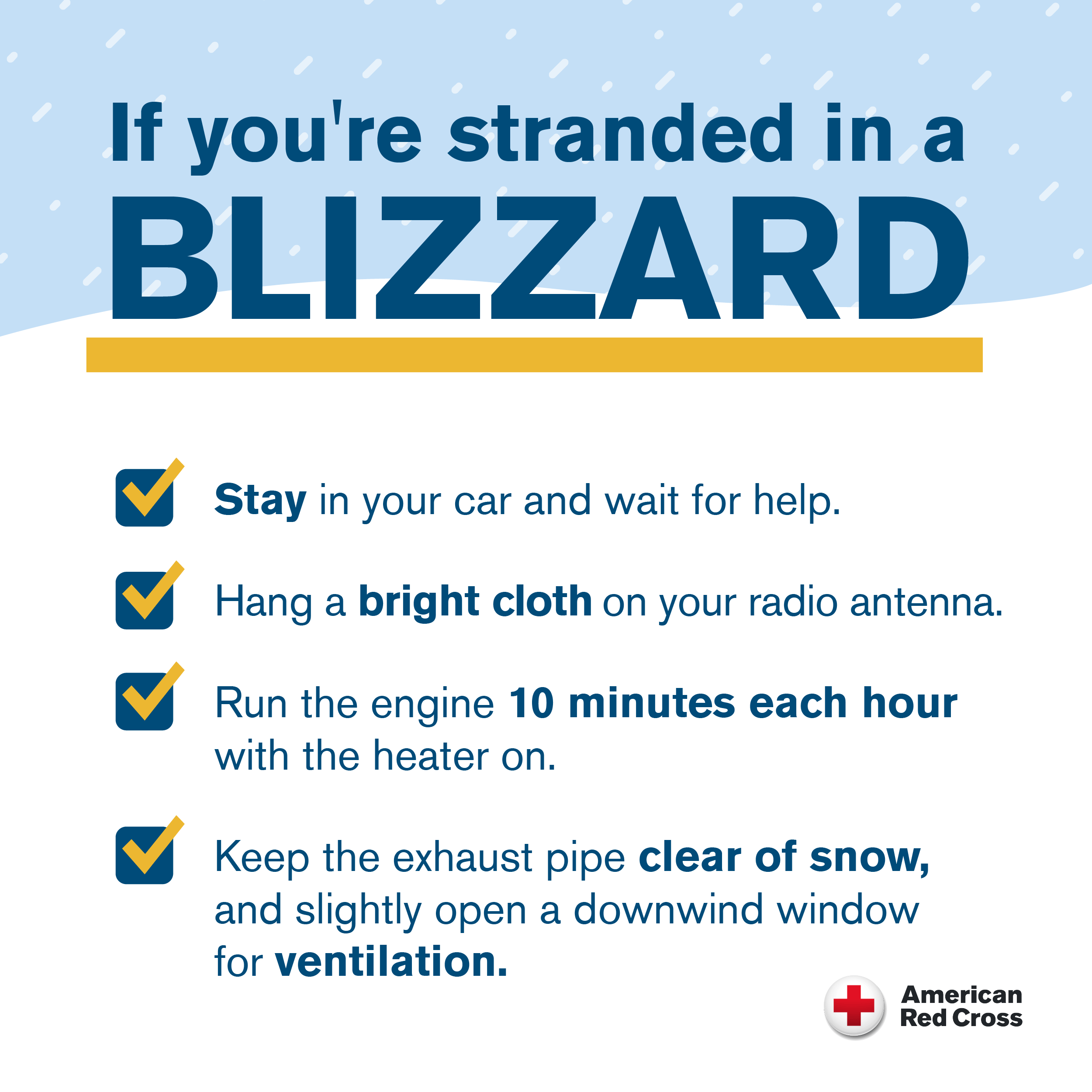
    Red Cross graphic – If you’re stranded in a blizzard: Stay in your car and wait for help. Hang a bright cloth on your radio antenna. Run the engine 10 minutes each hour with the heater on. Keep exhaust pipe clear of snow, and slightly open a downwind window for ventilation.

    Prepare Your Vehicle

    Even though travel is strongly discouraged, be sure your vehicle is equipped with:

    • A warm coat, hat, mittens and winter boots
    • Hand and foot warmers
    • A blanket or sleeping bag
    • Ice scraper, small shovel, jumper cables, and tow strap

    Given NWS predictions of 1–2 inches of snow per hour and potentially 20 inches or more in parts of the region, being stranded without supplies can be dangerous.

    Know the Warning Signs of Cold‑Related Emergencies

    Frostbite and hypothermia can become life‑threatening quickly. Frostbite can set in in as little as 10-30 minutes, and hypothermia in 30-60 minutes. If you must go outside this weekend, take precautions. Wear layers of clothing, a hat, gloves and warm boots and avoid staying outside too long. Fun fact: mittens keep your hands warmer than gloves!

    Download our free First Aid app for step‑by‑step instructions on a variety of situations, including hypothermia and frostbite.

  • Jane and Zymir prepare for winter weather

    Editor’s Note: Our fictional friends Jane and Zymir review ways to keep your home safe this winter.

    By Robert Ambrose

    Red Cross graphic – Don’t use an oven to heat your home!

    Jane: Ok, so we have had some cold days since the holiday season. Are we missing anything?

    Zymir: Checking the forecast is important. Snow and cold rain is more intense that previous decades because winter is compressed into a shorter cycle. Basically, the intensity of winter can spike.

    Jane: Really? Only several weeks but more intensity?

    Zymir: Climate change shortens winter, but nature balances it out.

    Jane: I see so smoke alarms are more important than ever since people are couped up inside.

    Zymir: Exactly. Philadelphia’s old buildings also can have bad electrical wiring. That is a leading cause of fire. In fact…

    Jane: I know what you’re gonna’ say…Red Cross installs free smoke alarms.

    Zymir: No one in our area has a reason to not have smoke alarms. All free.

    Jane: Just ask the Red Cross.

    Zymir: Yep. Red Cross comes to you with their free smoke alarms.

    Jane: In winter dress for success with warm layers of loose clothes – coat, hat, gloves.

    Zymir: Try to stay inside. Have a backup plan to go to the library or a friend’s house if your house heater fails.

    Jane: Makes sense to stock food and medicine.

    Zymir: A month’s supply of medications.

    Jane: Winter can knock out water supply so save a gallon of water per person per day.

    Zymir: Power can stop. If you use a generator do not bring it inside. Also, don’t bring any grills, camp stove, or gas/charcoal-burning stoves inside. The one I love is: don’t hurt yourself shoveling or even using a snow-blower.

    Jane: Someone’s trying to stay inside?

    Zymir: No just protecting myself. By the way people need to be alert to announcements. Like have a battery-operated radio in case power goes out.

    Jane: Have a phone charger handy and three days’ supplies in case you need to go somewhere else.

    Zymir: Because of snow?

    Jane: Yes. Winter is unpredictable. We must get through another winter. That’s all.

  • Cold weather pet safety: Tips to keep your fur babies warm and healthy this winter

    By Caroline Carr

    Brrrr…. it’s cold out! As we bundle up to face below zero temperatures and snow, it’s time to look at some cold hard facts about how our pets adjust to the weather. Believe it or not, their fur coats are not enough to protect them from extreme temperatures and even frostbite.  A common rule of thumb is that if it’s too cold for you, then it’s too cold for them. However, there are some really helpful tips to follow when taking your pets outside in the winter.

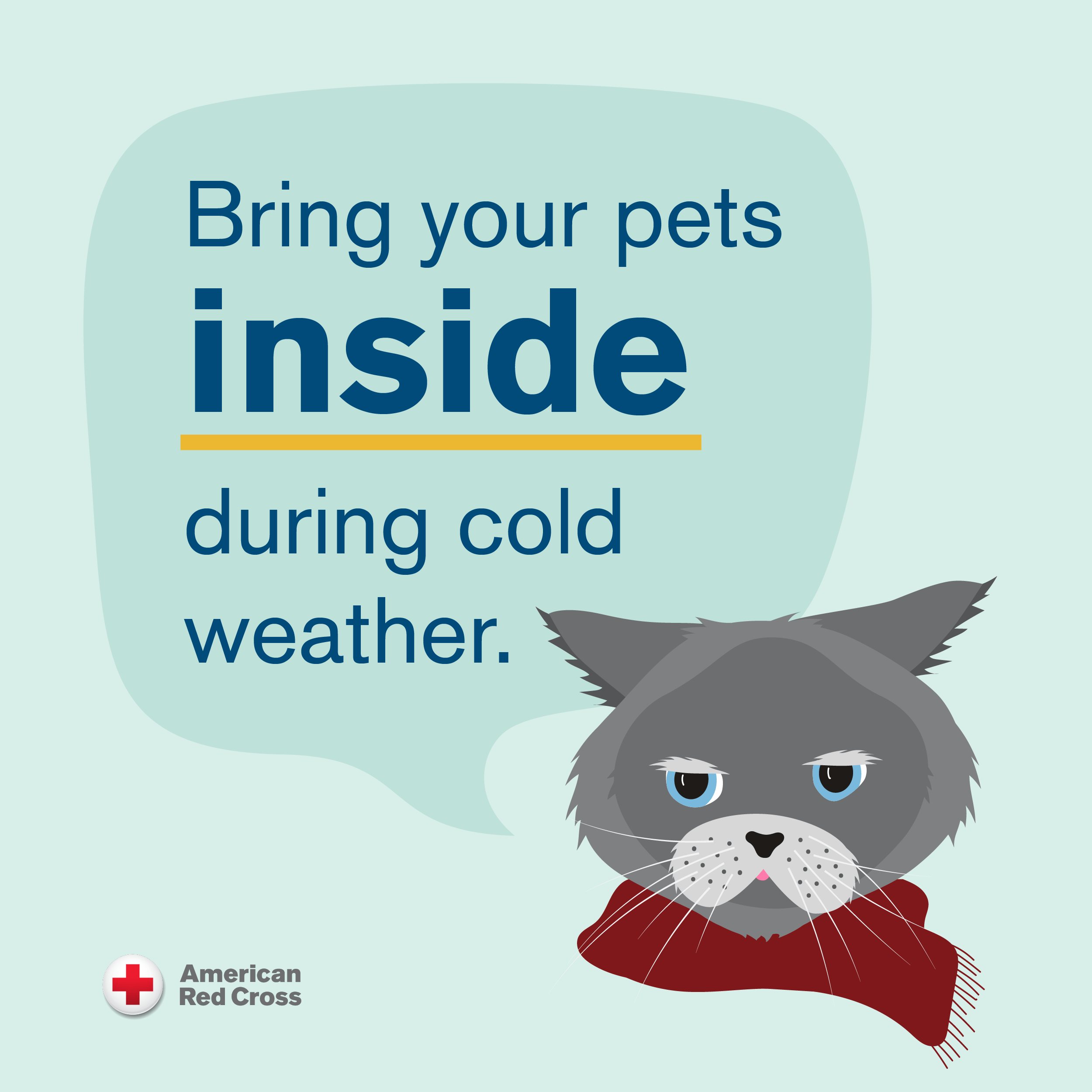
    Square light blue graphic with an illustrated gray cat head wearing a red scarf. Text in dark blue reads: Red Cross graphic - Bring your pet inside during cold weather.
    Red Cross graphic – Bring your pet inside during cold weather.

    Weather Safety

    The ASPCA has some tips on its website that can help you to keep your pet safe and comfortable during the winter.

    After walking, wash and dry your pet’s feet and stomach. This will clean off any salt or chemicals your pet might be exposed to during a walk.  Prior to walking, rub some petroleum jelly on their paws. This will help to protect them from harmful chemicals.

    Our pet’s fur protects them and provides extra warmth in the severe weather. Make sure not to shave them completely in the winter. They need their fur to keep warm.

    Remember that antifreeze is deadly to dogs and cats. Make sure to clean up any spills and keep them from walking in them if they are outside with you.

    It’s good to feed them a little extra in the winter so that they have enough calories in their systems because keeping warm burns more. Check with your pet’s vet first to make sure they can have extra calories.

    Illustration of a brown dog walking on a black surface with stars around one front and one back paw. White text against a sky blue background reads: salted sidewalks mean irritated paws.
    Red Cross graphic – Salted sidewalks mean irritated paws.

    Holiday Safety

    Be careful with table scraps during the holidays. It’s better to give them vet approved treats that are made for pet consumption. The foods we prepare are often too fatty or too sweet for them to digest properly. Chocolate is a definite no-no! It is toxic to cats and dogs.

    Ornaments and holiday decorations can also be dangerous for pets. It may seem funny to watch them play with ribbon or a tree ornament, but the ribbon can be swallowed and clog their intestines. They can wind up in the hospital needing surgery to remove it. It’s both painful for our pets and costly for their owners.

    The American Red Cross has put together a safety checklist that can be helpful for you and your pets.

    Pet First Aid

    Remember that our pets can suffer from things like frostbite and hypothermia just like we can.  Check out the links below for more information about hypothermia in cats and dogs:

    Square light blue graphic with white snow flakes and dark blue text that reads: Red Cross graphic - Bring your pet inside. Signs they could have hypothermia or frostbite: Whining and shivering; moving slower or not at all; looking for a warm place to burrow.
    Red Cross graphic – Bring your pet inside. Signs they could have hypothermia or frostbite: Whining and shivering; moving slower or not at all; looking for a warm place to burrow.

    Taking care of our pets can sometimes seem like a full-time job! They are our fur children, after all. By taking precautions and being aware of things that can cause them harm, we will keep them safe and in good health. Enjoy all that the colder weather offers us, snow, warm, crackling fires and tasty holiday treats… and of course, our beloved fur babies.

  • Jane and Zymir talk Thanksgiving cooking safety

    Editor’s Note: Our fictional friends Jane and Zymir recall a disastrous turkey frying incident and plan ways to make this year’s Thanksgiving safer.

    By Robert Ambrose

    Illustrations of a house, a cooked turkey and a turkey fryer with the following words: Turkey Frying Tips: Never use a fryer hear your house or other structure. Never fry a turkey that's not fully thawed. Place the fryer on a flat, even surfact.
    Turkey Frying Tips: Never use a fryer hear your house or other structure. Never fry a turkey that’s not fully thawed. Place the fryer on a flat, even surface.

    Zymir: Thanksgiving is here almost. We need to prevent last year’s disaster that my family experienced right here in Philly.

    Jane: When the turkey fryer zipped hot oil all over the kitchen and started a fire?

    Zymir: Exactly. The burns from the oil are so bad that my cousin is only going to partially heal.

    Jane: Answer is skip the turkey fryer and buy it pre-fried.

    Zymir: KFC does it for a living.

    Jane: Popeye’s probably. NFPA would want it that way.

    Zymir: NFPA?

    Jane: The National Fire Protection Association.

    Zymir: Oh…what else does NF… say?

    Jane: NFPA says Thanksgiving is number one for cooking accidents.

    Zymir: I believe it. All those weekend warriors.

    Jane: They also advise the obvious.

    Zymir: Like?

    Jane: Stay in the kitchen when you are cooking. Move the kids out. Knives and matches are not part of childhood so keep them separated. Test the smoke alarms.

    Zymir: Yes. My relatives on my father’s side received free smoke alarms by appointment from the Red Cross.

    Jane: Same with my people. They called and made an appointment.

    Zymir: Mine requested online.

    Jane: Speaking of online, NFPA’s website has a kid’s cut-out: if you are not three feet, stay out of the Kid-Free Zone. Ha.

    Zymir: Nice. Soon we will need that.

    Jane: If we are blessed with kids.

    Zymir: Well, I’ll call my family since we’re headed there for Thanksgiving. Maybe they want us to help watch the kids before the actual Thanksgiving dinner.

    Jane: Great coordination. Baby-sitting to prevent accidents was not listed in NFPA’s website. But volunteering to help protect your young relatives is admirable.

    Zymir: I just dialed into the NFPA website. There is another one that needs a mention: even one lit candle. Happens during the holidays. But folks cannot leave a child unattended with a lit candle.

    Jane: Sounds like common sense.

    Zymir: Americans are smart. But we’re a busy people and it’s easy to overlook something like that when you hear the phone ringing and you’re trying to do a third thing.

    Jane: So, we will all slow down in our houses to enjoy the holiday.

    Zymir: Sounds great. Sign me up.

  • Halloween safety tips and treats

    By Caroline Carr

    It’s that spooky time of year.  Jack-o-lanterns, ghosts and ghouls abound. Time for kids to roam our streets offering a trick or two and getting the treats! It’s a fun time of year for kids and adults. But there are some things we need to be aware of so this holiday is fun and safe for everyone.

    There are three areas we can look at to ensure a safe and fun Halloween: Driving safety, trick or treating safety and costume safety.

    Cartoon graphic of a skeleton, pumpkin head and ghost on a dark blue background with the text Be on the lookout for trick-or-treaters! in white.
    Red Cross graphic – Be on the lookout for trick-or-treaters!

    Trick or Treating Safety

    • Walk on sidewalks whenever possible. If you must walk in the street, make sure to face traffic.
    • Use the most direct paths to houses.
    • If someone’s house lights are off, go to the next house.
    • Do not eat any candy or treats until you get home and have an adult look through everything first.
    • Trick or treat in groups. It’s much safer than going alone.
    Red Cross graphic – Trick-or-treating tip: Small foods can be a choking hazard. Keep an eye on children under 5 years old eating candy.

    Driving Safety

    • Stay alert! Children are excited and might run into the street or driveway without looking.
    • Drive slowly through neighborhoods so you have time to stop if people are crossing the street without looking.
    • When making turns or backing up, be sure to look carefully to see if anyone is in your path.
    • Avoid any distractions like your phone and even the radio.
    Red Cross graphic – Drive with caution! Watch out for kids on Halloween.

    Costume Safety

    • Make sure costumes fit well so that they don’t cause tripping.
    • Carry a flashlight to light your path.
    • Put reflective tape on your child’s costume to make them visible to drivers.
    • Masks can obstruct a child’s vision. It’s better to use non-allergenic makeup.
    Red Cross graphic – Glow this Halloween! Keep children seen by adding reflective tape or glow sticks to their costumes.

    If kids are trick or treating without adult supervision, make sure they know the route they are going on and that they have check in times. Have them check in with you in a half hour, or hour. Designate the time they will return home. Also, make sure your trick or treaters know not to enter anyone’s home.

    Halloween is one of the most fun times of the year for children and adults. Employing these simple safety tips will ensure that everyone has a good, safe time.

    So, remember, if the vampire bites or the werewolf howls, don’t be scared! It’s probably your friend behind you. Have a spooky, safe time out there!

  • ‘Charge into Safety’ this National Fire Prevention Week

    • Red Cross and NFPA graphic that reads Charge into fire safety. Not all batteries are created equal.
    • Red Cross and NFPA graphic that reads Fully charged? Time to unplug.
    • Red Cross and NFPA graphic that reads Charge into fire safety. Beds are for sleeping, not charging.
    • Red Cross and NFPA graphic that reads Charge into fire safety. Batteries don't belong in the bin.

    By Caroline Carr

    Increasingly we see new products available that contain lithium-ion batteries. But how do we use these batteries safely?  What are the risks in buying, charging and recycling them? These are important questions we must ask ourselves in our growing electronic world.

    While a lithium-ion battery might not look like it could cause any risks or damage, the risks can be serious. For example:

    • Thermal Runaway – If the battery overheats, it can catch fire or explode. This can happen if you overcharge your battery because it causes it to overheat. If the battery is punctured or crushed, short circuits can occur. Also, storing a battery in excessive heat can cause damage that can become dangerous.
    • Fires from lithium-ion batteries burn hotter than other types of fires. They can also give off toxic gases like carbon monoxide.

    What can you do to minimize these risks? Following the next three steps will help. They involve which batteries to buy as well as charging and recycling safely.

    Buying

    Always make sure any product you purchase has a safety certification mark such as:

    • UL -The product or component has been tested and meets specific safety and performance standards.
    • ETL –  The product has been tested by Intertek (the testing and certification division of Electrical Testing Laboratories) and found to meet accepted North American safety standards.
    • CSA – The product was tested and has met the certification requirements for electrical, plumbing and/or mechanical products.

    These certifications show that the battery minimizes risks like thermal runaway, fire and explosion.  Following these tips will ensure you are using a product that meets important safety standards and is safe to buy.

    Charging

    When charging your device that uses a lithium-ion battery, make sure that you always use the charger that came with the product. Using other charges could damage the battery, making it unsafe and prone to risks. If you need to replace the charger, make sure to buy one from the same company where you purchased the device.

    Make sure that you do not overcharge your device. When they are fully charged, remove them from the charger.

    Recycling

    Lastly, make sure to recycle correctly. Lithium-ion batteries should never be thrown in the trash or a recycling bin used for other types of recyclables. They can start a fire when disposed of incorrectly. You can find a recycling location near you at Call2Recycle.org.

    In our ever-growing world that is advancing in technology at the speed of sound, we must stay vigilant and know how to buy, use and recycle safely.

  • Beat the bite: Stay safe from ticks and mosquitos all season long

    By Maureen Zug

    Many of us love to be outdoors at this time of the year…but sometimes small critters like mosquitoes and ticks can have a big impact on our health and comfort.

    Although you may be already be familiar with how to prevent bug bites, here is a current update on Summer, 2025 mosquito and tick activity. If you happen to be bitten, see below for access to Red Cross First Aid tips for treating those bites.

    Public domain photos of a deer tick (left) and mosquito (right).

    Mosquito and Tick Outlook for Southeastern Pennsylvania – 2025

    Based on recent reports from early to mid-2025, Southeastern Pennsylvania is experiencing increased activity of both ticks and mosquitoes. This  raises concerns about potential disease outbreaks.

    Tick Activity

    • Elevated Tick Populations: The state’s Tick Research Lab reported more than double the tick submissions in May 2025 compared to the previous year, indicating a significant increase in the overall tick population.
    • Dominant Species and Diseases:
    • Blacklegged (Deer) Ticks: These remain a primary concern, as they are responsible for the majority of Lyme disease and anaplasmosis cases in Pennsylvania, particularly between May and July.
    • Anaplasmosis: Cases have been steadily rising, doubling nearly every year for the past five years and are now present in almost every county.
    • Other Ticks: Other tick species, such as the American Dog tick, Lone star tick, Asian Longhorned tick, and Gulf Coast tick, are also being monitored by the Pennsylvania Department of Environmental Protection (DEP).
    • Emerging Tick-borne Diseases
    • Heartland Virus: Pennsylvania confirmed its first human case in 2022, transmitted by the Lone Star tick.
    • Borrelia miyamotoi: DEP tick studies in 2023-2024 found this pathogen, which causes hard tick relapsing fever, in about 1.4% of adult Blacklegged ticks collected across the state. 

    Mosquito Activity

    • Increased Mosquito Presence: Reports indicate a ramp-up in mosquito activity.
    • West Nile Virus Risk: Mosquitoes can transmit West Nile virus and other illnesses, especially during peak biting times at dawn and dusk.
    • High Mosquito Populations in Cities: Philadelphia ranked sixth among the top 50 U.S. cities with the most mosquito activity in a recent report. 

    Prevention and Protection

    To protect against ticks and mosquitoes, public health officials recommend staying informed about areas with high populations.. Personal protective measures include using EPA-registered insect repellents, treating clothing with permethrin, wearing protective clothing in grassy or wooded areas, and checking for ticks after being outdoors.  To protect babies and young children, talk to your pediatrician for appropriate insect repellents.

     Do not forget to check family pets for ticks after walks outside.

    Managing your yard by removing standing water, clearing brush and leaf litter, and using mulch can also help reduce tick and mosquito habitats. Additionally, ensuring screens are in good repair can prevent entry into homes. State and local health departments are actively monitoring and controlling tick and mosquito populations through surveillance and testing programs. 

    Handy Red Cross Resources for First Aid for Tick & Mosquito Bites

    After you have taken all the common-sense precautions  in guarding against ticks and mosquito bites, a bite still may occur.  Your “one stop” for First Aid information is the American Red Cross First Aid app. This on-line app is easily downloaded to your phone for anytime, anywhere access. You can even get local availability for Red Cross First Aid classes.

    The free First Aid mobile app by the American Red Cross puts expert advice for common emergencies —from the latest First Aid and CPR techniques to the nearest hospital location. Stay up to date on your lifesaving skills. iOS App, Google Play, or text “GETFIRST” to 90999.

  • Back-to-school safety checklists for parents and drivers

    Tips for parents

    Parent walking with child. Public domain photo by Anete Lusina.

    Young children/first-time students

    If your child is young, especially if they are going to school for the first time, make sure they know:

    • Their phone number, address, how to get in touch with their parents at work, how to get in touch with another trusted adult and how to dial 911.
    • Not to talk to strangers or accept rides from someone they don’t know.

    Transportation Safety

    Whether children walk, ride their bikes or take the school bus, it’s important they take proper safety precautions. Here are some tips to help ensure your child travels to and from school safely.

    Walkers

    Review your family’s walking safety rules and practice walking to school with your child. Teach them to:

    • Walk on the sidewalk. If no sidewalk is available, walk facing traffic.
    • Stop and look left, right and left again to see if cars are coming.
    • Cross the street at the corner, obey traffic signals and stay in the crosswalk.
    • Never run out into the street or cross between parked cars.

    Bus riders

    According to the National Safety Council (NSC), buses are the safest mode of transportation for school children. If your student takes the bus to school, teach them to:

    • Get to their bus stop early and stand away from the curb while waiting for the bus to arrive.
    • Board the bus only after it has come to a complete stop and the driver or attendant has instructed them to get on. And only board their bus, never an alternate one.
    • Stay in clear view of the bus driver and never walk behind the bus.

    Bikers

    Make sure your child knows the rules of the road and practice riding the bike route to and from school with your child. Teach them to:

    • Always wear a properly fitted helmet and bright clothing.
    • Ride on the right side of the road in the same direction as the traffic is going; ride single file.
    • Come to a complete stop before crossing the street; walk bikes across the street.

    Adult drivers

    If you or another adult drives your child to school, follow these best practices:

    • Always wear a seat belt. Younger children should use car or booster seats until the vehicle’s lap-shoulder belt fits properly (typically for children ages 8-12 and over 4’9”); children should always ride in the back seat until they are at least 13 years old.
    • Obey school zone speed limits and follow your school’s drop-off procedure. Don’t double park; it blocks visibility for other children and vehicles. Don’t load or unload children across the street from the school
    • Make eye contact with children who are crossing the street.
    • Never pass a bus loading or unloading children.

    Teen drivers

    Car crashes are the top cause of death for teens. Fortunately, many accidents are preventable. Take these actions:

    • Practice with new drivers every week, before and after they get their license.
    • Set a good example; drive the way you would want your teen to drive.
    • Have them sign NSC’s New Driver Deal, an agreement that helps define expectations for parents and teens
    • Teach them to never use their cell phone or text or make calls while driving (now a law in Pennsylvania) and avoid eating and drinking while driving.

    School safety

    Many school-related injuries are completely preventable. Follow these steps to ensure your child’s safety at school.

    Backpacks

    Choose a backpack for your child carefully; look for one with features that enhance safety and comfort. Follow these tips:

    • Ask your child to use both straps when wearing their backpack to evenly distribute the weight on their shoulders.
    • Don’t overstuff a backpack; it should weigh no more than 5% to 10% of your child’s body weight.
    • Rolling backpacks should be used cautiously since they can create a trip hazard in crowded school hallways.

    Playground and sports

    Bumps and bruises can be expected, but steps can be taken to reduce the risk or harm or injury. Make sure children:

    • Leave necklaces and jackets with drawstrings at home to reduce strangulation hazards on the playground.
    • Always wear sport-appropriate protective gear, like helmets, protective pads, etc.
    • Warm up before and cool down after practices and games.
    • Know the location of the closest first aid kit and automated external defibrillator (AED).

    Cell phones

    If your child has a cell phone, download the free Red Cross First Aid and Emergency apps to give them access to first aid tips for common emergencies and real-time weather alerts. Find the apps by searching for the American Red Cross in your favorite app store or going to redcross.org/apps.

    Tips for drivers

    Yellow school bus on a city street.
    School bus on a city street. Public domain photo by Mihai Vlasceanu.

    School buses

    It is illegal in all 50 states to pass a school bus that is stopped to load or unload children. Follow these road rules:

    • Yellow flashing lights indicate the bus is getting ready to stop ─ slow down and be prepared to stop. Red flashing lights and an extended stop sign indicate the bus is stopped and children are getting on or off.
    • The area 10 feet around a school bus is the most dangerous for children; stop far enough back to allow them space to safely enter and exit the bus.
    • Motorists must stop when they are behind a bus, meeting a bus or approaching an intersection where a bus is stopped.
    • If physical barriers such as grassy medians, guide rails or concrete median barriers separate oncoming traffic from the bus, motorists in the opposing lanes may proceed without stopping. Do not proceed until all the children have reached a place of safety.

    Pedestrians

    According to NSC, most fatal bus-related incidents happen when children are walking. They are hit by the bus or by a motorist illegally passing a stopped bus. Follow these precautions to keep children safe:

    • Don’t block the crosswalk when stopped at a red light or waiting to make a turn, forcing pedestrians to go around you; this could put them in the path of moving traffic.
    • In a school zone when flashers are blinking, stop and yield to pedestrians crossing the crosswalk or intersection.
    • Always stop for a school patrol officer or crossing guard holding up a stop sign.
    • Don’t honk or rev your engine to scare a pedestrian, even if you have the right of way.
    • Never pass a vehicle stopped for pedestrians,

    Bicyclists

    On most roads, bicyclists have the same rights and responsibilities as those driving motor vehicles. However, bikes can be hard to see, and children riding bikes are especially worrisome because they may not be able to properly understand traffic conditions. According to the NCS, the most common cause of collision is a driver turning left in front of a bicyclist. Follow these tips to keep cyclists safe:

    • When passing a bicyclist, proceed in the same direction slowly, and leave 3 feet between your car and the cyclist.
    • When turning left and a bicyclist is approaching in the opposite direction, wait for the rider to pass.
    • If you’re turning right and a bike is approaching from behind on the right, let the rider go through the intersection first, and always use your turn signals.
    • Watch for bike riders turning in front of you without looking or signaling; kids especially have a tendency to do this.
    • Watch for bikes coming from driveways or behind parked cars.
    • Check side mirrors before opening your door.

    Resources

  • Red Cross offers tips for a safe 4th of July

    By Alana Mauger

    Fireworks on display. Public domain photo.

    As you get ready to celebrate the 4th of July with family and friends, the American Red Cross Southeastern Pennsylvania Region offers tips to help keep everyone safe during the holiday festivities.

    Fireworks safety

    The safest way to enjoy fireworks is to attend a public firework show put on by professionals. As an alternative to fireworks at home, consider celebrating with glow sticks, noise makers or silly string instead. If you choose to set fireworks off at home, follow these safety steps:

    • Never give fireworks to small children and never throw or point a firework toward people, animals, vehicles, structures or flammable materials.
    • Always follow the instructions on the packaging.
    • Keep a supply of water close by.
    • Make sure the person lighting fireworks always wears eye protection.
    • Light only one firework at a time and never attempt to relight “a dud.”
    • Store fireworks in a cool, dry place away from children and pets.
    • Never use fireworks around pets and keep pets indoors. Exposure to lit fireworks can potentially result in severe burns or trauma, and many pets are also fearful of loud noises and can become lost, scared or disoriented.

    Water safety

    July 4th temperatures are projected to be in the mid-to-high 80s, which is the perfect weather for a dip in a pool, a visit to a water park or a getaway at the shore. The Red Cross recommends steps you should take to help stay safe around the water:

    • Designate a “water watcher” to keep a close eye and constant attention on children and weaker swimmers in and around the water until the next water watcher takes over.
    • Always swim with a buddy in a lifeguarded area and follow the rules of the facility.
    • Provide close and constant attention to those you are supervising in the water.
    • Stay within arm’s reach of young children and new swimmers.
    • Check the water depth and don’t swim or play beyond your swimming abilities.
    • Children, weak or non-swimmers, and all boaters should wear a properly fitted U.S. Coast Guard-approved life jacket.
    • Watch the weather and get out of the water at the first sign of lightning or rumble of thunder. Stay indoors and away from the water for 30 minutes after the last lightning flashes or thunder roars.

    Picnic and grilling safety

    On average, grilling sparks more than 10,000 home fires each year. To keep your picnic guests safe, the Red Cross recommends following these tips:

    • Always supervise a barbecue grill when in use.
    • Don’t add charcoal starter fluid when coals have already been ignited.
    • Never grill indoors – not in the house, camper, tent or any enclosed area.
    • Make sure everyone, including pets, stays away from the grill.
    • Keep the grill out in the open, away from the house, deck, tree branches or anything that could catch fire.
    • Use long-handled tools designed specifically for grilling to help keep the chef safe.
    • Wash your hands before preparing the food.
    • Don’t leave food out in the hot sun. Keep perishable foods in a cooler with plenty of ice or freezer gel packs.

    Safety at your fingertips

    Take the Red Cross with you this summer by downloading the free Red Cross First Aid app so you’ll know what to do if emergency help is delayed and the free Emergency app for real-time weather alerts and heat safety information. Content is available in English and Spanish with an easy-to-find language selector. Find both apps in smartphone app stores by searching for the American Red Cross or going to redcross.org/apps.

  • National Lightning Safety Week: When thunder roars, go indoors!

    By Zain Ahmad

    NOAA graphic – One Strike, You’re Out. When thunder roars, go indoors. weather.gov

    Each year, National Lightning Safety Week (June 22–28) highlights the importance of protecting ourselves from one of nature’s most dangerous forces. Although lightning can strike in an instant, the damage it causes can last a lifetime. Staying informed and taking simple precautions can help prevent injuries and save lives. From the American Red Cross, here are ways to stay safe during a lightning strike.

    Understanding Lightning Dangers

    Lightning is unpredictable and deadly. It can strike miles away from a storm and travel through ground, metal, and even plumbing. Each year, hundreds of people in the U.S. are injured or killed by lightning-related incidents. The key to staying safe is awareness and preparation.

    • When thunder roars, go indoors. If you can hear thunder, you are close enough to be struck.
    • Avoid open fields, tall objects, and water during a thunderstorm.
    • Stay away from windows, plumbing, and electrical equipment during a storm.
    NOAA graphic – Lightning is hotter than the surface of the sun and can reach temperatures around 50,000 degrees F. When thunder roars, go indoors. weather.gov

    Staying Safe Outdoors

    Outdoor activities are especially risky during a thunderstorm. Whether you’re hiking, playing sports, or working, having a lightning safety plan can make a difference.

    • Always check the weather forecast before heading outside.
    • Have a shelter option nearby—fully enclosed buildings are best.
    • Avoid high ground and metal objects like fences, poles, and bikes.
    Your chance of being struck by lightning greatly increases when remaining outdoors during a thunderstorm. Lightning can strike from up to 10 miles away! When thunder roars, go indoors! See a flash, dash inside! Some of the activities people were doing when they were recently struck by lightning include: golfing, boating, running, grilling, walking, constructing, riding, gardening, swimming.

    Staying Safe Indoors

    Many people are surprised to learn that lightning injuries can also occur inside the home. When lightning strikes a building, it can travel through wiring, plumbing, and even metal window frames. That’s why it’s important to avoid anything that conducts electricity while indoors during a storm.

    • Do not touch anything plugged into an outlet.
    • Avoid sinks, bathtubs, and other plumbing.
    • Use cordless or cell phones instead of corded ones.
    • Stay away from windows and exterior doors.
    • Avoid lying on garage or concrete floors, which may conduct electricity.
    NOAA graphic – Your Safe Place from Lightning: Lightning strikes the U.S. 25 million times a year, which sometimes results in death or permanent injury. You are safest indoors or inside a hard-topped and enclosed vehicle. If you hear thunder or see lightning, take shelter immediately.

    The American Red Cross provides tools to keep you safe before, during, and after thunderstorms. Their Emergency App sends real-time weather alerts, preparedness tips, and emergency instructions directly to your phone. Download it from the Red Cross Mobile Apps Page to stay informed of an upcoming disaster.

    National Lightning Safety Week is a great opportunity to build awareness, make smart choices, and feel more confident when storms roll in. With the right knowledge and tools, like the Red Cross Emergency App, you can take control of your safety and enjoy the season knowing you’re prepared.