By Alana Mauger

With a powerful winter storm moving into our region today, the American Red Cross urges Southeastern Pennsylvania residents to take precautions now. The National Weather Service office in Mount Holly has issued a Blizzard Warning for Philadelphia from 10 a.m. Sunday through 6 p.m. Monday, citing the risk of heavy snow, strong winds, and dangerous whiteout conditions.
Current NWS predictions indicate:
- 12 to 20 inches of snow across much of the Philadelphia region, with the potential for even higher totals in some areas.
- Snowfall rates could exceed 1–2 inches per hour during the heaviest bands.
- Wind gusts of 45–50 mph may create near‑zero visibility and drifting snow.
Stay Inside and Stay Informed
Officials are urging people to stay off the roads during the height of the storm, especially Sunday night into Monday morning when the heaviest snowfall and strongest winds are expected. Stay informed by downloading our free Red Cross Emergency app for real-time weather alerts and more. You can also sign up for county’s opt-in wireless emergency alerts: Ready Bucks, Ready ChesCo, Delco Ready, Ready Montco and Ready Philadelphia, or tune in to NOAA Weather Radio.
Gather Supplies and Charge Devices
With the combination of heavy snow and strong winds, power outages are possible across the Philadelphia region. Assemble essentials such as non‑perishable food, drinking water, medications, blankets, warm clothes, flashlights, batteries, phone chargers and power banks, and keep your devices fully charged while power is available. Avoid burning candles to reduce fire risk. If you use a generator, keep it outside in a well-ventilated area and away from windows.
Check out our survival kit checklist for additional ideas.
Shoveling and Snow Blower Safety
Heavy, wet snow—like the kind expected during Winter Storm Hernando—can create dangerous conditions not only on the roads but also while clearing sidewalks and driveways. The American Red Cross urges everyone in Philadelphia and across Southeastern PA to use caution when removing snow:
Shoveling Safety
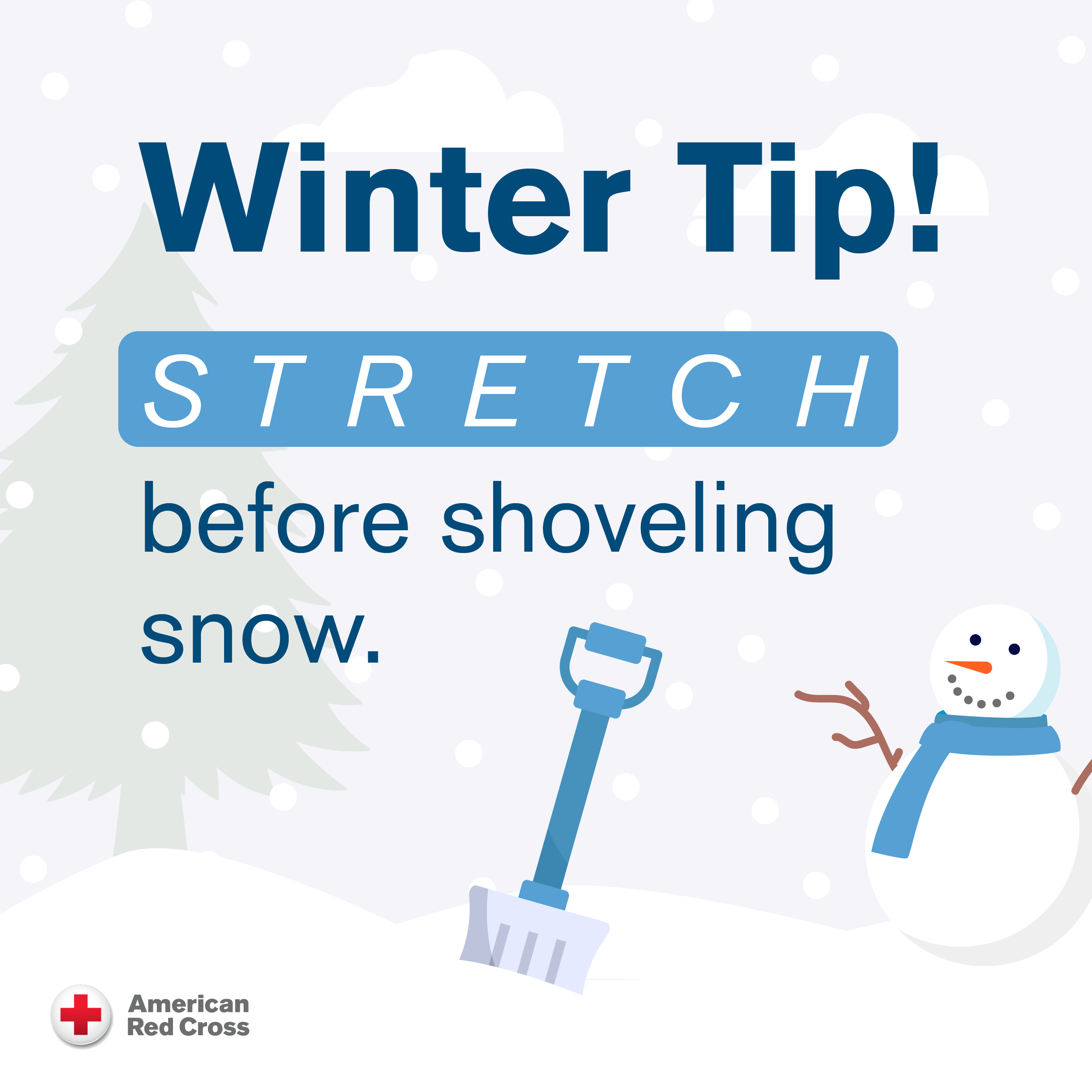
- Warm up first. Treat shoveling like exercise. Stretch your arms, legs, and back before heading outside.
- Take it slow. Push snow rather than lifting when possible. If you must lift, bend your knees and keep your back straight.
- Lift small amounts at a time. Heavy snow increases the risk of back injury and cardiac stress.
- Stay hydrated. Even in cold weather, your body loses fluids quickly.
- Take breaks often. Go indoors to warm up if you feel tired or chilled.
- Watch for signs of overexertion. Chest pain, shortness of breath, or dizziness are warning signs to stop immediately and seek help.
Snow Blower Safety
- Operate in good visibility. If conditions worsen or winds increase, stop and resume when it is safe.
- Read the manual before using. Make sure you know how to operate your machine safely.
- Keep hands and feet away from moving parts. If the chute gets clogged, turn off the engine and use a clearing tool—never your hands.
- Wear appropriate clothing. Avoid loose scarves or sleeves that could get caught in machinery.
- Fuel safely. Add gas outdoors before starting the snow blower—never refuel a hot or running machine.
- Be aware of your surroundings. Snow blowers can throw snow, ice, and debris at high speeds. Direct the chute away from people, vehicles, and windows.
Prepare Your Vehicle
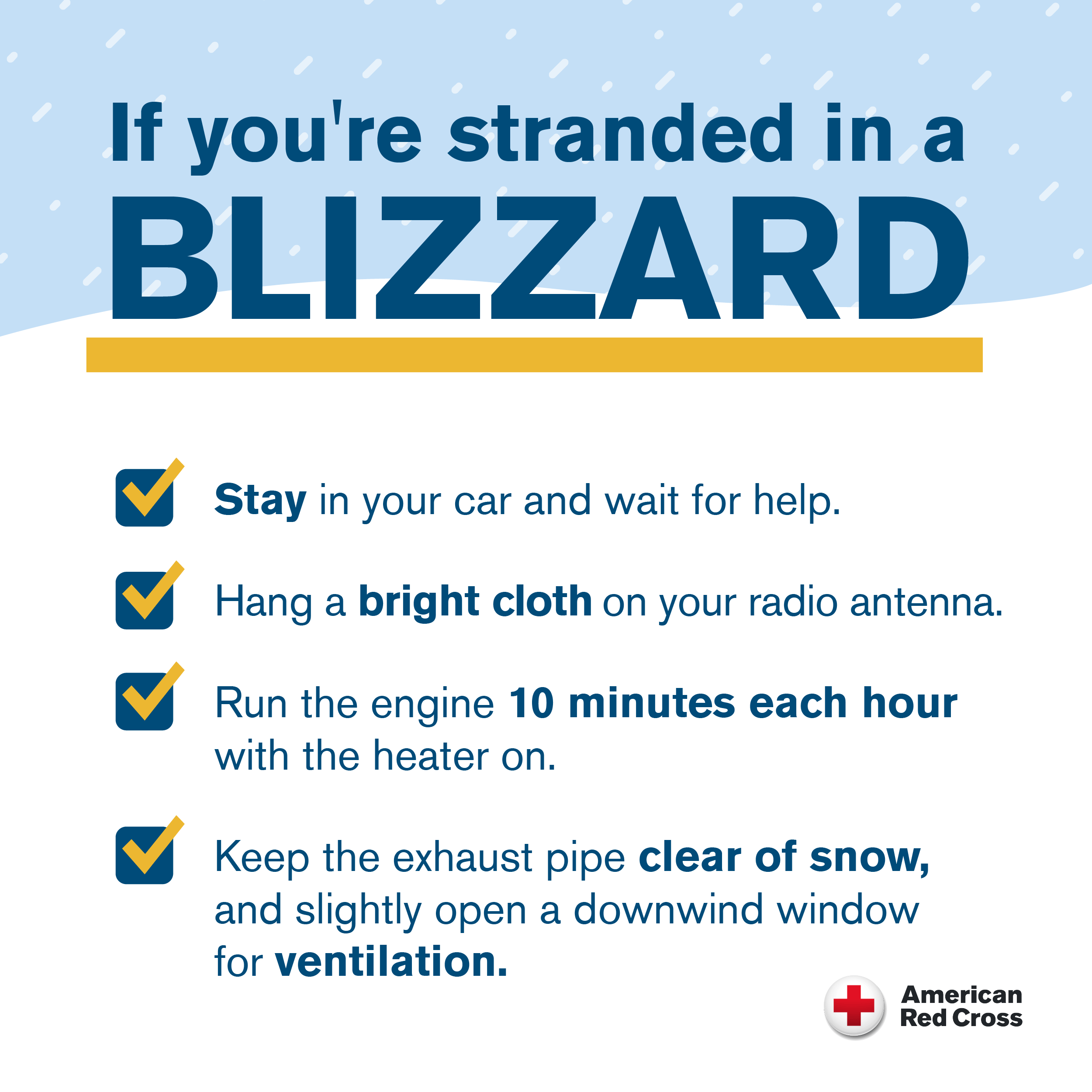
Even though travel is strongly discouraged, be sure your vehicle is equipped with:
- A warm coat, hat, mittens and winter boots
- Hand and foot warmers
- A blanket or sleeping bag
- Ice scraper, small shovel, jumper cables, and tow strap
Given NWS predictions of 1–2 inches of snow per hour and potentially 20 inches or more in parts of the region, being stranded without supplies can be dangerous.
Know the Warning Signs of Cold‑Related Emergencies
Frostbite and hypothermia can become life‑threatening quickly. Frostbite can set in in as little as 10-30 minutes, and hypothermia in 30-60 minutes. If you must go outside this weekend, take precautions. Wear layers of clothing, a hat, gloves and warm boots and avoid staying outside too long. Fun fact: mittens keep your hands warmer than gloves!
Download our free First Aid app for step‑by‑step instructions on a variety of situations, including hypothermia and frostbite.
Leave a Reply