Each year, National Poison Prevent Week is a reminder of how important poison safety and awareness are. In an emergency situation, knowing what to do and having resources on hand like Poison Help (1-800-222-1222) and the Red Cross First Aid app will keep you and your loved ones safe. Take a moment this week to educate yourself on poison prevention – it could make all the difference.
Poison Emergency? Here’s What to Do
If you suspect someone has been poisoned, it’s important to act quickly. Call Poison Help at 1-800-222-1222 or visit PoisonHelp.org for information on how to respond.
U.S. Health Resources and Services Administration (HRSA) graphic – Keep Poison experts in your pocket. Real help in real time. 1-800-222-1222.
Here are first-aid steps to take based on the type of poisoning:
If poison is inhaled: Move the person to fresh air. Call Poison Help for further instructions.
If poison is on the skin: Remove contaminated clothing and rinse the affected area of skin with water for 15-20 minutes. Call Poison Help for further instructions.
If poison is in the eyes: Flush the eyes with water for 15-20 minutes and call Poison Help for further instructions.
If the person swallowed the wrong medication or too much of it: Do not attempt first aid on your own—call Poison Help for professional advice.
Common Causes of Poisoning
Poisoning can occur in many ways, often during everyday situations. Some common causes include:
Accidental ingestion of household chemicals (cleaning products, pesticides)
Medication overdoses or taking the wrong medication
Carbon monoxide poisoning from household appliances or vehicle fumes
Food poisoning from spoiled or contaminated food
Be Prepared with the Red Cross First Aid App
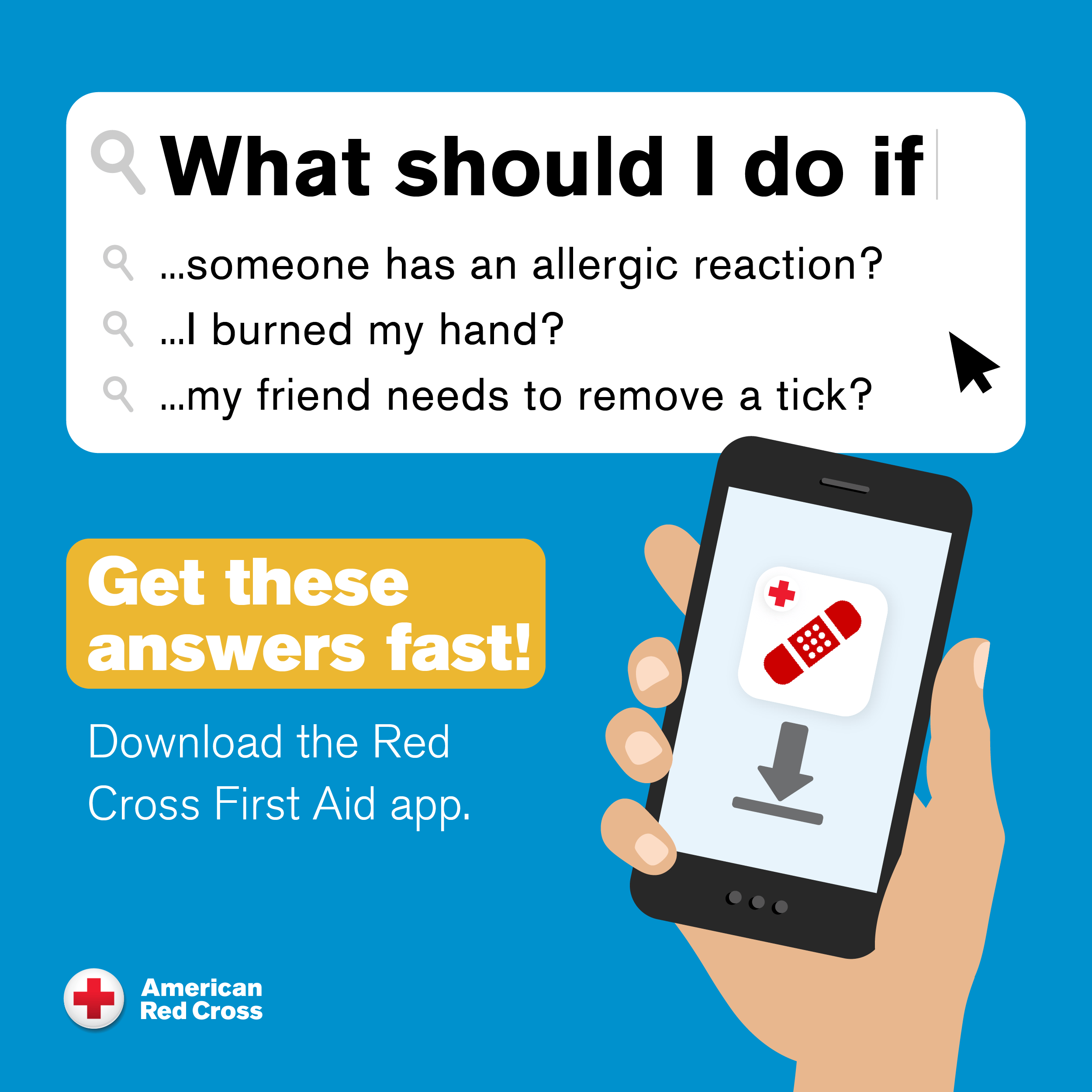
Red Cross graphic – What should I do if someone has an allergic reaction? I burned my hand? My friend needs to remove a tick? Get these answers fast. Download the Red Cross First Aid app.
Emergencies can happen at any time, and being prepared can save lives. The Red Cross First Aid app provides professional advice for everyday emergencies, including poisoning. This FREE app includes step-by-step instructions, videos, quizzes, and allows users to locate the nearest hospital. Available in English and Spanish, the app has lifesaving information at your fingertips.
Download the Red Cross First Aid app today by texting “GETFIRST” to 90999 or searching for it in your app store.
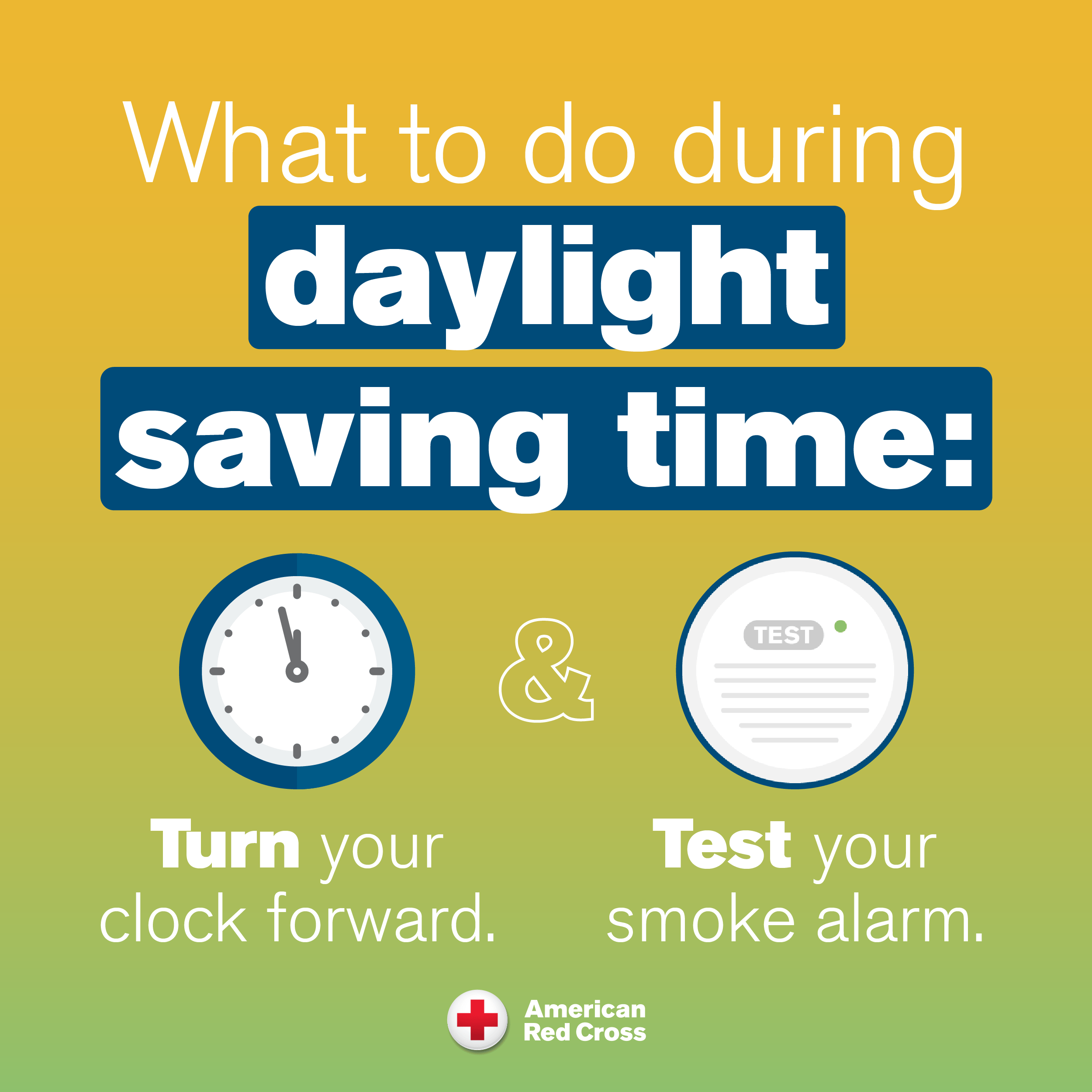
Red Cross graphic – What to do during daylight saving time: Turn your clock forward & test your smoke alarm.
Checking our smoke alarms is an excellent reminder as we switch our clocks for Daylight Saving Time. This small step can have a significant impact on our peace of mind and the safety of our houses. Smoke alarms are essential for warning us of fires so that we have enough time to flee if necessary. Use these simple measures to maintain the proper operation of your smoke alarms.
First, at least once a month, push the test button on your smoke alarms. It’s functioning if you hear a sound. Otherwise, examine the batteries and swap them out if they’re low. Even if everything appears to be in order, it’s still a good idea to change the batteries at least once a year because this little action can save lives. Additionally, don’t forget to replace smoke alarms every ten years. They may become worn out and less effective over time. Note when you purchased them and make plans to get new ones later.
Additionally, placement is crucial. Smoke alarms should be installed on each story of your house, particularly in the corridors and bedrooms where fires are most prone to originate. Because smoke rises, place them high up on a wall or on the ceiling for optimal effect. To prevent drafts from interfering with their operation, keep them away from windows, doors, and air ducts.
For added security, you might also want to consider purchasing carbon monoxide detectors. Teaching your family about fire safety, including escape routes and emergency procedures, is also beneficial. Together, we can make our homes safer for ourselves and our loved ones by routinely testing smoke alarms and practicing fire safety.
Visit our website to learn more about fire safety.
Picante Sauce And Tortilla Chips 2 by Sheila Brown. Published under CC0 Public Domain license.
Each year, the big game is an opportunity for friends and family to have fun cheering on their favorite teams. Whether you’re hosting a party or attending one, it’s important to keep yourself and others safe so you can enjoy the celebration. To make sure your game day is a winning experience, follow these food and alcohol safety tips!
Kickoff to Cleanup – Food Safety Tips
Chicken wings, burger sliders, and chili may be the MVPs of your party, but cooked food can quickly sideline the fun if they’re not prepared and stored properly. Here’s some tips to keep your snacks fresh and safe to eat:
1. Tackle Germs: Before preparing or serving food always make sure to wash your hands for at least 20 seconds with soap and warm water. Clean hands are one of the best ways to prevent the spread of food-borne illnesses.
2. Cook to Win: When cooking, make sure your food reaches a safe internal temperature with a food thermometer. Here’s examples of some staple game day food:
Chicken wings: 165°F (74°C)
Burgers and sliders: 160°F (71°C)
Chili and reheated dishes: 165°F (74°C)
3.Time Out: If any food has been sitting out for more than 2 hours, it’s time to either refrigerate or throw them away. No one wants a post-game stomachache!
Cheers to Safety – Responsible Drinking Tips
It’s easy to get wrapped up in all the game day excitement, but drinking responsibly will prevent any fumbles. Here’s how to keep yourself and others safe while enjoying drinks:
1. Play by the Rules: Driving with a blood alcohol level of 0.08 or higher is illegal and could result in a DUI charge with costs reaching upwards of $10,000.
2.Make a Game Plan: Before the party, plan how you are getting home after the big win. There are many great options available like rideshares, public transportation, or a designated driver.
3. The True MVP: Consider being a designated driver for friends, family, and other partygoers. There are plenty of tasty non-alcoholic drink options, like mocktails, soda, or flavored water, to enjoy so you can make sure others have a safe ride home.
Keep the Fun Going
The big game is all about creating memories with great people, lots of laughs, and plenty of food and drinks. Practicing food and alcohol safety ensures that everyone can cheer on their favorite team worry-free.
Stay safe, play it smart, and may the best team win!
Participants gather at Farko Playground before heading out to install smoke alarms in Juniata neighborhood home. Photo by Alana Mauger / American Red Cross
The Sound the Alarm event held in advance of Martin Luther King Jr. Day of Service focused on fire safety education and free smoke alarm installation. This experience provided valuable insights into community service and the importance of fire prevention.
What is Sound the Alarm?
Sound the Alarm part of the Red Cross year-round Home Fire Campaign. It’s a collaborative effort with partner organizations to educate neighborhoods about fire safety and install free smoke alarms in residences. Our Jan. 18th event took place in the Juniata neighborhood of North Philadelphia. Twenty teams of 3-4 people each covered more than 10 streets.
Multi-Organizational Collaboration
The event demonstrated effective collaboration between the Red Cross, Philadelphia Fire Department, MIRA USA and PECO. Although a significant portion of the neighborhood’s residents are Spanish-speaking, MIRA volunteers helped us overcome the language barrier, making the event more impactful with effective communication and education. The collaborative effort improved the event’s credibility and reach.
Members of the Philadelphia Fire Department with Red Cross preparedness mascot Fred Cross. Photo by Alana Mauger / American Red Cross
Community Response
The response from residents was overwhelmingly positive. Nearly every household that teams visited expressed interest in both learning about fire safety and smoke alarm installation, reflecting a high level of community engagement.
Some residents shared their past experiences. For example, one resident told us how a smoke alarm saved her life when she had forgotten to turn off the stove. After hearing her smoke alarm, neighbors were able to help her. Some homes we visited did not have any smoke alarms at all. Our experiences highlight the need for fire safety intervention throughout our region.
Volunteer Perspectives
At least one quarter of the participants were attending a Sound the Alarm event for the first time. They reported the experience to be a very rewarding community service. Many found it quite informational for their own families and loved ones as well. They also witnessed how with collaborative efforts, barriers like language can be overcome.
Overall, the Sound the Alarm event was a significant undertaking in community service and public safety. It exemplified the impact of collaboration to address critical safety issues in a community at a grassroots level. Events like this underscore the importance of continued community engagement for spreading awareness about fire safety and prevention.
Participants install smoke alarms in a family’s home on Jan. 18th. Photo by James Jones / American Red Cross
Contact Us!
If you cannot afford to purchase smoke alarms or are physically unable to install a smoke alarm, the Red Cross may be able to help. Visit our website to submit a request.
Winter is one of the most wonderful times of the year yet can also be one of the most treacherous, especially for people with pets. The drop in temperatures and harsher weather conditions bring serious risks to our furry friends. From frostbite to hypothermia, the cold weather poses a number of threats to the health and safety of our pets. With the right precautions, though, we can help our pets stay comfortable, warm, and safe all winter long.
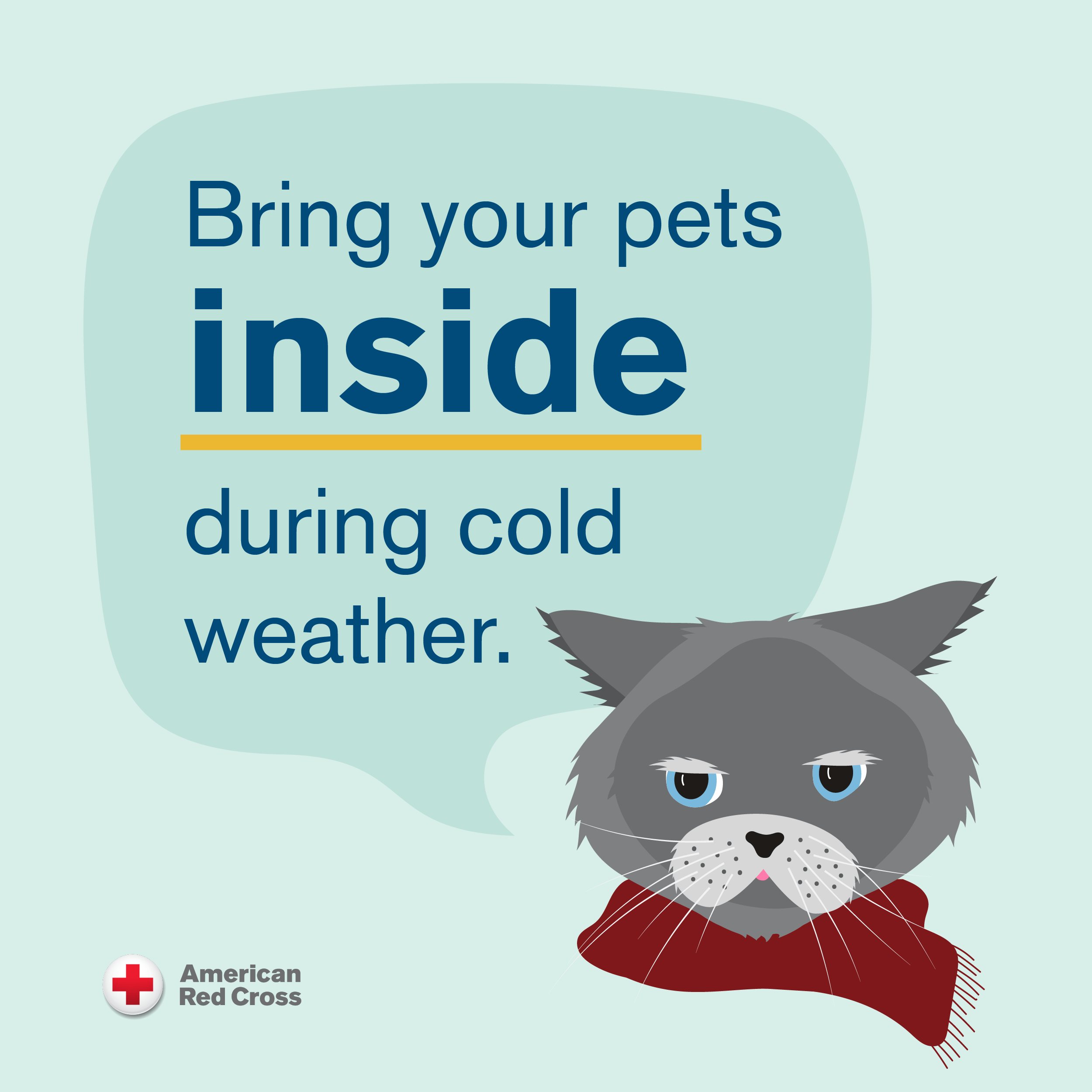
Red Cross graphic – Bring your pets inside during cold weather.
Following are some essential winter pet safety tips to make sure your animal companions are well cared for during the colder months:
Keep Pets Indoors
As tempting as it might be to let your dog or cat enjoy the winter wonderland, it’s much safer to keep them indoors whenever the temperature outside gets too low. Remember: If it’s too cold for you, it’s likely too cold for them. Prolonged exposure to cold weather can lead to dangerous conditions like frostbite, hypothermia, and even death. Animals left outside can also become disoriented, lost, injured, or stolen. Never leave your pets alone in a cold car as cars act like refrigerators and trap cold, which could lead to hypothermia.
Hydration and Nutrition
Cold weather dries out your pet’s skin, so make sure they can always have plenty of fresh water and a diet that is a little higher in calories. Pets use more energy in winter trying to stay warm, so a little more food may be beneficial. Check with your vet for the proper portion sizes and whether your pet requires additional nutrients during the cold weather months.
Protect Their Paws
Ice, snow, and the salt-clearing chemicals can burn your pet’s paws and dry them out, causing cracking and even open sores. Before going outside, rub petroleum jelly or protectants made for paw pads onto your pet’s paws to protect them. Putting booties on will offer even more protection. After being outside, dry off your pet and pay special attention to their paws, giving a thorough cleaning between the toes to remove any ice and salt that may be irritating and uncomfortable.
Dress for the Weather
While most pets have natural coats to keep them warm, short-haired pets or those with less body fat may need additional warmth. Consider getting your dog a sweater or coat that covers from the base of their tail to their belly. This is particularly important for small or aged pets, who may be more sensitive to cold temperatures. Be sure to change your pet’s sweater if it gets wet, as a damp coat can actually make them colder.
Red Cross graphic – Salted sidewalks mean irritated paws.
Watch for De-icing Chemicals
Ice-melting chemicals for sidewalks and roads are poisonous if swallowed. Antifreeze is especially hazardous for pets and may be fatal even in small quantities. Immediately clean up spills and keep these toxins out of reach of your pet. After walks, clean your pet’s paws if they may have come into contact with de-icing chemicals on the ground. If you must use de-icers at home, consider using pet-friendly alternatives or take other precautionary measures to protect your pet from the risk of accidental poisoning.
Avoid Frozen Water Sources
Frozen ponds, lakes, and rivers can be extremely hazardous for pets. Never let your pet off-leash near frozen water; the ice may not be thick enough to support their weight. If your pet falls through the ice, both of you could be in immediate danger. Always be aware of where you walk your pet during the winter months.
Provide a Warm Sleeping Space
During winter, this means providing them with a warm, cozy place to rest. Give them a bed off the floor away from any drafts and lined with extra blankets for warmth. Make sure your pets have a source of fresh, unfrozen water at all times, especially if they remain outdoors for short periods, and avoid using space heaters or heat lamps around pets in order to prevent burns or fires.
Keep Them Active But Safe
While you need to minimize the time your pet is out in cold weather, you also want to ensure they get physical activity. You can achieve this through shorter walks in winter. Immediately take them indoors if you notice signs of discomfort, such as shivering or refusing to walk any further. Older or arthritic pets may have difficulty navigating icy paths, so be extra cautious to prevent falls.
Red Cross graphic – Bring your pet inside. Signs they could have hypothermia: 1. Whining and shivering; 2, Moving slower or not at all; 3. Looking for a warm place to burrow.
Watch for Hypothermia and Frostbite
Like humans, pets can become hypothermic and get frostbite if left in the cold too long. If your pet begins to shiver, whine, act anxious or attempts to burrow in warm areas, this is a symptom of hypothermia. Frostbite is harder to notice but might cause skin to turn pale and even blister. Bring your pet inside immediately and call your veterinarian if you suspect your pet has frostbite or hypothermia.
Prevent Them from Getting Lost
It is much easier for pets to become lost during winter, especially since snowstorms bury familiar scents. Always keep your pet wearing a collar with current identification tags and consider microchipping for extra security. If your pet likes to roam free, a GPS collar could be a thoughtful investment.
Know Your Pet’s Limits
Just like humans, there is a big variation in the cold-weather tolerance of pets based on coat type, size, age, and health conditions. Older pets, young pets, and those with underlying conditions such as arthritis, heart disease, or diabetes can be more sensitive to cold temperatures. It is best to consult with your veterinarian to learn the needs and limitations of your pet in cold weather.
Winter is a very magical time to share with your pets, but it does take some extra TLC to ensure the animals stay comfortable and safe, too. By keeping them indoors in extreme cold, protecting their paws, adjusting their diet, and keeping their health checked, you will be able to ensure your pets are warm, safe, and happy during the entire winter season.
As temperatures drop, many households rely on heating systems to stay warm and cozy. However, heating equipment is the second-leading cause of home fires, following cooking. With some simple precautions, you can ensure your family stays safe while enjoying the warmth this winter.
Common Heating Hazards
Space heaters, fireplaces, and central heating systems are convenient, but they come with risks. According to the National Fire Protection Association (NFPA), nearly half of all heating fires occur in December, January, and February. Many of these fires are preventable, often caused by improper use or maintenance of heating equipment.
Red Cross graphic – How to use a space heater: 1. Place it on a nonflammable surface, not rugs. 2. Ensure it has an auto shut-off feature if it tips over. 3. Unplug the heater when you go to bed.
Essential Heating Safety Tips
Keep Flammable Items Away: Maintain a three-foot safety zone around space heaters and fireplaces. Ensure blankets, curtains, furniture, and other flammable materials are far from heat sources.
Supervise Heating Equipment: Always turn off space heaters when leaving a room or going to sleep. Never leave a fireplace unattended while in use.
Install and Test Smoke Alarms: Working smoke alarms can double your chances of escaping a fire. Test alarms monthly and replace batteries annually.
Clean and Inspect Heating Equipment: Schedule an annual inspection of your furnace, chimney, and other heating systems. Clean fireplaces and chimneys regularly to prevent creosote buildup, a common fire hazard.
Use Heating Equipment Correctly: Follow the manufacturer’s instructions for all heating appliances. Avoid using ovens or stoves to heat your home, as this can be dangerous and inefficient.
Plug Space Heaters Safely: Use space heaters with automatic shut-off features and plug them directly into a wall outlet—never into an extension cord.
Develop a Fire Escape Plan: Practice your family’s fire escape plan, ensuring everyone knows two ways out of every room. Keep exits clear and accessible.
Be Mindful of Carbon Monoxide: Heating equipment can produce carbon monoxide if not properly ventilated. Install carbon monoxide detectors and ensure they’re functioning correctly.
Red Cross graphic – Don’t use an oven to heat your home!
Taking proactive steps to maintain and safely operate your heating equipment can prevent tragedy this winter. Remember, safety starts with awareness and preparation. For more information on home heating safety, visit trusted resources like NFPA or Stay Safe.
Winter warmth should never come at the cost of safety. By taking proactive steps and remaining vigilant, you can protect your home and loved ones from potential heating-related dangers.
Remember, a few simple precautions can make all the difference between a cozy winter evening and a potential disaster. Stay warm, stay safe.
Editor’s Note: Our fictional friends Jane and Zyir talk about celebrating New Year’s Eve safely.
“New Year 2025 Greeting Card” by Freddy Dendoktoor, published under CC0 Public Domain license.
By Robert Ambrose
JANE: Hey, do we have a designated driver for the New Year’s party?
ZYIR: Do we need one?
JANE: Since impairment begins with the first drink, we need one.
ZYIR: I don’t drink.
JANE: I do. Will you be my designated driver?
ZYIR: Yep. Even if we were hosting, I would plan to drive people home – safely. I can’t understand why friends would let friends let someone get locked up for driving under the influence.
JANE: Yeah, people make it a tougher world than it has to be.
ZYIR: I was reading that the champagne cork can be dangerous.
JANE: How so?
ZYIR: Look, not only point the cork away from people when you pop it – obvious – chill it at 45 degrees.
JANE: Why?
ZYIR: The cork won’t pop so much at that temp or higher. Oh, and use a towel when you are popping the cork.
JANE: Speaking of pop, fireworks are not legal in many places. Plus, people must not try to re-ignite an inactive fireworks.
ZYIR: Right. Hey, a very dumb move: shooting a gun in the air.
JANE: Yes. Is it 1894?
ZYIR:. Shooting a gun means the bullet must come back down to Earth. That got outlawed eventually
JANE: Yes, our expectations for this New Year’s are down to Earth. We’re gonna’ have a good time without danger.
JANE: soberrides.org? Maybe I’ll put that on the cake instead of Happy New Year’s.
ZYIR: Yes. People need to ask for a ride, to speak up and maybe owe a favor.
JANE: But soberrides.org is…
ZYIR: It gives people ideas – taxis, rideshare, friends. Hey, did you know that New Year’s Day is the most dangerous day to walk around?
JANE: Seriously?
ZYIR: Walkers may not pay attention to pedestrian crosswalks.
JANE: And the drivers are impaired.
ZYIR: Next year we might host. So, we want to have different color cups – alcohol v non-alcoholic drinks.
JANE: Won’t that make the non-drinkers…
ZYIR: It will make sure people know what they are drinking.
JANE: Smoke alarm check would be good. Writing down the local hospital phone number…
ZYIR: We could book taxi rides in advance or I could drive them all to save some money.
JANE: If we get a pet we need to put the pet in a quiet room for new year’s.
ZYIR: Okay, pretend like you are making a public service announcement. Hi, you’re on the air, Jane. Go ahead.
JANE: Good day. To have another good day after New Year’s parties, make sure to follow this advice. Never DUI. Never chance a DUI by drinking one drink and starting your engine. Get an Uber, Lyft, or a friend. Sleep on the host’s floor if you need to. Never separate with friends to hang out with unknown people. Hold your phone in a front pocket – like credit card and cash. Never drink alcohol and light fireworks, don’t let kids touch fireworks. Have a bucket of water nearby.
Holiday ornaments on a tree. Photo by Bill Thawley / American Red Cross
As the holiday season approaches, many of us are eager to put up festive decorations. However, it’s crucial to prioritize safety while creating that perfect holiday environment. From the American Red Cross, here are some essential tips to keep your home merry, bright, and most importantly, safe.
Candle Safety
Candles add a warm glow to holiday decor, but they’re also a leading cause of home fires. Up to 40% of home decoration fires are started by the candles in the winter months. To enjoy them safely:
Keep candles at least 12 inches away from anything flammable
Use sturdy candle holders that won’t tip over easily
Never leave candles unattended or burning near exits
Keep children and pets away from the lit candles.
Consider using flameless LED candles as a safer alternative
Lighting Precautions
Twinkling lights are a holiday favorite, but they can pose risks if not used properly:
Inspect light strings for frayed wires, broken sockets, or loose connections.
Don’t overload electrical outlets or run cords under carpets or across doorways
Read manufacturer’s instructions for the number of the light strands to connect
Turn off all lights and decorations before leaving home or going to bed
Only use lights rated for indoor or outdoor use appropriately
Fireplace Safety
A cozy fireplace can be the heart of holiday gatherings. Keep it safe by:
Having your chimney inspected and cleaned annually
Using a sturdy screen to catch flying sparks
Keeping flammable decorations away from the fireplace
Disposing of ashes in a metal container, stored away from the house
Christmas Tree Care
If you opt for a live tree, follow these guidelines:
Choose a fresh tree with green needles that don’t fall off easily
Cut 2 inches from the base of the trunk before placing it in the stand
Keep the tree well-watered and at least 3 feet away from heat sources like fireplaces or space heaters.
Remove the tree promptly after the holidays or when it becomes dry
General Decorating Tips
Use flame-resistant or flame-retardant decorations
Keep exits clear of decorations to ensure easy escape in case of emergency
Test your smoke alarms monthly and have a fire escape plan
When using a ladder to hang decorations, ensure it’s on stable ground and have someone spot you
Remember, the joy of the season shouldn’t be overshadowed by preventable accidents. By following these safety tips, you can create a festive atmosphere that’s both beautiful and secure. From the Red Cross, happy decorating, and stay safe this holiday season!
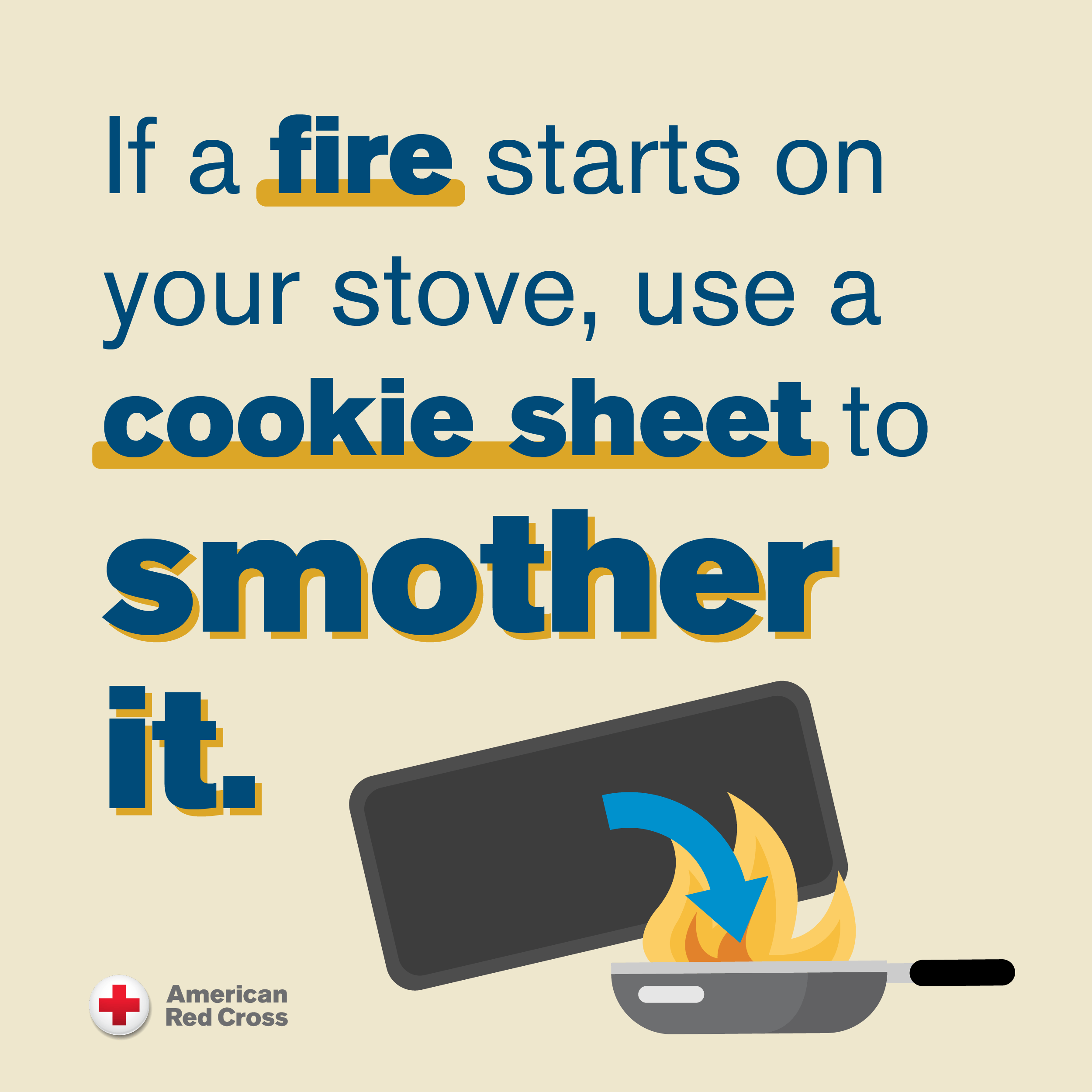
Red Cross graphic – If a fire starts on your stove, use a cookie sheet to smother it.
Thanksgiving and the day before are the top two days in this country for the chance of a cooking fire to happen in someone’s home. Cooking causes an average of 158,400 home fires per year, which is 44% of all home fires in the United States. The American Red Cross Southeastern Pennsylvania Region offers safety steps everyone can follow if they will be preparing their family’s Thanksgiving feast.
“Cooking is the leading cause of home fires, home fire injuries and the second leading cause of home fire deaths,” said Jennifer Graham, regional CEO for the American Red Cross in Southeastern Pennsylvania. “Most happen because people leave cooking food unattended. We want everyone to have a safe, enjoyable holiday, so don’t leave the kitchen while you’re cooking.”
Red Cross graphic – Oven fires: Keep the door closed so the fire doesn’t spread and call 9-1-1.
COOKING SAFETY TIPS
Follow these safety tips and visit redcross.org/fire for more information, including a fire escape plan to practice with your family.
Stay in the kitchen when you are frying, grilling or broiling food. If you must leave the kitchen for even a short period of time, turn off the stove.
Use a timer to remind yourself that the stove or oven is on.
Avoid wearing loose clothing or dangling sleeves while cooking.
Keep kids and pets at least three feet away from cooking areas.
Keep anything that can catch on fire — potholders, oven mitts, wooden utensils, paper or plastic bags, food packaging, and towels or curtains — away from your stove top and oven or any other appliance that generates heat.
Clean cooking surfaces on a regular basis to prevent grease buildup.
Consider purchasing a fire extinguisher to keep in your kitchen.
Always check the kitchen before going to bed or leaving home to make sure all stoves, ovens and small appliances are turned off.
Red Cross graphic – Turkey frying tips: Never use a fryer near your house or any other structure. Never fry a turkey that’s not fully thawed. Place the fryer on a flat, even surface.
Smoke alarms save lives. Install a smoke alarm on each level of your home, near sleeping areas, and inside bedrooms. Use the test button to check it each month. Replace all batteries at least once a year. If you cannot afford to purchase smoke alarms or are physically unable to install one, the Red Cross can help. Visit redcross.org/philly or call 215-299-4029 for more information.
HOME FIRE CAMPAIGN SAVES LIVES
Since October 2014, the Red Cross Home Fire Campaign, working with community partners, has saved at least two dozen lives in Southeastern Pennsylvania by educating families about fire safety, helping them create escape plans and installing free smoke alarms. To learn more about the campaign and how you can get involved, visit redcross.org/homefires.
Red Cross graphic – The safest wildfire is one that never starts.
If you live in Southeastern Pennsylvania and have the Red Cross Emergency App on your phone (which of course you should), you’ve gotten a lot of “red flag warnings” over the past few weeks.
Issued by the National Oceanic and Atmospheric Association (NOAA), a red flag warning, means that there’s an increased risk of fire danger due to a combination of warm temperatures, very low humidity and strong wind.
The current fire risk is exacerbated by severe drought conditions in Philadelphia and surrounding counties. According to NOAA, the entire region experienced the driest October in 130 years. The drought has led to a burn ban in all five SEPA counties.
A burn ban prohibits open burning, defined by PA Department of Natural Resources (DNRC) as the ignition and subsequent burning of any combustible material (garbage, leaves, paper, food scraps, etc.) in a burn barrel or on the ground. While Pennsylvania hasn’t activated a burn ban statewide, agencies have enacted bans in state forests, parks and game lands.
Wildfires are uncommon in SEPA, but they do happen. Our neighbors in New Jersey and Berks County have battled wildfires in the past two weeks, and hundreds of smaller outdoor fires have popped up throughout the Philly region.
According to the DNRC, 98% of the wildfires in Pennsylvania are a direct result of people’s actions. Below are some steps you can take to avoid sparking a wildfire:
Avoid driving or parking your vehicle on dry grass. Your vehicle’s exhaust can reach temperatures of 1,000+ degrees. Vehicles and other gas-powered equipment can shoot sparks from their exhaust, especially if they are not properly maintained.
Check your tires, bearings and axels if you’re towing a trailer. Do a maintenance check to ensure the tires are not worn, the bearings and axles are greased, and safety chains are properly in place and not dragging on the ground.
Don’t operate equipment that produces sparks near dry vegetation. Clear the area of flammables around your workspace – at least 10 feet under normal conditions or up to 25 feet if it’s windy.
Create a clearing where flammable materials have been removed. For example, if you rake a pile of leaves, that pile should be positioned at least 10 feet from other flammable materials or up to 25 feet if it’s windy.
Dispose of cigarette butts and matches in a closed container or cup of water. As always, keep lighters and matches out of the reach of children.
Practice off-road vehicle safety. Whether it’s a car, truck or off-highway vehicle (OHV), make sure it’s current on all mechanical inspections and is suited for off-road adventures. Carry a shovel, bucket and a fire extinguisher in your vehicle to put out fires. Off-highway vehicles must have a spark arrester.
If a campfire is allowed at your location, only start it in an appropriate pit that is cleared of vegetation and ringed by stones. Never leave a fire unattended, and always make sure your fire is completely doused with water and smothered with dirt before leaving. Don’t start a campfire on a windy day.