Category: Preparedness

  • Take action during National Preparedness Month to get ready for emergencies

    By Alana Mauger

    The American Red Cross of Southeastern Pennsylvania (SEPA) is encouraging everyone to take critical actions during National Preparedness Month this September to be ready for worsening disasters. Deadly storms and floods, raging fires and extreme heat are becoming more frequent and intense due to the climate crisis and families are experiencing the effects. These climate disasters occur on top of the devastating home fires the Red Cross responds to every day.

    “Disasters can happen at any time, often without warning, changing lives forever in just minutes,” said Jennifer Graham, Regional CEO, Red Cross, SEPA. “As our climate changes, it’s critical to help protect your loved ones and National Preparedness Month is the ideal time to get your household ready for emergencies.”
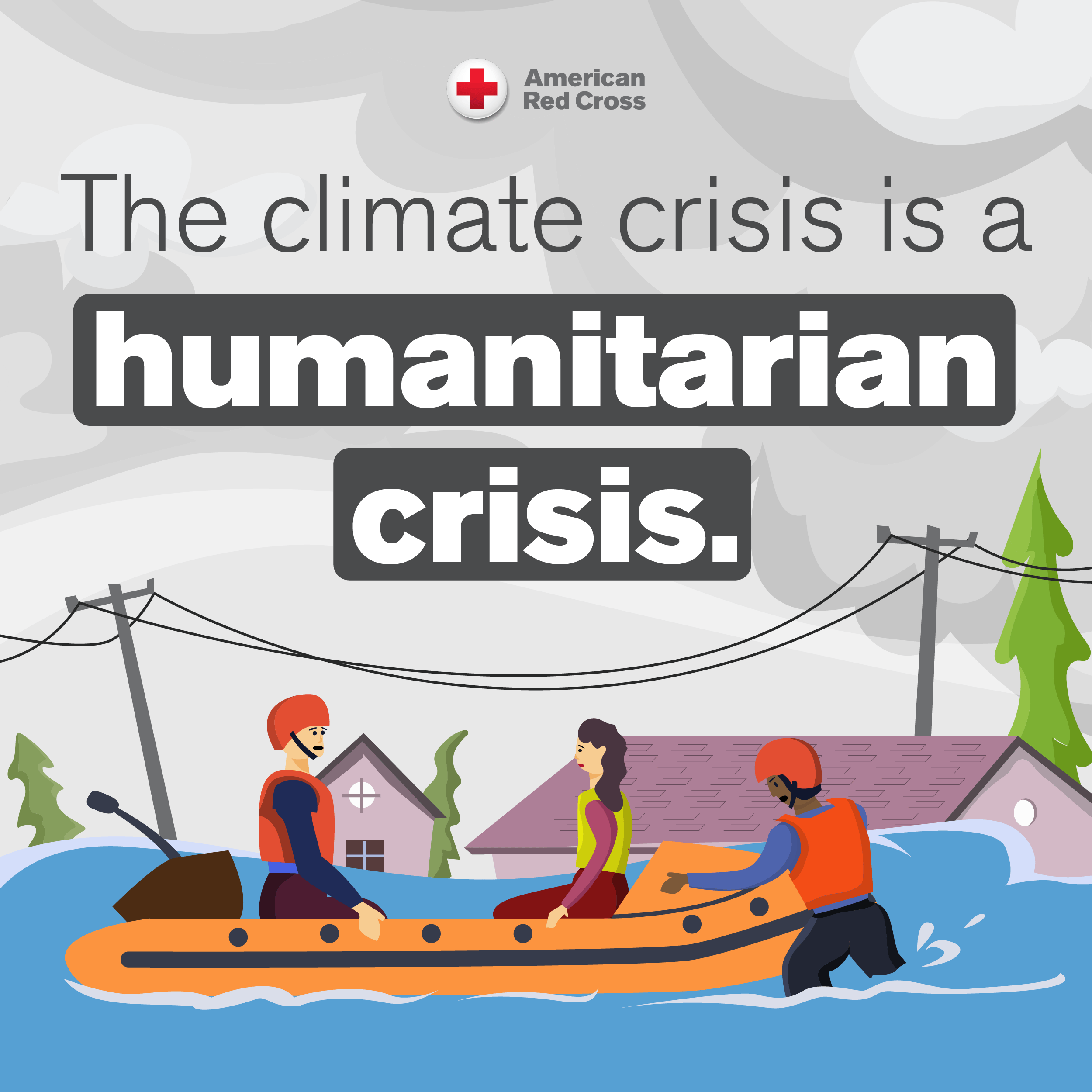
    Red Cross graphic – The Climate crisis is a humanitarian crisis.

    HOW TO PREPARE

    Get ready for disasters by making a plan to stay safe, gathering important supplies and knowing how you’ll stay connected. Follow these steps to prepare for emergencies:

    1. Depending on the emergency, you may need to stay where you are or go somewhere else to stay safe. If you may need to leave, think about where you will go, how you will get there, where you will stay and what you’ll take with you. Plan well in advance if you’ll need help leaving or use public transportation.
    2. Next, gather and organize critical supplies — like food, water and medicine — into a go-kit and a stay-at-home kit. Your go-kit should include three days of supplies that you can take with you. Your stay-at-home kit should have two weeks of food and water, and a one-month supply of medications, if possible.
    3. Customize your kit to meet your household’s specific needs. If you have young children, don’t forget formula and diapers. If you have pets, include leashes, carriers, food, bowls, litter and a litterbox.
    4. Make a plan to reconnect with loved ones if you are separated or if the phone or internet is down. Write down important phone numbers on a contact card and carry it with you.
    5. Finally, download the free Red Cross Emergency app for real-time weather alerts and expert advice in both English and Spanish. And don’t forget to sign up for free emergency alerts from your local government to get critical information during local emergencies.
    Red Cross graphic – The climate crisis impacts…hurricanes, floods, heatwaves, wildfires, drought.

    CLIMATE CRISIS EFFECTS

    This year, experts forecasted active wildfires and hurricanes — predictions that are proving to be true. In July, Hurricane Beryl broke records as the earliest Category 5 storm ever recorded and in early August, Hurricane Debby brought massive flooding to much of the East Coast, including parts of Chester County in our region. So far in 2024, 1.5 million more acres of land have been burned by wildfires compared to all of 2023. Plus, 2024 is on track to be the hottest year on record according to experts. Altogether in 2024, the U.S has experienced 15 climate disasters, each with losses of over a billion dollars — nearly double the average from the last 40 years.

    Over the past year in Southeastern Pennsylvania, we responded to 663 local disasters, most of which were home fires, providing relief and recovery support to more than 2,500 people. Since July 1, we have already supported 240 families – 615 people total – in response to local home fires.

    When these disasters happen, the Red Cross is there providing food, shelter and comfort to ensure no one faces such a difficult time alone. To help families better cope with this worsening climate crisis, the Red Cross is also enhancing our support for those who need it most and increasing our capacity to respond to non-stop disasters.

    “The best defense during an emergency is to be prepared, and that’s true for both our individual families and our entire community,” said Graham. “During National Preparedness Month, consider donating to help people affected by disasters big and small, or making an appointment to give blood. If you have the time, take a first aid class or put on a red vest and join us as a volunteer.”

    Visit redcross.org/philly or call 1-800-RED CROSS (1-800-733-2767) to learn more today. Follow us on X, Facebook and Instagram for 30 days of Preparedness tips!

  • Philly kids learn preparedness skills through Camp Save-A-Life

    By Maureen Zug

    For the second consecutive summer, American Red Cross Disaster Cycle Services (DCS) partnered with the City of Philadelphia’s Parks and Recreation Department to provide summer programming for city youth. Camp Save-A-Life targeted approximately 2,500 campers between the ages of 5-12 at 60 rec center locations.

    Camp Save-A-Life counselors bring preparedness messaging to youth at one of the city’s recreation centers. Photo by Ryan Gaul / American Red Cross

    Leading the Way for Fun and Learning

    Red Cross Disaster Preparedness Manager Ryan Gaul managed six weeks of camp sessions from July 8 through August 16. He worked with a team of eight counselors divided into two teams of four. A week-long training for the counselors began in late June. Maureen Streeter, Red Cross disaster recovery program manager, supported this training at the Red Cross House in Philadelphia. Red Cross preparedness volunteers Kathy Mullen, Amy Juarez, John Gebhardt and Mary Ann Santangelo provided direction for the program by adapting the vocabulary and delivery from “Be Red Cross Ready” home fire and hands only CPR modules to reach a younger audience. Additionally, Disaster Health Services volunteer Will Dobnak delivered the Hands Only CPR instructional training.This team provided the counselors’ training during their first week at the Red Cross House.

    Fostering Preparedness Skills and Confidence

    Both Maureen and Ryan emphasized the goal-oriented nature of the camp sessions. For younger campers ages 5-8, the “Prepare with Pedro” program is the basis for learning about preparedness and home fire safety evacuation procedures. Sessions last about 45 minutes.

    Longer sessions of an hour allow time for a “Red Cross Ready” presentation and “Hands-Only CPR” demonstration for older campers ages 9-12.

    “We try to build on and link to [safety messaging] that they have already learned at school, for example fire drills,” Ryan shared. The younger campers like the animated character of Pedro, and the older youth like practicing CPR compressions. “Even if the youth do not retain all the safety and CPR information, they may still save lives by getting help or calling 911,” added Ryan. Safety instruction builds confidence.

    “Whale Tales,” the Red Cross water safety program, was shared as a take-home activity for campers to discuss with their parents or caregivers. The youth were given colorful postcards with the website address and QR code for the instructional videos starring Longfellow the Whale. This water safety program is intended for the kindergarten to grade 5 audience. Both Maureen and Ryan are enthusiastic about Whale Tales. In particular, Maureen has grandchildren ages 4 and 7 who are beginning swimming lessons. She thinks that the Whale Tales videos are engaging and will run them at Red Cross House year-round for children staying there.

    Camp Save-A-Life counselors (top, left to right) Arvin Rahman, Hannah Kenny, Jayla Hankins, Isabella Juarez, India Prosser, andTracey Mclaine-Scott; (front, left to right) Daijah Fleming, Julia Tran. Photo by Ryan Gaul / American Red Cross

    What the Counselors Say

    The dedicated and energetic Red Cross counselors helped make Camp Save-A-Life a fun and informative place to spend hot summer days.

    “The highlight to my summer was being a counselor at Camp-Save-a-Life,” shared Julia Tran. “I wouldn’t have had an experience like this at any other job, so I am grateful to have been able to find a passion working with children and contribute to a community larger than myself.”

    Julie stressed the importance of preparedness programs because emergencies can happen to anyone.

    ““I think a lot of people understandably forget the need to refresh basic safety skills when there are other things to think about, but if it is easy for us to forget, it is even easier for children to forget too,” she said.

    Camp counselor Tracey Mclaine-Scott shared Julia’s sentiment.

    “The highlight of my summer is helping young minds be more prepared and efficient in the event of a fire. I’m taking the “Red Cross Ready” presentation and sharing it with low-income families,” she said.

    We applaud the entire Camp Save-A-Life Team for leading the way to foundational health and safety habits for the next generation!

  • Zymir outlines out thunderstorm safety tips for Jane

    Editor’s Note: A conversation between our fictional friends Jane and Zymir teach us how to stay safe from lightning during thunderstorms.

    By Robert Ambrose

    “Multiple Lightning Bolts” by Jean Beaufort, published under CC0 Public Domain license.

    Jane: Ah, here we go again. It’s raining in Philly. 

    Zymir: We love rain. Why do you sound so disappointed? 

    Jane: Hear that? .

    Zymir: Thunder.

    Jane: Yes, but lightning could be nearby. Stay inside when you hear thunder because lightning is close.

    Zymir: We can postpone our picnic.

    Jane: But why? Since 2001, there was a drop in lightning fatalities. Less than 30 people a year die. 

    Zymir: Do you want to be one of the 30? (Pause). I didn’t think so. 

    Jane: (Smiling). Just ask Lee Trevino.

    Zymir: Who?

    Jane: The golfer. He survived. (Lightning flashes across the sky). 

    Zymir: Gives that song,  “Lightning Crashes” new meaning.

    Jane: Live?

    Zymir: Yep. You’re right: If you hear thunder, it’s time to forget the outdoors and bolt for shelter.

    Jane: Like under the trees.

    Zymir: Never trees.

    Jane: Where do I run to?

    Zymir: Let me tell you where NOT to be.

    Jane: Okay.

    Zymir: Get away from trees, open fields and spaces like a courtyard, football fields, hiking trails, rooftops, utility power poles and mountains.

    Jane: So, where to go?

    Zymir: Do NOT go swimming. In fact, get out of the water, okay?

    Jane: Okay. But if it’s not raining…

    Zymir: You can still get hit by lightning.

    Jane: I already hate lightning. So, what if I’m on a boat, a tractor or a motorcycle?

    Zymir: The boat? Go in and park your boat and get out. Fast.

    Jane: What if my boat is miles from the shoreline.

    Zymir: Then just go inside the cabin and wait for the lightning to stop.    

    Jane: Understood.

    Zymir: But whether you’re on a boat, in a field or on a mountain, I hope you look up. Looking up can tell you that the weather is changing – advance notice. Remember the weather can change fast.

    (Silence)

    Zymir: Oh yeah. You asked me about being on a tractor or motorcycle…you don’t even ride those.

    Jane: But…

    Zymir: Very dangerous. Get off of a tractor or motorcycle. They are too open and lightning could nail you.

    Jane: No rest for the weary.

    Zymir: Huh?

    Jane: Growing up I learned all you need to do is get in your car.

    Zymir: Cars are good but if someone’s car has drop-top, then they are unsafe in lightning. Oh, your car  windows must be up. Don’t even touch the radio dial.

    Jane: You can’t hike, golf, sail, walk in a field or trail, swim, lean against a street pole, stand under a tree, sit in a convertible, a tractor, or a motorcycle…what can you do?

    Zymir: Don’t worry about jewelry. Lightning likes tall metal pointed objects or just tall objects. Get away from metal high school bleachers. Don’t lie down. You can die more from ground current since your body takes more space than those Newbies you have on your feet. Just stay upright and run to a building or a car. The car tires don’t protect you. The car’s metal roof absorbs the lightning which passes through the car’s metal frame to the ground. If you are too far from the car and any building, just pray.

  • Let’s go to the beach! Stay safe on the sand and in the surf

    By Haley Heisley

    “Sun Bed and Beach” by Petr Kratochvil, published under CC0 Public Domain license.

    Salty air, wind in my hair and the sound of seagulls and waves crashing against the shore – the beach is my favorite place to be in the summer. With Southeasten PA being only a couple hours drive from most Jersey shore destinations, beaches are popular vacation spots in the summertime.

    If you’re heading to the beach and are not properly packed and prepared, I can almost guarantee you’ll leave with a sunburn, feeling dehydrated, hungry and exhausted. Even when it’s cloudy out, UV indexes and humidity levels can leave your body feeling weak and exhausted.

    Red Cross graphic – Stay hydrated

    Being out in the sun also dehydrates your body quicker, which makes keeping your body hydrated very important. Dehydration puts you at risk for low energy, heat-related illnesses, mental fog, weight gain, headaches, skin damage and so much more. In addition to dehydration, not wearing sun block and getting a sunburn puts you at risk for sun poisoning, skin cancer premature aging, skin discoloration, scarring and immune system suppression.

    Ways to keep your body happy and healthy while on the beach are:

    • Drink adequate fluids and water
    • Eat enough food
    • Apply sunblock
    • Stay in the shade of an umbrella as much as possible
    • Wear a hat to protect your scalp from burning
    • Pack a shirt with sleeves to put on over your bathing suit, and
    • Try to avoid being in direct sunlight during the sun’s strongest time of day – from around noon to 5 p.m.
    Red Cross graphic – How to escape a rip current: 1. Relax your body and don’t fight the current. 2. Swim parallel to the shore until you are out of the current. 3. Turn and swim toward the shore. If you can’t make it to the shore, wave and call for help.

    The sun isn’t the only thing for which we should learn safety tips; water as well. How many times have you been out in the ocean swimming and having a good time and then you find yourself so much further down the beach than you remembered? Now all of a sudden you don’t know where your stuff is or how to get back. The ocean may have strong currents without you even realizing it. It can pull you out into deeper water and to the side where you did not even plan on going. Before you know it, you can’t even swim strong enough against it.

    Being a strong swimmer, wearing a life jacket, only swimming when there is a lifeguard and always being with an adult or others is so important. Paying attention to where you are when you are in the ocean, and being aware of what sea creatures are near the shore are very important.

    So when you are packing your beach bag, don’t forget the cooler with ice water, electrolyte drinks, sandwiches and your tote bag full of sunblock, life jackets, a bright bathing suit to be easily spotted, a hat and sunglasses. 

    Red Cross graphic – If you’re stung by a jellyfish: 1. Get out of the water. 2. Remove any tentacles attached to your skin with a gloved hand or blunt object. 3. Apply water as hot as you can handle for at least 20 minutes. 4. Call 911 if necessary.
  • Stay safe and celebrate: Essential 4th of July safety tips

    By Zain Ahmad

    “Fireworks” by Andrea Stöckel published under CC0 Public Domain license.

    As we come together to celebrate our nation’s independence with barbecues, fireworks, and outdoor fun, it’s important to keep grilling, insects, fireworks, and campfire safety in mind. From the Red Cross, this guide offers crucial tips to help you have a safe and enjoyable holiday.

    Grilling Safety

    One of the main traditions celebrated during the 4th of July is a good barbecue, but doing so can be risky. Here are some tips to have safety when barbecuing during the 4th of July:

    • Always keep an eye on the grill while it’s in use to ensure safety, and always make sure to never grill indoors.
    • Keep yourself and others away from the heat. When cooking, use long utensils to keep a safe distance from the grill as well.
    • Keep perishable food out of the sun to avoid foodborne illnesses.
    Red Cross graphic – Don’t go from cooking on a grill to a grill fire.

    Insect Safety

    Outdoor activities on the 4th of July can attract insects that can cause major consequences if not treated and protected from. Here are some tips to stay safe from insects:

    • Apply repellents when outside to stay safe from any insect bites.
    • Opt for long-sleeved shirts and long pants, tucking pant legs into socks or boots, and shirts into pants.
    • When hiking, stick to the center of trails and avoid tall grass.
    • If outdoors for extended periods, check yourself regularly, especially in hairy areas like the neck and scalp. Try not to stay outdoors during dusk and dawn when mosquitoes are most active.
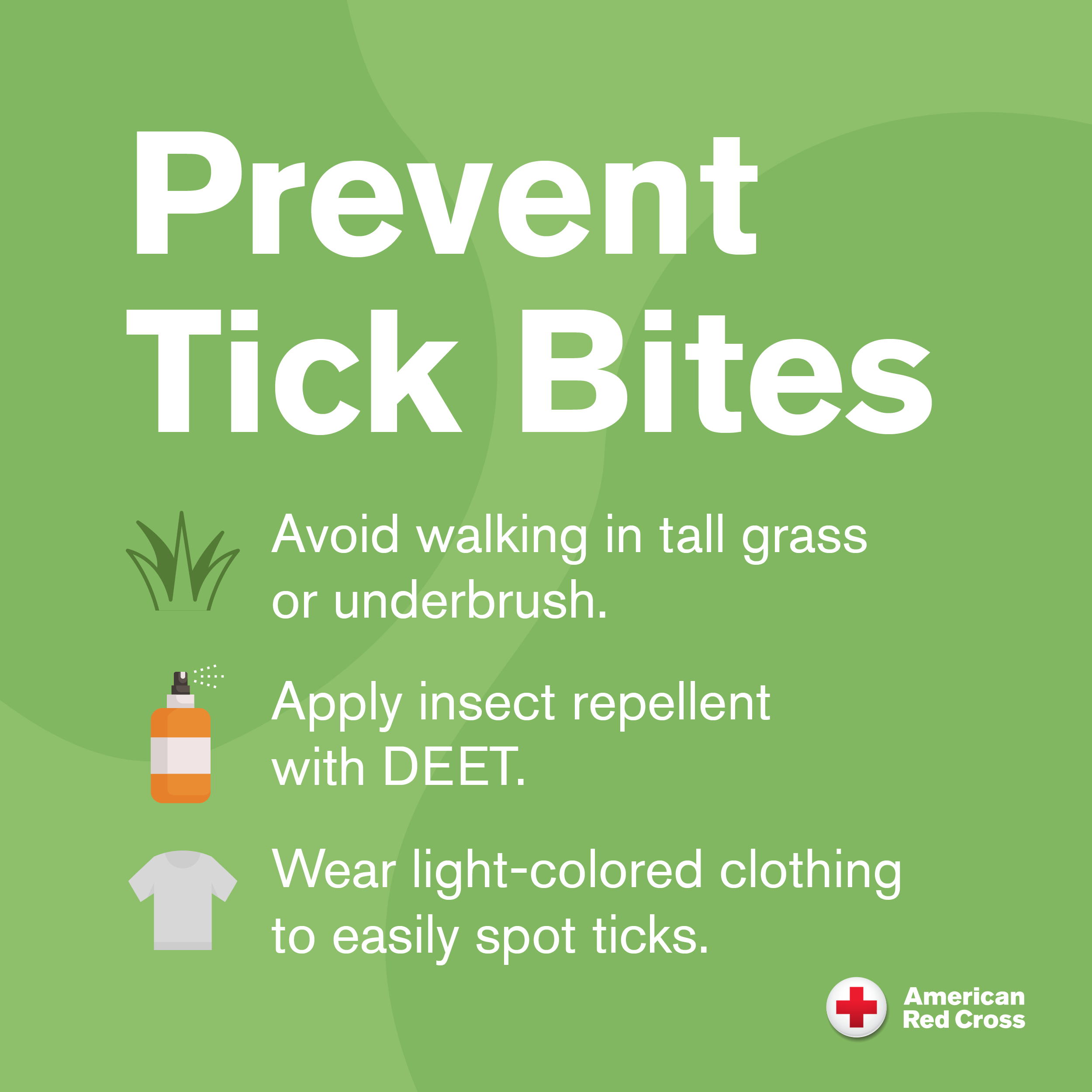
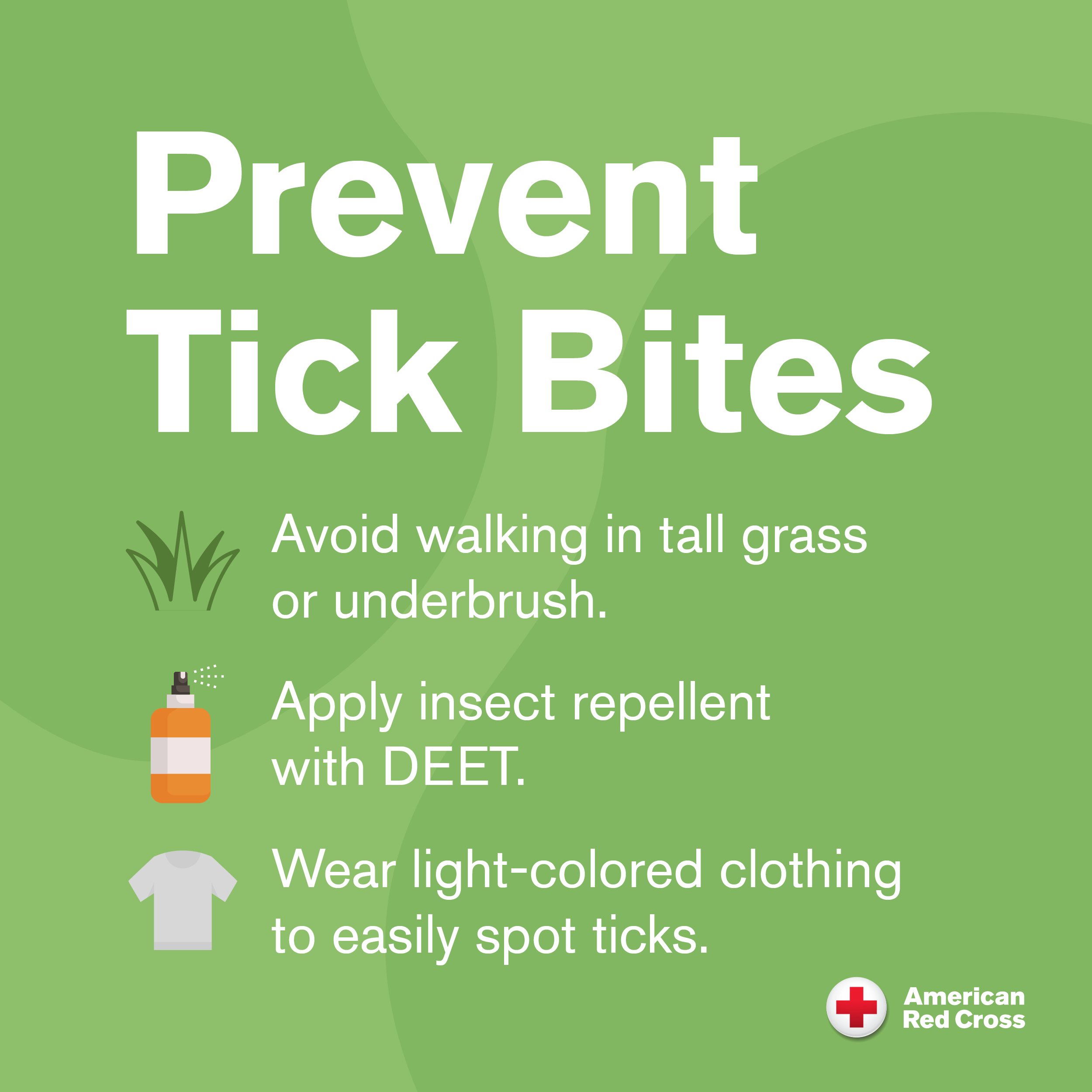
    Red Cross graphic – Prevent tick bites: Avoid walking in tall grass or underbrush. Apply insect repellent with DEET. Wear light-colored clothing to easily spot ticks.

    Fireworks Safety

    Fireworks are a highlight of 4th of July celebrations but can be hazardous if not used correctly. Use these tips to ensure safety:

    • Never allow young children to handle fireworks. Older children should use them only under close adult supervision. Wear protective eyewear when using fireworks.
    • Never hold lighted fireworks in your hands, ignite them indoors, aim them at another person, or use them in closed areas.
    • Have a bucket of water nearby to extinguish any fireworks that don’t go off or in case of a fire.
    Red Cross graphic – Firework Safety: Keep water nearby in case fireworks start a fire. Don’t point fireworks at pets. Wear eye protection if you light a firework. Never try relighting a dud.

    Campfire Safety

    Campfires provide a good background vibe when celebrations are happening, but they can be severe if handled incorrectly. Here are some safety tips for campfires:

    • Set up campfires at least 25 feet away from tents, shrubs, and anything that can burn.
    • Ensure all fires are turned off or completely put out before leaving the area.
    • Keep matches and lighters out of reach and sight of children.
    Red Cross graphic – The safest wildfire is one that never starts.

    By following these important safety tips, you can ensure that your 4th of July celebration is both fun and safe. Keeping safety a priority allows you to fully enjoy the spirit of Independence Day with peace of mind. Share these tips with friends and family, and from the Red Cross, have a safe and happy 4th of July!

    Check out the American Red Cross Summer Safety Tips webpage for more info.

  • PA Lightning Awareness Week: Crack down on the facts!

    By Susan West

    Red Cross graphic – What to do if lightning strikes someone: 1. Call 911. 2. Check for burns and other injuries. 3. Perform CPR if the person isn’t breathing.

    Lightning: It’s sudden, it’s scary, and it can indeed strike in the same place twice. But while these bolts from the blue may seem random, there are lots of ways you can keep yourself safe. Here are some summertime scenarios to think about:

    Scenario #1: You’re golfing and hear thunder.

    DO: As the saying goes, “When thunder roars, go indoors.” You’re close enough to be struck, so seek shelter in a substantial, enclosed structure—not a shed, picnic shelter, tent, carport, or patio. There is no safe place outside during a storm, and an open field or beach is the most perilous place of all.

    DON’T: Stand under a tree or near anything tall, such as a light pole. You don’t want to be the highest object in the area. Don’t even think about crouching; you won’t be protected, and lying flat may actually increase your chance of being impacted by a ground current.

    Scenario #2: A beach day turns dark and stormy.

    DO: Get out of the water and take shelter—in your car, if you have to. Lightning doesn’t strike the ocean as much as land, but when it does, it spreads out over the water, which acts as a conductor. It can hit nearby boats and even electrocute fish near the surface.

    DON’T: Wait on the beach. Remember, the beach is a big, flat, sandy open space.

    Scenario #3: Whew! The storm is raging, but you’re safely indoors.

    DO: Stay away from windows, upper floors, and electrical appliances. Exterior doors can have metal both inside and out—like that doorknob. Any metal, wires, and pipes extending from the house could provide a deadly route for electricity coming in from outside.

    DON’T: Take a shower, wash dishes, or use a landline phone. Metal doesn’t attract lightning, but it does conduct it—that is, it provides a path for the current to follow.

    Scenario #4: You hit a nasty squall while driving.

    DO: Stay in the car; pull over if you have to. Your metal-topped vehicle can provide shelter from lightning when no building is available. The tires aren’t what protect you; instead, the car’s metal body and frame conducts the current around you, through the tires, and into the ground.

    DON’T: Touch any metal inside the car. Note: A convertible or soft-topped vehicle is not safe.

    Scenario #5: Bases are loaded and your kid is at bat. The sky darkens and rumbles.

    DO: Look for the person who’s been assigned to call off the game. There is someone assigned, right? About two-thirds of lightning deaths happen during outdoor recreational activities. Planning is essential for everyone’s safety.

    DON’T: Wait until it’s too late. If you hear thunder, the storm is probably within 10 miles. Sorry, kid.

    The nightmare scenario: Your friend was struck and has collapsed!

    DO: Call 911 and provide first aid if you can. Want to learn CPR? The American Red Cross can help: www.redcross.org/take-a-class/CPR. This could make the difference between life and death.

    DON’T: Be afraid to touch your friend. People struck by lightning do not carry a charge and are safe to touch. You will not be electrocuted.

  • Be prepared for floods and landslides this hurricane season

    By Zain Ahmad

    All over the country, floods and landslides are increasing. Some areas in the country are more prone like California and Alaska. In January 2023, California reported 700 landslides while Kentucky also sustained significant damage in July 2023 from flash floods. Southeastern Pennsylvania is not exempt from these disasters. These floods and landslides cost the country a lot. For instance, in 2023, 4 billion dollars were spent in order to respond to these emergencies

    Being able to prepare for these disasters is extremely important, and  the American Red Cross helps you do so, especially as hurricane season is officially here.

    Red Cross graphic – Download this! Search “Red Cross Emergency app” for weather alerts, safety tips, shelter locations.

    How to Prepare for any Disaster

    When looking at disasters in general, keep in mind the following points:

    1. Know the Fast-Moving and Slow-Moving disasters. 

    • Fast moving disasters are those which give no time to prepare like Wildfire or a Home Fire, and a Tornado.
    • Slow moving disasters are ones which have some warnings and give time to prepare like Flood, Hurricane, and Winter Storms.
    • Landslides may have some warning signs like heavy rainfall or road work before the event occurs.

    2. Know how to prepare Before a disaster, During, and After a disaster. 

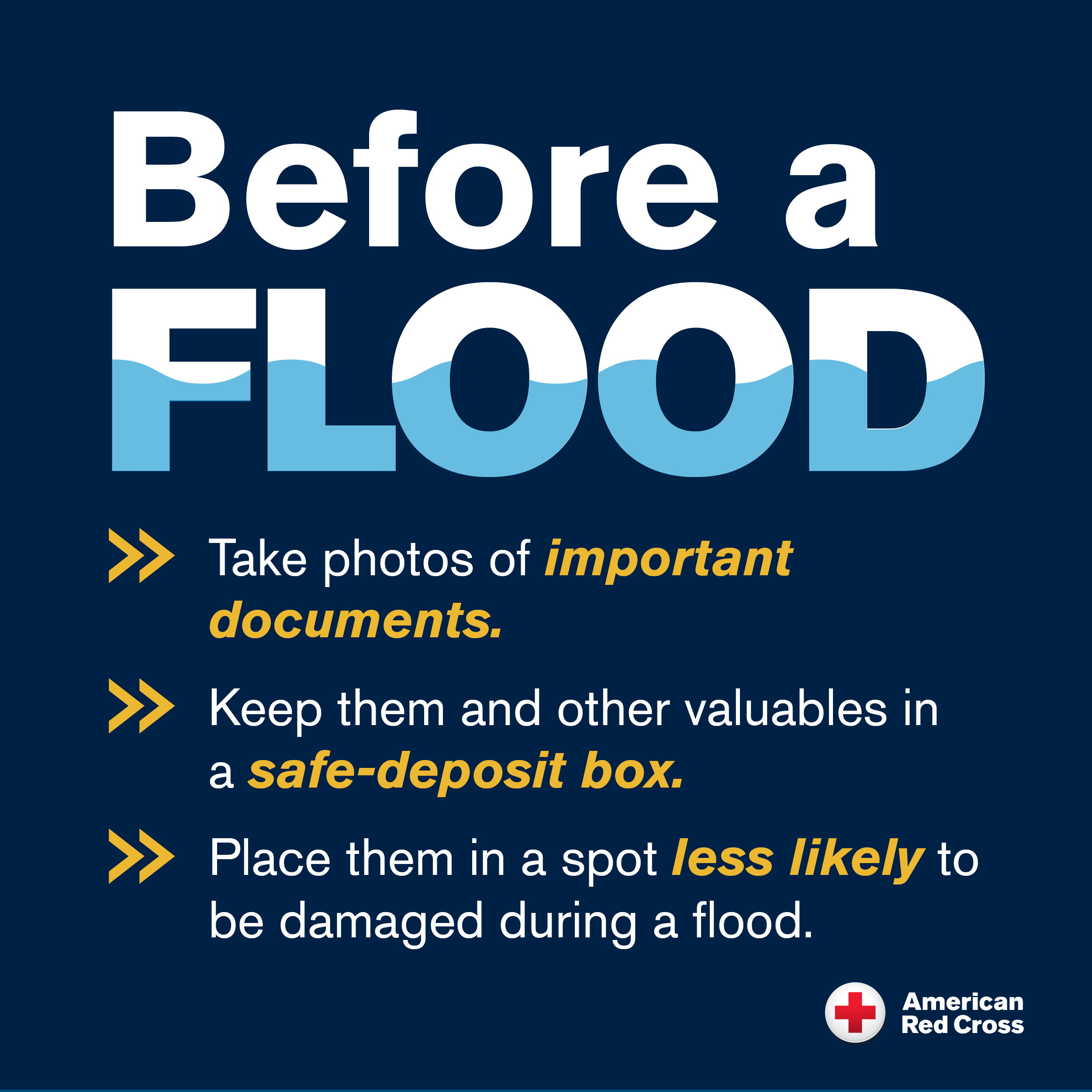
    Red Cross graphic – Before a flood: Take photos of important documents. Keep them and other valuables in a safe-deposit box. Place them in a spot less likely to be damaged during a flood.

    Before a Disaster:

    • Identify any likely local emergencies.
    • Be familiar with community response plans.
    • Sign up for alerts and warnings.
    • Write down important contact numbers in a small diary or card incase you are not able to access your phone during emergency.
    • Have a battery operated radio at home.
    • Know your neighbors.
    • Make a plan of evacuation and where to meet after a disaster.
    • Most importantly, visit redcross.org/prepare for full preparedness tips and download the Red Cross Emergency App.
    Red Cross graphic – Never walk, swim or try to drive through floodwater.

    During a Disaster:

    • Know how you would react to protect yourself.
    • Stay informed. 
    • Locate public shelters.
    • Do not count on receiving help right away.
    • Be prepared to help loved ones and neighbors.
    Red Cross graphic – If your car is trapped on a flooded road with rising water, get out and move to higher ground.

    Floods

    When a flood is predicted, be prepared to evacuate and secure any important documents. Check your disaster kits and the NOAA radio to stay updated on the course of the flood. 

    When a flood happens, make sure to:

    • Get to higher ground, and stay away from areas that can flood quickly.
    • Avoid any contact with floodwater.
    • If you see fast moving water, turn around and don’t drown.

    Amy Juarez, our regional preparedness education lead, says that “it only takes about 6 inches of water to knock an adult person off their feet and sweep them away.”

    Red Cross graphic – Stay alert and awake. Many landslide deaths occur while people are sleeping.

    Landslides

    A landslide is the movement of any rock, earth, or debris downwards, and that movement can cause major harm to a road and other people in its way. They are more common where landslides have already occurred.

    Important Warning Signs for a Landslide:

    • Popping, creaking and rumbling sounds in the area
    • Any leaning trees or poles
    • Changes in the terrain

    If a landslide is predicted, take the same precautions as for a flood, which can be securing any important documents and checking disaster kits. One of the most important ways to protect yourself in an active landslide is to protect your head!

    Red Cross graphic – After a flood: Beware of snakes, insects and other animals that may be in and around your home.

    After a Disaster:

    After a flood or a landslide, contact others to let them know that you are safe. During a flood, water can get contaminated and become unsafe, so make sure it is safe to use. During a landslide, only go back to your home when authorities say it is safe to do so.

    Having the knowledge to know what to do in the case of a flood or a landslide is important for everyone. To better prepare for such disasters, redcross.org/prepare, provides you with more tips. Stay Safe!

  • Red Cross offers tips to help you have a safe summer

    By Dave Skutnik

    As we all head outside to enjoy the sunshine and warm weather this summer, the American Red Cross Southeastern Pennsylvania Region has steps you can follow to help stay safe.

    “Here in the Delaware Valley many of us enjoy spending time outdoors with loved ones as we head down the shore, up to the Poconos or simply hang out at home,” said Jennifer Graham, CEO for the American Red Cross of Southeastern Pennsylvania. “The Red Cross wants you to avoid any danger no matter what your plans include and offers steps you can follow to have a safe summer.” Visit redcross.org/summersafety for more information.

    WATER SAFETY

    Drowning can happen quickly and silently. Unless rescued, it could take as little as 20 to 60 seconds for a drowning person to submerge.

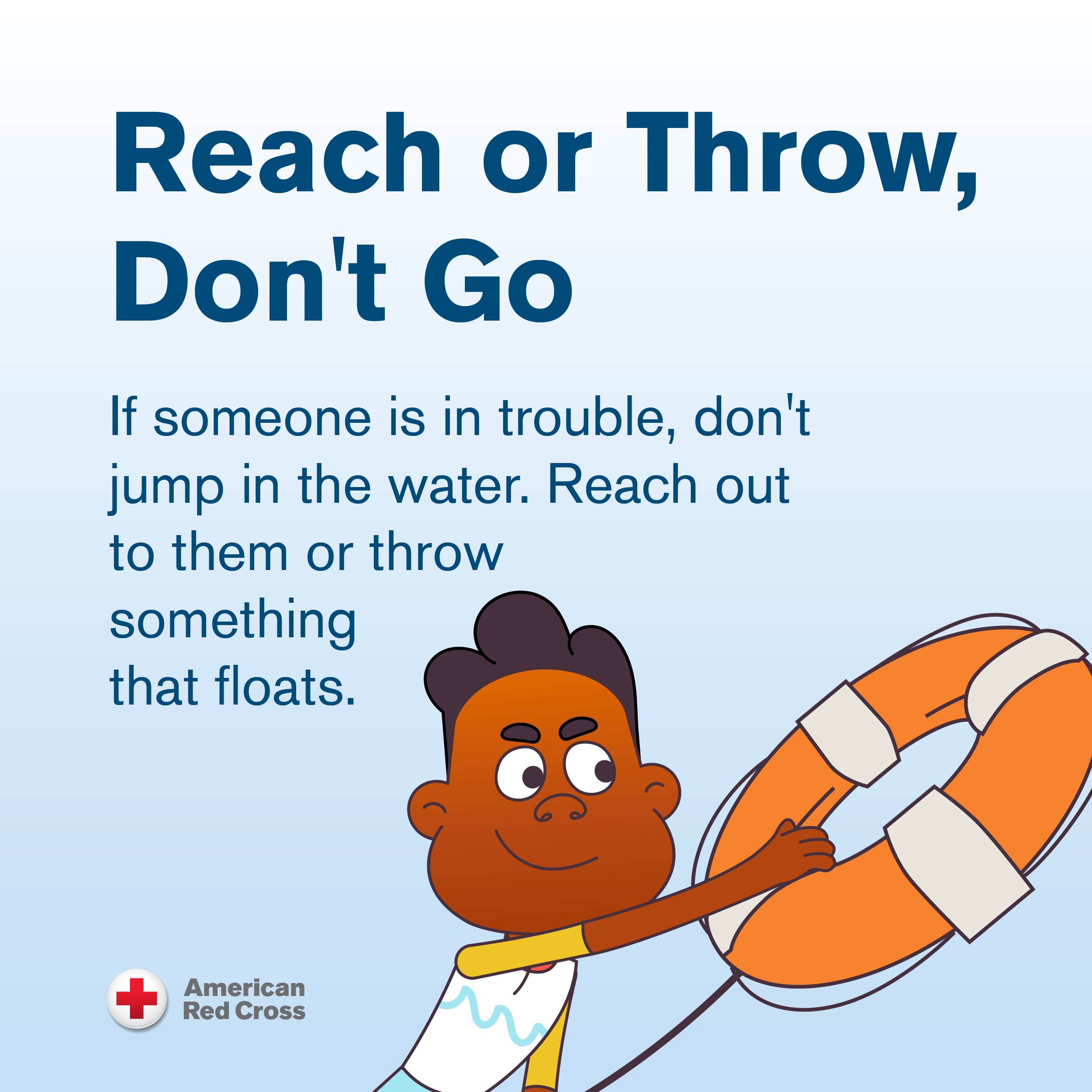
    Red Cross graphic – Reach or Throw, Don’t Go! If someone is in trouble, don’t jump in the water. Reach out to them or throw something that floats.
    • Learn to be safe, make good choices, learn to swim and know how to handle emergencies.
    • Provide constant, active adult supervision and know how to swim.
    • Swim in an area with lifeguards. Designate a “water watcher” to keep a close eye and constant attention on everyone in and around the water until the next water watcher takes over.
    • Wear your life jacket.
    • Reach or throw, don’t go! In the event of an emergency, reach or throw an object to the person in trouble. Don’t go in! You could become a victim yourself.
    • Swimming classes are available for both children and adults. Visit redcross.org/watersafety for a map of Learn-to-Swim providers in your community.
    • Download the Red Cross Swim app for safety tips, kid-friendly videos and activities, and take the free Water Safety for Parents and Caregivers online course in English or Spanish.

    PICNIC & GRILLING SAFETY

    Summer is a great time to get outside for a picnic or to fire up the grill. Follow these tips to prevent illness and keep everyone safe.

    Red Cross graphic – Places you shouldn’t grill: in a tent, inside a camper, inside your house.
    • Wash your hands, utensils and workstation before preparing the food.
    • Separate uncooked meats, poultry and seafood from ready-to-eat foods like salads, fruits, vegetables, cheeses and desserts. Use separate plates and utensils to prevent cross-contamination.
    • Bring hand sanitizer if your picnic site doesn’t have hand-washing facilities.
    • If you are going to cook on the grill, bring a food thermometer to be sure grilled foods are cooked enough. 
    • Always supervise a barbecue grill when in use.
    • Don’t add charcoal starter fluid when coals have already been ignited.
    • Never grill indoors.
    • Make sure everyone, including pets, stays away from the grill.
    • Keep the grill out in the open, away from the house, deck, tree branches or anything that could catch fire.
    • Use the long-handled tools especially made for cooking on the grill to help keep the chef safe.
    • Wash your hands before preparing the food.  
    • Don’t leave food out in the hot sun. Keep perishable foods in a cooler with plenty of ice or freezer gel packs.  

    OUTDOOR SAFETY

    Whether camping or just enjoying the outdoors, follow these tips.

    Red Cross graphic – Prevent Tick Bites: Avoid walking in tall grass. Apply insect repellent with DEET. Wear light-colored clothing to easily spot ticks.
    • If a camping trip is in your plans, know the level of ability of the people in your group and the environment around you. Plan accordingly.
    • Pack a first aid kit.
    • Take a Red Cross first aid and CPR course and download the First Aid app.
    • Watch for sprains, falls and dehydration.
    • Share your travel plans and locations with a family member, neighbor or friend.
    • Bring nutritious food items and water, light-weight clothing to layer and supplies for any pets.
    • There is a greater chance of getting bitten by mosquitoes and ticks outdoors Use insect repellents containing DEET (N, N-diethyl-meta-toluamide) when you are outdoors. Be sure to follow the directions on the package.
    • Consider staying indoors at dusk and dawn, when mosquitoes are most active.
    • Wear long-sleeved shirts and long pants and tuck your pant legs into your socks or boots.
    • Use a rubber band or tape to hold pants against socks so that nothing can get under clothing.
    • Tuck your shirt into your pants. Wear light-colored clothing to make it easier to see tiny insects or ticks.
    • When hiking in woods and fields, stay in the middle of trails. Avoid underbrush and tall grass.
    • If you are outdoors for a long time, check yourself several times during the day. Especially check in hairy areas of the body like the back of the neck and the scalp line.
    • Inspect yourself carefully for insects or ticks after being outdoors or have someone else do it.
    • If you have pets that go outdoors, spray with repellent made for their breed/type. Apply the repellent according to the label and check your pet for ticks often.
    • Get rid of mosquito breeding sites by emptying sources of standing water outside of the home, such as from flowerpots, buckets and barrels.
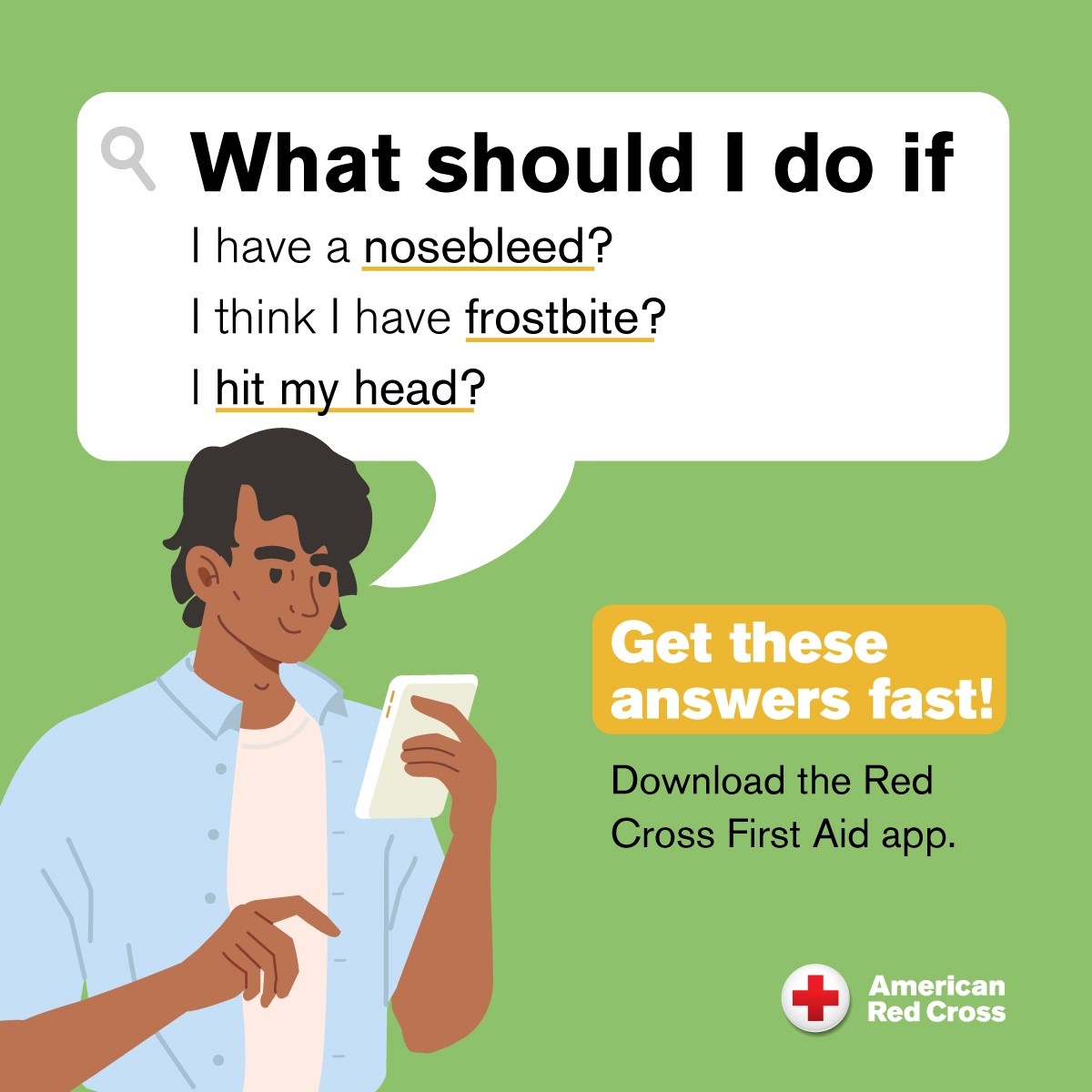
    Red Cross graphic – What should I do if: I have a nosebleed? I think I have frostbite? I hot my head? Get these answers fast! Download the Red Cross First Aid app.

    Download the FREE Red Cross First Aid app so you’ll know what to do if emergency help is delayed and the FREE Emergency app for weather alerts, open Red Cross shelter locations and safety steps for different emergencies. Choose whether you want to view the content in English or Spanish with an easy-to-find language selector. Find these and all of the Red Cross apps in smartphone app stores by searching for the American Red Cross or going to redcross.org/apps.

  • National Hurricane Preparedness Week: Be ready for the storms ahead!

    By Terri Seydel

    As the Atlantic hurricane season approaches, it’s time to refresh our knowledge and prepare for potential storms. National Hurricane Preparedness Week, observed from May 5 to May 11, 2024, serves as a crucial reminder to safeguard ourselves, our families, and our communities. Let’s dive into the essentials of hurricane preparedness and equip you with the necessary knowledge.

    Red Cross graphic – Hurricane Watch: When hurricane conditions are a threat within 48 hours vs Hurricane Warning: When hurricane conditions are expected within 36 hours.

    Understanding Your Risk

    It’s vital to assess risk and begin your preparations early. Consider the following:

    1. Water & Wind:
      • Hurricanes bring wind damage and storm surges. Check to see if you live in a flood-prone area so you can understand your level of risk.
    2. Pre-Season Preparations:
      • Stock up on essential supplies like non-perishable food, water, medications, flashlights, and batteries.
      • Save copies of essential documents to the cloud to ensure you can access them if you need them.
      • Secure your home by reinforcing windows, doors, and roofs.
    3. Interpreting Forecasts and Alerts:
      • Understand the difference between a hurricane watch (favorable conditions) and a hurricane warning (imminent conditions) so you are prepared to understand emergency announcements.
      • Stay informed by monitoring weather forecasts and official alerts.
      • Customize your alerts using the Free Red Cross Emergency App. The app provides step-by-step guides and weather alerts and can help you locate nearby Red Cross shelters.
    Red Cross graphic – Are you prepared for an emergency? Get a kit; make a plan; be informed.

    The Red Cross Preparedness Checklist

    Make sure you’re ready by taking proactive steps to prepare for potential storms. Here’s your checklist:

    1. Create an Emergency Kit:
      • Assemble an emergency supply of essentials, such as water, non-perishable food, first aid supplies, medications, and important documents.
      • Customize your kit based on your family’s unique needs. Don’t forget pet supplies!
    2. Make a Plan:
      • Discuss and practice your family disaster plan. Everyone should know evacuation routes, meeting points, and emergency contacts.
      • Teach children how to call 911 and what to do in an emergency.
    3. Be Informed:
      • Know which disasters are likely in your area. Hurricanes? Tornadoes? Earthquakes? Be prepared for them all.
      • Understand how climate change impacts these hazards.
    Red Cross graphic – What should I do if the power goes out? What should I do if there’s a tornado? What should I put in an emergency kit? Get these answers fast! Download the Red Cross Emergency app.

    Take Action Today

    Don’t procrastinate—take action now! Here’s how:

    1. Download the Free Emergency App:
      • Available for both Apple and Android devices.
      • Customize weather alerts, find shelters, and stay informed.
      • Text “GETEMERGENCY” to 90999 or search “American Red Cross” in your app store.
    2. Learn Hands-Only CPR:
    3. Explore the Emergency Resource Library:
      • Dive deeper into specific hazards and learn what to do before, during, and after events like hurricanes, wildfires, and earthquakes.

    Remember, being prepared won’t prevent a disaster but will give you the confidence to face it head-on. Let’s make this National Hurricane Preparedness Week count! 

  • April is National Financial Capability Month

    By Kyra Cummings

    FEMA graphic – Have an emergency rainy day fund. You never know when it may pour…

    First Aid isn’t just for injuries but is also relevant in finances! Federal Emergency Management Agency (FEMA) makes financial first aid easy to navigate with their Emergency Financial First Aid Kit (EFFAK). April is National Financial Capability Month, which makes it the perfect time to check out these resources and take charge of your financial resilience.

    FEMA and Operation HOPE’s Financial First Aid Kit

    Developed by FEMA and Operation HOPE, the EFFAK helps the public in organizing important household, financial and medical information. The EFFAK includes a checklist for public use to ensure crucial information is accounted for.

    You can create your own emergency financial first aid kit by compiling important documents such as household identification, contacts, medical information, and financial and legal information, reviewing insurance plans for accuracy, storing copies electronically and in stare locations, and updating the plan often to make sure everything is current.

    Creating your own emergency financial first aid kid helps minimize financial burden should a disaster or emergency occur. This can give you peace of mind knowing that you are prepared should a disaster or emergency strike.

    Other Financial Preparedness Tips

    In addition to creating an emergency financial first aid kit, consider an emergency savings account obtaining homeowners, health and life insurance if you do have all of them yet, and review policies to make sure you are covered for all possibilities.

    Visit these resources for more information: