Category: Preparedness

  • National Preparedness Month: Be informed

    By Eric Li

    Emergencies are always worrying. We try our best to be prepared for them at all times, but sometimes these happen without notice and without warning. Therefore, everyone should be prepared to handle volatile situations at all times, and be able to watch for weather alerts and know what they mean.

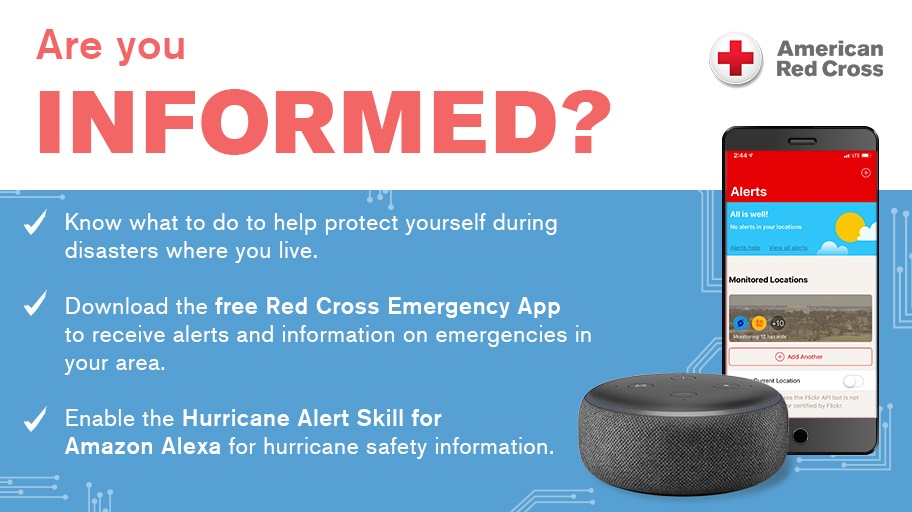
    First step to being prepared is to determine where you will get your information. Be it a radio, television, an app (preferably NOAA or the Red Cross apps), determine where you can get information quickly and reliably, especially during disasters where the power is gone.

    Now that you’ve gotten hold of where you’ll get your information from, now it’s time to understand what it means. Different weather alerts have different meanings.

    Most weather emergencies are split into 3 types of alerts: warnings, advisories, and watches.

    According to the National Weather Service: “A watch is used when the risk of a hazardous weather or hydrologic event has increased significantly, but its occurrence, location or timing is still uncertain. It is intended to provide enough lead time so those who need to set their plans in motion can do so. A watch means that hazardous weather is possible. People should have a plan of action in case a storm threatens and they should listen for later information and possible warnings especially when planning travel or outdoor activities.” 

    Advisories are a step above warnings: “An advisory is issued when a hazardous weather or hydrologic event is occurring, imminent or likely. Advisories are for less serious conditions than warnings, that cause significant inconvenience and if caution is not exercised, could lead to situations that may threaten life or property.”

    Warnings are the most serious: “A warning is issued when a hazardous weather or hydrologic event is occurring, imminent or likely. A warning means weather conditions pose a threat to life or property. People in the path of the storm need to take protective action.”

    To prepare, look at certain disasters that are more likely in your area. Then prepare a plan on how you would deal with them. Redcross.org is a good resource to get you started.

    Preparation in advance doesn’t just apply to weather watches; a good plan can help you deal with emergencies that might occur more quickly. In addition to staying informed, making a plan and building a disaster kit are key.

    Some key supplies to include in your disaster kit:

    • Non-perishable food and extra water, in most disasters going outside is dangerous, so you need extra food and water to be able to survive without running out.
    • A radio, preferably NOAA, to receive external alerts or orders that will help you avoid the disaster. Make sure you have enough batteries too.
    • A first-aid kit, for any health emergencies during the disaster, and you should also make sure everyone knows CPR and knows how to operate an automated external defibrillator (AED).
  • National Preparedness Month: What to know before you go

    By Nancy Degnan

    Taking a road trip is exciting, whether it is for relaxation or to learn something new. As you set the stage for your trip, an itinerary can serve as a guide to help you get started and keep moving.

    Along with your schedule, you may want to be mindful of potential roadblocks, so your vacation is both safe and memorable. It is important to prepare for the expected and unexpected. With peace of mind, you can plan to enjoy the journey as much as the destination.

    The American Red Cross offers helpful information for everyday use as well as for travelers. These resources can create awareness for the needs of family, friends, and pets that may be on the move with you. There are a variety of Red Cross Mobile Apps that will place expert advice at your fingertips whether you are seeking information on first aid, weather, the nearest hospital or help for your pet.

    As you prepare to go, create a checklist of items to pack:

    • Protein snacks and water
    • Personal medications
    • Flashlight
    • Extra batteries

    To learn more about essential items, visit our website page, American Red Cross Survival Kit Supplies, for more details on how to prepare for an emergency.    

    Before you begin your drive, think about road and personal safety:

    • Download the Red Cross Mobile App for quick use if you need assistance
    • Ensure your vehicle is inspected and equipped for the trip
    • Be well rested and alert
    • Designate a primary contact who knows your plan, route, and destination

    For additional roadway safety tips, visit our website page, American Red Cross On the Highway.

    Whether you are travelling alone or with others, plan for a safe and healthy road trip with available resources from the American Red Cross that aim to serve in times of need: 

    • Red Cross Mobile Apps
      • Red Cross Mobile Apps and Voice-Enabled Skills/Actions can be downloaded for free at the Apple, Amazon, and Google stores
      • Available Apps cover First Aid, Pet First Aid, weather and more

    For more information about the American Red Cross, visit redcross.org.

  • National Preparedness Month: Is your first aid kit up to par?

    By Nathan Fligeman

    July 13, 2012. Be Red Cross Ready First Aid Kit open. Photo by Dan Bittinger

    A first aid kit is a very handy, and borderline necessary, item for a person to have in their possession. These kits, assuming that you pack them adequately and with proper due diligence, serve as a means of protection against a plethora of both emergency and minor, ‘just-in-case,’ scenarios. Remedies that help to treat burns, cuts, abrasions, stings, splinters, sprains, daily sicknesses, and strains are commonly included in these kits. Plenty of first aid kits are offered for commercial sale, but personalized ones can be made in order to serve specific, self-determined, purposes.

    Below is a brief guide on how to make your own first aid kit, based upon commonly included items and their functionalities.

    Aloe Gel – This is good for alleviating the pain of minor sunburn, cuts, burns, and rashes.

    Adhesive Tape – This therapeutic tape is designed to help treat strains and sprains, primarily.

    Antibiotic Ointments – These are meant to be applied to cuts and abrasions in order to prevent and/or help heal infections.

    Bandages – These are a staple of first aid kits. Bandaids are simple and can always be useful in the case of a minor cut.

    Book on First Aid – A guide to performing a plethora of medical techniques can never hurt when carrying a medical kit. You can also download the free Red Cross First Aid app to have this information at your fingertips.

    Breathing Barrier – These are considered to be a necessity for those who know how to perform CPR, especially. You never know when you may be in need of protection in order to complete the breathing portion of the CPR process.

    Emergency Blanket – Get an emergency blanket that reflects heat and can be used to signal for help.

    Gauze – This is another item which is almost always included in first aid kits. Gauze is utilized to wrap cuts which cannot be completely covered by a bandaid alone.

    Insect Repellant Bands – This item is common for people who frequently travel to wooded areas. Putting on one of these wrist bands each day keeps the bugs away!

    Instant Cold Compress – These are utilized in order to help combat heat-based illnesses and/or fevers.

    Latex-free Gloves – These are important for protecting yourself and keeping cuts and scraps you may be treating clean.

    Medication(s) – It is important to pack other-the-counter medications, such as Advil, Tylenol, and/or Aspirin. These items help to combat the symptoms of illness and general pain. Antidiarrheal medications, such as Pepto-Bismol, are also recommended as an addition to the kit.

    Oral Thermometer – These are important to include as a testing method for illnesses.

    Petroleum Jelly – Similar to aloe gel, petroleum jelly can be utilized to help treat minor sunburn, cuts, burns, and rashes.

    Swiss Army Knife – These versatile tools can come in handy in almost every scenario which requires any sort of physical effort. Swiss army knives often come equipped with at least a flashlight, knife, scissors, and tweezers.

    More items can certainly be added to a first aid kit, based upon personal preference and necessity. However, the listed items, along with a portable storage unit to encapsulate them, are the basis for a useful and properly-equipped first aid kit. Make sure to keep this kit within a near vicinity at all times; it is always better to be safe than sorry!

  • National Preparedness Month: Emergency planning for caregivers

    By Terri Seydel

    Emergency planning is especially critical for caregivers as there are often unique and life-essential needs to be factored into a readiness plan. In addition to these basic tips from the Red Cross and an essential survivor kit, caregivers should consider these additional details.

    Build a Support and Communication Network

    This is a group of people who may be able to assist with additional needs such as transportation, lifting, or backup care for your patient. Create an emergency contact list including how you’ll reach your support group and important emergency contacts if communications are disrupted during an emergency.

    Secure Backup Power Sources

    Many patients have power-dependent devices or medicines. In those cases, you’ll need to plan for alternative power sources to operate medical devices or keep medicines cold for your patient. Consider having generators or batteries as a backup power supply for power-dependent devices.

    Reserve Inventory of Medicine

    You may not have immediate access to replacement medication during extended outages or natural disasters. It’s important to include up to 30 days of medications and extra assistive items such as a cane or eyeglasses in your emergency kit.  

    Document Critical Information

    Keep an Up-to-Date List of Medical Information: conditions, allergies, medications, prescription records, doctors, and insurance cards. This information may become critical during an emergency.

    Include Caregiver Needs

    As a caregiver, you should also  plan for your own necessities. Maintaining your well-being and health is a critical aspect of caring for others.  Be sure to have a supply of your own medications, documentation, and dietary needs.

    Proactively preparing for emergencies can help control some of the challenging aspects of an emergency. You can learn more about disability-specific emergency planning or research specific types of emergencies,  on this Red Cross emergency library of references.

  • National Preparedness Month: Every emergency requires planning

    By Maria Marabito

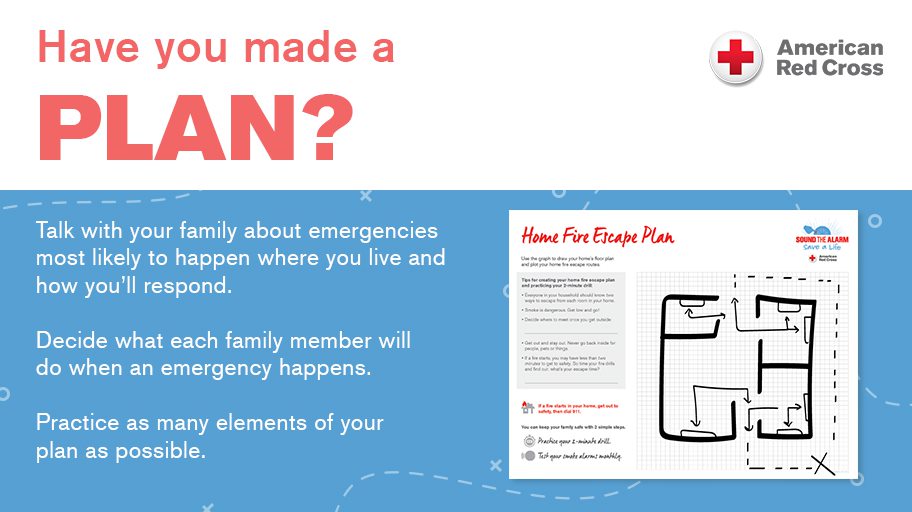
    Planning for an emergency may seem like an oxymoron, but a plan can help you prepare for, respond to and recover from disasters if they should come. This National Preparedness Month take time with your family to draft your emergency plan. From fires to floods to tornadoes, your plan can help you be ready for anything that comes your way.

    There are several elements to consider when discussing an emergency plan. The first step is identifying disasters most likely to happen where you live. Some of the most common natural disasters in the Southeastern PA region include floods, severe storms, winter storms, tornadoes and power outages. Emergencies don’t always come from natural disasters though. According to the National Fire Protection Association, more than 350,000 home fires occur in the U.S. each year. Creating a simple home fire escape plan and practicing your 2-minute drill could be lifesaving.

    Emergencies can also happen outside the home and might separate you from your loved ones. Decide on a meeting place should this happen. Plan how to let your loved ones know you’re safe if you are not able to reunite immediately. Read here for more information on how to draft a comprehensive emergency plan.

    After deciding on your emergency plan, assign responsibilities to each member of your household and establish how you can work together as a team to get through the stressful times that emergencies can bring. It may make you a stronger in the end. Make your plan applicable for everyone, including older adults, people with disabilities, children and pets. One family member may be assigned the responsibility of getting first aid and CPR/AED certified. Another family member may be in charge of assembling the family’s medical information so that it is ready to go should an evacuation be necessary. Everyone can play a part in preparing for emergencies.

    Lastly, practice makes perfect. Take a few minutes to run through your plan to work out the kinks and clear up any confusion. Annually, practice drills, update your plan and restock your emergency kit.

    However, preparation and practice means little if you do not know when a disaster hits. Make sure that you are signed up to receive watches, warnings and advisories when severe weather and other emergencies strike. There are national and local warning systems available to alert you to trouble.

    Learning more about what can occur where you live, work and play and taking steps to be prepared can mean all the difference when an emergency actually does strike. And you don’t have to do it alone. The Red Cross has resources available to help you create and test your emergency plan. More information can be found here.

  • Protect yourself from unwanted pests this summer

    By Robert Ambrose

    When you plan for a nature outing, you might prepare to bring some food and drink. But what can make you the host of a party you never want?

    Bugs.

    Those little creatures do not pay rent to land on your skin. As seasonal blood-lovers, ticks and mosquitoes swing to full parasite mode during spring, summer, and fall. As transcontinental free-loaders, ticks and mosquitoes steal your blood – and give you problems ex-post. Ticks transfer Lyme disease while mosquitoes cause multiple issues including body muscle aches, fever, headaches, joint pain, rash, neck stiffness and even in rare instances paralysis.

    As you make your ways in the great outdoors, skip the bug problems and still have fun. Several ways to do that: avoid high grass, standing water, and weed-filled forests. Use insect repellant with 20-50% DEET chemical to hide your human scent from ticks and mosquitoes. Permethrin is a super-charged bug spray like 94 octane gas is to cars but permethrin is only for clothes – not your skin.

    Before you trek, remember that clothes can make the difference. For example, light colored clothing makes the ticks easier to spot than dark colors. (Also, in the summer light colors keep you cooler than dark because sunshine is reflected).

    If a tick finds you, take action. Never allow the free-loader to burrow in your skin. Yank any tick with tweezers immediately. Wash the skin area where the tick was. Later, a washing machine’s hot water will kill any unseen clothing-bound ticks. See a doctor if you develop any vector-borne disease.

    Some other steps to practice in your outdoor space:

    • Do not let water stand;
    • Discard debris in ditches; and
    • Cover equipment.

    Being aware, taking the aforementioned precautions, and taking action will raise probability of summer health well-being. For additional first aid safety tips on treating things like tick and insect bites, download the free Red Cross First Aid app.

  • Red Cross offers tips for a safe July 4th

    By Alana Mauger

    Independence Day is just ahead, and your plans might include fireworks displays, a backyard picnic, or perhaps fun at the beach. The American Red Cross offers these tips so you can enjoy a fun-packed, safe holiday.

    “We’re all looking forward to the 4th of July holiday. It’s a time for fun with friends and family,” said Jennifer Graham, acting CEO, Red Cross Southeastern Pennsylvania region. “We here at the Red Cross want everyone to enjoy their celebration and to be safe.”

    FIREWORKS SAFETY

    The safest way to enjoy fireworks is to attend a public firework show put on by professionals. Stay at least 500 feet away from the show. Many states outlaw most fireworks. Leave any area immediately where untrained amateurs are using fireworks. If you are setting fireworks off at home, follow these safety steps:

    1. Never give fireworks to small children, and never throw or point a firework toward people, animals, vehicles, structures or flammable materials. Always follow the instructions on the packaging.
    2. Keep a supply of water close by as a precaution.
    3. Make sure the person lighting fireworks always wears eye protection.
    4. Light only one firework at a time and never attempt to relight “a dud.”
    5. Store fireworks in a cool, dry place away from children and pets.

    PICNIC SAFETY

    1. Wash your hands before preparing the food.
    2. Don’t leave food out in the hot sun. Keep perishable foods in a cooler with plenty of ice or freezer gel packs.
    3. If you are going to cook on the grill, never grill indoors. Keep the grill out in the open, away from the house, the deck, tree branches or anything that could catch fire.
    4. Always supervise the grill when in use. Don’t add charcoal starter fluid when coals have already been ignited. Use the long-handled tools especially made for cooking on the grill to keep the chef safe.
    5. Make sure everyone, including pets, stays away from the grill.

    BEACH SAFETY

    Watch the weather and get out of the water at the first sign of lightning or the rumble of thunder. Stay indoors and away from water for 30 minutes after the last lightning flashes or thunder roars. Plan ahead for aquatic activities:

    1. Swim only at a beach with a lifeguard, within the designated swimming area. Obey all instructions and orders from lifeguards and ask them about local conditions.
    2. Always designate a “water watcher” whose sole responsibility is to keep a close eye and constant attention on everyone in and around the water until the next water watcher takes over.
    3. Children, inexperienced swimmers, and all boaters should wear properly fitted U.S. Coast Guard-approved life jackets.
    4. Protect your neck – don’t dive in headfirst. Walk carefully into open waters. Watch out for and avoid aquatic life.
    5. If you are caught in a rip current, stay calm and don’t fight it. Swim parallel to the shore until you are out of the current. Then, turn and swim to shore. If you can’t swim to shore, float or tread water until you are free of the rip current and then head toward shore. Draw attention to yourself by waving and calling for help. 

    Download the free Red Cross First Aid and Swim apps for instant access to safety tips.

  • National Kitchen Site Management Boot Camp trains 21 volunteers ready to deploy to disasters

    By Judith Weeks

    Volunteers from the Southern Baptist Convention and American Red Cross prepare food in a field kitchen at West Chester University on Saturday, June 11, 2022. Photo by James Jones / American Red Cross

    As more hurricanes, wildfires, tornados, and floods are occurring, the American Red Cross needs Kitchen Site Managers for deployment. Feeding is a critical component of the Mass Care Team who provide shelter and food for those evacuated during a disaster or need a place to go after a disaster

    Recently, the Southeastern Pennsylvania (SEPA) Region hosted the first National Kitchen Site Management Boot Camp at West Chester University.. This “hands on” training gives volunteers the experience they need to qualify for Kitchen Site Manager. Twenty-one Red Cross volunteers from around the country arrived for this training event. They participated under the guidance of instructors, asking questions, and in this simulation, learning from mistakes while experiencing the workflow of a field kitchen.

    Jeff Banks, Senior Red Cross Disaster Program Manager, directing the operation, explained “this program is focused on developing Kitchen Site Managers.” Banks intends to bring it to other sites around the country. Laurynn Myers, National Program Manager, was observing the kitchen and workflow. Instructors Nanci Banninger and Brian Gerber were closely watching the activity, evaluating trainees.

    Program participants carry prepared food to ERVs for delivery to homeless shelters and soup kitchens in the region. Photo by James Jones / American Red Cross

    The Southern Baptist Convention, a major feeding partner with the Red Cross brought their portable kitchen to cook meals. SEPA Logistics delivered supplies and equipment. Steve Thomas, Logistics Lead, explained, “Logistics are the Roadies for the Red Cross. First in Last Out!” The group assembled at the parking lot for orientation and assignments. Meals ready to go and ERVs (Emergency Response Vehicles)  delivering them by 11 a.m. was the objective. Volunteers were organized and Johan Reyes was designated Kitchen Site Manager.

    A field kitchen is a complex operation with all steps of the workflow happening simultaneously. The Southern Baptists were busy preparing barbeque chicken, green beans, rice and fruit. Volunteers were sanitizing cambros (insulated container for keeping food hot or cold), placing cooked food containers into the cambros, labeling them, then loading on the ERVs. ERVs with drivers were lined up, waiting for direction to the loading area by yard dog Andy Aerenson,

    The kitchen was running smoothly until Gary Mills, manager for the Southern Baptist Kitchen, determined meal preparation had slowed by 30 minutes. Additional hands were needed. Red Cross volunteers jumped in helping with preparation. Soon, the food preparation operation was back on track and it was announced the first ERV was delivering meals at 11 a.m.! The boot camp experience was a success!

    A loaded ERV prepares to deploy from West Chester University. Photo by James Jones / American Red Cross

    Twenty-one new Kitchen Site Managers from New Jersey, Pennsylvania, New York, Massachusetts, Virginia, Colorado, Florida, Idaho, Rhode Island, Texas, and Alabama are fully trained and ready to deploy to any disaster where a field kitchen is needed.

    For volunteer Ana Gallagher, this was a great opportunity. She enthusiastically said, “feeding is my passion, and this is the right place to learn!”

    View more event photos on Flickr.

  • Hurricane season is here! Get prepared; volunteer now

    By Alana Mauger

    The Atlantic Hurricane Season started on Wednesday, June 1 and runs until November 30, and another active season is expected. In fact, the first tropical storm or hurricane of the season is possible in the Gulf of Mexico late this week. The American Red Cross urges everyone to make their preparations now and is issuing a call for more people to volunteer to respond to these emergencies.

    For the seventh consecutive year, NOAA’s Climate Prediction Center is predicting above-average Atlantic hurricane activity, continuing the trend of more frequent and intense climate-driven disasters. The forecast calls for 14 to 21 named storms, of which 6 to 10 could become hurricanes, including 3 to 6 major hurricanes with winds of 111 mph or higher.

    HOW TO GET READY

    Last month, communications volunteer Terri Seydel shared some important steps you can take to prepare for hurricanes. These include:

    • Creating an evacuation plan – Plan what to do in case you are separated from your family during an emergency or if you need to evacuate.
    • Building an emergency kit – Include a gallon of water per person, per day, non-perishable food, a flashlight, battery-powered radio, first aid kit, medications, supplies for infants or pets, a multi-purpose tool, personal hygiene items, copies of important papers, cell phone chargers, extra cash, blankets, maps of the area and emergency contact information.
    • Staying informed – Find out how local officials will contact you during a disaster and how you will get important information, such as evacuation orders.
    • Downloading the free Red Cross Emergency app – Have severe weather safety information right at your fingertips.The Emergency app provides real-time weather alerts and tips on how to stay safe during severe weather and countless other emergencies. Search “American Red Cross” in app stores or go to redcross.org/apps.

    VOLUNTEERS NEEDED

    You can also help the Red Cross prepare for hurricane season by getting involved — and getting trained now — before hurricanes strike our region. The relentless pace of severe disasters has created additional and ongoing emergency needs, especially for families who have been displaced year after year by extreme weather events. As the growing number of climate disasters threatens lives on a near-constant basis, the Red Cross is growing our volunteer capacity to respond to these emergencies.

    The need to help during disasters has never been greater — join us to provide relief and hope when it matters most. Visit redcross.org to sign up now. These are our most-needed disaster volunteer positions:

    • SHELTER SUPPORT: Help at a shelter during a large disaster either locally or across the country by welcoming and registering residents, serving meals, setting up cots, distributing blankets and personal hygiene kits, and providing information and other assistance to people in need. Training and travel costs are covered by the Red Cross.
    • HEALTH SERVICES: Use your professional skills as a licensed health care provider to deliver hands-on support, including care and education, to people staying at a shelter during a large disaster either locally or nationwide. Travel costs are covered by the Red Cross. Qualified licenses include RN, LPN, LVN, EMT, Paramedic, MD, DO, PA, NP and APRN.

    • DISASTER ACTION TEAM: While big hurricanes get the most news coverage, smaller disasters such as floods, tornadoes and home fires are no less devastating to those affected. Join a Disaster Action Team to help local families in need by providing food, lodging, comfort, recovery assistance and other support.
    • DUTY OFFICER: Volunteer from home to dispatch local Red Cross volunteers to meet with families impacted by home fires and other disasters so they can provide temporary relief such as a safe place to stay, food and clothing.

    Visit our volunteer webpage to get started today!

  • Red Cross hero Thurston Perry Moon brings water safety to new heights in Philadelphia

    By Erica Silverman

    American Red Cross lifeguard guard and blood donor Thurston Perry-Moon. Submitted photo

    Trainees line up, get ready to jump in the water, and the whistle blows! Swim 300 yards, tread water for 2 minutes without hands, swim 20 yards to retrieve a 10-pound weight from the bottom of the pool, then swim with the weight back to the starting point in under 1 minute and 40 seconds. This is the first test Red Cross trainees must pass on their way to becoming certified life guards, administered by Red Cross hero and Lifeguard Instructor Thurston-Perry Moon.

    “I train each lifeguard to save lives,” said Moon, who initially became a certified lifeguard through the Red Cross in 1999.

    “I became involved with the Red Cross, since their training has the highest standards in providing adequate care for a drowning victim or other water emergencies,” he said.

    Moon, a Philadelphia native, has been a Red Cross Lifeguard Instructor (LGI) since 2010 in Philadelphia and Southeastern PA.

    He holds about 12 training sessions every spring and summer across Southeastern PA, training between 50 to 100 guards per season.

    “It’s a very diverse group [of trainees], all ages, ethnicities, and different backgrounds,” said Moon.

    May is Water Safety Month, which comes at a perfect time as swimmers, campers and people of all ages are gearing up for summer fun in the water. The American Red Cross plays a key role in this national campaign, providing education and training in water safety, and swim lessons.

    “The most successful lifeguard candidates start out taking Red Cross swim lessons; this is an important pipeline,” explained Moon, a father and middle-School math teacher in Philadelphia.

    You can download the free American Red Cross Swim App, as a companion to the Learn-to-Swim program. The app keeps the swimmer motivated and provides the latest in water safety guidelines.

    Moon serves a Red Cross trainer in several roles.

    “I also hold CPR and first aid training courses so community members can help someone who is a victim of a gunshot wound,” he said.  He is currently fundraising to continue these efforts to combat increasing violence.

    He makes whole blood donations about 5 times per year and continued throughout the pandemic.

    Moon comes from a long line of heroes.

    His grandfather, Joseph Mander, 41, died in the Schuylkill River while trying to save the life of a child, Paul Waxman, 7, who had fallen into the river in 1952. Mander held the boy above the water, but suddenly both were pulled under and downed. A plaque near the river commemorates Mander’s heroic efforts.

    “This empowered me and my family to make water safety a priority in our lives,” said Moon.

    Trained lifeguards are prepared for rapid response in case of a water emergency.

    The mastery test at the end of the training includes two written tests for CPR and first aid skills, an in-water aquatic rescue test, and the candidate must demonstrate proper execution of CPR on dry land, according to Moon.

    To find out more about training opportunities visit this link.