Category: Preparedness

  • Tips for a fun and safe July 4th

    By Alana Mauger

    Independence Day is just ahead, and your plans might include fireworks displays, backyard picnics or spending time outdoors. The American Red Cross offers these tips so you can enjoy a fun-packed, safe holiday.

    FIREWORKS SAFETY

    Red Cross fireworks graphic – Do this, not that: Keep water nearby in case fireworks start a fire. Don’t point fireworks at pets. Wear eye protection if you light a firework. Never try relighting a dud.

    The safest way to enjoy fireworks is to attend a public firework show put on by professionals. Stay at least 500 feet away from the show. Many states outlaw most fireworks. Leave any area immediately where untrained amateurs are using fireworks. If you are setting fireworks off at home, follow these safety steps:

    1. Never give fireworks to small children, and never throw or point a firework toward people, animals, vehicles, structures or flammable materials. Always follow the instructions on the packaging.
    2. Keep a supply of water close by as a precaution.
    3. Make sure the person lighting fireworks always wears eye protection.
    4. Light only one firework at a time and never attempt to relight “a dud.”
    5. Store fireworks in a cool, dry place away from children and pets.

    PICNIC AND GRILLING SAFETY

    Red Cross graphic – Have a perfect picnic: Don’t catch your house on fire by grilling too close. Don’t leave perishable food in the sun. Keep pets away from grills.

    July 4th is a great time to get outside for a picnic or to fire up the grill. Follow these tips to prevent illness and keep everyone safe:

    1. Wash your hands before preparing the food.
    2. Don’t leave food out in the hot sun. Keep perishable foods in a cooler with plenty of ice or freezer gel packs.
    3. If you are going to cook on the grill, never grill indoors. Keep the grill out in the open, away from the house, the deck, tree branches or anything that could catch fire.
    4. Always supervise the grill when in use. Don’t add charcoal starter fluid when coals have already been ignited. Use the long-handled tools especially made for cooking on the grill to keep the chef safe.
    5. Make sure everyone, including pets, stays away from the grill.

    SEVERE WEATHER SAFETY

    Red Cross graphic – If you’re outside during a thunderstorm: Avoid high ground; don’t shelter in dugouts; stay away from isolated trees.

    According to the National Weather Service, there is no safe place outside when a thunderstorm is in the area. If you can hear thunder, you’re close enough to be in danger from lightning. Follow this tips:

    1. Listen to local news or NOAA Weather Radio for emergency updates. Watch for signs of a storm, like darkening skies, lightning flashes or increasing wind.
    2. Postpone outdoor activities if thunderstorms are likely to occur. Many people struck by lightning are not in the area where rain is occurring.
    3. Move inside at the first clap of thunder and stay inside at least 30 minutes after the last thunderclap. Don’t wait to seek shelter until the storm is overhead or it starts to rain.
    4. If a severe thunderstorm warning is issued, take shelter in a substantial building or in a vehicle with the windows closed. Get out of mobile homes that can blow over in high winds.

    BE PREPARED

    Download our free Red Cross Emergency, First Aid and Swim apps for instant access to safety tips and information.

    Red Cross graphic – What should I do if: Someone has an allergic reaction? I burned my hand? My friend needs to remove a tick. Get these answers fast. Download the Red Cross First Aid app.
  • Wildfire awareness: How to prepare and protect yourself

    By Teliyah Davis

    Red Cross graphic – Prepare now for wildfire threats. Assemble an emergency preparedness kit with items you’ll need. Items include bottled water, first aid kit, flashlight, radio, snacks, batteries, blanket, hand sanitizer and important documents.

    Wildfires can be devastating, causing significant damage to forests, wildlife, and even human lives. As climate change continues to impact our planet, the frequency and intensity of wildfires are on the rise. In such circumstances, it is crucial to understand wildfires and equip ourselves with the necessary knowledge and preparation to safeguard our lives and properties. This article aims to provide valuable insights into wildfire awareness and offer practical tips on how individuals can prepare and protect themselves in the face of this natural disaster.

    Understanding Wildfires

    Wildfires are uncontrolled fires that spread rapidly through vegetation, fueled by dry conditions and strong winds. They can ignite from various sources, including lightning strikes, human activities, or even volcanic eruptions. Once ignited, wildfires can quickly grow, engulfing vast areas within a short span of time. The primary factors that contribute to the spread of wildfires include weather conditions, fuel availability, and topography.

    1. Stay Informed: One of the key aspects of wildfire preparedness is staying informed about fire conditions and updates. Utilize reliable sources such as local authorities, fire departments, and meteorological agencies to stay updated on fire risks, weather patterns, and evacuation orders. Sign up for emergency alerts and follow social media channels for timely information.
    2. Create a Defensible Space: Creating a defensible space around your property is crucial to reduce the risk of wildfires. Clear dry leaves, debris, and flammable materials from your surroundings. Maintain a buffer zone of at least 30 feet around structures by regularly trimming shrubs, trees, and overhanging branches.
    3. Prepare an Emergency Kit: As wildfires can lead to evacuations and disruptions, it is essential to always have an emergency kit ready. Include items such as non-perishable food, water, medications, important documents, a first aid kit, a flashlight, batteries, and a portable radio. Prepare a checklist and ensure that all family members are aware of its location.
    4. Develop an Evacuation Plan: Create a detailed evacuation plan for your household. Identify multiple evacuation routes and establish a meeting point outside the affected area. Practice the evacuation plan with your family members to ensure everyone knows what to do during a wildfire emergency. Consider the needs of vulnerable family members, such as children, elderly individuals, or individuals with disabilities, and make appropriate arrangements.
    5. Safeguard Your Home: Implementing measures to safeguard your home can significantly reduce the risk of damage from wildfires. Install spark arrestors on chimneys and stovepipes to prevent sparks from escaping and igniting nearby vegetation. Use fire-resistant materials for roofing and siding. Clear gutters and roofs of debris regularly. Additionally, consider installing fire-resistant windows and screens.
    6. Be Fire-Smart: Adopt fire-smart practices in your daily life to minimize the chances of unintentionally starting a fire. Extinguish cigarettes and matches properly, never leaving them unattended. Use caution when operating machinery or tools that generate sparks. Avoid burning debris during dry or windy conditions. Practice responsible campfire and outdoor cooking practices, adhering to designated fire pits and regulations.
    7. Collaborate with the Community: Wildfire preparedness should extend beyond individual efforts. Engage with your community to establish a network of support and cooperation. Participate in local fire prevention programs, attend community meetings, and volunteer for activities such as firebreak construction or vegetation clearing. Working together as a community can enhance overall resilience and response during wildfire events.

    In conclusion, wildfire awareness is crucial for protecting lives, properties, and the environment. With increased awareness and proactive actions, we can minimize the devastating impacts of wildfires and build more resilient communities that are better equipped to face these natural disasters. To learn more, visit our Wildfire Safety webpage.

  • Summer and extreme heat safety

    By Haley Heisley

    Red Cross graphic: What to eat and drink during a heat wave. 1. Eat small meals and eat more often. 2. Stay hydrated y drinking plenty of fluids, even if you do not feel thirsty. 3. Avoid drinks with caffeine or alcohol.

    With the warm weather quickly turning into hot weather, it isn’t just about the beach days, sun tans, cold lemonade, and swimming pools – but also, about the safety considerations that come with each of these. 

    Believe it or not, according to the CDC, high temperatures cause hundreds of heat related deaths each year – but these deaths are preventable. 

    To sum it up, high temperatures can make you sick and if they are too high your body can’t compensate to cool you down. High humidity levels and personal considerations like obesity, poor circulation, sun burn, alcohol/drug use and heart disease as well as people 65 and older, children younger than 2 and people with chronic diseases or mental illness pose as the highest risk.

    It is advised that the precautions listed below be implemented into daily routines throughout this summer, especially on the hottest days to prevent high temperature related problems:

    • Air conditioning (as much as possible).
    • Drink a lot of water, even when you’re not thirsty.
    • Check on your at risk neighbors, friends, and family members.
    • Limit outdoor activity during the hottest times of day in midafternoon. 
    • Pace activities out by starting out slow and gradually picking up the pace.
    • Wear lightweight/light-colored clothing. 
    • Take cool showers or baths periodically to cool down.
    • Schedule intense activities/exercises for the later part of the day when it cools down.
    • Never leave people or pets alone in hot cars.
    • Wear sunblock, even if the sun is not out. 

    By taking these protocols, becoming aware of at-risk populations, and listening to our bodies – it can make all the difference this summer. Visit redcross.org for more summer and heat safety tips.

  • Pet Preparedness Month: Is your pet prepared for a disaster?

    By Caroline Carr

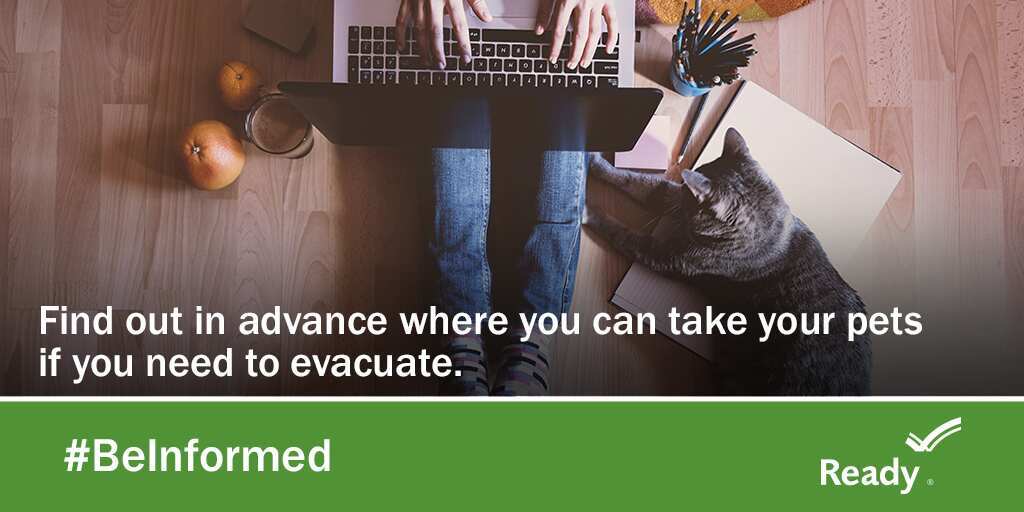
    Ready.gov graphic: Find out in advance where you can take your pets if you need to evacuate. #BeInformed.

    You’ve made an escape plan to get out of your house in case of a fire. You have a survival kit ready to take with you in case of a disaster. But, have you forgotten anything? What about your four-legged friends? When planning for disasters or emergencies, we also need to plan for the wellbeing of our pets.

    June is FEMA’s Pet Preparedness Month. There are many resources available to help you make plans for your pets so they can survive an emergency.

    Things to Consider

    • Where will your pet stay during the emergency, if they can’t stay with you?
    • Will they have enough food and water available?
    • What about their medications?

    Build a Pet Emergency Kit

    The American Red Cross advises to include the following:

    • Leashes and pet carriers.
    • Food, drinking water, bowls, cat litter/pan.
    • Medications and instructions with a medical history of your pet.
    • Current photos of you with your pet(s) in case they get lost. Since many pets look alike, this will help to eliminate mistaken identity and confusion.
    • Instructions for feeding, any behavior problems, and the name and number for your veterinarian.
    • Something familiar for your pet like favorite toys or a blanket that they sleep on.

    Keep in Mind

    • Many shelters and hotels will not allow you to bring a pet with you, unless it’s a service animal. A back-up plan is necessary to ensure your pet’s wellbeing. Make arrangements ahead of time to house your pet at a friend or relative’s home.
    • Make arrangements with neighbors or relatives who can evacuate your pet if you cannot do so.
    • If your pet is microchipped, be sure to update your address and contact information so you can be reached if your pet is lost.
    • Contact your local emergency management office, animal shelter or animal control office to get additional advice and information if you’re unsure how to care for your pet in case of an emergency.

    Our pets are part of our family. Planning for them in case of an emergency ensures their safety. They will be frightened by the situation and worried if they cannot be with you during an emergency. They give us so much; we need to make sure they will be taken care of if the worst happens.

    Visit the redcross.org or ready.gov/pets for more info.

  • Red Cross offers tips for a safe Memorial Day weekend and summer

    By Dave Skutnik

    Red Cross graphic: Bee ready for anything this summer.

    As we all head outside to enjoy the sunshine and warm weather this summer, the American Red Cross Southeastern Pennsylvania Region has steps you can follow to help stay safe.

    “Here in the Delaware Valley many of us enjoy spending time outdoors with loved ones as we head down the shore, up to the Poconos or simply hang out at home,” said Guy Triano, CEO for the American Red Cross of Southeastern Pennsylvania. “The Red Cross wants you to avoid any danger no matter what your plans include and offers steps you can follow to have a safe summer.” Visit redcross.org/summersafety for more information.

    Red Cross graphic – Myth: Strong swimmers never drown. Reality: Unexpected water and medical conditions can cause anyone to drown.

    WATER SAFETY Drowning can happen quickly and silently. Unless rescued, it could take as little as 20 to 60 seconds for a drowning person to submerge.

    • Learn to be safe, make good choices, learn to swim and know how to handle emergencies.
    • Provide constant, active adult supervision and know how to swim.
    • Swim in an area with lifeguards. Designate a “water watcher” to keep a close eye and constant attention on everyone in and around the water until the next water watcher takes over.
    • Wear your life jacket.
    • Reach or throw, don’t go! In the event of an emergency, reach or throw an object to the person in trouble. Don’t go in! You could become a victim yourself.
    • Swimming classes are available for both children and adults. Visit redcross.org/watersafety for a map of Learn-to-Swim providers in your community.
    • Download the Red Cross Swim app for safety tips, kid-friendly videos and activities, and take the free Water Safety for Parents and Caregivers online course in English or Spanish.
    Red Cross graphic: Don’t go from this [image of normal grill] to this [image of grill fire.]

    PICNIC, GRILLING SAFETY Summer is a great time to get outside for a picnic or to fire up the grill. Follow these tips to prevent illness and keep everyone safe:

    • Wash your hands, utensils and workstation before preparing the food.
    • Separate uncooked meats, poultry and seafood from ready-to-eat foods like salads, fruits, vegetables, cheeses and desserts. Use separate plates and utensils to prevent cross-contamination.
    • Bring hand sanitizer if your picnic site doesn’t have hand-washing facilities.
    • If you are going to cook on the grill, bring a food thermometer to be sure grilled foods are cooked enough. 
    • Always supervise a barbecue grill when in use.
    • Don’t add charcoal starter fluid when coals have already been ignited.
    • Never grill indoors.
    • Make sure everyone, including pets, stays away from the grill.
    • Keep the grill out in the open, away from the house, deck, tree branches or anything that could catch fire.
    • Use the long-handled tools especially made for cooking on the grill to help keep the chef safe.
    • Wash your hands before preparing the food.  
    • Don’t leave food out in the hot sun. Keep perishable foods in a cooler with plenty of ice or freezer gel packs.  
    Red Cross graphic: Prevent tick bites – Avoid walking in tall grass. Apply insect repellent with DEET. Wear light-colored clothing to easily spot ticks.

    OUTDOOR SAFETY Whether camping or just enjoying the outdoors, follow these tips:

    • If a camping trip is in your plans, know the level of ability of the people in your group and the environment around you. Plan accordingly.
    • Pack a first aid kit.
    • Take a Red Cross first aid and CPR course and download the First Aid app.
    • Watch for sprains, falls and dehydration.
    • Share your travel plans and locations with a family member, neighbor or friend.
    • Bring nutritious food items and water, light-weight clothing to layer and supplies for any pets.
    • There is a greater chance of getting bitten by mosquitoes and ticks outdoors Use insect repellents containing DEET (N, N-diethyl-meta-toluamide) when you are outdoors. Be sure to follow the directions on the package.
    • Consider staying indoors at dusk and dawn, when mosquitoes are most active.
    • Wear long-sleeved shirts and long pants and tuck your pant legs into your socks or boots.
    • Use a rubber band or tape to hold pants against socks so that nothing can get under clothing.
    • Tuck your shirt into your pants. Wear light-colored clothing to make it easier to see tiny insects or ticks.
    • When hiking in woods and fields, stay in the middle of trails. Avoid underbrush and tall grass.
    • If you are outdoors for a long time, check yourself several times during the day. Especially check in hairy areas of the body like the back of the neck and the scalp line.
    • Inspect yourself carefully for insects or ticks after being outdoors or have someone else do it.
    • If you have pets that go outdoors, spray with repellent made for their breed/type. Apply the repellent according to the label and check your pet for ticks often.
    • Get rid of mosquito breeding sites by emptying sources of standing water outside of the home, such as from flowerpots, buckets and barrels.
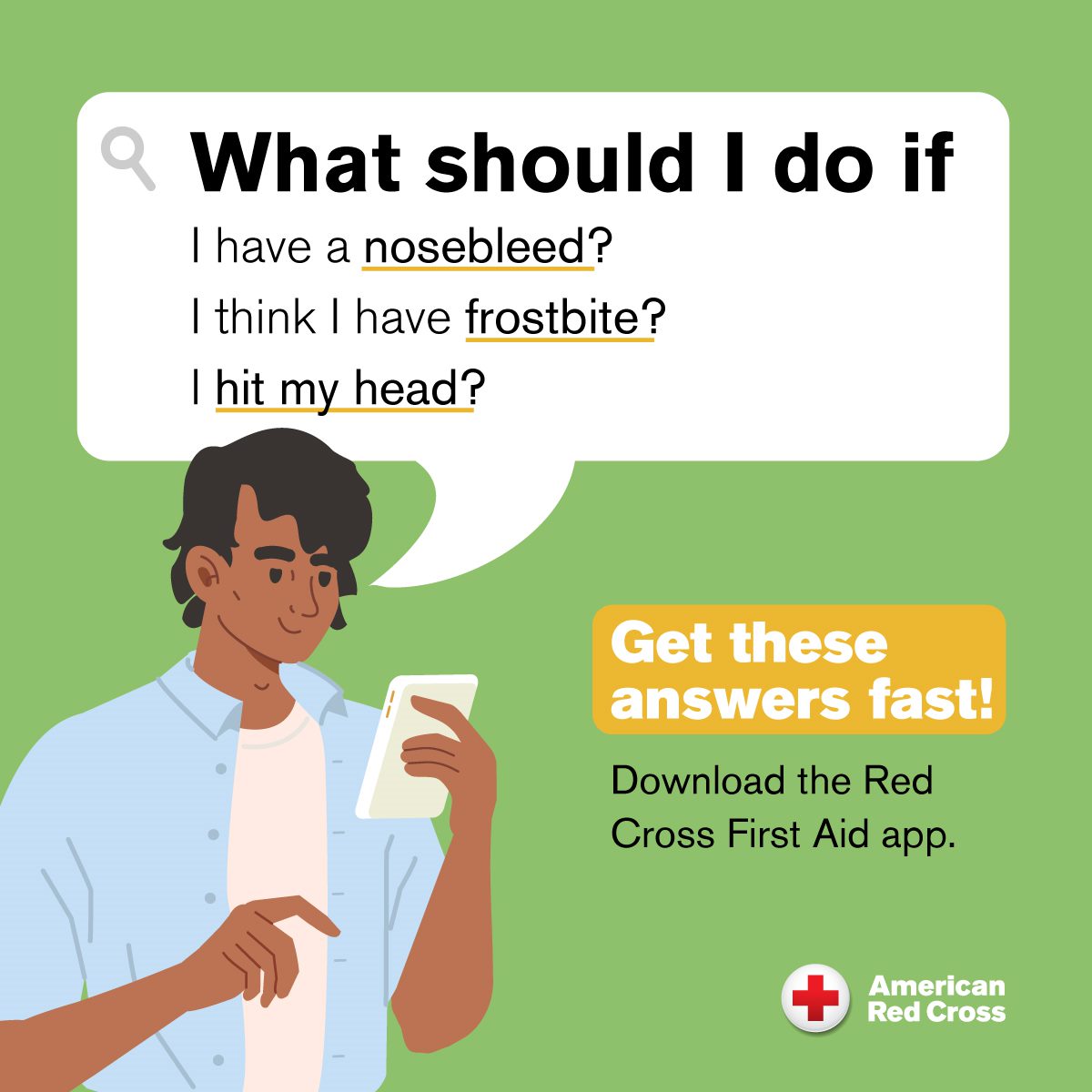
    Red Cross graphic: What should I do if — I have a nosebleed? I think I have frostbite? I hit my head? Get these answers fast! Download the Red Cross First Aid app.

    Download the FREE Red Cross First Aid app so you’ll know what to do if emergency help is delayed and the FREE Emergency app for weather alerts, open Red Cross shelter locations and safety steps for different emergencies. Choose whether you want to view the content in English or Spanish with an easy-to-find language selector. Find these and all of the Red Cross apps in smartphone app stores by searching for the American Red Cross or going to redcross.org/apps.

  • Water Safety Month: Kick off swimming season with Red Cross water safety tips

    By Yesh Kane

    Red Cross graphic: Make Water Safety a Priority. 1. Know how to prevent drowning. 2. Become water competent. 3. Know how to respond to a water emergency.

    As the warmth of summer approaches, families and individuals eagerly prepare to dive into swimming pools, lakes, and beaches. However, it is essential to prioritize water safety to ensure a safe and enjoyable experience for everyone.

    The American Red Cross has been a prime advocate of safety and emergency prevention. For more than 100 years, Red Cross has been helping millions of kids, teens and adults learn how to swim and become lifeguards and instructors so the water can be a safer place for everyone.

    The Red Cross created the first national water safety program in the U.S. — and today it’s still the gold standard for aquatics training. Click here to lookup water safety programs near you.

    Build Water Competency

    Drowning is a tragic and all-too-common cause of death, especially among children. It’s essential that we prioritize water safety to prevent such heartbreaking incidents. By developing water competency, which includes swimming skills, water smarts, and the ability to help others, we can make a significant difference in keeping ourselves and those around us safe in and around water.

    Water competency starts with being smart about water. Imagine you’re at the beach with your family. You’re not planning to swim, but it’s important to be cautious. Know your limits and take care of your physical fitness and any medical conditions. Always swim with lifeguards present or with someone keeping a watchful eye. And remember, wearing a life jacket that’s suitable for your weight and size is a must, whether you’re boating or not.

    Learning swimming skills is like unlocking a door to water safety. Think about it: being able to confidently enter water over your head and return to the surface, floating or treading water for a minute, and knowing how to turn over and turn around in the water can make a world of difference. Imagine if you or your child falls into a pool or a river—having the skills to swim at least 25 yards and exit the water safely can save lives.

    But water competency isn’t just about us—it’s also about helping others. Picture this: you’re at a crowded pool, and you notice a child struggling in the water. By paying close attention and knowing the signs of drowning, you can spring into action. Remember the saying “reach or throw, don’t go” to assist someone in trouble without putting yourself at risk. And having CPR and first aid training can be a lifesaver in those critical moments.

    Create Layers of Protection

    To make water safety a priority, it’s important to create layers of protection. Imagine you’re at a backyard pool party. Even if there’s a lifeguard, it’s crucial for you or another responsible adult to keep a close watch on children. Avoid distractions like checking your phone and be a dedicated “water watcher.” Teach your children to always ask for permission before going near water. And for boating or water activities, make sure everyone wears a U.S. Coast Guard-approved life jacket, regardless of their swimming abilities.

    Sometimes, accidents happen even to strong swimmers. That’s why it’s essential to be aware of the risks and take sensible precautions. Imagine you’re on a lake, planning to swim across with a friend. Always swim with a buddy to watch out for each other. It’s also important to avoid alcohol or drugs before swimming or supervising swimmers, as they impair judgment and coordination. And if you’re boating or fishing, remember to wear a life jacket, even if you don’t plan to jump into the water.

    Ultimately, ensuring that the entire family learns how to swim is an investment in their safety and enjoyment. Imagine the peace of mind when your loved ones have the skills to navigate the water confidently. It not only reduces the risk of drowning but also allows them to fully participate in water activities and enjoy the wonders of swimming.

    Know What To Do

    In the unfortunate event of an emergency, every second counts. Picture a child going missing at a pool party. The first thing you should do is check the water—it could make all the difference. If there’s a lifeguard, alert them immediately. Learn to recognize the signs of distress, like someone not making progress in the water, being unable to move or tread water, or appearing motionless and face down. Removing the person from the water safely, calling emergency medical services (EMS), performing rescue breathing and CPR, and using an automated external defibrillator (AED) if available can be lifesaving actions.

    By promoting water competency, implementing layers of protection, and knowing how to respond in emergencies, individuals can contribute to making water activities safer and prevent drowning incidents, ensuring that water remains a source of fun and enjoyment for everyone.

    Visit redcross.org for additional water safety information.

  • Hurricane Preparedness Week: Get ready now

    By Samantha Munro

    Red Cross graphic: Hurricane Watch = When hurricane conditions are a threat within 48 hours. Hurricane Warning: When hurricane conditions are expected within 36 hours.

    A hurricane is a tropical cyclone – a rotating, organized system of clouds and thunderstorms that originates over tropical or subtropical waters. It’s considered a Hurricane when wind speed hits a maximum of 74 mph. The Atlantic hurricane season runs from June 1 to November 30, while the eastern Pacific hurricane season runs from May 15 to November 30. Thus, the best time to prepare is before hurricane season begins.

    Develop an evacuation plan: If you are at risk from hurricane impacts, you need an evacuation plan. Now is the time to begin planning where you would go and how you would get there.

    Assemble disaster supplies: Whether you’re evacuating or sheltering-in-place, you’re going to need supplies not just to get through the storm but for the potentially lengthy and unpleasant aftermath. Have enough non-perishable food, water and medicine to last each person in your family a minimum of 3 days (store a longer than 3-day supply of water, if possible).

    Get an insurance checkup & document your possessions: Call your insurance company or agent and ask for an insurance check-up to make sure you have enough insurance to repair or even replace your home and/or belongings.

    Create a communication plan: Write down on paper a list of emergency contacts, and make sure to include utilities and other critical services — remember, the internet may not be accessible during or after a storm.

    Strengthen Your Home: Now is the time to improve your home’s ability to withstand hurricane impacts. Trim trees. Install storm shutters, accordion shutters, and/or impact glass. Seal outside wall openings. Remember, the garage door is the most vulnerable part of the home, so it must be able to withstand hurricane-force winds. Many retrofits are not as costly or time consuming as you may think. If you’re a renter, work with your landlord now to prepare for a storm.

    Learn more about hurricane preparedness on the website.

    In 2022, the American Red Cross assisted communities affected by Hurricane Ian, Hurricane Fiona, and Typhoon Merbok. Through these storm and their immediate aftermath, American Red Cross disaster workers served as a beacon of hope, providing safe refuge, nourishing meals, sorely needed relief supplies and emotional support to residents facing devastation. Learn more about our work.

    Disasters will always be a hard thing to manage, but with more people educated on how to prepare when faced with an oncoming disaster, more lives can be saved! It takes us all working together, the community, law enforcement and national disaster relief agencies to lessen the impact on an already devastating situation! Be part of the relief by becoming a Red Cross volunteer today!

  • #BeReady: It’s ‘Severe Weather Awareness Week’ in PA

    By Samantha Munro

    National Weather Service graphic: Understanding Severe Weather Hazards –TORNADO – tornadoes are violently rotating columns of air that can destroy buildings and cause significant injury or death. ACTION: Take shelter immediately in a sturdy structure. LARGE HAIL – hail can damage vehicles, crops, buildings, and cause injuries. ACTION: Move indoors away from windows. STRONG WIND – strong wind can knock over trees and damage buildings. ACTION: Move indoors away from windows. HEAVY RAIN – Heavy rain can cause flash flooding. ACTION: Avoid rising creeks and water-covered roads. LIGHTNING – Lightning strikes can cause significant injury or death. ACTION: Move indoors if you hear thunder

    If there is one thing that can never be controlled, it would be the weather in all its magnificence! We humans do our best in following the patterns and signs warning of severe weather which have saved many lives. Sometimes the magnitude of these storms outweigh the predictions causing massive damage and the loss of lives.

    It is important to be reminded yearly, on the different weather conditions and its severity so you, your loved ones and those in your community can know how to prepare once a warning is issued!

    Did you know:

    • Lightning is hotter than the surface of the Sun and can reach temperatures around 50,000ºF.
    • Severe thunderstorms can produce hail larger than softballs or winds over 100 mph!
    • Tornadoes are capable of hurling objects through the air like deadly missiles and can occur at any time of day or night and at any time of the year.
    • Approximately seventy-five percent of all Presidential disaster declarations are associated with flooding.

    The American Red Cross goes wherever they are needed, from small house fires to multi-state natural disasters, so people can have clean water, safe shelter and hot meals when they need them most.

    Floods are among the most frequent and costly natural disasters. In late July of 2022, heavy rains caused extreme flooding across eastern Kentucky, causing immense damage to homes and critical infrastructure in multiple communities.

    In the weeks to follow, the American Red Cross was there to support those in Kentucky who were impacted by the devastating flood waters, working closely with local officials and partners to ensure needs were being met and that households had what they needed to start their recovery journey. Disasters will always be a hard thing to manage, but with more people educated on how to prepare when faced with an oncoming disaster, more lives can be saved!

    It takes us all working together, the community, law enforcement and national disaster relief agencies to lessen the impact on an already devastating situation! Be part of the relief by joining the Red Cross today at redcross.org/volunteertoday.

  • It’s National Financial Capability Month; build your EFFAK now

    By Robert Ambrose

    FEMA graphic: According to FEMA’s 2020 Financial Resilience Survey, 91% of those who experienced a disaster reported a financial impact. Recover faster with the free Emergency Financial First Aid Kit (EEFAK).

    Ever heard of EFFAK?

    While the abbreviation sounds unusual, Ready.gov may be the best start to prepare for possible disasters. EFFAK is your own Emergency Financial First Aid Kit.

    Advice is right there. Updating insurance policies and holding the document and other records (e.g., physician, health insurance, immunizations, medications, mortgage payments) in a safe place is suggested. Storing data in the cloud may be considered for access in case of you need to evacuate your home.

    Background knowledge like warnings about (electronic) spam is offered. For example, did you know that the government never texts or emails requests for money or payments? Any links (i.e., URLs) that request your bank data and passwords are trash.

    Discovering the resources available now may give us gratitude for all we have as Americans. Not every country has an app to tell you where to find shelters during an emergency. The FEMA app will do just that. But federal assistance does not stop there. If you live in a flood zone, you can get details at flood.gov.

    If a flood is threatening, tune in to the local news. Sign up for weather alerts. How do you even know if you live in a flood zone? There is a convenient map at that website. What if you live far from a river or sea and you are in the forest? Did you know that wildfires leave neighborhoods prone to mud slides years later? It makes sense because the burn scar leaves no trees and shrubbery to absorb rainwater and springtime snow melts.

    Less dramatically, you can prepare for basement flooding by maintaining a sump pump. A water alarm can alert you if there is a problem down there.

    Back to the EFFAK. Good EFFAKs hold financial literacy like saving money for a problem instead of incurring debt. For example, if a natural disaster strikes, it is better to have the appropriate savings than to borrow to repair the property. Knowing your insurance policy – its limits, exclusions and deductibles – can help you plan to save the appropriate amount now.

    Another way to protect you is to divert incoming paper payments (e.g., employer, Social Security checks) to electronic transfer. That way if the U.S. mail stops working for months to your neighborhood, you still receive your payments.

    Suggested dates for reviewing your EFFAK and checklists are listed in the ready.gov EFFAK guidelines.

    Communication is a sine qua non – nothing happens without it. Your EFFAK tells close family members who they need to contact (e.g., banks, etc.) if, you, the head(s) of household die(s).

    So you survived the disaster. Did you know that creditors still knock even if there is no door to knock on/ In other words your  mortgage and credit card payments are due on time even if you have lost your home. You EFFAK will have the bank contact information to call if you need more time to pay. Contact the banks immediately if there is a disaster-related payment problem.

    Get more information at Ready.gov’s Financial Preparedness webpage.

    Video courtesy of the U.S. Consumer Financial Protection Bureau
  • Click! Click!! April 5th is the day to click a selfie in your safe place

    By Yesh Kane

    NOAA graphic: #SafePlaceSelfie – Join us on April 5.

    Take the #SafePlaceSelfie challenge! A selfie is a statement about you. You can use this powerful tool of self-expression to have fun, plan for safety during weather emergencies, and influence your social network to plan for safety too.

    Imagine it is another manic Monday, and you are hurrying to get ready for work and your kids off to school when the entire house trembles. It is an earthquake!  Many such natural hazards can occur unexpectedly anywhere. Emergencies like earthquakes, wildfires, and flash floods are much less predictable than other weather conditions like hurricanes or winter storms, which weather services can track. Yet many of these natural hazards can occur with little time to prepare. That is why it’s essential to have a plan in place — and safe locations identified — before dangerous weather hits.

    If there was one extreme weather preparedness action you want your loved ones to take, what would it be? Ask yourself, ‘What if?’ Where would you go if life-threatening weather approached your area? What are the most common hazards that can occur in places you inhabit? What would be the best place to stay safe during various emergencies and weather situations? Practicing what to do and where to go for any hazardous weather makes the action second nature, which is crucial when time is of the essence. 

    The National Weather Service created the #SafePlaceSelfie challenge to remind us to plan for unexpected moments. Red Cross supports the National Weather Service and Federal Emergency Management Agency in asserting that finding your safe place is one of the essential preparedness activities to save your life during extreme weather. 

    On April 5th, join us on social media for the #SelfPlaceSelfie challenge. You’re invited to participate by posting a selfie taken in a safe place. Also, share with your friends where you would go if you needed to take shelter!

    NOAA graphic: A partial list of safe places from weather hazards. 

    When planning your safe place selfie, consider these steps:

    Step 1: Identify common hazards in your area

    • Think about the hazards that can happen where you live, work or visit. These could be frequent hazards like lightning, flash flooding, or extreme heat. Or, they could be rare but high-impact hazards, such as a tsunami.
    • Maybe your most common hazards aren’t weather events. Where is your safe space during wildfires, earthquakes, rough surf, and rip currents?

    Step 2: Find locations to stay safe, take a selfie, and post with #SafePlaceSelfie

    • Get the whole family involved in the creative process. For example, do you have young children or a pet? What is your plan to protect them?
    • You can also think beyond just a physical location. For example, your safe spot may be anywhere you can access lifesaving warnings through technology like weather channels on your smartphone. It could also be how close you are to safety, such as swimming near lifeguard stands.

    Step 3: Challenge others to post a safe place selfie

    • Encouraging others to participate could help others stay safe. Tag your friends to have them find their safe place from natural hazards, and like and share posts to spread awareness on social media.
    • Knowing where to go if a disaster strike can minimize hesitation and help you make good decisions to ensure the safety of yourself, your family, and your pets.

    What else can you do the promote and participate in #SafePlaceSelfie Day?

    • Create a friendly competition on your social network online and offline at work or neighborhood.
    • Get others involved, like your colleagues, family members, friends, and pets.
    • Use this campaign to promote other weather safety actions, such as having multiple avenues to receive warnings, assembling an emergency kit, and building your communication plans. Ready.gov is a great resource to help with your planning process.
    • Get creative! Think beyond the traditional safe locations for tornadoes and focus on other hazards such as lightning, rip currents, tsunami, flood, extreme heat or cold, wildfire, earthquake, etc.

    The simple act of showing others that you are prepared for extreme weather by participating in the #SafePlaceSelfie challenge could save the life of someone you know.  

    NOAA video: #SafePlaceSelfie video guide.