The American Red Cross is proud to highlight the availability of preparedness materials in American Sign Language (ASL) specifically designed for deaf and hard of hearing communities.
Developed through support from a FEMA Fire Prevention and Safety Grant, the Red Cross ASL Disaster Resource Hub offers preparedness videos in ASL for hurricanes, wildfires, extreme heat, floods, winter storms and more.
In addition to resources on the hub, the Red Cross also provides its Be Red Cross Ready presentation in ASL as well as information about its popular Emergency app.
The Red Cross is committed to providing inclusive preparedness resources that help all people take steps to protect themselves and their loved ones before disasters strike and to help families and communities build resilience.
Visit redcross.org for accessible disaster safety and planning resources.
Hand holding a lantern flashlight. Public domain image by Amar Preciado.
It’s still National Preparedness Month, so let’s play a little Choose Your Own Adventure.
Today’s challenge: Could you make it 72 hours without power?
To build our adventure, I posed a few questions to my family group chat to see how they would handle three days without electricity.
Their answers ranged from practical to creative and, in one case, involved a private jet.
You’ll hear from them along the way.
But first, imagine this:
No lights.
No Wi-Fi.
No refrigerator humming in the background.
Your phone is at 37%, and that episode of The Bear you planned to watch will have to wait.
The lights flicker.
Everything goes quiet.
Your 72 hours begin now.
The power just went out. What do you grab first?
A. Your phone.
Obviously. You need to find out what happened, check on family and friends, and protect that remaining 37% battery like it’s the last electricity on Earth.
B. Flashlights and batteries.
Congratulations. Dare I say you have become the responsible person in the disaster movie.
C. Water and nonperishable food.
You’re already thinking ahead.
D. The generator.
If you have one, you’re deciding what actually needs power. And remember: generators should only be used outdoors and safely away from your home.
I asked my family a similar question:
How would you survive 72 hours without electricity?
Then Chantal responded: “I’m getting on a private jet and going somewhere with power.”
Fair enough.
Adventure over.
Except, as we went back and forth about taking this seriously and practically, Chantal had really thought about this.
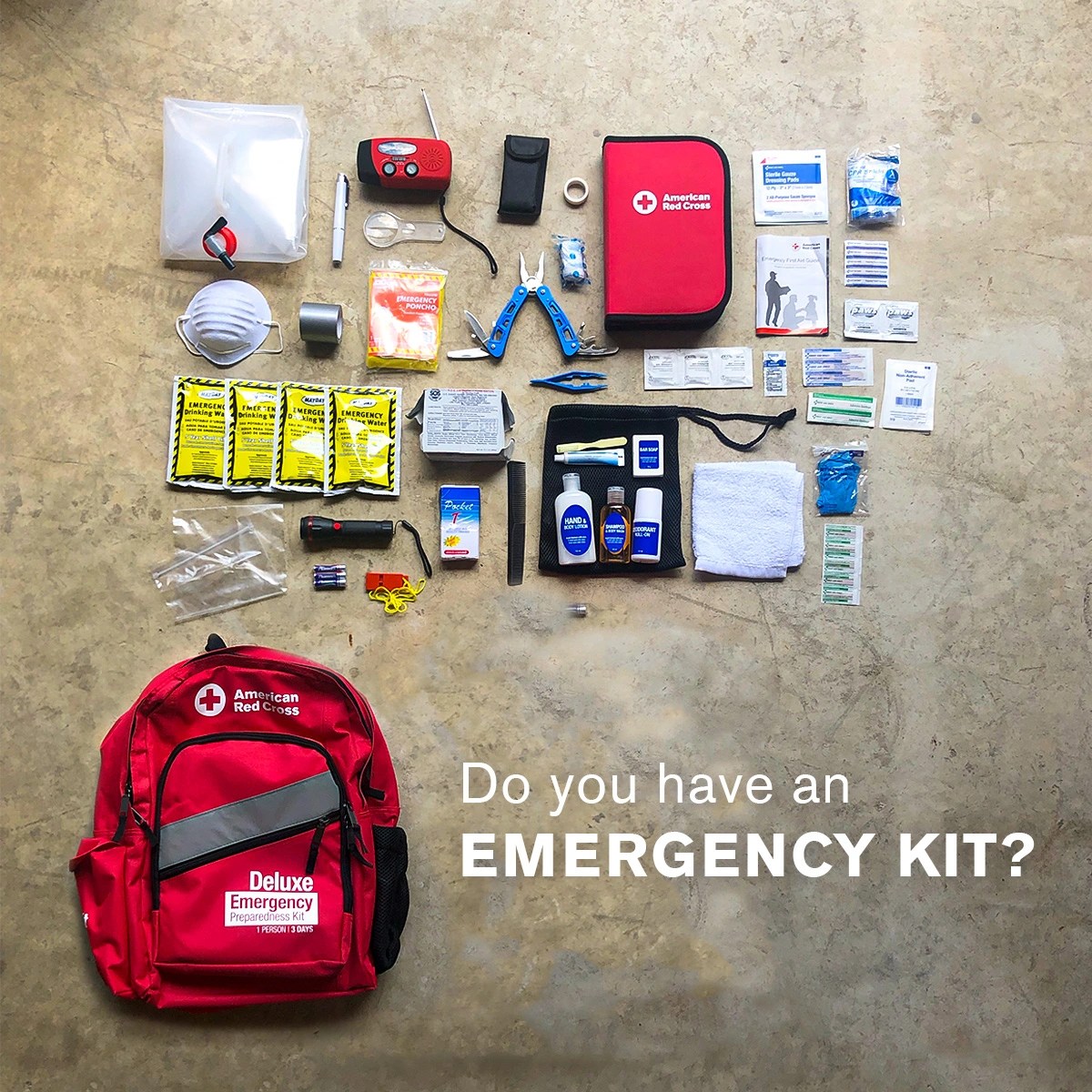
Emergency supplies. Photo illustration by Jason Colston/American Red Cross
Night falls. How are you getting through it?
The house is dark. The Wi-Fi is gone. If you have children, someone has probably already asked, “When is the power coming back?” approximately 47 times.
What’s your move?
A. Get everyone comfortable.
Vanessa is ready with blankets, layered clothing, baby essentials, medications and whatever else everyone needs.
B. Break out the games.
Euphemia is going old-school with entertainment that doesn’t require Wi-Fi, electricity or a charger.
C. Grab a book.
Gloria has accepted the situation and is probably several chapters ahead of the rest of us.
D. Go to sleep.
Cass has concluded that the most efficient way to get through several hours without electricity is to be unconscious for them.
Depending on how long the outage lasts, rejuvenating oneself through sleep is a great way to pass the time.
Mid chat however Gloria raises an important question:
What season are we talking about?
Seventy-two hours without electricity during extreme summer heat is a very different experience from 72 hours after a winter storm.
The same is true depending on where you live and who is in your household. Young children, older adults, pets and anyone who relies on medication or medical equipment can change what “prepared” looks like pretty quickly.
Your phone hits 8%. What do you do?
George said he could manage without plenty of things, but losing his phone and computer would be difficult because they’re also his connection to other people.
During an outage, that matters.
You may be checking on family, looking for emergency information or trying to find out when power is expected to return.
Suddenly, that little red battery icon becomes considerably more concerning than usual.
What’s your move?
A. Keep scrolling and hope for the best.
B. Switch to low-power mode and start rationing your battery.
C. Reach for the portable power bank you remembered to charge.
D. Casually produce a solar charger and become everyone’s new favorite relative.
Portable chargers came up several times in our family conversation.
Enter Chantal, who continues her chatter and says we should meet at a central location. A place to check in and make sure we are alright and together. Have a family meeting place.
She’s an 80’s baby who remembers guidelines given before she had a cell phone.
She knows that phones need power. Networks can become congested. Messages may not go through. And sometimes the people in your household aren’t together when the power goes out. If you couldn’t call or text, would everyone know where to go or how to reconnect?
Or is the entire family emergency plan currently stored inside one person’s head?
Close-up of a person holding a smartphone. Public domain photo by Cottonbro Studio.
Welcome to Day Two. How prepared are you really?
At this point, the adventure is considerably less adventurous. The novelty has worn off.
Someone is asking about the refrigerator. Your battery supply is looking different than it did yesterday. And all those little things you depend on without thinking about them are suddenly very noticeable. Which preparedness category sounds most like your household?
A. “We can get through today.”
You have some water, food, flashlights and basic supplies. You’re not starting from scratch, but you may be discovering a few gaps.
B. “We have an emergency kit.”
Food, water, medications, batteries, chargers and other essentials are organized and reasonably easy to find.
C. “We have supplies and a plan.”
People know where things are, how to use them and what to do if the household gets separated.
And then there’s:
D. “Please consult Chantal.”
Remember Private-Jet Chantal?
While the rest of us were thinking about flashlights, bottled water and protein bars, Chantal was apparently preparing for an entirely different reality her checklist included:
Stored water.
Backup power.
Solar power.
A hand-crank radio.
A compass.
Water filtration.
Rice and lentils.
She plans on ensuring her nieces know how to read maps and find safe water.
I asked about making it through a 72-hour power outage.
Chantal prepared for civilization to reboot.
Excessive? Perhaps. However, she also made one of the better points to come out of our family discussion:
Having supplies is only part of being prepared. You also need to know what to do with them.
A flashlight isn’t very useful if nobody can find it.
A family plan doesn’t help much if only one person knows it.
And emergency supplies are only useful if they actually account for the people—and animals—living in your home.
Do you have necessary medications?
Supplies for babies or older adults?
Pet food?
Batteries that aren’t several years old?
And then there’s water.
The Red Cross recommends having one gallon of water per person, per day. For a stay-at-home emergency supply, the recommendation is enough water for two weeks.
Do that math for your household and suddenly those bottles at the back of the pantry may not look like quite so much.
The refrigerator has been without power for hours. What do you do?
A. Open it every 15 minutes to see if everything still feels cold.
B. Keep the doors closed as much as possible.
C. Start deciding which foods you would use first.
D. Realize you have absolutely no idea how long food stays safe without power.
If you picked B, you’re on the right track.
The natural temptation is to keep opening the refrigerator to check on things. Resist that temptation. Keeping refrigerator and freezer doors closed helps them stay cold longer. An unopened refrigerator can keep food cold for about four hours. A full freezer can maintain its temperature for about 48 hours; a half-full freezer, about 24.
Sometimes preparedness isn’t about buying another piece of equipment.
Sometimes it’s knowing what not to do.
Kitchen refrigerator and pantry. Public domain photo by Jonathan Borba.
Hour 72: The lights come back on. How did you do?
The refrigerator hums.
A light flickers on.
Someone celebrates because the Wi-Fi has returned.
You made it.
Now comes the useful part:
What did those three days reveal?
A. “We’re ready.”
Look at you. Chantal would be proud.
B. “We need a few things.”
Maybe more water, fresh batteries or another portable charger.
C. “We have supplies. Finding them is another matter.”
Three flashlights are considerably less useful when nobody knows where they are.
D. “Our entire emergency plan is ‘everybody call Mom.’”
That counts as a discovery. The point of this little adventure isn’t to prepare for every disaster imaginable or turn your basement into Chantal’s command center. It’s to identify the handful of things that would make an unexpected outage easier and safer for your household.
Know where your emergency supplies are. Keep enough water and basic food on hand. Think about medications, children, older adults and pets. Keep a portable charger charged. Decide how your family would reconnect if calling and texting weren’t an option. None of that requires preparing for the end of the world. It just requires doing a little thinking before the lights go out.
You don’t have to become Chantal. You just want your plan to be slightly more sophisticated than calling mom or trying to google it.
One Last Adventure: The Martian
If all this talk about stretching limited supplies has you looking for a movie night — because hey, what is a writing piece from me without a movie recommendation — add The Martianto your list.
Without giving too much away, astronaut Mark Watney finds himself facing the ultimate preparedness challenge: limited food, limited supplies, no quick rescue and a very long distance to the nearest grocery store. His circumstances are, hopefully, nothing like yours.
But the questions are familiar:
What do I have?
What do I need?
How long will it last?
And what happens if Plan A doesn’t work?
Consider it preparedness homework. A yummy snack of your choice is permitted.
And remember, choose wisely as your next adventure may not give you advance notice.
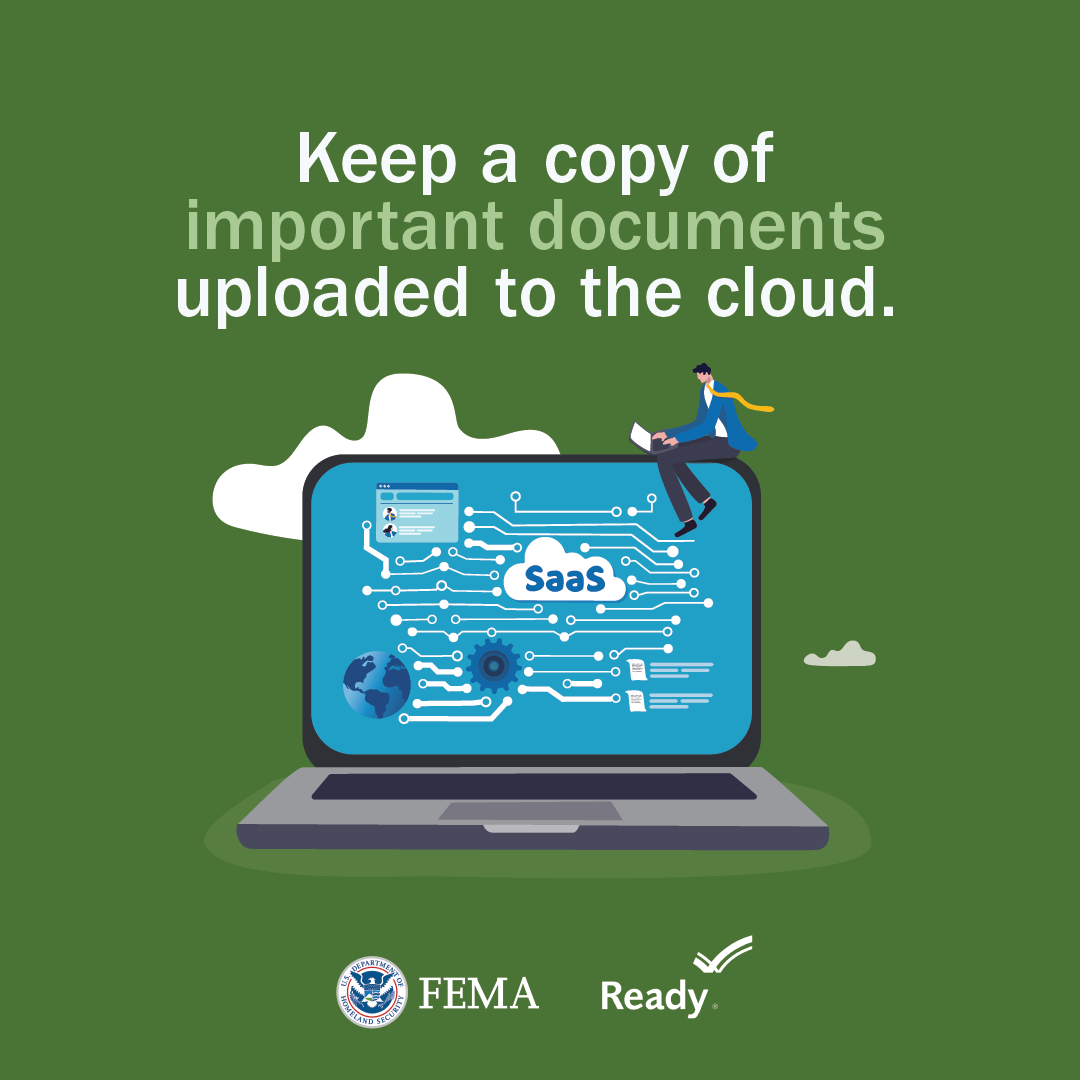
FEMA graphic: “Keep a copy of important documents uploaded to the cloud.”
Oh no! A disaster has struck your home and all of your important documents are gone forever! How do you prevent losing your information in the future? The answer is a digital emergency kit.
A digital emergency kit is a collection of your most important documents stored electronically. This way, it doesn’t matter if the original, physical copies get destroyed or lost. Everything is easily accessible to you online at any time from anywhere, saving you a lot of headache and stress in case something unfortunate does happen.
What specific documents should I store digitally?
There is no exact list you should follow, so it is recommended to just digitize whatever information or items you feel like you would hate to lose in a disaster.
Graphic: Documents to Consider Saving to the Cloud” listing house deeds, birth certificates, vehicle registrations, passports, pay statements, driver’s licenses, tax statements, green cards, medical records, social security cards, health insurances, family photos/videos, diplomas/awards, and utility bills.
For things you can’t store electronically, such as jewelry, bags, collectibles, and other valuables, take multiple, clear photos with different angles and then digitize those photos. To have proof of ownership, take additional photos of yourself holding the items or of any receipts you may still have. Insurance claims can take a long time if you can’t prove who you are, what you owned, or what it’s worth. Having these photos in your kit can get you your coverage sooner.
But where online should I store all of these things, and how will I know that my private information won’t get hacked?
You should keep your digital emergency kit in the cloud. Popular services like Dropbox, Amazon Cloud Drive, and Google Drive allow you to store your information digitally on their networks. Lots of photos and videos may also already be online on your phone or websites like Shutterfly or Snapfish. As for hackers, you can keep your kit safe by looking into encryption and having multiple authentication factors. Don’t put everything in one place and don’t have only one person handling the passwords. Spread your things across multiple clouds and discuss how to access your kit with trusted people such as your spouse, children or parents.
Laptop with a security symbol. Public domain photo illustration by Dan Nelson.
Does building a digital emergency kit take a long time?
Packing your digital emergency kit can happen in one afternoon, but you have to maintain it over time. Whenever you have new documents or updates to older ones, add them to your kit. To further prevent the risk of getting hacked, change your passwords once or twice a year. But make sure that your trusted people still know how to access the information.
Taking each photo and digitizing each document might seem like overkill, but it’s definitely worth your time, just in case. It’s better to be prepared and not have something happen then to have something happen and not be prepared. It doesn’t hurt to pack a digital emergency kit. Your future self will thank you!
🚨 Think you’re ready for the unexpected? Take this short quiz to find out. Click the arrows to navigate through the questions and keep track of your points.
Whether you’re a preparedness pro or just getting started, share your results on social media and tag a friend.
Preparedness can feel overwhelming. Between severe weather, home fires, power outages and medical emergencies, it’s easy to look at everything you should do and wonder where to even begin.
The good news? You don’t have to do it all at once.
This September, the American Red Cross Southeastern Pennsylvania Region is making preparedness a little easier. Throughout National Preparedness Month, we’ll share one simple action you can take to help yourself, your family and your community be a little more ready for whatever comes your way.
Some days will take just a few minutes, while others might take a little more planning. But every step you take adds up. So whether you’re just getting started or looking to refresh your emergency plans, we hope you’ll join us for this 30 Days of Preparedness challenge.
This September, the American Red Cross Southeastern Pennsylvania Region is breaking down preparedness topics to make them more manageable. Throughout National Preparedness Month, we’ll be sharing 30 Days of Preparedness—a daily dose of practical actions you can take to strengthen your readiness.
** Bonus Challenge: Play Preparedness BINGO!
Looking for an extra way to participate in National Preparedness Month? Download our Preparedness BINGO card and see how many preparedness activities you can complete throughout September.
Mark off squares as you go, challenge friends and family to play along and see if you can earn a BINGO before the month is over. Whether you complete one row or fill the entire card, every action you take helps make you, your family and your community more prepared.
Tap or click to open the image above, then right click to save the National Preparedness BINGO card to your device.
30 Days of Preparedness Activities
Tuesday, Sept. 1 – Download our Apps
Let’s start with something simple. Take a few minutes today to download our free Red Cross Emergency and First Aid apps. The Emergency app can send weather alerts, help you locate open Red Cross shelters and provide expert guidance for a variety of emergencies. The First Aid app offers easy-to-follow instructions for everyday injuries and unexpected situations. Download both apps and spend a few minutes exploring them.
Wednesday, Sept. 2 – Sign Up for Alerts
When it comes to emergencies, information is everything. Now that you’ve downloaded our apps, make sure you have a few other ways to receive alerts too. Wireless Emergency Alerts on your phone and a NOAA Weather Radio can help keep you informed when severe weather or other emergencies threaten your area.
Many counties and municipalities also offer their own alert systems. In Southeastern PA, these include Ready Bucks, Ready ChesCo, Delco Ready, Ready Montco and Ready Philadelphia. Take a few minutes today to see what’s available where you live and sign up if you haven’t already.
Download the American Red Cross Emergency App for free from your favorite app store. Photo by Alana Mauger/American Red Cross
Thursday, Sept. 3 – Know Your Risk
Not every community faces the same hazards. Some areas are more prone to flooding, while others may be at greater risk from severe storms or extreme heat. Today’s preparedness step is easy: spend a few minutes exploring FEMA’s National Risk Index interactive map. Understanding the risks where you live can help you make smarter decisions about planning and preparedness.
Friday, Sept. 4 – Learn How Choose or Use a Fire Extinguisher
A fire extinguisher can make a big difference during a small fire, but only if you know how to use it. If you don’t have a fire extinguisher on every level of your home, consider adding one. If you already have them, take a few minutes to review the instructions so you’re not trying to figure them out during an emergency. The U.S. Fire Administration has resources to get you started. Better yet, check with your local fire department to see if they offer demonstrations or training.
Saturday, Sept. 5 – Learn CPR
Each year, more than 350,000 people experience out-of-hospital cardiac arrest in the U.S. and only about 10% survive. But immediate CPR delivered by a bystander can double or even triple a person’s chance of survival. Whether you’re brand new to CPR or just need a refresher, today is a great day to learn. You can sign up for a class through the Red Cross or watch a hands-only CPR video online. Even a few minutes spent learning the basics can make a life-saving difference.
CPR stock photos by Roy Cox for the American Red Cross.
Sunday, Sept. 6 – Create an Escape Plan
If a home fire happened tonight, would everyone in your household know what to do? Take some time today to create a home fire escape plan. Make sure everyone knows two ways out of each room and where to meet once they’re safely outside. Don’t forget to include children and pets in your planning. Download our home fire escape plan template to get started.
Monday, Sept. 7 – Practice Your Escape Plan
Yesterday, you made a plan. Today, let’s put it into action. Gather everyone in your household and do a quick practice run. The goal is to be able to get out safely in two minutes or less. It may feel a little silly at first, but practicing now can help everyone react quickly when it matters most.
Bonus Task: After the drill, take a selfie of you and your family at your designated meeting spot. Share it on social media and challenge a friend to do the same.
A family maps our their two-minute home fire escape plan. Photo illustration by Brad Zerivitz/American Red Cross
Tuesday, Sep. 8 – Know the Difference Between a Watch and a Warning
You’ve probably seen weather alerts pop up on your phone before, but do you know exactly what they mean? A watch means conditions are favorable for severe weather and you should be prepared to take action. A warning means dangerous weather is happening or expected soon and it’s time to act. Take a few minutes today to review the different types of weather alerts and what they mean. Knowing the difference can help you make quicker, safer decisions when severe weather threatens.
Wednesday, Sept. 9 – Know Your Numbers
If you had to leave home quickly, would you have all the important information you need? Spend a few minutes gathering emergency contacts, doctors’ phone numbers, insurance information and any other important details your family may need during an emergency. FEMA’s family emergency plan template is a great place to start.
Thursday, Sept. 10 – Brush Up on Hurricane Preparedness
September is the busiest month of Atlantic hurricane season, making it a good time to review hurricane safety. Even though hurricanes don’t hit Southeastern Pennsylvania directly very often, their impacts can reach us through flooding, high winds and power outages. Take a few minutes today to review Red Cross hurricane safety information so you’ll know what to do before, during and after a storm.
Example of a solar and crank-powered radio with NOAA weather bands. Photo by Alana Mauger/American Red Cross
Friday, Sept. 11 – Find Your Emergency Radio
What would you do if your phone lost service and the power went out? Battery-powered and hand-crank radios remain one of the most dependable ways to receive emergency information during a disaster. If you already have one, find it and make sure it’s working. If not, consider adding one to your preparedness supplies.
Bonus Task: A NOAA Weather Radio can provide lifesaving information when other communication systems are unavailable. Find your local NOAA station here.
Saturday, Sept. 12 – Back Up Important Documents
Recovering from a disaster is much easier when important documents are easy to access. Take some time today to securely store copies of key documents such as insurance policies, driver’s licenses, medical records, banking information and housing documents. A password-protected cloud account or secure external drive can help keep them safe.
Sunday, Sept. 13 – Build Your Emergency Kits
Let’s talk emergency kits. Think about the things you and your family use every day to stay safe and comfortable. Water, food and medications are a great start, but don’t stop there. Consider items for children, pets and anyone with specific medical needs. These checklists from the Red Cross and FEMA can get you started. Remember, the goal isn’t to build the perfect kit overnight. Start with what you can and build from there.
Red Cross graphic showing examples of items to include in an emergency kit.
Monday, Sept. 14 – Don’t Forget Your Vehicle
Emergencies don’t always happen when you’re at home. Take a few minutes today to put together a basic emergency kit for your vehicle. Consider items like a flashlight, blanket, jumper cables, first aid supplies, charger, boots, flares and bottled water. Check out these lists from FEMA and AAA for inspiration.
Tuesday, Sept. 15 – Put Flashlights Where You’ll Need Them
Power outages never seem to happen at convenient times. Today, walk through your home and make sure flashlights are stored in easy-to-find locations. Check the batteries and add extras nearby if needed. The next time the lights go out, you’ll know exactly where to look.
Wednesday, Sept. 16 – Sign up for the Great ShakeOut
Did you know millions of people participate in the Great ShakeOut earthquake drill every year? Even though earthquakes aren’t common in our area, practicing what to do during unexpected emergencies is always a good idea. Take a minute today to register your family, workplace or school and plan to participate in this year’s drill. It’s free, easy and a great way to build preparedness habits.
ShakeOut graphic: Get Ready to ShakeOut. October 15, 2026. Register: ShakeOut.org
Thursday, Sept. 17 – Test Your Smoke Alarms
Here’s a task that takes less than five minutes and could save lives. Walk through your home and test every smoke alarm. Working smoke alarms can cut the risk of dying in a home fire by half. If you discover a missing or non-working alarm, make a plan to replace it as soon as possible.
If you need smoke alarms, the Red Cross may be able to help. Submit a request to have free smoke alarms installed by the Red Cross. Many fire departments also offer this service free of charge.
Friday, Sept. 18 – Turn Around, Don’t Drown
Flooding is the most common natural disaster in Pennsylvania, and flood-related deaths happen far too often because people underestimate moving water. Today’s reminder is simple: never drive, walk or swim through flooded areas. Take a few minutes to review our flood safety tips and remember the slogan: Turn Around, Don’t Drown.
Saturday, Sept. 19 – Build a First Aid Kit
You probably have bandages somewhere in the house, but do you have a complete first aid kit? Take some time today to check what supplies you already have and fill in any gaps. Include items for cuts, burns, sprains, allergies and common illnesses, along with any medications your household depends on. Review this checklist from the Red Cross.
Be Red Cross Ready First Aid Kit open. Photo by Dan Bittinger
Sunday, Sept. 20 – Check Your Fuel Level
Here’s a simple preparedness habit that can make a big difference. Take a look at your vehicle’s gas gauge. Is your tank at least half full? Keeping your vehicle fueled can give you more options if you ever need to evacuate or travel during an emergency. Consider making a half tank your personal rule of thumb.
Monday, Sept. 21 – Learn About Amateur Radio
In a world of smartphones and Wi-Fi, you might be surprised to learn that amateur radio (aka ham radio) still plays an important role during disasters. When traditional communication systems fail, licensed amateur radio operators often help emergency organizations stay connected.
The Philadelphia Amateur Radio Emergency Service (ARES) directly supports the disaster work of the Red Cross, and many operators are also volunteers. Take a few minutes to read about the role of Red Cross amateur radio operations during Philadelphia’s summer of major sporting events, festivals and public gatherings.
Amateur radio operator Sam Rausch checks in to Net Control from Central Parkway Library during his first Red Cross summer events shift on June 14. Photo by Eileen Raul / American Red Cross
Tuesday, Sept. 22 –Get Familiar with Your Utilities
If a water pipe bursts or a storm damages utility lines, would everyone in your household know what to do?Take a few minutes today to locate your home’s water, gas and electrical shutoffs. Make sure the adults and older children in your household know where they are and when they should be used. It’s also a good idea to keep any tools needed to turn off water or gas nearby.Just remember – only shut off utilities if you suspect damage or are instructed to do so by local authorities. If the gas is turned off, it must be turned back on by a professional.
Wednesday, Sept. 23 – Donate Blood or Platelets
Preparedness isn’t just about protecting yourself. It’s also about helping others when they need it most. When emergencies happen, hospitals rely on blood that’s already on the shelves. If you’re eligible, consider scheduling a blood or platelet donation this month. If donating isn’t an option, you can still help by encouraging someone else to give. Visit RedCrossBlood.org or download our FREE Blood Donor app.
Local Red Crosser Heidi Dampman took a break during her recent deployment in Indiana to donate blood. Submitted photo
Thursday, Sept. 24 – Store Extra Water
Water is one of the most important things you’ll need in an emergency, but it’s easy to overlook when building your supplies. Today, take stock of the water you already have and consider whether it’s enough for your household. A good rule of thumb is to have at least one gallon per person per day. You’ll want enough for drinking, cooking and basic hygiene. If you’re just getting started, don’t worry about storing two weeks’ worth today. Start small and build your supply over time. Every bottle you set aside is one step closer to being prepared.
Bonus Task: Take a few minutes to review CDC guidance for making water safe in an emergency.
Friday, Sept. 25 – Explore Red Cross Programs for Kids
Preparedness isn’t just for adults; kids can learn important safety skills, too. And when kids understand what to do in an emergency, they often become preparedness champions for the whole family.
Take a few minutes to explore two free Red Cross programs designed especially for children. Prepare with Pedro helps young children learn how to stay safe during home fires, severe weather and other emergencies through engaging stories and activities with Pedro the cartoon penguin. In WHALE Tales, Longfellow the whale teaches children and families important water safety skills to help prevent drowning.
Red Cross graphic reads Alexa, enable Pedro’s Fire Challenge.
Saturday, Sept. 26 – Go on a Home Hazard Hunt
Here’s a preparedness activity the whole family can do together! Walk through your home and look for things that could become hazards during an emergency. Bookcases that aren’t secured, overloaded outlets, loose cords, cleaning supplies within reach of children and heavy items stored on high shelves are all good places to start. You might be surprised by what you find. Small fixes today can help prevent injuries and damage tomorrow.
Sunday, Sept. 27 – Check In with Your Neighbors
Preparedness is stronger when communities are connected. Think about the people who live around you. Do you know who might need extra help during an emergency, such as an older adult, someone with a disability or a family with young children? Do your neighbors know how to reach you if they need assistance?
You don’t need to organize a neighborhood emergency response team. Simply introducing yourself or exchanging contact information with a neighbor can make a big difference when severe weather, power outages or other emergencies occur.
Monday, Sept. 28 – Make a Plan for Your Pets
Our pets are family, so they should be part of our preparedness plans, too. Take a few minutes to think about what your pets would need if you had to leave home in a hurry. Do you know where you could take them if a shelter or hotel doesn’t allow animals? Are their ID tags and microchip information up to date? Do you have extra food, water, medications and supplies set aside? A little planning now can help keep your furry family members safe and reduce stress if an emergency happens.
Bonus Task: Download the free Red Cross Pet First Aid app.
Storm the cat sits in his carrier. Photo by Alana Mauger / American Red Cross
Tuesday, Sept. 29 – Volunteer with the Red Cross
Want to take preparedness one step further? More than 90 percent of the Red Cross disaster workforce is made up of volunteers. Whether you’re interested in supporting shelters, helping families after home fires or working behind the scenes, there’s a volunteer role for almost everyone. Take a few minutes today to explore volunteer opportunities and learn how you can make a difference in your community.
Wednesday, Sept. 30 – Spread the Word
We made it! Over the past 30 days, we’ve taken steps to become more prepared for emergencies. That’s something worth celebrating. Before the month ends, share a preparedness tip, resource or lesson you’ve learned with a friend, family member or neighbor. Preparedness works best when we do it together. A simple conversation today could help someone be ready tomorrow.
Keep the Momentum Going
If you’ve made it through all 30 days, you’ve taken meaningful steps toward becoming more prepared for emergencies.
The truth is, preparedness isn’t about checking boxes or building the perfect emergency kit overnight. It’s about creating habits that help us respond with confidence when the unexpected happens. Every alert you signed up for, every plan you reviewed and every conversation you had with family, friends or neighbors helps build a safer, more resilient community.
Red Cross graphic: Being a good neighbor means showing up when it matters most
Preparedness doesn’t stop at our front doors, either. When we know how to care for ourselves, we’re better equipped to help others. Whether it’s checking on a neighbor during a power outage, sharing preparedness tips with a friend or volunteering with the Red Cross, small actions can have a ripple effect throughout our communities.
That’s what resilience is all about: people looking out for one another before, during and after emergencies.
As National Preparedness Month comes to a close, we hope you’ll continue building on what you’ve started. Revisit your plans, update your supplies and keep the conversation going throughout the year.
A mother and her daughter walk towards a school building on a sunny day. Public domain photo by Caleb Oquendo.
It’s time to dig out your backpacks, gather your school supplies and fill up your calendars with bus schedules, sports practices and afterschool activities. For many families, the start of a new school year brings excitement, anticipation and a return to familiar routines. But amid the rush to prepare for the first day, there’s one important item that shouldn’t be overlooked: safety.
Whether your child is heading to class for the first time or is a senior in high school, the American Red Cross Southeastern Pennsylvania Region encourages families to make safety part of your back-to-school preparations.
For Younger Students
Teach young children important personal information. Make sure younger students know their phone number, home address, how to contact their parents at work, another trusted adult they can call and how to dial 911 in an emergency.
Remind them not to talk to strangers or accept rides, gifts or invitations from someone they don’t know.
Getting to and From School
Use sidewalks whenever possible and look both ways before crossing a street. Encourage children who walk to school to cross only at corners, obey crossing signals and stay within marked crosswalks. Remind them to never play or cross between parked cars.
Arrive at the bus stop early. Students who ride the bus to school should get to their assigned bus stop early and wait a safe distance from the curb. Teach kids to wait until the bus comes to a complete stop and only board when instructed by the driver. They should always cross in front of the bus and never behind it.
Always wear a bike helmet. If your student bikes to school, a properly fitted helmet is one of the best ways to prevent serious injuries. Remind bikers to ride on the right side of the road and follow the same direction as traffic.
Buckle Up Every Time. Whether you’re driving your student to school or they’re driving themselves, everyone in the vehicle should wear a seatbelt. Younger children should stay in a car seat or booster seat until the seat belt fits correctly — usually when they are between ages 8–12 and taller than 4 feet 9 inches. Children under 13 should always ride in the back seat.
Eliminate Distracted Driving. Remind teens (and yourselves) to avoid texting, calling, eating or drinking while driving to school.
Apps, Classes Enhance Readiness
Parents, teens and teachers are encouraged to download the free Red Cross First Aid and Emergency apps to give them access to first aid tips for common emergencies and real-time weather alerts. Find the apps by searching for the American Red Cross in your favorite app store or visiting redcross.org/apps.
For kids ages 11 and up or for adults caring for children, the Red Cross offers online and in-person babysitting and child care courses thatteach unique babysitting skills and best practices, as well as how to respond effectively in emergency situations.
The Red Cross also offers a variety of online skill courses, like Anaphylaxis and Epinephrine Auto-Injector Training, which helps teachers and caregivers recognize the signs severe allergic reactions and properly administer epinephrine when needed. Visit redcross.org/take-a-class for a full list of classes.
Drivers, Slow Down!
It is illegal in all 50 states to pass a school bus that is stopped to load or unload children. Follow these road rules:
Yellow flashing lights indicate the bus is getting ready to stop ─ slow down and be prepared to stop. Red flashing lights and an extended stop sign indicate the bus is stopped and children are getting on or off.
The area 10 feet around a school bus is the most dangerous for children; stop far enough back to allow them space to safely enter and exit the bus.
Motorists must stop when they are behind a bus, meeting a bus or approaching an intersection where a bus is stopped.
Motorists following or traveling alongside a school bus must also stop until the red lights have stopped flashing, the stop arm is withdrawn and all children have reached safety. This includes two and four-lane highways.
If physical barriers such as grassy medians, guide rails or concrete median barriers separate oncoming traffic from the bus, motorists in the opposing lanes may proceed without stopping. Do not proceed until all the children have reached a place of safety.
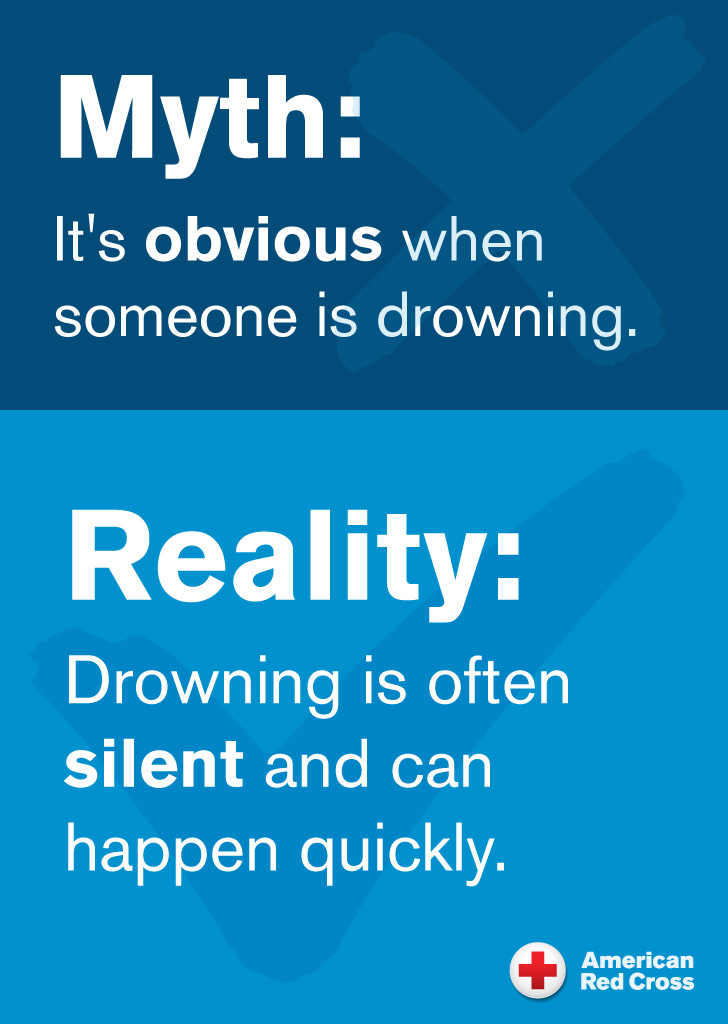
When people think of drowning, they often picture someone splashing wildly, yelling for help, and making a dramatic scene like in movies or television shows. The truth is much different. Most drowning incidents are quiet, happen in seconds, and can easily be mistaken for normal swimming or playing.
Knowing what drowning actually looks like could help you recognize an emergency before it’s too late.
American Red Cross graphic – False: It’s easy to tell if someone is drowning.
What Does Drowning Look Like?
A person who is drowning is focused on one thing: trying to breathe. Because their body is struggling to get enough air, they usually cannot call out for help or wave their arms.
Instead, someone who is drowning may:
Keep their head low in the water with their mouth barely above the surface.
Tilt their head back with their mouth open while gasping for air.
Have glassy or unfocused eyes.
Press their arms downward instead of waving.
Appear to be climbing an invisible ladder.
Stay in one place without making progress.
Become unusually quiet.
Drowning can happen in less than a minute, especially for young children. That’s why active supervision is so important whenever anyone is in or around water.
American Red Cross graphic – Myth: It’s obvious when someone is drowning. Reality: Drowning is often silent and can happen quickly.
Aquatic Distress Isn’t the Same as Drowning
Someone in aquatic distress is having trouble in the water but is still able to keep themselves afloat. They may be tired, caught in a current, or unable to swim back to safety. Because they still have some control, they can often wave, shout for help, or grab a flotation device.
A person who is drowning, however, has lost that ability. Their body instinctively uses every bit of energy trying to breathe, leaving them unable to call out or signal for help. Without immediate assistance, drowning can quickly become fatal.
Recognizing the difference allows you to respond sooner and potentially save a life.
American Red Cross graphic – How to spot a swimmer in trouble: 1. They aren’t making forward progress in the water. 2. Unable to move or tread water. 3. Are motionless and face down.
The Truth About “Dry Drowning”
You may have seen stories online about “dry drowning” or “secondary” (also called delayed) drowning. These terms can sound frightening, but medical experts do not recognize them as actual medical conditions.
After a water incident, it’s normal for someone to cough briefly if a small amount of water entered their airway. However, a child or adult who leaves the water feeling completely normal does not suddenly drown hours or days later.
If someone develops persistent coughing, difficulty breathing, chest pain, extreme fatigue, or other concerning symptoms after a water incident, they should be evaluated by a healthcare provider. While these situations are uncommon, they should always be taken seriously.
American Red Cross video – Is Dry Drowning Real? Facts vs. Fiction. Watch it on YouTube.
Drowning Prevention Starts Before Anyone Enters the Water
The American Red Cross recommends using multiple layers of protection whenever you’re around water.
Some simple ways to help prevent drowning include:
Always actively supervise children around water and stay within arm’s reach of inexperienced swimmers.
Designate a “Water Watcher” whose only job is to watch swimmers with no phones, reading, or other distractions.
Learn to swim and encourage family members to take age-appropriate swim lessons.
Wear a U.S. Coast Guard-approved life jacket while boating or participating in water activities.
Learn CPR so you’re prepared to help during an emergency.
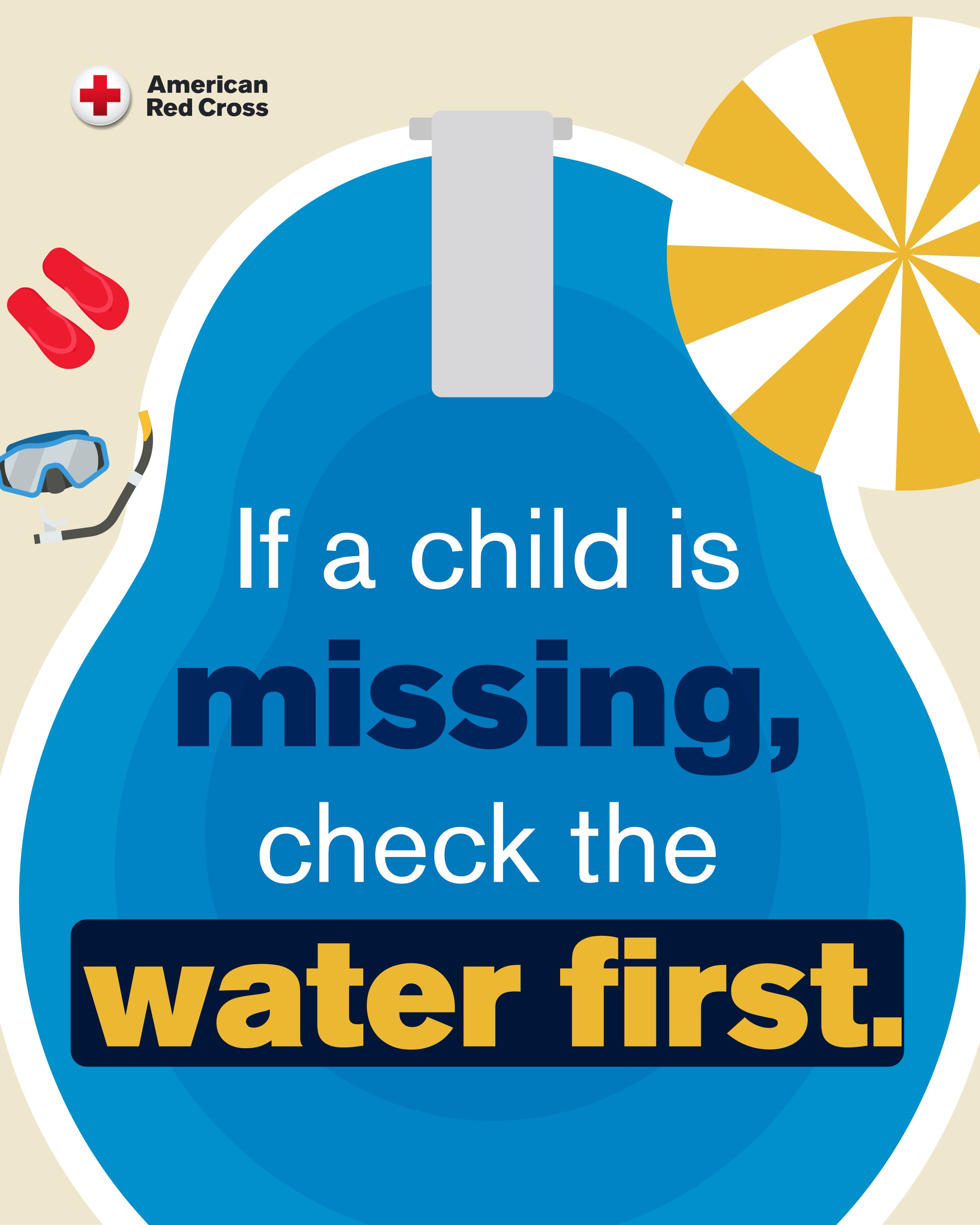
According to the American Red Cross, drowning is one of the leading causes of accidental death for children. Many incidents happen quickly and silently, even when other people are nearby.
American Red Cross graphic – If a child is missing, check the water first.
Every Second Matters
The biggest misconception about drowning is that you’ll always hear or see someone calling for help. In reality, drowning is often silent because a person simply cannot yell while struggling to breathe.
By learning the signs of drowning, understanding the difference between aquatic distress and drowning, and practicing simple water safety habits, you can help protect yourself, your loved ones, and your community.
The heat is on in Southeastern Pennsylvania, and many families head to local rivers, lakes, and coastal beaches for recreation. However, open water environments present unique, unpredictable conditions that demand extra caution. From the American Red Cross, here is a practical guide to staying safe when enjoying natural bodies of water.
Understand Natural Hazards
Unlike swimming pools, open water comes with shifting currents, deep drop-offs, and unpredictable weather. Being prepared starts with understanding the hidden risks beneath the surface:
Watch for hidden obstacles: Natural waters often contain submerged rocks, logs, debris, and sudden drop-offs. Always enter unknown waters feet first to avoid head or neck injuries.
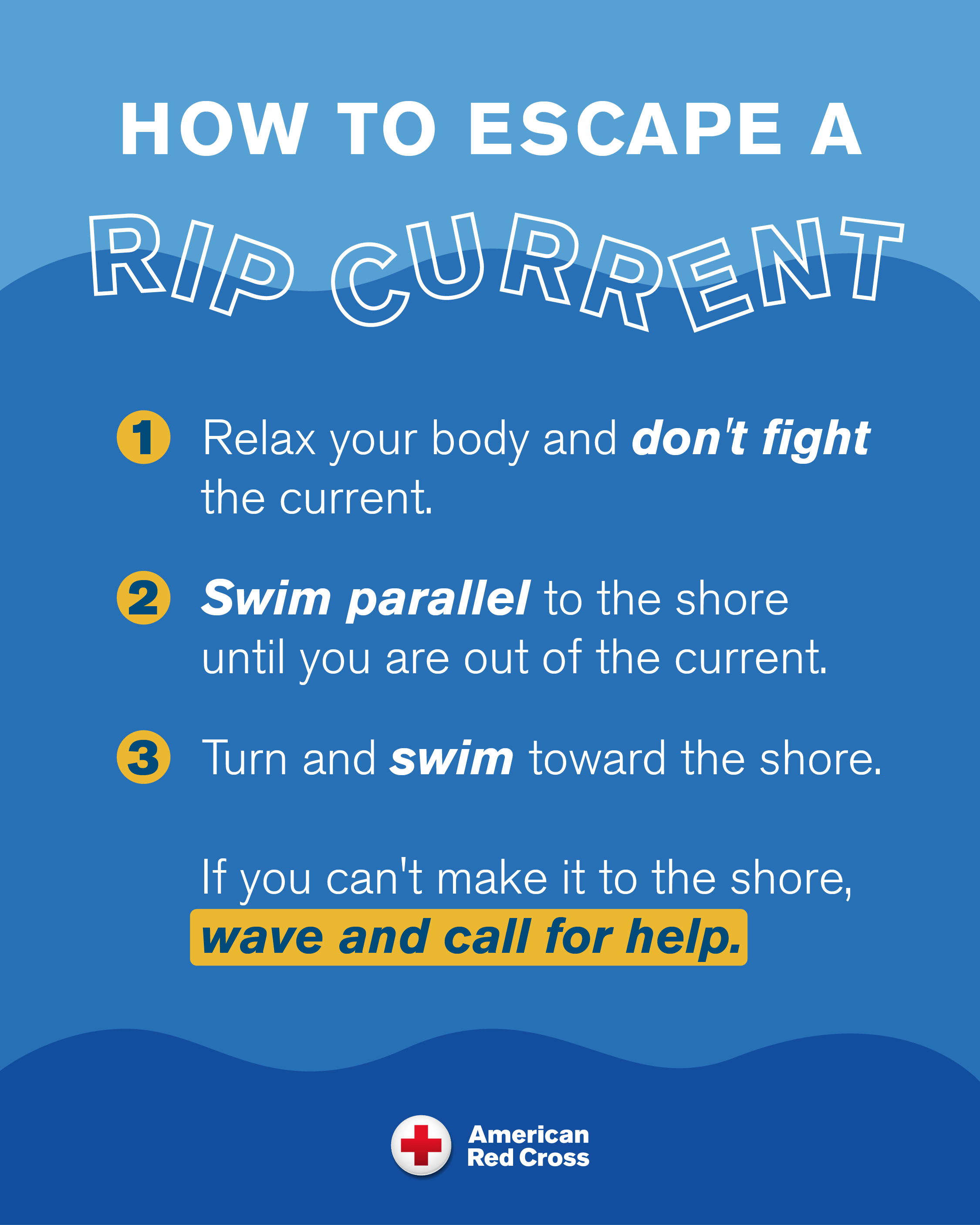
Respect currents and waves: Strong undertows and fast-moving river currents can sweep away even experienced swimmers. If caught in an ocean rip current, remain calm, signal for help, and swim parallel to the shore until you escape the current before heading back to land.
Monitor the weather: Check forecasts before heading out and leave the water immediately at the first sign of dark clouds or thunder. Stay indoors for at least 30 minutes after the last thunderclap.
How to Escape a Rip Current. 1. Relax your body and don’t fight the current, 2. Swim parallel to the shore until you are out of the current, 3. Turn and swim toward the shore, and 4. If you can’t make it to the shore, wave and call for help.
Respect Beach & Waterfront Warnings
Before jumping into open water, take time to observe your surroundings and read local safety postings:
Understand warning flags: Many ocean and lake beaches use color-coded flag systems. Green flags indicate low hazards, yellow flags warn of moderate currents or surf, red flags mean dangerous conditions, and double red flags mean the water is completely closed to the public.
Obey posted signage: Look for signs marking sudden drop-offs, underwater hazards, or areas designated exclusively for motorized watercraft.
Follow lifeguard instructions: Lifeguards have a clear view of water conditions and potential hazards. Always swim within sight of a lifeguard chair and follow any instructions immediately.
Swim as a Pair with a Lifeguard There. Someone should always be watching the water” and “Drowning can happen silently and quickly.
Smart Habits on the Shore
Establishing clear safety routines ensures everyone stays protected throughout the day:
Swim in designated areas: Always choose beaches, lakes, and parks with a lifeguard on duty, and swim with a buddy rather than alone.
Assign a dedicated Water Watcher: Designate a responsible adult to maintain undivided attention on swimmers, keeping cell phones and distractions away.
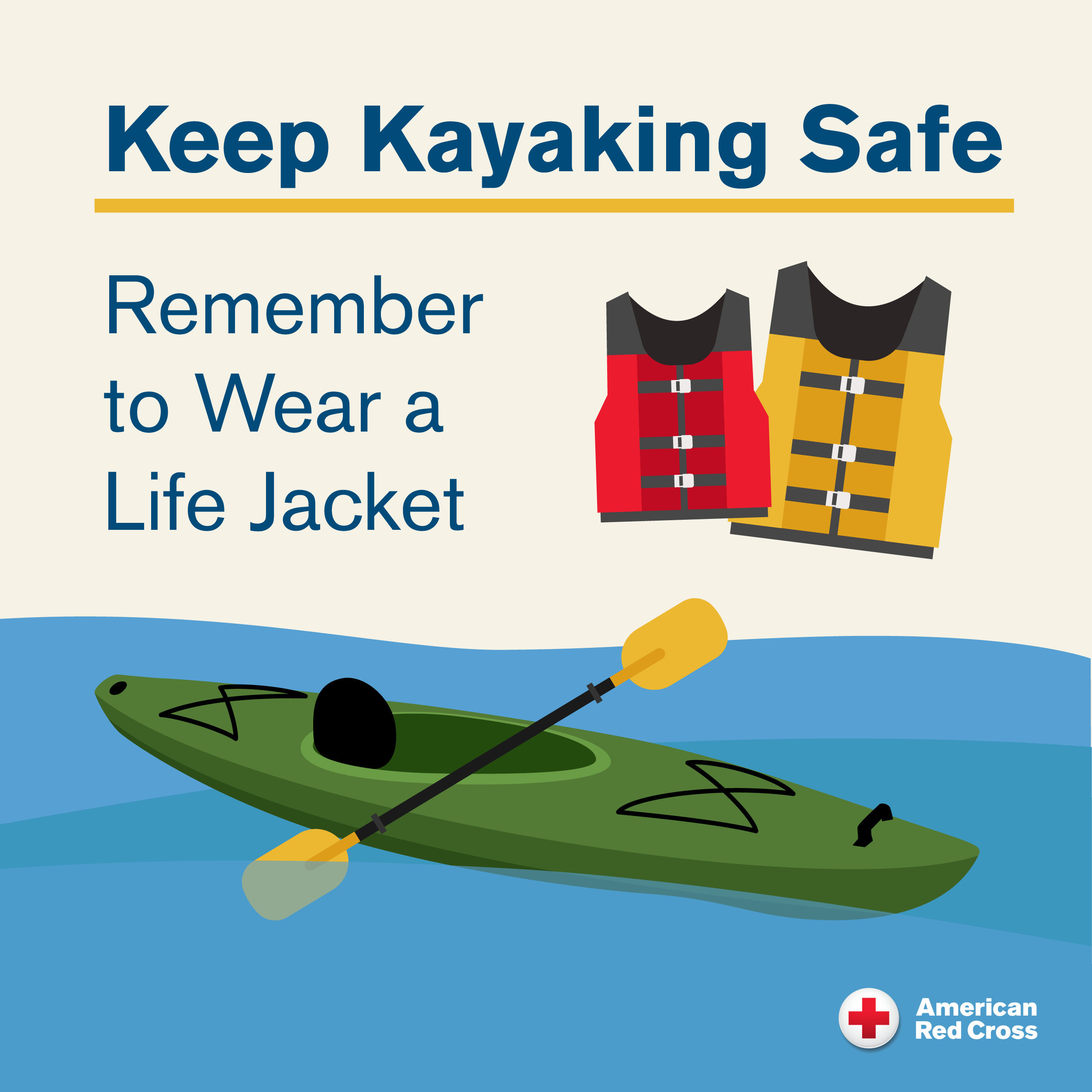
Wear U.S. Coast Guard-approved life jackets: Non-swimmers, inexperienced swimmers, and anyone boating, kayaking, or fishing should always wear a properly fitted life jacket.
Keep Kayaking Safe. Remember to wear a life jacket.
Know How to Respond
If an emergency arises, acting quickly and safely makes all the difference:
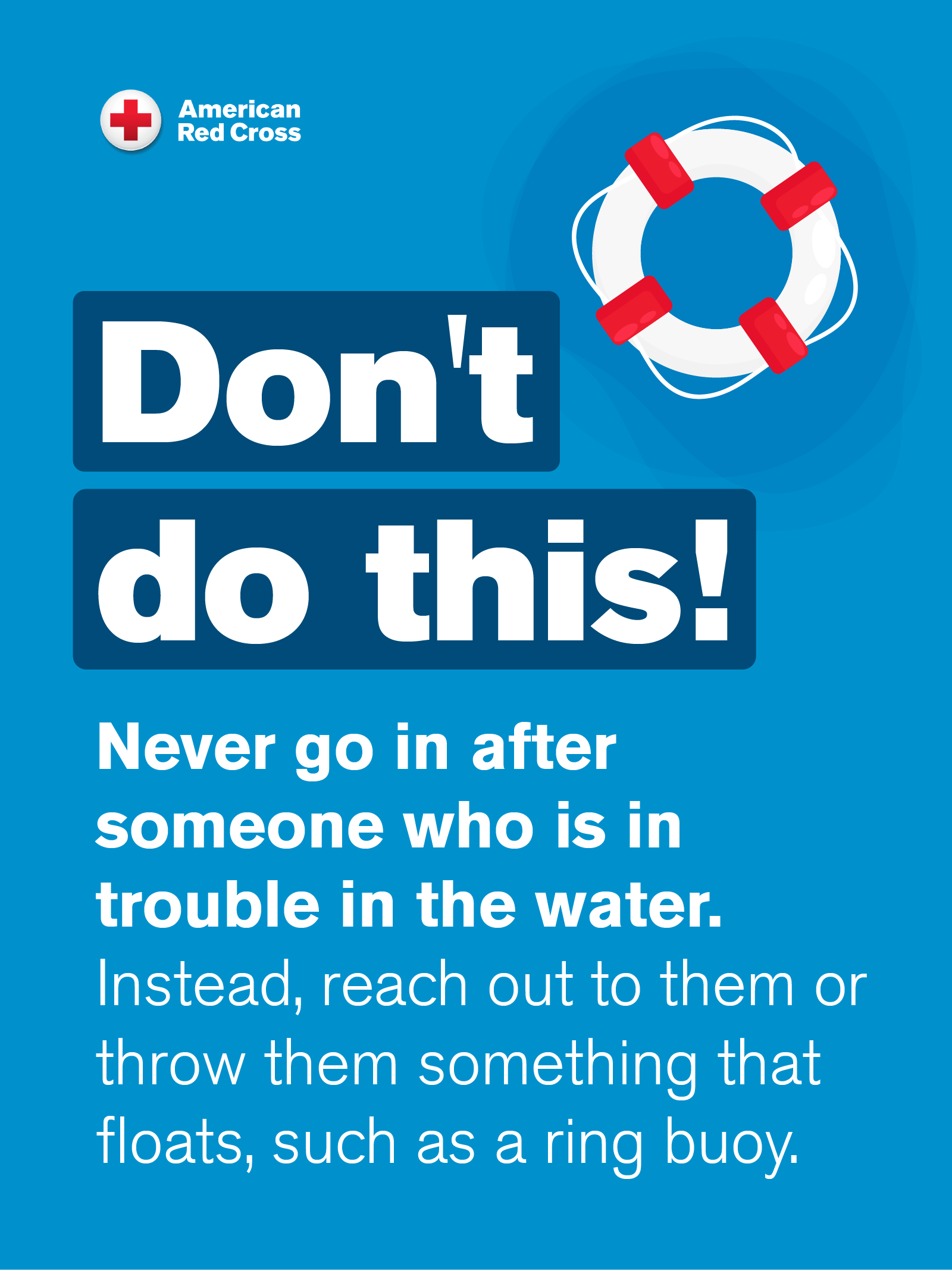
Reach or throw, don’t go: If someone is struggling in open water, throw them a flotation device or extend a long object like a pole. Entering fast or deep water after a drowning person can pull you under as well.
Alert lifeguards or call 911: Seek professional assistance immediately and ensure bystanders provide accurate location details to first responders.
Don’t do this! Never go in after someone who is in trouble in the water. Instead, reach out to them or throw them something that floats, such as a ring buoy.
Taking time to respect open water hazards keeps outdoor adventures enjoyable for everyone. Be sure to check out our local chapter’s upcoming swim classes and water safety certifications to prepare your family for the season ahead!
With many families across Southeastern Pennsylvania gearing up for summer trips to backyard pools, water parks, and coastal beaches, safety remains a top priority. However, many people drastically overestimate their abilities in the water. From the American Red Cross, this is a clear framework to help you and your family understand what it truly means to be “water competent”. Water competency means much more than just knowing how to swim. It’s a full combination of safety awareness, physical skills, and the ability to respond to an emergency.
Myth: Strong swimmers never drown. Reality: Unexpected water and medical conditions can cause anyone to drown.
1. Situational Awareness & Prevention
Drowning prevention starts a long time before you step into the water. It involves understanding your aquatic environment, recognizing hidden hazards like rip currents or sudden drop-offs, and establishing strict safety habits. Here are some tips to stay smart when on the water:
Swim with supervision: Always swim with a buddy and choose areas with a lifeguard on duty.
Designate a Water Watcher: Have a responsible adult focus entirely on supervising swimmers without cell phone distractions.
Use layers of protection: A four-sided fence, according to the Center for Disease Control (CDC) is the best way to prevent unsupervised access around backyard pools.
Wear life jackets: Always wear a U.S. Coast Guard-approved life jacket when boating, fishing, or if you are an inexperienced swimmer.
Don’t just pack it, wear your life jacket! Even if you’re a pro swimmer, it can keep you afloat during an emergency.
2. The Five Lifesaving Swim Elements
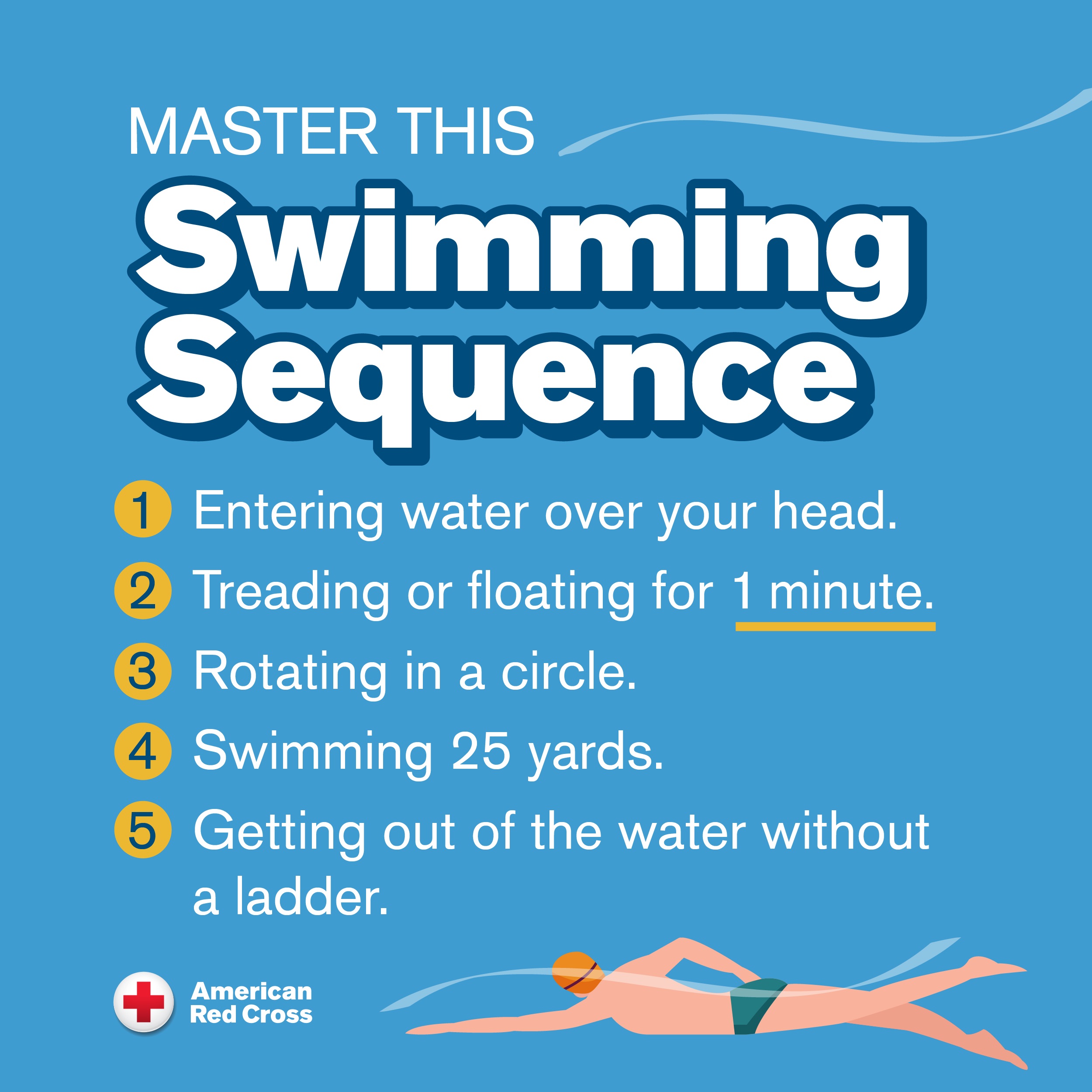
If you or a family member unexpectedly falls into deep water, being water competent means you have the physical capability to survive. The Red Cross defines this through a sequence of five critical skills that everyone should master:
Enter water that is over your head and successfully return to the surface.
Float or tread water for at least 1 minute to catch your breath and conserve energy.
Turn completely around in a 360-degree circle to orient yourself toward safety.
Swim at least 25 yards (the length of a standard pool) to find an exit.
Exit the water safely, even if there is no ladder available.
Master This Swimming Sequence: 1. Entering water over your head, 2. Treading or floating for 1 minute, 3. Rotating in a circle, 4. Swimming 25 yards, 5. Getting out of the water without a ladder.
3. Emergency Response & Safe Rescue
Drowning is often surprisingly fast and silent. Part of water competency is recognizing when someone is in trouble and knowing how to safely assist without becoming a victim yourself.
Reach or Throw, Don’t Go: Never jump in after a drowning person, as panic can cause them to pull you under. Instead, reach out with a pool noodle or throw a flotation device.
Call for help: Notify lifeguards or dial 911 immediately.
Learn CPR: Knowing bystander CPR can double or triple a drowning victim’s chance of survival while waiting for paramedics to arrive. The American Red Cross offers Hands-Only and full CPR classes for certification.
Reach or Throw, Don’t Go. If someone is in trouble, don’t jump in the water. Reach out to them or throw something that floats.
Keeping these fundamental practices in mind will ensure a secure and enjoyable environment for your loved ones, so don’t forget to check out our local chapter’s upcoming swim classes and safety certifications to get fully prepared! Visit the links below for more information.
With America’s 250th birthday around the corner, this year’s Fourth of July celebrations are shaping up to be bigger than ever. From parades to backyard barbecues to dazzling firework shows, there’s so much to look forward to. But with all that excitement, it’s important to keep safety in mind so the celebration stays fun for everyone.
Firework Safety
While the American Red Cross strongly recommends viewing professional firework displays instead of using them at home, if you choose to light your own, adhere to these precautions to have a happy and safe fourth!
Never light fireworks or sparklers while compromised by drugs or alcohol.
Make sure you follow the instructions on the package.
Keep fireworks stored in a cool, dry place.
Keep a source of water like a bucket of water to soak used fireworks in water for a few hours prior to throwing them away.
Make sure to keep fireworks and sparklers out of the hands of small children as they can get extremely hot (2000 – 3000°F)
Do This, NOT That. Keep water nearby in case fireworks start a fire. Don’t point fireworks at pets. Wear eye protection if you light a firework. Never try relighting a dud.
Staying Safe & Hydrated in the Heat
The Red Cross highly recommends you to drink at least one cup of water every 15-20 minutes even if you do not feel thirsty.
Wear sunscreen with at least an SPF of 30 and reapply every two hours.
Find a cool or shaded spot to spend the hottest part of the day.
Stay Hydrated. Drink a cup of water every 20 minutes.
Grilling & Food Safety
Keep grills at least 10 feet away from your home and any branches or deck railings.
Never use a grill, smoker, or charcoal inside even in the garage. Having these materials inside is a fire hazard and can cause carbon monoxide poisoning.
Use a food thermometer to prevent foodborne illnesses from meat. Make sure that perishable foods are not left in the summer heat for more than two hours and if it is 90°F or higher, food can only remain one hour in the sun.
Grilling near a tree could start a fire.
Following these rules will help your 4th of July celebration be as safe as it is fun!