By Zain Ahmad
With many families across Southeastern Pennsylvania gearing up for summer trips to backyard pools, water parks, and coastal beaches, safety remains a top priority. However, many people drastically overestimate their abilities in the water. From the American Red Cross, this is a clear framework to help you and your family understand what it truly means to be “water competent”. Water competency means much more than just knowing how to swim. It’s a full combination of safety awareness, physical skills, and the ability to respond to an emergency.

1. Situational Awareness & Prevention
Drowning prevention starts a long time before you step into the water. It involves understanding your aquatic environment, recognizing hidden hazards like rip currents or sudden drop-offs, and establishing strict safety habits. Here are some tips to stay smart when on the water:
- Swim with supervision: Always swim with a buddy and choose areas with a lifeguard on duty.
- Designate a Water Watcher: Have a responsible adult focus entirely on supervising swimmers without cell phone distractions.
- Use layers of protection: A four-sided fence, according to the Center for Disease Control (CDC) is the best way to prevent unsupervised access around backyard pools.
- Wear life jackets: Always wear a U.S. Coast Guard-approved life jacket when boating, fishing, or if you are an inexperienced swimmer.

2. The Five Lifesaving Swim Elements
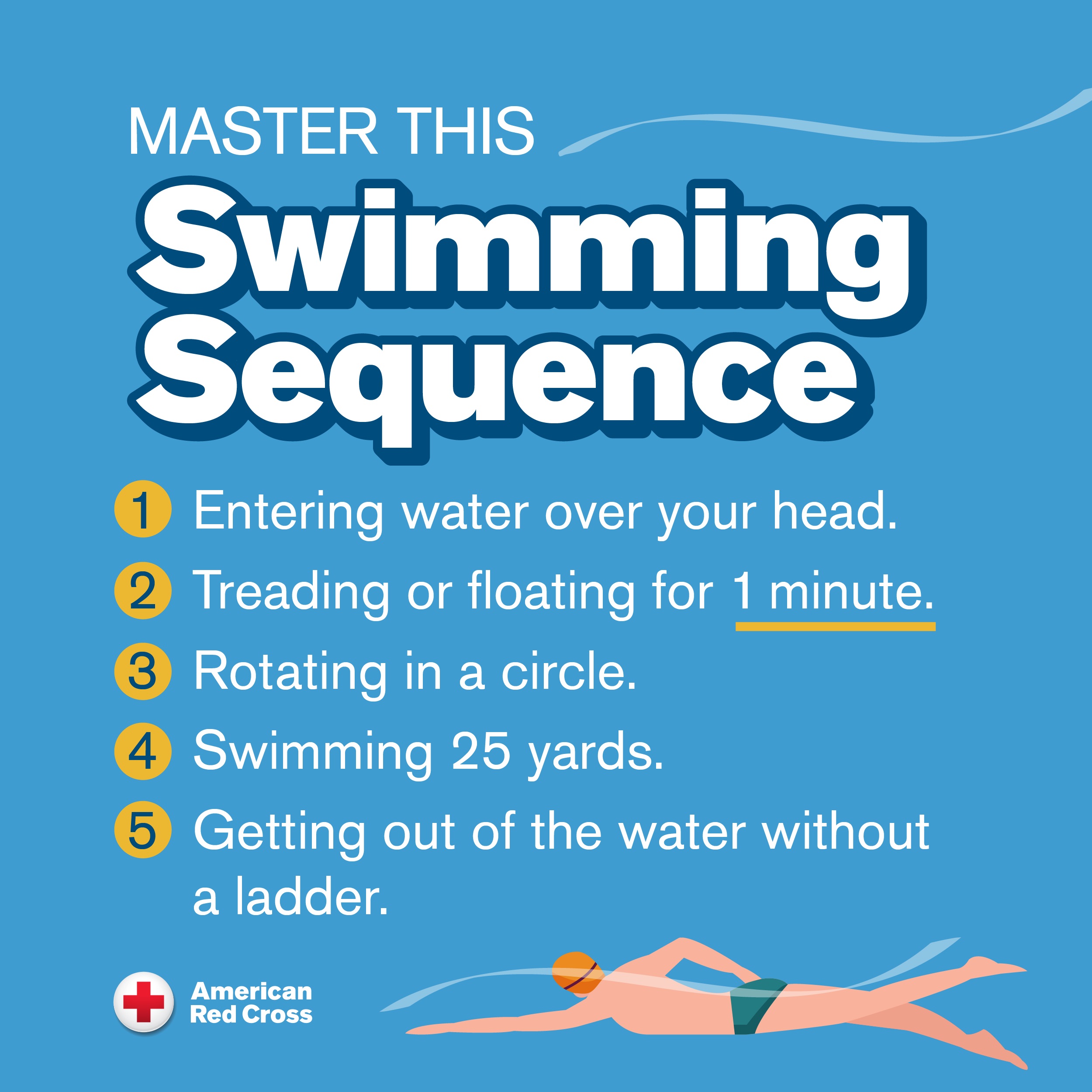
If you or a family member unexpectedly falls into deep water, being water competent means you have the physical capability to survive. The Red Cross defines this through a sequence of five critical skills that everyone should master:
- Enter water that is over your head and successfully return to the surface.
- Float or tread water for at least 1 minute to catch your breath and conserve energy.
- Turn completely around in a 360-degree circle to orient yourself toward safety.
- Swim at least 25 yards (the length of a standard pool) to find an exit.
- Exit the water safely, even if there is no ladder available.
3. Emergency Response & Safe Rescue
Drowning is often surprisingly fast and silent. Part of water competency is recognizing when someone is in trouble and knowing how to safely assist without becoming a victim yourself.
- Reach or Throw, Don’t Go: Never jump in after a drowning person, as panic can cause them to pull you under. Instead, reach out with a pool noodle or throw a flotation device.
- Call for help: Notify lifeguards or dial 911 immediately.
- Learn CPR: Knowing bystander CPR can double or triple a drowning victim’s chance of survival while waiting for paramedics to arrive. The American Red Cross offers Hands-Only and full CPR classes for certification.

Keeping these fundamental practices in mind will ensure a secure and enjoyable environment for your loved ones, so don’t forget to check out our local chapter’s upcoming swim classes and safety certifications to get fully prepared! Visit the links below for more information.
Leave a Reply