Governor Tom Wolf signed a proclamation designating Sept. 5 as Blood Donation Day in Pennsylvania – part of a national Blood Donation Week effort to encourage eligible donors to give blood around Labor Day.
For the sixth consecutive year, media personality Dr. Daliah Wachs, who hosts a syndicated radio program on GCN and iHeartRadio, has worked to enlist all 50 states in promoting blood donation. As part of her show, she covers various medical topics, including the importance of blood donation. After hearing about an emergency need for more blood donors, she decided to establish a National Blood Donation Day, strategically timed right after the Labor Day holiday, when blood donations often decline due to busy holiday schedules.
Each year, Dr. Daliah asks state governors to join her by proclaiming the service day in their home states. Pennsylvania’s proclamation is below.
“Giving blood is a wonderful way to serve your community and help patients at the same time,” said Guy Triano, Regional CEO for American Red Cross Southeastern Pennsylvania. “With the Red Cross recovering from a critically low blood supply during much of the summer, now is the perfect time to give.”
As a thank-you, those who come to give Sept. 3-7 will receive a new, 16-ounce Red Cross campfire mug, while supplies last. In addition, donors who come to give throughout the month of September will receive a free haircut coupon by email from Sport Clips Haircuts.
Blood and platelet donations are needed every day for patients with many serious medical conditions. Accident and burn victims, heart surgery patients, organ transplant patients, and those receiving treatment for leukemia, cancer or sickle cell disease may all need blood.
To learn more about blood donation, including eligibility information, visit RedCrossBlood.org or call 1-800-RED CROSS (1-800-733-2767). If you were deferred from donating in the past, you may be able to donate again.
Jennie Dillion Heneks’s superpower is giving the gift of life through blood donations.
Jennie was inspired to become a blood donor with the American Red Cross after her son, Des, became ill with Kawasaki disease (KD). He needed an immediate blood treatment, and Jennie gained a new appreciation for blood donors as she watched her 4-year-old son receive the intravenous immune globulin (IVIG) that would help him recover.
Jennie and Des want to create awareness around recognizing the onset of KD, the importance of quick intervention, and the lifesaving value of blood. KD is a rare condition that mainly affects children; it causes swelling in the walls of medium-sized arteries throughout the body. The inflammation tends to affect the coronary arteries, which supply blood to the heart muscle. When Jennie initially brought her son to the emergency room, Des had a high fever and couldn’t walk due to foot pain and peeling on his toes. These are symptoms noted in the second phase of the disease. (In the third and final phase, signs and symptoms slowly subside.)
The good news is that most kids with KD recover completely, but early action is key. There’s a knowledge gap when it comes to diagnosing KD, and that can result in unnecessary delays. Within the 10-day window of the onset of the condition, parents are important advocates for their kids in dealing with health care providers. Symptoms to watch for: a fever that lasts three to four days, redness in both eyes, a very red and swollen tongue, redness of the palms or soles, skin peeling, a rash, and swollen lymph nodes.
As mentioned, recognizing the early signs—ideally during the first phase—is key. When KD is diagnosed and treated within the first 10 days, there’s a better chance of full recovery without residual problems. The longer the symptoms progress, the higher the likelihood of long-term damage and the need for ongoing treatments.
Pictured: Des Heneks today, living a full life thanks to the blood treatment he received when he was four years old.
Jennie is thankful that the on-call doctor at Children’s Hospital of Philadelphia was a cardiologist familiar with KD. Thanks to the rapid diagnosis, Des was treated with one IVIG treatment over the course of 36 hours and observed in the ICU for the next seven days to ensure his recovery.
Today, Des is a healthy 13-year-old with a black belt in karate. He is living a full life, thanks to the blood treatment he received at age 4.
Jennie and Des are heroes with heart. Jennie is giving life by giving blood, and with the help of her son, she is creating awareness of the symptoms associated with KD. By helping parents and doctors recognize the early warning signs, she hopes young patients with KD can recover quickly and keep sharing their smiles!
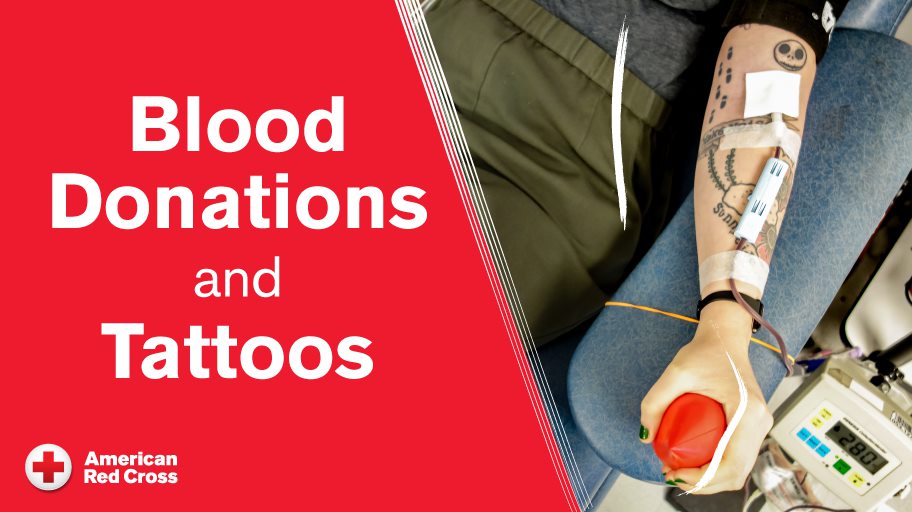
Got ink? I do. So does nearly half of the U.S. adult population. That’s a lot of people. So it’s a good thing that having a tattoo (or nine, in my case) DOES NOT disqualify us from donating lifesaving blood to the American Red Cross.
In states that don’t regulate tattoo facilities, like Pennsylvania, you need to wait three months after getting ink before you can donate blood. Why? While all blood donations are screened for Hepatitis B and C with several tests, there may be a period of time before the viruses can be properly detected. In addition to Pennsylvania, this applies to other unregulated states, including Georgia, Idaho, Maryland, Massachusetts, New Hampshire, New York, Utah and Wyoming, as well as the District of Columbia.
But there’s good news. Three months isn’t very long; in fact, the FDA reduced the waiting period from 12 to three months in June 2020. And there’s NO wait time between getting ink and giving blood in other states as long as your tattoo is applied a state-regulated facility using sterile needles and ink that is not reused.
More into piercings? You’re not alone; 61% of the adult U.S. population has a piercing, with earlobe and ear cartilage being the most common. You should wait three months to donate blood after getting a piercing if it was performed with a reusable gun or other reusable instrument or if you don’t know whether or not the instrument was single use. (Note: Even though the equipment is sterilized and single-use jewelry is inserted, ear-piercing guns used at many retail stores are considered reusable.)
Here’s another stat – only 3% of age-eligible blood donors give blood each year. Arms – inked or not – are sorely needed right now to help the Red Cross recover from a severe blood shortage. You can help by scheduling an appointment to give blood or platelets. Download the free Blood Donor App, visit RedCrossBlood.org or call 1-800-RED CROSS to get started.
June 14, Flag Day, is marked on most Americans’ calendars. But did you know that June 14 is also World Blood Donor Day? This observance, a joint initiative of the World Health Organization and the International Federation of Red Cross and Red Crescent Societies, was created in 2005 for two reasons: to raise awareness of the global need for blood, and to thank blood donors for their lifesaving gifts.
Blood donation is a selfless, honorable act. Blood can’t be manufactured; it can only come from volunteer donors. This year’s theme is “Give blood and keep the world beating.” In the United States alone, about 6.8 million people donate lifesaving blood. Christina McCarthy is one of them.
McCarthy, a clinical assistant at a pain management office, has been giving blood regularly with the Red Cross for about six years now. Like many blood donors, she was inspired to do her part because of a family connection. Her grandfather, who passed away in 2013, had heart issues that landed him in the hospital on a regular basis. He received many transfusions as part of his care, which motivated McCarthy and her family to start donating themselves.
Photo courtesy of Christina McCarthy
McCarthy’s mother was the first in the family to get the ball rolling. Once Christina began working in the medical field, she realized just how important — and how easy— blood donations are. Her sister and some coworkers have since donated as well.
“I recruited a couple of coworkers for the last blood drive I went to; two women went with me, and now they’re starting to do it on a semi-regular basis as well,” McCarthy says.
The feel-good rewards are immediate, and you’ll be plenty pleased with yourself. But for an extra shot of satisfaction, you can actually find out where your blood donation went: Just use the Red Cross blood donor app. “I like how the Red Cross tells you when they’ve processed your blood, and they send you an email telling you where it’s going. I think that’s really helpful,” McCarthy says. “I know my last couple of donations have gone to the Children’s Hospital of Philadelphia, so that makes me feel really good.”
The app not only allows you to schedule your donations but also keeps track of them and lets you know when it’s safe to donate again. “I donate every time my app reminds me, so every 48 days or something like that,” McCarthy says. [Editor’s note: you can donate whole blood every 56 days.]
If you’re nervous, McCarthy insists that the needles aren’t bad at all. (New, sterile needles are used and discarded after one use.) You’ll even be given a free mini-physical at your appointment — temperature, blood pressure, pulse and hemoglobin — to ensure that you’re healthy enough to donate that day. But don’t go on an empty stomach: McCarthy says she passed out the first time, because she didn’t eat enough beforehand. (She recommends a large meal.) That didn’t stop her from going again and turning it into a routine.
Why give blood? “It is one thing you can do that can literally save someone else’s life, and it’s free for you to do and it takes not even a half hour, so why wouldn’t you do it?” McCarthy says. [Editor’s note: please allow for 1 hour when you schedule a blood donation appointment.]
In fact, a single donation can potentially save up to three lives.
And in case you were wondering, the pandemic hasn’t stopped the Red Cross from collecting blood. “They’ve been doing a good job at staggering the appointment times so there aren’t too many people at once. It definitely wouldn’t stop me from donating,” McCarthy says.
There are four blood and platelet donation centers and many blood drive collection sites within the five counties of Southeastern Pennsylvania. Finding a location and time is easy: Just use the Red Cross’s online blood drive finder. You can also use the Red Cross blood donor app to schedule and manage appointments. Depending on the type of donation (whole blood, power red, or platelet), you can donate as often as every 56 days. Today’s your day to save a life… or three!
Primary image description: an illustration, with the American Red Cross logo above the words “World Blood Donor Day” in white letters on a dark blue background. Next to the logo and words is a bright red drop with a water-color rendering of the world inside it.
The American Red Cross and the American Cancer Society have teamed up this June to encourage people across the country to Give Blood to Give Timeand help ensure loved ones have the strength and support they need as they undergo cancer treatment.
According to the American Cancer Society, many patient visits and procedures were forced to delay or cancel early in the pandemic to reduce the risk of exposure to COVID-19. With procedures resuming, blood donations are critical for cancer treatments. Unfortunately, the Red Cross is seeing fewer blood and platelet donors give as the nation begins to climb out of this pandemic. This downturn comes at a time when the Red Cross continues to see strong demand for blood products − including platelets − by hospitals, causing concern for the sufficiency of the blood supply this month and throughout the summer.
Red Cross currently has an emergency need for eligible donors in the Greater Philadelphia area to make an appointment now to give platelets to ensure critical patient needs are met. Platelets, the clotting portion of blood primarily given to cancer patients during treatment, must be transfused within five days of donation and, therefore, are always in great demand.
“Many cancer patients, especially those going through chemotherapy, will have a need for blood products during treatment,” said Dr. Baia Lasky, medical director for the Red Cross. “When someone donates blood or platelets, they may not only help prevent life-threatening bleeding that can cause stroke or relieve some symptoms, like shortness of breath and headaches, but also give patients and their families the time and hope they need to fight back.”
Some types of chemotherapy can damage bone marrow, reducing red blood cell and platelet production. Other times, the cancer itself or surgical procedures cause the need for blood products. About six blood products are needed every minute to help someone going through cancer treatment. Yet only 3% of people in the U.S. give blood. It is vital that more people donate blood and platelets regularly to meet that need.
“The need for blood in cancer treatments is an important and untold story,” said Howard Byck, senior vice president of corporate and sports alliances, American Cancer Society. “The American Cancer Society is excited to be working with the Red Cross on Give Blood to Give Time. Through this partnership, we want people to know there are multiple ways they can help and make a meaningful difference in the lives of patients and their families.”
Cancer takes so much, but you can help
In August 2016, Myel Bowers-Smith received an unexpected and life-changing medical diagnosis. What she thought was an infection from a mosquito bite was actually stage 4 inflammatory breast cancer. The cancer was a very rare and aggressive breast carcinoma that spread from her breast to her lymph nodes on the left side of her body. “I just knew something wasn’t right with my body,” she said.
Bowers-Smith was determined to keep a positive attitude even when her treatments left her feeling sick for days at a time, unable to eat and extremely fatigued. “I received five different chemotherapy treatments and steroids. I also received multiple plasma and platelet transfusions. I would be in the hospital bed for hours receiving treatments,” she said.
After months of treatment, Bowers-Smith was told her cancer was in remission in February 2017. “I was more than excited because I survived. I won, and it was time to get my life back! This couldn’t defeat me,” she said.
Bowers-Smith recognizes the role of blood products in her recovery and now encourages others to give. “Everyone needs someone, and this is your time to help someone who needs your blood or platelets. Be a blessing,” she said. “Eligible donors, you have something good – which is your blood. A pint of blood can help save lives, and you never know if you or someone you love would need donated blood or platelet products.”
To schedule a blood or platelet donation appointment, visit GiveBloodToGiveTime.org. As a special thank-you, those who come to donate through June 13 will receive a limited-edition Red Cross T-shirt, while supplies last.
Long-time platelet donor Rich Mazur (center), of Hatfield cuts the ribbon on the new American Red Cross Blood Donation Center in Horsham on May 26. Pictured (from left) Andree Baylor-Lloyd, Red Cross director of fixed site collections; Helen Munizza, Red Cross regional donor services executive; David Poindexter, board chair, Red Cross Philadelphia Chapter; Guy Triano, regional CEO, Red Cross Southeastern Pennsylvania; phlebotomists from the Red Cross collections team; Jennifer Graham, executive director, Red Cross Delaware Valley Chapter; Mark McCouch, Horsham Township Council president; William Whiteside III, Horsham Township Council vice president; and William Gallagher, Horsham Township councilman. Photo by Sandi Yanisko
People wanting to make a lifesaving difference in Montgomery County have the chance to donate blood and platelets at the new Horsham American Red Cross Blood Donation Center. The new donation center is now collecting blood and platelet donations for patients, such as those battling cancer, accident victims, transplant recipients and those living with sickle cell disease.
A formal ribbon cutting was held on morning of May 26 at the donation center, located at 116-G Welsh Road. This new center replaces the location previously open in nearby Willow Grove. Jennifer Graham, executive director, Red Cross Delaware Valley Chapter, officiated the ceremony, and long-time platelet donor Rich Mazur, of Hatfield, cut the ceremonial ribbon. They were joined by Red Crossers Guy Triano, regional CEO; David Poindexter, Philadelphia Chapter board chair; Andree Baylor-Lloyd, director of fixed site collections; and Helen Munizza, regional donor Services executive, as well as phlebotomists from the Red Cross collections team.
Horsham Township officials also attended, including Mark McCouch, council president; William Whiteside III, council vice president; William Gallagher, councilman; William Gildea-Walker, township manager; Dennis Haggerty, director of administration; Michael Shinton, director of codes and community planning; William Daly, chief of police; and Mary Marass, public relations clerk.
Having a readily available blood supply is vital for patients whose survival depends on transfusions. Donating blood is essential to community health, and volunteer donors are the only source of blood for those in need. By making an appointment to give blood or platelets at the Horsham American Red Cross Blood Donation Center, donors can feel good knowing that they may be helping patients not only in their community, but also their family and friends across the nation.
“This much larger donor center will allow us to collect more blood products to supply to hospitals all over the Delaware Valley,” said Graham. “The blood products collected here are needed for many different reasons. Accident and burn victims, heart surgery patients, organ transplant patients, and those receiving treatment for leukemia or sickle cell disease may all need blood.”
Because of space constraints, the Red Cross was only able to collect platelets, which are in high demand by local hospitals, at its former donation Center in Willow Grove.
“Platelet collection will continue to be one of our top priorities, said Graham. “A platelet donation takes about two to three hours, and donors are encouraged to relax during the donation – videos, television and wireless internet are available here at our new location.
Platelets are the clotting portion of blood and are needed for many reasons, but they are primarily given to cancer patients. These tiny cells have a very short shelf life – just five days from the time they are donated – so there is a constant, often critical, need for new and current donors to give to keep up with hospital demand for platelets.
In addition to these critical platelets, this new, larger donation center will provide donors additional opportunities to give whole blood and Power Red donations as well.
“Eligible donors with types O, A negative and B negative blood are urged to make a Power Red donation here in Horsham. Power Red donors give a concentrated dose of red blood cells during a single donation, allowing them to maximize their impact,” shared Graham.
The Horsham Blood Donation Center is open daily, including most holidays:
Monday and Tuesday: 11:45 a.m.-8 p.m.
Wednesday: 10:45 a.m.-7 p.m.
Thursday through Sunday: 7:15 a.m.-3:30 p.m.
In addition to the Horsham Blood Donation Center, individuals will also continue to be able to give blood at Red Cross blood drives across the Southeastern Pennsylvania region.
Inside the new American Red Cross Blood Donation Center in Horsham. Check out the full photo album on Flickr. Photos by Sandi Yanisko
Brett Keibach volunteers at the 6abc American Red Cross Blood Drive on March 25, 2021 at the Courtyard by Marriott on City Avenue in Philadelphia. Photo by Dana James
American Red Cross volunteer Brett Keibach knows a thing or two about blood. He’s not only a regular blood donor but also a blood donor ambassador—a volunteer who greets and assists donors at blood drives. But Brett’s knowledge of blood runs much deeper.
Blood helped save Brett’s life when he was a child. And now, at age 29, he is committed to giving back as much as possible.
“I’m grateful and lucky to be here,” he said at a recent blood drive in Philadelphia. “It’s important to me to return something.”
When he was in fifth grade, Brett was hit by a car and suffered life-threatening injuries. The accident shattered both of his legs and caused head trauma, among other serious damage. He was flown by helicopter to Hershey Medical Center, where he spent more than a year.
“At one point, my parents were told that I probably wouldn’t live,” Brett said.
But live he did. Brett is thankful to all the people and resources that helped make his recovery possible—from the outstanding medical care he received, to the generous blood donors who provided lifesaving transfusions, to the Ronald McDonald House that gave his family a place to stay.
Today Brett lives by the motto “give back, work hard.” In addition to his Red Cross work, Brett volunteers with Philabundance, the Delaware Valley’s largest hunger relief nonprofit. He also runs half marathons. That’s pretty inspiring for a guy who broke both femurs as a kid.
Most recently, Brett and a team of Red Cross volunteers have been supporting COVID-19 vaccine distribution efforts at various sites in Southeastern Pennsylvania. These volunteers are greeting people, providing directions and information, and handing out water and snacks.
“I feel like I have a reason to be here. It’s to give back,” Brett says.
O so needed
When a patient arrives at a hospital, it’s the blood already on the shelf that saves a life. Having type O negative blood on hand is especially critical for trauma patients. As the universal blood type, it can be transfused to all patients, saving the medical staff precious time when seconds count. This Trauma Awareness Month, you can help ensure blood is there when it’s needed by scheduling an appointment to donate.
Volunteer With Us
The vital work of the Red Cross is made possible by people like Brett who share their passions and talents with us. The Red Cross of Southeastern Pennsylvania is actively recruiting volunteer drivers and blood donor ambassadors to support blood drives, but many other positions are available to match your interests and skills. To learn more, visit redcross.org/volunteertoday.
Clara Baron, the founder of the American Red Cross, once said: “The Red Cross is a part of us – it has come to stay – and like the sturdy oak, its spreading branches shall yet encompass and shelter the relief of the nation.”
Clara Barton selflessly dedicated her life to alleviate suffering. At the beginning of the Civil War, she worked at the U.S. Patent Office. As the war intensified, she quit her job to nurse the wounded, and collect bandages and supplies, then courageously went to the front lines where soldiers recognized this hero, calling her “Angel of the Battlefield”. In 1869, Barton traveled to Switzerland where she learned about the International Red Cross that grew out of the Geneva Convention. Understanding its potential benefits to Americans, she lobbied for support. On May 21, 1881, the American Red Cross was established with Barton as President.
Now, following Barton’s humanitarian mission for 140 years and counting, the American Red Cross provides shelter and comfort to those who have been affected by a disaster; supports the military, their families, and veterans; teaches first aid skills to save lives; and collects 40% of the nation’s blood supply.
Service
During the COVID-19 Pandemic, the Red Cross adapted its procedures to deliver its life-saving services safely, both for volunteers and for those receiving them. Shelters are now in hotels, and boxed lunches are served to ensure social distancing. Contact-free disaster assistance in the form of a debit card is often transferred between volunteer and recipient across the hood of a Red Cross vehicle. At COVID-19 vaccination sites, volunteers help with registration and pass out snacks and water in the recovery area.
Innovation
Today, the Red Cross is leveraging technology, including Geographic Information Systems (GIS), drones, and artificial intelligence to deliver services. Red Cross Mobile Apps and voice-enabled skills/action tools, downloaded to mobile devices from Apple, Amazon, and Google stores, provide expert advice for first aid and disaster relief after earthquakes, hurricanes, and floods. Locating blood drives and making appointments can be made with Alexa and Google.
Hope
During the pandemic, volunteers cannot give hugs, but with social distancing, they still bring a smile and ear to listen. Disaster Volunteers of the Southeastern Pennsylvania chapter of the Red Cross, trained in COVID-19 safety procedures, are ready when called to a local house fire or deployed nationally to floods, hurricanes, and wildfires, giving immediate help for recovery. Dedicated blood donors give life-saving blood and COVID-19 survivors give convalescent plasma to help patients who need it. Others generously donate dollars to support the Red Cross.
The American Red Cross will continue its work through the 21st century and longer, adapting services to meet humanitarian needs, using technology for the delivery of services and communication, and always bringing hope and peace to those who are suffering.
Learn how you can get involved and be part of the Red Cross mission at RedCross.org.
During National Volunteer Week (April 18–24) we honor the 300,000+ volunteers who donate their time and energy to the American Red Cross, an organization whose workforce is 90% unpaid. This is one of a series of profiles you’ll see on the Red Cross Philly Blog. To learn more about exciting volunteer opportunities with the Red Cross, visit redcross.org/VolunteerToday.
This month, Maryann Santangelo marks her first anniversary as a volunteer with the Red Cross of Southeastern Pennsylvania. But she’s no stranger to volunteerism: After retiring from a rewarding career as a senior VP and teacher in the world of marketing and advertising, Maryann donated her time to an adult literacy program at Delaware County Community College. Then she found out about the lifesaving mission of the American Red Cross.
Many people are surprised to learn that 90 percent of the Red Cross workforce is volunteer. That was a big factor in Maryann’s decision to sign on in April 2020. Since then, she has brought a lot to the Biomedical Services table, both as a Blood Donor Ambassador (BDA) and BDA Trainer. She hosts at least one blood drive a week as a disaster recovery caseworker, and she also conducts training and onboarding of new volunteers in Philadelphia, Delaware, and Chester counties. What’s more, her role as disaster recovery caseworker has been invaluable to the disaster services team. And that’s not all: Maryann is also focusing on becoming a Disaster Action Team member so she can further serve disaster-affected people and communities.
Despite days filled with Red Cross projects, Maryann still enjoys working out and spending quality time outdoors with her daughter and furry friends. (She has three cats and a dog.) Her life and professional experience never fails to yield results: She not only gets the job done but also finds ways to get it done better.
Maryann is driven. She comes up with creative ideas to keep people motivated. (She recently shared that she and her team have come up with a great idea that’s yet to be set in motion. Stay tuned!) It’s the adrenaline rush of meeting people (virtually) to brainstorm creative ideas that ranks near the top as her favorite part of volunteering.
It’s no surprise, then, that Maryann has a vibrant personal life. Having been very close to her Italian grandmother, she wishes to visit Italy someday and explore her Italian heritage, as well as learn more about the beauty and richness of that beautiful country and culture.
Primary image description: Picture of Red Cross volunteer Maryann Santangelo, a Caucasian woman with short brown hair, smiling at the camera. She wears a light gray shirt, lipstick and eye makeup, and flower-shaped earrings.