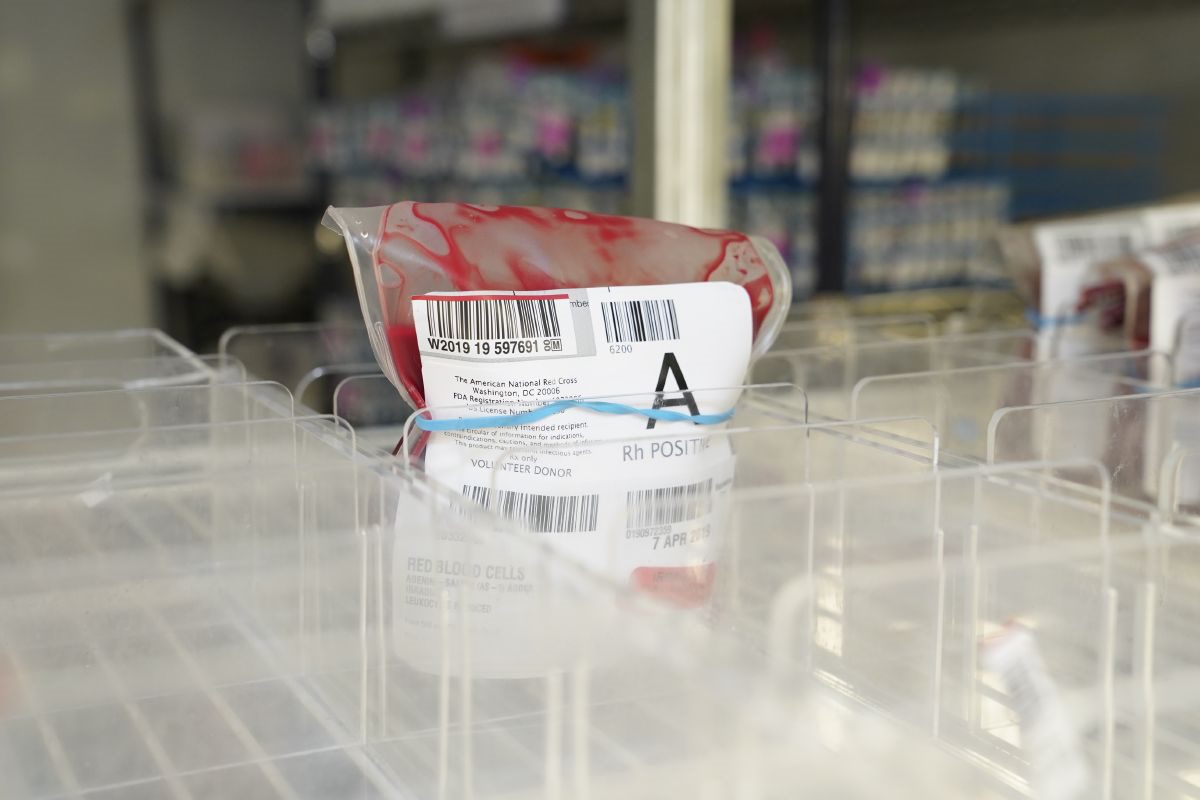
If you’ve never donated blood to the American Red Cross and are curious what it’s like, just ask Judy Harris. She’ll tell you all about how easy and seamless it is. And she should know—she has been giving blood regularly for more than 20 years.
Harris’s noble tradition began when her former employer partnered with the Red Cross to bring bloodmobiles to the company site. She had no qualms about the blood donation process—she was just happy to help. “I want to help save somebody’s life.” she says. “I do want to help somebody with sickle cell disease. I would want somebody to do it for me if I needed it.”
That first donation, 20-plus years ago, was all it took: Just knowing she’d be helping someone in need inspired Harris to roll up her sleeve on the regular. And every time she gives blood, she walks out with a huge reward—a feeling of satisfaction and well-being that simply can’t be bought.
The veteran donor describes the process as simple. First, you’ll get a brief physical during which a Red Cross staffer checks your blood and temperature to make sure you can donate at that time. Then you’ll be shown to a comfortable seating area where the blood is collected.
Harris has witnessed firsthand how blood transfusions can save lives. Her friend’s late brother had sickle cell disease, and also the same blood type as she has. While Harris doesn’t know if he ever received her blood, she directs her donations to go to sickle cell patients. (Yes, you can do that!) That’s because there’s a shortage of available blood from African American donors—and sickle cell patients, most of whom are African American, often benefit the most when they receive transfusions from a donor of their ethnicity.
Always in the back of Harris’s mind are these questions: What if I needed a blood transfusion myself? What if someone in my family needed one? She views blood donation as a civic duty to help other people, and she feels blessed that she’s healthy enough to do so.
Harris strongly encourages everyone to donate. You never know who you might help or even befriend in the process. She sometimes sees familiar faces at blood drives, and bonding with fellow donors is always a collateral benefit. Being a donor feels like being a part of a community. “Everyone is there for the same reason—to save a life.”
January is National Blood Donor Month, a time to celebrate the lifesaving impact of blood and platelet donors. Observed each January since 1969, it coincides with one of the most difficult times to maintain a sufficient blood supply for patients.
As holiday celebrations continue, concern is rising for the nation’s blood supply, which has now dipped to concerning levels and could force hospitals to hold off on essential blood transfusions for patients.
Historically low blood supply levels not seen in more than a decade persist for the American Red Cross, which supplies about 40% of the nation’s blood.The ongoing decline comes at a time of year when donations typically fall. Holiday get-togethers, school breaks and winter weather often lead to lower donor turnout, potentially further compounding the situation.
Potential donors are urged to schedule an appointment now by using the Red Cross Blood Donor App, visiting RedCrossBlood.org or calling 1-800-RED CROSS (1-800-733-2767). If there is not an immediate opportunity available to donate, donors are asked to make an appointment in the days and weeks ahead to ensure the Red Cross can replenish and then maintain a sufficient blood supply.
In thanks, all who come out toto give through Jan. 2 will receive an exclusive Red Cross long-sleeved T-shirt, while supplies last.
Those who come to give blood, platelets or plasma in January will automatically be entered for a chance to win a getaway to Super Bowl LVI in Los Angeles. As an extra thank-you from the Red Cross, those who come to donate in January will also be automatically entered to win a home theater package and a $500 e-gift card. Terms apply; visit RedCrossBlood.org/SuperBowl for more information.
Blood drive safety
Each Red Cross blood drive and donation center follows the highest standards of safety and infection control, and additional precautions – including face masks for donors and staff, regardless of vaccination status – have been implemented to help protect the health of all those in attendance. Donors are asked to schedule an appointment prior to arriving at the drive.
Nearly two years into the pandemic, everyone has earned a holiday break with their family and friends. But as the nation gathers again for celebrations this season, the American Red Cross, which provides 40% of the country’s blood, is facing historically low blood supply levels.
Busy holiday schedules, breaks from school and winter weather all contribute to a drop in blood and platelet donations this time of year. Those factors, combined with the ongoing challenges of COVID-19, make it vital for donors to make an appointment to give as soon as possible. If more donors don’t come forward to give blood, some patients requiring a transfusion may potentially face delays in care.
Donors are urged to schedule an appointment now by using the Red Cross Blood Donor App, visiting RedCrossBlood.org or calling 1-800-RED CROSS (1-800-733-2767). There is no blood donation waiting period for those who have received a flu shot or a Moderna, Pfizer or Johnson & Johnson COVID-19 vaccine or booster, so long as they are symptom-free.
To encourage donors to help address the historically low blood supply this holiday season, all who come to give Dec. 17-Jan. 2 will receive an exclusive Red Cross long-sleeved T-shirt, while supplies last.
Maria Maribito is a Red Cross Communications volunteer. Photo courtesy of Maria Marabito.
I have always wanted to donate blood but kept pushing it off. In all honesty, I am prone to passing out and I was afraid of what donating a pint of blood would do to me. I imagined dropping to the floor at the donation area (how embarrassing) or losing consciousness in the car ride home. However, when I heard about the national emergency blood shortage, I decided now was the time to make the leap.
I downloaded the Red Cross Blood Donation app on my phone and made an appointment closest to me. I chose around lunchtime since I figured I had enough time to get plenty of fluids and food into me by then. The app said to drink plenty of fluids before, eat nutritious foods and ideally take an iron supplement. I followed these instructions to the T for the most part (I kind of forgot about the iron until the two days leading up to my appointment). My blood donation center ended up being just 15 minutes away. I have passed it dozens of times and never knew it was there.
When I arrived, the donation center was quite busy. I checked in on the front desk laptop and waited for my name to be called. About 15 minutes later, I was called back and brought into a private room. The Red Cross worker was very nice and welcoming and reassured me when I told her I was new to donating. She asked me some questions about my health, took my blood pressure and pricked my finger to test my iron levels. Initially, my levels were too low to give blood. However, she said the first time sometimes comes out lower than it actually is and she pricked me again. The second test was high enough to allow me to donate (since then, I have been taking iron supplements daily to keep my levels high).
Once I was deemed healthy enough to donate that day, we went out of the room and around the corner to a bed/table, the kind you find in a doctor’s office. The Red Cross worker prepared the station for me and had me lie down. She wrapped a rubber ribbon around the top of my arm to find a vein. She also gave me some foam to squeeze softly and repeatedly as she inserted the needle into my arm. It pinched, but once in, it was painless. I kept squeezing the foam for the entire duration, which ended up not being that long. I gave a unit of blood within minutes in addition to a few extra vials for testing purposes. I felt a little dizzy after so the worker said to lie down for a little while longer. She was extremely attentive and gave me as much time as I needed. She insisted I have a juice box and something to eat from the many snack options available. I sat for a little while longer but overall felt well and the dizziness went away very quickly. I even went home with a Red Cross t-shirt.
The entire process was seamless and much quicker than I expected. It felt very rewarding to be able to donate my blood to help people who really need it. I plan on donating consistently from now on. And if I had not donated, I would never have known my real blood type. My entire life, I thought I was A+ but turns out I am not!
As the holidays approach and the Centers for Disease Control and Prevention warns about a potential spike in flu cases this year, it’s important that those who are eligible, healthy and feeling well make an appointment to donate blood or platelets. The American Red Cross continues to address an ongoing emergency blood shortage, and donors are urged to give now to combat the lowest blood supply levels at this time of year in more than a decade.
According to the CDC, flu cases reached an all-time low last year due to masking, physical distancing and shutdowns across the country, and many Americans may have reduced immunity this year. When seasonal illness increases, the number of healthy blood donors tends to decrease. Paired with winter weather, busy holiday schedules and ongoing COVID-19 concerns, the already-struggling blood supply could be further impacted throughout winter.
There is no blood donation waiting period for those who have received a flu shot or a Moderna, Pfizer or Johnson & Johnson COVID-19 vaccine or booster, so long as they are symptom-free. Donors are urged to schedule an appointment now by using the Red Cross Blood Donor App, visiting RedCrossBlood.org or calling 1-800-RED CROSS (1-800-733-2767).
To encourage donors to help meet the needs of hospital patients this month, all who come to donate Nov. 1-23 will receive a $10 Amazon.com Gift Card by email, thanks to Amazon.* Those who come to give around the Thanksgiving holiday, Nov. 24-28, will receive a pair of Red Cross socks, while supplies last.
With Thanksgiving and the holidays approaching, the American Red Cross urges donors to continue to make and keep appointments now and in the weeks ahead to help overcome the ongoing emergency blood and platelet shortage that has significantly impacted the nation’s blood supply. In fact, the current blood supply is the lowest the Red Cross has seen this time of year in more than a decade.
Since declaring an emergency need for donors last month, thousands of people have come to Red Cross blood drives across the country to roll up a sleeve and help patients who are counting on lifesaving transfusions. The Red Cross is incredibly grateful for the kindness and generosity of these blood and platelet donors, but hospital need remains strong. At least 10,000 MORE donations are needed each week in the coming weeks to meet patient needs — ahead of the upcoming holiday season, which always presents seasonal challenges to blood collection.
Donors are urged to schedule an appointment now by using the Red Cross Blood Donor App, visiting RedCrossBlood.org or calling 1-800-RED CROSS (1-800-733-2767).
In honor of the new series, I Know What You Did Last Summer, those who come to give Nov. 1-12, 2021, will automatically be entered to win a trip for two to Hawaii, courtesy of Amazon Prime Video.* The trip will transport you to where the series was filmed and includes round-trip airfare for two, hotel accommodations for nine nights, meals, $1,000 gift card for expenses and on-trip transportation with tour stops from Honolulu to Maui. Plus, those who come to donate Nov. 1-23 will receive a $10 Amazon.com Gift Card* by email, thanks to Amazon.**
Blood drive safety
Each Red Cross blood drive and donation center follows the highest standards of safety and infection control, and additional precautions – including face masks for donors and staff, regardless of vaccination status – have been implemented to help protect the health of all those in attendance. Donors are asked to schedule an appointment prior to arriving at the drive.
The American Red Cross continues to experience an emergency blood and platelet shortage that has caused the blood supply to drop to the lowest post-summer level in at least six years.
With less than a day’s supply of certain blood types in recent weeks, the Red Cross asks donors of all blood types – especially type O − to make an appointment to give blood or platelets as soon as possible to ensure patients can receive the lifesaving transfusions they rely on. Appointments can be made by using the Red Cross Blood Donor App, visiting RedCrossBlood.org or calling 1-800-RED CROSS (1-800-733-2767).
Fall is typically a time when the blood supply rebounds from summer blood shortages, but a surge in COVID-19 cases across the U.S. due to the delta variant has contributed to the lowest donor turnout of the year. To shore up inventory, the Red Cross must collect 10,000 additional blood products each week this month to meet hospital and patient needs.
Blood donations help those with breast cancer
During Breast Cancer Awareness Month in October, the Red Cross is reminding donors of the importance of blood to those undergoing treatment. According to the National Cancer Institute, roughly 1.9 million people are expected to be diagnosed with cancer in the U.S. this year, and more than 281,000 of those individuals will have breast cancer.
Patients with breast cancer and other cancers may need blood products on a regular basis during chemotherapy, surgery or treatment for complications. In fact, nearly 25% of the blood supply is used by cancer patients.
Blood drive safety
Each Red Cross blood drive and donation center follows the highest standards of safety and infection control, and additional precautions – including face masks for donors and staff, regardless of vaccination status – have been implemented to help protect the health of all those in attendance. Donors are asked to schedule an appointment prior to arriving at the drive.
The American Red Cross is experiencing an emergency blood and platelet shortage and must collect 10,000 additional blood products each week over the next month for the blood supply to recover and meet hospital and patient needs. Donors of all blood types – especially type O – and platelet donors are urged to make an appointment to give now and in the weeks ahead to overcome this current shortage.
Blood donor turnout has reached the lowest levels of the year as many delayed giving amid a return to the workplace and in-person learning, as well as a recent surge in COVID-19 cases across the country due to the delta variant. As cases spiked in August, blood donor participation decreased about 10%, but blood product distributions to hospitals have remained strong, significantly outpacing blood donations in recent weeks.
Historically low inventory levels
The national Red Cross blood inventory is the lowest it’s been at this time of year since 2015, with less than a day’s supply of certain blood types in recent weeks. The supply of types O positive and O negative blood, the most needed blood types by hospitals, dropped to less than a half-day supply at times over the last month − well below the ideal five-day supply.
“Fall is typically a time when the blood supply rebounds as donors are more available to give than during the busy summer months, but this year has presented a unique and serious challenge,” said Dr. Pampee Young, chief medical officer for the Red Cross. “While it’s clear the pandemic continues to weigh heavily on our minds, the Red Cross asks the public to remember donating blood and platelets is essential to the many patients that rely on lifesaving transfusions every day.”
Don’t wait. People across the country depend on the generosity of blood donors. Make an appointment to give blood or platelets as soon as possible by using the Red Cross Blood Donor App, visiting RedCrossBlood.org or calling 1-800-RED CROSS (1-800-733-2767).
Written by Judith Weeks with Photography by Bill Thawley
Most don’t know there is an American Red Cross Histocompatibility Laboratory right here in Philadelphia. It is 1 of 5 nationwide!
This laboratory provides a life-saving American Red Cross service for transplantation. The lab tests for the compatibility of a donor’s organ with the recipient of the organ. For example, those who want to donate a kidney are tested to find a recipient whose body will accept the kidney. This testing is called HLA typing. HLA typing is also used for matching bone marrow of a donor with someone who has a blood cancer, and to determine whether a platelet donation is a match with someone who has a clotting disorder and needs platelets.
The HLA typing process is complex and requires a special laboratory.
I am an American Red Cross Volunteer and Clinical Laboratory Scientist. I wanted to see this laboratory and understand HLA typing. I called Dr. Mary Philogene, Senior Director. She invited me to visit the laboratory and meet the technologists.
When I arrived, Dr. Philogene introduced me to Selina Taylor (pictured below), a histocompatibility certified technologist. Histocompatibility means finding compatibility among tissues. Selina has over 20 years of experience. She explained HLA is an acronym for Human Leukocyte Antigen. Human Leukocyte Antigens are found on every cell in our body, except red blood cells.
HLA typing and matching is more complicated than red blood cell ABO typing, because there are over 15,000 HLA antigens with more than 22,000 subtypes. Each individual’s HLA type is a unique combination of these antigens and subtypes. There are thousands of HLA types. Finding the right match for a transplant can take months and even years.
Dr. Philogene led me into the laboratory where blood samples are received from New York, New Jersey, and Pennsylvania, and locally from Jefferson Medical Center, Dupont Children’s Hospital and Christiana Medical Center to name a few.
I met Jaclyn Connor (pictured below) who logs in information for each sample. Another technologist verifies each sample is correctly logged. Because patients and donors are only typed once, it’s critical to make sure each one is properly entered in the laboratory information system.
Next, the blood samples are sent to the laboratory for HLA typing. A process called DNA Sequencing is used to determine an individual’s HLA type.
Jessica Garbacz (pictured below) receives the blood samples. She places the samples into an instrument that extracts the DNA from blood and determines how much DNA is in each individual sample.
Then, Victoria Quann (pictured below) places the purified DNA into a PCR Thermocycler. This instrument increases the amount of DNA in each sample so it can be detected by the DNA Sequencing Analyzer.
Selina Taylor (pictured below) prepares samples for DNA Sequencing by adding tiny droplets of each sample into a small plate with 96 wells, one for each sample.
Victoria (pictured below) inserts this plate into the DNA Sequencing Analyzer. This analyzer produces a graph of each individual sample’s DNA sequence.
The graphs are sent to Alex Sum (pictured below) who analyzes them, identifying HLA type for donor or recipient.
Eric Pimpinella (pictured below) is analyzing graphs from another DNA Sequencing that types platelet donors. Then he reviews reports with the HLA type before sending to a hospital or a donor registry.
The success of a transplant is dependent on HLA typing by this Red Cross Laboratory. A look “behind the scenes” gave me an appreciation of the life-saving work by these dedicated people!
When patients living with sickle cell disease face a sickle cell crisis, blood transfusions can make a lifesaving difference. That’s why the American Red Cross has launched an initiative to grow the number of blood donors who are Black to help patients with sickle cell disease and to help ensure hospitals have a diverse blood supply.
Sickle Cell Disease: The Basics
Sickle cell disease causes red blood cells to be hard and crescent-shaped – like a sickle – instead of soft and round, making it difficult for blood to flow smoothly and carry oxygen adequately to the rest of the body. Patients can experience complications like severe pain, anemia, infections, stroke and organ damage.
Blood transfusions can help relieve a patient’s sickle cell disease symptoms. But ensuring hospitals have an adequate supply of the major blood types – O, A, B and AB – is only part of the equation. Patients who require regular blood transfusions, like those with sickle cell disease, may develop an immune response against blood from donors that is not closely matched to their own.
There are more than 600 known antigens – substances on red blood cells that help determine blood type – some of which are unique to specific racial and ethnic groups. For example, more than half of blood donors who are Black have blood that is free of C, E and K antigens, making them the best match for those with sickle cell disease.
“Transfusions provide healthy blood cells, unblocking blood vessels and delivering oxygen,” said Dr. David Moolten, Red Cross medical director for Southeastern Pennsylvania and New Jersey. “By increasing the amount of closely matched blood products, the Red Cross is able to help ensure the right blood product is available at the right time for patients facing a sickle cell crisis – minimizing complications for those with rare blood types fighting sickle cell disease.”
The Faces of Sickle Cell Disease
The Crescent Foundation held a Red Cross Sickle Cell Awareness Month blood drive on Sept. 9. Pictured (from left): La Valle Warren, Red Cross sickle cell account manager; Tahirah Austin-Muhammad, Crescent Foundation COO and co-founder; Jawanda Hargrove and Shaun Griggs, sickle cell patient advocates; and Ediomi Utuk-Lowery, Crescent Foundation chief marketing and communications officer and co-founder. Photo by Alana Mauger
Locally, the Red Cross partnered with the Crescent Foundation to hold a Sickle Cell Awareness Month blood drive in Philadelphia on Sept. 9. At the drive, several sickle cell patient advocates shared their experiences.
One of those people, Shaun “Sturdy” Griggs, recalls having his first sickle cell crisis at age 3.
“Everyone’s pain is different. Mine was like a heartbeat – if you can picture 100 knives stabbing me in the stomach. BOOM! BOOM! BOOM!” he shouted while moving his hands in a stabbing motion.
Now age 30, Shaun continues to experience sickle cell crises a few times per month.
“You wouldn’t be able to tell I have [sickle cell disease] by looking at me, but it’s shaped my life,” he said. “The pain is random. It can happen at any time. I missed a lot of school.”
When asked by a reporter what we, as individuals not living with sickle cell, can do to help, Shaun was quick to respond.
“Awareness. I want sickle cell to have as much awareness as cancer. Everyone knows about cancer,” he said. “We don’t want sympathy, but you can offer support. It can be as simple as giving me a glass of water, making sure I’m hydrated.”
Disparity of Care
Over 100,000 people in the U.S. have sickle cell disease. It is the most common inherited blood disorder, and the most sickle cell patients are Black and/or of African descent. Despite the discovery of the disease more than a century ago, there have been fewer health resources available to help those currently suffering from sickle cell crisis in comparison to similar diseases.
According to the Centers for Disease Control and Prevention, people with sickle cell disease experience worse health outcomes than those with comparable diseases. Patients with sickle cell have the highest hospital return rate within 30 days of discharge compared to other conditions. They often experience longer wait times to see a doctor and get pain medication in the ER. The number of physicians trained and willing to see adult sickle cell patients is very limited. The rate of having a stroke is three times higher for adults with sickle cell disease compared to adults in the same age group without it. Because of these and other factors, the life expectancy of someone with severe sickle cell disease is 30 years shorter than that of people without it. It is an enduring and often invisible health disparity in the U.S.
Building Awareness, Giving Blood
Partnerships with national and local organizations, like the Crescent Foundation, within the Black community are critical to building trust, sharing information and working together to engage new donors to help save lives. Nationally, the Red Cross announced new partnerships with preeminent organizations like the NAACP and 100 Black Men of America, Inc. to raise awareness about sickle cell disease encourage blood donations from individuals who are Black.
The Red Cross is asking members of the Black community to join in helping to address this health disparity and meet the needs of patients with sickle cell disease. Donors can take action today by scheduling a blood donation appointment at RedCrossBlood.org, by downloading the Blood Donor App or by calling 1-800-RED CROSS.
At a time when health information has never been more important, the Red Cross is screening all blood, platelet and plasma donations from self-identified African American donors for the sickle cell trait. This screening will provide Black donors with an additional health insight and help the Red Cross identify compatible blood types more quickly to help patients with sickle cell disease who require trait-negative blood. Donors can expect to receive sickle cell trait screening results, if applicable, within one to two weeks through the Red Cross Blood Donor App and the online donor portal at RedCrossBlood.org.