Governor Josh Shapiro and First Lady Lori Shapiro signed a proclamation designating Sept. 4, 2026 as Blood Donation Day in Pennsylvania, joining a nationwide effort during National Blood Donation Week effort to encourage eligible donors to give blood around the Labor Day holiday.
The American Red Cross invites the Greater Philadelphia community to help save lives by donating blood at drives scheduled throughout the week and beyond.
Image of the proclamation signed by PA Governor Josh Shapiro and PA First Lady Lori Shapiro designating Sept. 4, 2026 as Blood Donation Day.
The annual campaign was launched 11 years ago by board-certified family physician and media personality Dr. Daliah Wachs, who encourages governors across the country to promote blood donation in their states. Pennsylvania is one of 33 states participating in 2026.
Dr. Daliah hosts a nationally syndicated radio program on Talk Media Network and is heard on iHeartRadio stations across the U.S. Through her work educating listeners on health and medical issues, she understands the critical need for a strong and reliable blood supply.
“As we observe National Preparedness Month, maintaining a stable blood supply is an essential part of helping communities prepare for emergencies, disasters and everyday medical needs,” said Jennifer Graham, CEO, Red Cross Southeastern Pennsylvania Region. “Blood cannot be manufactured, and patients depend on volunteer donors every day. By giving blood now, donors help ensure lifesaving transfusions are available whenever and wherever they are needed.”
To find a blood drive and learn more about donation eligibility, download the Red Cross Blood Donor App, visit RedCrossBlood.org or call 1-800-RED CROSS (1-800-733-2767).
Maddie Mafodda (right) holds her mom Allison’s hand as she gives blood for the first time. Submitted photo
Hi! I am Maddie Mafodda, and I’m soon ready to start my senior year at Academy of Notre Dame de Namur. This past April, I donated blood at my schools’ NHS Blood Drive for the very first time! Let’s talk about it!
I signed up to donate blood super spontaneously. I remember being in my Anatomy class, and deciding to sign up, because I was already so involved with the Red Cross. At that moment, I actually regretted signing up, but now, I don’t regret a thing!
On the actual day of the drive, I showed up to my school’s gym, where the blood drive was being held, and signed in. I highly recommend filling out your RapidPass to make the check in process much easier. Then, I sat and waited for my turn to be called up. I got to talk with my friends, classmates, teachers, and blood donor ambassadors about their experiences donating blood. Personally, I was super worried about the needle (I am NOT a fan of needles), so I talked these worries out with the people who had donated blood many times before that day. It was super comforting!
Then, I got called up. I had to get my basic vitals taken as well as confirm some information about myself and my health, which was super quick because I had filled out my RapidPass. Then, I waited there for a table to open up and it was my turn to lay down and give blood.
I was so nervous! I thought I had talked out all of my nerves, but walking to my table brought all of my nerves back. Looking back, I have no idea what I was so nervous about. I laid comfortably on my table, while the phlebotomist cleaned my arm and found the vein she was going to use. She was super nice and reassuring, since she knew it was my first time donating blood. Then, she slipped the needle into my arm, and let it sit for about 5 minutes before my bag was full and she removed it. Honestly, it wasn’t as bad as I thought it would be! I was expecting to be in excruciating pain for the time that the needle was in my arm, and it just ended up feeling like a very hard pinch, followed by some moderate discomfort, which was relieving.
During my 5 minutes, I squeezed my fist together to make the blood pump faster, and I think that helped a lot! I am also not afraid to admit that I squeezed my mom’s hand, because it was still my first time!
Once it was all over, I walked right over to a large mat our school had set out for us. I sat there and rehydrated with juice and ate pretzels and cookies to refuel. I needed it! When you donate blood, you give about 1 pint of blood, which is a lot! Initially, I felt super faint, but after a short amount of time (and lots of snacks), I felt ready to get back to the rest of my day! I felt like myself again by the next morning when I woke up.
Overall, giving blood was a nerve-racking experience, but it is so rewarding! I got an email telling me exactly what hospital my blood went to, which was so cool to hear! I loved getting that follow up knowing that my donation truly saved lives.
I would TOTALLY recommend giving blood to anyone on the fence about it. Plus, you can tell all of your friends about the cool thing you did!
A few tips: Make sure you eat lots of food and drink plenty of water (+ electrolytes!). I honestly think this is what helped me feel better so soon after donating; it is very important! Make sure you get a good night’s rest! Donating blood while tired seems AWFUL; imagine already being tired and becoming more tired by donating blood! Yikes! And lastly, I skipped my track practice after school that day to rest and relax, which I highly recommend you do as well. Maybe have a nice self care night! You deserve it!
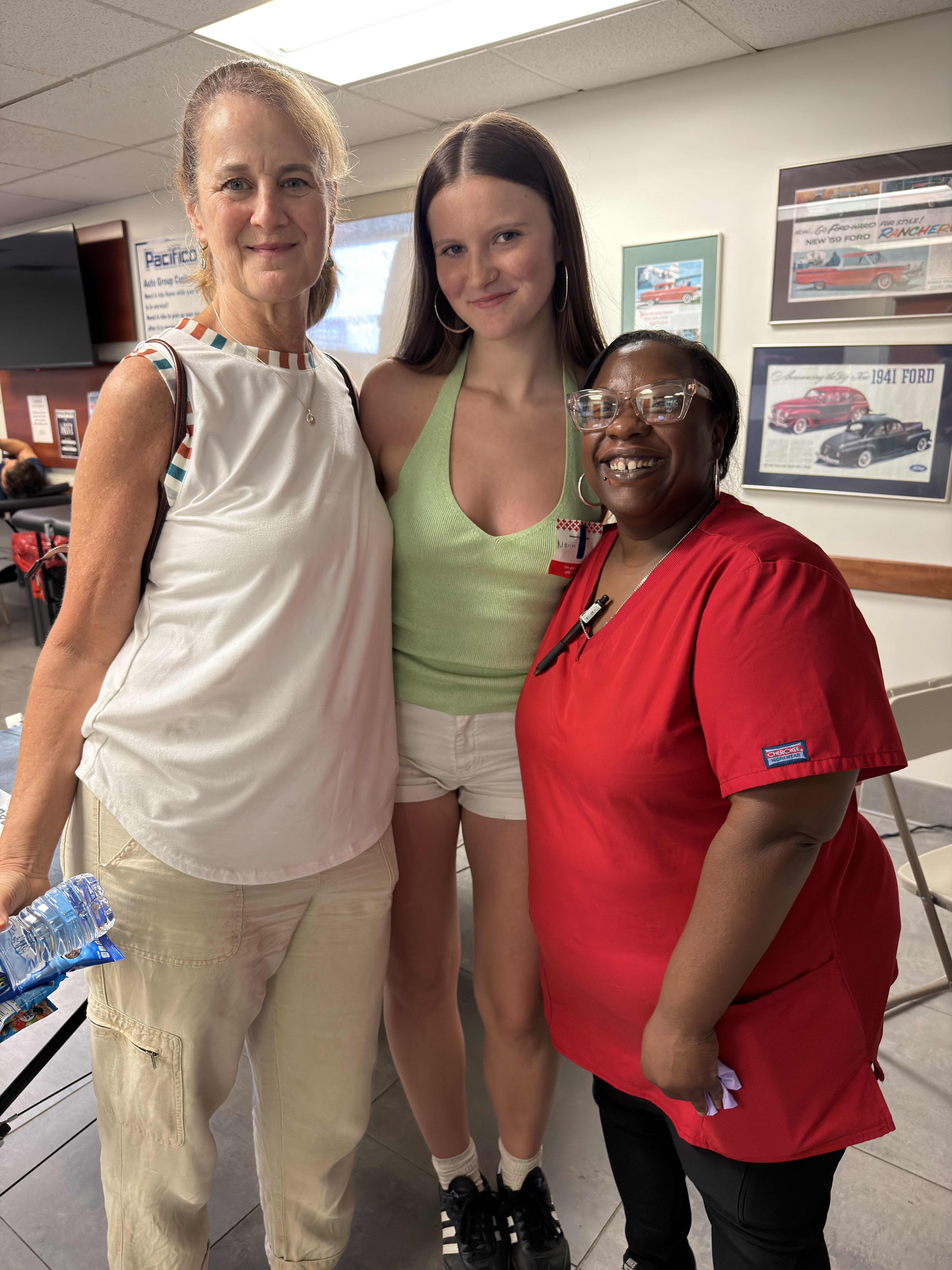
Maria Shankin is shown with her daughter Marin Shankin and phlebotomist Ikea Smith at the Red Cross blood drive at Pacifico Ford on July 13, 2026 in Philadelphia. Marin donated blood for the first time one day before her 21st birthday. Ikea Smith is used to helping first time blood donors. She said, “I just try to walk them through the process and just make them feel comfortable and let them know that everything’s going to be okay.” Photo by Jenny Farley/American Red Cross.
Marin Shankin and her mother Maria are big fans of “Breaking Bad,” the hit TV show that starred actor Bryan Cranston.
When Cranston posted that he would be at a Red Cross blood drive at Pacifico Ford on July 13th, both knew they had to make the trip to see him in person.
“I saw on Instagram that my good friend Walter White was going to be here,” Marin said.
Walter White is the fictional character Cranston played.
One day before Marin would celebrate her 21st birthday, she and her mother headed to the blood drive.
“I was like, ‘oh, maybe it’ll be fun if I donate my blood with Bryan,’” she said.
Marin said even though blood drives happen at schools and other places, normally it might not be the type of event she found herself attending until now.
“I’ve just never done it before.”
Marin had been studying abroad in Italy before coming home for the summer. She and her mom have been re-watching “Breaking Bad” all the way through for the second time.
“We’re right in the middle of it and we’re huge fans the first time around. We love it even more this time,” Maria said. “We jumped in the car and came down.”
Cranston donated blood at the drive and inspired many other people like Marin to donate too. The mom and daughter duo said it probably won’t be the last time Marin donates.
Maria said, “You need somebody to get you started and if it’s Bryan Cranston, then so be it, right?”
According to Maria, over a period of 20 years, Marin’s dad had a “very bad heart problem” and received several transfusions.
“He had two open heart surgeries, and he needed blood many times.So, it’s a good thing she’s doing,” Maria said.
Ikea Smith is a phlebotomist who has worked for the Red Cross for 8 years. She befriended the pair at the blood drive and talked to Marin as she checked on her during her donation.
“I tried to make her feel a little more comfortable.” She said, “I just kind of talked to her, just to get to know her a little bit, found out that tomorrow’s her birthday, her 21st birthday, so she was really nice.”
Ikea said it made her feel good to see a first-time blood donor and she told Marin something she’s witnessed before, “Once you start donating, you’ll want to continue to donate.”
Marin agreed. She said donating blood might become a new birthday tradition.
“It’s a good thing. She’ll never forget it,” Maria said.
Marin has something to say to other young people who are thinking of donating but haven’t done so yet.
“You should do it. It’s not bad. It’s not hard and I feel like you’re young and healthy and able and can help other people.”
Right now, for only the second time ever, the American Red Cross has declared a national blood crisis. All blood types are needed but especially type O.
Nearly half of the people who live in the United States have type O positive blood and O negative is what doctors use first in an emergency when there isn’t time to figure out a patient’s blood type.
If just three more people donate at each blood drive this summer, the Red Cross says the blood supply will stabilize. If it doesn’t, doctors may have to make decisions about patient care based on whether or not they have available blood on the shelves. Some surgeries could be delayed.
If you would like to make an appointment to donate, you can get more info at RedCrossBlood.org.
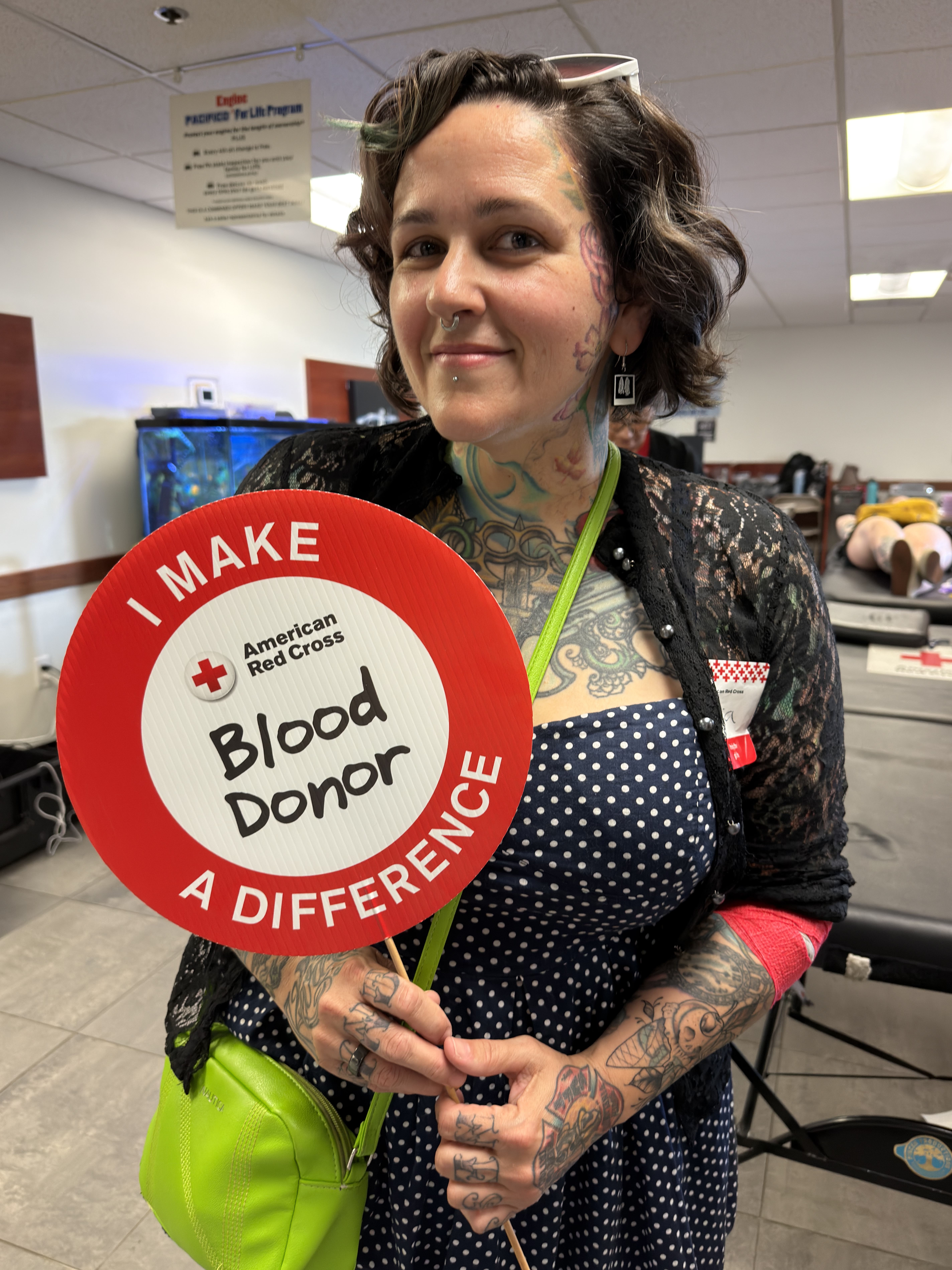
Marcy Letizia’s life was saved by platelet transfusions years ago when she nearly died after giving birth. She said back then when her family was in the hospital waiting room “hoping that I was gonna make it” they all donated blood. When she recovered she did too. She said, “Every time I would get a chance, I would try to donate.” Photo by: Jenny Farley/American Red Cross
It had been about ten years since Marcy Letizia donated blood, so when her friend Mary texted that they should do it she thought, “I’ve been trying to do new things and trying to have a new chapter of life a little bit so, I figured I might as well.”
Letizia showed up to donate at an American Red Cross blood drive hosted by Pacifico Ford in Southwest Philadelphia, held in cooperation with the Ford Building Together initiative and Major League Baseball.
When she was checking in, someone mentioned to her that there was a celebrity there that day.
“Who?” she asked.
Bryan Cranston, she was told. Letizia couldn’t believe it. “I didn’t think she was correct. I was like, ‘No, no’!”
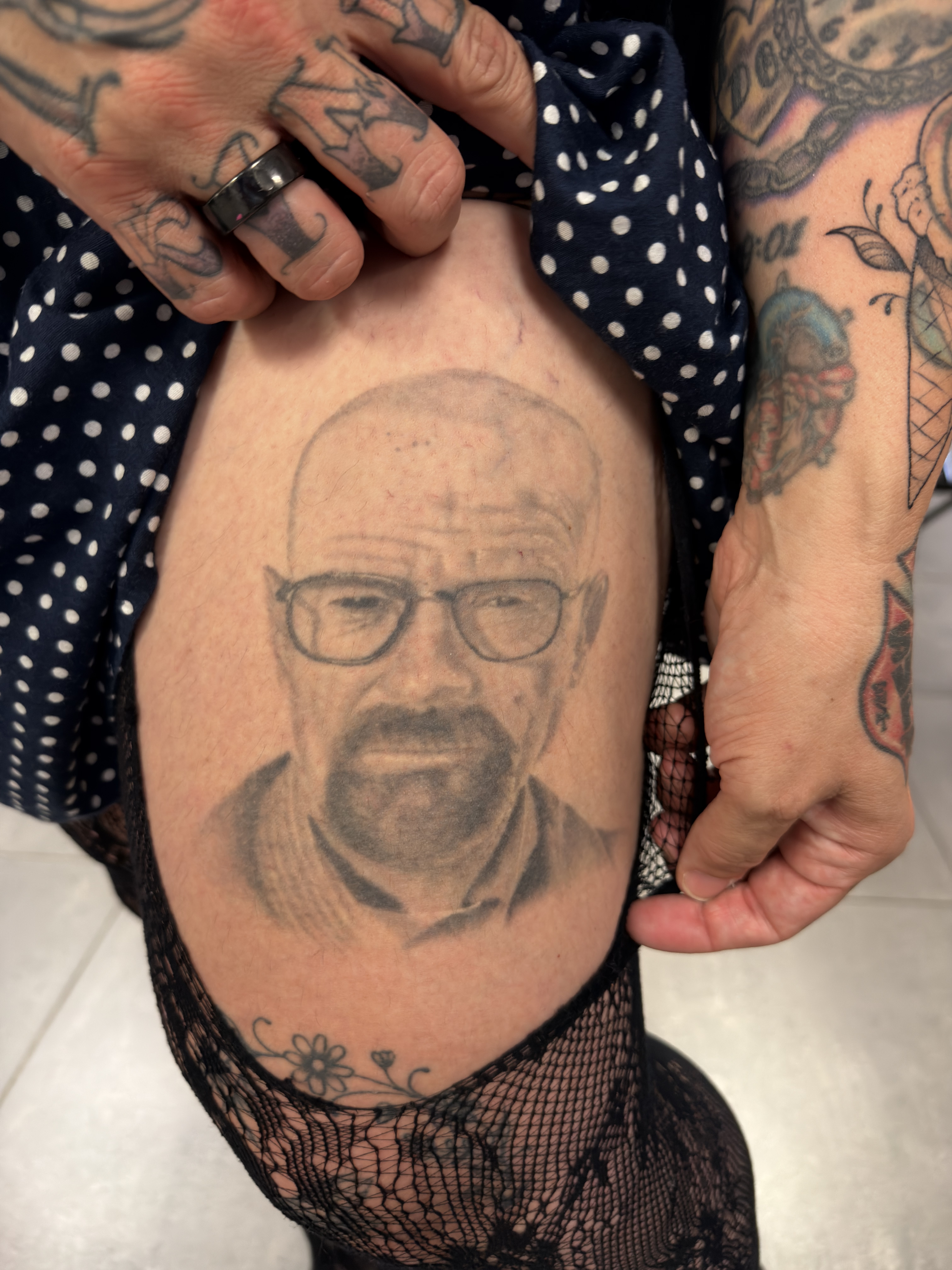
Letizia and her husband own a tattoo shop in New Jersey. Her husband is the artist who tattooed, what is arguably the most famous TV character Cranston has ever played, on Letizia’s thigh about 13 years ago.
“Breaking Bad’s” Walter White. “We’re kind of super fans.”
She said, “I had no idea he was here. I just came to the blood drive.”
Marcy Letizia owns a tattoo shop in Vineland, New Jersey with her husband, the tattoo artist who did this tattoo of Bryan Cranston’s famous fictional character Walter White from “Breaking Bad.” Photo by JennyFarley/American Red Cross
Cranston has won so many awards it’s hard to list them all. He’s been nominated for an Oscar. He’s won multiple Emmys, a Golden Globe and two Tony awards and many more.
He’s an actor, producer and director. He’s the voice of Ford Motor Company and has done commercials for Ford for nearly ten years. He’s supported numerous causes and has a long history of philanthropy on his own and with Ford Philanthropy.
He’s also a blood donor.
Before he arrived at Pacifico Ford, Cranston promoted the drive from Center City on his Instagram.
He talked about being in town for Major League Baseball’s All-Star Game and mentioned the Red Cross, and two organizations that help feed hungry people in need – World Central Kitchen and Sharing Excess.
“What I’m here for is to bring awareness to these three great organizations that help our communities,” he said.
He urged people to come say hello to him and said, “I’m going to be giving blood.”
Many people caught that post and came to Pacifico Ford to see him, but stayed to donate blood, just like Cranston.
He felt strongly that in his case, to inspire people to donate, he wanted to do it himself or else his words would be “hollow,” he said.
And that’s how one of Cranston’s biggest fans got introduced to the only celebrity she’s ever wanted to meet.
Marcy Letizia came to give blood at the Red Cross drive at Pacifico Ford and had no idea she would get to meet Bryan Cranston after he donated blood too. She said, “He’s the one celebrity that I’ve always, always, always adored. He’s fantastic in everything that he’s been in. So, the stars aligning and just making it so I came here for a blood drive with my friend was just crazy.” Photo by Jenny Farley/American Red Cross
Letizia has two kids, who are 17 and 24. She said they watched Cranston’s hit series “Malcolm in the Middle” from the time they were little.
“It’s strange that everything aligned, that I actually got the meeting. It was crazy cool.”
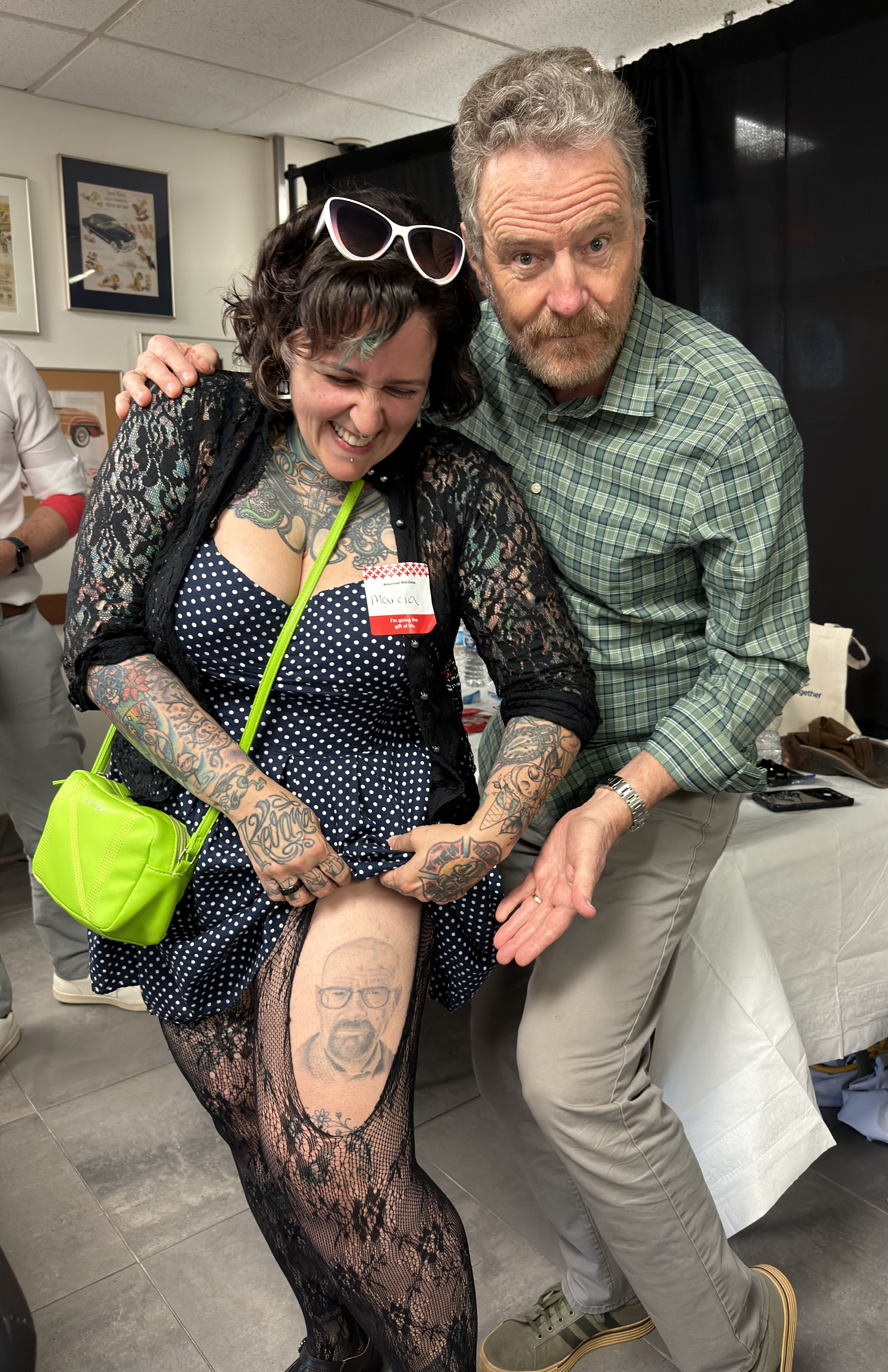
She was wearing black stockings, but she ripped them just enough to show Cranston the tattoo of his face.
He joked, “I’ve got a tattoo of you!” And they both laughed.
Letizia won’t forget it. He was “so down to earth and normal and nice,” she said.
Nearly 25 years ago, Letizia nearly died when she lost too much blood giving birth to her daughter.
Platelet transfusions helped saved her. As soon as she recovered, she became a blood donor.
The American Red Cross is facing an emergency blood shortage as the blood supply fell nearly 25% in June. There is also an emergency need for platelets. Donors are urgently needed to give now to help ensure patients receive lifesaving medical care without delay. The shortage is especially serious for types O positive and B negative blood. Visit RedCrossBlood.org to schedule an appointment to donate.
Isabella Rosa hates running. That didn’t stop her from running ten miles in the Broad Street Run in Philadelphia. Broad Street is lined with lampposts. Each time she ran past one she told herself, “Just get to the next lamppost.”
She thought getting to the next lamppost was a good metaphor for life, so she knew what one of her nine tattoos was going to be.
“I got myself a little lamppost,” she said.
For Isabella Rosa, life is all about getting to the next lamppost so she had one tattooed on her arm. She also has two cross-stitch needles, a floral design and a heart tattoo with a crying face, which is one of her favorites. When she donated blood at the Staff Donor Day drive on July 9, she said, “If I could help anybody who needs blood, I really would love to.” Photos by Jenny Farley/American Red Cross
Jessica Kohn is a big “Game of Thrones” fan. When she had a bone tumor removed from her ankle, she waited for the scar to heal and knew what would make the perfect tattoo.
“Like they say in the show, ‘What do we say, to the god of death?’ And she says, ‘Not Today.’ So, that was a very meaningful tattoo.”
Kohn said the tattoo reminds her that she came out on the other side of an ordeal.
Now, Kohn donates blood to “pay it forward.” She said, “I’ve had so many people help me with my illnesses and injuries, surgeries that I’ve had.”
Jessica Kohn got her octopus tattoo in Sedona, Arizona, and her “Not Today” tattoo after she recovered from having a bone tumor removed. She got a raccoon tattoo because she volunteers at a wildlife center helping to rehab orphaned and injured animals and return them to the wild. She said, “Raccoons are my favorite animal that I work with.” Photos by Jenny Farley/American Red Cross
For Laura Hash, tattoos can have meaning or just be beautiful to look at. She has a palm tree tattoo to commemorate a 50th birthday trip she took with her friends, and she’s drawn to tattoos of music notes and flowers.
“They’re very vivid. I love them. The tattoo artist did great,” she said. Hash also has tattoos on her hip and thigh.
Laura Hash donated blood at the Red Cross “I Bleed for Preston and Steve” blood drive on June 19. She has musical and floral tattoos and also has one of a palm tree to commemorate the trip she took with her friends to celebrate turning 50. Her friends got a matching tattoo. Photos by Jenny Farley/American Red Cross
The Lifesaving Connection
Rosa, Kohn and Hash all love tattoos and they are all blood donors. Rosa works in the National Molecular Lab as a genetic analyst at the American Red Cross Spring Garden Campus. She analyzes DNA sequences to “help type people’s blood” so that recipients who may need more specialized blood than traditional blood types can get what they need.
She donated blood at the Staff Donor Day blood drive on July 9. “The more that I work here, the more that I realize that it really is a need for a lot of folks, and if it’s something that I can help with, by giving 7 minutes of my time, I’m happy to do that,” she said.
Hash and Kohn donated blood at the “I Bleed for Preston and Steve” Red Cross blood drive on June 19.
Kohn said she likes donating blood to help others.
“My favorite part is getting the email to tell me where my blood’s going.” She said, “It’s nice to know oh, it went here to the kids’ hospital, it went here to this place, and so that’s a pretty cool part of it.”
Kohn is an animal lover who has volunteered at a wildlife center for 10 years. Many of her tattoos are of animals and some are dedicated to the memory of beloved pet cats that have died.
Having tattoos won’t stop you from donating blood. On National Tattoo Day, we are reminding you of what you need to know:
Red Cross graphic: Got Ink? What you need to know about tattoos and blood donation.
Have a Tattoo? Here’s What You Need to Know to Donate Blood
Pennsylvania is one of seven states and the District of Columbia that don’t have regulations for tattoo businesses, so you must wait three months after getting a tattoo before you can donate blood.
Those states include: New York, Maryland, Massachusetts, New Hampshire, Idaho and Wyoming.
The delay is because of concerns about hepatitis. The Red Cross tests blood donations for hepatitis B and hepatitis C, but it takes time to detect the virus. If you have hepatitis, don’t donate blood.
In states that regulate tattoo facilities, there is no delay before donating blood, as long as the tattoo business uses fresh ink and sterile needles.
If you apply your own tattoos or get tattoos in states with regulations but from unregulated businesses or artists, you will still have to wait three months between getting your tattoo and donating blood.
If you have questions about donating blood with tattoos or piercings, learn more at RedCrossBlood.org.
Donor Services team members Danielle Spencer and Hayden Noonan led the charge to plan Staff Donor Day on July 9, 2026. They’re pictured here with mascots Fred Cross and Buddy. Photo by Konrad Jones / American Red Cross
For the first time since the COVID-19 pandemic, the American Red Cross workforce celebrated Staff Donor Day by hosting a blood drive at the Spring Garden Campus on July 9.
The effort was spearheaded by an enthusiastic committee of employees from across Red Cross departments, which competed to see who could recruit the most donors.
Staffers were welcomed at the entrance to the blood drive by Crystal Baytop who was excited to see so many people signed up to donate. “I know it’s going to be a successful day. I’m looking forward to it,” she said.
Baytop has been a Red Cross volunteer since 2019 and serves in many roles including disaster spiritual care, shelter services and feeding. She has deployed to disasters around the country and now deploys locally. On this day she greeted donors in her role as blood donor ambassador.
Red Cross volunteer Crystal Baytop welcomed donors to the Staff Donor Day blood drive at headquarters in Philadelphia on July 9, 2026. Photo by Konrad Jones/American Red Cross.
Jennifer Graham, the CEO of the American Red Cross Southeastern Pennsylvania (SEPA) Region, and Helen Munizza, Regional Donor Services Executive for Southeastern Pennsylvania, New Jersey and Delaware, both donated blood at the drive.
Graham said staff donor days have been happening off and on since she started at the Red Cross nearly 30 years ago. She’s a longtime blood donor who is one donation away from giving four gallons!
“This is one of the only things that you can, within about an hour, know that you’ve helped to save somebody else’s life. That’s pretty amazing and certainly makes me feel good for the rest of the day,” she said.
Southeastern PA CEO Jennifer Graham and Regional Donor Services Executive Helen Munizza both rolled up a sleeve at Staff Donor Day on July 9. Photo by Jenny Farley / American Red Cross
Yaly Alvarez felt great after donating blood for the first time ever.
Alvarez is the residential care supervisor at the Red Cross House and says the Red Cross is her “second home.” She had been nervous to donate because of the needle, but after donating was surprised she barely felt it.
“I don’t like needles, but they made me feel so comfortable, and they were talking to me during the process, and there was no way to be nervous about it,” she said.
Yaly Alvarez, who works as the residential care supervisor at the Red Cross House, plans to donate blood again after donating for the first time at the Staff Donor Day blood drive. She’s also encouraging others to donate. “Don’t be scared. It’s very easy. It took like 10 minutes.” Photo by Alana Mauger / American Red Cross
The blood collections team says talking to people is one of the tools they use to help soothe donors and make them feel comfortable. Ana Scavuzzo is a phlebotomist who worked at the drive.
“I just kind of chitchat with them to keep their mind distracted,” she said.
Scavuzzo started out at the Red Cross ten years ago in the manufacturing lab and was looking forward to seeing co-workers donating blood who she hadn’t seen in a while.
Red Cross phlebotomist Ana Scavuzzo took blood from donors at the Staff Donor Day blood drive. When asked what her favorite part about being a blood collector is she said, “I like that it saves lives.” Photo by Jenny Farley/American Red Cross.
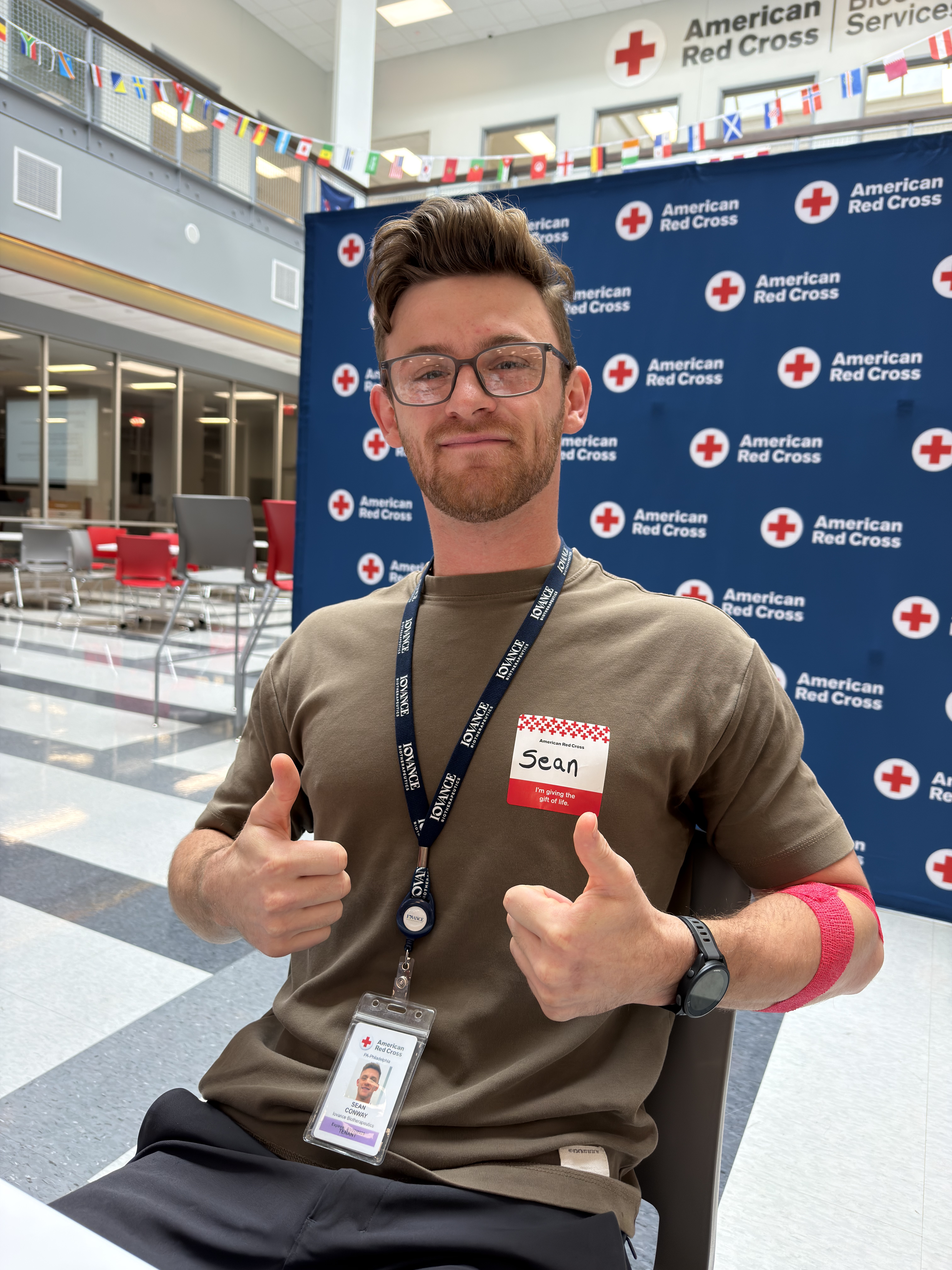
Sean Conway is the lead of the manufacturing department at Iovance Biotherapeutics, which is a tenant at the Spring Garden Campus.
A blood donor since high school, he was excited to see he could make a Power Red donation at work while supporting the mission of the Red Cross.
“It’s a noble cause, so I’m happy to help out, especially when we come into nationwide blood shortages and issues like that, where we need supply in hospitals,” he said.
Sean Conway works for Iovance Therapeutics and made a Power Red donation. “In my experience, everyone from the American Red Cross has been so great, so helpful, making sure that before and after your donation, you’re taken care of. Once you’re through the first needle stick, it’s all just a breeze. Just lay down and relax,” he said. Photo by Jenny Farley/American Red Cross.
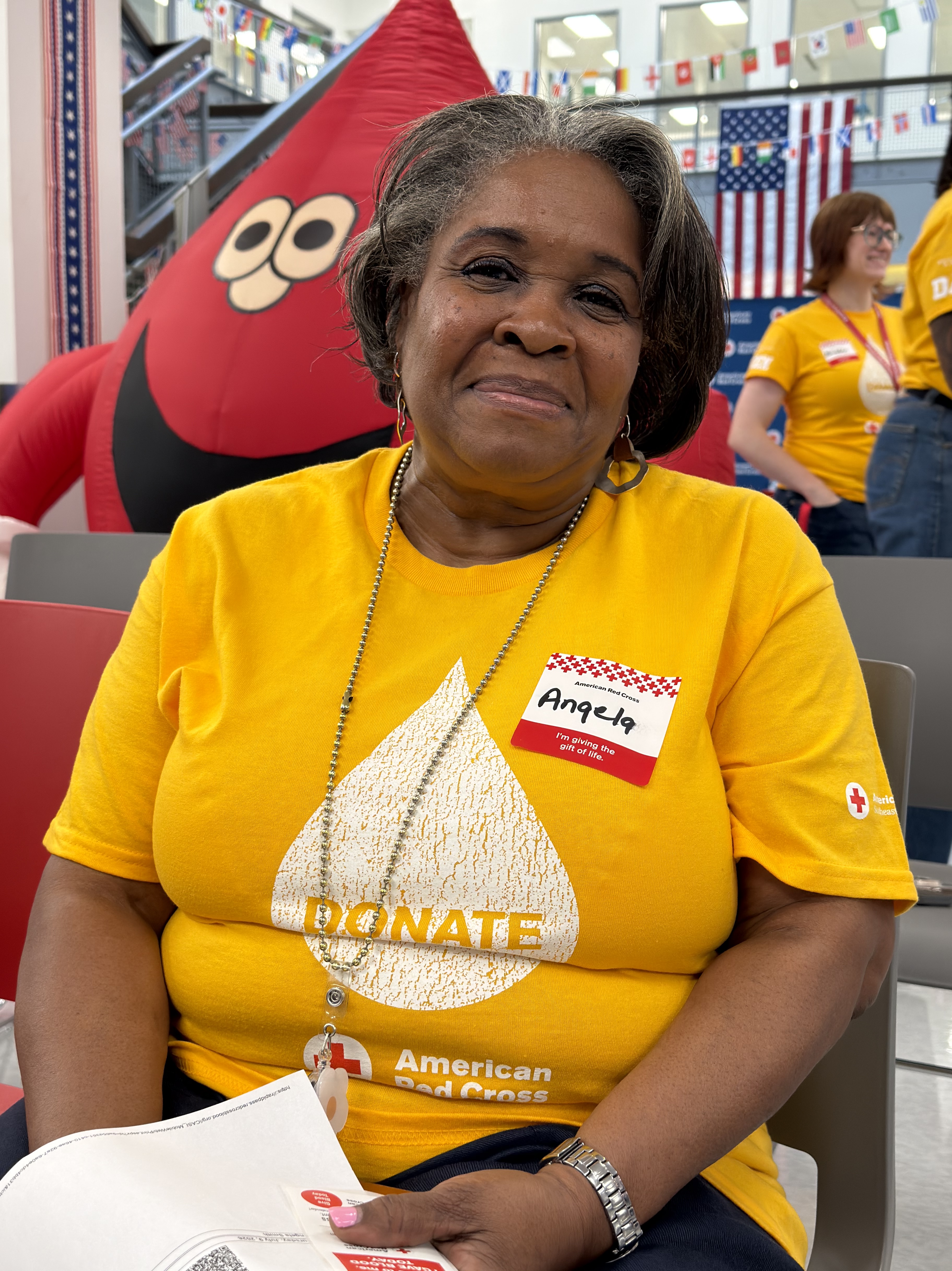
Angela Smith, who works as an administrative assistant in therapeutic cellular services, will celebrate her 25th anniversary with the Red Cross in February. She has donated blood since the 90s and felt proud to donate at the staff donor drive.
“I think it helps people to be more appreciative of the job they do, and also to know how many people benefit from it.”
Smith was also motivated to donate to help people who may have a rare blood type or a condition that requires a lot of transfusions. She said it helps “to know that your blood is actually being used to help them not only heal, but to have a better life.”
Angela Smith liked donating at the Staff Donor Day blood drive because she said, “It lets you know that you’re more than just an employee, and that even though you’re getting a paycheck, you’re actually reaching out and helping other people.” Photo by Jenny Farley/American Red Cross.
There was a friendly competition in the building to see which department had the most donors. The prize? Bragging rights and the chance to display the American Red Cross SEPA Staff Donor Day trophy.
Committee member Paul Mansfield, director of the Red Cross Immunohematology Reference Laboratory in Philadelphia, predicted a Laboratory Services victory before the event even started. His confidence wasn’t misplaced. Lab employees donated the most of any department, with Humanitarian Services and Donor Services tying for second place.
Paul Mansfield exuded confidence after his donation, predicting Laboratory Services would win the blood drive competition…and they did! Photo by Alana Mauger / American Red Cross
Graham said one of the most special aspects of the blood drive is that it was held at the Spring Garden Campus.
“The blood that’s collected here will be processed here, manufactured here and sent out to the hospitals that we service right from this building,” she said. “We’ve got amazing teams and laboratories. They make sure that we get the right product to the right patient at the right time.”
The American Red Cross has an emergency blood shortage as the blood supply fell nearly 25% in June. There is also an emergency need for platelets. Donors are urgently needed to give now to help ensure patients receive lifesaving medical care without delay. The shortage is especially serious for types O positive and B negative blood.
Visit RedCrossBlood.org to schedule an appointment to donate blood or platelets.
Volunteer blood transportation specialists take blood collected at mobile drives to a processing center and deliver completed blood products to hospitals. Photo by Brad Zerivitz / American Red Cross
Amid the excitement and volunteer opportunities generated by the city’s major events this summer, the American Red Cross remains focused on the work it does every day — collecting and delivering lifesaving blood and responding to local disasters like home fires. To ensure these essential services continue uninterrupted, teams have developed contingency plans to address road closures and heavy traffic that could affect volunteers’ ability to reach critical locations.
One of the team’s highest priorities is maintaining the uninterrupted flow of blood products from the Red Cross Spring Garden Campus to area hospitals.
According to Jim Leahy, program specialist for operations and logistics, the Red Cross began pre-stocking blood at Philadelphia trauma centers ahead of the first major event to help ensure blood products are already there when needed.
Jim’s team is responsible for transporting blood collected at mobile drives throughout Southeastern Pennsylvania, New Jersey and Delaware to the Spring Garden Campus in North Philadelphia for processing. From there, they deliver blood products — including red cells, platelets and plasma — to hospitals across the region and sometimes beyond.
While many deliveries follow a schedule, others are urgent. Patients with rare blood types may require a specific unit of blood, making timely transportation critical.
“We have five to 10 volunteers on the road at any given time,” Jim said.
During an emergency, it’s the blood already on hospital shelves that helps save lives. Photo by Brad Zerivitz / American Red Cross
Given the volume of blood collected in the region and the large number of hospitals served, approximately 180 volunteer blood transportation specialists are supplemented by 22 paid drivers. To help minimize delays and frustrations caused by event-related traffic, Jim has assigned paid drivers to routes near the South Philadelphia sports complex and the Lemon Hill area of Fairmount Park through mid-July.
At the same time, all Red Cross drivers — and everyone carrying out the mission in the field — carry documentation identifying them as essential workers, helping ensure they can reach their destinations when needed.
Beyond avoiding areas impacted by major events, operations have remained largely unchanged.
“Everything is operating status quo,” Jim said.
Some Blood Transportation Specialist volunteers have also stepped up to serve as shuttle drivers for disaster volunteers supporting 13 summer events. These teams are strategically positioned throughout the city on key event days, ready to provide sheltering and reunification services if needed.
Blood Transportation Specialist Stephen Kelly prepares to transport a team of field volunteers to Parkway Central Library on July 2, 2026. Photo by Alana Mauger / American Red Cross
Stephen Kelly is one of those volunteers. He made several shuttle trips on July 2nd, when the Red Cross was supporting preparedness operations for Wawa Welcome America events near the Philadelphia Museum of Art.
“I live close close by and was available. So when the call went out, I signed up,” he said.
In his usual volunteer role as a blood transportation specialist, Stephen drives blood from the Spring Garden Campus to area hospitals at least once per week. You can usually find him on a mid-day hospital run to locations across Southeastern Pennsylvania and New Jersey, “wherever the need is.” He also signs up to deliver blood products all the way to Hershey!
Stephen has been in the role for about 3 years, starting after he retired.
“I was looking for something to do, and I’m always around here,” he said, adding that he has given blood at the Spring Garden Campus for years and his Laborers’ Local Union 57 is just down the street.
And while he says that traffic is a little more congested with all of the city’s happenings, for the most part, it’s been business as usual.
Whether transporting blood to hospitals, supporting disaster response operations or adapting to unusual logistical challenges, Red Cross volunteers and staff continue to move the mission forward, ensuring communities can count on the organization’s lifesaving services every day, regardless of what is happening in the city around them.
Volunteer Jeanne Vissa talks about her role as a Blood Transportation Specialist. Video by Alana Mauger.
American Red Cross Southeastern Pennsylvania Regional CEO Jennifer Graham and Red Cross Regional Donor Services Executive Helen Munizza grab a photo with the Preston & Steve Morning Show crew after their broadcast on June 19th from the Greater Philadelphia Expo Center in Oaks. Pictured (from left) are Ryan Shuttleworth, Casey Fosbenner, Helen Munizza, Steve Morrison, Jennifer Graham, Preston Elliot and Marissa Magnatta. Photo by Donn Greenberg / American Red Cross
By Jenny Farley and Alana Mauger
Missy Hinspeter doesn’t like needles. But on June 19th, the sixth-grade science teacher rolled up her sleeve anyway. Her A negative blood type is rare, found in only about 1 in 16 people.
“It’s good that I can give,” she said. It was her third time donating at the “I Bleed for Preston & Steve” Blood Drive, and as a big fan of the show, she was happy to see them again in person – even if the needle stick made her nervous.
Across the room, fellow Preston & Steve fan Bill Paoletti had a different reason for being there. After losing a leg in a motorcycle accident 8 years ago, he said that wearing a helmet and days of blood transfusions helped save his life.
Nearby, Erin Crew donated blood on her schedule of every 56 days. She’s been giving blood for years, starting after her father survived leukemia, relying on transfusions along the way.
“I was his life donor, so he’s gone through a lot of blood,” she said. “We figure as long as I’m able to keep donating, I’ll give as much as I can, because we know firsthand how important it is.”
Left: Missy Hinspeter donated blood even though she “hates needles.” She tries to donate at least once a year. Center: Bill Paoletti lost a leg in a motorcycle accident. Blood transfusions helped save his life. He said, “Knowing people care enough to donate got me to where I am today.” Right: Longtime blood donor Erin Crew was asked what she’d tell someone thinking of donating blood that hasn’t done it yet. She said, “It’s so easy. It’s fast and you get snacks.” Photos by Jenny Farley / American Red Cross
Stories like these filled the Greater Philadelphia Expo Center in Oaks as more than a thousand blood donors, volunteers and fans came together for the 21st annual 93.3 WMMR “I Bleed for Preston & Steve” Blood Drive — held in one location for the first time since the COVID-19 pandemic.
By the end of the day, the American Red Cross collected 1,048 units of blood, retaining its distinction as one of the largest, single-day blood drives in the country.
“People were heeding the call,” Steve Morrison said during the show’s June 23rd broadcast as he and co-host Preston Elliott announced the totals.
Preston reflected on the sheer number of donations. “A lot of blood drives, you’ll hear tens, maybe a hundred, couple hundred, but very rarely do you get in the 1,000 mark,” he said. “You just knocked it out of the park. You saved a lot of lives.”
Giving Back and Raising Awareness
This year’s blood drive took place on Juneteenth, a federal holiday that commemorates the end of slavery in the United States. It also coincides with World Sickle Cell Day, adding a deeper layer of meaning and opportunity for education.
“Juneteenth is a holiday we are proud to be a part of and recognize, as well as World Sickle Cell Day. We’re making sure we’ve got a space for our blood donors to come in to be able to donate, help our diverse communities and have a little fun while they’re at it,” said Jennifer Graham, CEO, Red Cross Southeastern Pennsylvania Region.
She described the long-running event as “an amazing legacy” that serves as the Red Cross “unofficial official kickoff to summer.”
Jennifer Graham, CEO, American Red Cross Southeastern Pennsylvania Region, talks on-air with the Preston & Steve Morning Show on June 19th. Photo by Alana Mauger / American Red Cross
The day provided a bit of education in addition to the opportunity to have fun and give back. Throughout the drive, 93.3 WMMR DJs shared information about sickle cell disease and encouraged their listeners to step up to help ensure the Red Cross maintains a diverse blood supply.
Preston recalled a character from season one of the TV show “The Pitt” who was admitted to the hospital during a sickle cell crisis.
“She was in excruciating pain and came very, very close to dying until they diagnosed it and got her a transfusion,” he shared during the broadcast.
Because they may receive frequent transfusions, people living with sickle cell disease may develop an immune response to blood that is not closely matched to their own. A patient in need is more likely to find a compatible blood match from a donor of the same race or a similar ethnicity, which is why the Red Cross is committed to maintaining a diverse blood supply at all times.
Blood Collections Supervisor Ashley Barrett helps host Preston Elliot locate his veins while producer Casey Boy holds the mic during the live broadcast of the Preston & Steve Morning Show on June 19th. Photo by Alana Mauger / American Red Cross
Collections supervisor Ashley Barrett talked listeners through the blood donation process and helped Preston identify which of his veins would work best for drawing blood. The Morning Show also tackled how seasonal challenges and a packed calendar of major events compete for people’s time.
“We are certainly in a spot where the number of people scheduling donations has dropped by about 20%,” Graham said during her live radio interview.
Preston issued a call to action for everyone listening, “If you can’t make this blood drive, go to RedCrossBlood.org to find out where you can find one in your general area. But donate this summer, for sure, and every 56 days.”
Powering a Life-Saving Effort
A blood drive of this magnitude wouldn’t be possible without dedicated Red Cross volunteers and staff.
Maureen O’Connell spent the first official day of her retirement volunteering as a Red Cross blood donor ambassador. She just retired after 41 years as a nurse, and you could tell she was still thinking of her patients.
“I worked in the hematology/oncology unit, so often I would just hang units and units of blood and platelets, and I always said I want to give back some day,” she shared.
Maureen O’Connell is a newly retired nurse who volunteered for the Red Cross as a blood donor ambassador at the drive. She said, “I just love the donors. They’re so joyful!” Photo by Jenny Farley/American Red Cross.
Preston and Steve praised the dedication of Red Cross staff who showed up and put in long hours to make the day a success.
“Everybody is in such a great mood,” Preston observed. “Every time we do this, they love it.”
Steve gave a special shout-out to the Red Cross collections team. He said they “just really take great care of you, and the end result is, you know, again, you’re seeing a lot of smiling people.”
Preston and Steve, who both donated blood at the event along with producer Ryan Shuttleworth, are already gearing up for next year’s drive.
“So the question is, we’re back up into stellar numbers – should we make a real concerted effort next year to break that record?” Steve asked, referring to the 2019 drive, which collected more than 1,400 donations.
“For real, I think we could do it,” Preston responded. “After this many years of doing it, I thought maybe you’d see things wane a little bit; not even close.”
Preston Elliott (top) and Steve Morrison (bottom) donate blood at the 21st annual “I Bleed for Preston & Steve” Blood Drive. Photos by Donn Greenberg / American Red Cross
Celebrating a Movement
In front of an audience of excited blood donors and their friends and families, 93.3 WMMR hosts broadcast their shows live from Oaks for a full 12-hours. That included the drive’s namesake Preston & Steve Morning Show, followed by Jacky Bam Bam in for Matt Cord in the afternoon and Brent Porche who was on the air until the last blood donation appointment at 7 p.m.
Throughout the day, radio hosts, blood donors and Red Crossers celebrated the life and legacy of beloved 93.3 WMMR DJ Pierre Robert, who died on Oct. 29, 2025. Pierre broadcast his afternoon show live from the blood drive every year for the past decade. Pictured left: A blood donor presents radio host Jacky Bam Bam with a portrait of Pierre. Photo by Donn Greenberg / American Red Cross Pictured right: Radio host Brent Porche hangs out with Pierre’s nephew Brett Robert during his live broadcast between 3-7 p.m. Both are wearing Pierre-themed T-shirts. Brett read a proclamation for Pierre earlier in the day during Jacky’s show. Photo by Alana Mauger / American Red Cross
The hosts and producers mingled with fans, launched boomerangs and even broke into an impromptu roller-skating party at one point. They patiently signed autographs and posed for hundreds of photos with thrilled blood donors who walked away with a limited-edition Preston & Steve T-shirt, along with other goodies.
With music blaring and crowds moving through the space, the event felt like part celebration, part mission-driven movement. It’s rooted in the megafans – like Tom VanDuyne and Craig Powell – who return year after year and in the 89 new donors who gave blood for the first time.
“It feels good that I’m able to do this and that Preston and Steve and the Red Cross have been doing this now for 21 years and it has kept going,” Powell said. “I hope that it continues on for many more years.”
Morning Show super-fans Tom VanDuyne (left) and Craig Powell (right) have come out to donate blood at all 21 “I Bleed for Preston & Steve” Blood Drives! Tom said donating is a “piece of cake.” Photos by Jenny Farley / American Red Cross
CEO Jennifer Graham summarized the event best.
“You come for the party. You come for the experience. You come for the people. You leave helping save lives, and there’s nothing more impactful than that.”
Paying it Foreward
As seasonal challenges grow, the Red Cross has an urgent need for blood and platelet donors to give now to help ensure hospitals stay ready to help patients without delay. Book a time to donate blood or platelets by visiting RedCrossBlood.org, downloading the Red Cross Blood Donor App or calling 1-800-RED CROSS.
Above: American Red Cross photos from the 21st annual “I Bleed for Preston & Steve Blood Drive on June 19th at the Greater Philadelphia Expo Center in Oaks. Photos taken by Donn Greenberg, Jenny Farley, Kai Kwong and Alana Mauger. Check out our Flickr album for more!
The American Red Cross joins organizations across the U.S. to celebrate the 51st Medical Laboratory Professionals Week, observed April 19-25, recognizing clinical and public health laboratory professionals for their contributions to the health of our communities. The Red Cross employs more than 2,200 laboratory and manufacturing team members who work across 116 laboratories and product distribution facilities nationwide. Together, these teams process, test and distribute approximately 6.3 million blood products each year.
All blood products collected in Southeastern Pennsylvania, New Jersey and Delaware are processed in Philadelphia’s Manufacturing Lab at the Spring Garden Campus, which is the largest Red Cross facility in the U.S.
Meet Our Team
Lab professionals like Connor Klee and Timothy Hall work every day, 365 days/year to ensure requested blood components are available to patients when and where needed.
Connor Klee is a specialized testing technologist in the National Reference Laboratory for Specialized Testing in Philadelphia. Submitted photo
As a specialized testing technologist in the National Reference Laboratory for Specialized Testing in Philadelphia, Connor Klee performs tests on samples from patients with rare platelet antibodies to identify matches. He also screens blood donations to identify matches for patients being treated for sickle cell disease.
Before joining the Red Cross two years ago, Connor worked in cellular therapy for a university hospital, performing procedures to help clinical trial patients.
“I love that I can help people with specialized medical needs get the treatment they need using components made by the body itself,” said Connor. “Being a part of making the American Rare Blood Donor Program possible feels truly special.”
Timothy Hall is a a supervisor in the National Molecular Laboratory (NML) in Philadelphia. Submitted photo
As a supervisor in the National Molecular Laboratory (NML) in Philadelphia, Timothy Hall provides both technical and personnel supervision of the laboratory’s molecular testing operations. He oversees genotyping processes used for blood antigen phenotype prediction to ensure accurate, reliable and compliant results to support patient care.
“What I enjoy most about my current role is the opportunity to encounter novel cases on a regular basis,” he said. “The complexity of blood antigen genetics makes each case unique and intellectually engaging, requiring thoughtful analysis and problem-solving.”
Career Opportunities
The American Red Cross has a variety of career opportunities in Laboratory Services and Manufacturing. To learn more about available roles, visit the career center at redcross.org.
For Linn Johnson, sickle cell disease has been a constant presence since childhood. Growing up in Philadelphia, she was initially misdiagnosed—doctors told her parents she had rheumatoid arthritis before eventually discovering the true cause of her pain.
As a child, Linn sometimes went weeks without being able to walk or use her arms. Nights were long and sleepless, eased only by family members who stayed awake with her, trying anything they could to bring relief.
“I have pain every day. Every single day,” she said.
Sickle cell disease nearly claimed her life more than once. In 2000, a severe crisis left her on life support for a week and hospitalized for months. Since then, she’s endured multiple joint replacements and countless pain episodes—but she continues to push forward.
Today, Linn is a mother, grandmother, substitute teacher for children with autism, and a devoted volunteer. She also helps coordinate sickle cell blood drives to help ensure blood is available when patients need it.
“You have to survive,” she said. “Some days you don’t want to get out of bed, but I push myself because I know there’s somebody out there who needs my help.”
Sickle cell warrior Linn Johnson. Photo by Jenny Farley / American Red Cross
National Minority Health Month
April is National Minority Health Month—a time to recognize persistent health disparities in historically underserved communities and to take meaningful steps to reduce them.
At the American Red Cross, action begins locally. Philadelphia has long been at the forefront of advancing sickle cell care and awareness, including serving as the birthplace of the Red Cross Blue Tag Program, which helps people living with sickle cell disease receive better-matched blood transfusions.
For patients like Linn, access to compatible blood isn’t optional—it’s lifesaving.
Blood Donations for Sickle Cell Warriors
More than 100,000 people in the United States live with sickle cell disease, most of whom are of African, Latino or Mediterranean descent. The disease often requires lifelong blood transfusions to manage pain crises and prevent serious complications such as stroke or organ damage.
Because repeated transfusions can make it harder for patients to find compatible blood over time, programs like the Blue Tag initiative play a critical role. By identifying donors whose blood is more likely to match the complex needs of sickle cell patients, the program helps reduce complications and improve quality of care.
The Blue Tag Program’s roots in Philadelphia reflect the region’s commitment to meeting community-specific health needs and strengthening care where it matters most.
American Red Cross graphic – Blood donors who are Black are almost 3x more likely to match the blood most commonly needed by patients with sickle cell disease.
Black Maternal Health Week
Within National Minority Health Month, Black Maternal Health Week (April 11–17)shines a spotlight on another urgent health inequity—one where access to blood can save lives in a matter of minutes.
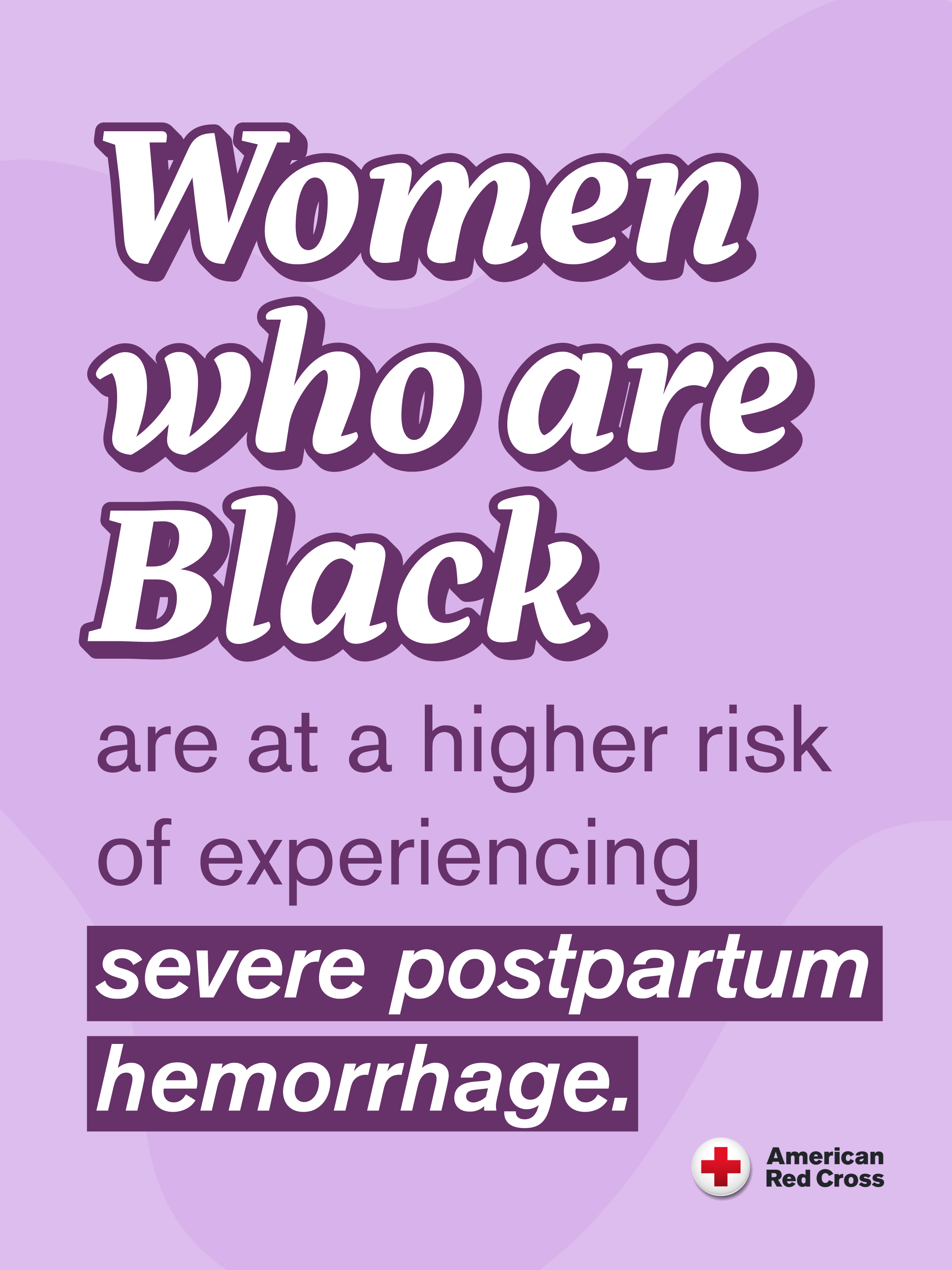
More than 80% of pregnancy-related deaths in the U.S. are preventable. Yet maternal mortality rates have worsened for women who are Black and Hispanic compared to pre-pandemic levels, while improving for some other groups. Women who are Black remain more than three times as likely to die from pregnancy-related complications.
Severe bleeding after childbirth, known as postpartum hemorrhage, is one of the leading causes of maternal death. When it strikes, immediate access to blood transfusions—sometimes dozens of units—is critical. Having blood readily available can mean the difference between survival and tragedy.
For the Red Cross, supporting maternal health is another way blood donors help close health gaps that disproportionately affect communities of color. Every donation strengthens the safety net for mothers and birthing people when emergencies arise.
American Red Cross graphic – Women who are Black are at a higher risk of experiencing severe postpartum hemorrhage.
Progress Brings Hope—and Continued Need
Today, newborn screenings and simple blood tests help diagnose sickle cell disease earlier than ever before. New gene therapies are offering fresh hope to patients and families.
Still, many people undergoing these treatments require months of ongoing blood transfusions to maintain stable hemoglobin levels and avoid serious complications. The need for blood has not gone away—it has evolved.
That means donors remain essential to turning scientific progress into real-world healing.
American Red Cross graphic – Did you know: Most patients with sickle cell disease who undergo gene therapy rely on donated blood & platelets.
Health Equity Starts With Community
As part of its commitment to bridging health gaps, the Red Cross provides all presenting blood donors with a free mini health screening, including pulse, blood pressure and hemoglobin levels. For many people, especially those who lack regular access to care, this insight can be life-changing.
Through its Sickle Cell Initiative, the Red Cross also tests first-time donors who self-identify as Black, African American or multiracial for sickle cell trait, which empowers individuals with critical health information while helping better serve patients like Linn.
How You Can Help
National Minority Health Month and Black Maternal Health Week are about more than awareness. They are calls to action.
Across Southeastern Pennsylvania, you can help by:
Donating blood to support patients with sickle cell disease and mothers in childbirth emergencies
Encouraging first-time and repeat donors to roll up a sleeve
Volunteering with the Red Cross to support lifesaving services in your community