Category: Training Services

  • Red Cross hero Thurston Perry Moon brings water safety to new heights in Philadelphia

    By Erica Silverman

    American Red Cross lifeguard guard and blood donor Thurston Perry-Moon. Submitted photo

    Trainees line up, get ready to jump in the water, and the whistle blows! Swim 300 yards, tread water for 2 minutes without hands, swim 20 yards to retrieve a 10-pound weight from the bottom of the pool, then swim with the weight back to the starting point in under 1 minute and 40 seconds. This is the first test Red Cross trainees must pass on their way to becoming certified life guards, administered by Red Cross hero and Lifeguard Instructor Thurston-Perry Moon.

    “I train each lifeguard to save lives,” said Moon, who initially became a certified lifeguard through the Red Cross in 1999.

    “I became involved with the Red Cross, since their training has the highest standards in providing adequate care for a drowning victim or other water emergencies,” he said.

    Moon, a Philadelphia native, has been a Red Cross Lifeguard Instructor (LGI) since 2010 in Philadelphia and Southeastern PA.

    He holds about 12 training sessions every spring and summer across Southeastern PA, training between 50 to 100 guards per season.

    “It’s a very diverse group [of trainees], all ages, ethnicities, and different backgrounds,” said Moon.

    May is Water Safety Month, which comes at a perfect time as swimmers, campers and people of all ages are gearing up for summer fun in the water. The American Red Cross plays a key role in this national campaign, providing education and training in water safety, and swim lessons.

    “The most successful lifeguard candidates start out taking Red Cross swim lessons; this is an important pipeline,” explained Moon, a father and middle-School math teacher in Philadelphia.

    You can download the free American Red Cross Swim App, as a companion to the Learn-to-Swim program. The app keeps the swimmer motivated and provides the latest in water safety guidelines.

    Moon serves a Red Cross trainer in several roles.

    “I also hold CPR and first aid training courses so community members can help someone who is a victim of a gunshot wound,” he said.  He is currently fundraising to continue these efforts to combat increasing violence.

    He makes whole blood donations about 5 times per year and continued throughout the pandemic.

    Moon comes from a long line of heroes.

    His grandfather, Joseph Mander, 41, died in the Schuylkill River while trying to save the life of a child, Paul Waxman, 7, who had fallen into the river in 1952. Mander held the boy above the water, but suddenly both were pulled under and downed. A plaque near the river commemorates Mander’s heroic efforts.

    “This empowered me and my family to make water safety a priority in our lives,” said Moon.

    Trained lifeguards are prepared for rapid response in case of a water emergency.

    The mastery test at the end of the training includes two written tests for CPR and first aid skills, an in-water aquatic rescue test, and the candidate must demonstrate proper execution of CPR on dry land, according to Moon.

    To find out more about training opportunities visit this link.

  • EMS program opens doors for Red Cross volunteer Sam Antenucci

    By Alana Mauger

    Sam Antenucci – Submitted photo

    Sam Antenucci’s American Red Cross experience started with her dad, who donated blood regularly. When he could no longer give blood after surviving cancer, Sam picked up the mantle and starting donating at Temple University blood drives where she was a student.

    “I wanted to do more, but my class schedule wasn’t the most flexible,” she recalled.

    Sam soon found a home as a communications volunteer with the Red Cross Southeastern Pennsylvania Region, which allowed her to give back on her schedule and flex her writing muscles, as well as participate in smoke alarm installation events and other Red Cross programs. She’s been a Red Cross volunteer since 2016.

    “I always enjoyed writing, but I wasn’t doing it as part of my schoolwork. It was a good fit,” she said.

    After graduating from Temple with a degree in Kinesiology, Sam became a certified EMT and worked in the EMS field for a year before starting a graduate program in Biomedical Science.

    “I wanted to pursue different experiences before I applied to medical school. One thing I’ve always wanted to do was become an EMT. There was a significant appeal to the career because you can work with people during some of the most challenging times of their lives. I wanted an opportunity to start making a difference in patients’ lives, even if I wasn’t in medical school just yet,” she shared.

    After finishing the EMT program, Sam transitioned to teaching critical EMS skills as an instructor at Thomas Jefferson University. The experience has prompted her to pursue a career as a clinical educator in addition to medical school.

    “I have EMS to thank for kindling a hidden passion in me that I would have never known about if I did not sign up for the [EMT] course.”

    After finishing her master’s degree, Sam became an adjunct faculty member in the cadaver lab at Philadelphia College of Osteopathic Medicine – where she, herself, will start medical school this August.

    In addition to her two teaching gigs and communications volunteer work, Sam found time to give a little more. She recently became a Red Cross Biomedical Transportation Specialist, picking up blood at the Philadelphia Donation Center and delivering it to area hospitals.

  • Check your blood pressure, learn CPR this American Heart Month

    By Alana Mauger

    February is American Heart Month – the ideal time to take inventory of your personal heart health and to learn or brush up on lifesaving skills like CPR and First Aid.

    For this year’s theme, the CDC is shining a light on hypertension, or high blood pressure, a leading risk factor for heart disease and stroke. Most people with high blood pressure don’t have any symptoms, which means they probably don’t have their blood pressure checked regularly. In fact, according to the CDC, about 1 in 3 U.S. adults with high blood pressure aren’t even aware they have it and are not being treated to control it.

    Prevent and Manage High Blood Pressure

    Living a healthy lifestyle can help keep your blood pressure in a healthy range. The CDC recommends you practice the following healthy living habits:

    • Measure your blood pressure – Measuring your blood pressure on a regular basis is an important first step to better health. Because high blood pressure and elevated blood pressure often have no symptoms, checking your blood pressure is the only way to know for sure whether it is too high.

    • Eat a healthy diet – In addition to eating lots of fruits and veggies, choose a variety of foods that are rich in potassium, fiber and protein and are lower in sodium and saturated fat. Visit the CDC’s Nutrition, Physical Activity and Obesity webpage to learn more about healthy eating and nutrition.

    • Maintain a healthy weight – Being overweight increases your risk for high blood pressure. If you know your height and weight, you can calculate your body mass index (BMI) on the CDC’s Assessing Your Weight webpage.

    • Be physically active – The U.S. Health Department’s Physical Activity Guidelines for Americans recommends that adults get at least 2 hours and 30 minutes of moderate-intensity exercise, such as brisk walking or bicycling, every week. That’s about 30 minutes a day, 5 days a week. Children and teens should get 1 hour of physical activity every day.

    • Don’t smoke – Smoking raises your blood pressure and puts you at higher risk for heart attack and stroke. If you do not smoke, don’t start. If you do smoke, quitting will lower your risk for heart disease. Check out the CDC’s Smoking and Tobacco Use webpage for info on quitting.

    • Limit alcohol – Consuming too much alcohol can raise your blood pressure. Men should have no more than 2 alcoholic drinks per day, and women should have no more than 1 alcoholic drink per day. Visit the CDC’s Alcohol and Public Health webpage for to learn more.

    • Get enough sleep – Getting enough sleep is important to your overall health and helps keep your heart and blood vessels healthy. Not getting enough sleep on a regular basis is linked to a higher risk of heart diseases, blood pressure and stroke. Learn more on the CDC’s Sleep and Sleep Disorders webpage.

    Learn Lifesaving Skills

    Cardiac arrest claims thousands of lives every year. By learning how to perform CPR and use an AED (Automated External Defibrillator), you can help sustain someone’s life in the moments before they can receive medical retreatment.

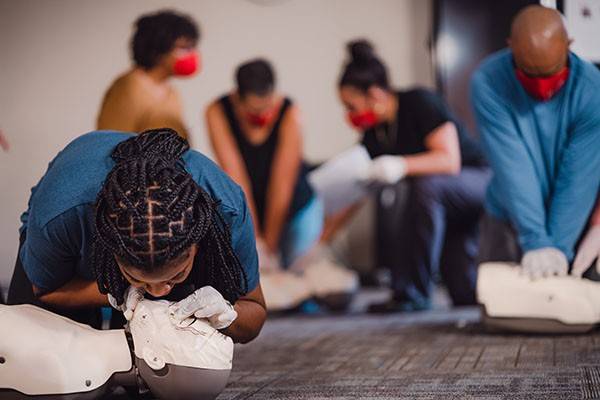
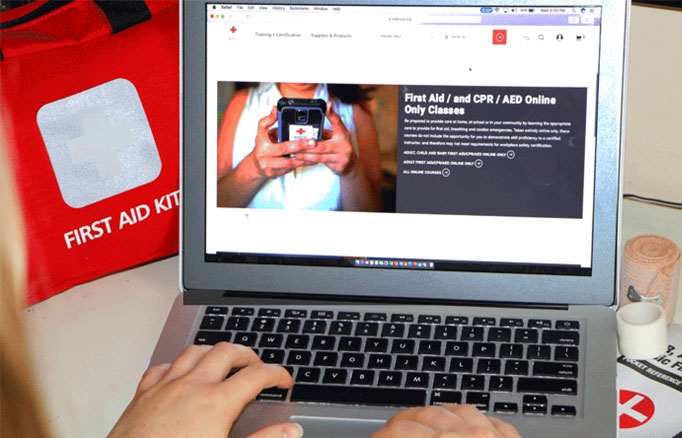
    The Red Cross offers next-generation CPR, AED and first aid classes in-person, online and via blended approach, so you can choose the format that works best for you. Visit redcross.org/takeaclass to browse the selection of courses and to sign up.

    You can also download the free Red Cross First Aid App for instant access to information on handling the most common first aid emergencies, including cardiac arrest, today.

  • Red Cross introduces next-generation training programs

    By Alana Mauger

    Earlier this month, the American Red Cross launched revised curricula for its First Aid, CPR and AED programs, designed to boost engagement and tailor training to individual learners and settings.

    The revised programs incorporate “active learning,” where students take turns assuming the roles of lifesaver, coach and observer in classroom simulations.  This gives students 20% more hands-on training time and the opportunity to provide and receive feedback from their peers. Research shows active learning improves students’ confidence in real-life situations.

    “Adaptive learning” is another hallmark of the programs. Students enrolled in blended and online courses can now take pre-assessment tests, which enables curriculum to be personalized to their knowledge and skill level. This may reduce the overall length of some programs and can provide a more customized and relevant learning experience for students.

    The Red Cross has also added “Skills Boosts,” which can be added to certification classes or can be taught on their own for participants who are already certified in First Aid/CPR/AED. Current Skills Boosts include Anaphylaxis and Epinephrine Auto-Injector Administration; Asthma and Quick-Relief Medication Administration; Life Threatening Bleeding and Tourniquet Application; Opioid Overdose and Naloxone Administration; and Head, Neck, Muscle, Bone and Joint Injuries and Splinting

    Enhanced and on-demand videos and easy-to-reference eBooks complement the revised programs. To learn more, visit redcross.org/training.

  • FAST course prepares high school students to save lives

    By Alana Mauger

    When accidents happen, it’s often the actions we take beforehand that helps save lives. And even though National Preparedness Month is coming to a close, there’s still plenty of time to learn first aid or brush up on your skills.

    The American Red Cross, in coordination with STOP THE BLEED® Coalition and other national partners, is offering a new First Aid for Severe Trauma (FAST) course to prepare learners to respond to bleeding emergencies.

    According to STOP THE BLEED®, approximately 40% of trauma-related deaths worldwide are due to bleeding or its consequences, with hemorrhage being the most common cause of preventable death in a trauma.  A person can die from severe blood loss in less than five minutes, making the ability to recognize and act on a bleeding emergency paramount.

    While anyone can enroll, FAST is the first national STOP THE BLEED® course specifically designed for high school students. Thanks to a to grant support from the Department of Homeland Security Science and Technology Directorate, the course and digital materials will be offered at no charge to high school students under the age of 19. For others, a 90-minutes FAST Online course is available for $30.

    The FAST curriculum is designed to prepare learners to identify and respond to bleeding emergencies; to communicate with others on the scene and with the emergency dispatcher; and to care for a person with life-threatening bleeding, such as applying pressure and using a tourniquet.

    For high school students, the program is offered in two formats: A 135-minute instructor-led course that consists of instruction and skills- and scenario-based learning, and a 90-minute online program that can be completed as homework plus 45 minutes in the classroom for skills- and scenario-based learning.

    Visit redcross.org/take-a-class to see all of our Red Cross Training Services classes and programs.

  • Get Red Cross Trained this National Online Learning Day

    By Sam Antenucci

    It comes as no surprise that online learning has been garnering popularity for the past few years, especially amid the COVID-19 pandemic. For many of us, whether we are current students, parents/caregivers, or educators, the pandemic has warranted the need to adapt to online learning methods.

    Though the initial switch to online learning can be challenging, many striking innovations, technology, and new teaching methods have taken place in education and online learning. As a result, online learners can complete academic programs or learn new skills virtually from anywhere.

    To commemorate National Online Learning Day, Sept. 15, the American Red Cross invites you to check out the many exciting and helpful courses offered online through Training Services.  Whether you are interested in brushing up on an old certification or learning something new, the Red Cross offers a wide variety of online courses, including 12 different first aid classes, CPR. AED, babysitting, swimming and water safety and lifeguarding.  A full list is available below.

    In addition to registering for a Red Cross class, how else can one celebrate this day? If you are a current student or educator, take the time to acknowledge your accomplishments within the field of education! Learning, especially online and at a distance, is a difficult challenge. Reflecting on how online learning has taught you unique skills and new learning methods is an accomplishment in itself!

    Red Cross Online Classes

    One Year First Aid/CPR/AED Provisional Courses

    First Aid

    CPR

    AED

    Babysitting & Child Care

    Swimming + Water Safety

    Lifeguarding

  • Lincoln Rajasky awarded Certificate of Merit for lifesaving efforts

    Photo courtesy of Lincoln Rajsky

    By Alana Mauger

    Last month, the American Red Cross awarded a Certificate of Merit to Lincoln Rajsky for extraordinary actions he took to save a child’s life. The Certificate of Merit is the oldest and most prestigious Red Cross Lifesaving Award. It is signed by the President of the United States, who traditionally serves as the Honorary Chairman of the Red Cross.   

    Lincoln was enjoying dinner at a friend’s home in July 2020 when a young child began to choke. He quickly rose from his seat, went behind the child and began administering back blows and, ultimately, abdominal thrusts. The child soon expelled the food and began to breathe.

    Lincoln is certified in Red Cross Lifeguarding with CPR/AED for Professional Rescuers and First Aid. The skills he learned in these Red Cross Training Services course helped to save the life of this child. 

    “Lincoln’s action exemplifies the highest degree of concern of one human being for another who is in distress. He is a hero and steward of the Red Cross mission,” said Jennifer Graham, executive director, Red Cross Delaware Valley Chapter.

    Lifesaving Awards program

    The Red Cross Lifesaving Awards program is comprised of four awards. In addition to the Certificate of Merit, the Lifesaving Award for Professional Responders and Healthcare Professionals is given to trained people who respond to emergencies as part of their work. The Certificate of Extraordinary Personal Action goes to people who lack Red Cross training but who step up during an emergency. Finally, the Lifesaving Instructor Award is given to instructors who teach the skills that help save or sustain lives.

    You can nominate and recognize a person or group who have used the skills and knowledge gained in Red Cross training courses to help save or sustain a life. Visit LifesavingAwards.org to get started.