When people think of drowning, they often picture someone splashing wildly, yelling for help, and making a dramatic scene like in movies or television shows. The truth is much different. Most drowning incidents are quiet, happen in seconds, and can easily be mistaken for normal swimming or playing.
Knowing what drowning actually looks like could help you recognize an emergency before it’s too late.
American Red Cross graphic – False: It’s easy to tell if someone is drowning.
What Does Drowning Look Like?
A person who is drowning is focused on one thing: trying to breathe. Because their body is struggling to get enough air, they usually cannot call out for help or wave their arms.
Instead, someone who is drowning may:
Keep their head low in the water with their mouth barely above the surface.
Tilt their head back with their mouth open while gasping for air.
Have glassy or unfocused eyes.
Press their arms downward instead of waving.
Appear to be climbing an invisible ladder.
Stay in one place without making progress.
Become unusually quiet.
Drowning can happen in less than a minute, especially for young children. That’s why active supervision is so important whenever anyone is in or around water.
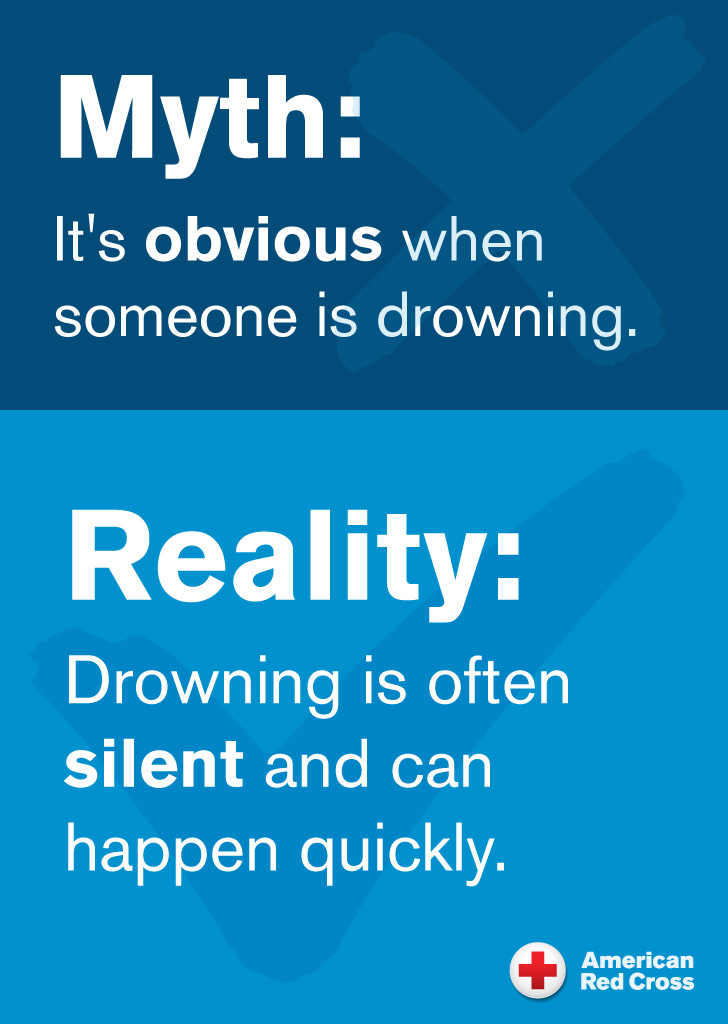
American Red Cross graphic – Myth: It’s obvious when someone is drowning. Reality: Drowning is often silent and can happen quickly.
Aquatic Distress Isn’t the Same as Drowning
Someone in aquatic distress is having trouble in the water but is still able to keep themselves afloat. They may be tired, caught in a current, or unable to swim back to safety. Because they still have some control, they can often wave, shout for help, or grab a flotation device.
A person who is drowning, however, has lost that ability. Their body instinctively uses every bit of energy trying to breathe, leaving them unable to call out or signal for help. Without immediate assistance, drowning can quickly become fatal.
Recognizing the difference allows you to respond sooner and potentially save a life.
American Red Cross graphic – How to spot a swimmer in trouble: 1. They aren’t making forward progress in the water. 2. Unable to move or tread water. 3. Are motionless and face down.
The Truth About “Dry Drowning”
You may have seen stories online about “dry drowning” or “secondary” (also called delayed) drowning. These terms can sound frightening, but medical experts do not recognize them as actual medical conditions.
After a water incident, it’s normal for someone to cough briefly if a small amount of water entered their airway. However, a child or adult who leaves the water feeling completely normal does not suddenly drown hours or days later.
If someone develops persistent coughing, difficulty breathing, chest pain, extreme fatigue, or other concerning symptoms after a water incident, they should be evaluated by a healthcare provider. While these situations are uncommon, they should always be taken seriously.
American Red Cross video – Is Dry Drowning Real? Facts vs. Fiction. Watch it on YouTube.
Drowning Prevention Starts Before Anyone Enters the Water
The American Red Cross recommends using multiple layers of protection whenever you’re around water.
Some simple ways to help prevent drowning include:
Always actively supervise children around water and stay within arm’s reach of inexperienced swimmers.
Designate a “Water Watcher” whose only job is to watch swimmers with no phones, reading, or other distractions.
Learn to swim and encourage family members to take age-appropriate swim lessons.
Wear a U.S. Coast Guard-approved life jacket while boating or participating in water activities.
Learn CPR so you’re prepared to help during an emergency.
According to the American Red Cross, drowning is one of the leading causes of accidental death for children. Many incidents happen quickly and silently, even when other people are nearby.
American Red Cross graphic – If a child is missing, check the water first.
Every Second Matters
The biggest misconception about drowning is that you’ll always hear or see someone calling for help. In reality, drowning is often silent because a person simply cannot yell while struggling to breathe.
By learning the signs of drowning, understanding the difference between aquatic distress and drowning, and practicing simple water safety habits, you can help protect yourself, your loved ones, and your community.
The heat is on in Southeastern Pennsylvania, and many families head to local rivers, lakes, and coastal beaches for recreation. However, open water environments present unique, unpredictable conditions that demand extra caution. From the American Red Cross, here is a practical guide to staying safe when enjoying natural bodies of water.
Understand Natural Hazards
Unlike swimming pools, open water comes with shifting currents, deep drop-offs, and unpredictable weather. Being prepared starts with understanding the hidden risks beneath the surface:
Watch for hidden obstacles: Natural waters often contain submerged rocks, logs, debris, and sudden drop-offs. Always enter unknown waters feet first to avoid head or neck injuries.
Respect currents and waves: Strong undertows and fast-moving river currents can sweep away even experienced swimmers. If caught in an ocean rip current, remain calm, signal for help, and swim parallel to the shore until you escape the current before heading back to land.
Monitor the weather: Check forecasts before heading out and leave the water immediately at the first sign of dark clouds or thunder. Stay indoors for at least 30 minutes after the last thunderclap.
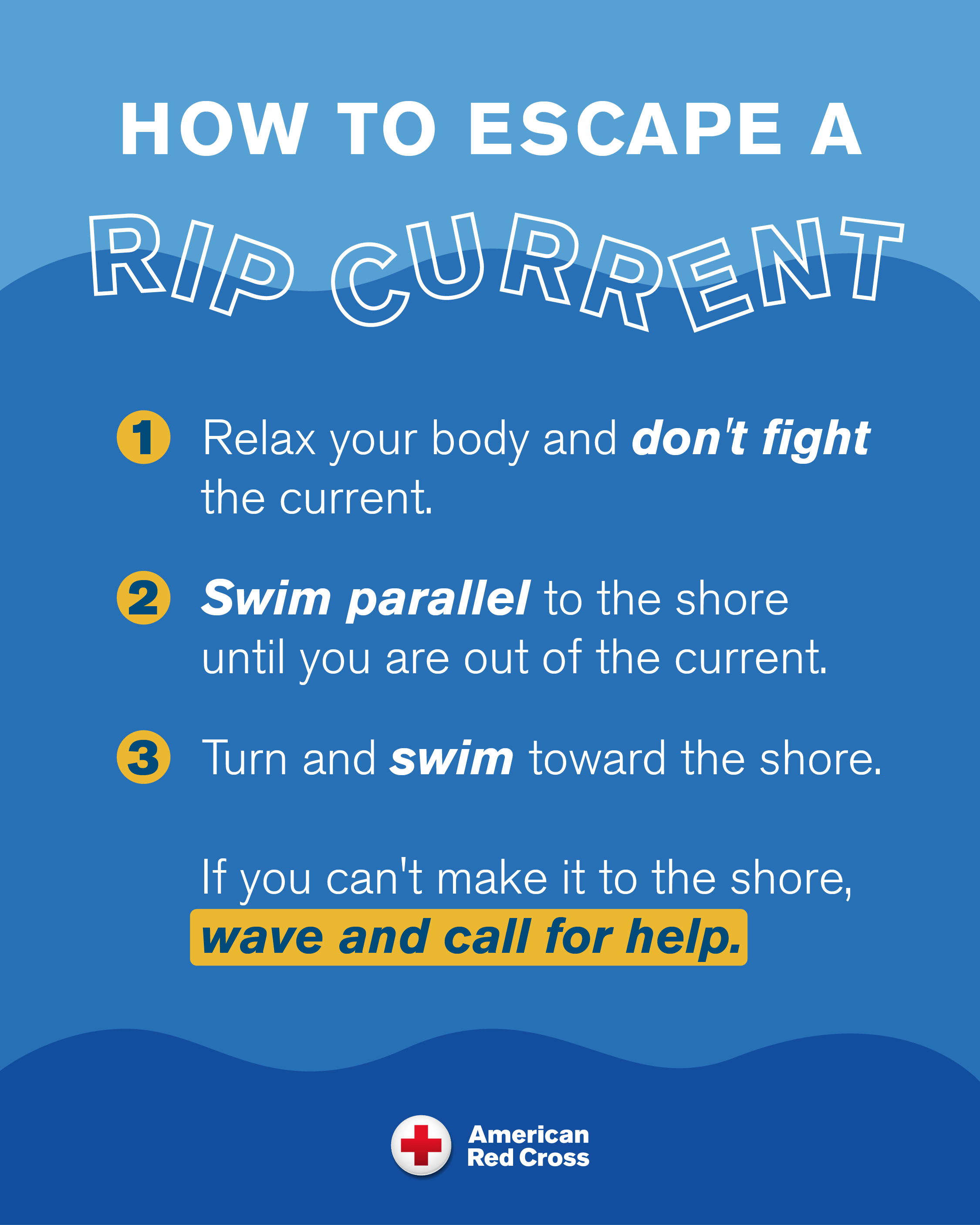
How to Escape a Rip Current. 1. Relax your body and don’t fight the current, 2. Swim parallel to the shore until you are out of the current, 3. Turn and swim toward the shore, and 4. If you can’t make it to the shore, wave and call for help.
Respect Beach & Waterfront Warnings
Before jumping into open water, take time to observe your surroundings and read local safety postings:
Understand warning flags: Many ocean and lake beaches use color-coded flag systems. Green flags indicate low hazards, yellow flags warn of moderate currents or surf, red flags mean dangerous conditions, and double red flags mean the water is completely closed to the public.
Obey posted signage: Look for signs marking sudden drop-offs, underwater hazards, or areas designated exclusively for motorized watercraft.
Follow lifeguard instructions: Lifeguards have a clear view of water conditions and potential hazards. Always swim within sight of a lifeguard chair and follow any instructions immediately.
Swim as a Pair with a Lifeguard There. Someone should always be watching the water” and “Drowning can happen silently and quickly.
Smart Habits on the Shore
Establishing clear safety routines ensures everyone stays protected throughout the day:
Swim in designated areas: Always choose beaches, lakes, and parks with a lifeguard on duty, and swim with a buddy rather than alone.
Assign a dedicated Water Watcher: Designate a responsible adult to maintain undivided attention on swimmers, keeping cell phones and distractions away.
Wear U.S. Coast Guard-approved life jackets: Non-swimmers, inexperienced swimmers, and anyone boating, kayaking, or fishing should always wear a properly fitted life jacket.
Keep Kayaking Safe. Remember to wear a life jacket.
Know How to Respond
If an emergency arises, acting quickly and safely makes all the difference:
Reach or throw, don’t go: If someone is struggling in open water, throw them a flotation device or extend a long object like a pole. Entering fast or deep water after a drowning person can pull you under as well.
Alert lifeguards or call 911: Seek professional assistance immediately and ensure bystanders provide accurate location details to first responders.
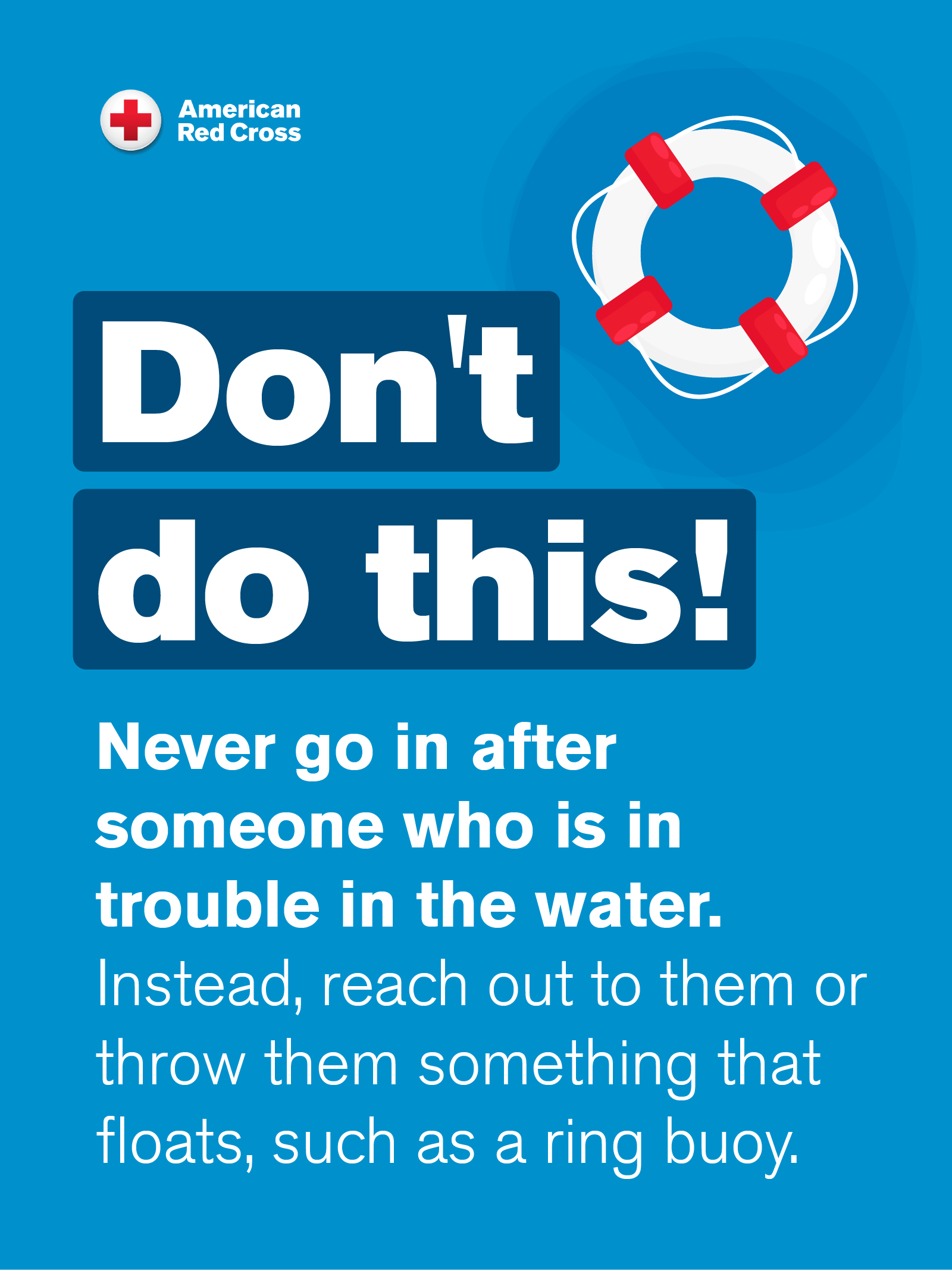
Don’t do this! Never go in after someone who is in trouble in the water. Instead, reach out to them or throw them something that floats, such as a ring buoy.
Taking time to respect open water hazards keeps outdoor adventures enjoyable for everyone. Be sure to check out our local chapter’s upcoming swim classes and water safety certifications to prepare your family for the season ahead!
With many families across Southeastern Pennsylvania gearing up for summer trips to backyard pools, water parks, and coastal beaches, safety remains a top priority. However, many people drastically overestimate their abilities in the water. From the American Red Cross, this is a clear framework to help you and your family understand what it truly means to be “water competent”. Water competency means much more than just knowing how to swim. It’s a full combination of safety awareness, physical skills, and the ability to respond to an emergency.
Myth: Strong swimmers never drown. Reality: Unexpected water and medical conditions can cause anyone to drown.
1. Situational Awareness & Prevention
Drowning prevention starts a long time before you step into the water. It involves understanding your aquatic environment, recognizing hidden hazards like rip currents or sudden drop-offs, and establishing strict safety habits. Here are some tips to stay smart when on the water:
Swim with supervision: Always swim with a buddy and choose areas with a lifeguard on duty.
Designate a Water Watcher: Have a responsible adult focus entirely on supervising swimmers without cell phone distractions.
Use layers of protection: A four-sided fence, according to the Center for Disease Control (CDC) is the best way to prevent unsupervised access around backyard pools.
Wear life jackets: Always wear a U.S. Coast Guard-approved life jacket when boating, fishing, or if you are an inexperienced swimmer.
Don’t just pack it, wear your life jacket! Even if you’re a pro swimmer, it can keep you afloat during an emergency.
2. The Five Lifesaving Swim Elements
If you or a family member unexpectedly falls into deep water, being water competent means you have the physical capability to survive. The Red Cross defines this through a sequence of five critical skills that everyone should master:
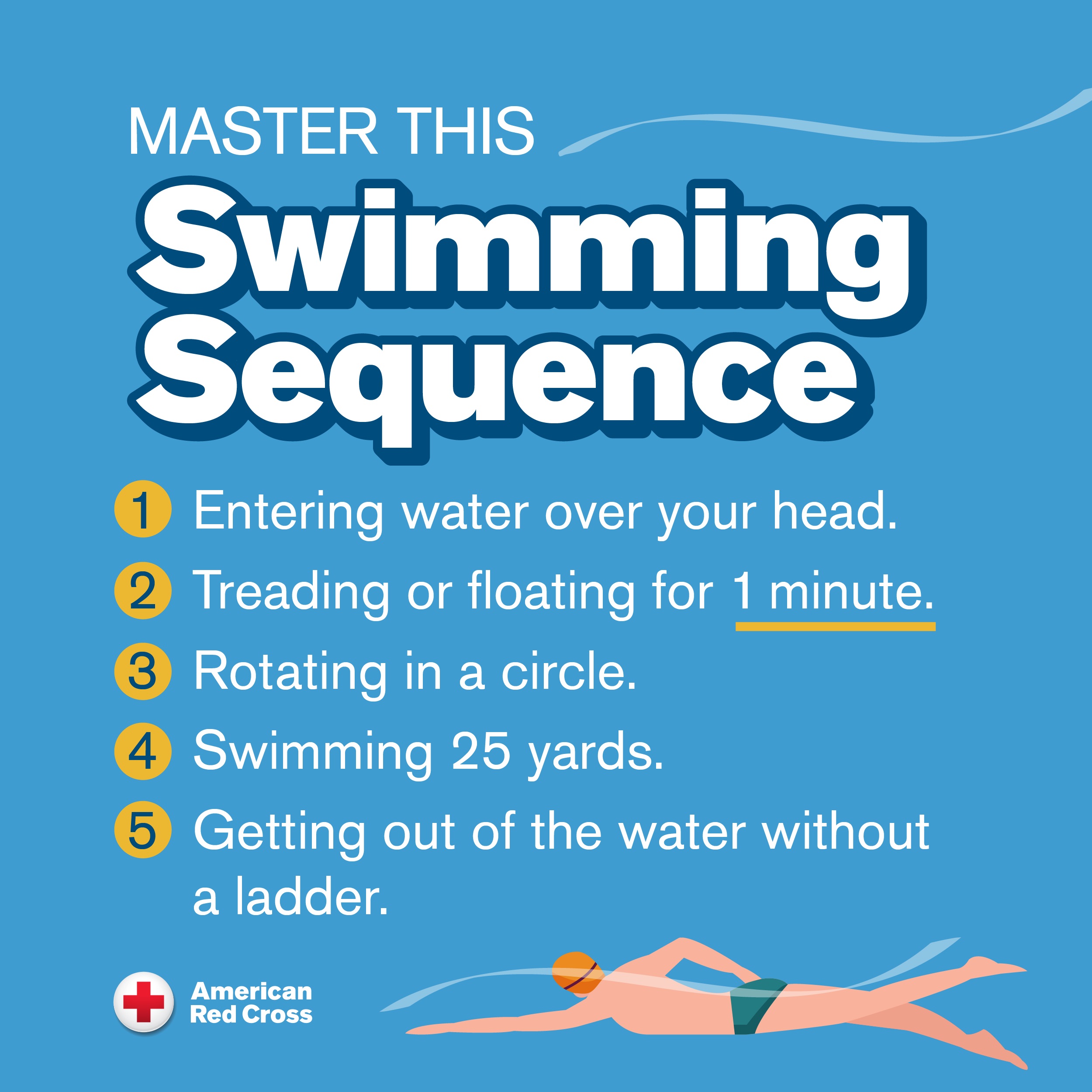
Enter water that is over your head and successfully return to the surface.
Float or tread water for at least 1 minute to catch your breath and conserve energy.
Turn completely around in a 360-degree circle to orient yourself toward safety.
Swim at least 25 yards (the length of a standard pool) to find an exit.
Exit the water safely, even if there is no ladder available.
Master This Swimming Sequence: 1. Entering water over your head, 2. Treading or floating for 1 minute, 3. Rotating in a circle, 4. Swimming 25 yards, 5. Getting out of the water without a ladder.
3. Emergency Response & Safe Rescue
Drowning is often surprisingly fast and silent. Part of water competency is recognizing when someone is in trouble and knowing how to safely assist without becoming a victim yourself.
Reach or Throw, Don’t Go: Never jump in after a drowning person, as panic can cause them to pull you under. Instead, reach out with a pool noodle or throw a flotation device.
Call for help: Notify lifeguards or dial 911 immediately.
Learn CPR: Knowing bystander CPR can double or triple a drowning victim’s chance of survival while waiting for paramedics to arrive. The American Red Cross offers Hands-Only and full CPR classes for certification.
Reach or Throw, Don’t Go. If someone is in trouble, don’t jump in the water. Reach out to them or throw something that floats.
Keeping these fundamental practices in mind will ensure a secure and enjoyable environment for your loved ones, so don’t forget to check out our local chapter’s upcoming swim classes and safety certifications to get fully prepared! Visit the links below for more information.
It’s a beautiful sunny day outside. The perfect day for a swim. As you’re getting your family ready for what is a wonderful day filled with water fun, you are deciding on whether to put a floatie or life jacket on your little one who doesn’t quite know how to swim yet. This article will teach you the differences between the two devices and why floaties are not a substitute for life jackets.
Floaties are recreational pool devices that can be used for enjoyment and are often designed to help children learn to swim. They are not U.S. Coast Guard approved nor do they have the traditional life saving properties that life jackets have. They do not prevent drowning.
Floaties fail for a number of reasons. First, they support the incorrect positioning for children (vertical or head down) which can be unsafe and prevent breathing. Another reason is their risk for deflation as floaties can easily pop or leak air, leaving the swimmer unable to float.
Life jackets are U.S. Coast Guard approved and have lifesaving properties. A life jacket is designed for emergency rescue and survival. They are highly buoyant, so they can turn an unconscious person face up in the water, saving their life.
When to use a Floatie vs. a Life Jacket
Floaties are can be fine when used for supervised play or learning how to swim in an enclosed area like a swimming pool. It’s important to remember that floaties act as aids for swimming not safety devices. When a child is using a floatie to learn how to swim, strict adult supervision is necessary as floaties can easily fail or malfunction.
Always use a life jacket in bodies of open water and during boating or other water sports. Make sure you look for the U.S. Coast Guard’s seal of approval.
These tips and information will help you make educated decisions about your family’s water safety this summer. Get more information at redcross.org.
Video: How to stay safe in extreme heat: Tips from the American Red Cross. Watch on You-Tube.
Thousands of people will flock to Philadelphia this summer for historic events, matches and celebrations. Large crowds, combined with high summer temperatures, can create dangerous conditions, especially during long periods of standing, walking and outdoor activities.
“Philadelphia will be filled with incredible energy and excitement as we welcome visitors for these major events, but extreme heat can quickly turn dangerous if people aren’t prepared,” said Jennifer Graham, CEO, American Red Cross Southeastern Pennsylvania Region. “We’re urging everyone — whether you’re a lifelong resident or first-time visitor — to stay hydrated, take breaks in cooler areas and download our free Red Cross Emergency and First Aid apps so this summer remains both memorable and safe.”
Why Extreme Heat is a Serious Risk
Extreme heat is the leading cause of weather-related deaths in the United States. Last year ranked among the warmest on record globally, and forecasters expect above-average temperatures across much of the U.S. again this summer. Dense crowds, prolonged outdoor exposure, long transit times and limited access to shade amplify the risk of heat-related illness.
Stay Safe During Extreme Heat
The American Red Cross urges everyone to take three critical actions to stay safe when temperatures are high:
Stay Hydrated – Drink one cup of water every hour, even if you don’t feel thirsty.Avoid sugary, caffeinated and alcoholic beverages.
Stay Cool – Spend timein air-conditioned spaces whenever possible. If your home is too hot, go to a mall, library or cooling center. At outdoor events, take breaks in shaded areas and rest frequently.
Stay Connected – Check in on friends, family and neighbors, and ask for help if needed. Don’t forget your pets; ensure they always have access to fresh water and shade.
Know the Signs of Heat-Related Illness
Heat-related illness occurs when your body can’t cool down properly. It’s critical to recognize the symptoms early and respond quickly.
Heat Cramps – Symptoms: Heavy sweating and muscle pain. What to do: Stop activity, move to a cool place and sip water slowly. Seek medical attention if cramps last more than an hour or if you have underlying health conditions.
Heat Exhaustion – Symptoms: Heavy sweating, weakness, cool and clammy skin, muscle cramps, dizziness, fainting, nausea or vomiting. What to do: Rest in a cool place, loosen clothing, apply cool wet cloths and sip water. Seek medical help if symptoms persist, worsen or include vomiting.
Heat Stroke (medical emergency) – Symptoms: High body temperature, rapid heartbeat, confusion, headache, dizziness, fainting, nausea or vomiting. What to do: Call 9-1-1 immediately. Move the person to a cooler area, remove excess clothing and use cool cloths or a bath to lower body temperature. Do not give fluids.
While anyone can become ill during extreme heat, higher risk groups include:
Older adults and young children
Pregnant women
People with chronic medical conditions or disabilities
People taking certain medications
Athletes, outdoor workers and those without access to air conditioning
Information at Your Fingertips
No matter your summer plans, download our free Red Cross Emergency and First Aid apps. The Emergency App provides real-time weather alerts, open Red Cross shelter locations and safety guidance, while the First Aid App offersstep-by-step instructions for handling common emergencies, including heat-related illness. Find both apps in your preferred app store by searching for “American Red Cross.”
Lifelong swimmer Tom Koellhoffer was eager to return to the water when he arrived at River Crossing YMCA’s Quakertown Branch on March 11, 2025. His daughter gifted him a Y membership so he could resume swimming after recovering from a heart attack.
He checked in at the front desk, changed into his suit and spoke with on-duty lifeguard Jodie Hart about his exercise plan.
Tom doesn’t remember any of it. He woke up a few days later in a hospital intensive care unit to learn he had suffered sudden cardiac arrest.
“I don’t remember coming here. I don’t remember changing into my suit. I don’t remember a thing about that day,” he said during a return visit to the Y eight months later.
It’s a day Jodie and fellow lifeguards Kai Butcher and Ruth Clement will never forget.
Pictured at a Lifesaving Awards Presentation at River Crossing YMCA’s Quakertown Branch on Nov. 5 are (from left): Lynn Cohen, Red Cross Delaware Valley Chapter executive director; Tom Koellhoffer; YMCA lifeguards Jodie Hart and Kai Butcher; and Becky Musselman, senior aquatics director, YMCA Doylestown branch. Photo by Alana Mauger / American Red Cross.
Ordinary Afternoon, Extraordinary Heroes
It was a typical afternoon at the Quakertown YMCA. Jodie was scanning the water as she walked the pool’s perimeter. Kai was on a lifeguard rotation in the Y’s health and wellness area. Ruth was off duty, but in the pool nevertheless, helping a friend train for a high school state swimming competition.
From across the pool, Jodie noticed Tom resting along the shallow end pool wall and knew something was wrong.
“He looked blue,” she recalled.
She activated the Y’s emergency action plan, alerting staff, and rushed toward Tom.
Ruth saw the situation unfold from the pool’s deep end as she warmed up with a kickboard.
“Something that really has stuck with me about it is that I don’t usually kick with a kickboard because I have had shoulder issues,” she said.
That choice mattered. Because her head was above water, she spotted the emergency right away.
“I saw it happen. Because if my head had been in the water, I probably wouldn’t have known anything was wrong for marginally longer.”
She grabbed a rescue board and swam to Tom. With the help of her nearby swim coach, Ruth and Jodie maneuvered him onto the pool deck.
Ruth did an initial assessment. When she couldn’t find a pulse, Jodie began chest compressions.
By then, YMCA staff had called 9-1-1 and brought an AED and oxygen to the scene. When Kai arrived, he took over chest compressions so Jodie could give breaths. As they performed CPR, the AED advised a shock.
“It’s just like you see on TV; the body actually jolts,” Jodie said.
After each shock, the AED analyzed Tom’s vitals.
“His heartbeat was in and out,” Kai explained. “It would stabilize for a little bit, then go out again.”
Jodie and Kai completed two rounds of CPR and administered three shocks before EMTs arrived about 20 minutes later.
Looking back, Kai remembers “a lot of reacting” during his response to the emergency. “It’s so drilled in. There’s no time to think. You just do it.”
Jodie recalled her emotions as EMT’s carted Tom out.
“In the moment, you don’t have time to cry; you just have to keep going. And then when he left, I cried for a really long time.”
Lifeguard Ruth Clement was 16 and a high school senior when she helped save Tom’s life. She’s currently a freshman Biochemistry major at Rochester Institute of Technology and was away at school when the Lifesaving Awards were presented on Nov. 5. Submitted photo.
Trained for the Moments That Matter
Tom knows he’s lucky. The survival rate for cardiac arrests outside of a hospital is less than10%. Those who live without any loss of brain function are even fewer. But immediate CPR can double or even triple someone’s chance of survival.
During a speech at the YMCA’s Impact Gala in October, Tom credited the quick actions of Kai, Ruth and Jodie.
“They administered CPR immediately and effectively and kept my brain oxygenated for approximately 20 minutes,” he said. “These three wonderful young people proceeded to keep me alive until EMT arrival.”
Mastering these skills is part of becoming an American Red Cross-certified lifeguard. Candidates must complete more than 25 hours of instruction, demonstrate aquatic competency, pass a written exam and perform three skill assessments, including a multiple rescuer response scenario like the one that saved Tom.
Lifeguards are recertified every two years. Jodie and Kai trained together and were recertified just a few weeks before Tom’s cardiac arrest. Becky Musselman, senior aquatics director at the Y’s Doylestown branch, was their instructor. She also oversaw Ruth’s certification in October 2023.
The group received Red Cross Lifesaving Awards for their heroic efforts. Kai, Ruth and Jodie earned Lifesaving Awards for Professional Responders, given to first responders who save or sustain a life outside of a medical setting. Becky received a Lifesaving Instructor Award for training the three lifeguards.
“Just knowing and seeing this aftermath is awesome – the knowledge that what I do matters,” she said.
After hugs all around, Tom helped Lynn Cohen, Red Cross Delaware Valley Chapter executive director, present their certificates during a joyful reunion with YMCA staff.
Tom Koellhoffer presents an American Red Cross Lifesaving Award to Jodie Hart while Lynn Cohen, Becky Musselman and Kai Butcher look on. Photo by Alana Mauger / American Red Cross
Behind the Whistle
Ruth describes becoming a lifeguard as “a rite of passage” for kids like her who grew up swimming.
“It’s like, you turn 15, and all of these skills of swimming and maintaining yourself in the water are already endowed in you for years,” she said. “It was almost a given to me that I would become a lifeguard and work at the Y.”
She got recertified this past August before leaving for Rochester Institute of Technology, where she’s a freshman biochemistry major. She volunteers in surgical services at St. Luke’s when she’s home and plans to attend medical school.
Ruth was 16 and a high school senior when Tom lost consciousness. She said the experience confirmed her path.
“Being able to be part of such a story of success and recovery has definitely spurred me forward,” she said.
Like Ruth, Kai also grew up in the water. When his younger sister became a lifeguard, she dragged him along.
“She said, ‘we’re taking the test,’ and I said, ‘okay.’ They wore me down,” he joked, prompting Becky to laugh, “We really did.”
He works at the Y full-time while taking classes at Bucks County Community College.
“I love it here,” he said after the presentation.
“I do too,” Jodie chimed in.
“Aww, I love that they love it here,” Becky added.
While Jodie also grew up swimming, her path to lifeguarding was different.
“I did hair for 20 years, and then after COVID, I just needed a break,” she said. “I was in a salon, then, by myself, but I like working with other people.”
Building on her swimming skills, she became a swim instructor with a shallow-water lifeguard certification. Inevitably, she “crossed over from shallow to deep water” and got certified.
Jodie and Kai started working at the Y around the same time – about two and a half years ago.
“We have a really good team, and I think it’s important to have good communications and get along with each other,” she said.
Lifeguards Kai Butcher and Jodie Hart pose with Tom Tom Koellhoffer. They performed CPR on Tom for 20 minutes before EMTs arrived. Photo by Alana Mauger / American Red Cross
A Red Cross Connection
Tom’s ties to the Red Cross go back decades – long before he met Jodie, Ruth and Kai.
“I was a beneficiary of the American Red Cross learn to swim program, and it was one of the most wonderful experiences of my life,” he shared. “I started off as a beginner swimmer, and I went all the way through advanced swimming and junior lifesaving.”
He even worked as water safety aid for the Red Cross and taught swimming lessons. This lifelong passion for swimming is what brought him to the Quakertown Y earlier this year.
“Before COVID, I was doing 12,000 meters every week in the pool,” he said. “I want to work my way back up to some level.”
Tom isn’t back in the water yet, but he says he’ll be swimming “any day now.”
Until then, he’ll stay dry and greet his new friends from the pool deck.
Nominate a Lifesaving Hero
If you or someone you know has used skills and knowledge learned in a Red Cross Training Services course to help save or sustain a life, visit LifesavingAwards.org to nominate them.
To commemorate World Restart a Heart Day (October 16th), the American Red Cross joins organizations across the globe to raise awareness about sudden cardiac arrest and the importance of learning CPR.
Each year, more than 350,000 people experience out-of-hospital cardiac arrest in the U.S. and about 90% of them die. Cardiac arrest occurs when the heart suddenly stops beating normally because of abnormal electrical activity. Every second counts, so it’s important for people to be trained in knowing how to perform CPR and use an AED. Immediate CPR delivered by a bystander can double or even triple a person’s chance of survival. More than 70% of out-of-hospital cardiac arrests happen in the home.
The Red Cross encourages everyone to enroll in a CPR and AED course so they can learn how to help someone who goes into cardiac arrest. Below, Red Cross Training Services Field Operation Manager Al Clinton demonstrates what students learn in a CPR class. Get started by signing up for a class today.
American Red Cross Training Services Field Operation Manager Al Clinton demonstrates what students learn in a CPR class. October 16, 2025 is World Restart a Heart Day, a global initiative to raise awareness for cardiac arrest and the importance of learning Hands-Only CPR. Watch on You-Tube.Video by Alana Mauger / American Red Cross
Red Cross graphic – Every second counts during cardiac arrest.
It was a typical afternoon at the Springfield YMCA when Jim McBride’s life changed in an instant. After swimming laps in the pool, he eased into the hot tub to relax. Moments later, Jim went into sudden cardiac arrest. Fortunately, he wasn’t alone.
YMCA lifeguards — trained in CPR, AED use and first aid — sprang into action. Their quick thinking and American Red Cross training made all the difference.
“If it had happened anywhere else, I would have been gone by the time the ambulance came,” he said.
Jim’s story is not uncommon. The majority of cardiac arrests — more than 70% — occur outside of hospitals. The survival rate is a sobering 10%. But when CPR is started immediately, a person’s chance of survival can double or even triple.
October is Sudden Cardiac Arrest Awareness Month, designed to educate the public about warning signs, risk factors and what to do in a cardiac emergency. The Red Cross encourages everyone to enroll in a CPR and AED course so they can learn how to help someone who goes into cardiac arrest.
Jim McBride with his wife Donna at a Red Cross Lifesaving Award ceremony on Oct. 3, 2024 recognizing the three YMCA lifeguards who saved his life when he went into cardiac arrest. Photo by Jenny Farley / American Red Cross
Red Cross skills in action
YMCA lifeguard Peter McMonagle had just arrived for his shift when he noticed Jim’s head slipping beneath the water. The high school sophomore had just completed his Red Cross CPR and AED training a few weeks earlier.
Peter pulled Jim out of the water, called for help and started CPR. Fellow lifeguard Gabe DiEmidio – also a newly-trained, high school sophomore – responded. He pressed an emergency button to summon first responders, then immediately retrieved an AED.
“I strapped him up and it said ‘Shock Advised’ so I pressed shock. As soon as I pressed shock he went, (Gabe demonstrated an intake of breath) and then came right back to life. One shock,” he said.
Off-duty lifeguard Carlotta Myers heard the commotion and rushed to help. She cleared Jim’s airway.
“Every employee at the Y is certified in first aid, CPR and the AED,” she said. “So, whether you work on the fitness floor, the front desk, everybody has that training.”
The Red Cross honored Springfield YMCA lifeguards (from left):Gabe DiEmidio, Peter McMonagle and Carlotta Myers. on Oct. 3, 2024 for helping save the life of Jim McBride. Photo by Jenny Farley / American Red Cross
YOUR hands can save a life
Jim knows he was fortunate that Peter, Gabe and Carlotta were nearby. But you don’t need to be a lifeguard or first responder to save someone’s life.
Hatfield resident Matt Decesare was driving through an intersection when he saw a jogger collapse. He pulled over, checked for breathing and called 9-1-1.
While Matt wasn’t certified in CPR, he remembered the importance of doing chest compressions to the beat of Bee Gees’ “Staying Alive.” He performed hands-only CPR – essentially CPR without mouth-to-mouth breaths – for over five minutes until Montgomery Township Police arrived. As a result, the jogger, Tom Pepe, survived.
Unlike Jim and Tom’s experiences, most cardiac arrests don’t happen in public. In fact, more than 70% of non-hospital cardiac arrests happen at home. That’s why it’s so important for everyone to learn CPR and AED skills. The life you save could be your spouse, partner, parent, child or friend.
On Oct. 16, the American Red Cross will join organizations across the globe to celebrate World Restart a Heart Day – an initiative to raise awareness about sudden cardiac arrest and the importance of learning hands-only CPR.
To mark the occasion, the Red Cross will host a virtual discussion at 4 p.m. called “Real Stories of Cardiac Arrest Survival and the Training that Saves Lives.” Gina Peattie and Dr. Joseph Farrell from the Sudden Cardiac Arrest Foundation will discuss topics such as surviving cardiac arrest and its impact on the entire family. You can stream the live discussion on LinkedIn or Facebook.
Join the Red Cross for “Real Stories of Cardiac Arrest Survival and the Training that Saves Lives” on Thursday, Oct. 16 at 4 p.m. Stream the live discussion on LinkedIn or Facebook.
Lifesaving skills at your fingertips
Last year, more than 6.6 million people turned to the Red Cross for First Aid, CPR and AED and other lifesaving training. These skills empower everyday people to act with confidence when every second counts. Be ready for the moments that matter by downloading the free Red Cross First Aid app or activating the First Aid Skill for Alexa-enabled devices to access step-by-step emergency guidance.
Photo illustration of students practicing AED skills during a Red Cross First Aid and CPR/AED course. Photo illustration by The American National Red Cross
Picture this: You’re at a family picnic. Laughter fills the air. Suddenly, someone collapses. No pulse. No breath. The seconds stretch as panic sets in—but what if you knew exactly what to do?
That’s the power of CPR (Cardiopulmonary Resuscitation) and AED (Automated External Defibrillator) training. It turns ordinary people into everyday heroes.
Why CPR-AED Awareness Week matters
Every year, more than 350,000 cardiac arrests happen outside of hospitals in the U.S. Survival drops by 10% every minute without CPR. But with quick action and the right training, you can double or even triple someone’s chance of survival.
CPR-AED Awareness Week (June 1–7) reminds us that saving a life doesn’t always require a medical degree—sometimes it just takes 30 minutes and the willingness to act.
Red Cross graphic – Train for the moments that matter. redcross.org/takeaclass. CPR + AED Awareness Week
My experience: Learning hands-only CPR in 30 minutes
As someone who hadn’t been CPR-certified, I recently took the leap and joined a Hands-Only CPR training session with a Red Cross volunteer. I expected technical jargon and pressure—what I got was clarity, confidence, and empowerment.
We focused on two simple but powerful steps:
Call 911
Push hard and fast in the center of the chest (100–120 compressions per minute)
No mouth-to-mouth. No stress. Just strong, steady compressions to the beat of “Stayin’ Alive.”
What surprised me most? How easy it was to learn and how quickly I felt prepared to help in an emergency. In under 30 minutes, I walked out knowing I could save a life.
Red Cross You-Tube video – How to perform hands-only CPR
Real stories, real impact
During my training, I met someone who had saved a life—a high school teacher who performed CPR on a student during gym class. “The training kicked in before the fear,” she said. That student survived. Not because of luck. Because someone was ready.
Want to be a hero in 30 minutes?
Whether you’re already certified or curious to learn, now is the time. Here’s how you can get involved:
Host or promote awareness events during CPR-AED Week.
A fresh idea: CPR on campus
Want to engage youth? Imagine pop-up CPR challenges at schools or universities—where students test their compression rhythm to songs like “Stayin’ Alive” or “Baby Shark.” Combine lifesaving with fun and you’ll build a generation of prepared responders.
Students from Immaculata University’s Red Cross Club learn hands-only CPR on April 15, 2025. Photo courtesy of Red Cross Preparedness Team
The bottom line?
Don’t wait for a crisis to realize how crucial CPR-AED knowledge is. Invest 30 minutes. Take the training. Be ready. Because when every second counts, someone’s life may depend on you.
Red Cross graphic – It takes only 5 minutes for someone to die from blood loss.
By Robert Ambrose
Jane: Just in. Red Cross offers training for bleeding emergencies.
Zymir: And?
Jane: There are situations where people must take action to help another to stop bleeding.
Zymir: They have app for that?
Jane: Yes. iOS App, Google Play, or text “GETFIRST” to 90999. Name of that app is First Aid mobile app. First Aid mobile app gives you CPR techniques and nearest hospital. Red Cross has a program for training people to stop bleeding There’s a podcast for that, too.
Zymir: Really?
Jane: There’s even a trainathon this month to encourage as many people as possible to get certified. Of course, there are ways to get training.
Zymir: For example?
Jane: A training video.
Zymir: Sounds well-covered.
Jane: STOP THE BLEED® is an official program of the US military.
Zymir: STOP THE BLEED® eh?
Jane: Quizzes, instructor license and even serving as a STOP THE BLEED® ambassador is on offer.
Zymir: Is there any money in play?
Jane: A STOP THE BLEED® grant is available for organizations who meet specific requirements.
Zymir: Sounds like someone is doing a saint’s work. You know adults who are bleeding can die if they lose only the amount of half a soda can. You must apply pressure to the wound.
Jane: That’s what we learn to take swift action. Use a tourniquet or a wound-stuffer, call 911 and reassure the bleeding victim that help is on the way. Also, stay with the bleeding person until EMS arrives.
Zymir: Some bleeding people go into shock, right?
Jane: Yes. Shock symptoms are pale cold skin, fast heart rate, rapid breathing and weird response times.
Zymir: So now that I know how serious this situation is, what is the name of that course?