Category: Safety Tips

  • Hurricane preparedness: Creating a plan now will help keep you safe later

    By Terri Seydel

    What is a hurricane?
    A hurricane is a severe storm that forms over warm waters with sustained high-speed winds over 74 miles per hour. These storms can cause devastating damage and have the power to destroy neighborhoods and communities in relatively short periods of time.

    Who’s at risk of Hurricane threats?
    In addition to the shoreline dangers, the effects of a hurricane often cause damage to areas that are hundreds of miles inland. In fact, flooding accounts for more than 50 percent of hurricane-related deaths every year.

    The Importance of Planning
    Each year the American Red Cross responds to assist victims in the aftermath of hurricanes. However, proactive planning is your best defense in being well prepared to protect yourself and your family during a storm.

    Your plan should include an evacuation route, a safe destination, basic needs, and how to stay connected with news sources, emergency services, and your loved ones. Refer to this American Red Cross Hurricane Preparedness Checklist or follow these tips:

    1 . Gather emergency supplies — It’s wise to prepare for both evacuations and sheltering in place since all storms are different. Prepare a ‘go kit’ and a ‘stay at home’ kit to ensure you’re ready for any scenario.  

    If local authorities advise you to evacuate, you should do so immediately. Take your ‘go kit’ containing everything your household needs to be on your own for three days. Essential items would include food, water, medicine, backup batteries, and chargers for your devices. You should also carry and protect legal documents and identification.  

    In some cases, sheltering in place may be your best option. Even if the high winds and floodwaters do not reach your home, you may lose power and water, and you may not be able to leave your home for several days due to impassable roads. With this in mind, your Shelter-in-place kit should contain two weeks supply of the same essential items you prepared for your ‘go kit.’

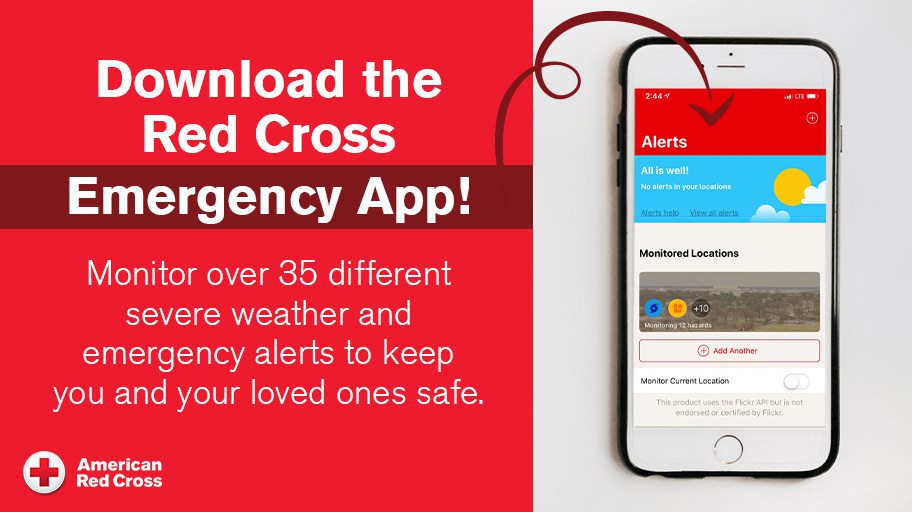
    2. Planning to stay connected — You’ll want the ability to stay connected for weather updates, emergency alerts, and contact with your family. Plan to have a battery-powered radio, a way to charge your phone, and sign up for free emergency alerts from your local government. You should also consider downloading the American Red Cross Emergency App found in the Apple Store or Google Play.

    3. Learn emergency skills — Take the time to educate yourself on life-sustaining needs. The Red Cross suggests you learn First Aid and CPR, be ready to live without power, learn how to use a generator safely, and plan how you can use medical equipment during a power outage.

    Proactive planning is essential in keeping your family safe during a hurricane. Following this American Red Cross Hurricane Preparedness Checklist will help ensure that you’re ready to manage through evacuation or sheltering in place until the storm and the after-effects subside.

  • Keep your furry (and not so furry) friends safe this winter

    By Divya Kumar

    Winter is a great season to recharge with your furry friends by your side. Whether you have a dog, cat, rabbit, horse, scaly friend or another type of animal, it’s important to remember a few things to ensure they are cozy, safe, and warm alongside you when the weather gets cold!

    Tip #1: Before even getting in your car, much less starting it, be sure to look under your vehicle for a little one potentially hiding out seeking warmth. Also, be sure to either knock on your hood a couple times or quickly pop it open to see if there’s a little ball of fluff cozied up next to your engine. (It does happen!) If you do find an animal, call animal control or, if you feel comfortable handling it, take it to the nearest shelter.

    Tip #2: If its super cold out for you, then its super cold out for your pet! Never leave your pet out in the cold, no matter what. For many of us pet owners, our pets are family. Treat your pet with the same dignity you treat your most vulnerable family member.

    Tip #3: If you need to walk your dog, be mindful of the hard salt crystals that are distributed on sidewalks and roads before a storm. Your dog’s paw pads are sensitive! Before going out, rub some salve on your dog’s paw. There are a few brands you can find by googling “paw pad salve.” If your dog needs extra TLC on his or her paws, acclimate them to wearing booties. They may not like it at first, but that’s why you’re the one taking care of your pet—to do what’s best for them!

    Tip #4: Cats and dogs love a warm spot to snuggle, so make sure there are some cozy spots inside where they can snuggle when it gets extra cold outside. My cats like the thermo kitty sill—you can get it from most online retailers.

    Tip #5: It can be tempting to blast the heater on extra hot when it dips below freezing, but be mindful that you’re not creating a sauna. Cats and dogs have a higher body temperature than humans, and they can overheat quickly.

    Tip #6: If you’re going out overnight and leaving your animals behind, check the weather forecast for storms. A snowstorm could lead to a power outage, and if you use an automatic food dispenser that needs to be plugged in, your pets will go hungry! Get someone to cover for you, ideally, or use a battery-operated dispenser.

    Tip #7: Have fun! Wintertime can be magical for the pets you can take outside. Some dogs love the snow, others not so much. Always respect your pet’s needs, likes and dislikes. If your dog does not like the snow, and you love it, maybe check out your local shelter and ask to walk a dog who loves the snow! The SPCA near me lets us take certain dogs to the park. A fun option to spend some time with a shelter dog who loves the snow as much as you. Your own dog won’t be jealous and will be thankful he or she can stay cozy inside.

  • Holidays 2021: Red Cross offers safety steps on decorating safely

    By Dave Skutnik

    Candles are very popular, especially around the holidays. But did you know that candles cause about 20 home fires a day on average in the U.S.?

    December is the peak month for home candle fires. If you’re decorating with candles this holiday season, consider using the battery-operated kind. If you must use candles, keep them away from anything that could burn, and place them out of reach of pets and children. Never leave burning candles unattended.

    The American Red Cross offers these additional steps you can take to deck your halls safely:

    • Check all holiday light cords to ensure they aren’t frayed or broken. Don’t string too many strands of lights together — no more than three per extension cord.
    • Turn off all holiday lights when going to bed or leaving the house.
    • Ensure outside decorations are for outdoor use and fasten lights securely to your home or trees. If using hooks or nails outside, make sure they are insulated to avoid an electrocution or fire hazard.
    • If buying an artificial tree, look for the fire-resistant label. When putting it up, keep it away from fireplaces, radiators and other sources of heat. Never use electric lights on metallic trees.
    • If getting a live tree, make sure it’s fresh and keep it watered. To test if the tree is fresh, bend the needles up and down to make sure no needles fall off.
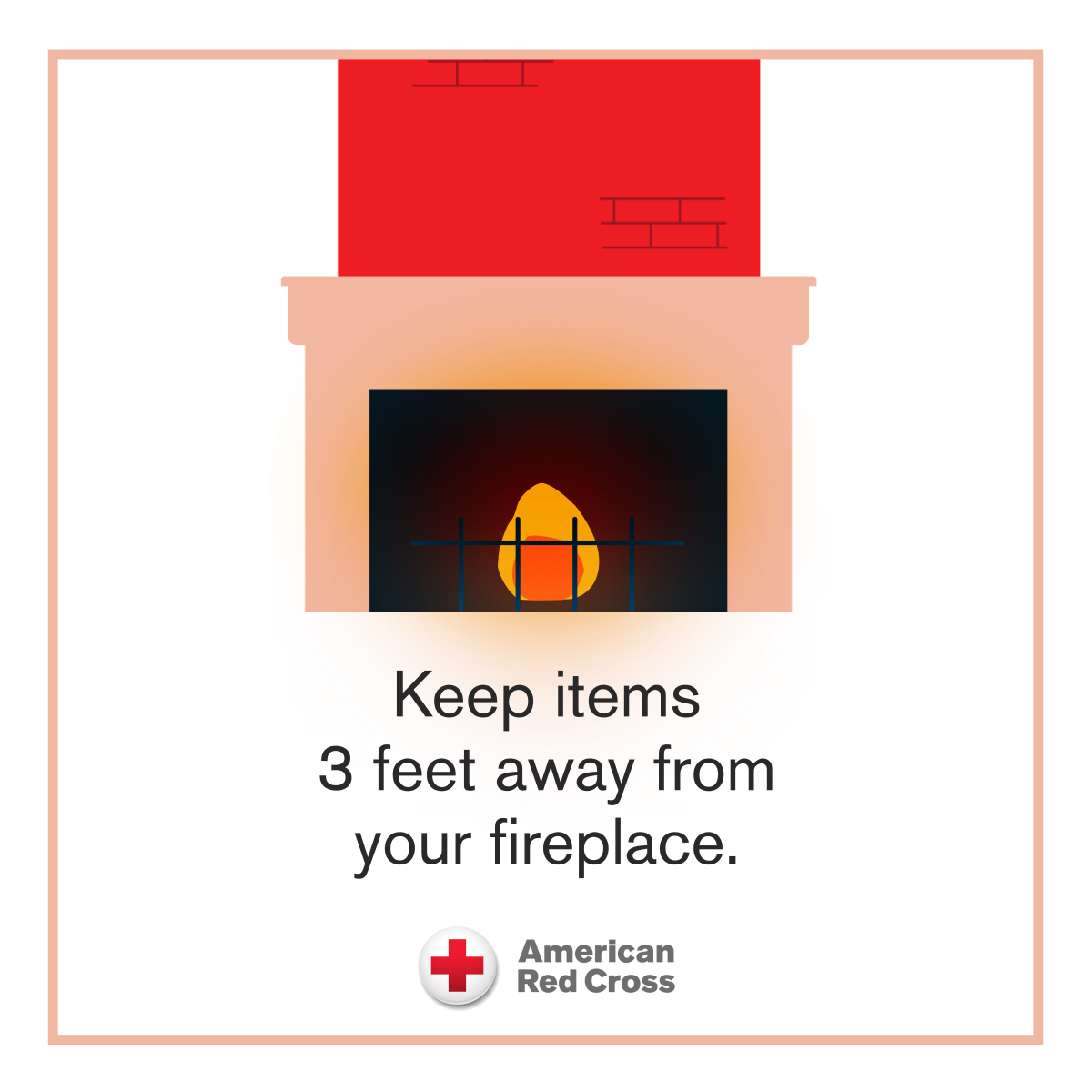
    • Don’t light the fireplaceif hanging stockings or other decorations on the mantel.
    • Check the labels of older decorations. Some older tinsel is lead-based. If using angel hair, wear gloves to avoid irritation. Avoid breathing in artificial snow.
    • If using a ladder, be extra careful. Make sure to have good, stable placement and wear shoes that allow for good traction.

    In addition, many people will be doing a lot of extra cooking during the holiday season. Cooking is the top cause of home fires in the U.S. Enjoy the holiday season by keeping an eye on what you fry, that is, never leave cooking food unattended. If you need to leave the kitchen, even for a moment, turn off the stove.

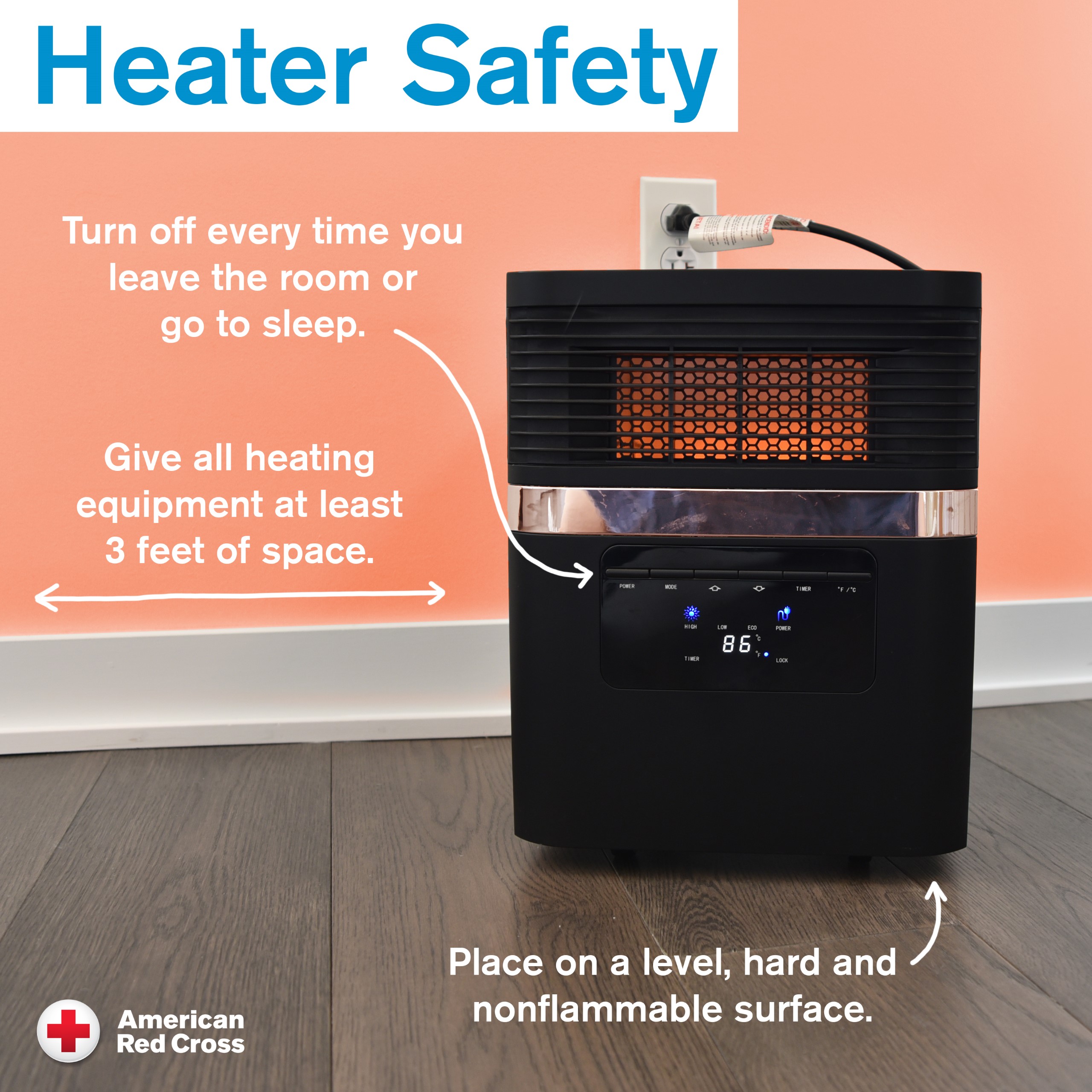
    Another leading cause of home fires is heating equipment. With the cold weather settling in, that risk increases. Help keep your family safe by providing at least three feet of space for all heating equipment. This is critical because most home heating fire tragedies occur when flammable items like furniture, rugs and drapes are too close. Never leave space heaters unattended — as they’re involved in most fatal home heating fires. If you use a space heater, place it on a level, hard and nonflammable surface, such as a ceramic tile floor. And turn it off every time you leave the room or go to sleep.

    You can also help keep your family safe by testing your smoke alarms monthly and practicing your home fire escape plan until everyone can escape in two minutes or less. Visit redcross.org/fire for more information, including an escape plan to practice with your family. You can also download our free Emergency app (search “American Red Cross” in app stores).

  • Safely heat your home as colder weather sets in across the Delaware Valley

    By Dave Skutnik

    Many have had to turn up the heat over the past few days and the American Red Cross Southeastern Pennsylvania Region urges families to safely heat their home to avoid home fires.

    Heating equipment is the second leading causes of home fires. Red Cross home fire responses typically rise in the Philadelphia area as the weather gets colder, and that’s already been happening over the past week. In fact, Red Cross volunteers responded to 17 homes fires last week after responding to only two during the first week of November. Already this month, the Red Cross has helped 99 people displaced by a fire with urgent needs like emergency lodging, financial assistance and recovery planning.

    “Colder temperatures often bring the increased risk of home heating fires, and we want everyone to stay safe by properly warming their home,” said Guy Triano, Regional CEO for the Red Cross of Southeastern Pennsylvania.

    How to heat your home safely

    A 2020 Red Cross survey showed that more than half of us have used a space heater — which is involved in most fatal home heating fires. Provide at least three feet of space around all heating equipment, and never leave space heaters unattended. Follow these additional tips:

    • If you must use a space heater, place it on a level, hard and nonflammable surface, such as a ceramic tile floor. Don’t place it on rugs and carpets, or near bedding and drapes; keep away children and pets.
    • Plug space heater power cords directly into outlets — never an extension cord. Turn it off every time you leave the room or go to sleep.
    • Never use a cooking range or oven to heat your home.
    • Never leave a fire burning in the fireplace unattended. Make sure any embers in the fireplace are extinguished before going to bed or leaving home. Use a glass or metal fire screen to keep embers in the fireplace.
    • Have furnaces, chimneys, fireplaces, wood and coal stoves inspected annually by a professional and cleaned if necessary.

    Take two steps to prevent fire tragedies

    To help protect your family year-round, test your smoke alarms monthly and practice your home fire escape plan until everyone can escape in less than two minutes — the amount of time you may have to get out of a burning home before it’s too late. Visit redcross.org/fire for more information, including an escape plan to practice with your family. You can also download the free Red Cross Emergency app by searching for ‘American Red Cross’ in app stores.

  • TURN your clocks! TEST your smoke alarms!

    By Judith Weeks

    As clocks “fall back” when daylight saving time ends on Sunday, November 7 it’s also the perfect time to test your smoke alarms and replace the batteries if needed.

    Home fires are the nation’s most frequent disaster, taking seven lives every day in this country. With the colder season and holidays approaching, the risk of deadly home fires increases! Heating equipment is a leading cause of home fires. And with the COVID pandemic, the risk increases as more people are working and staying at home. 

    Its critical to take action now to be as safe as possible. There is no doubt that home smoke alarms save lives. You can take a few simple steps to help protect your loved ones and those who live in your home or apartment.

    The American Red Cross asks everyone to follow these three fire safety steps to keep everyone safe from home fires.

    1. Install smoke alarms on every level of your home, including inside and outside bedrooms and sleeping areas.
    2. Replace smoke alarms that are 10 years or older. Components such as sensors can become less sensitive over time. Follow your alarm’s manufacturer instructions.
    3. Practice your two-minute home fire escape plan. Make sure everyone in your household can get out in less than two minutes – that’s the amount of time you may have to escape a burning home before it’s too late. Include at least two ways to get out of every room and select a meeting spot that is a safe distance away from your home, such as your neighbor’s home or landmark like a specific tree in your front yard, were everyone can meet.

    The Red Cross Home Fire Campaign helps save lives by installing free smoke alarms in homes that do not have them, and by educating people about fire safety. Southeast Pennsylvania Region volunteers work with local fire departments canvassed neighborhoods, installing free smoke alarms and talking to the residents about preparedness and prevention

    For more information, including safety tips and free resources, visit redcross.org/homefires or download the free Red Cross Emergency app by searching for “American Red Cross” in app stores.

    From June 2020 through June 2021, the Southeast Pennsylvania Region Red Cross responded to 689 local disasters, including home fires, and helped a total of 3,855 people.

  • Red Cross offers Halloween safety tips as pandemic continues

    By Dave Skutnik

    Trick-or-treating is back this Halloween. However, the ongoing COVID-19 pandemic means there are extra factors to consider when planning your activities. The American Red Cross offers these tips and more to help keep you and your loved ones safe.

    “Halloween is one of the most popular holidays and with most communities returning to normal activities this school year, people should expect more visitors in search of treats,” said Guy Triano, Regional CEO for the American Red Cross of Southeastern Pennsylvania. “Whether you’re handing out goodies or going door-to-door, with just a few simple considerations you can make sure your family and those around you are safe and sound.”

    Here are the top tips for parents to keep in mind while getting their kids ready for Halloween this year:

    1. Make your cloth mask part of your costume. A costume mask is not a safe substitute for a cloth mask. Avoid wearing a costume mask over a cloth mask as it can make breathing difficult.
    2. Plan outdoor activities and avoid indoor events where the risk of virus transmission is higher.
    3. Bring hand sanitizer with you while trick-or-treating and use it after touching objects or other people. Wash your hands when you get home.
    4. Avoid trick-or-treating in large groups, and social distance from others around the neighborhood.
    5. Make sure trick-or-treaters can see and be seen. Give kids a flashlight to light their way and consider adding reflective tape to costumes and trick-or-treat bags.
    6. Plan the trick-or-treat route in advance and make sure adults know where their children are going. A parent or responsible adult should accompany young children door-to-door. 
    7. It’s not only vampires and monsters people have to look out for. Be cautious around animals, especially dogs.
    8. Walk only on the sidewalks, not in the street. Avoid running. Look both ways before crossing the street, and cross only at the corner. Don’t cross between parked cars.
    9. Only visit homes that have a porch light on, and never go inside.
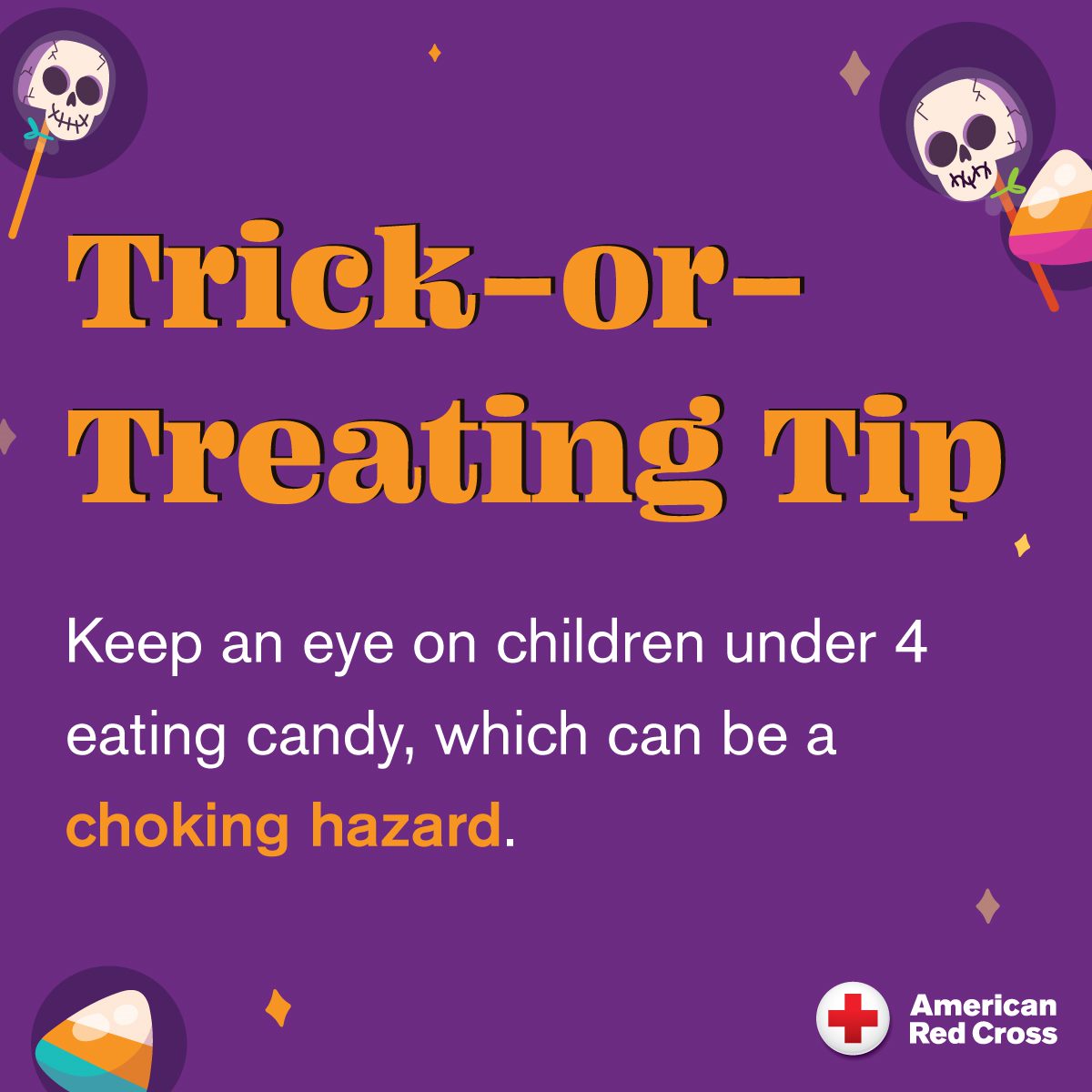
    10. Make sure a grown-up checks the goodies before eating. Make sure to remove loose candy, open packages and choking hazards. Discard any items with brand names that you are not familiar with.

    For those planning to welcome trick-or-treaters to their homes, follow these safety steps:

    • Give out treats outdoors, if possible.
    • Avoid direct contact with trick-or-treaters by setting up an area with individually bagged treats for kids to take. Wash your hands before handling treats.
    • Maintain social distancing and wear a cloth mask.
    • Light the area well so young visitors can see.
    • Sweep leaves from your sidewalks and steps. Clear your porch or front yard of obstacles someone could trip over.

    Download the free Red Cross First Aid app for instant access to expert advice in case your ghost, goblin or superhero has a mishap. Use the Emergency app for weather alerts and to let others know you are safe if severe weather occurs. Find these and all of the Red Cross apps in smartphone app stores by searching for the American Red Cross or going to redcross.org/apps. 

  • Got mold? Clean it up safely after Ida

    Contents of a Red Cross clean-up kit. Disaster workers distributed more than 1,800 clean-up kits since Sept. 1. Photo by Larry Daly.

    By Alana Mauger

    Ida’s waters have receded, and people across our region are busy drying out their homes and belongings. Unfortunately, mold may still be lurking in damp areas. The Environmental Protection Agency (EPA) offers a helpful guide for evicting this unwelcomed guest. Below are some highlights.

    Get to know mold

    Believe it or not, mold spores are already in our homes, even without flooding. Like dust, there’s no way to eliminate all mold spores from the air. The spores only become a problem when they land on wet or damp objects and begin to grow. No moisture, no mold. Easy, right?

    Here’s the issue – after Ida, there IS moisture, which means there IS mold. And mold spores can gradually destroy the things they land on and cause allergic reactions in people and pets. Plus, mold can be both visible and hidden. You can often smell mold hiding in places like wallpaper, ceiling tiles and carpets even if you can’t see it.

    Safety first

    According to the EPA, it’s important to limit your exposure to mold and mold spores. Before you clean, make a trip to a home improvement store to pick up the following:

    • N-95 respirator for every person in the house;
    • Long gloves that extend to the middle of the forearm made of natural rubber, neoprene, nitrile or PVC; and
    • Goggles without ventilation holes.

    It takes some elbow grease

    We have determined that, yes, we likely have mold, and we bought our PPE. Now what? If it’s a small area (the EPA suggests 10 square feet), it can be a DIY job. Here are some tips:

    • Scrub mold off hard surfaces with detergent and water (and dry completely);
    • Throw away absorbent or porous materials like ceiling tiles and carpet;
    • Don’t paint or caulk moldy surfaces;
    • Never touch mold or moldy objects with your bare hands.

    Know when to call for back up

    Not sure if you can clean up the mold yourself? For large areas with significant water damage, the EPA suggests consulting its guide on Mold Remediation in Schools and Commercial Buildings. If you choose to hire a contractor, make sure he or she has experience (with references) cleaning up mold. If you suspect you have mold in your HVAC system, stop running it immediately and consult EPA’s guide, Should You Have the Air Ducts in Your Home Cleaned? Finally, call a specialist if your mold or water damage was caused by sewage or other contaminated water.

  • Ida Bringing Flood and Tornado Threat to Southeastern PA

    By Dave Skutnik

    The remnants of Hurricane Ida are tracking through Pennsylvania today, bringing the threat for flash flooding and severe thunderstorms with possible tornadoes later today.

    The Red Cross has disaster workers and supplies stocked and ready to go in the event evacuations are necessary and shelters need to be opened.

    Below are some tips on staying safe at home, at work or in the car in today’s terrible weather.

    FLOOD SAFETY

    If you are driving and encounter torrential rain, try to safely exit the road and park.Stay in your vehicle and turn on the emergency flashers until the heavy rain ends. And remember to always drive with your headlights on during rain.

    Turn around, don’t drown! If you encounter a flooded roadway, turn around and go another way. If you are caught on a flooded road and waters are rising around you, quickly get out of the car, move to higher ground and stay there. Most cars can be swept away by less than two feet of moving water.

    Be ready to evacuate. If your neighborhood is prone to flooding, prepare to evacuate quickly if necessary. Follow evacuation orders and don’t return until officials say it is safe. Tune into local media for the latest updates.

    Stay away from floodwaters. Keep children and pets away from hazardous sites and floodwaters.

    TORNADO SAFETY

    Know the difference between a watch and a warning. A watch means a tornado is possible; a warning means it is already happening or will very soon.

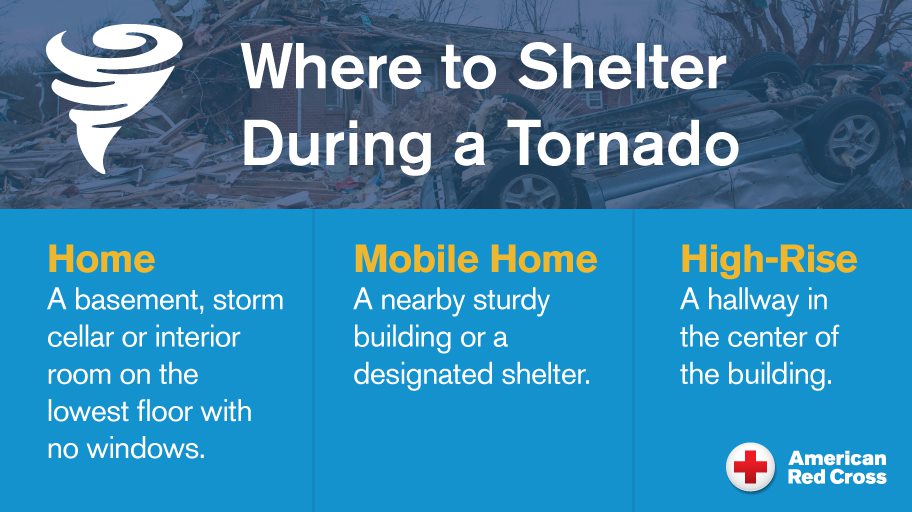
    During a tornado warning, go to your safe place immediately. Identify a safe place in your home to gather — whether it’s a basement or interior room on the lowest floor with no windows. If you live in a mobile home, find a safe place in a nearby sturdy building or vehicle.

    If you’re outside, seek shelter in a sturdy building. If you cannot quickly walk to a shelter, immediately get in a vehicle and try to drive to the closest sturdy shelter. If strong winds and flying debris occur while driving, pull over and park. Keep your seatbelt on and the engine running. Put your head down below the windows and cover your head with your hands and a blanket.

    Download the free Red Cross Emergency App for real-time weather alerts, open shelters and expert advice on emergency situations. The Emergency App includes an “I’m Safe” feature that helps people check on loved ones. Search “American Red Cross” in app stores, or go to redcross.org/apps.

  • National Preparedness Month: Emergencies more frequent, larger due to climate change — #BeReady

    By Dave Skutnik

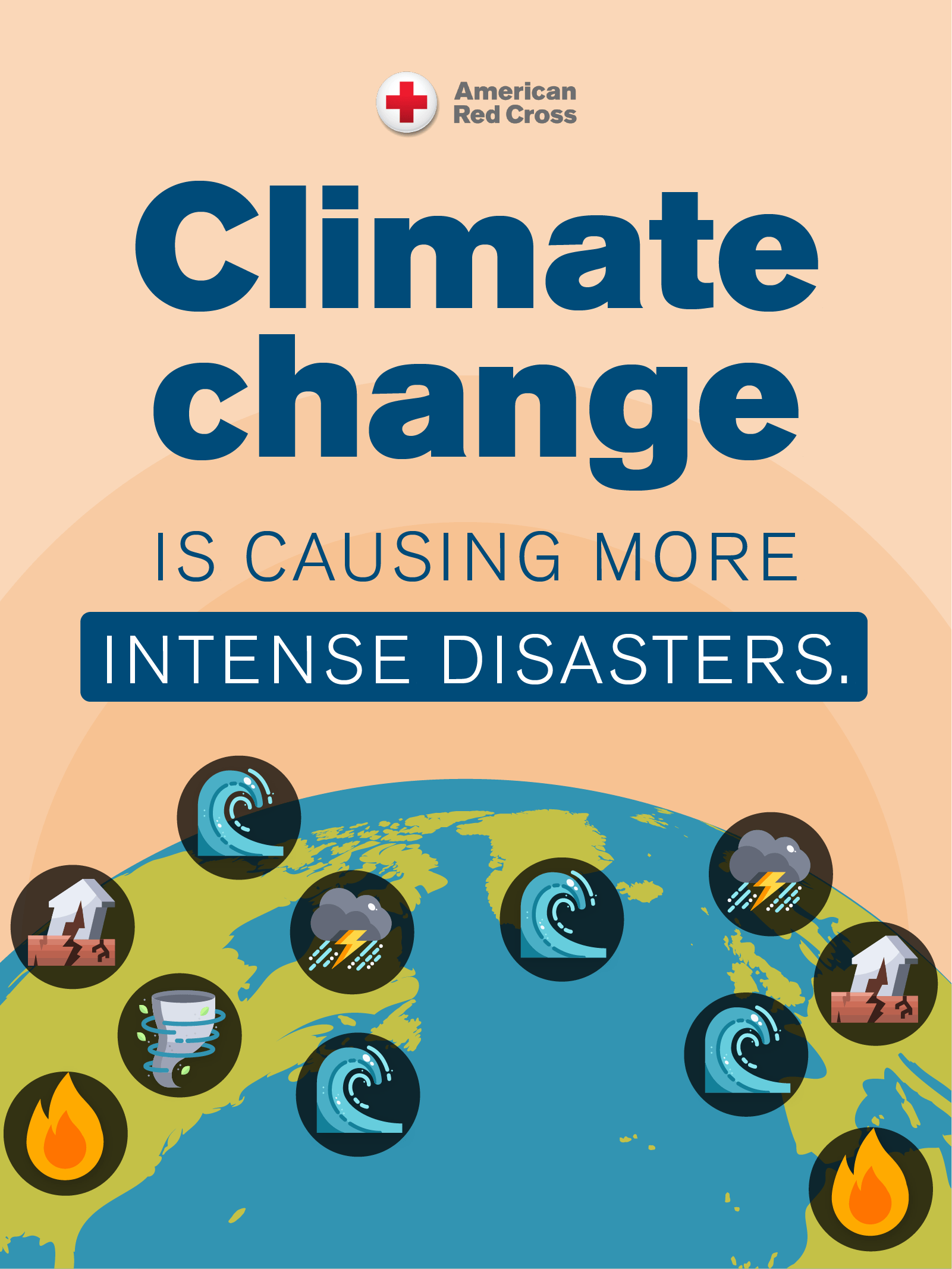
    The impact of climate change is being felt by families across the country as more intense storms, heavier rain, higher temperatures, severe droughts and record-setting hurricanes and wildfires. The American Red Cross of Southeastern Pennsylvania urges everyone to get ready by making preparedness a priority this September during National Preparedness Month. 

    We have recently seen emergencies impacting people who don’t usually experience a major disaster or extreme weather, while other communities are going through the devastation of disasters multiple times a year. Here in our area, flooding and tornadoes devastated parts of Bucks County earlier this summer, and now the remnants of Hurricane Ida threaten to bring even more flooding.

    “Disasters can happen anywhere, anytime.We urge people to prepare now and be ready if an emergency occurs in their home or in our local community,” said Guy Triano, Regional CEO for the American Red Cross Southeastern Pennsylvania Region. “Helping people during disasters is at the heart of our mission and climate change is a serious threat we are all facing. Help keep your loved ones safe — get Red Cross Ready today.”

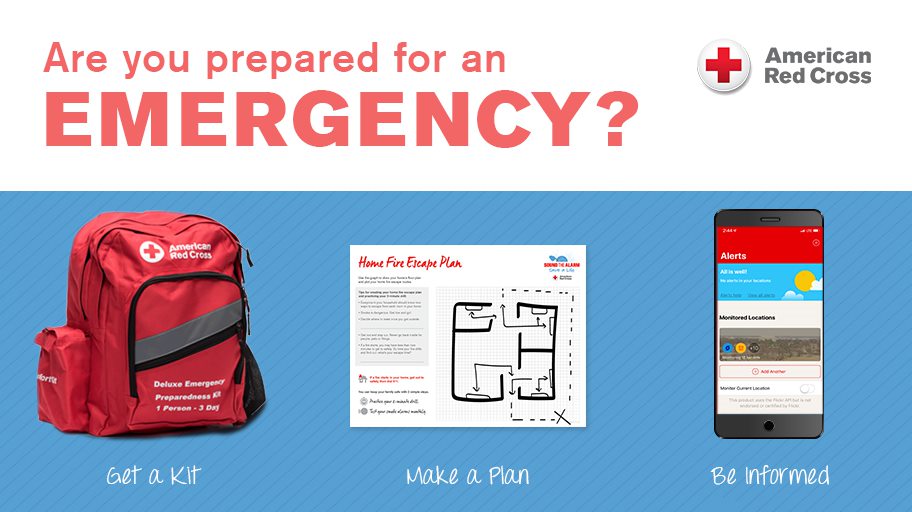
    HOW TO GET PREPARED Help keep your family safe by taking three actions to: 1) Get a Kit. 2) Make a Plan. 3) Be Informed.

    1. First, build your emergency kit with a gallon of water per person, per day, non-perishable food, a flashlight, battery-powered radio, first aid kit, medications, supplies for infants or pets, a multi-purpose tool, personal hygiene items, copies of important papers, cell phone chargers, blankets, maps of the area and emergency contact information.
    2. Next, plan what to do in case you are separated from your family during an emergency and what to do if you have to evacuate. Coordinate your plan with your child’s school, your work and your community’s emergency plans. Don’t forget to include your pets. Remember, if you and your family need to evacuate, so does your pet. Know in advance which pet-friendly hotels are in your area, and where your pets can stay in an emergency situation.
    3. Finally, plan to stay informed by finding out how local officials will contact you during a disaster and how you will get important information, such as evacuation orders.

    ADDITIONAL CONCERNS Being prepared is important for everyone. Depending on your household’s needs, there might be additional considerations to take into account as part of your emergency planning.

    For example, older adults or people with mobility, hearing, learning or seeing disabilities may need to create a support network of people that can help during an emergency. The Red Cross recommends creating a plan that considers each person’s capabilities, any help they may need and who can provide it. This is especially important if evacuations are called for or if the power goes out for several days.

    Disasters can be scary for children. It’s important to talk with your kids about preparing for common emergencies, how to stay safe and what to expect before a disaster happens. The Red Cross has free programs and tools to help, visit redcross.org/youthprep for more information.

    HELP YOUR COMMUNITY National Preparedness Month is also a good time to take steps to help your community get prepared for emergencies of all sizes. By volunteering, donating blood or learning lifesaving skills, you can be ready to help your loved ones and neighbors when needed. Visit redcross.org to learn more.

    Red Cross volunteers play several critical roles in their local communities, including providing aid after disasters and educating people about home fire safety. People can also support local military members, veterans and their families, or volunteer as a blood donor ambassador or a blood transportation specialist to be the critical link between blood donors and recipients.

    Blood can take up to three days to be tested, processed and made available for patients, so it’s the blood already on the shelves that helps to save lives in an emergency. To help prepare your community, make an appointment to donate blood or platelets and help save lives.

    Learn lifesaving skills so you can help people in a crisis until medical professionals arrive. Sign up for a first aid, CPR or other classes available online or in-person.

  • Get back to school safely with Red Cross resources

    By Nancy Degnan

    Sesame Street’s character, Big Bird, a loveable 8’3” image represents childlike traits with his enthusiasm and curiosity about understanding the world around him. As we take our first steps back to school, and change our day-to-day routines, we should follow Big Bird’s example and find out all we can to be informed and stay safe and healthy.

    The American Red Cross of Southeastern Pennsylvania is here to help you with some resources for kids of all ages.

    Keeping our little ones safe

    • Teach your child their phone number and address.
    • Discuss a plan on how your child can reach you or another trusted adult.
    • Demonstrate to your child how to dial 9-1-1 and what to say.

    Arriving at school safely

    • Educate your children on the importance of safety rules for riding the bus.
    • If your child is riding their bike, stress the importance of wearing a helmet and riding on the right side in the same direction as traffic.
    • If your child is walking to school, make sure they understand rules for intersections and are comfortable with their surroundings.

    Driving with awareness

    • Set the guidelines for teenage drivers to ensure the understanding of school zones and guidelines when on school property.
    • Reinforce the seat belt mandate and safety rules.

    For more tips, check out our website.

    First Aid Preparedness

    The Red Cross First Aid App provides instant access to information on handling the most common first aid emergencies whether it be before, during or after school. Download the app for free by searching for ‘American Red Cross’ in your app store or at redcross.org/apps. Learn and practice First Aid and CPR/AED skills by taking a course (redcross.org/takeaclass) so you can gain the knowledge and skills to help save a life.

    Return to School Health Guidelines for COVID-19

    While schools are offering a combination of methods for learning, take the time to learn what you can about your child’s going back to school experience. Pennsylvania Department of Education offers a series of COVID-19 resources for schools. Check the websites for your county and your child’s school district for up-to-date local information.

    The Red Cross takes pride in providing continued support to help you prepare for transition events and emergencies. We are here to help! Visit our resources and have a sunny day!