Category: Safety Tips

  • Seeing the Mission and Vision in action

    Here as a volunteer blogger for the SEPA chapter, I’m getting a chance to learn some of the things that the Red Cross does that don’t make it onto your local news but does make an impact on people’s lives.

    Whether it’s mental health volunteers helping out in Colorado or the SEPA Communications team being the first on the scene to help survivors access the help they need following a fire in Philadelphia, I’m also learning that the hundreds of Red Cross chapters nationwide and their volunteers adhere to one vision and one mission.
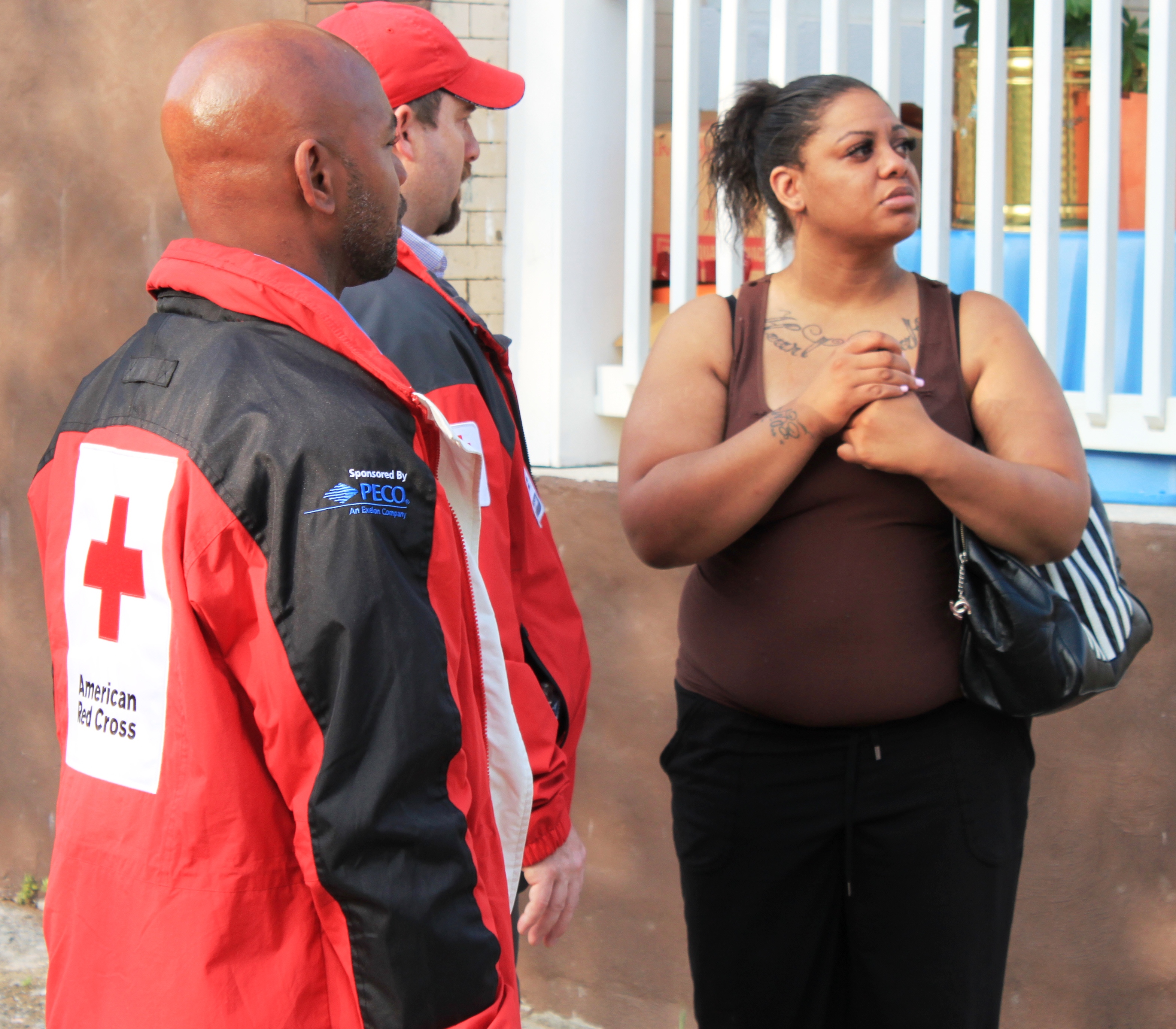
    Two Red Cross Southeastern Pennsylvania workers console a woman displaced by a fatal fire in West Philadelphia.

    The mission is to “prevent and alleviate human suffering in the face of emergencies by mobilizing the power of volunteers and the generosity of donors.”

    The vision is to turn compassion into action so that:

    .all people affected by disaster across the country and around the world receive care, shelter and hope;

    ..our communities are ready and prepared for disasters;

    …everyone in our country has access to safe, lifesaving blood and blood products;

    ….all members of our armed services and their families find support and comfort whenever needed; and

    …..in an emergency, there are always trained individuals nearby, ready to use their Red Cross skills to save lives.

    Both are daunting tasks and responsibilities.

    Yet both were demonstrated during the number of tragedies this past summer. Tragedies that ranged from but not limited to house fires, water main breaks, and some natural disasters on the local level as well as wildfires and mass causality crises on the national level.
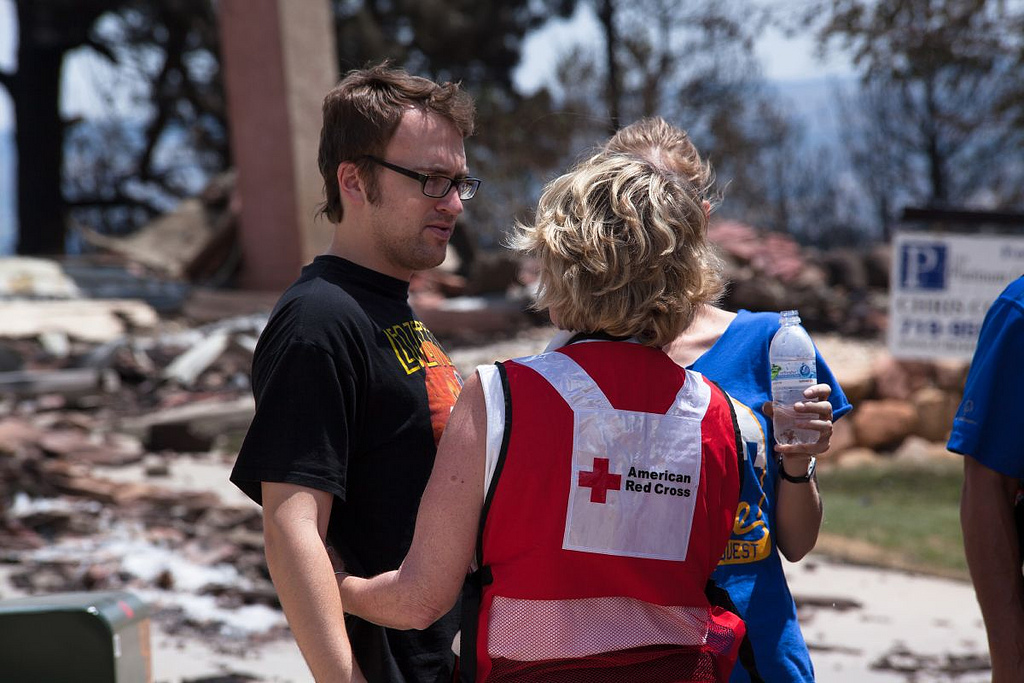
    American Red Cross Southeastern Pennsylvania mental health volunteer meeting with a man displaced by the Colorado wildfires.

    Through them all, the American Red Cross was there to help and through their actions I begin to realize how volunteers live the American Red Cross mission and vision everyday.

    – Jabril Redmond, volunteer guest blogger
  • New Website Preview

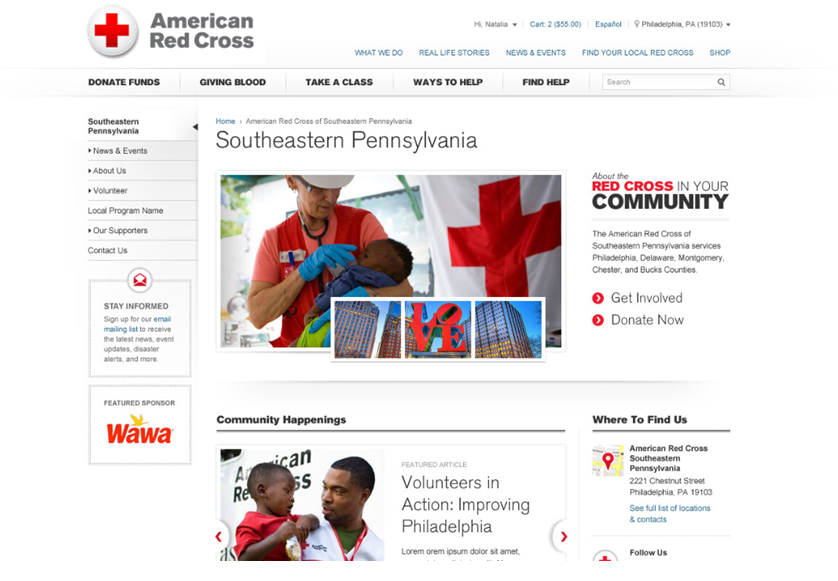
    Are you ready for change? Well, here at the SEPA Chapter, the office has been a buzz, enamored with and swamped preparing for the unveiling of the new Red Cross website.

    In an effort to make the Red Cross chapters more uniform nationwide, the Red Cross’s website will undergo a few modifications and the SEPA chapter will be a pilot chapter for this redesign.

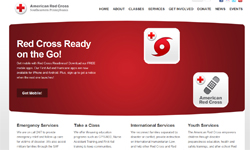
    Without losing the qualities that make it so user friendly, you’ll still be able to sign up for classes, volunteer, make a donation, get help and interact with us on the site. And don’t worry, the domain name you have embraced and grown to love: RedCrossPhilly.org will remain the same but like a wardrobe change the web page will be fashioned with a new look. So expect the same content, the same availability of features but only with an updated design. It’s been in the works for quite some time, with you the user in mind and we are very excited about it.  Our new website makes its debut next week. So be on the lookout for it.(preview below).

    A preview of new RedCrossPhilly.org
    Here’s what RedCrossPhilly.org looks like now.
    In the end, all our hard work will make our website even easier for you to navigate, click and search for the information you need and easier for us to continue to meet the needs of the people we serve.

    – Jabril Redmond, volunteer, guest blogger

  • Olympic Sized responsibilities for the Red Cross

    Did you know that the Red Cross is also at the Olympics, behind the scenes and playing an important role in London? The British Red Cross planned and practiced for the Games years in advance just like the athletes and when the Games actually commenced, the British Red Cross came prepared with first aid and multilingual phrase books to connect with diverse populations. Thus far, they have been actively engaged in giving first aid in different high volume spots in the city. There are 400 volunteers working 2,000 shifts in 5 of the busiest stations surrounding the Olympic games.

    Pictured below is Pauline Lean volunteering first-aid services at the London Bridge.

    Not every Red Cross is the same around the world but we share the same mission and goals and as the Olympic Games progress with various countries coming together to play and compete on a world stage, its times like these that certainly remind us that the Red Cross is also an international organization. Comparable to the participants coming together for the Olympic Games in London this year behind goals of training hard and coming prepared to compete, Red Cross volunteers around the world train hard to be prepared and offer support in a time of need.

    Mary, (pictured above) student from Oxford says,  “This summer, I am going to Weymouth to provide first aid cover on the beach during the Olympic sailing events. The Red Cross is universally recognised, so I think that for people who have travelled from across the world to be at the games it is important for them to be able to recognise where they can go for help.”

    The Red Cross along with the Red Crescent Movement has volunteers who are active in more than 185 Red Cross societies around the globe. These groups function independently from governments and political parties but work closely with host nations to provide support during a time of need, disaster and crisis. Here are a few interesting facts from the American Red Cross website about other related Red Cross branches worldwide:

    • –The Palestine Red Crescent Society and Mexican Red Cross provide major medical care, operating hospitals and ambulances.
    • –The Norwegian and Italian Red Cross conduct search and rescue operations following emergencies.
    • –The Kenyan, Russian and Vietnam Red Cross provide care and support to people living with HIV/AIDS.

    It’s true that there are some similarities and a few differences between the Red Cross branches throughout the world in as much as there are similarities and differences between countries and customs worldwide. Yet, we are all connected by the same mission and goals. So in the meantime, while you are enjoying the Olympic Games, remember that the British Red Cross is there too, lending a hand.

    Jabril Redmond, Volunteer, Guest Blogger

    Pictures courtesy of the British Red Cross. To see more, click here!

  • New Hurricane Prepardeness App!

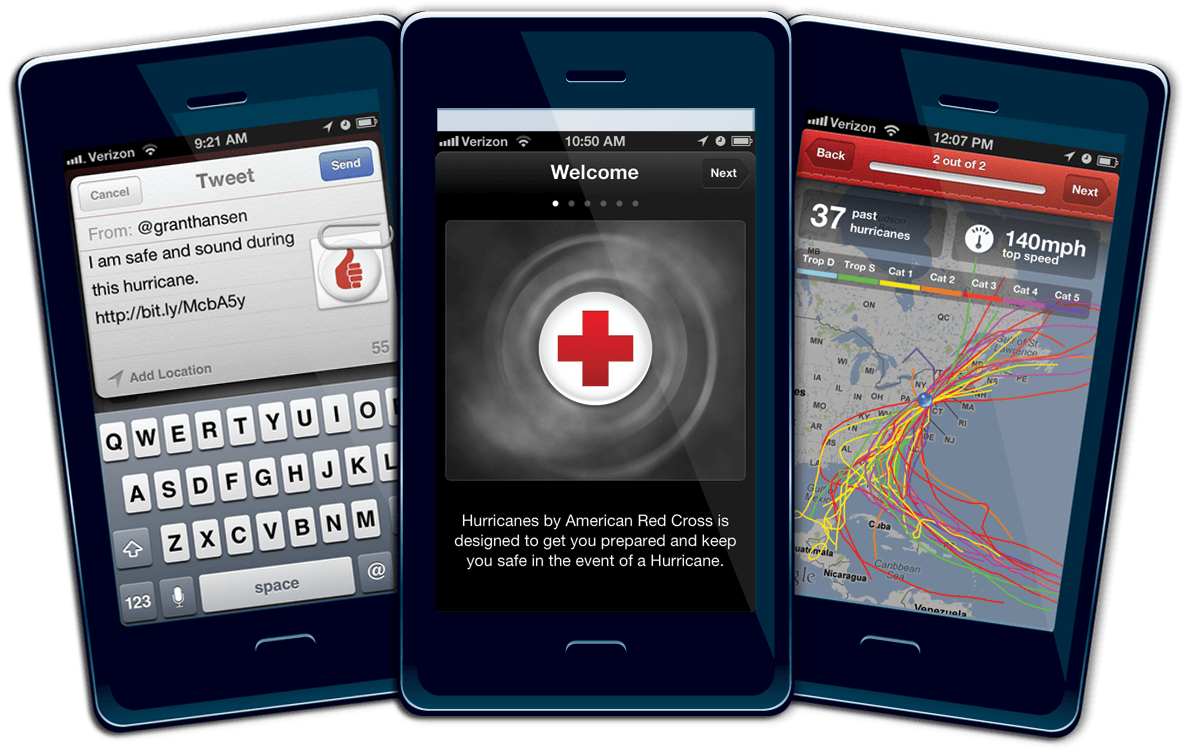
    With Hurricane Isaac on its way, you can now keep track of your loved ones who are in disasters path! The American Red Cross released its new official hurricane app for iPhone and Android users. And while it won’t be able to stop the awful conditions, it will help you be prepared with easy to understand and follow step-by-step instructions. So, before you rush out to the grocery store for eggs and bread, I would suggest downloading this FREE app for preloaded checklists, tracker maps, and alerts.

    Here’s a look at what the new Red Cross hurricane app looks like

    Fortunately, I have not experienced extreme hurricane conditions in my lifetime, but I have loved ones who live in areas more prone to such conditions than Philadelphia, like Florida and New Jersey. This app sends you real-time hurricane alerts for your area, or any location that you choose. These alerts are sent straight to your phone as soon as the National Oceanic and Atmospheric Administration (NOAA) issues them, even if the app is closed.  For each location you set to monitor, the app sends you hurricane warnings, as well as alerts for tropical storms and floods.

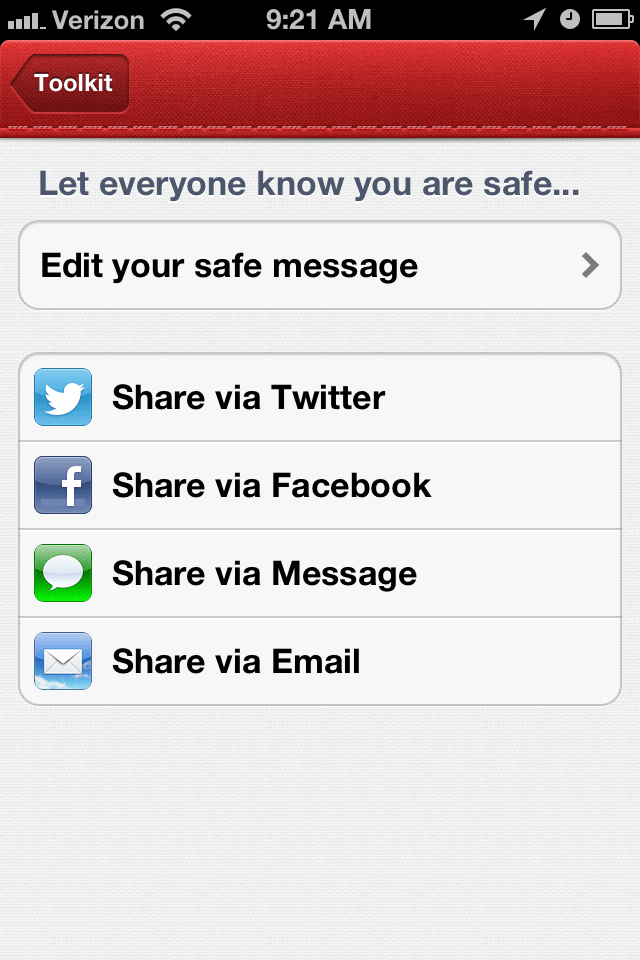
    What I think is great about this app is the toolkit located in the top left corner. It comes with emergency tools like a flashlight, strobe light, alarm and an “I’m Safe” feature. This allows you to connect with others to let them know you are ok in the face of danger with only the touch of a button. You can personalize your message beforehand and share via Twitter, Facebook, SMS, and email.

    You’d be amazed how the littlest preparations could save you from a lot of grief. Some of these hurricane preparedness tips are ones that I would never think of, like filling your car’s gas tank or putting your refrigerator on its coldest setting – so if you lose power, the contents will stay cooler longer. In addition to preparation pointers, this app has information on what to do immediately before, during and after the hurricane hits.

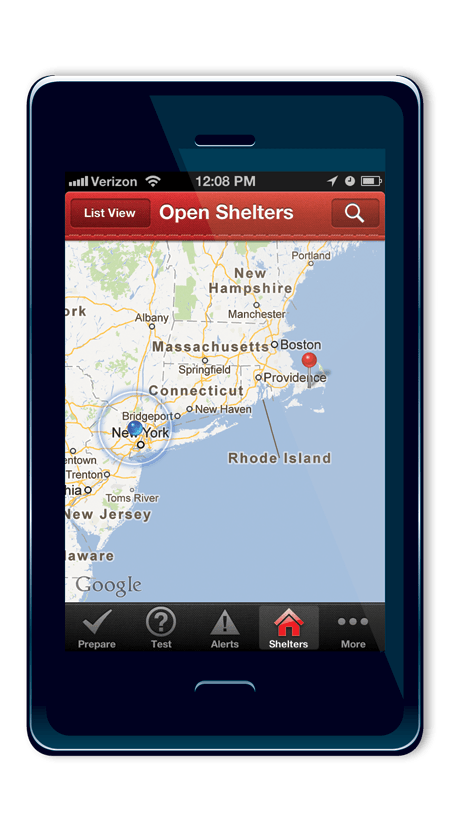
    There is also a feature that lets users map locations and shelter details across the United States. You  can zoom in on local area and view details on each shelter, such as which agency is managing the shelter, its capacity and current population, the disaster event and the specific shelter address or location. It is quick and easy.

    This app is useful even when you’re not necessarily faced with an alert or warning at the moment. Prepare for disaster by testing your hurricane knowledge and preparedness. There are three quiz categories (history, knowledge and prepare) in which you can earn achievements and share them with your friends. And if you are particularly interested in hurricane history, you can also look back 150 years and see how many hurricanes have hit your area. In Philadelphia, we’ve experienced 34 hurricanes – the top speed being 135 mph!

    The hurricane app is the second in a series of preparedness apps the Red Cross is releasing. Several weeks ago, the Red Cross unveiled a first-aid app that has been very helpful to me in providing tips for treating major and minor medical emergencies. Needless to say I was excited to add another preparedness app to use in case of disaster. (Not to mention, many preparedness tips and tactics can easily translate to other disasters.)

    Take a look at this video for more information:

    (download here for iPhone and here for Android)

    -Kelsey Crater

  • Happy Birthday America (party safely)

    Fireworks by the Philadelphia Art Museum

    I received a letter from my youngest son yesterday. He is away at summer camp and loving every minute of it. His letters are full of great stuff like – “a ball hit me right in the face really hard but then it dropped into my arms so the guy was out and it was okay.” Or this wonder-goodie, “I’m working on some back flips off the high diving board into the lake but I keep missing!” Missing what? The diving board itself? The water? My favorite was the report on preparations for July 4th. “The Bridgers (Counselors in Training) are building the wood pile for the bonfire in the meadow. It’s super high and the flames will be really intense!” Really? A huge bonfire in near a wooded area containing several hundred children between the ages of 7 and 17?

    It’s July 4th people! That’s the kind of crazy stuff we get up to celebrate the birth of our nation. So today, July 3rd, is a good day to do some thinking and some planning before we welcome our friends and get out the barbeque. Friends of mine drive from Philadelphia to South Carolina for a large family gathering at this time every summer. One year, a chaotic evening with small children delayed their journey and left them low on gas and unprepared for terrible traffic. They had forgotten to fill water bottles and pack snacks for the car and spent a very stressful few hours getting out of the northeast corridor madness. Needless to say, they learned to value of planning ahead. The length of their journey has them driving quite late at night. They plan their route carefully and switch drivers at their frequent rest stops.

    July 4th will be the start, for many of us, of an extended outdoor weekend. I will tell you from personal experience that while there are many fabulous ways to spend this great holiday, sitting in the emergency room with an active and energetic child is not one of them. Again, it helps to make expectations clear at the start of any gathering. I you are celebrating by a pool, check out these important guidelines for pool safety. Make children aware of dangers if they are in unfamiliar surroundings. Tell them that swinging on the swing set is fine, but walking on top of it as if on a balance beam 12 feet from the ground is not a wise choice. This may seem obvious to some but not to many 8-12 yr. old boys I know. Explain that while football is a great American game, the tackle variety is not an appropriate option when playing with your five year old cousins. Keep a first aid kit at hand for skinned knees and other abrasions, and keep all youthful enthusiasm away from the grill. If it can char your hamburgers, it can really harm a child.

    Speaking of that grill, use it wisely! If your charcoal briquettes have been sitting out on the damp part of the porch, spring for some new ones that will light up nicely with safe fuel. If it’s raining – and the possibility is in the forecast – don’t move your grill onto the porch or into the garage. Don’t grill! The kitchen has several heating elements that will cook your food safely and efficiently. I recommend checking out the American Red Cross tips for a safe July 4th. It’s informative reading.

    Most of all have a wonderful and safe holiday. Warm summer evenings with friends and family are a precious gift. The American Red Cross urges you to protect everyone you love with some careful planning.

  • Drinking water to beat dehydration

    I must admit that “drinking water” does not have the same appeal or quality taste as say an ice tea, a kiwi- strawberry fruit drink, or a soda but during the summer months, even as the forecast constantly changes from one day to the next, one of the best drinks to have to stay cool and avoid dehydration is water. I know it may seem at first unnecessary to remind someone to drink more water when the heat rises or before they reach the point of becoming thirsty, but the simple truth of the matter is that by the time you are becoming thirsty, you are already in route to becoming dehydrated. Our bodies are made up of water but can’t regenerate a new water supply on its own. According to The Encyclopedia of Healing Foods, we need to drink at least 48 ounces of water per day to replace the water we lose naturally.

    Dehydration can result in that general feeling of malaise with varying symptoms such as dry mouth, dry eyes, dizziness, fatigue, headaches, irritation, trouble with concentration, and cramps. Children are even more at risk, as their physical activity and play increases during the summer. According to a book called Nutrition for Life, “children adapt less efficiently than adults to hot weather and are more vulnerable to heat. They produce more body heat than adults but sweat less and therefore take longer to change their body temperature. In addition, children’s thirst mechanism is not as fully developed as that of adults and they may not express the need to drink and should be encouraged to drink water before, during, and after exercise to prevent dehydration and heat stroke.”

    When it comes to staying cool, drinking more water does not create a placebo effect. It actually does help keep our body’s temperature balanced by allowing us to sweat when we are hot, preventing us from overheating. Contrary to what our appearance looks like when we perspire, you know our clothes clinging to our skin, our shirts feeling more like a wet rag than a shirt, sweat is keeping our internal temperature from going up to potentially dangerous levels. On a hot day we desperately need water to sweat. Sweat is our own body’s cooling system. I can’t promise you’ll look and feel your best when you start to sweat but at least you’ll know you’re beating dehydration when you are drinking more water.

    – Jabril Redmond, guest blogger, American Red Cross Southeastern Pennsylvania

  • Practicing What we Preach

    You hear us all the time talking about the importance of being prepared for an emergency. We pound that message into your head just about every opportunity we get. I realize, it may seem excessive. Maybe, maybe not. But let me tell you, being the person who helps deliver those messages, repetition sure came in handy for me last night.

    You see in the midst of a three day heat wave, the power in my house went out. A transformer down the street blew and our entire block was without any power. No lights. No TV. No A/C on the hottest night of the year. But other than it being an inconvenience, there wasn’t much concern. We knew what to do. I had my trusty Red Cross preparedness kit right by the door. I put it there so I knew exactly where I could find it so I wouldn’t be wandering around in the dark looking for the flashlight that was inside.

    Image

    I also knew where we would go if the power was out for a long time and it got too hot to stay in the house. Having a plan for where to go is critical to every emergency plan.

    I was lucky enough to have my smartphone and a laptop with lots of battery power. So I did what any Red Cross communicator does in a situation like that, I tweeted and recorded a video (below). I figured, this was a good chance to put into practice what the Red Cross preaches.

    In the end, it wasn’t a major emergency. It was barely even a minor one. Thankfully, by midnight, the power was back on and we never had to leave the house. The whole matter turned out to be a drill of sorts in case there is a major emergency, like the tornado warnings that had my family huddled in a corner in the dark during the height of Hurricane Irene last summer. Or the blizzard two years ago that also knocked out power and we couldn’t go anywhere.

    You just never know when the advice the Red Cross gives you about being prepared will be useful. So take a few minutes to review Red Cross preparedness information when you’re safe and sound. And be sure to refresh yourself every few months. That way, if there is an emergency, you’ll be ready.

  • Tips from a Texan

    Howdy!

    As the temperature (slowly) rises I’m reminded of my home state of Texas. Now Texans are no strangers to heat advisories, warnings and their ilk. Our summer temperatures usually stay between 90-105 degrees. Heat related hospitalizations and even deaths are a sad yet common occurrence there.

    The excessive heat advisory issued this week has been a top news piece recently but all of this hubbub seems a bit over the top. I’ve been assured by many Philadelphians that it does get very hot and humid here but I still have my doubts. This is probably the first summer I’ve been able to wear a light sweater outside!

    I play Ultimate regularly so I do spend quite a bit of time outside and it’s definitely a muggy heat but nothing like the scorchers we have in Texas. I’m from the Dallas-Fort Worth (DFW) region so our climate tends to be bone-dry, like walking into an oven (as opposed to a steam room.) Last year’s summer saw the worst drought in recent years. It got so bad in places that critters would get stuck where the ground had cracked.

    So as a survivor of many a Texas summer here are some of my personal tips to help keep you cool and sunburn free this summer.

    1. One thing that commuters tend to forget is that your left arm is exposed to the sun for however many minutes (or hours) you’re stuck in traffic. Cover up! My mom keeps a long sleeve button down in the car and throws that over her left arm when she drives for long periods of time.
    1. Umbrellas are great for rain but they also provide portable shade! Yes you may get funny looks but it beats melting in the sun!
    1. Personal water misting fan. Carry everywhere. (The link is not an endorsement to buy that specific product. Just an example!)
    1. Sunglasses and lip balm with UV protection are essential. It’s definitely possible to get sunburn on your eyes and lips. I’ve done it. It hurts. Learn from my mistakes.
    1. Speaking of sun protection, you can never say enough about sunscreen. Apply a thick coating and wait for your skin to absorb it before heading out the door. Some limbs that get commonly forgotten: the ears, the back of the neck and the tops of your feet (if you like to wear flip flops but don’t like the flip flop tan line!) Ladies, there are a lot of makeup options that have sunscreen too so no excuses! And reapply often.
    1. Cowboy hats are not just a bold fashion statement but a very practical way to keep the sun out of your eyes and off your neck!
    1. Keep your clothes in the fridge. Sounds weird but it feels really nice to slip into cold pajamas after a long hot day!
    1. Most people tend to eat cool things in the summer like salads and ice cream but eating spicy food actually helps cool you down. You sweat more when eating spicy food which helps to cool your body. Add a fan and you’re in business!
    1. If you do a lot of outdoor activities plan ahead and throw water bottles in the freezer. Take them out when you’re ready to head out and you should have ice cold melted water when you need it!
    1. If after all of these tips you still manage to get sunburned do not take a hot shower! Use lukewarm water (or cold water if you can stand it) pat your skin dry and use burn relief gel. The aloe variety is my favorite. It’s especially nice when you get some cool air on the burn.

    Hope y’all find these tips useful! Have a safe and happy summer!

  • Heat safety

    Heat accounts for the most weather related deaths in the United States. Although we have been lucky enough to have cool summer temperatures this season, these next few days are calling for temperatures of close to 100 degrees. And if you’re like me, you love seeing that big yellow sun on the weekly forecast, but its important you don’t let the sun get the best of you. I had an experience myself with minor heat exhaustion.

    A few weeks ago, on a particularly hot Friday, I did the normal college student summer routine, which doesn’t include much but working out and relaxing outdoors. I started my new summer job later that evening and didn’t take into consideration the long hours spent in the sun mixed with working on my feet could end in heat exhaustion. As a result I became dizzy, weak, and even sick for the next couple of days. Now I know there are many things I could have done to prevent this.

    In the heat, the first and most important step is to stay cool. Although this may seem obvious, it is crucial to prevent heat cramps, exhaustion and even stroke. Wear lightweight clothing and stay indoors with an air conditioner when possible. Plan strenuous outdoor activities like lawn care or exercising for the coolest parts of the day.

    The next tip is to stay hydrated. Drink plenty of water and avoid alcoholic beverages and caffeinated fluids if possible. Be sure to eat small meals and snack more often to keep your energy levels up. If you have access, go to the pool or beach for the day to cool off. If you do choose to spend long hours outside, use proper sun protection for your skin and reapply as you sweat or go in the water. This is important even if you don’t burn easily. Ultra violent rays are dangerous to all skin types.

    Also, check in frequently on small children and pets, as they are more susceptible to heat stroke. Be sure they have the proper amount of shade and fluids and never leave your pet in the car on a hot day even if it is just for a few minutes.

    For more on how you can be prepared and what you should do during a heat wave look at our checklist and be Red Cross ready.

  • First Aid at Your Fingertips

    When faced with a medical problem, we often find ourselves unsure about the proper steps to take or wishing we had been more prepared by keeping a first aid kit nearby.  Trying to tackle a medical problem while waiting for professional help to arrive or to seek out professional help can be chaotic and demanding.  American Red Cross, with the recent launch of a first aid app for Android and iPhone, has taken strides to ensure that we are well informed and equipped in these situations.  The app includes disaster preparedness information, and provides sequential instructions on how to handle common first aid situations, such as allergies, asthma attacks, broken bones and choking.  It also includes videos and interactive quizzes.

    I can easily recall a particular instance involving one of my relatives when the first aid app would have come in handy.  My cousin, Marla, who is a newlywed, was trying to impress her husband by cooking him a nice, home cooked meal, chicken cordon bleu.  She was very anxious for the meal to turn out perfectly, but she had minimal cooking experience living on her own before marriage.  She jokes to this day that the only meals she knew how to prepare were cereal and microwavable pizza.  As she was preparing the chicken cordon bleu, she absentmindedly grabbed the baking pan without wearing an oven mitt and burned all of her fingertips on her right hand.

    She immediately went into panic mode.  She was in severe pain and her fingers were beginning to blister.  She had just moved into her new home and did not have a first aid kit.  She frantically called my mother and inquired what she should do because she had never been in a situation similar to this.  She also called her mother and sisters for advice.  Each family member had their own version of a proper remedy for the burns, but did not want to steer her in the wrong direction.

    My cousin ended up not treating her burns until she arrived at the hospital, out of fear that she would do something to worsen her condition.  Once at the hospital, a nurse immediately applied ice to her fingertips followed by an ointment, and then wrapped her fingers in bandages.  In this particular instance, the first aid app could have saved my cousin a lot of stress.  Although the app is not a substitute for proper medical training, it could have provided my cousin with proper instructions given by doctors and nurses to ease her pain before going to the hospital.

    My cousin is addicted to her iPhone.  Consequently, this no cost app would have been ideal for her to access and utilize.  She would not have had to seek out a variety of theories from family members and weigh the pros and cons of each because she would have already known, thanks to the first aid app, what the best actions were to take in her situation.  Therefore, whether it is a minor medical emergency such as my newlywed cousin’s disastrous cooking experience or a more severe medical emergency, the app is a reliable source to turn to when faced with such unforeseen events.

    Submitted by: Lana Pizzo