Category: Preparedness

  • Get informed during PA Severe Weather Awareness Week

    By Alana Mauger

    The American Red Cross joins the National Weather Service (NWS) in observing Severe Weather Awareness Week in Pennsylvania April 15-19, 2024. The educational campaign aims to inform the public about how to prepare for and respond to severe weather events like thunderstorms, flash flooding and tornadoes.

    National Weather Service video – Thunderstorm Types

    Severe Thunderstorms

    A thunderstorm is considered severe if it produces wind gusts of at least 58 miles an hour or hail stones that are about the size of a quarter. These storms are usually accompanied by heavy rain, lightening and possible tornadoes.

    NWS issues watches and warnings to alert the public about severe weather risks.

    • A severe thunderstorm watch is issued when conditions in the atmosphere are favorable for thunderstorms with damaging winds and large hail to develop in a geographic region. If a watch is issued for your area, consider rescheduling outdoor activities and check for updates throughout the day.
    • A severe thunderstorm warning means a severe thunderstorm is happening or is about to happen at your location soon. Warnings typically last less than an hour and may list specific towns that are in the storm’s path. If a severe thunderstorm warning is issued for your area, seek shelter inside immediately and go to an interior room on the lowest level. If you’re driving, pull over to the side of the road until the storm passes.

    Outlooks, Watches and Warnings

    Watches and warnings can be issued for any severe weather event and apply to the flash flooding and tornado sections below.

    In addition to watches and warnings, NWS issues a convective outlook 1-8 days ahead of severe weather to predict the risk for broad regions. Categories of risk include general thunderstorms, marginal, slight, enhanced, moderate and high. The higher the risk, the greater potential for intense and widespread severe storms.

    NOOA graphic – A Flood Warning is issued when flooding is happening or will be happening. Some roads will be flooded. Move to higher ground. Never drive through flooded roads. A Flood Watch is issued when flooding is possible. Stay tuned to radio/TV, follow weather.gov and be ready to seek higher ground.

    Flash Flooding

    Unfortunately, more people are killed by flash floods than by other storm-related weather hazard, with most deaths caused by driving on flooded roads. A flash flood is flooding that happens quickly. During a flash flood, streams, creeks or manmade drainage systems rise rapidly and crest within a few hours as a result of heavy rain. They’re so dangerous because the water rises quickly and can catch people off guard and trap them in dangerous situations.

    If you encounter a flooded road, TURN AROUND, DON’T DROWN! Don’t drive or walk through flooded areas. It takes only 6 inches of water to knock you off your feet, and 16 inches of water to move a vehicle. Get to higher ground outside of the area prone to flooding and stay informed by monitoring weather alerts. Pay attention to flood warnings and watches.

    National Weather Service video – Get Weather Ready During a Tornado

    Tornadoes

    A tornado is a violently rotating column of air in contact with the ground. Wind speeds inside a tornado can range from just under 100 to 300 MPH and can travel as fast as 70 MPH. While Pennsylvania is at a lower risk for tornadoes than areas in the mid-west, they do occur here. In fact, the commonwealth averages around 15 tornadoes per year.

    If a tornado warning is issued for your community, seek shelter in a basement or interior room on the lowest floor. Closets, bathrooms, and other interior rooms without windows offer the best protection. Avoid windows and get under something sturdy or cover yourself with a mattress. If you’re at a school, hospital or shopping center, follow directions to a pre-designated shelter area.

    If you’re in a vehicle, buckle your seat belt, and try to drive to the closest sturdy shelter. If your vehicle is hit by flying debris while you are driving, pull over and park. Stay in the car with the seat belt on. Put your head down below the windows, cover your head with your hands and a blanket, coat or other cushion if possible.
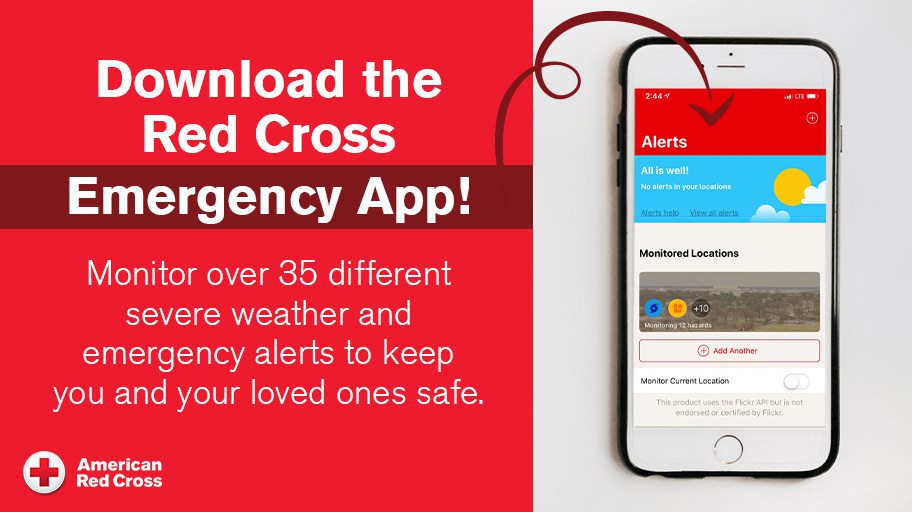
    Red Cross graphic – Download the Red Cross Emergency App! Monitor over 35 different severe weather and emergency alerts to keep you and your loved ones safe.

    Stay Informed

    The Red Cross provides a free Emergency App for real-time alerts and proactive planning. This app has been delivering timely and reliable storm emergency information to affected communities since 2015 and was updated last year with new features that provide modern accessibility, customization, and proactive planning guidance. Download it from any app store or visit our website.

    Climate Crisis

    The climate crisis has led the Red Cross to respond to nearly twice as many large disasters compared to a decade ago. In 2023 alone, the U.S. experienced an all-time high of 28 billion-dollar plus disasters that ravaged communities and forced hundreds of thousands of people to flee from severe storms, floods and wildfires.

    With the growing frequency and intensity of disasters driven by the climate crisis, the Red Cross is racing to adapt its services and grow its disaster response capacity across the country. Visit our Climate Crisis webpage to learn more.

  • Check Your Stress: April is National Stress Awareness Month

    By Samantha Munro

    Red Cross graphic – Find a small way every day to cope with stress.

    April is recognized as National Stress Awareness Month to bring attention to the negative impact of stress. Managing stress is an essential component of a healthy lifestyle. Knowing how to manage stress can improve mental and physical well-being as well as minimize severity of health-related issues.

    The origins of National Stress Awareness Month can be traced back to 1992 when the Health Resource Network (HRN), a non-profit health education organization, launched a campaign to encourage people to learn about the effects of stress and to provide information on how to manage it.

    As a humanitarian organization, The American Red Cross responds to an average of more than 60,000 disasters every year. Even when the immediate danger has. People may feel grief or anger over the damage or loss, fear or hopelessness when thinking about rebuilding their lives, and not knowing where or how to begin.

    The Red Cross offers Disaster Mental Health services provided by licensed professionals who volunteer their time and talent when disaster strikes. It is crucial for people to know that there is help available to them after experiencing a disaster. Knowing that you are not alone, that there are people who are available to assist you with getting your life back on track one day at a time.

    Keeping a balanced life and limiting the amount of stress is very important. Here are some resources that can be of great benefit to anyone seeking additional information:

  • Smile! April 3rd is #SafePlaceSelfie Day!

    By Samantha Antenucci

    NOAA graphic – #SafePlaceSelfie: Join us on April 3, 2024. Extreme weather could occur at any time. Wherever you may be, know your safe place.

    Disaster preparedness doesn’t have to be all doom and gloom. In fact, Safe Place Selfie Day, which is celebrated on April 3rd this year, is here to demonstrate that it can be an enjoyable and engaging experience. On this day, people are encouraged to take the time to consider preparing a backup for their homes, offices, or schools in the event of a disaster, all while taking a photo in their chosen safe spot.

    The idea is simple yet very important. Natural disasters, such as fires, tornadoes, floods, and extreme weather, can occur anytime. Knowing where to go and what to do can make all the difference in these circumstances. Safe Place Selfie Day attempts to spread the word about how important it is to be organized and prepared. Here’s how you can participate:

    Select Your Safe Spot: Spend a moment determining which areas of your house, place of employment, or school are the safest. These spaces must be easily accessible, away from windows, and ideally housed in a solid building. Consider a place with insulation, heating, and/or AC in cases of extreme weather. Additionally, with flooding, consider elevation and staying away from flooded roads. Tornados warrant the opposite, in a basement and away from windows. 

    Take a Selfie: After finding your safe haven, it’s time to snap a selfie! Take a picture of yourself in the safe spot you’ve chosen. Since being prepared doesn’t have to be dull, be imaginative and enjoy yourself while doing it.

    Post Your Selfie: Use the hashtag #SafePlaceSelfie on social media to post your Safe Place Selfie. By posting your image, you’ll encourage others to take similar precautions and raise awareness of the value of being prepared for local emergencies.

    NOAA graphic – A partial list of hazards and potential safe places. Visit weather.gov/SafePlaceSelfie for info.

    In addition, Safe Place Selfie Day is supported by the National Oceanic and Atmospheric Administration (NOAA). NOAA offers helpful resources and information to assist people and communities in getting ready for a range of weather-related emergencies. You’ll find advice on assembling an emergency kit, staying up to date on weather alerts, and developing a family communication plan on their Safe Place Selfie page, here.

    Take a time this April 3rd to take a selfie and join the movement, whether you’re gathering in a designated meeting spot, huddled up in your basement, or hunkered down under a sturdy desk. Because being ready for a disaster can make all the difference. In the process, you might even enjoy yourself a little fun. Remember, it’s not just a selfie – it’s a statement of preparedness. Happy Safe Place Selfie Day!

  • National Tsunami Awareness Week: A scenario with Jane and Zymir

    FEMA graphic: Tsunami Safety.

    Editor’s Note: FEMA has declared the week of March 24 as National Tsunami Awareness Week. Below is a fictitious – but factually accurate – account of a local couple on vacation who must evacuate due to a Tsunami warning.

    By Robert Ambrose

    JANE: Look at beautiful view of the Caribbean Sea. This hotel window is all ours for a week.

    ZYMIR: Wait ‘til sundown. (They hug. The phone rings).

    JANE: (answers the phone). Mom, I came here to get away, How did you find my hotel room number? You want to talk to Zymir? Okay. (She hands the phone to Zymir).

    ZYMIR: (5 minutes later) I have no idea. Ma’, you’re talking about waves. We were just about to go swimming. No. Not surfing. Don’t worry Ma’. We need lessons to surf…exactly. We’re only here for a week.

    JANE: (Whispering). Hang up.

    ZYMIR: Gotcha’. Talk to you. Love you. (They end the call.)

    JANE: What’s my mother saying?

    ZYMIR: Imminent something.

    JANE: (Looking out the window). The beach got bigger. Why is the water all the way out there? Way out there and some weird noise.

    HOTEL VOICE: (Hotel speakers suddenly announce) Evacuate hotel immediately. Seek high ground. Elevator prohibited.

    JANE: (Opens room door, looks down hallway). The elevator is packed. Forget the elevator.

    ZYMIR: (Both in the parking lot, breathing heavy). Cut your moped on. Point your moped that way. (He points in the direction of hills.)

    (Five hours later).

    ZYMIR: Are you glad we ran for high ground?

    JANE: (nods her head and they hug). Who needs five-star hotels anyway?

    ZYMIR: Yeah, we just had a snack from emergency services.

    JANE: They kept barking orders like do not go back to the water.

    ZYMIR: (repeating the emergency responders orders) The hotel has a foot of water around there. Downed wires can bring electrocution. Chemicals, sewage and bacteria might be floating in that water – then you’re sick.. Also, you could cut your feet if the water is hiding some junk that you walk into. I loved the part about gasoline, propane, natural gas or charcoal-burning bar-b-queuing in your house!

    JANE: It’s in case the locals make a break for their homes. The snack packs are boring. But if the locals return home to their houses, no indoor bar-b-ques.

    ZYMIR: Correct because fuel-burning releases a toxic odorless gas. Carbon monoxide, I believe. (He grabs another food pack). All the food at the hotel has to be trashed if it got wet.

    JANE: No Yubari King Melons and saffron, eh?

    ZYMIR: (looks with a twisted face at Jane). Time to call mom.

    JANE: Emergency aid workers said save your cellphone battery for emergencies.

    ZYMIR: Telling your mom you’re alive is…

    JANE: I know but…

    ZYMIR: We might be in a patch where this island has cell service. Not everywhere on this island has service. And the lines might overload with calls soon.

    JANE: Why?

    ZYMIR: Maybe more survivors come here. Look, we got a truckload of snack packs and phone service so kids can videogame.  

    JANE: No heatstroke for the kids. The rest of us must take breaks. (Reading from her phone) Tsunamis can happen along coastlines anywhere and anytime. But the Caribbean Sea and West Coast are especially vulnerable to tsunamis. Ocean-connected river mouths, bays and lagoons are flashpoints.

    ZYMIR: So we vacation in the Delaware Valley next time.

    JANE: (smiling). We are from the Del-Val, you goof-ball.

  • Pennsylvania Flood Awareness Week: Be prepared and stay safe

    By Teliyah Davis

    FEMA graphic – Flood water is dangerous.

    From March 20th to 24th, Pennsylvania observes Flood Awareness Week, a crucial time to educate residents about the risks of flooding and how to prepare for this natural disaster. With the increase in extreme weather events due to climate change, floods pose a significant threat to communities across the state. However, with proper preparation and awareness, individuals and families can minimize the risks and stay safe during flood events.

    Understanding Flood Risks

    Floods can occur suddenly and with little warning, making it essential to understand the potential risks in your area. Pennsylvania experiences various types of flooding, including riverine flooding from overflowing rivers and streams, flash flooding from heavy rainfall, and coastal flooding along its shoreline. By knowing the flood risks in your locality, you can better prepare and respond effectively in case of an emergency.

    Preparing for a Flood

    Preparation is key to mitigating the impact of a flood. Here are some essential steps to take before a flood occurs:

    1. Create an Emergency Plan: Develop a family emergency plan that includes evacuation routes, meeting points, and contact information for local authorities and emergency services.
    2. Prepare an Emergency Kit: Assemble a disaster supply kit containing essential items such as water, non-perishable food, medications, first aid supplies, flashlights, batteries, and important documents.
    3. Secure Your Home: Take measures to protect your property by installing flood barriers, sealing cracks in walls, and elevating electrical appliances and valuables.
    4. Stay Informed: Monitor weather forecasts and flood warnings issued by the National Weather Service. Sign up for emergency alerts in your area to receive timely updates on flood conditions.

    During a Flood

    If a flood warning is issued for your area, take immediate action to ensure your safety:

    1. Evacuate if necessary: Follow evacuation orders issued by local authorities. Do not attempt to drive or walk through flooded areas.
    2. Seek Higher Ground: Move to higher ground and avoid low-lying areas prone to flooding.
    3. Turn Off Utilities: Shut off gas, electricity, and water mains to prevent accidents and damage to utilities.
    4. Stay Informed: Keep tuned to emergency broadcasts for updates and instructions from authorities.

    After a Flood

    Once the floodwaters recede, the recovery process begins. Here’s what to do after a flood:

    1. Assess Damage: Inspect your property for damage and document any losses for insurance purposes.
    2. Clean Up Safely: Be cautious when returning to your home and wear protective gear while cleaning up debris and disinfecting affected areas.
    3. Contact Your Insurance Provider: File a claim with your insurance company and provide documentation of the damage.
    4. Seek Support: Reach out to local disaster relief agencies and organizations such as the American Red Cross for assistance and support.

    Promoting the Red Cross Emergency App

    The American Red Cross offers a free Emergency App designed to help individuals and families prepare for emergencies, including floods. The app provides real-time alerts, safety tips, and resources for creating emergency plans and assembling disaster supply kits. By downloading the Red Cross Emergency App, you can stay informed and take proactive steps to protect yourself and your loved ones during floods and other emergencies.

    As Pennsylvania observes Flood Awareness Week, let us come together to raise awareness, promote preparedness, and ensure the safety and resilience of our communities in the face of flooding and other natural disasters. Remember, being informed and prepared can save lives.

  • National Poison Prevention Week: Poison prevention starts at home

    By Susan West

    Video: Poison Control Center public service announcement.

    Did you know more than 90 percent of accidental poisonings happen at home, and that the vast majority involve very young children? Every March we observe National Poison Prevention Week to focus on keeping families safe. This year’s week kicks off on March 17; here are some easy ways to poison-proof your loved ones.

    The Poison Help Line: 1-800-222-1222

    This free service is available 24/7. Call with questions about medications, household toxins, bug bites, food poisoning, drug interactions, and liquid nicotine…and more. Trained experts provide real-time help (in 161 languages!) and can often solve a poisoning emergency over the phone. Learn more at poisonhelp.hrsa.gov.

    Kitchen

    • Look around: Everything at a toddler’s eye level is a potential hazard. Where are your cleaning supplies? Are your cabinets childproofed?
    • Keep household products in their original containers, separate from food items.
    • Don’t use bleach or any cleaning product on food or food packaging.

    Bathroom, Bedroom

    • Keep drugs, cosmetics, creams, and drugstore remedies—including vitamins and supplements—away from tiny hands. Have you checked your dresser and bedside table?
    • If you’re unsure about drug interactions, call your doctor, pharmacist, or the Poison Help Line.

    Basement, Garage

    • Do you really need that leftover antifreeze and weed killer? Then put them on a high shelf, labeled.
    • Lock laundry products away. (Hello, Tide Pods!) Bleach is especially toxic; don’t mix it with anything other than water. In fact, never mix household or chemical products together. Doing so can create a dangerous gas.

    Some Overlooked Hazards:

    • Button cell batteries are easy to lose and swallow, and the consequences can be tragic.
    • E-cigarettes: Liquid nicotine can poison your child. Keep vape supplies secure.
    • Gummy vitamins are attractive to kids. Hide them.
    • Carbon monoxide is odorless, which is why you should have a working CO detector.
    • Your curious pet should not ingest chocolate, coffee beans, macadamia nuts, onions, raisins, grapes, salt, yeast dough, alcoholic beverages, and certain houseplants.

    About the Kids…

    • If they don’t know what it is, they shouldn’t touch or taste it.
    • Never refer to medicine as “candy.”
    • Some art products can be toxic. Follow the directions, don’t eat or drink while using them, and wash up afterward.
    • Know what poisonous snakes, bugs, and plants (including berries) are in your area, and educate your kids.

    If It Happens…

    Time is of the essence: The interval between exposure and the appearance of symptoms is a critical window of opportunity. Immediately call the Poison Help Line at 1-800-222-1222.

    Be Prepared

    Download the free Red Cross First Aid App and Pet First Aid App to get expert advice at your fingertips for common emergencies: Text GETFIRST or GETPET to 90999, or go to www.redcross.org/get-help and select Mobile Apps. (https://www.redcross.org/get-help/how-to-prepare-for-emergencies/mobile-apps.html)

  • American Red Cross and Kennett Library team up to help a community prepare for disaster

    By Jenny Farley

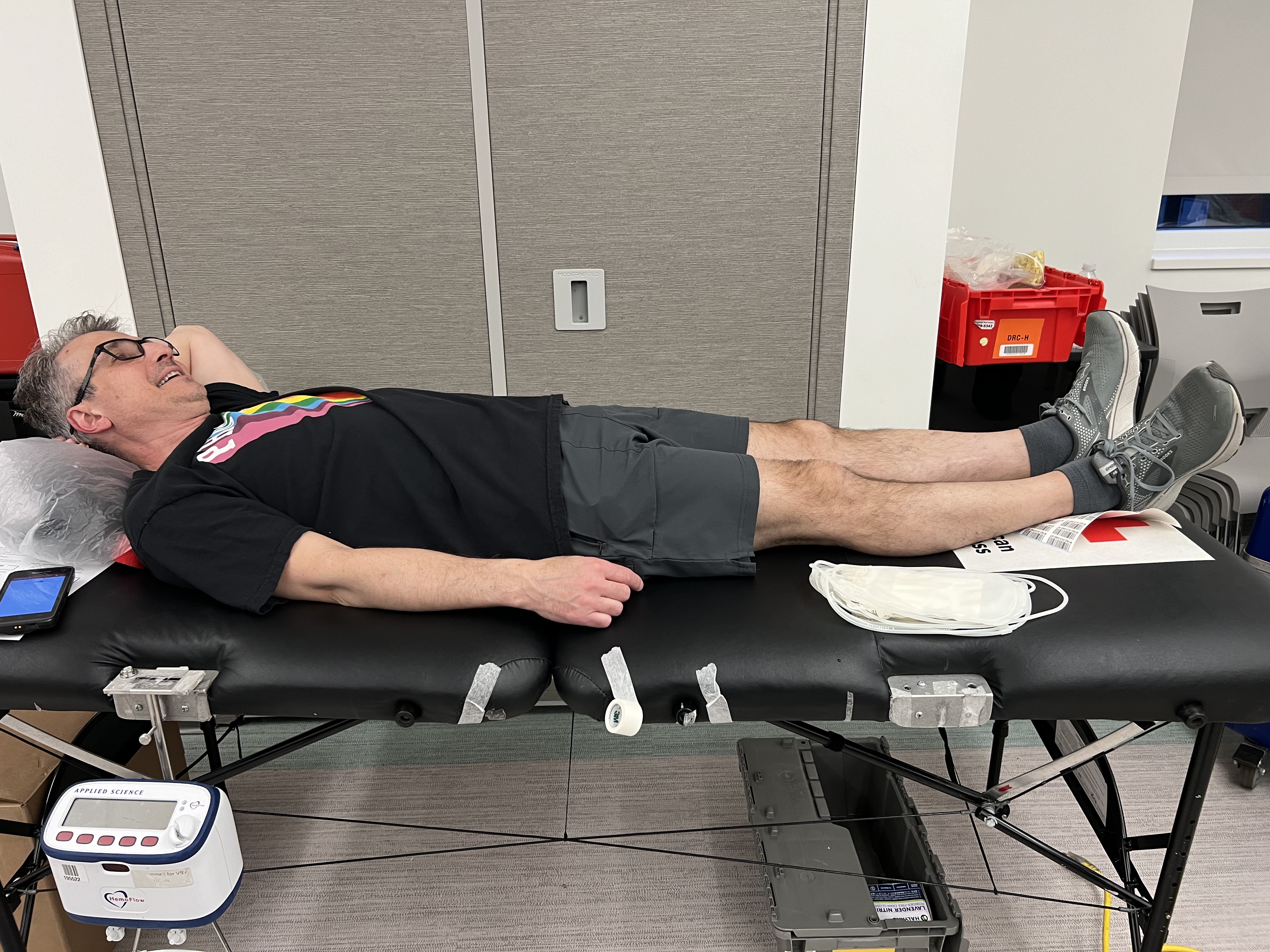
    Kennet Library and Red Cross partnered for a blood drive and day of preparedness presentations on March 4, 2024. Photo by Konrad Jones/American Red Cross

    For the first time, the American Red Cross has teamed up with the Kennett Library in Kennett Square to host a blood drive and day of free classes on how to prepare for a disaster.

    Rana Sakr, the Director of Health Literacy at Kennett Library, described it as a safe, social and comfortable place where the Library’s health literacy initiative “Live Better” inspired the decision to help the Red Cross save lives.

    “We wanted to bring attention to the need to volunteer, and all the help – through crisis management and preparedness – that the Red Cross provides to our community.”

    Before coming to work at Kennett Library, Rana worked as a medical doctor in France and Lebanon. She also volunteered for the Red Cross.

    “I come from a medical background so I know where that blood goes and how needed it is,” she said.

    Rana Sakr, Director of Health Literacy for Kennett Library. Photo by Jenny Farley/American Red Cross

    Donors who arrived for their appointments at Kennett Library went to a large room on the second floor, past rows and rows of books.

    Akin Davulcu waited patiently for his turn to donate. He’s a scientist who works in pharmaceutical research and development and has donated blood since college. He has been married for 32 years.

    “A few years back, my wife got sick and required some blood transfusions, so it solidified in my mind the need to have blood available for patients that need it,” he said.

    Akin Davulcu gives blood at Kennett Library. He encourages others donate as well. He said, “It’s the right thing to do. Help your fellow person.” Photo by Jenny Farley/American Red Cross

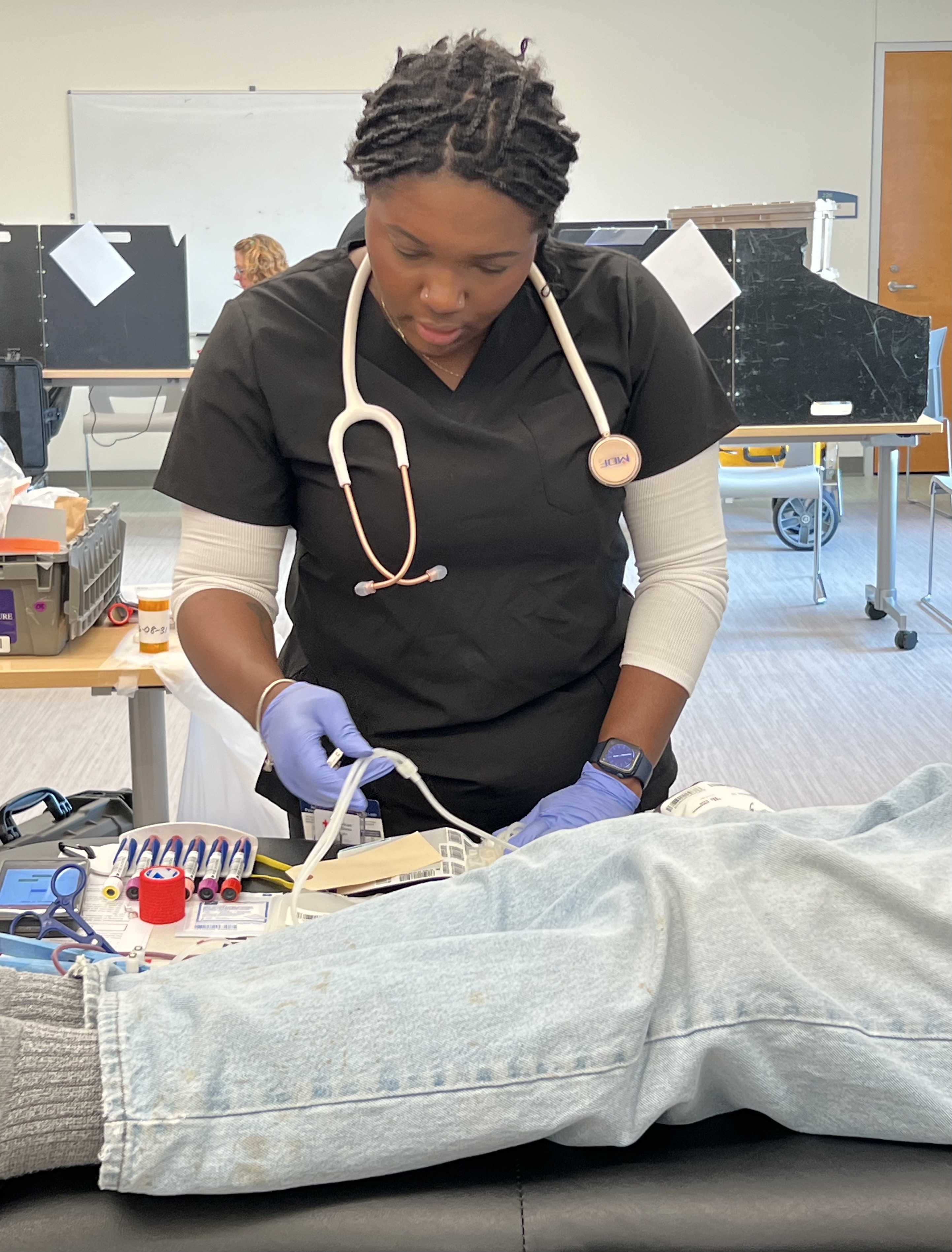
    Red Cross phlebotomists, like Krysten Brown, collected 33 units of blood during the drive. Krysten is completing several weeks of training to be a Red Cross blood collector. She described what she does to put donors, who might be nervous about giving, at ease.

    “Just kind of talk to them. Tell them about the whole entire process. You just want to make sure that they are comfortable, that they are ready, that they know what’s happening.”

    Krysten Brown, Phlebotomist in Training. Photo by Jenny Farley/American Red Cross

    While the blood drive was going on upstairs, a team of volunteers and Red Cross instructors worked downstairs to help recruit new volunteers to the Red Cross and teach disaster preparedness.

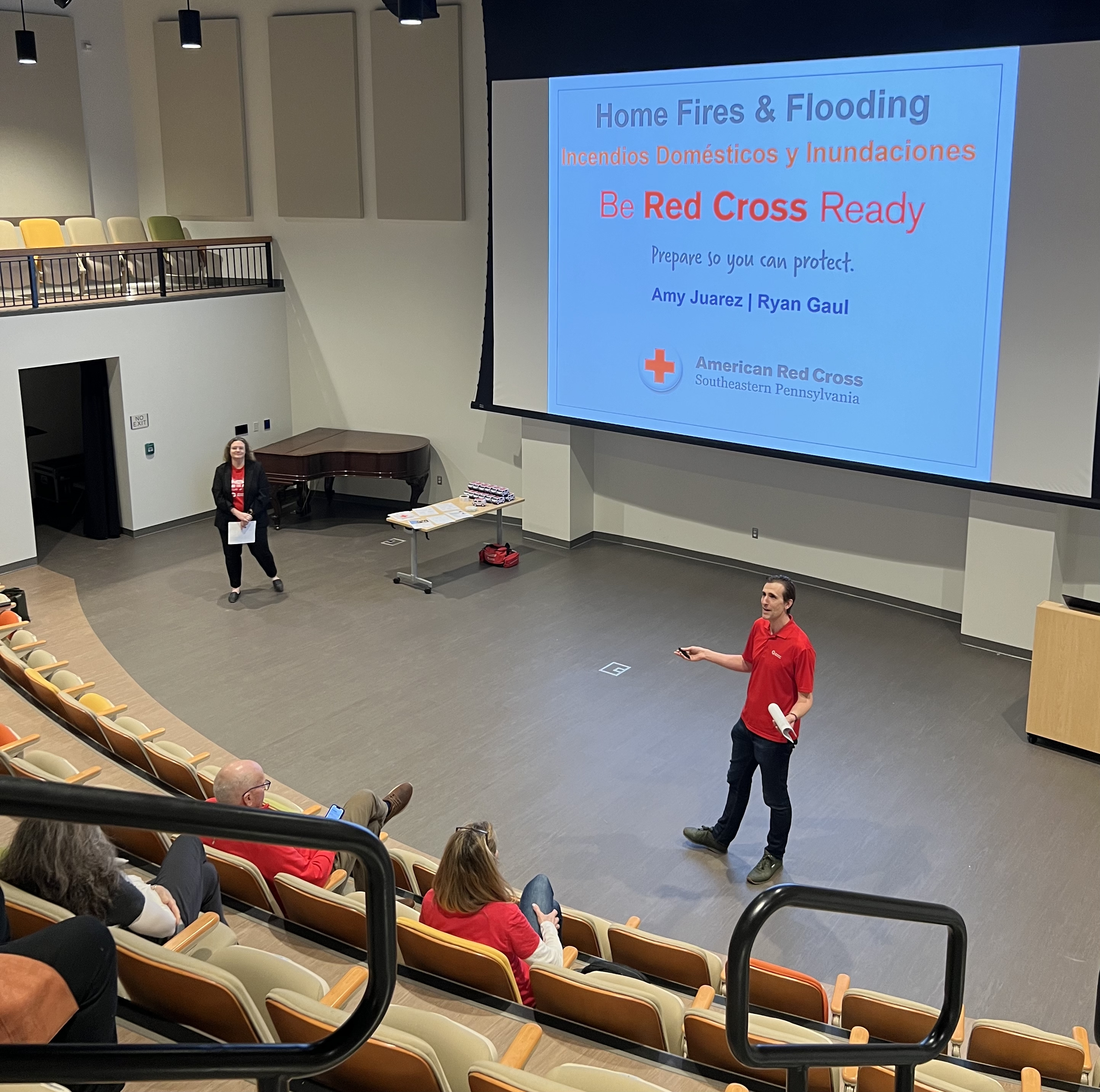
    Along with volunteer instructor Amy Juarez, Ryan Gaul led classes in hands-only CPR and Red Cross Ready workshops, where flood and fire safety were top topics. Ryan is the Disaster Preparedness Manager for the Red Cross SEPA region.

    “The part that I enjoy about the program, the Red Cross Ready program, is that while we are providing some specific information, really the goal is to motivate people to start taking actions to prepare.”

    Red Cross volunteer Amy Juarez Disaster Preparedness Manager Ryan Gaul co-taught classes at the Kennett Library on March 4, 2024. Photo by Jenny Farley/American Red Cross

    During the classes, Ryan reminded eager participants that now is the time to make an emergency plan with their family. He also stressed how important it is to have working smoke alarms in their home and if they don’t, to call the Red Cross to come out and help install them.

    Ryan and Amy used small toy stress-ball ambulances to get down on the floor and show how chest compressions are performed during hands-only CPR. That training meant a lot to Chase Fallon, who came to the library specifically to take the Red Cross hands-only CPR class.

    “I thought it was really nice, very informative, very interactive, and I really appreciate the help that the instructors gave,” he said.

    Chase Fallon, a recent college graduate and former lifeguard pictured on the left, took the Red Cross hands-only CPR class at the Kennett Library along with Pierce Ruoff, shown on the right. Photo by Jenny Farley/American Red Cross

    Red Cross volunteer Tracy Bell worked at a table near the front of the library, handing out brochures and information about Red Cross programs.

    Tracy has volunteered for the Red Cross for 16 years and in her day job works for a local health system in Delaware.

    “I love remembering that 1 in 7 patients walking through our doors needs blood. So, I feel like I’m contributing to our mission as a health system, as well as the Red Cross mission to providing those necessary services in the community.”

    Tracy Bell has volunteered for the Red Cross for 16 years and loves encouraging others to donate blood. Photo by Konrad Jones/American Red Cross

    Amy Juarez, who taught classes with Ryan, is a social worker who volunteers for the Red Cross in several community preparedness roles. She is getting her master’s degree in emergency management.

    After the classes ended, Amy helped Ryan pack up supplies. She said she felt good about the day’s events.

    “We ended up having a good number of people that we were able to communicate with and it’s great to be able to spread the information,” she said.

    Amy Juarez, a Red Cross volunteer, co-taught classes on disaster preparedness at the Kennett Library. Photo by Jenny Farley/American Red Cross

    The collaboration between the Red Cross and Kennett Library went well and there are tentative plans for another preparedness day and blood drive there again in the fall.

    If you would like to volunteer for the Red Cross, visit redcross.org/volunteertoday, or to learn more about giving blood visit RedCrossBlood.org. To get involved in the Red Cross Home Fire Campaign, visit redcross.org/homefires.

    Photos by Konrad Jones/American Red Cross.Visit our Flickr album for more event pics.

  • TEST your smoke alarms as your TURN your clocks forward this weekend

    By Zain Ahmad

    Red Cross graphic – What to do during daylight saving time: Turn your clock forward & Test your smoke alarm.

    It’s that time of the year to turn our clocks forward…but how about checking on smoke alarms and reviewing fire safety tips with our loved ones? 

    If you have a fire in your home, you only have two minutes to evacuate. Having working smoke alarms and being prepared with a fire escape plan can make us move swiftly and save lives. Here are the important prevention and response tips for home fires

    Smoke Alarms: Where should you install them?

    Smoke alarms need to be installed on every single level of the house and in every bedroom or sleeping space. This ensures quick response and escape from the home.

    Smoke Alarms: How should I test them?

    Smoke alarms should be tested once every month. Press the button on the bottom of the alarm to hear a sound, and if it beeps, the smoke alarm works. This ensures that the smoke alarm is able to effectively alert the people in case of emergency.

    Fire Escape Plan: Evacuation and Escaping a Fire Safely

    Every family member should be aware of what needs to be done in an event of a fire so they can escape quickly without confusion. A fire escape plan should be made and practiced with your family at least twice a year, to make sure that the it’s remembered by every family member. Don’t forget to include children and pets!

    Once out of the house, stay out and call for help. This is especially important to reinforce with children.

    The Red Cross makes it easy to create a fire escape plan by downloading this grid. Use it with your family for an easy-to-understand layout of your home to ensure more safety. It’s available in both English and Spanish (second page).

    In conclusion, learning the necessary tips to escape a fire is life-saving and doesn’t take long. Be sure to visit our website for more fire safety tips. Stay safe and help us #EndHomeFires.

  • Food safety tips for the Big Game

    By Susan West

    Uncle Mike’s Super Bowl party was legendary. People raved about the wings, the nachos, the game, everything… until the next day. Unfortunately for Mike and his guests, foodborne pathogens had crashed the party. He could have saved everyone a lot of gut misery if he’d just taken a few precautions. Here are a few easy ways to avoid the same fate.

    Before the big day: Avoiding cross-contamination starts in your shopping cart. Keep raw meats apart from produce, and grab a food thermometer while you’re in the store. When you get home, stash everything in its own area, and get to cleaning. (Don’t forget the bathroom. Make sure it has soap, wipes, and paper towels.)

    CDC graphic: Rules of the Game for Food Safety – Keep it Clean. Before you eat or handle food, wash your hands, food prep tools and surfaces.

    Food prep time: Start by washing your hands for at least 20 seconds. Then rinse your produce, and if you’re handling raw meat or chicken, use a separate knife and cutting board. As you prep your protein, grab the thermometer; it’s your only tool for making sure your wings or meat are cooked. Place the probe in the thickest part of the wing, avoiding the bone. The temp should be 165°F. Check multiple wings, not just one.

    Buffet basics: Super Bowl Sunday is notorious for foodborne illnesses, because people tend to leave munchies out for hours. Don’t do that. (That was Uncle Mike’s big mistake!) Keep buffet portions small, and replenish often so bacteria can’t thrive. Two hours is the maximum safe time for leaving food at room temperature. Set a timer to remind yourself. Set out individual utensils and small plates—no double dipping, folks!

    CDC graphic: Rules of the Game for Food Safety – Watch the clock. Throw out perishable food that has been sitting at room temperature for more than two hours; one hour if it’s 90 degrees F or warmer.

    The numbers: Keep hot foods hot (140°F minimum), and cold foods cold (40°F or colder). Ordering takeout? You’re not off the hook; use the same precautions noted above.

    The chafing dish, slow cooker, and warming tray are your friends. For cold foods like salsa or guac, nest serving dishes in bowls of ice. If you plan on serving food for the whole game, hold back half of the food in the fridge or oven. Serve half your food as the game starts, and swap it out at halftime.

    CDC graphic: Rules of the Game for Food Safety – Serve at the right temperature. Keep hot foods at 140 degrees F or warmer, and cold foods at 40 degrees F or colder.

    After the party: If you accidentally left perishable food at room temp for too long, toss it. (This includes meat, chicken, turkey, seafood, eggs, dairy, cut fruit, cooked rice, and leftovers.) Refrigerate or freeze leftovers immediately—it’s OK to put hot foods directly into the refrigerator! Your leftovers will last three or four days in the fridge, max. Hungry the morning after? Reheat leftovers to at least 165°F. This includes leftovers warmed up in the microwave.

    Sadly, Uncle Mike’s party is no longer an annual bash. Make yours an event to remember, for all the right reasons!

  • National Burn Awareness Week – Focus on flammable liquids

    By Sanaya SinhaRoy

    Red Cross graphic – How to treat a burn: 1. Eliminate the cause of the burn. 2. Cool it under cool running water for 10 minutes or apply a cool compress. 3. Loosely cover it with a clean dressing if it needs medical care. 4. Call 911 if needed.

    National Burn Awareness Week, observed February 4th-10th, serves as a crucial reminder of the potential dangers associated with burns. This year’s theme is flammable liquids, which emphasizes the understanding of how flammable liquids can ignite in the air and travel considerable distances, posing risks that require awareness.

    In the culture of safety, the American Red Cross promotes knowledge and preparedness for any situation that puts one’s health in jeopardy. Offering comprehensive First Aid classes, the Red Cross ensures that individuals are equipped with the skills needed to respond effectively in burn emergencies. These classes cover various topics, including immediate burn care, wound management and the importance of swift action.

    Moreover, in an era dominated by technology, the Red Cross provides a free First Aid App, a useful tool that empowers individuals to access any information instantly. This app serves as a valuable resource during National Burn Awareness Week and beyond, offering step-by-step instructions, safety tips, and emergency resources.

    Here are some general guidelines in first aid procedures to attend to a burn situation:

    1. Assess the Situation – Prioritize your safety and the safety of others. Ensure that the area is safe and free from potential hazards before approaching the burn victim.
    2. Call for Help – In case of severe burns or if the victim is in distress, immediately call for medical assistance.
    3. Remove the Source of Burn – If the burn is caused by a hot liquid or object, carefully remove the source to prevent further damage.
    4. Cool the Burn – For minor or first-degree burns, cool the affected area with cold, running water for 10 minutes. Avoid using ice as it can further damage the skin.
    5. Cover up the Burn – Use a sterile, non-stick bandage or clean cloth to cover the burn.
    6. Do not Pop Blister – If blisters form, do not pop them, for blisters act as a protective barrier and popping them can increase the risk of infection.
    7. Seek Professional Medical Attention – For second and third-degree burns, seek immediate medical attention. Do not attempt to treat these burns at home.

    This National Burn Awareness Week, let’s commit to learning, sharing knowledge, and utilizing resources like First Aid Classes and the free First Aid App. By doing so, we collectively contribute to creating safer environments for ourselves and those around us.