Category: Preparedness

  • THANK YOU, Volunteers: You ARE the American Red Cross

    By Sukripa Shah

    It’s been quite a year. The coronavirus pandemic has had a huge impact on all of us — individuals, communities, and the nation as a whole. The fear of illness, the toll on our physical and mental health, and the burden of job insecurity have all left an indelible mark. But now, with spring and a rousing vaccine rollout, we’re finally seeing a glimmer of light at the end of the tunnel. Sure, it’s not over. We’re still getting back on our feet. But we’re seeing shots going in arms all across Pennsylvania. That alone has reignited hope for a better future in 2021.

    At the Philadelphia Convention Center, vaccine recipients expressed the same hope and optimism as they lined up to get their COVID-19 shots. And you — the Red Cross volunteers of Southeastern Pennsylvania — were on hand to help. Thank you, volunteers, for your time, energy, and dedication to keeping our communities, families, and children safe.

    Volunteers at the convention center vaccine event filled a variety of nonmedical roles:

    • Access and functional needs: Addressing any language, mobility, or behavioral health needs and connecting people to the appropriate resources 
    • Greeting and traffic flow: Keeping the mood upbeat while reminding those in line to stay socially distanced 
    • Registration station: Directing new arrivals to registration tables 
    • Wellness checkpoint: Asking pre-vaccine wellness screening questions 
    • Appointment verification: Checking appointments in the PrepMod system 
    • Observation/PrepMod and 2nd appointment registration: Directing first-dose recipients to make an appointment for their second
    • Exit guide: Maintaining orderly exit protocols

    Because of Red Cross volunteers, medical professionals at the event were able to focus on their area of expertise: getting people vaccinated! We’re grateful to all of you for your valuable support in inoculating hope and courage into the people of our neighboring cities and counties. Thank you! 

    Primary image description: Three Red Cross volunteers of Southeastern Pennsylvania wearing masks and social distancing stand in front of a Red Cross disaster relief vehicle near the Pennsylvania Convention Center’s COVID-19 vaccine clinic in Philadelphia, PA. In front of the volunteers is a table with a red tablecloth with the Red Cross logo on it, holding bottles of water and snacks.

  • Celebrate National Pet First Aid Awareness Month with the Red Cross

    By Marta Rusek

    April is National Pet First Aid Awareness Month. We really love pets here at the Red Cross Philly blog, so we want to connect you with up-to-date information for keeping your pet safe at home, outside, and if disaster strikes.

    If you haven’t already, download the Red Cross Pet First Aid App. The app helps you build a comprehensive pet profile, and provides emergency pet first aid information whenever you need it. Text “GETPET” to 90999 now to download it, or look for the app in your smartphone’s app store.

    Here are recent articles we’ve shared on pet safety and emergency preparedness, for you and your furry, feathered, or scaly family members:

    Have you used pet safety information or tips from the Red Cross? Let us know about it on social media! Post a picture of your pet(s) and let us know which first aid or safety tips have helped your pet the most by tagging @RedCrossPhilly.

  • Red Cross Month is the perfect time to learn life-saving skills

    By: Communications Volunteer

    Imagine you’re dining outside on a sunny spring day and someone at your table starts choking on a piece of food. What would you do? Hope someone around knows the Heimlich maneuver? Maybe you’d try it yourself, but have you ever been properly trained or practiced the correct technique? Now imagine being able to go into this emergency, or any other health situation, with the confidence of knowing what to do, how to do it, and with a greater chance of saving the endangered person’s life. All it takes is one class with the Red Cross to make everyone around you that much safer.

    From CPR to AED, First Aid, and more, the Red Cross has a number of classes that are easy to sign up for online. Preparing to be a first time parent or grandparent? A course that includes infant CPR/AED training might be the perfect fit! Looking to brush up on babysitting skills? Check out the childcare courses. If you’re not interested in leaving your house to learn, fear not, there are Red Cross classes that are online only. 

    Red Cross classes don’t just deal with physical health emergencies. The organization realizes that mental health is a huge issue as well, especially when you take a year of pandemic, isolation, anxiety, and stress into account. Right now there is a class on the website called Psychological First Aid: Supporting Yourself and Others During COVID-19 that aims to “build resilience and support yourself and others through this crisis by reviewing basic principles of providing psychological first aid, including how to recognize and manage stress in yourself and in others and how to lend support to family members, friends and coworkers during and following the COVID-19 outbreak.” 

    Having personally taken the Red Cross CPR/AED course, I can tell you that one of the biggest rewards was the feeling of empowerment. I know that in an emergency I would feel comfortable taking control, directing people to call 911, and starting the process of asking the right questions or, if the person is unconscious and not breathing, beginning well-learned chest compressions that I have practiced on a CPR dummy. The feeling of knowing that I could potentially sustain or save a life is a good one, and while I hope I’ll never have to put these skills to the test, I would gladly dive into action than feel like someone who has to stand on the sidelines and hope others jump in.

    Interested in learning more? Check out available classes in your area by typing in your zip code here.

    Primary image description: A design with pieces of bread arranged around the words “Stop loafin’ around. Learn first aid!”

  • Local Heroes Honored with Red Cross Lifesaving Awards

    By: Alana Mauger

    This week, 11 people received the American Red Cross Certificate of Extraordinary Personal Action, or CEPA, for their heroic and lifesaving acts during two medical incidents in Southeastern Pennsylvania. The CEPA is awarded to people who step forward in an emergency situation to help save or sustain a human life.

    “These individuals exemplify the mission of the Red Cross to prevent and alleviate human suffering in the face of emergencies,” said Guy Triano, CEO of Red Cross of Southeastern Pennsylvania. “We commend them for their willingness to help others in distress.”

    The first award at the virtual ceremony on March 9 was presented to Jessica Halvorson. In 2012, Jessica was visiting friends in Philadelphia when one of them was injured by a vehicle during a hit-and-run accident. According to the detective on the scene, the man flew 15 feet in the air and 35 feet across the intersection of 39th and Chestnut Streets—just around the corner from the Red Cross House. 

    Jessica quickly assessed the situation and told her friends to call 911. She applied pressure to the man’s head wound and verified that he was breathing independently and could move his limbs. Then EMS arrived and resumed care.

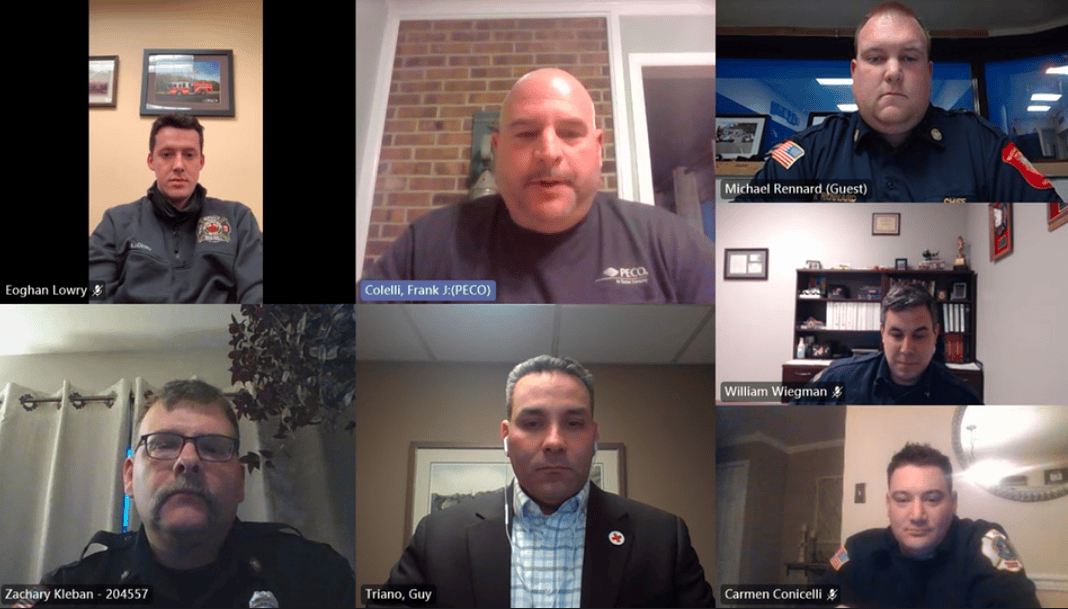
    The next awards were presented to 10 people who acted together to help save a man’s life when he had a cardiac incident in Montgomery Township. On October 23 last year, a customer found the man hunched over a counter, unresponsive, in a retail establishment. Michael Kleban, an employee and firefighter, moved the man to the floor, began CPR, and told the customer to call 911. 

    That’s when members of Squad 18 from the Montgomery Township Department of Fire Services (Carmen Conicelli, Frank Colelli, Kevin Neubert, and Eoghan Lowry) sprang into action. They arrived on location, took over CPR and rescue breathing, and used an automated external defibrillator (AED) to administer shocks. 

    Next, two ambulance crews from the Volunteer Medical Corps of Lansdale arrived. Shannon Pasquale, Jeff Owler, Mike Shearer, Derek Kreyenhagen and Mike Rennard assisted with CPR, AED, and rescue breathing. They deployed the LUCAS machine (a chest compression device) and administered medication.

    The efforts of all 10 of these people resulted in the man regaining his pulse and breathing before being transported to a local hospital.

    Lifesaving Award program

    The Red Cross Lifesaving Awards program comprises four awards. The oldest and most prestigious Red Cross award is the Certificate of Merit, signed by the U.S. President. The Lifesaving Award for Professional Responders and Healthcare Professionals is given to trained people who respond to emergencies as part of their work. The Certificate of Extraordinary Personal Action goes to people who lack Red Cross training but who step up during an emergency. Finally, the Lifesaving Instructor Award is given to instructors who teach the skills that help save or sustain lives. 

    You can nominate and recognize a person or group who have used the skills and knowledge gained in Red Cross training courses to help save or sustain a life. Visit LifesavingAwards.org to get started. 

    Primary image description: Recipients of the American Red Cross Certificate of Extraordinary Personal Action are shown in a screenshot during the virtual Lifesaving Awards ceremony on March 9, 2021.

  • March 14 is Time to “Turn and Test”

    After a long, snowy, pandemic winter, we’re finally starting to see the light—literally. The Northern Hemisphere turns toward spring, our days become longer and warmer, and March Madness begins. Then comes another sign of the season: an extra hour of afternoon daylight. That’s right: March 14 is time to “spring forward” and turn your clocks an hour ahead. And along with that semiannual task comes another: testing your smoke alarms. 

    The American Red Cross responds to nearly 64,000 disasters a year, and the majority of those are home fires. On average, seven people are killed in a home fire every day in the United States. Another 36 people are injured. Smoke alarms can help beat those statistics, because early warning from a working smoke alarm, plus a well-rehearsed fire escape plan, can save lives.

    If you don’t have smoke alarms, now is a great time to install them. At a minimum, put one on every level of your home, inside bedrooms and outside sleeping areas. (Check local building codes for additional requirements.) If you do have smoke alarms, congratulations! But you still have a job to do: Test the batteries. And if your alarms are 10 years old, replace them.

    A home fire is never expected, but it is something you can and should prepare for. That’s how you keep yourself and your loved ones safe.

    To sum it up, here are four ways to reduce the risk of death from a home fire:

    1.    Install smoke alarms on every level of your home, inside bedrooms and outside sleeping areas. 

    2.    Test smoke alarms every month. If they’re not working, change the batteries.

    3.    Talk with all family members about a fire escape plan—and practice the plan twice a year.

    4.    If a fire occurs in your home, get out, stay out and call for help. Never go back inside for anything or anyone.

    Spring is almost in sight, and the Red Cross wants you to enjoy the season safely. 


    For more information on home fire safety, visit: https://www.redcross.org/get-help/how-to-prepare-for-emergencies/types-of-emergencies/fire.html

    Main image description: A graphic with the American Red Cross logo at the top, along with the words “Don’t forget to #TurnAndTest”. Underneath are images of a hand turning a clock, next to the words “Step 1: Turn your clocks forward one hour.” To the right of the clock is an image of a hand pressing a button on a smoke detector, next to the words “Step 2: Test your smoke alarms.”

  • Winter Weather Precautions for Home and On the Go

    By Maria Marabito

    Now that the holidays are over, you might already be dreaming of warm weather. But spring and summer are still a ways away, and you never know what else Mother Nature will throw at you in the middle of winter. Whether you’re at home or on the go, read on for tips to stay prepared from the Red Cross.

    At Home

    Keep fire prevention in mind. If you’re keeping cozy with a space heater or fireplace, make sure that any combustible materials, such as furniture or curtains, are at last three feet away. In fact, any heat producer, such as a stove and radiator, should be three feet from anything that could catch on fire. Never leave your portable heaters and fireplaces unattended while on. Likewise, test your smoke detectors. The U.S. Fire Administration recommends testing smoke detectors at least once a month and replacing them every 10 years.

    Collect flashlights. In the case of a power outage, use flashlights instead of candles. Prepare for inclement weather by making an inventory of your flashlights, making sure that every room has one and every person knows where they are.

    Home maintenance. Keep the cold from creeping in by caulking and weatherstripping doors and window edges. If you don’t have storm windows, covering your windows on the interior with plastic can go a long way toward helping your home feel warm. These inexpensive kits can be found at any hardware or home center.

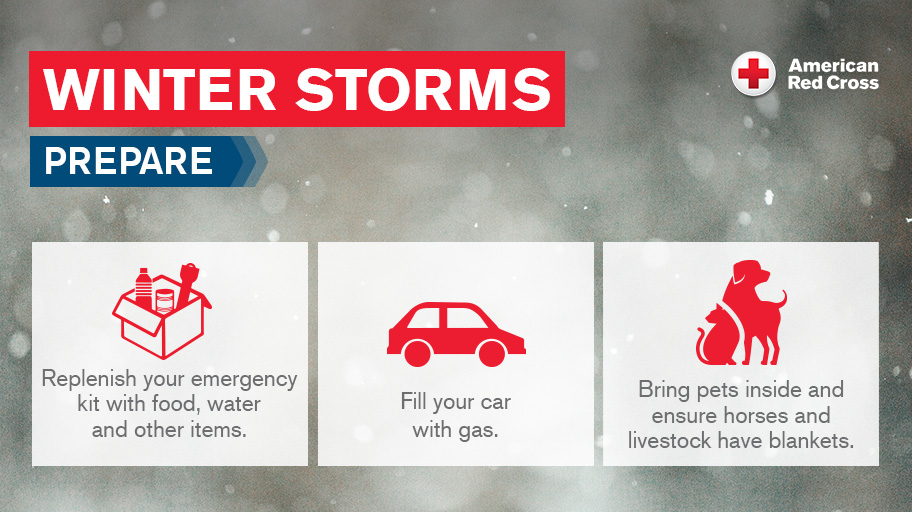
    Don’t forget your pets! Bring your pets indoors with you during extremely cold weather. Make sure you have supplies to clean up after them, since the weather might prevent them from doing their business outside. Shelter animals like horses or livestock as best you can against wind, snow, rain and ice.

    On the Go

    If you need to go outside during freezing temperatures and snow, take these precautions to make the trip safer.

    Bundle up. Wear layers, gloves, and a hat to keep yourself warm and protect against frostbite. The American Red Cross recommends that outer garments be tightly woven and water repellent.

    Remember your mask! Covering your mouth and nose protects your lungs from the cold air—and protects you and your community from coronavirus.

    Double-check your safety kit. Your car, just like your home, should have an emergency kit. Don’t have one? Don’t worry—the Red Cross has many online resources to guide you. In addition to seasonal essentials like windshield scrapers and extra gloves, make sure you have an emergency blanket in case your car breaks down in a snowstorm or deep-freeze situation.

    Phone a friend. If you must set out in less-than-optimal weather, make sure at least one person knows your route, destination, and estimated arrival time. Establish a check-in time so your friend knows whether to send for help.

    Cold weather can be unpredictable. A rainstorm can turn into ice or snow quickly, so take your preparations seriously. Keep an eye on the weather forecast and make responsible choices if going out into a storm.

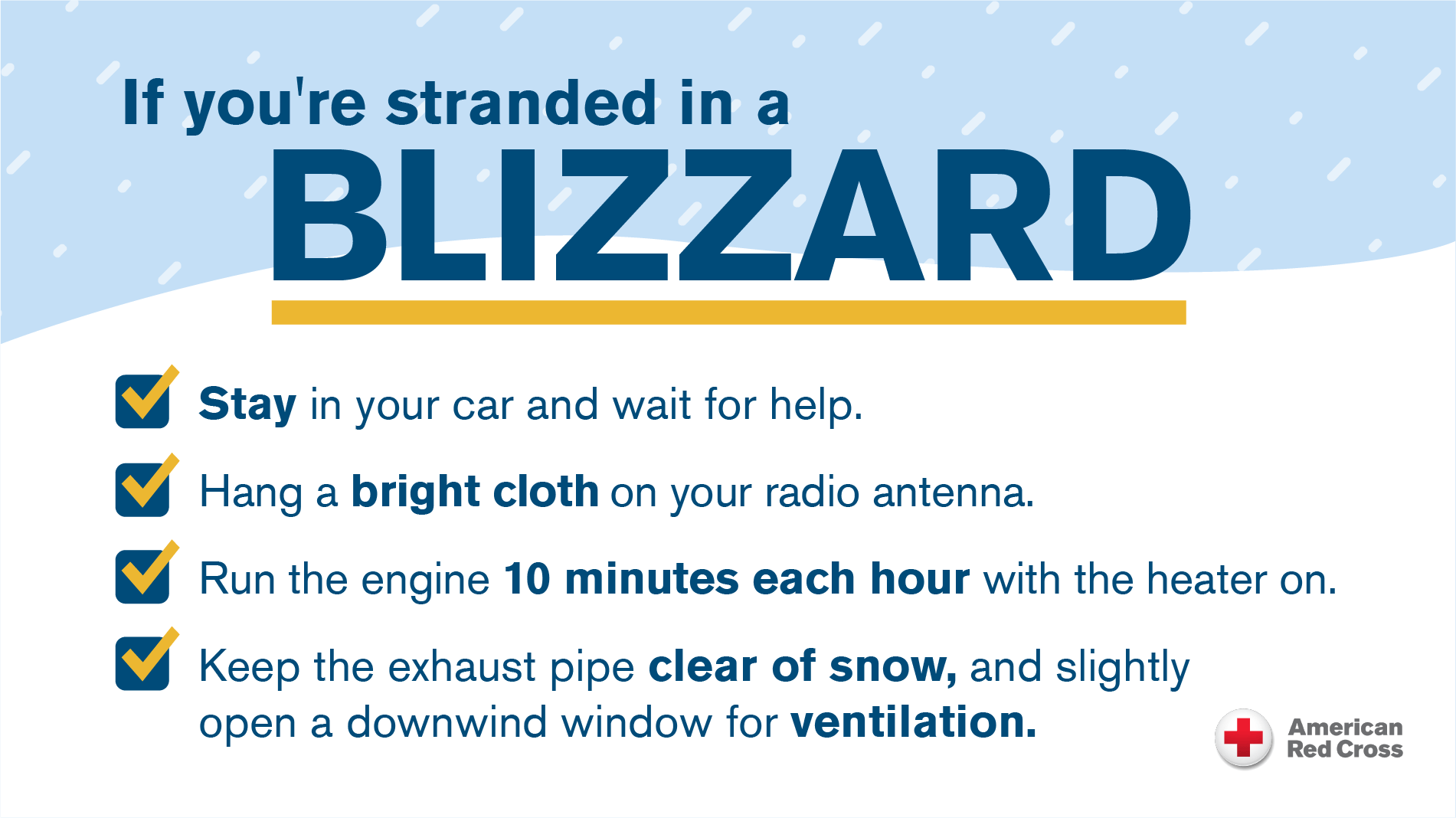
    This image has an empty alt attribute; its file name is rc-stranded-in-a-blizzard.png
  • Make a New Year’s Resolution with the American Red Cross

    By: Marta Rusek

    Let’s face it, 2020 was a tough year. It challenged us to rethink our day-to-day priorities and taught us hard truths about not taking good fortune for granted. It gave us new gratitude and empathy. But now that we’ve turned the corner, let’s slam the door on the past and look forward to 2021. That means resolutions!

    Sure, the resolution is a bit of a January cliche. By whatever word you use—goal, aspiration, dream, ambition—a resolution is a motivator. Are you seeking a satisfying way to learn something new, cross off long-postponed items on your to-do list, and find your passion through a life-changing cause? Look no further than the American Red Cross.

    The Red Cross’s vast network of resources can connect you with classes to prepare you for emergencies at home and out in the world, plus opportunities to make a difference based on your interests, skills, and schedule. Here are a few ideas to consider:

    • Prepare for an emergency at home and on the go. It’s never too early to plan for potential disaster, and the Red Cross has you covered with Emergency Preparedness Kits for every situation. So be proactive: Pick up your very first emergency kit, or stock up on supplies to stash in your car for inclement weather or a natural disaster. To get started, browse the Emergency Preparedness section of the Red Cross store.
    • Take a First Aid/CPR/AED class. Knowing how to save a life or help dress a wound are essential skills to know, even during a pandemic. Getting a First Aid/CPR/AED certification now is also a good idea, so that when social distancing is no longer necessary and folks with your skillset are needed, you’ll be ready! The Red Cross offers several options in-person, online, and hybrid classes that are a combination of both. Once you complete the course, you will receive a digital certificate for First Aid/CPR/AED that will be valid for two years. Find a class here.
    • Become a volunteer. Did you know that 90 percent of the people behind the Red Cross are unpaid? Volunteerism benefits everyone, and that’s especially true when you’re with the Red Cross. Whatever your skill level, you will be welcomed as a volunteer. You’ll receive in-depth training and have access to a wealth of learning opportunities, and the new skills you acquire can be put to good use in a variety of areas—disaster response, support for military service members, blood drives, and even communications and public relations. (The article you’re reading now was written by a volunteer!) If you’re 18 or older and looking to serve your community and gain leadership skills that will take you far, you can’t go wrong with one of the nation’s best volunteer-led humanitarian organizations. Begin your volunteer journey on our website here.

    When you make your resolution with the Red Cross happen, we want to know about it! Post your story about volunteering, giving blood, or taking a class with the Red Cross on social media with the hashtag #RedCrossResolution and tag @RedCrossPhilly on Facebook, Twitter, and Instagram. Your example just may inspire your loved ones to do the same!

    Main image description: Two Red Cross volunteers wearing face masks work together to load life-saving supplies onto a truck.

    Secondary image description: Several sticky notes with New Year’s resolutions on a wall, with phrases like “Be happy!”, “Exercise more,” “Eat Healthier,” and “Save Money.” In the center is “Donate Blood,” with a large red arrow pointing to it. On the righthand side is a red block with the Red Cross log and text in white letters that reads: “May we suggest a resolution?”

  • Five Facts about Clara Barton on her Birthday

    By: Marta Rusek

    Clara Barton founded the American Red Cross in 1881 and led the organization for the first 23 years of its existence. As we honor this pioneering nurse and humanitarian on her birthday, December 25th, here are five facts about her life and work.

    • Her passion for healing the sick began when she was a child. At age 10, Clara cared for her brother David when he sustained a serious head injury after falling off of a barn. His chances of recovering appeared dismal and doctors gave up on him. Clara did not—she learned how to give him his medication and other treatments available to patients in his condition at the time (including hirudotherapy—the use of leeches to increase blood flow). Thanks to that persistence and dedication, her brother made a full recovery.
    • She was known as the “Angel of the Battlefield” for providing medical care to both Union and Confederate soldiers during the Civil War. When she lived in Washington D.C., Clara cared for wounded soldiers who were brought the capital beginning in April 1861. Shortly after the battle of Cedar Mountain in Northern Virginia in 1862, she began to administer first aid to soldiers…on the battlefield! She earned her nickname from tirelessly helping soldiers who were wounded at the battles of Fairfax Station, Chantilly, Harpers Ferry, Antietam, and many more.
    • The seed for an American Red Cross was planted during Clara’s visit to Europe. After dedicating much of her post–Civil War life to finding missing soldiers and bringing closure to their families, Clara took a well-deserved trip to Europe in 1869. It was there, in Switzerland, that she became aware of the Red Cross. An 1864 treaty ratified by 12 European nations in Geneva, known as the Geneva Treaty (and alternatively as the Red Cross Treaty), created international chapters of the Red Cross to help the sick and wounded in wartime. Clara was immediately inspired to bring this idea to the United States and initiate a Red Cross chapter there. Even on vacation, Clara was thinking of new and innovative ways to serve people in need!
    • Clara convinced the international Red Cross community to expand its work beyond wartime relief. After the American Red Cross’s founding in 1881, Clara presided over a volunteer-led organization that was primarily devoted to helping communities impacted by natural disasters, including an 1884 dam break in Johnstown, PA, which claimed over 2,000 lives. Clara recognized the potential of this growing field of relief work, and during the Third International Red Cross Conference in Geneva in 1884, the American Red Cross proposed an amendment to the Geneva Treaty. The American Amendment, as it came to be known, expanded the Red Cross mission to include natural disaster relief during peacetime. This amendment continues to help communities around the world recover and rebuild after earthquakes, hurricanes, wildfires, and more.
    • The American Red Cross was not the only relief organization she founded. After resigning as Red Cross president at age 83, Clara created the National First Aid Society, which empowered local first aid programs throughout the United States. The National First Aid Society eventually became part of the Red Cross, which now provides lifesaving first aid and CPR training to people in communities across the country.

    Today, Clara’s influence is felt in the American Red Cross’s Service to the Armed Forces network, its disaster response efforts, and its comprehensive first aid training courses and certifications. You can learn more about these services and how to become a volunteer at RedCross.org.

    Image description for main image: A vintage black & white photograph of Clara Barton by photographer Matthew Brady, seated in a chair next to an ornate clock. Her facial expression is one of calm determination.

    Image description for secondary image: A graphic design of a quote by Clara Barton. A pained portrait of Clara, her head resting on her hand, wearing an elegant blue gown with a detailed white collar design in the front. Her name is written in large blue letters, followed by this quote: “I defy the tyranny of precedent. I got for anything new that will improve the past.”

  • Don’t Forget to ‘Turn and Test’ This Weekend!

    By: Marta Rusek

    Daylight Savings Time ends this Sunday, and you know that means – time to ‘Turn and Test’ your smoke alarms at home!

    Home fires are unfortunately the most common household disaster in America, even during COVID-19. During the month of October alone, volunteers from the Red Cross of Southeastern Pennsylvania responded to over 35 home fires in our five-county region, which impacted the lives of more than 140 people.

    “The need to protect ourselves from home fires hasn’t stopped during COVID-19,” said Guy Triano, CEO of the Red Cross Southeastern Pennsylvania. “That’s why it’s critical to have working smoke alarms, which can cut the risk of dying in a home fire by half. This weekend, take a few minutes to ‘turn and test’ to help keep you and your loved ones safe.”

    New to the ‘Turn and Test’ game? No problem! After you turn back your clocks, just press the button on your smoke alarms, following the manufacturer’s instructions. Replace the batteries in your alarm(s) if needed — at least once a year, if your model requires it.

    If you or a member of your family is deaf or hard-of-hearing, there are fire safety devices and even apps for your smartphone or tablet that can help alert you to a fire in your home.

    Looking for more ways to make sure you and your family are safe in case of a fire? Do the following:

    ∙ Replace smoke alarms that have been in use for 10 years or longer. The sensor inside becomes less sensitive as the years go by.

    ∙ Install smoke alarms on every level of your home, especially inside or right outside of bedrooms and sleeping areas.

    ∙ Create a two-minute escape plan and practice it with everyone in your home (including your pets). Two minutes is the amount of time you may have to escape a burning home before it’s too late. Practice at least two ways to get out of every room and choose a meet-up point where everyone can gather outside of your home, at a safe distance.


    Visit the Red Cross website to learn how to make an escape plan with your family and access additional resources. You can also download the FREE Red Cross Emergency app to your smartphone or tablet for safety tips on-the-go (just search for “American Red Cross” in the app store).


    Image description: A graphic with the American Red Cross logo at the top and a headline that reads – “Don’t forget to #TurnAndTest!” Underneath, there’s an illustration of a hand changing the time on an alarm clock, with the words “Step 1: Turn your clocks back one hour.” Next to Step 1 is an illustration of a hand pressing the Test button on a smoke alarm, with the words “Step 2: Test your smoke alarms.”

  • Flu Season is Coming: Here’s How to Stay Safe

    By Sam Antenucci

    Flu Safety Tips from the American Red Cross: 

Handle your own belongings

Wash your hands often with soap and water

Carry hand sanitizer and anti-bacterial wipes with you

    What’s the biggest health story of 2020? That’s an easy one. COVID-19 has overstayed its welcome, and it’s stubbornly sticking around. But guess what? Here comes fall and winter, and another health hazard looms on the horizon: seasonal influenza. Sure, flu viruses circulate every year, but it’s important to understand that you can contract COVID-19 and flu at the same time. So it’s especially important to take proper precautions to enjoy a healthy season this year.

    The single most important protective step you can take now—before flu season is in full swing—is to make sure you’re vaccinated. Each year, a unique flu vaccine is developed by researchers and virologists after months of surveillance data review. They select the three or four viruses most likely to spread and among people during the coming season. Flu viruses are constantly changing, so the vaccine must also change annually.

    The flu vaccine cannot cause flu. The vaccine itself typically contains a killed version of the virus that is used to train your white blood cells to recognize the prevailing flu viruses and kill them before they get the chance to take over and infect your healthy cells.

    The vaccine is overwhelmingly safe and highly effective. It keeps millions of us out of bed each year. The CDC estimates that during 2018-2019, flu vaccination prevented an estimated 4.4 million illnesses, 2.3 million medical visits, 58,000 hospitalizations, and 3,500 deaths—all flu-related. And it’s especially important for kids to get the shot: Children ages 6 months up to their 5th birthday—even those who are healthy—are at high risk for serious flu complications simply because of their age.

    With this in mind and the pandemic front and center, flu vaccination is critical—not only for your own health but also the health of the people you care about. The CDC recommends an annual flu shot for everyone 6 months of age and older, with rare exceptions. If you have severe, life-threatening allergies, or a condition that compromises your immune system, seek clearance from your doctor first.

    Ways to Keep Flu at Bay
    You can prevent the spread of influenza within your family and community by taking these small precautions:

    • Wash your hands often; if soap and water are unavailable, use an alcohol-based hand sanitizer.
    • Avoid touching your face, eyes, nose, and mouth
    • As always, maintain your social distancing practices. Wear a mask in public and keep at least six feet from others. If you’re feeling sick, stay home.

    In addition to vaccination and safe hygiene practices, good health habits will fortify your body’s resistance to infection. A few tips:

    • Turbocharge your diet with vegetables and nutrient-dense foods. (Need ideas? Check out these CDC Nutrition Guidelines.)
    • Hydrate! Reach for a glass of water at regular intervals throughout the day.
    • Try to maintain an exercise regimen—ideally, at least 30 minutes a day.
    • Manage your stress. This is especially important during these unpredictable times. For some useful advice on stress management, see American Red Cross’s Coping with Stress.
    • Get enough rest and sleep.

    Flu Symptoms
    If you’re feeling ill, you might wonder whether you have the flu or another condition that mimics seasonal influenza. The pandemic complicates that uncertainty, so it’s especially important to observe how you’re feeling. If you get a lot sicker, consider getting a COVID test. The CDC notes that many flu symptoms are also common with COVID-19. These include…

    • Fever (though not in every flu case)
    • Chills
    • Cough
    • Sore throat
    • Runny or stuffy nose
    • Muscle aches, body aches
    • Headache
    • Fatigue
    • Vomiting and/or diarrhea (more common in children)

    The difference between COVID-19 and Influenza
    The flu symptoms listed above can range from mild to severe. COVID-19, on the other hand, may bring symptoms that are more severe and cause serious illness. One symptom unique to coronavirus is a loss of taste and smell. If at any point your symptoms intensify and impact your ability to breathe, call your doctor and get a COVID test.

    Caring for Someone with the Flu
    If you’re in a multi-person household and someone becomes sick with any of the symptoms listed above, designate one person to look after him or her. Keep everyone’s personal items separate. Avoid sharing utensils, towels, clothes, blankets, sheets, or food. When cleaning up any bodily fluids, wear disposable gloves.

    To learn more about keeping yourself safe during the pandemic and flu season, download one or more of the free Red Cross mobile apps from the Apple App Store or Google Play. For descriptions, just go to redcross.org, click on Get Help, and select Mobile Apps from the dropdown menu.

    Keep the Faith!
    Sure, 2020 has been a challenging year. The pandemic has caused stress and confusion for everyone. Don’t let it get the best of you! You are not alone. With sensible precautions, we can support one another and clear these hurdles together!

    Lead Image description: A design with a mug, a box of tissues, some loose tissues, and a pair of glasses next to a red box with text that reads: Flu Safety Tips. Tips include – Handle your own belongings, Wash your hands often with soap and water, Carry hand sanitizer and anti-bacterial wipes with you.