By Maria Marabito
Now that the holidays are over, you might already be dreaming of warm weather. But spring and summer are still a ways away, and you never know what else Mother Nature will throw at you in the middle of winter. Whether you’re at home or on the go, read on for tips to stay prepared from the Red Cross.
At Home
Keep fire prevention in mind. If you’re keeping cozy with a space heater or fireplace, make sure that any combustible materials, such as furniture or curtains, are at last three feet away. In fact, any heat producer, such as a stove and radiator, should be three feet from anything that could catch on fire. Never leave your portable heaters and fireplaces unattended while on. Likewise, test your smoke detectors. The U.S. Fire Administration recommends testing smoke detectors at least once a month and replacing them every 10 years.
Collect flashlights. In the case of a power outage, use flashlights instead of candles. Prepare for inclement weather by making an inventory of your flashlights, making sure that every room has one and every person knows where they are.
Home maintenance. Keep the cold from creeping in by caulking and weatherstripping doors and window edges. If you don’t have storm windows, covering your windows on the interior with plastic can go a long way toward helping your home feel warm. These inexpensive kits can be found at any hardware or home center.
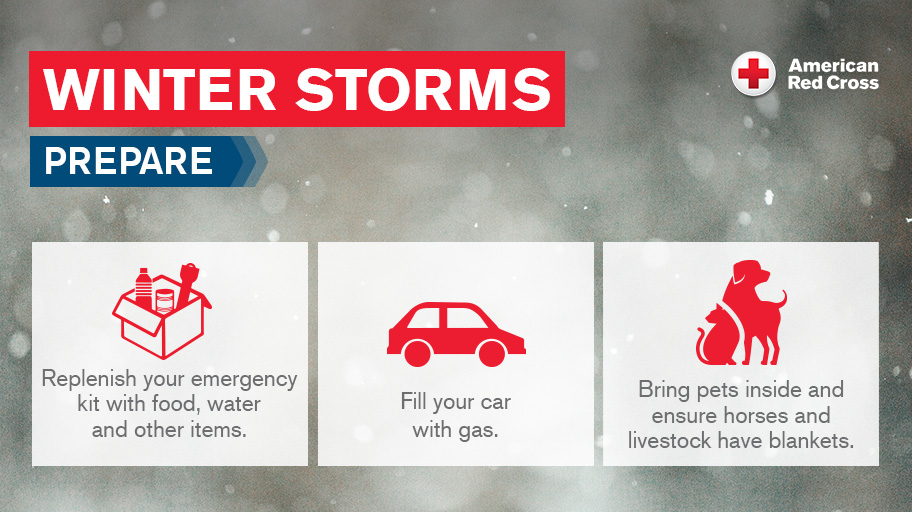
Don’t forget your pets! Bring your pets indoors with you during extremely cold weather. Make sure you have supplies to clean up after them, since the weather might prevent them from doing their business outside. Shelter animals like horses or livestock as best you can against wind, snow, rain and ice.
On the Go
If you need to go outside during freezing temperatures and snow, take these precautions to make the trip safer.

Bundle up. Wear layers, gloves, and a hat to keep yourself warm and protect against frostbite. The American Red Cross recommends that outer garments be tightly woven and water repellent.
Remember your mask! Covering your mouth and nose protects your lungs from the cold air—and protects you and your community from coronavirus.
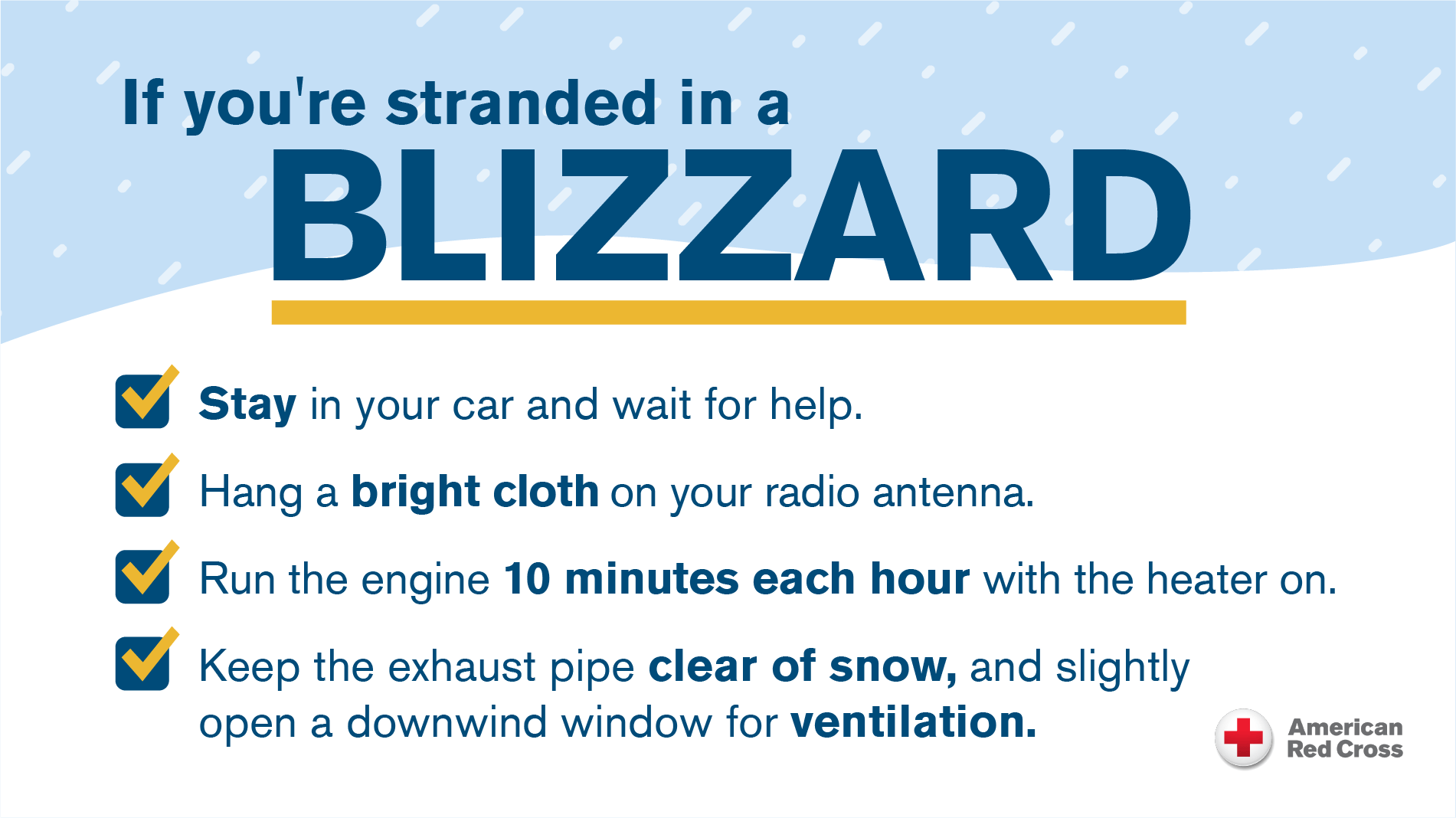
Double-check your safety kit. Your car, just like your home, should have an emergency kit. Don’t have one? Don’t worry—the Red Cross has many online resources to guide you. In addition to seasonal essentials like windshield scrapers and extra gloves, make sure you have an emergency blanket in case your car breaks down in a snowstorm or deep-freeze situation.
Phone a friend. If you must set out in less-than-optimal weather, make sure at least one person knows your route, destination, and estimated arrival time. Establish a check-in time so your friend knows whether to send for help.
Cold weather can be unpredictable. A rainstorm can turn into ice or snow quickly, so take your preparations seriously. Keep an eye on the weather forecast and make responsible choices if going out into a storm.
Leave a Reply