
By: Sam Antenucci
January is National Blood Donation Month, and for many, kicking off the New Year could involve donating blood for the first time at the American Red Cross. I gave blood for the first time in September 2016, and like many first-time donors, I wasn’t sure what to expect. And I had a strong fear of needles. In the end, my experience of donating blood was very rewarding!
If you’re thinking about signing up for your first Red Cross Blood Drive, here are my tips for first-time donors, especially prospective donors who are afraid of needles.
Have Your RapidPass® Ready
RapidPass® is a digital health questionnaire that allows donors to complete the readings and health questions prior to your donation. Not only does it save time at registration, it also can be filled out from the convenience of your phone.
Be mindful of current COVID-19 guidelines
The Red Cross has been working in accordance with CDC guidelines when it comes to the COVID-19 pandemic. This means the enforcement of social distancing measures, masks, and the cleaning of high-touch surface areas. As a vigilant precaution, the Red Cross is also asking that you defer your appointment for at least 14 days following:
- A Positive COVID-19 test or diagnosis
- Any symptoms of COVID-19
For more information, read Red Cross’ COVID-19 and Blood Donations guide.
Eat a Full Meal and Drink Plenty of Water Before You Donate
Do not donate on an empty stomach and drink an extra 16 ounces (or 2 cups) of water. Having a well-balanced meal and drinking plenty of water before you donate will keep from feeling dizzy or lightheaded after your donation.
Your iron levels will be checked during the screening process before you donate, to confirm that they are at adequate levels. Make sure your diet leading up to and after your donation is filled with iron-rich foods. Check out the Red Cross’ recommendations for Iron-Rich Foods.
Tips for Overcoming Your Fear of Needles
If needles are something that has kept you from donating in the past, here are some tips that have helped me conquer my fears.
- Share your fears with the Red Cross Staff. The Red Cross Staff are friendly, welcoming people who help donors feel comfortable by talking them through the process.
- Listen to music or catch up on some reading. It can be relaxing to bring a pair of earphones and listen to your favorite music or catch up on an audiobook.
Remember – it’s a quick pinch for a good cause. If all else fails, keep in mind that it is a quick 3 second pinch and you are saving lives with your donation!
Be Proud! Your Donation Will Save Lives!
Blood donation is a rewarding experience. If you want to sign up to donate, visit RedCrossBlood.org or download the Blood Donor App to schedule your first appointment.
Primary image description: Graphic that reads “January is National Blood Donor Month”, surrounded by figures depicted in the act of donating blood and raising a bandaged arm in triumph. Symbols of different blood types, blood donation bags, bandages, a Red Cross truck, and red drops are arranged around the words.


 Judith Alexis Smith is uniquely qualified in her role as a volunteer for the American Red Cross’ Service to the Armed Forces Program, as she herself is a veteran of military service!

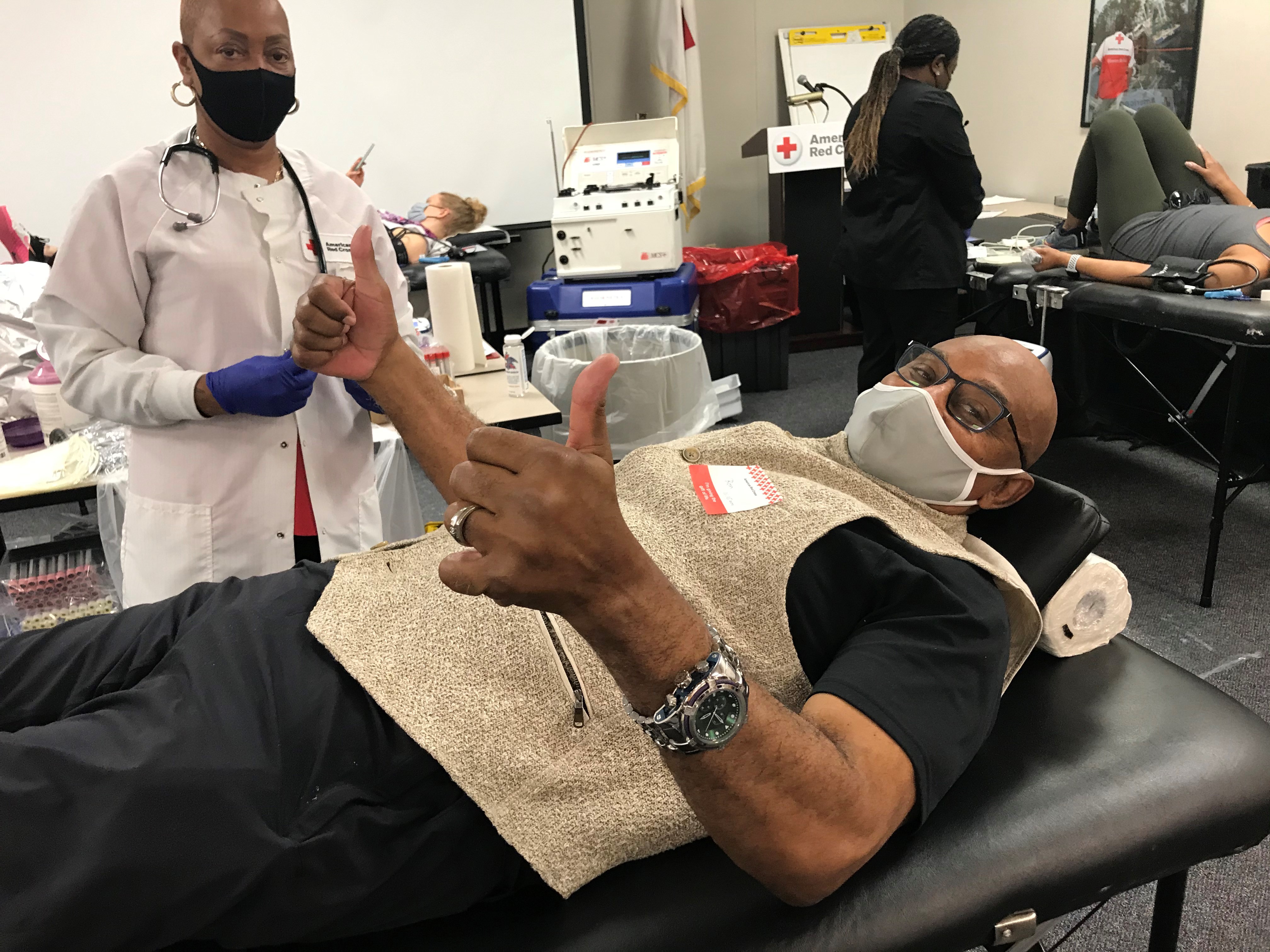
 By taking 15 minutes out of your day to donate blood, you can save three lives and give patients a chance to keep fighting. You don’t need a special reason to give blood, just one that motivates you. Some donate because of friends, some do it because they believe it is the right thing to do, and there are some who do it for the free cookies. Regardless of the reason to give blood, I would like to offer advice for new-donor jitters – take pride in the good you are doing, relax with music or chat with the staff, and be prepared before you donate by eating a good meal with plenty of water. It is a rewarding experience that changes the lives of those in need.

