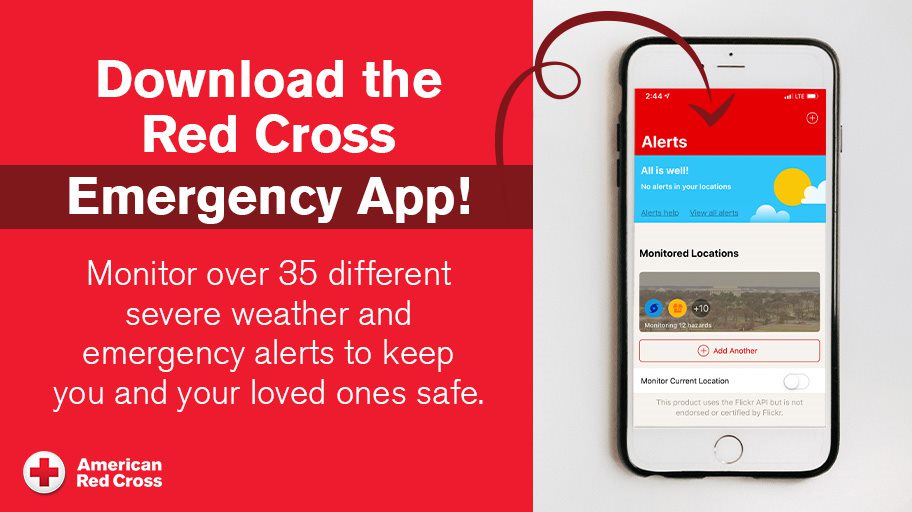
The Emergency app is a good place to start. Here, you can monitor over 35 severe weather and emergency alerts to help keep you and your family safe. There are also specific apps for Hurricanes, Tornadoes and Earthquakes for those who live in areas prone to these types of disasters. Be sure to turn on alerts in your settings to get notifications!
The Red Cross First Aidand Pet First Aid apps are great in a pinch if you, your pet, or someone near you is experiencing a health crisis. In the Pet First Aid app, you can toggle between Cat and Dog and prepare for and treat common health scares, like choking. I have cats, and this app has helped me get a baseline of their health stats so that I know when their temperature is too high or their heart is beating too quickly. It has helped me prepare for things like blood sugar emergencies, burns, car accidents, allergic reactions, and much more! Pro tip: The fastest thing you can do (besides downloading the app, of course) searching for “emergency veterinarian near <your zip code>” in your browser.
For First Aid, you can check out life-threatening events like allergies, asthma, bleeding, choking, concussion and head injuries, CPR, diabetic emergencies, heart attacks, heat stroke, hypothermia, poisoning, seizures, and more! You can also learn how to respond to less threatening situations, like broken bones and burns, to help you decide on the next best steps.
The Red Cross Swim app is great for learning about water safety. Did you know that even if you are a good swimmer, drowning is still very much a possibility? In fact, drowning is a leading cause of death among children. A child or weak swimmer can drown in the time it takes to reply to a text, check a fishing line, or apply sunscreen. Death and injury from drownings happen every day in home pools and hot tubs, at the beach or in oceans, lakes, rivers and streams, bathtubs, and even buckets.
With the Blood Donor app, you can schedule an appointment to donate blood or platelets, track your donations, and even find out at what hospital and city your donations were used. There’s also a lot of great information to help you prepare to donate blood and recover afterward.
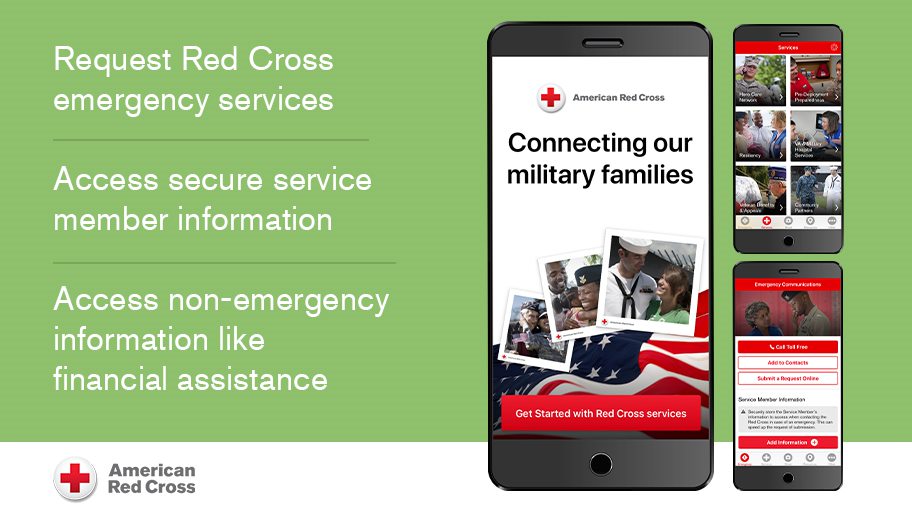
Lastly, the Hero Care app is an all-in-one resource for caring for vets, whether that be you as a vet, or if you are a caregiver. One of the best features in this app is thee Hero Care Resource Directory, which is great for finding resources and support for food, housing, transit, money, and much more.
Once you download the apps of your choice, be sure to spread the word! Happy Download Day from us to you!
In a world of hashtag activism, #GivingTuesday has become a post-Thanksgiving tradition, much like Black Friday. Founded in 2012 on a simple idea of doing something good, the day has grown into an international movement. Today, people around the world will use their individual power of generosity to support their communities.
For the American Red Cross, GivingTuesday provides an opportunity to come together on one day to support humanitarian needs in our community. A look back at our home fire response over the Thanksgiving holiday – when Red Cross volunteers assisted 56 people over only five days – illustrates the urgency of this need.
Your tax-deductible gift can help ensure that no one is left alone in the face of an emergency. For example:
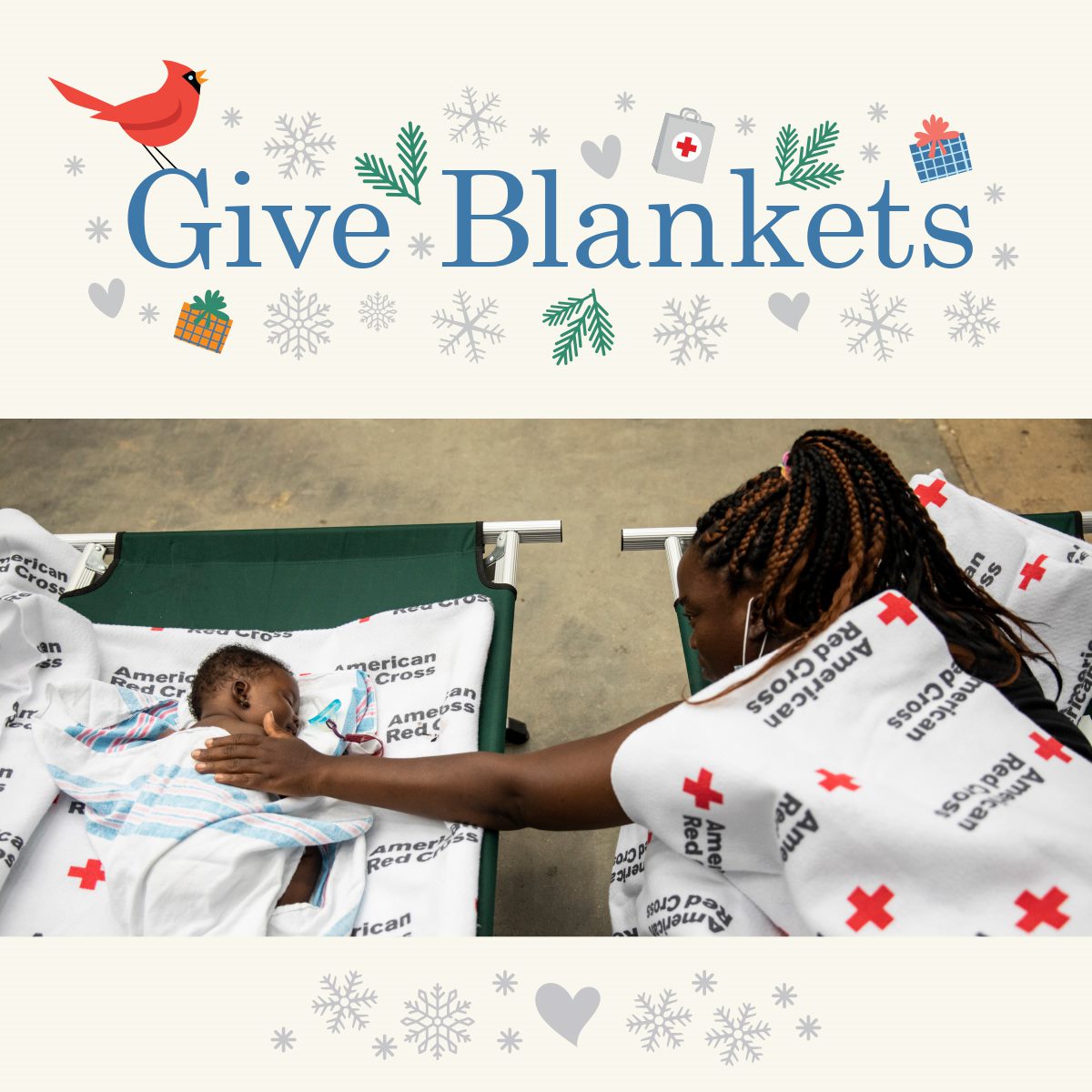
A gift of $25 can provide 5 warm blankets to protect children and families from the cold and help them sleep comfortably in emergency shelters.
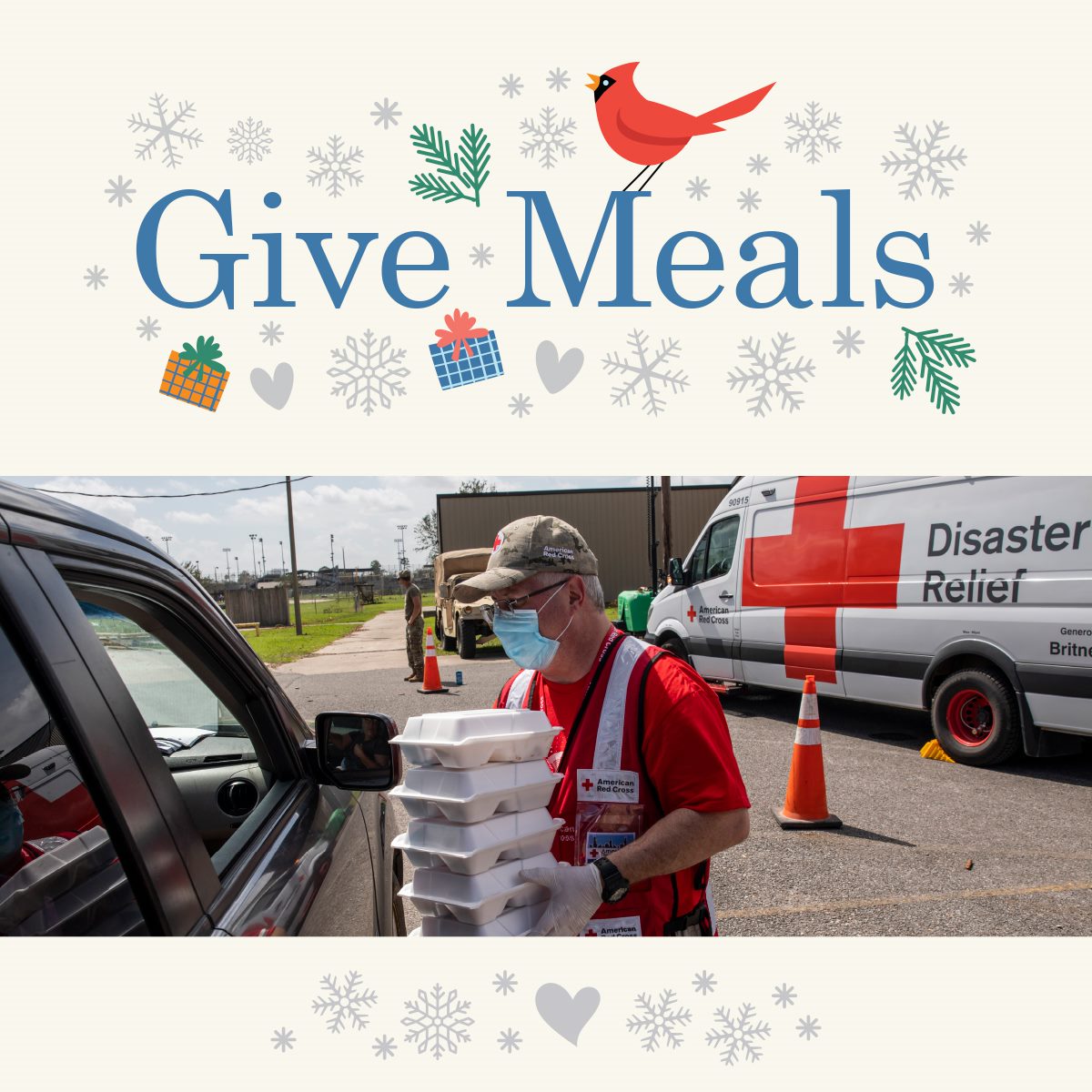
A gift of $50 can provide a hot meal and snacks to 50 people after a disaster.
A gift of $145 can provide 20 comfort kits filled with toiletries and other essential items to military service members and veterans in medical facilities to help them feel at home.
A gift of $160 can provide a crib and infant care supplies, including formula and diapers, to a family recovering from a disaster.
A gift of $250 can provide a full day of emergency shelter for 5 people, including 3 meals, 2 blankets, 1 cot, snacks and personal hygiene supplies.
A gift of $500 can 4 families with a complete emergency kit, which provides a family of five with hygiene supplies, blankets, tarps, water containers, a kitchen set and a crank-powered radio, lamp and charger.
Your donation to help where it’s needed most will enable the Red Cross to continue delivering its lifesaving mission – both today and the future. Visit https://www.redcross.org/donate/giving-tuesday.html/ to get started.
In addition to monetary gifts, the Red Cross has an emergency need for blood and platelet donors to help ensure patients have access to lifesaving treatments as they recover from illness and injury. Every two seconds, someone in the U.S. needs blood – a mother giving birth, a child with cancer, a neighbor who was in a car accident and countless others. Yet, as a result of low blood donor turnout in recent months, the Red Cross is heading into the holidays with its lowest blood supply in more than a decade at this time of year. Visit rcblood.org/appt to schedule an appointment.
Maria Maribito is a Red Cross Communications volunteer. Photo courtesy of Maria Marabito.
I have always wanted to donate blood but kept pushing it off. In all honesty, I am prone to passing out and I was afraid of what donating a pint of blood would do to me. I imagined dropping to the floor at the donation area (how embarrassing) or losing consciousness in the car ride home. However, when I heard about the national emergency blood shortage, I decided now was the time to make the leap.
I downloaded the Red Cross Blood Donation app on my phone and made an appointment closest to me. I chose around lunchtime since I figured I had enough time to get plenty of fluids and food into me by then. The app said to drink plenty of fluids before, eat nutritious foods and ideally take an iron supplement. I followed these instructions to the T for the most part (I kind of forgot about the iron until the two days leading up to my appointment). My blood donation center ended up being just 15 minutes away. I have passed it dozens of times and never knew it was there.
When I arrived, the donation center was quite busy. I checked in on the front desk laptop and waited for my name to be called. About 15 minutes later, I was called back and brought into a private room. The Red Cross worker was very nice and welcoming and reassured me when I told her I was new to donating. She asked me some questions about my health, took my blood pressure and pricked my finger to test my iron levels. Initially, my levels were too low to give blood. However, she said the first time sometimes comes out lower than it actually is and she pricked me again. The second test was high enough to allow me to donate (since then, I have been taking iron supplements daily to keep my levels high).
Once I was deemed healthy enough to donate that day, we went out of the room and around the corner to a bed/table, the kind you find in a doctor’s office. The Red Cross worker prepared the station for me and had me lie down. She wrapped a rubber ribbon around the top of my arm to find a vein. She also gave me some foam to squeeze softly and repeatedly as she inserted the needle into my arm. It pinched, but once in, it was painless. I kept squeezing the foam for the entire duration, which ended up not being that long. I gave a unit of blood within minutes in addition to a few extra vials for testing purposes. I felt a little dizzy after so the worker said to lie down for a little while longer. She was extremely attentive and gave me as much time as I needed. She insisted I have a juice box and something to eat from the many snack options available. I sat for a little while longer but overall felt well and the dizziness went away very quickly. I even went home with a Red Cross t-shirt.
The entire process was seamless and much quicker than I expected. It felt very rewarding to be able to donate my blood to help people who really need it. I plan on donating consistently from now on. And if I had not donated, I would never have known my real blood type. My entire life, I thought I was A+ but turns out I am not!
Bring hope to the holidays by donating on Giving Tuesday orgiving blood to help overcome the nation’s emergency blood shortage.
By Dave Skutnik
In 2021, people in Southeastern Pennsylvania and across the country faced great emergency needs as the ongoing pandemic exacerbated the challenges related to severe disasters, blood shortages and global conflict.
“Our most vulnerable neighbors are facing unique and pressing struggles when crisis strikes on top of COVID-19,” Guy Triano, regional CEO for the American Red Cross Southeastern Pennsylvania Region said. “This holiday season, join us to provide help and hope in these difficult moments by making a financial donation or by giving blood or platelets.”
On Giving Tuesday and during the holidays, visit redcross.org to make a financial donation or an appointment to give blood or platelets. Individuals can also learn about volunteer opportunities in their area and give back in honor of American Red Cross founder Clara Barton, whose 200th birthday will be commemorated on December 25.
RELENTLESS DISASTERS COMPOUND COVID-19 STRUGGLES 2021 marked one of the country’s most active years for severe weather — which battered many communities still reeling from last year’s disasters. For thousands of people in need, the Red Cross launched a new major relief effort every 11 days to provide refuge, food and care.
This year, a family displaced by a disaster in the U.S. spent an average of nearly 30 days in a Red Cross-supported emergency shelter. These extended stays were largely due to a lack of savings and community housing shortages — signs that climate-driven disasters are compounding the financial hardships of the pandemic.
Storms like Hurricane Ida in September and the 100-year flood and multiple tornadoes that affected Bucks County in July are just the latest examples of the changing climate in Southeastern Pennsylvania.
GLOBAL CONFLICT CREATES MASS NEEDS FOR DISPLACED FAMILIES Around the world, massive humanitarian needs emerged in 2021 for a growing number of families displaced by the overlapping challenges of conflict, COVID-19 and climate change. This year, at the request of federal government partners, Red Cross workers from Southeastern Pennsylvania and across the country distributed more than 2.1 million essential items — like blankets, diapers, medicine and toys — for Afghan evacuees arriving on U.S. military bases and unaccompanied children seeking asylum at the U.S.-Mexico border.
At Philadelphia International Airport, evacuees from Afghanistan often had nothing but the clothes on their backs after facing perilous journeys. Local Red Cross volunteers were at the airport handing out snacks and water, relief supplies and comfort items like teddy bears to children.
COVID-19 STRAINS BLOOD SUPPLY FOR PATIENTS To meet the increasing needs of hospital patients, the Red Cross distributed 250,000 more blood products in 2021 than last year, until the delta variant began to spread in August. The pandemic also resulted in fewer blood drives at schools and colleges, contributing to a 34% drop in new blood donors from last year — one of the largest year-to-year decreases and one that could threaten essential medical care for patients.
As a result of low blood donor turnout in recent months, the Red Cross is heading into the holidays with its lowest blood supply in more than a decade at this time of year. Blood donations are desperately needed now to meet the needs of accident and burn victims, heart surgery and organ transplant patients, and those receiving treatment for leukemia, cancer or sickle cell disease. All those who come to give Nov. 29-Dec.16 will automatically be entered for the chance to win a private screening for the winner and 50 of their guests of the epic new film The Matrix Resurrections. Plus, those who come to give Nov. 29-Dec. 16 will also get a $10 Amazon.com Gift Card by email, thanks to Amazon.*
Pottstown NAACP held its first Red Cross blood drive on Oct. 14 at the Ricketts Center in Pottstown. Photo by Alana Mauger
The American Red Cross partnered with the Pottstown Branch of NAACP to host a community blood drive at the Ricketts Center last week as part of an initiative to grow the number of blood donors who are Black in order to help more patients with sickle cell disease.
Sickle cell patients, the majority of whom are Black and/or of African descent, rely on Black blood donors to provide lifesaving transfusions as part of their treatment. This is because patients who require regular blood transfusions, like those with sickle cell disease, may develop an immune response against blood from donors that is not closely matched to their own.
Shawn Morris, a community volunteer leader with the Delaware Valley Chapter of the Red Cross and former vice president with NAACP’s Pottstown branch, got the ball rolling.
“We asked Shawn to talk about her volunteer experience with the Red Cross at a meeting, and we thought, hey, we should partner for a blood drive,” shared Paula Corson, chair of NAACP’s Membership Committee.
The drive was successful, collecting 32 units of blood (33% over the goal), which will help up to 96 patients in our region and beyond. Units of blood from donors who self-identify as Black are marked with a special blue tag designating it as a possible match for a sickle cell patient.
In addition to hosting the drive, NAACP volunteers provided information about sickle cell disease to donors during the event, as well as to community and elected officials leading up to the drive.
Shawn was surprised to learn that Pottstown was the first NAACP branch in Pennsylvania to hold a Red Cross blood drive.
“This branch has paved the way for a lot of good things to happen in the community, and we’ll continue to do that,” she said.
Pictured at the NAACP blood drive (from left) Shawn Morris, Red Cross community volunteer leader and NAACP member; Paula Corson, NAACP Membership Committee chair; and Jennifer Graham, executive director, Red Cross Delaware Valley Chapter. Photo by Alana Mauger.
October is Breast Cancer Awareness Month, and it’s a perfect opportunity to remind everyone of the importance of a stable blood supply to support breast cancer patients and their needs.
We are all on this journey together. One way the American Red Cross carries out its humanitarian mission is through partnerships with groups like the National Breast Cancer Foundation. Breast cancer patients have shared their stories of surviving and thriving by receiving the gift of lifesaving blood donations. These “ pink ambassadors” know the importance of cooperative endeavors to save and enhance lives, made possible through the energy and commitment of volunteers. Together, the Red Cross and the National Breast Cancer Foundation provide hope by keeping us informed with key resources, education, and outreach programs. For more inspiration, check out National Breast Cancer Foundation Awareness Month and American Red Cross.
Ways to get involved
If you’re an eligible donor, we encourage you to help support patients by giving blood, plasma, or platelets. All blood types are welcome and needed! The Red Cross follows the highest standards of safety and infection control, and volunteer donors are the only source of blood for those in need.
Whole blood can be donated every 56 days. You must be at least 16 years old, in good health, and weigh at least 110 pounds. Power Red (double red cells) can be donated every 112 days, up to three times a year. Platelets can be donated every seven days, up to 24 times a year. To find out more about donation and eligibility, please read our Frequently Asked Questions section, where you’ll find plenty of information on the requirements for each donation type.
If you want to become a donor and would like more information, visit RedCrossBlood.org.
To find a blood drive and make an appointment, you have multiple options. One way to make an appointment is by downloading the Red Cross Blood Donor App. You can also sign up online at RedCrossBlood.org, or call 1-800-RED CROSS (1-800-733-2767). You can even enable the Blood Donor Skill on any Alexa Echo device.
What to know about the Coronavirus and Blood Donation
The Red Cross wants to keep you informed about COVID-19 protocols as we consider your health and well-being a priority. You are eligible to donate blood, platelets, or plasma after receiving the COVID-19 vaccine. Learn more by reviewing the categories outlined on our website. These include: Red Cross donation safety protocols, COVID-19 vaccine and blood donor eligibility information, travel and deferral information, and ways to limit the spread of germs and prevent infection.
When patients living with sickle cell disease face a sickle cell crisis, blood transfusions can make a lifesaving difference. That’s why the American Red Cross has launched an initiative to grow the number of blood donors who are Black to help patients with sickle cell disease and to help ensure hospitals have a diverse blood supply.
Sickle Cell Disease: The Basics
Sickle cell disease causes red blood cells to be hard and crescent-shaped – like a sickle – instead of soft and round, making it difficult for blood to flow smoothly and carry oxygen adequately to the rest of the body. Patients can experience complications like severe pain, anemia, infections, stroke and organ damage.
Blood transfusions can help relieve a patient’s sickle cell disease symptoms. But ensuring hospitals have an adequate supply of the major blood types – O, A, B and AB – is only part of the equation. Patients who require regular blood transfusions, like those with sickle cell disease, may develop an immune response against blood from donors that is not closely matched to their own.
There are more than 600 known antigens – substances on red blood cells that help determine blood type – some of which are unique to specific racial and ethnic groups. For example, more than half of blood donors who are Black have blood that is free of C, E and K antigens, making them the best match for those with sickle cell disease.
“Transfusions provide healthy blood cells, unblocking blood vessels and delivering oxygen,” said Dr. David Moolten, Red Cross medical director for Southeastern Pennsylvania and New Jersey. “By increasing the amount of closely matched blood products, the Red Cross is able to help ensure the right blood product is available at the right time for patients facing a sickle cell crisis – minimizing complications for those with rare blood types fighting sickle cell disease.”
The Faces of Sickle Cell Disease
The Crescent Foundation held a Red Cross Sickle Cell Awareness Month blood drive on Sept. 9. Pictured (from left): La Valle Warren, Red Cross sickle cell account manager; Tahirah Austin-Muhammad, Crescent Foundation COO and co-founder; Jawanda Hargrove and Shaun Griggs, sickle cell patient advocates; and Ediomi Utuk-Lowery, Crescent Foundation chief marketing and communications officer and co-founder. Photo by Alana Mauger
Locally, the Red Cross partnered with the Crescent Foundation to hold a Sickle Cell Awareness Month blood drive in Philadelphia on Sept. 9. At the drive, several sickle cell patient advocates shared their experiences.
One of those people, Shaun “Sturdy” Griggs, recalls having his first sickle cell crisis at age 3.
“Everyone’s pain is different. Mine was like a heartbeat – if you can picture 100 knives stabbing me in the stomach. BOOM! BOOM! BOOM!” he shouted while moving his hands in a stabbing motion.
Now age 30, Shaun continues to experience sickle cell crises a few times per month.
“You wouldn’t be able to tell I have [sickle cell disease] by looking at me, but it’s shaped my life,” he said. “The pain is random. It can happen at any time. I missed a lot of school.”
When asked by a reporter what we, as individuals not living with sickle cell, can do to help, Shaun was quick to respond.
“Awareness. I want sickle cell to have as much awareness as cancer. Everyone knows about cancer,” he said. “We don’t want sympathy, but you can offer support. It can be as simple as giving me a glass of water, making sure I’m hydrated.”
Disparity of Care
Over 100,000 people in the U.S. have sickle cell disease. It is the most common inherited blood disorder, and the most sickle cell patients are Black and/or of African descent. Despite the discovery of the disease more than a century ago, there have been fewer health resources available to help those currently suffering from sickle cell crisis in comparison to similar diseases.
According to the Centers for Disease Control and Prevention, people with sickle cell disease experience worse health outcomes than those with comparable diseases. Patients with sickle cell have the highest hospital return rate within 30 days of discharge compared to other conditions. They often experience longer wait times to see a doctor and get pain medication in the ER. The number of physicians trained and willing to see adult sickle cell patients is very limited. The rate of having a stroke is three times higher for adults with sickle cell disease compared to adults in the same age group without it. Because of these and other factors, the life expectancy of someone with severe sickle cell disease is 30 years shorter than that of people without it. It is an enduring and often invisible health disparity in the U.S.
Building Awareness, Giving Blood
Partnerships with national and local organizations, like the Crescent Foundation, within the Black community are critical to building trust, sharing information and working together to engage new donors to help save lives. Nationally, the Red Cross announced new partnerships with preeminent organizations like the NAACP and 100 Black Men of America, Inc. to raise awareness about sickle cell disease encourage blood donations from individuals who are Black.
The Red Cross is asking members of the Black community to join in helping to address this health disparity and meet the needs of patients with sickle cell disease. Donors can take action today by scheduling a blood donation appointment at RedCrossBlood.org, by downloading the Blood Donor App or by calling 1-800-RED CROSS.
At a time when health information has never been more important, the Red Cross is screening all blood, platelet and plasma donations from self-identified African American donors for the sickle cell trait. This screening will provide Black donors with an additional health insight and help the Red Cross identify compatible blood types more quickly to help patients with sickle cell disease who require trait-negative blood. Donors can expect to receive sickle cell trait screening results, if applicable, within one to two weeks through the Red Cross Blood Donor App and the online donor portal at RedCrossBlood.org.
Jessica Weissman (left), field marketing manager, Dunkin’ Brands, presents an oversized voucher for a free medium Iced Coffee and Classic Donut to Rosie Taravella (center), CEO, Red Cross New Jersey Region, and Helen Munizza (right), regional donor services executive, Red Cross Penn Jersey Blood Services Region.
By Dave Skutnik
Local blood donors are in for a sweet treat this August. Dunkin’ of Greater Philadelphia is once again teaming up with the American Red Cross to provide 24,500 vouchers to American Red Cross blood donors in the region during August.
To thank donors who help refuel the blood supply throughout August, presenting donors will receive a voucher for a free Medium Iced Coffee and a free Classic Donut, redeemable at participating Dunkin’ restaurants in the Greater Philadelphia area, while supplies last. Vouchers are not redeemable for cash.
The American Red Cross continues to experience a severe blood shortage and donors of all blood types – especially type O and those giving platelets – are urged to make an appointment to give now.
Right now, the Red Cross needs to collect more than 1,000 additional blood donations each day to meet current demand as hospitals respond to an unusually high number of traumas and emergency room visits, organ transplants and elective surgeries.
“We are thrilled to continue our partnership with Dunkin’ and encourage donors to give to help with the severe blood shortage,” said Rosie Taravella, CEO, American Red Cross of New Jersey. “As you finalize your plans for the summer, make a blood or platelet donation appointment part of them and receive this special gift from Dunkin’.”
Donors who give now will help stock the shelves for the rest of the summer season. Schedule an appointment to give blood or platelets by using the Red Cross Blood Donor App, visiting RedCrossBlood.org, or calling 1-800-RED CROSS (1-800-733-2767).
“Dunkin’ is thrilled to once again team up with the American Red Cross to reward deserving blood donors this August who are helping the community in this critical time of need,” said Jessica Weissman, Field Marketing Manager, Dunkin’. “We hope that by providing donors with a free Medium Iced Coffee and Classic Donut, Dunkin’ will encourage the Philadelphia community to stop by a donation center and roll up a sleeve to help save lives.”
Jennie Dillion Heneks’s superpower is giving the gift of life through blood donations.
Jennie was inspired to become a blood donor with the American Red Cross after her son, Des, became ill with Kawasaki disease (KD). He needed an immediate blood treatment, and Jennie gained a new appreciation for blood donors as she watched her 4-year-old son receive the intravenous immune globulin (IVIG) that would help him recover.
Jennie and Des want to create awareness around recognizing the onset of KD, the importance of quick intervention, and the lifesaving value of blood. KD is a rare condition that mainly affects children; it causes swelling in the walls of medium-sized arteries throughout the body. The inflammation tends to affect the coronary arteries, which supply blood to the heart muscle. When Jennie initially brought her son to the emergency room, Des had a high fever and couldn’t walk due to foot pain and peeling on his toes. These are symptoms noted in the second phase of the disease. (In the third and final phase, signs and symptoms slowly subside.)
The good news is that most kids with KD recover completely, but early action is key. There’s a knowledge gap when it comes to diagnosing KD, and that can result in unnecessary delays. Within the 10-day window of the onset of the condition, parents are important advocates for their kids in dealing with health care providers. Symptoms to watch for: a fever that lasts three to four days, redness in both eyes, a very red and swollen tongue, redness of the palms or soles, skin peeling, a rash, and swollen lymph nodes.
As mentioned, recognizing the early signs—ideally during the first phase—is key. When KD is diagnosed and treated within the first 10 days, there’s a better chance of full recovery without residual problems. The longer the symptoms progress, the higher the likelihood of long-term damage and the need for ongoing treatments.
Pictured: Des Heneks today, living a full life thanks to the blood treatment he received when he was four years old.
Jennie is thankful that the on-call doctor at Children’s Hospital of Philadelphia was a cardiologist familiar with KD. Thanks to the rapid diagnosis, Des was treated with one IVIG treatment over the course of 36 hours and observed in the ICU for the next seven days to ensure his recovery.
Today, Des is a healthy 13-year-old with a black belt in karate. He is living a full life, thanks to the blood treatment he received at age 4.
Jennie and Des are heroes with heart. Jennie is giving life by giving blood, and with the help of her son, she is creating awareness of the symptoms associated with KD. By helping parents and doctors recognize the early warning signs, she hopes young patients with KD can recover quickly and keep sharing their smiles!
Saturday, June 19th is an important day for celebration and awareness. It marks Juneteenth, our newest federal holiday and a day of reflection and pride that commemorates the ending of slavery in the United States. It also celebrates the accomplishments of Black innovators and trailblazers, like American Red Cross blood bank pioneer, Dr. Charles Drew. Learn more about Dr. Drew and the contributions of people of color at the Red Cross.
It’s also World Sickle Day, established by the United Nations in 2008 and commemorated every June 19th to increase awareness about sickle cell disease – the most common genetic disorder in the U.S. An estimated 100,000 people in the U.S. are living with sickle cell disease, most of whom are of African and Latinx descent.
Sickle cell disease causes red blood cells to be hard and crescent-shaped – like a sickle – instead of soft and round, making it difficult for blood to flow smoothly and carry oxygen adequately to the rest of the body. Patients can experience complications like severe pain, anemia, infections, stroke and organ damage.
Blood transfusions help relieve a patient’s sickle cell disease symptoms by increasing the number of healthy red blood cells in the body, helping to deliver oxygen throughout the body and unblocking blood vessels. But ensuring hospitals have an adequate supply of the major blood types – O, A, B and AB – is only part of the equation.
There are more than 600 known antigens – substances on red blood cells that help determine your blood type – some of which are unique to specific racial and ethnic groups. Patients who require regular blood transfusions, like those with sickle cell disease, need blood that is matched more closely to reduce possible complications. Therefore, a patient is more likely to find a compatible blood match from a donor of the same race or similar ethnic group.
The Red Cross is committed to maintaining a diverse blood supply to ensure the right blood product is available at the right time. Every blood and platelet donor has an important role in meeting that need. Currently, there aren’t enough blood donors to help meet the severe blood shortage. To become a donor, schedule an appointment at RedCrossBlood.org, call 1-800-RED-CROSS or download the free Blood Donor App.