By Dave Skutnik
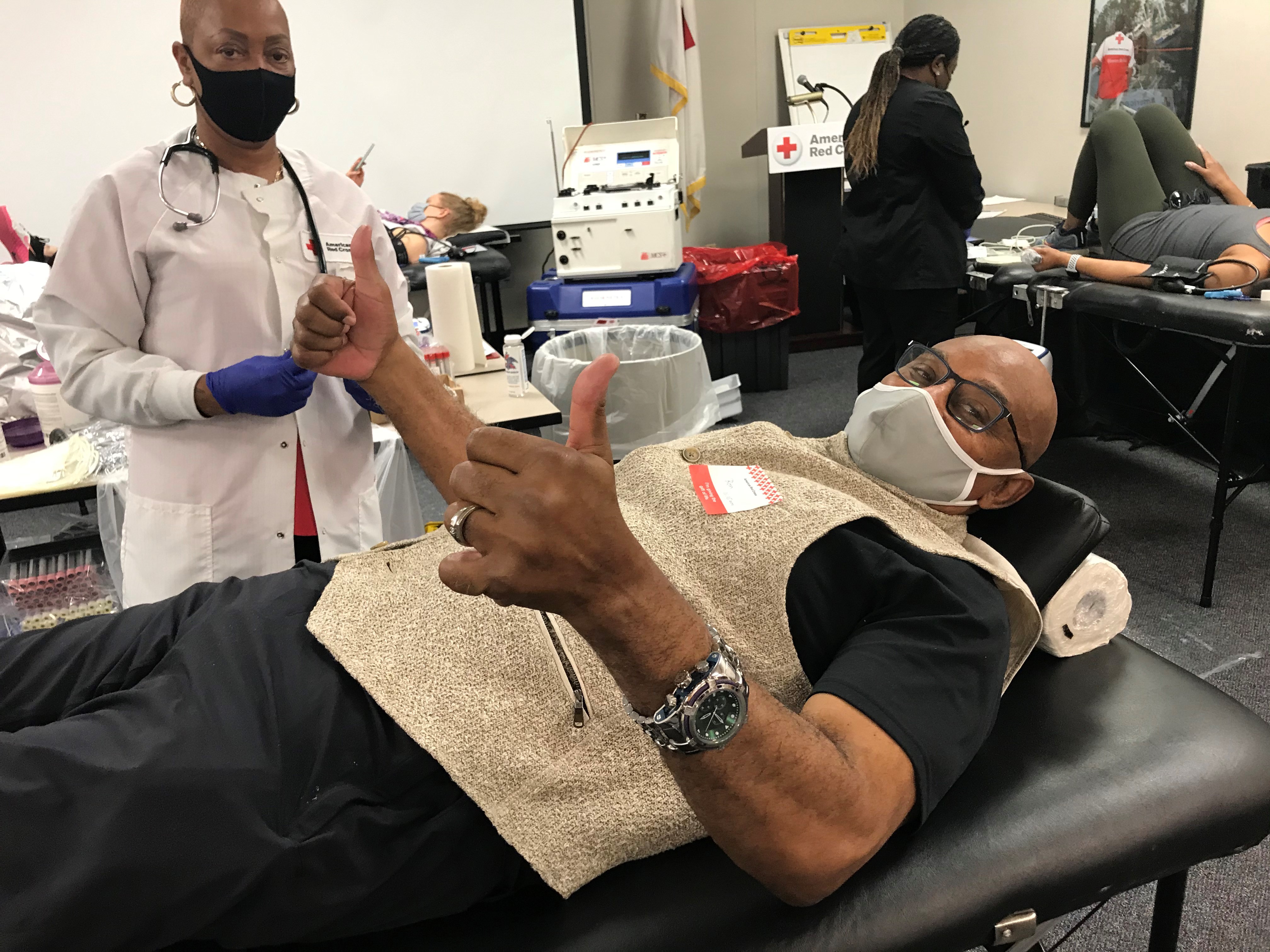
On Monday, January 18, 2021 the Red Cross partnered with Girard College for the 26th annual Martin Luther King Jr. Day of Service. While COVID-19 forced many projects for the day to be virtual, the Red Cross hosted a blood drive that collected 56 units of blood, far exceeding the day’s goal of 40 units.
The drive specifically invited African American donors to help sickle cell patients. Since the COVID-19 pandemic began last March, the number of African Americans donating blood has dropped significantly. One reason for the lower donor turnout is blood drive cancellations due to closures for businesses, schools, and churches during the pandemic.
Blood donors of all races and ethnicities are needed to increase the diversity of the blood supply and ensure blood remains readily available for patients who still rely on transfusions during this uncertain time.
Ron Davis was one donor who turned out, along with his wife, to donate. “It’s a tremendous opportunity to give on this special day. It’s a day that respects a man who gave much to the country and this world,” said Davis.
For Davis, Martin Luther King Jr. Day is more than a holiday, it’s personal. “I dedicate my donor experience to my brother Stephen, who is going through a challenging time and is a recipient of blood,” he said.
Davis is a local board member for the Red Cross, and also serves on the American Red Cross National Diversity Advisory Council. “I’m proud of the Red Cross and its leadership for reaching out to help the vulnerable people who have sickle cell disease,” he added.
“It’s a tremendous opportunity to give on this special day. It’s a day that respects a man who gave much to the country and this world.”
– Ron Davis, Red Cross Blood Donor
In the U.S., about 100,000 people of various racial and ethnic backgrounds are living with sickle cell disease, most of whom are of African or Latino descent. African American blood donors are vital for many patients with rare blood types, like those with sickle cell disease, who depend on blood that must be matched very closely – beyond the A, B, O and AB blood types – to reduce the risk of complications.
Despite the decline in blood donations from African American donors, the need for blood products for patients with sickle cell disease has remained steady. Without a readily available blood supply, sickle cell patients can experience severe pain, tissue and organ damage, acute anemia, and even strokes. Furthermore, sickle cell patients are at high risk of serious complications from coronavirus infection, and a blood transfusion can be a lifesaving treatment for these patients.
To protect the health and safety of Red Cross staff and donors, individuals who do not feel well or who believe they may be ill with COVID-19 should postpone their donation.
Each Red Cross blood drive and donation center follows the highest standards of safety and infection control, and additional precautions – including temperature checks, social distancing and face coverings for donors and staff – have been implemented to help protect the health of all those in attendance. Donors are asked to schedule an appointment prior to arriving at the drive and are required to wear a face covering or mask while at the drive, in alignment with Centers for Disease Control and Prevention public guidance.
Healthy individuals who are feeling well are asked to make an appointment to donate in the weeks and months ahead by downloading the free Red Cross Blood Donor App, visiting RedCrossBlood.org, calling 1-800-RED CROSS (1-800-733-2767) or enabling the Blood Donor Skill on any Alexa Echo device.
All blood types are needed to ensure a reliable supply for patients. A blood donor card or driver’s license or two other forms of identification are required at check-in. Individuals who are 17 years of age in most states (16 with parental consent where allowed by state law), weigh at least 110 pounds and are in generally good health may be eligible to donate blood. High school students and other donors 18 years of age and younger also have to meet certain height and weight requirements.
Blood and platelet donors can save time at their next donation by using RapidPass® to complete their pre-donation reading and health history questionnaire online, on the day of their donation, before arriving at the blood drive. To get started, follow the instructions at RedCrossBlood.org/RapidPass or use the Blood Donor App.
Main image description: Blood donor Ron Davis gives blood, and an enthusiastic thumbs’ up, during the recent Red Cross Blood Drive at Girard College on Martin Luther King Jr. Day of Service. Photo by Dave Skutnik.
Leave a Reply