Category: Blood Services

  • National Minority Health Month: From sickle cell care to safer births, blood donors help close critical health gaps

    By Alana Mauger and Jenny Farley

    For Linn Johnson, sickle cell disease has been a constant presence since childhood. Growing up in Philadelphia, she was initially misdiagnosed—doctors told her parents she had rheumatoid arthritis before eventually discovering the true cause of her pain.

    As a child, Linn sometimes went weeks without being able to walk or use her arms. Nights were long and sleepless, eased only by family members who stayed awake with her, trying anything they could to bring relief.

    “I have pain every day. Every single day,” she said.

    Sickle cell disease nearly claimed her life more than once. In 2000, a severe crisis left her on life support for a week and hospitalized for months. Since then, she’s endured multiple joint replacements and countless pain episodes—but she continues to push forward.

    Today, Linn is a mother, grandmother, substitute teacher for children with autism, and a devoted volunteer. She also helps coordinate sickle cell blood drives to help ensure blood is available when patients need it.

    “You have to survive,” she said. “Some days you don’t want to get out of bed, but I push myself because I know there’s somebody out there who needs my help.”

    Photo of sickle cell warrior Linn Johnson
    Sickle cell warrior Linn Johnson. Photo by Jenny Farley / American Red Cross

    National Minority Health Month

    April is National Minority Health Month—a time to recognize persistent health disparities in historically underserved communities and to take meaningful steps to reduce them.

    At the American Red Cross, action begins locally. Philadelphia has long been at the forefront of advancing sickle cell care and awareness, including serving as the birthplace of the Red Cross Blue Tag Program, which helps people living with sickle cell disease receive better-matched blood transfusions.

    For patients like Linn, access to compatible blood isn’t optional—it’s lifesaving.

    • Health disparities disproportionally affect communities of color. What to know about health inequities.
    • Sickle cell disease Affects more than 100,000 people in the U.S., many of whom are of African, Latin and Mediterranean descent. These groups have less access to comprehensive care than people with other genetic disorders. Patients with sickle cell disease may rely on blood transfusions throughout their lifetime.
    • Beta
Thalassemia
Major
"Cooley's anemia" is a rare genetic blood disorder affecting people of Asian, Mediterranean and Middle Eastern descent. Affects the body's ability to make healthy blood cells.
› Patients face life-threatening anemia and require frequent blood transfusions and extensive ongoing medical care.
    • Pregnancy
Maternal deaths have increased among all race and ethnicity groups. Women who are Black are 3x more likely to die from pregnancy-related issues than women who are white.
, Black women are more likely to experience severe postpartum hemorrhage, requiring blood transfusions.
    • High Blood Pressure
Nearly half of U.S. adults have high blood pressure. Adults who are Black have higher rates of hypertension than adults who are white and are at risk for heart disease and kidney disease.
> Monitoring blood pressure is a critical step toward timely detection and treatment of hypertension.
Red Cross blood donors receive a free mini-health screening with blood pressure and hemoglobin insights.

    Blood Donations for Sickle Cell Warriors

    More than 100,000 people in the United States live with sickle cell disease, most of whom are of African, Latino or Mediterranean descent. The disease often requires lifelong blood transfusions to manage pain crises and prevent serious complications such as stroke or organ damage.

    Because repeated transfusions can make it harder for patients to find compatible blood over time, programs like the Blue Tag initiative play a critical role. By identifying donors whose blood is more likely to match the complex needs of sickle cell patients, the program helps reduce complications and improve quality of care.

    The Blue Tag Program’s roots in Philadelphia reflect the region’s commitment to meeting community-specific health needs and strengthening care where it matters most.

    American Red Cross graphic - Blood donors who are Black are almost 3x more likely to match the blood most commonly needed by patients with sickle cell disease.
    American Red Cross graphic – Blood donors who are Black are almost 3x more likely to match the blood most commonly needed by patients with sickle cell disease.

    Black Maternal Health Week

    Within National Minority Health Month, Black Maternal Health Week (April 11–17) shines a spotlight on another urgent health inequity—one where access to blood can save lives in a matter of minutes.

    More than 80% of pregnancy-related deaths in the U.S. are preventable. Yet maternal mortality rates have worsened for women who are Black and Hispanic compared to pre-pandemic levels, while improving for some other groups. Women who are Black remain more than three times as likely to die from pregnancy-related complications.

    Severe bleeding after childbirth, known as postpartum hemorrhage, is one of the leading causes of maternal death. When it strikes, immediate access to blood transfusions—sometimes dozens of units—is critical. Having blood readily available can mean the difference between survival and tragedy.

    For the Red Cross, supporting maternal health is another way blood donors help close health gaps that disproportionately affect communities of color. Every donation strengthens the safety net for mothers and birthing people when emergencies arise.
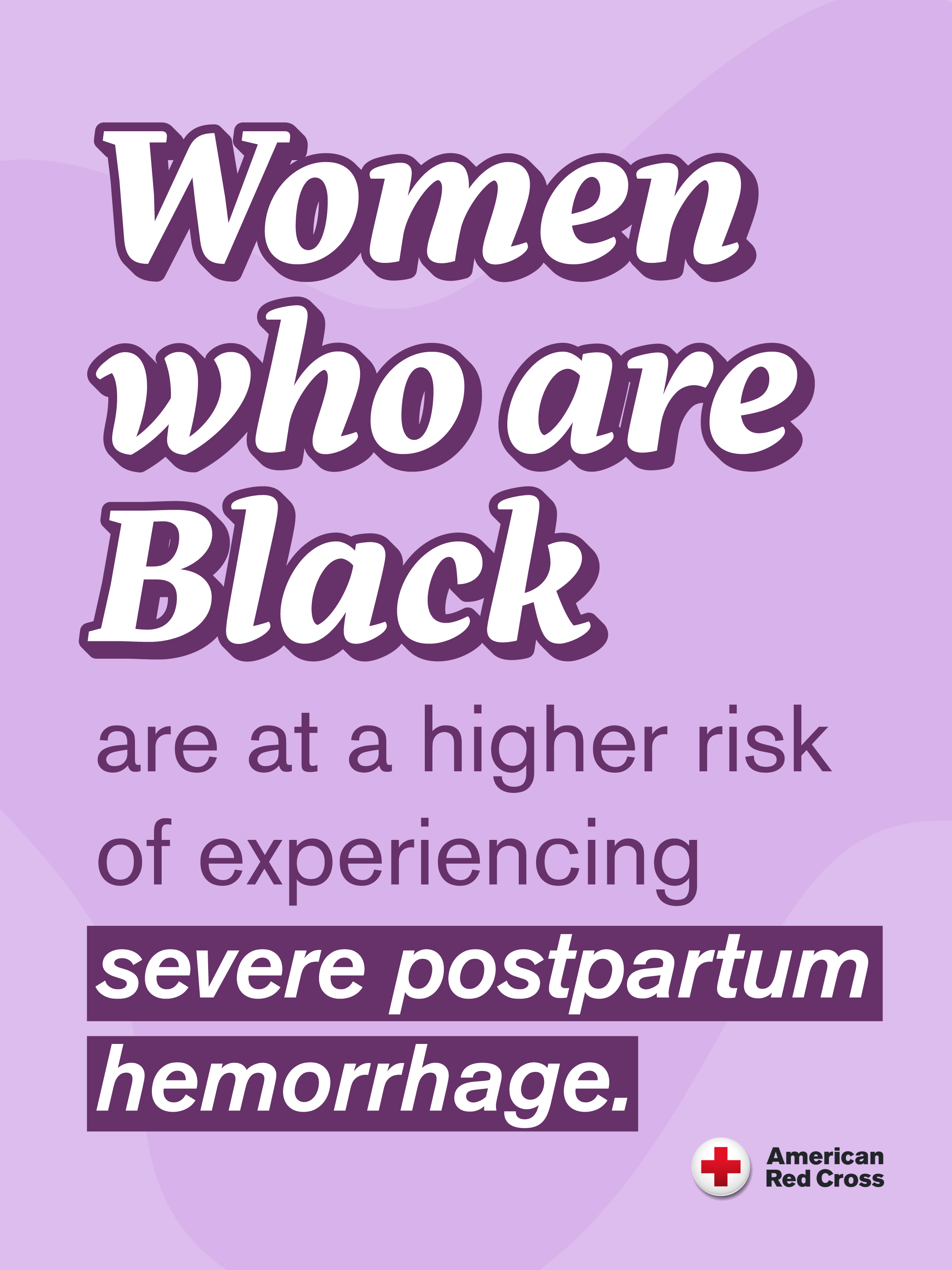
    American Red Cross graphic - Women who are Black are at a higher risk of experiencing severe postpartum hemorrhage.
    American Red Cross graphic – Women who are Black are at a higher risk of experiencing severe postpartum hemorrhage.

    Progress Brings Hope—and Continued Need

    Today, newborn screenings and simple blood tests help diagnose sickle cell disease earlier than ever before. New gene therapies are offering fresh hope to patients and families.

    Still, many people undergoing these treatments require months of ongoing blood transfusions to maintain stable hemoglobin levels and avoid serious complications. The need for blood has not gone away—it has evolved.

    That means donors remain essential to turning scientific progress into real-world healing.

    American Red Cross graphic - Did you know: Most patients with sickle cell disease who undergo gene therapy rely on donated blood & platelets.
    American Red Cross graphic – Did you know: Most patients with sickle cell disease who undergo gene therapy rely on donated blood & platelets.

    Health Equity Starts With Community

    As part of its commitment to bridging health gaps, the Red Cross provides all presenting blood donors with a free mini health screening, including pulse, blood pressure and hemoglobin levels. For many people, especially those who lack regular access to care, this insight can be life-changing.

    Through its Sickle Cell Initiative, the Red Cross also tests first-time donors who self-identify as Black, African American or multiracial for sickle cell trait, which empowers individuals with critical health information while helping better serve patients like Linn.

    • Red Cross
Sickle Cell Initiative:
How we're helping patients with sickle cell disease
    • In 2021, the Red Cross launched an initiative to grow the number of blood donors who are Black to help patients with sickle cell disease & improve health outcomes
    • Since 2021, 170,000+
African Americans gave their first blood donation with the Red Cross
    • We've provided 350,000+
sickle cell trait screenings
to donors who self-identified as Black or multiracial

    How You Can Help

    National Minority Health Month and Black Maternal Health Week are about more than awareness. They are calls to action.

    Across Southeastern Pennsylvania, you can help by:

    • Donating blood to support patients with sickle cell disease and mothers in childbirth emergencies
    • Encouraging first-time and repeat donors to roll up a sleeve
    • Volunteering with the Red Cross to support lifesaving services in your community

    Schedule a blood donation at RedCrossBlood.org.

    American Red Cross graphic - All blood types needed.
    American Red Cross graphic – All blood types needed.
  • Hundreds donate during expanded 6abc Philly Red Cross Month Blood Drive

    By Jenny Farley and Alana Mauger

    In its sixth year, 6abc Philly continued its tradition of sponsoring a Red Cross Month Blood Drive on the last Wednesday in March. This year’s drive—held on March 25, which was also Red Cross Giving Day—expanded to five locations in Southeastern Pennsylvania and Southern New Jersey and collected 517 units of blood.

    Watch 6abc coverage of the blood drive below.

    VIDEO: Hundreds turn out for 6th annual 6abc Philly Red Cross Month Blood Drive. Watch it on You-Tube

    According to Jennifer Graham, CEO, Red Cross Southeastern Pennsylvania Region, the drive comes at a critical time of year.

    “Severe winter weather across the country has caused thousands of blood donations to go uncollected over the past several months,” she said. “At the same time, we’re preparing for summer when donations decrease because of school breaks and vacations.”

    Graham says that donors of all blood types are needed now to help ensure patient care is not disrupted and the blood supply is stable heading into spring.

    Since 2021, the 6abc Philly Blood Drive has collected 1,614 donations.

    Photo of Janelle Cheeseborough in the canteen area of a blood drive.
    Janelle Cheeseborough donated blood for the first time after seeing the need in a news story on 6abc. She said her first experience donating “was great.” Photo by: Jenny Farley/American Red Cross.

    Some donors, like Janelle Cheeseborough, came out to give for the first time. 6abc aired several news stories about the importance of donating blood in the days leading up to the drive that caught her attention.

    “I saw it pop up on Channel 6 and I thought, you know I’ve never done it before. So, I thought, ‘why not?’”

    Janelle wasn’t nervous because she said, “I felt welcome as soon as I came in. Like I’ve already been here before. I felt welcome.” She plans to donate again and is going to bring her sister to donate too.

    One of those recipient stories on 6abc featured Red Cross communications volunteer Jenny Farley, who received 5 blood transfusions following surgical complications in November.

    She has written dozens of stories about people who have needed blood, never imagining she would be one of them.

    “It changes everything because I think until your own life is at stake, you can’t really get it,” she told 6abc anchor Gray Hall during the interview, which you can watch below.

    VIDEO: Red Cross volunteer saved by blood donors shares her own story. Watch it on You-Tube

    Some people that came out to donate on Wednesday were seasoned blood donors.

    Deborah Johnson-Jennings is 70 years old and has been donating blood for 45 years! She started giving when she worked for a school district and now tries to donate at least once a year. So, what did it mean to her to donate at the 6abc drive?

    “It means a lot because I know it’s well needed. It’s just one way you can give back,” she said.

    Deborah Johnson-Jennings is 70 years old and started donating at age 25. She donated blood at the American Red Cross 6abc blood drive on March 25. Photo by: Jenny Farley/American Red Cross.

    Jennifer and Kevin Lewis both celebrate March birthdays. They came to the drive together to donate blood as a birthday gift to themselves and others.

    Jennifer is a Philadelphia police officer who has donated for more than 25 years.

    “I used to donate almost every 56 days if I could. So, I just kept up the tradition and now I try to do it at least two, three times a year,” she said.

    Kevin worked at the Children’s Hospital of Philadelphia (CHOP) for 27 years as a respiratory therapist and sleep technologist. It was his first time donating blood at the 6abc drive. He was especially moved to learn that because he is African American his blood may be used for sickle cell patients.

    “I have family members that have sickle cell. So, just to hear that, I got choked up. In addition to getting choked up, it was like, ‘Wow, I need to do this more often,’” he said.

    Jennifer & Kevin Lewis celebrated their March birthdays early at the 6abc blood drive. Kevin encouraged others to donate. He said, “Do it for the children who have sickle cell. African American men, African American women — come on out and definitely give blood, because giving blood does save lives.” Photo by Jenny Farley / American Red Cross

    Volunteers who serve as blood donor ambassadors help blood drives run smoothly by caring for the donors who come out to give.

    Welcoming donors is blood donor ambassador D’LaVale Anderson-Reeves’ specialty. She is a breast cancer survivor who has volunteered for the Red Cross for more than 20 years and works as part of the community outreach team too.

    Her favorite part is “meeting a lot of people.” She also enjoys recruiting new Red Cross volunteers and making donors feel better if it turns out they aren’t able to donate for health reasons.

    “Some people get upset because they’re not able to give, so you’re trying to make them feel better and that makes me feel good. What I always say is, ‘well, you can’t give blood – you can always come and reschedule another time – but you know we can use some volunteers when you come and join us.’”

    Left: Red Cross volunteer D’LaVale Anderson-Reeves will celebrate her 70th birthday and 18 years as a breast cancer survivor this October. She worked as a blood donor ambassador at the 6abc blood drive where she tried to recruit donors. She said, “I try to talk them into volunteering for the Red Cross.” Right: Blood donor ambassador Susan Brereton is a new Red Cross volunteer who worked at the 6abc blood drive. She said, “I was looking for volunteer work because I’m retired and I wanted something that was very connected to the community–which the Red Cross is.” Photos by Jenny Farley/American Red Cross.

    Susan Brereton is a new Red Cross volunteer who has been doing it for about a month. The 6abc blood drive was her second shift as a blood donor ambassador.

    “I’m still learning the ropes but this is a really exciting event here because so many people are coming.” She said, “So far, so good. Everybody’s lovely.”

    In addition to the location in Philadelphia at the Courtyard by Marriott City Avenue, 6abc drives were held at the Spring Valley YMCA in Royersford and Sellersville Fire Department in Southeastern Pennsylvania. In South Jersey,  locations included the Collingswood Grand Ballroom and the Forum Wedding and Catering Hall in Blackwood.

  • #LeadLikeClara: Anika Harris proves young leaders can make a big impact

    Editor’s Note: In commemoration of Red Cross Month and Women’s History Month, we are publishing a series of #LeadLikeClara profiles featuring local women volunteer leaders who emulate the leadership characteristics of Red Cross founder Clara Barton.

    Anika Harris stands in a gymnasium with a blood drive going on in the background.
    Anika Harris at Unionville High School’s blood drive in February. Submitted photo

    By Alana Mauger

    Unionville High School senior Anika Harris joined the American Red Cross because she was inspired by its mission to prevent and alleviate human suffering.

    “It’s a really admirable goal, to not only relieve the current suffering, but work on making sure your community is in a place where they could respond to emergencies if they ever arise,” she said.  

    High school and college Red Cross clubs are a great way for young humanitarians to strengthen their skills and create meaningful change. Anika embraced that opportunity early. She co-founded Unionville’s Red Cross club as a sophomore and has served as co-president ever since.

    The club currently has 120 members, around 40 who participate regularly. Anika says the group strives to organize at least one emergency preparedness event, one fundraiser and one blood drive every year.

    Soon after launching the club, Anika and her team organized a successful coin drive to support people impacted by hurricanes Helene and Milton in North Carolina.  They tapped into the school’s spirit by associating each donation jar with a teacher, promising that the teacher with the most coins would wear a chicken costume.

    “We pitted our teachers against each other,” she explained. “We got these three teachers to really battle it out, and we ended up getting around $350.”

    This year, Anika’s Red Cross club partnered with Unionville’s THON chapter for their annual blood drive, resulting in the largest number of student blood donors across her three years of organizing.

    “A lot of the blood we collect will probably go to cancer patients. So we thought, ‘Oh, it’s an organization that helps families affected by childhood cancer.’ It’s a great combination,” she said.

    Anika’s leadership deepened even further during her junior year, when the club members formed a team to participate in the International Humanitarian Law (IHL) program through the International Committee of the Red Cross (ICRC). The campaign theme was Space Law, and coordinating the project required Anika to develop practical leadership strategies.

    “At the beginning, it was kind of hard to get everyone to contribute, and I had to step up as a leader,” she explained. “I assigned everyone roles and created assignments for each of them.”

    Overall, Anika describes the Red Cross’ commitment to youth engagement as surprising and heartwarming.

    “I really appreciate how much the Red Cross cares about youth and their perspective on things,” she said. “They really let youth create their own initiatives and give them the resources they need to be able to implement them.”

    Anika’s leadership extends beyond Unionville. As SEPA’s youth and young adult ambassador through the National Youth Council, she’s helping to strengthen connections across Red Cross clubs.

    “Basically, we are trying to connect whatever issues our region is facing with the resources the National Youth Council offers,” she explained.

    Working alongside a fellow ambassador at Lehigh University, she is helping nearby Red Cross clubs share resources, information and best practices.

    “They can share the tips and tricks of what works best for their schools,” she said.

    Even outside of youth programming, Anika continues to lead through service. She volunteers monthly as a blood donor ambassador—primarily at the West Chester Blood Donation Center—where she greets, checks in and thanks donors to help ensure they have a positive experience. Recently, she also signed up to be a social media ambassador for national Red Cross campaigns.

    After graduation, Anika plans to study biochemistry or biomedical sciences and ultimately attend medical school. Her path forward already reflects the leadership values she has honed through the Red Cross—initiative, compassion and a commitment to strengthening her community.

  • Mother and daughter team up to support blood donors

    By Maureen C. Zug

    Mother and daughter Red Cross volunteers Jane and Juniper sit at a table with blood donation chairs visible behind them.
    Mother-daughter blood donor ambassador duo Jane and Juniper during a shift at the Red Cross Blood Donation Center in West Chester. Submitted photo

    On a recent snowy Saturday afternoon, I had the  pleasure  to video call with the mother-daughter team of Juniper Mui and her mother Jane Chan. Although we have a number of husband and wife teams throughout the Red Cross organization, this is the first mother-daughter pair I have met personally.

    Getting Started As Volunteers

    Motivated by a desire to volunteer in 2023, Juniper and Jane looked for opportunities at a number of different organizations.  The American Red Cross was the only possibility for Juniper, since  she was underage at the time.  Originally, the duo intended to volunteer for the summer as blood donor ambassadors, but they enjoyed their volunteer roles so much that they decided to continue year ‘round. 

    Juniper and Jane belong to the Delaware Valley Chapter.  They serve at Red Cross Blood Donation Centers in West Chester and Horsham. Jane is a financial analyst; daughter Juniper is a high school student. Despite their busy schedules, they truly enjoy their time together greeting, registering, orienting, and guiding blood donors toward post-donation drinks and snacks.  They are a reassuring presence for novice donors.

    As blood  donor ambassadors,  they are the welcoming faces at the blood donation centers.  They answer questions or contact Red Cross collections team professionals onsite to get quick answers. Juniper  recalled a time when another mother-daughter pair tried to donate blood together, but the daughter was underage.  The young women was gracefully declined, but was assured that she would be able to donate blood in the future.  During our chat, I could not help but notice that Juniper and Jane are so in tune with each other, in a very natural way, that they finish each other’s sentences.

    What Motivates Juniper and Jane to Continue Volunteering

    In any conversation among Red Cross volunteers, the question eventually comes up—‘Why do you volunteer?” Both mother and daughter answered the question clearly:

    • They want to give back to the community with a sense of gratitude.
    • Volunteering makes them feel good.
    • The Red Cross community of volunteers is generous and welcoming.
    • Community engagement is important during a time of economic and political uncertainty.

    As a parent, Jane says that “Volunteering helps me see my daughter differently”and “Understand her personality from a different perspective.” Juniper sees her volunteer role as “A learning experience opportunity to care for others.” She is focused on “Staying in the moment” for a most fulfilling time spent as a blood donor ambassador.  Also she likes working in tandem with her mother to pass the time and  the benefit of knowing her  personality.

    An Active Family Life

    Jane and Juniper have the active support of a loving husband and father who helps with cooking and other household chores. “We try to balance everyone’s needs in the family,” Jane said, which also includes a younger daughter.  It may seem like a juggling act sometimes, but Jane says this sense of balance works well for her family.  Add in the three family tabby cats—Boots, Pluto, and Benedict—and you get a good picture of a happy and active family life.  In fact, Pluto quietly attended our video call while snuggling in Juniper’s arms, and graciously accepted pets from Jane during our conversation.

    Future Plans

    As champions for volunteering with the Red Cross,  Juniper and Jane say they will continue to serve as blood donor ambassadors, helping in whatever way that they can. Juniper intends to recruit her little sister as a volunteer as she becomes older. At this point, Juniper has expressed an interest in engineering classes.  However, she is still considering options for college and majors. Jane is proud of her family and will continue to encourage her daughters’ ongoing  community engagement.

    Thank you, Juniper and Jane, for sharing your Red Cross story!  Your support of the blood donor community is highly inspirational, especially during a time of critical need for blood, platelets and plasma.

  • #LeadLikeClara: Carla Venditti coordinates compassion at the Red Cross

    Editor’s Note: In commemoration of Red Cross Month and Women’s History Month, we are publishing a series of #LeadLikeClara profiles featuring local women volunteer leaders who emulate the leadership characteristics of Red Cross founder Clara Barton.

    Photo of Red Cross volunteer Carla Venditti
    Longtime American Red Cross volunteer Carla Venditti talked about the importance of blood donor ambassadors. She said, “You are the first person they see in a blood drive and you have to make them feel so welcome. It’s a great feeling. You’re looking at people you’ve seen in the past and they keep coming back and you’re so thankful that they’re there giving blood.”

    By Jenny Farley

    Carla Venditti first volunteered for the American Red Cross at the age of 18 when she became a water safety instructor and taught little kids how to swim during her off hours as a receptionist at the YWCA.

    After retiring from 25 years in the tech industry she returned to volunteering for the Red Cross.

    “You can’t sit still when you retire,” she said.

    After donating blood one day she sat down at the blood drive and asked someone there a simple question, “You need help?” That was in 2004 and she’s been a volunteer ever since.

    Carla donates blood every 56 days and will soon have donated a staggering 23 gallons. She knows how the blood donation process works as a donor, and in her volunteer role she works as a blood donor ambassador and the scheduler of volunteers for blood drives in Bucks County.

    She makes herself available “24/7 – because they call me all hours of the day, emails all hours – every day of the week – to say whether they’re canceling out of a blood drive or they want to sign up for a blood drive.”

    Blood drives need volunteers to successfully operate and Carla takes pride in making sure the volunteers get to staff their favorite drives.

    “I plug their names in. Even when they don’t see it – their names are going into blood drives because it’s their favorite one and they want to go back. The donors love seeing the same volunteers, because they remember their names.”

    There’s an art and finesse to coordinating so many different schedules and she’s dedicated to keeping her team happy and successful.

    “They’re all really good people that work for the Red Cross.” She said, “I really love my team. They know I look after them.”

    She also makes sure volunteers know how important being a blood donor ambassador really is. Blood donor ambassadors greet donors, make sure they are properly registered and keep the refreshments stocked.

    “You’re greeting people and making them feel like they’re a million bucks for doing what they’re doing. That’s important because nobody has to give blood. You can’t reproduce blood. They’ve tried. You cannot create blood. So, we are all needed to help other people.”

    If you are thinking of volunteering for the Red Cross, Carla wants you to know, “It’s an enjoyable experience. You get to meet a lot of people, and you get to learn a lot of stuff. You learn so much from being a volunteer.”

    For more information on how to become a volunteer go to redcross.org/volunteertoday.

  • Red Cross Month shines a spotlight on A1C and community health

    By Alana Mauger

    Red Cross graphic – 1 in 5: Red Cross donors who had their A!C tested when they gave in March 2025 had levels in the prediabetic or diabetic range.

    This March, the American Red Cross is performing A1C testing on all successful blood, platelet and plasma donations (one result per calendar year). The offering comes as new data reveals that one in five blood donors has elevated A1C levels—a sign that prediabetes and diabetes are prevalent among adults in generally good health. These findings come from the first year of free A1C screenings offered by the Red Cross across three testing periods in 2025. Click here to dive into the data

    “Too many people still face gaps in access to preventive care, and the Red Cross is proud to help close them by giving our 2.5 million blood and platelet donors easy access to essential health information, like their blood sugar levels,” said Dr. Courtney Lawrence, Red Cross medical director. By giving blood and downloading our Blood Donor App, individuals can be informed and empowered to better manage and advocate for their health.”

    Dr. Courtney Lawrence, Red Cross medical director, explains A1C results. Watch it on You-Tube.

    Among donors with elevated A1C levels, 80% had readings indicating prediabetes — a condition that is often reversible through healthy lifestyle changes, such as a balanced diet and regular exercise.

    The A1C test does not require fasting and provides an average blood sugar level over the past three months. Visit RedCrossBlood.org, to schedule your March donation appointment.All who come out to give blood, platelets or plasma March 1-31, 2026, will also receive a $15 Amazon Gift Card by email. See RedCrossBlood.org/March for details. 

    In addition to periodic A1C screening, the Red Cross continues to help bridge health care gaps by providing donors with valuable health insights, including blood pressure, hemoglobin, pulse and body temperature — all of which can be tracked in the Blood Donor App. Download the app from Apple or Google Play.

    Donating blood in March is part of Red Cross Month, a national campaign that encourages people to deliver support when help can’t wait — whether by giving blood, making a financial donation, volunteering or taking a lifesaving skills class.

  • Sickle cell warrior Cameron Williams inspires his community to step up and donate blood

    By Jenny Farley

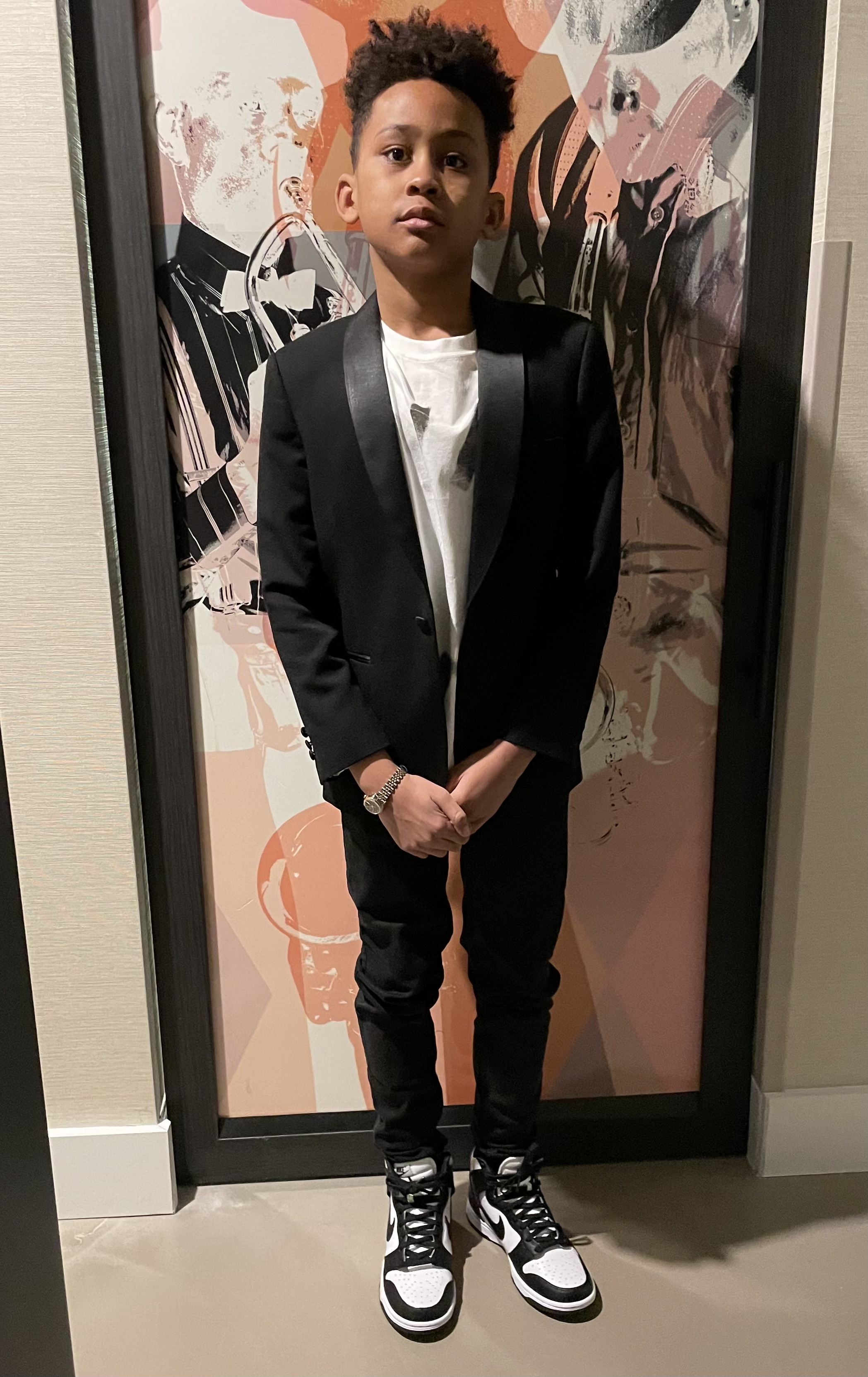
    Head to toe photo of 14-year-old Cameron Williams in front of an abstract painting. He is wearing a black coat and pants, white T-shirt and black and white sneakers.
    Sickle cell warrior Cameron Williams, 14, often has to battle through pain to play the sports he loves. Submitted photo

    Cameron Williams is a diehard Philly sports fan and an athlete who loves playing football, basketball and running track. He’s also an inventor.

    At just 14 years old, he recently worked on a group project in school for his “Money Matters” class, where he came up with the idea for compression undergarments that heat up.

    “It was phenomenal actually,” his mom Qamra Williams said.

    Cameron’s teacher told the class to design a project useful to the public. He got an “A.”

    For Cameron, developing clothing that heats up came from his own experience being cold, something that for him can be more than uncomfortable – it can hurt.

    “I chose that because I know how it feels to play in the cold or play in the snow and we wanted to fix that,” he said.

    Cameron has sickle cell disease, the most common inherited blood disorder in the United States. Patients may suffer intense pain (crisis), have organ damage or need hundreds of blood transfusions throughout their life.

    Blood donors who are Black or African American are much more likely to be a match for the blood most commonly needed.

    Photo of a young Cameron Williams in a hospital bed with a stuffed bear beside him. He is wearing a blue short and is half covered with a white blanket. A vase of flowers and another wrapped gift sit beside him on a table.
    Cameron Williams is shown during one of his hospital stays. His mom Qamra said, “Most people, or most children who have sickle cell are in the hospital 10 times a year, in and out for long stays. I think the past maybe 8 months or so has been the worst for Cameron.” Submitted photo

    Cameron’s mom Qamra is an operating room nurse at a Level 1 trauma center and will graduate in September with a master’s degree in health care administration.

    In nursing school she remembers studying about sickle cell disease while pregnant with Cameron. It was still a shock to get the diagnosis after he was born, but she’s grateful his condition is not worse.

    “We’ve been blessed. Cameron is not as sick as a lot of other children with sickle cell,” she said. “He’s gotten one blood transfusion in his entire life.”

    Pain from sickle cell disease can knock him out of his much loved activities though, and that’s frustrating.

    “I miss out on a lot of things I need to do,” he said.

    On the day we spoke Cameron was having a “rough day” from the pain in his arm, which prevented him from going to basketball practice the day before a game.

    When asked what he wants people, especially kids, to know about sickle cell disease he said, “I can’t control it.” But there’s something you can do to help.

    “Donating blood is important. It helps people with sickle cell,” he said.

    As a member of the Montgomery chapter of the community organization Jack and Jill of America Inc., Qamra volunteered to host a blood drive with the American Red Cross to help collect blood for people with sickle cell disease like her son Cameron. The blood drive was held at the Super Giant Community Center in Willow Grove the day after Valentine’s Day.

    Qamra and Cameron planned to be there. But, proving that a sickle cell crisis can happen at any moment, Cameron spent the day of the blood drive and the days leading up to it with a fever, in terrible pain at a hospital. His mom stayed by his side to help him through it.

    Donor after donor arrived at the blood drive with a mission – helping Cameron know how much he and his family are loved and how willing they were to donate blood to support him.

    Photo of Dana Walters wearing a red T-shirt that reads Be a Sickle Cell Fighter, donate blood.
    Dana Walters is a member of the Jack and Jill of America, Inc. Montgomery County chapter. She volunteered at the blood drive to help support Qamra and Cameron Williams, who she considers family. Dana said, “We are very thankful that the Red Cross is able to collect the blood from those that donate. They’re wonderful.” Photo by Jenny Farley/American Red Cross

    Dana Walters and several other volunteers from Jack and Jill of America, Inc. spent the blood drive helping Red Cross volunteers hand out t-shirts, restock snacks for donors and check on how they were feeling after giving blood.

    Dana has an aunt who has sickle cell disease and is close to the Williams family. She considers Cameron her nephew.

    “When he’s in the hospital, he’s receiving heavy pain medication and we’re just hoping that he feels better soon,” she said.

    Michele Edwards put her fear of needles aside to donate blood at the drive to support Qamra and Cameron. Michele’s son is friends with Cameron and the families have been close for years.

    “They go through a lot with that disease and I just wanted to make sure that I was available to help any way that I can. This is my first time. I’m doing it for Cam,” she said.

    2 photos. In the left photo is Michele Edwards laying a donation table as Stephanie Chinofsky prepares to draw blood. In the right photo, Lamont Terrell lays on a blood donation cot while he gives blood.
    Left: Michele Edwards donated blood for the first time at the Red Cross blood drive in Willow Grove. She is pictured with phlebotomist Stephanie Chinofsky. Michele had a message for friend Qamra and her son Cameron: “Just keep staying strong. You have a big support system and we’re here for you. We love you.”  Right: Lamont Terrell made a Power Red donation at the blood drive in support of his daughter’s friend Cameron. He said, “Unfortunately, there aren’t any cures for sickle cell so by being able to give blood it really makes me feel proud that I’m doing something to help someone else.” Photos by Jenny Farley/American Red Cross

    Lamont Terrell has been a blood donor for nearly 25 years and his daughter is also friends with Cameron. While making a power red donation, he talked about the movie plans the kids had before Cameron ended up in the hospital and they had to cancel.

    “Seeing her friend suffering really just brought it to life why it’s so important to always give back, in particular by giving blood,” he said.

    Cameron’s dad Maurice Williams came to the drive with his son Hampton, Cameron’s little brother. Maurice donated blood and said Cameron’s pain was down to a “level 6” that day, on a scale of 1 to 10.

    “Each day he’s getting better. He’s a strong kid. He’s doing everything he needs to do to get out of the hospital.”

    Maurice had a message for people who are thinking about donating blood but haven’t done it yet.

    “Do it as soon as possible. You never know how your donation may help somebody else in need, especially kids with sickle cell.”

    Photo of Maurice Williams on a blood donation cot with Hampton Williams sitting beside him on a chair.
    Maurice Williams donated blood to support his son Cameron who has sickle cell disease. Cameron was in the hospital when this photo was taken. Maurice said, “It’s frustrating as a parent to watch your child suffer and not be able to do anything to help.” Maurice is shown with his son Hampton, Cameron’s little brother. Photo by Jenny Farley/American Red Cross

    For more information on becoming a blood donor, download the Red Cross blood donor app, visit RedCrossBlood.org or call 1-800-RED CROSS. That’s 1-800-733-2767.

  • Celebrating the heart of every donation: Phlebotomists Recognition Week

    By Alana Mauger

    Person making a heart with their hands in front of the Red Cross logo on their shirt.
    Person making a heart with their hands in front of the Red Cross logo.

    Each day thousands of people roll up their sleeves and donate blood, platelets or plasma through the American Red Cross. And behind every successful donation is a skilled, compassionate Collections team member who makes the lifesaving process possible.

    During Phlebotomists Recognition Week (Feb. 9-13) we celebrate the dedicated professionals who greet donors with a smile, offer reassurance and ensure every collection is safe, comfortable and efficient. Their expertise isn’t just technical — it’s deeply human.

    It’s that human connection that draws collections staff like Sierra Perry to the job. She’s been with the Red Cross for about a year and is a collections specialist II, also called a “charge,” which means she is responsible for all blood collection activities at assigned blood drives.

    “I love helping people and saving lives every day!” she shared.

    Collections staff member Paul Bradley Kacer came to the Red Cross 3.5 years ago with a desire to help others. He said that “making connections with people” is what keeps him coming back.

    For collections specialist II Jamal Aimry, the Red Cross mission inspires him at work, especially with the constant need for blood.

    Three photos, each showing one person, from left: ierra Perry, Paul Bradley Kacer andJamal Aimry.
    From left, Red Cross Southeastern Pennsylvania Collections staff Sierra Perry, Paul Bradley Kacer and Jamal Aimry. Submitted photos

    The Red Cross offers 6 weeks of paid, comprehensive training for all collections staff, and in most cases, no prior experience is needed. Collections team members do everything—from health history screenings to blood collection to post-donation care. Their day-to-day work supports the nation’s blood supply and helps ensure blood is on the hospital shelves when it’s needed most.

    “We are treated very well. I really like my job,” Sierra shared.

    Beyond their technical skills and attention to detail, Red Cross collections staff bring encouragement and compassion to every donor interaction. They calm first-time donors, brighten someone’s day and help ensure that each unit collected becomes a gift of hope for someone in need.

    This week—and every week—we extend our heartfelt thanks to every Red Cross collections team member. Your commitment makes our mission possible.

  • National Blood Donor Month: Rachel Noethen reminds us that every donation matters

    By Alana Mauger

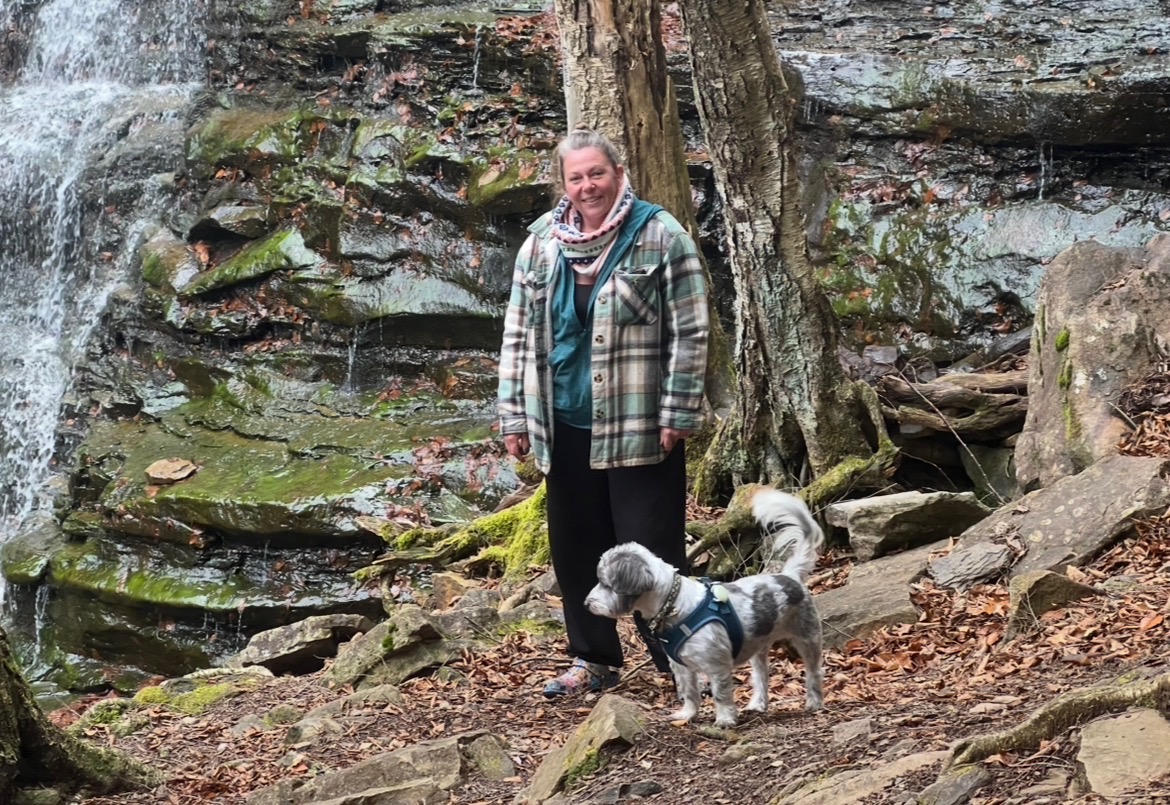
    A woman walks in the woods with a small gray and white dog.
    Rachel Noethen is a Red Cross volunteer duty officer and blood and platelet donor. Submitted photo

    American Red Cross volunteer Rachel Noethen wants you to know it’s never too late to give blood for the first time – or in her case, to get back into the habit of donating.

    Rachel has donated blood in the past, then paused as life got busy.

    “I don’t even know why I stopped doing it,” she shared.

    Seeing natural disasters and severe weather strain the national blood supply inspired her to roll up her sleeve again.

    “I kept seeing it pop up on Red Cross social media pages, so I got back into it,” she said.

    Rachel gave blood at the Horsham Blood Donation Center in the fall, then she made her very first platelet donation on New Year’s Day.

    Giving blood and platelets is just the latest way Rachel supports the Red Cross. She also serves as a volunteer duty officer on the Disaster Action Team (DAT). In this role, she volunteers from home, taking requests from local authorities and dispatching Red Cross teams to help families affected by home fires and other emergencies.

    Rachel typically volunteers two to four times per week, often covering the early morning 4–8 a.m. shifts that are notoriously difficult to fill.

    “It’s such a great team, very welcoming” she shared. “The support of everybody is what keeps me super motivated.”

    She also recently joined a Sound the Alarm smoke alarm installation event in Bucks County, giving her the chance to “put some faces and names together” since her duty officer work is virtual.

    Beyond her Red Cross service, Rachel volunteers with the Philadelphia Folk Festival and Hemlock Edge Rescue.

    Severe Blood Shortage

    The Red Cross is facing a severe blood shortage and urges people to take action now to help offset the impact of recent winter storms. To schedule an appointment to donate blood or platelets, visit RedCrossBlood.org.
  • Red Cross urges preparedness as Winter Storm Fern brings snow, ice and extreme cold

    By Alana Mauger

    Blue graphic will illustration of a snowman in the bottom right corner and the words: Red Cross Graphic - What should you do during a blizzard? Don't drink caffeine or alcohol, which can cause dehydration. Check on friends, neighbors or relatives who live along. Avoid overexerting yourself while you shovel.
    Red Cross Graphic – What should you do during a blizzard? Don’t drink caffeine or alcohol, which can cause dehydration. Check on friends, neighbors or relatives who live alone. Avoid overexerting yourself while you shovel.

    As Winter Storm Fern stretches across the country this weekend, millions of people are bracing for snow, ice and dangerously cold temperatures. Heavy snowfall is expected in the Greater Philadelphia area, making travel difficult to impossible and raising the risk of stranded motorists and extended road closures.

    In Southeastern Pennsylvania and across the nation, Red Cross shelter teams are on standby, and supplies are being moved into place. More than 745 trained Red Cross responders are working with partners to support communities in the storm’s path. We’re also prepositioning blood products at hospitals to help ensure patients continue to have access to lifesaving care.

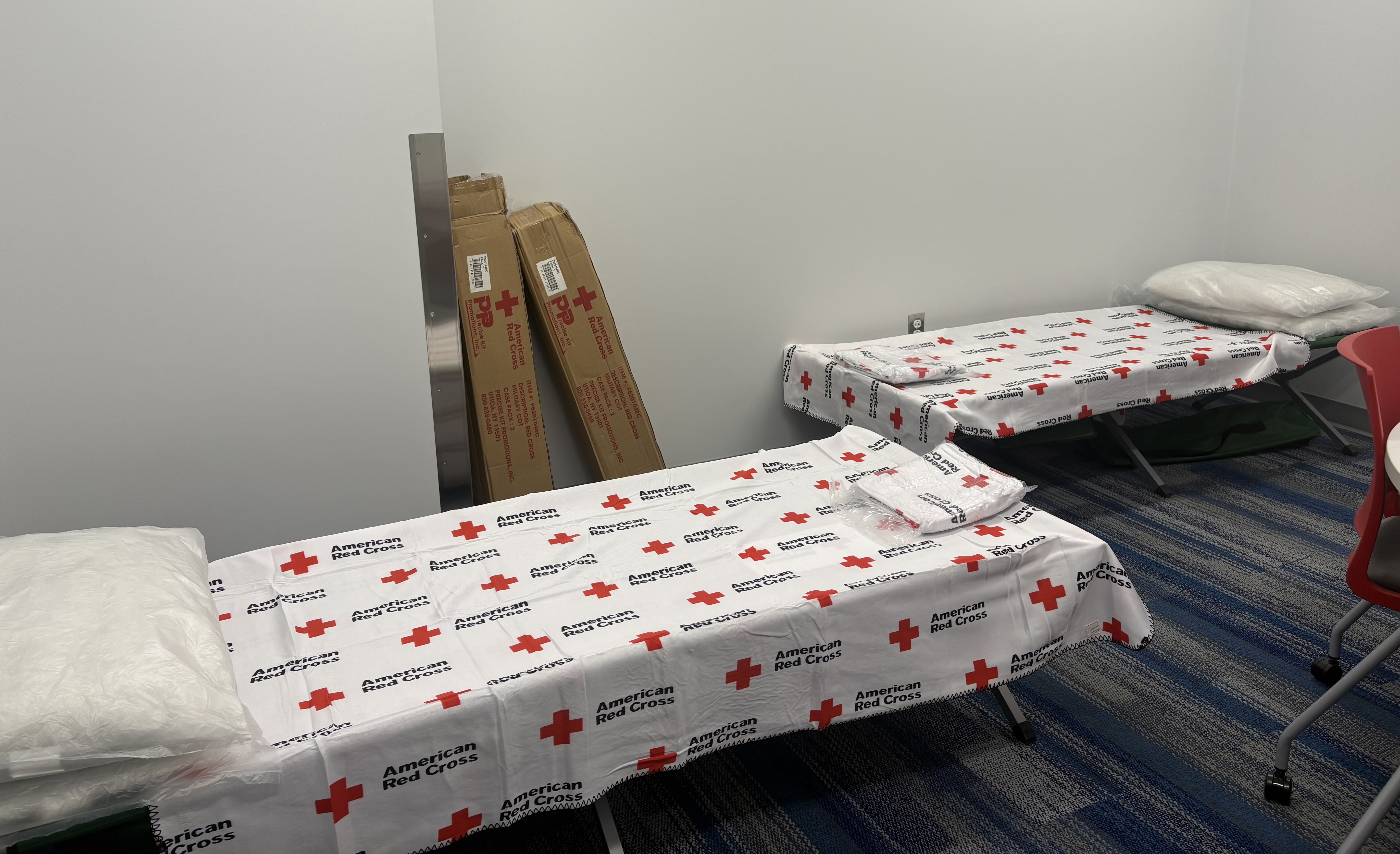
    Locally, Red Cross logistics and operations teams set up shelter cots for our Biomedical laboratory employees who process blood and provide critical support to our community health care partners around the clock. They also fulfilled cot requests from several first responder agencies to help ensure essential personnel can continue their work safely during the storm.

    Sleeping areas are set up at our Spring Garden Campus in Philadelphia for Biomedical laboratory employees who perform critical functions. Photo by Heidi Dampman / American Red Cross

    Extreme Cold Temperatures

    In addition to snow and ice, Winter Storm Fern will bring extreme cold, with single‑digit temperatures and below‑zero wind chills expected across many states.

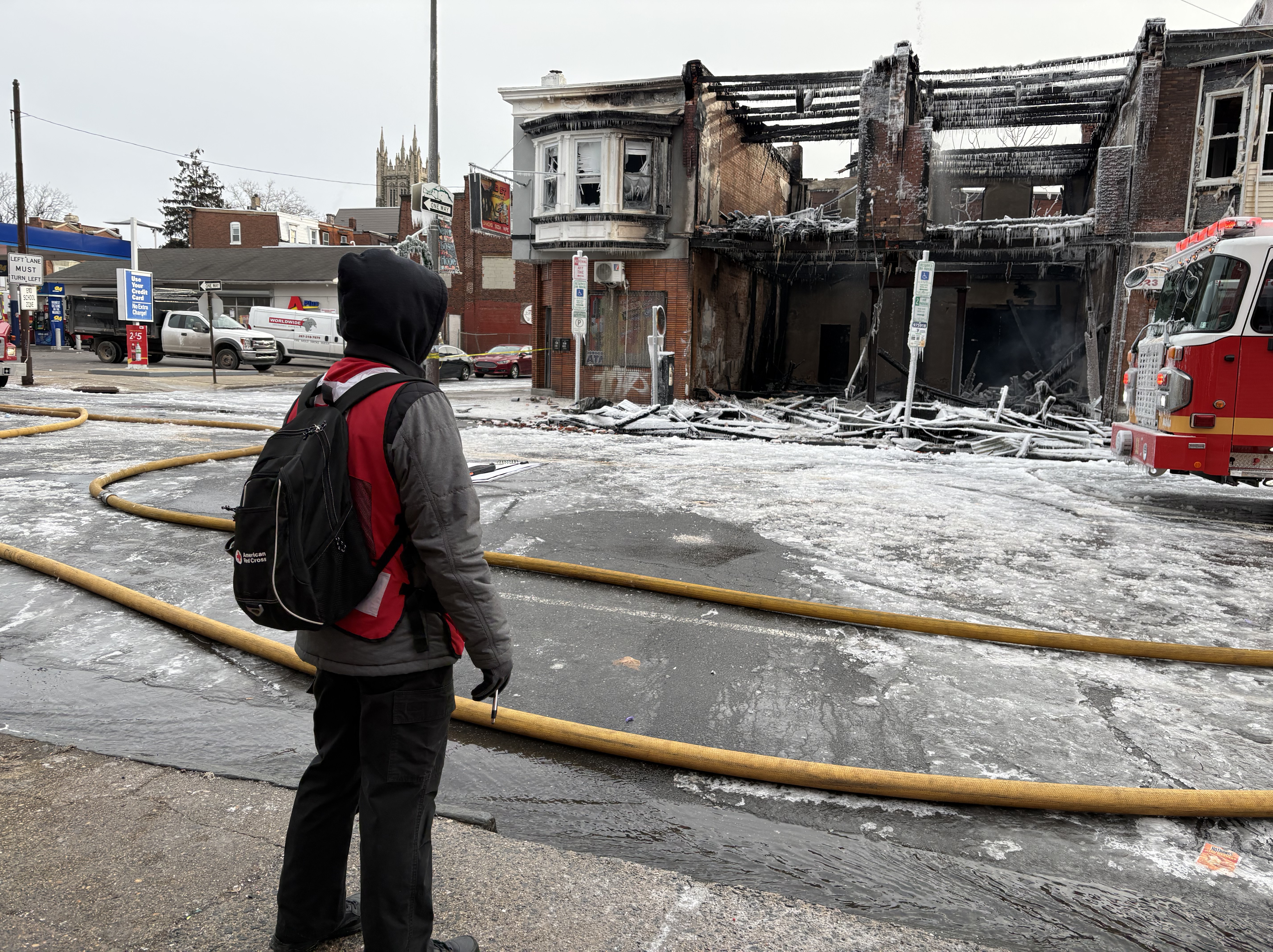
    As temperatures fall, the Red Cross typically sees an increase in home fires. Already today, local disaster volunteers assisted 19 people affected by home fires in North and West Philadelphia and are supporting a reception center operated by the Philadelphia Office of Emergency Management.

    Heating equipment remains a leading cause of home fires, with space heaters posing the greatest risk. If you must use a space heater, never leave it unattended. For more tips, revisit our home heating safety article.

    Disaster Action Team volunteer Evan Holland observes the aftermath of a multi-family home fire on Delancey Street in West Philadelphia on Jan. 24, 2026. Photo by Ed Robold / American Red Cross

    Take Action Now

    The Red Cross urges everyone to take a few simple steps before the snow begins to fall:

    • Get access to weather info and alerts. Download the free Red Cross Emergency app for real‑time weather alerts, open Red Cross shelter locations and emergency safety guidance. Also sign up for your county’s emergency alerts: Ready Bucks, Ready ChesCo, Delco Ready,  Ready Montco and Ready Philadelphia.
    • Gather supplies in case the power goes out. Assemble non‑perishable food, drinking water, medications, blankets, warm clothes, flashlights, batteries, phone chargers, power banks, a snow shovel and rock salt. Check out our survival kit checklist for additional ideas. Keep your phone and power banks fully charged ahead of the storm.
    • Learn how to prevent cold-related emergencies. Frostbite and hypothermia can become life‑threatening quickly. Pay attention to the wind chill, dress in layers, wear a hat and gloves and avoid staying outside too long. Download our free First Aid app for step‑by‑step instructions for a variety of situations, including hypothermia and frostbite.
    Light blue and white graphic with the words: What is wind chill? How cold people and animals feel outside and how the wind and cold feel on exposed skin.
    Red Cross graphic – What is wind chill? How cold people and animals feel outside and how the wind and cold feel on exposed skin.

    Revisit our winter storm safety and winter pet safety articles to brush up on tips to help keep your loved ones safe.

    Severe Blood Shortage

    The Red Cross blood supply remains at critically low levels. Winter Storm Fern is already causing widespread blood drive cancellations, leaving hundreds of donations uncollected locally and across the country. We encourage eligible donors to schedule an appointment now to give blood or platelets after the storm by visiting RedCrossBlood.org.

    Square graphic with red background and white illustrated snowflakes. Words read: Weather Alert! Blood & Platelet Donors Needed.
    Red Cross graphic – Weather Alert! Blood & Platelet Donors Needed.