Brrrr…. it’s cold out! As we bundle up to face below zero temperatures and snow, it’s time to look at some cold hard facts about how our pets adjust to the weather. Believe it or not, their fur coats are not enough to protect them from extreme temperatures and even frostbite. A common rule of thumb is that if it’s too cold for you, then it’s too cold for them. However, there are some really helpful tips to follow when taking your pets outside in the winter.
Red Cross graphic – Bring your pet inside during cold weather.
After walking, wash and dry your pet’s feet and stomach. This will clean off any salt or chemicals your pet might be exposed to during a walk. Prior to walking, rub some petroleum jelly on their paws. This will help to protect them from harmful chemicals.
Our pet’s fur protects them and provides extra warmth in the severe weather. Make sure not to shave them completely in the winter. They need their fur to keep warm.
Remember that antifreeze is deadly to dogs and cats. Make sure to clean up any spills and keep them from walking in them if they are outside with you.
It’s good to feed them a little extra in the winter so that they have enough calories in their systems because keeping warm burns more. Check with your pet’s vet first to make sure they can have extra calories.
Red Cross graphic – Salted sidewalks mean irritated paws.
Holiday Safety
Be careful with table scraps during the holidays. It’s better to give them vet approved treats that are made for pet consumption. The foods we prepare are often too fatty or too sweet for them to digest properly. Chocolate is a definite no-no! It is toxic to cats and dogs.
Ornaments and holiday decorations can also be dangerous for pets. It may seem funny to watch them play with ribbon or a tree ornament, but the ribbon can be swallowed and clog their intestines. They can wind up in the hospital needing surgery to remove it. It’s both painful for our pets and costly for their owners.
The American Red Cross has put together a safety checklist that can be helpful for you and your pets.
Red Cross graphic- Swap mistletoe, poinsettias and holly for moth orchids, fake plants or Christmas cactus.
Pet First Aid
Remember that our pets can suffer from things like frostbite and hypothermia just like we can. Check out the links below for more information about hypothermia in cats and dogs:
Red Cross graphic – Bring your pet inside. Signs they could have hypothermia or frostbite: Whining and shivering; moving slower or not at all; looking for a warm place to burrow.
Taking care of our pets can sometimes seem like a full-time job! They are our fur children, after all. By taking precautions and being aware of things that can cause them harm, we will keep them safe and in good health. Enjoy all that the colder weather offers us, snow, warm, crackling fires and tasty holiday treats… and of course, our beloved fur babies.
Editor’s Note: Our fictional friends Jane and Zymir pet-proof their house for a furry house guest just in time for National Pet Fire Safety Day.
IAF graphic – 5 tips from fire fights to keep your pets safe. 1. Consider installing monitored smoke detectors to receive an alert when you’re not home. 2. Secure hazards out of paw’s reach, especially electrical wires and stove-top knobs. 3. Make sure your pet is microchipped or wearing a collar with up-to-date contact information. 4. Keep pets near an entrance door where fire fighters can easily get to them. 5. Affix a pet alert decal on the door or window of your home.
By Robert Ambrose
ZYIR: Your mom called me about babysitting her dog.
JANE: Here we go.
ZYIR: Just so happens our first day of sitting is National Pet Safety: Tuesday, July 15.
JANE: So?
ZYIR: Look, half million pets are hurt by fires. What really struck me is: 100,000 pets started the fires.
JANE: Seriously?
ZYIR: A dog or cat could knock over a candle or a stovetop pan…we can get stove knob covers so the dog cannot turn on our stove.
JANE: Never would have thought…or just remove the stove knobs.
ZYIR: And I never thought of that. Anyway, I was just catching up on the Red Cross blog. We need exit points…
JANE: to escape.
ZYIR: And keep your mom’s dog near a door when we’re away…
JANE: So, the fire department can rescue the dog. How about a pet sticker on the window?
ZYIR: Yes. Google ASPCA for free pet safety pack. We’re gonna’ microchip your mom’s pet…
JANE: next to the dog’s ID tag.
ZYIR: We have a smoke alarm on every floor. How about a fire drill practice?
JANE: Do you think this is grade school?
ZYIR: Then our escape plan is an automatic reaction instead of panic, delay and overreaction.
JANE: Okay. Let’s practice evacuation.
ZYIR: I love your mom, but it’s a hassle to remove every extension cord from where Humphrey will play. I don’t want the dog to eat half the cord and then we have an electrical fire.
JANE: Like most dogs, this dog is not trained to behave itself. Humprey chomped through an electrical cord last week at my mom’s house. Luckily, there was no current in that extra cord.
ZYIR: Forgiven. But we can assure against any repeated devouring of extension cords.
JANE: Dog eat dog world.
ZYIR: Nice one. How’s work?
JANE: Gonna’ share with them this Red Cross reminder about learning to use fire extinguishers.
ZYIR: Does any adult not know how to use a fire extinguisher?
JANE: Yes. And people need to learn. Aim, pop the pin and squeeze.
ZYIR: I guess we’ll keep tuning in to the Red Cross blog to have these interesting discussions about what if scenarios and ways to prevent those emergencies.
JANE: Prevention is key. That smoke alarm upstairs is beeping by the way.
April is Pet First Aid Awareness Month, the perfect time to ensure you’re prepared to care for your furry friends in an emergency. Just like humans, pets can experience accidents or sudden illnesses, and knowing what to do can make all the difference. The American Red Cross offers lifesaving resources, including the free Red Cross Pet First Aid app and an online Pet First Aid class, to help pet owners act quickly and confidently.
Download the Free Red Cross Pet First Aid App
The Red Cross Pet First Aid app is a must-have tool for every pet owner. Packed with expert advice and step-by-step instructions, it helps you handle common emergencies—from cuts and burns to choking and poisoning. Here are some of its key features:
Step-by-Step Emergency Guides – Learn how to respond to critical situations like bleeding, seizures, or heatstroke.
Early Warning Signs – Recognize symptoms that indicate your pet needs veterinary care.
Pet-Friendly First Aid Kit Checklist – Ensure you have the right supplies on hand.
Veterinarian Locator – Quickly find nearby animal hospitals in an emergency.
Toxic Substances List – Identify foods, plants, and household items that could harm your pet.
Available for both iOS and Android, the app is a convenient way to keep vital pet safety information at your fingertips. Download it today from the Apple App Store or Google Play Store and be prepared for any situation.
Enroll in Our Online Pet First Aid Class
For those who want even more in-depth knowledge, the Red Cross offers an online Cat and Dog First Aid class. This interactive course covers essential skills, including:
How to perform CPR and basic first aid for pets.
Understanding your pet’s vital signs and behavior.
Preventing and responding to common emergencies.
Be Prepared—Because Pets Are Family
Pets bring joy, love, and companionship to our lives, and they depend on us for their safety. This Pet First Aid Awareness Month, take a few moments to download the app, enroll in a class, and brush up on your pet first aid skills. A little preparation today could save your pet’s life tomorrow.
Rahel Pachter is pet liaison lead for Red Cross Southeastern PA Region. Photo by Dianne Heard / American Red Cross
Much like Clara Barton, the founder of the American Red Cross, Rahel Pachter has dedicated herself to serving those in need with unwavering determination. Barton, known as the “Angel of the Battlefield,” fearlessly stepped into crisis zones to aid soldiers and civilians alike. Rahel embodies this same spirit of compassion and resilience, bringing comfort to both people and their beloved pets during disasters.
Rahel’s journey with the Red Cross began in 2019 as a blood donor ambassador, but her passion quickly expanded into disaster response and pet welfare. Witnessing the struggles of pet owners during emergencies, she took the initiative to become a pet liaison, ensuring that animals are not forgotten in times of crisis. Attending a Shelter Training Institute in California solidified her commitment, leading her to launch the pet liaison program in SEPA independently.
Rahel’s leadership shines through in her ability to make people feel safe and supported, even in the most trying circumstances. She has worked tirelessly to develop necessary forms and procedures for the Disaster Pet Liaison program. Rahel provides a valuable service to vulnerable pet owners. One of her memorable experiences involved helping an elderly woman who needed constant supervision. Recognizing the unique challenges in such situations, she plans to order essential supplies like slip leashes to assist responders in handling pets more effectively.
Like Barton, who built the Red Cross on the foundation of human connection and service, Rahel believes in the power of personal touch. She offers strong therapeutic hugs and brings hope to those she meets, ensuring that even in the darkest moments, no one feels alone.
As a Red Cross responder in Marion, near the Philadelphia line, she and her husband enter neighborhoods others might avoid, driven by faith and a deep sense of duty. As a Disaster Action Team supervisor, she mentors new trainees, witnessing firsthand the heartbreaking realities of those affected by disasters. Frustrated with the system’s temporary solutions, she dreams of creating a truly impactful organization to support people in need—just as Barton did when she revolutionized emergency relief.
One of Rahel’s biggest concerns is the lack of affordable, temporary housing for pets during disasters. The cost of accommodating animals in hotels is high, and she envisions a mobile spay-neuter unit to provide essential care on the go. By addressing these issues, she hopes to bridge the gap in disaster relief services for both people and their beloved pets.
For those who love heartwarming stories about pets overcoming adversity, “Homeward Bound: The Incredible Journey” (1993) is a must-watch. The film follows two dogs and a cat as they embark on a perilous journey across the wilderness to reunite with their family. Filled with adventure, resilience, and deep bonds between pets and humans, it’s a perfect companion to Rahel’s mission—showing just how much animals mean to the people who love them, especially in times of crisis.
Like Clara Barton, Rahel is driven by a deep sense of duty to serve others, always willing to step into disaster zones and fight for those who need help the most—whether they have two legs or four.
Editor’s Note: In commemoration of Red Cross Month and Women’s History Month, we are publishing a series of #LeadLikeClara profiles featuring local women volunteer leaders who emulate the leadership characteristics of Red Cross founder Clara Barton.
Winter is one of the most wonderful times of the year yet can also be one of the most treacherous, especially for people with pets. The drop in temperatures and harsher weather conditions bring serious risks to our furry friends. From frostbite to hypothermia, the cold weather poses a number of threats to the health and safety of our pets. With the right precautions, though, we can help our pets stay comfortable, warm, and safe all winter long.
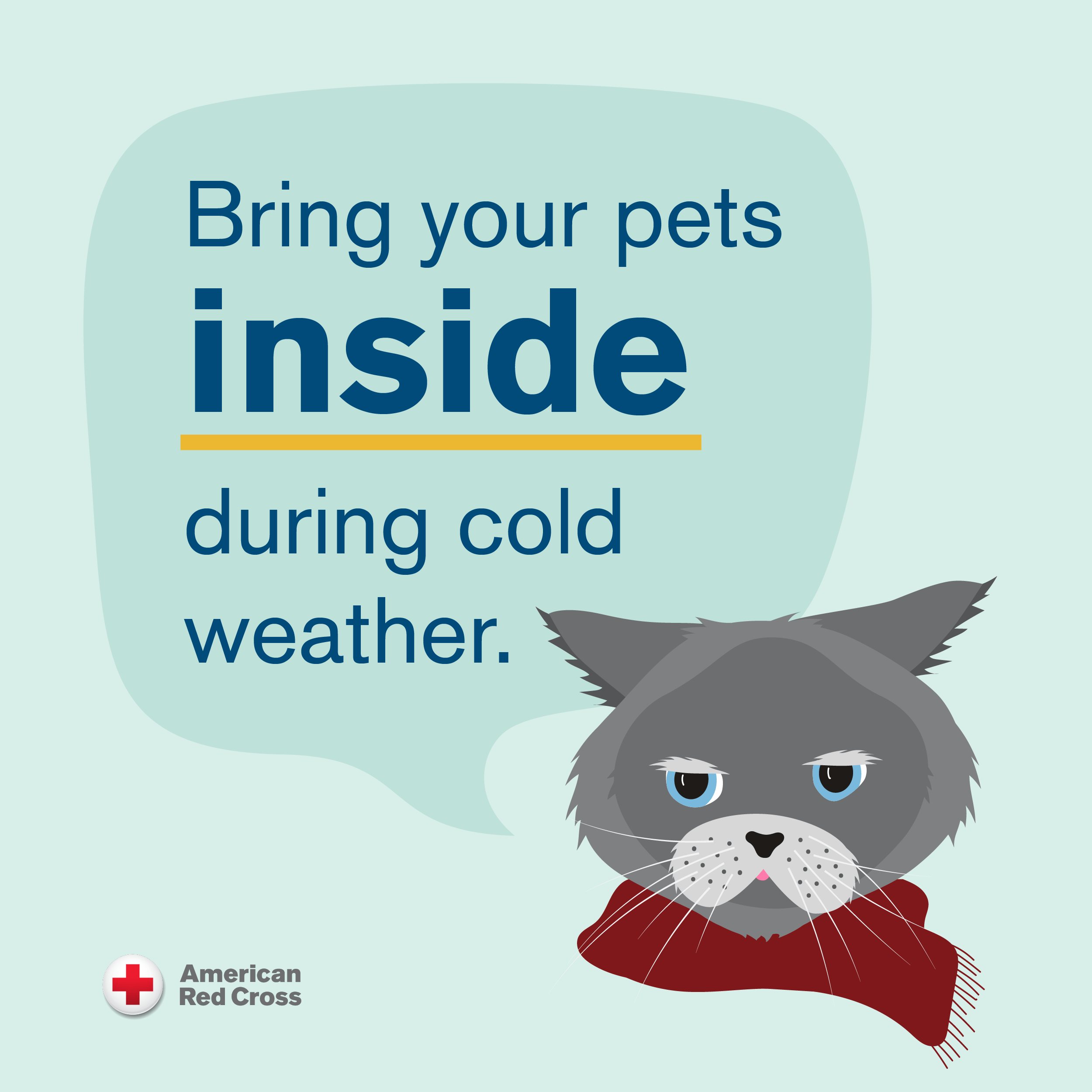
Red Cross graphic – Bring your pets inside during cold weather.
Following are some essential winter pet safety tips to make sure your animal companions are well cared for during the colder months:
Keep Pets Indoors
As tempting as it might be to let your dog or cat enjoy the winter wonderland, it’s much safer to keep them indoors whenever the temperature outside gets too low. Remember: If it’s too cold for you, it’s likely too cold for them. Prolonged exposure to cold weather can lead to dangerous conditions like frostbite, hypothermia, and even death. Animals left outside can also become disoriented, lost, injured, or stolen. Never leave your pets alone in a cold car as cars act like refrigerators and trap cold, which could lead to hypothermia.
Hydration and Nutrition
Cold weather dries out your pet’s skin, so make sure they can always have plenty of fresh water and a diet that is a little higher in calories. Pets use more energy in winter trying to stay warm, so a little more food may be beneficial. Check with your vet for the proper portion sizes and whether your pet requires additional nutrients during the cold weather months.
Protect Their Paws
Ice, snow, and the salt-clearing chemicals can burn your pet’s paws and dry them out, causing cracking and even open sores. Before going outside, rub petroleum jelly or protectants made for paw pads onto your pet’s paws to protect them. Putting booties on will offer even more protection. After being outside, dry off your pet and pay special attention to their paws, giving a thorough cleaning between the toes to remove any ice and salt that may be irritating and uncomfortable.
Dress for the Weather
While most pets have natural coats to keep them warm, short-haired pets or those with less body fat may need additional warmth. Consider getting your dog a sweater or coat that covers from the base of their tail to their belly. This is particularly important for small or aged pets, who may be more sensitive to cold temperatures. Be sure to change your pet’s sweater if it gets wet, as a damp coat can actually make them colder.
Red Cross graphic – Salted sidewalks mean irritated paws.
Watch for De-icing Chemicals
Ice-melting chemicals for sidewalks and roads are poisonous if swallowed. Antifreeze is especially hazardous for pets and may be fatal even in small quantities. Immediately clean up spills and keep these toxins out of reach of your pet. After walks, clean your pet’s paws if they may have come into contact with de-icing chemicals on the ground. If you must use de-icers at home, consider using pet-friendly alternatives or take other precautionary measures to protect your pet from the risk of accidental poisoning.
Avoid Frozen Water Sources
Frozen ponds, lakes, and rivers can be extremely hazardous for pets. Never let your pet off-leash near frozen water; the ice may not be thick enough to support their weight. If your pet falls through the ice, both of you could be in immediate danger. Always be aware of where you walk your pet during the winter months.
Provide a Warm Sleeping Space
During winter, this means providing them with a warm, cozy place to rest. Give them a bed off the floor away from any drafts and lined with extra blankets for warmth. Make sure your pets have a source of fresh, unfrozen water at all times, especially if they remain outdoors for short periods, and avoid using space heaters or heat lamps around pets in order to prevent burns or fires.
Keep Them Active But Safe
While you need to minimize the time your pet is out in cold weather, you also want to ensure they get physical activity. You can achieve this through shorter walks in winter. Immediately take them indoors if you notice signs of discomfort, such as shivering or refusing to walk any further. Older or arthritic pets may have difficulty navigating icy paths, so be extra cautious to prevent falls.
Red Cross graphic – Bring your pet inside. Signs they could have hypothermia: 1. Whining and shivering; 2, Moving slower or not at all; 3. Looking for a warm place to burrow.
Watch for Hypothermia and Frostbite
Like humans, pets can become hypothermic and get frostbite if left in the cold too long. If your pet begins to shiver, whine, act anxious or attempts to burrow in warm areas, this is a symptom of hypothermia. Frostbite is harder to notice but might cause skin to turn pale and even blister. Bring your pet inside immediately and call your veterinarian if you suspect your pet has frostbite or hypothermia.
Prevent Them from Getting Lost
It is much easier for pets to become lost during winter, especially since snowstorms bury familiar scents. Always keep your pet wearing a collar with current identification tags and consider microchipping for extra security. If your pet likes to roam free, a GPS collar could be a thoughtful investment.
Know Your Pet’s Limits
Just like humans, there is a big variation in the cold-weather tolerance of pets based on coat type, size, age, and health conditions. Older pets, young pets, and those with underlying conditions such as arthritis, heart disease, or diabetes can be more sensitive to cold temperatures. It is best to consult with your veterinarian to learn the needs and limitations of your pet in cold weather.
Winter is a very magical time to share with your pets, but it does take some extra TLC to ensure the animals stay comfortable and safe, too. By keeping them indoors in extreme cold, protecting their paws, adjusting their diet, and keeping their health checked, you will be able to ensure your pets are warm, safe, and happy during the entire winter season.
Disasters causing us to evacuate our homes are always unexpected, and unfortunately can happen anytime. There are many resources available for people to rely on during a crisis such as family, friends, and community organizations like the American Red Cross. But our beloved pets don’t plan for emergencies and are incredibly vulnerable when they strike. Preparing a crisis plan and kit can be crucial for their survival.
During an emergency, it may take some time before you and your pets have a stable place to live. Vital necessitates such as food, water and medications are an essential component of an emergency kit.
The CDC recommends having the following for each pet:
A leash, collar with identification, and appropriate carrier such as a crate or cage.
2 weeks supply of food and water along with feeding instructions.
2 weeks supply of any medications along with instructions for administering.
1 month supply of flea, tick and heartworm preventative.
A manual can opener.
Blankets, bandages, and other first aid items.
It is also important to include any important documents related to pet health and identity. You can always consult your veterinarian for a specific list. Certain animals may have additional needs, but some of the most vital documents include:
Registration information such as proof of ownership.
Your contact information should you and your pets be separated.
Rabies certificates, vaccination information, and medical history.
Traveling with pets generally requires advance planning, but emergencies can create extra complications. A detailed plan for your pets should include phone numbers of veterinarians, and animal shelters capable of taking in animals on short notice. Since many hotels and shelters do not accept pets, it is a good idea to call in advance to make sure their policies meet your potential needs. Larger animals such as horses and livestock might require advance preparations with caretakers who have additional resources and expertise beyond those of a veterinarian.
Also, for your consideration, the Red Cross has created app to download on your phone which contains information about how to provide first aid to animals in the event of an emergency. The app has useful instructions for how to administer CPR, respond to smoke inhalation, and treat wounds and burns.
When it comes to emergency preparedness, ensuring the safety and well-being of every member of your family, including your beloved pets, should be a top priority. Our furry friends are part of our families, and just like any other family member, they need to be included in our plans for unexpected situations. Whether it’s a natural disaster, a sudden evacuation, or any other crisis, having a well-thought-out pet safety and preparedness plan can make all the difference.
Red Cross graphic: Make an emergency kit for pets with things like: leashes, food, water, cat litter, medication.
Creating a Pet Evacuation Kit
One of the critical components of pet safety and preparedness is the creation of a pet evacuation kit. This kit should contain everything your pet might need to stay safe, comfortable, and healthy during an emergency. Here are the essential items to include:
Food and Water: Pack a sufficient amount of your pet’s regular food and clean water to last for at least a week. Make sure to include non-perishable food items that have a long shelf life.
Medications and Medical Records: Include any necessary medications your pet requires, along with copies of their medical records, vaccination history, and any relevant prescriptions.
Identification Tags: Ensure your pet has proper identification, including an up-to-date ID tag with your contact information. Consider microchipping your pet as an added layer of identification.
Comfort Items: Familiar items like toys, blankets, and bedding can provide comfort and a sense of security for your pet during stressful times.
Leashes, Carriers, and Harnesses: Have sturdy leashes, carriers, or harnesses ready to transport your pet safely. These items will be crucial during evacuations.
Sanitary Supplies: Pack waste bags, litter for cats, and cleaning supplies to maintain hygiene.
Contact List: Have a list of emergency contacts, including your veterinarian’s information, animal shelters, and friends or family who can assist with your pet if needed.
Red Cross graphic: Plan where you’ll go if you need to evacuate.
Incorporating Pets into Shelter Plans
Recognizing the importance of pets in people’s lives, the Red Cross has made significant strides in accommodating pets during emergencies. Red Cross Pet Liaisons work to incorporate pets into shelter plans, ensuring that families and their furry companions can stay together during challenging times.
Shelters equipped to handle pets provide separate areas for animals, complete with necessary amenities. This not only ensures the physical well-being of pets but also alleviates emotional stress for both animals and their owners.
Red Cross graphic: If it’s not safe for you to stay home during an emergency, it’s not safe for your pets either!
Community Engagement and Awareness
Raising awareness about pet safety in emergencies can encourage more people to take the necessary steps to prepare for their pets’ well-being. This includes assembling evacuation kits and practicing evacuation drills with pets, so everyone knows what to do when disaster strikes.
Pets are cherished members of our families, and their safety and well-being should be a priority in any emergency preparedness plan. By creating pet evacuation kits, incorporating pets into shelter plans, and promoting community engagement, we can ensure that our furry companions are protected during times of crisis. With these measures in place, we can face the unexpected with confidence, knowing that we are well-prepared to care for all members of our family.
Red Cross Disaster Action Team volunteer Fred Lehman assists the Philadelphia Fire Department care for a pet after it was rescued from a home fire last week. Photo courtesy of the Philadelphia Fire Department
While browsing the Pet First Aid app it occurred to me there are medical situations that could occur as a pet owner that never entered my mind prior to this review. This app has given me a new outlook on pet ownership and awareness of uniquely different structures compared with humans requiring similar responses. The main point is to be attentive to symptoms, such as shock syndromes, wounds, smoke inhalation, CPR, seizures, drowning, choking, breathing problems, and many more advanced medical conditions. A well-prepared pet owner may save their pet from needless discomfort in an emergency.
But downloading the Red Cross Pet First Aid App makes sense for non-pet owners, too. Here’s my personal story. A few years ago, I noticed a dog strolling up and down the sidewalk. It was a bit shabby and somewhat fearful, but the dog seemed mellow so I followed along to a nearby area filled with trees. I suspected the dog may have favored the woods as an easy exit if threatened. The dog was small and jet black with a collar around his neck – a good indication he was cared for by his owner. I decided to follow the dog back and forth along the sidewalk feeling his mood was cautious yet curious as he walked and I followed.
Finally, I caught up and held onto his collar. The contact information named a rescue agency. I called the number, reached a message and explained that I would take the dog to my home until I received further instructions. The dog didn’t dislike the idea, and off we went to my apartment. The elevator was uncomfortable, but he entered the apartment easily. I promptly offered him water and food, and took a tour of the apartment, opening all the doors so the dog felt safely placed.
I called the agency a second time and identified his name as Cooper. As soon as he heard the name, Cooper barked in recognition. The agency found the owner’s information and asked if it’s okay to receive a call from the owner’s friend. We waited without distress until the call was received. While waiting, I found a clothesline rope for a leach to escort him in the elevator to my courtyard. After a while the friend called and easily took possession of Cooper, and we went our separate ways. The owner was out of town but called later that evening to thank me.
While my story did not require first aid knowledge, you never know when you might encounter an animal that needs medical help. Having the app already on your phone can help to identify a lost pet’s condition and respond accordingly. While a veterinarian is the best solution for timely emergencies, it’s best to be well prepared with reliable information.
Download the free Red Cross Pet First Aid App from any app store or visit our website to learn more.
Winter is a great season to recharge with your furry friends by your side. Whether you have a dog, cat, rabbit, horse, scaly friend or another type of animal, it’s important to remember a few things to ensure they are cozy, safe, and warm alongside you when the weather gets cold!
Tip #1: Before even getting in your car, much less starting it, be sure to look under your vehicle for a little one potentially hiding out seeking warmth. Also, be sure to either knock on your hood a couple times or quickly pop it open to see if there’s a little ball of fluff cozied up next to your engine. (It does happen!) If you do find an animal, call animal control or, if you feel comfortable handling it, take it to the nearest shelter.
Tip #2: If its super cold out for you, then its super cold out for your pet! Never leave your pet out in the cold, no matter what. For many of us pet owners, our pets are family. Treat your pet with the same dignity you treat your most vulnerable family member.
Tip #3: If you need to walk your dog, be mindful of the hard salt crystals that are distributed on sidewalks and roads before a storm. Your dog’s paw pads are sensitive! Before going out, rub some salve on your dog’s paw. There are a few brands you can find by googling “paw pad salve.” If your dog needs extra TLC on his or her paws, acclimate them to wearing booties. They may not like it at first, but that’s why you’re the one taking care of your pet—to do what’s best for them!
Tip #4: Cats and dogs love a warm spot to snuggle, so make sure there are some cozy spots inside where they can snuggle when it gets extra cold outside. My cats like the thermo kitty sill—you can get it from most online retailers.
Tip #5: It can be tempting to blast the heater on extra hot when it dips below freezing, but be mindful that you’re not creating a sauna. Cats and dogs have a higher body temperature than humans, and they can overheat quickly.
Tip #6: If you’re going out overnight and leaving your animals behind, check the weather forecast for storms. A snowstorm could lead to a power outage, and if you use an automatic food dispenser that needs to be plugged in, your pets will go hungry! Get someone to cover for you, ideally, or use a battery-operated dispenser.
Tip #7: Have fun! Wintertime can be magical for the pets you can take outside. Some dogs love the snow, others not so much. Always respect your pet’s needs, likes and dislikes. If your dog does not like the snow, and you love it, maybe check out your local shelter and ask to walk a dog who loves the snow! The SPCA near me lets us take certain dogs to the park. A fun option to spend some time with a shelter dog who loves the snow as much as you. Your own dog won’t be jealous and will be thankful he or she can stay cozy inside.
April is National Pet First Aid Awareness Month. We really love pets here at the Red Cross Philly blog, so we want to connect you with up-to-date information for keeping your pet safe at home, outside, and if disaster strikes.
If you haven’t already, download the Red Cross Pet First Aid App. The app helps you build a comprehensive pet profile, and provides emergency pet first aid information whenever you need it. Text “GETPET” to 90999 now to download it, or look for the app in your smartphone’s app store.
Here are recent articles we’ve shared on pet safety and emergency preparedness, for you and your furry, feathered, or scaly family members:
Have you used pet safety information or tips from the Red Cross? Let us know about it on social media! Post a picture of your pet(s) and let us know which first aid or safety tips have helped your pet the most by tagging @RedCrossPhilly.


.jpg)