Category: Climate

  • Earth Month challenge: Give public transit a try

    By Alana Mauger and Sean McKee

    SEPTA Silverliner IV local Saturday service at Malvern Terminus. Photo by Valerio Pucci. No changes were made. Photo published under  CC BY-SA 4.0.

    April is Earth Month, a time when people around the globe commit to fostering a more sustainable future. Building on the efforts of the national American Red Cross Sustainability Office, Southeastern Pennsylvania’s Red Cross Green Team challenges readers to give public transit a try.

    Using public transit is one of the most effective actions individuals can take to conserve energy. A single person who switches from a 10-mile solo commute by car to existing public transportation can reduce their annual CO2 emissions by 10 pounds per day. You’ll also save money by reducing the need for gas and parking, and you use your passive commute time to finish up work, listen to music, read or just relax. Who knows, you might even enjoy it!

    To get you started SEPA’s Green Team will help you plan a public transit trip to our Spring Garden Campus in Philadelphia via SEPTA.

    How To Get There

    Getting to the Red Cross Spring Garden Campus via SEPTA is easy; it is centrally located and there are multiple routes that will get you there, depending on your starting location. To find the route that best works for you, here are a few resources to check out:

    How To Pay For Fares

    There are multiple ways to pay on SEPTA:

    Contactless Payment: SEPTA accepts contactless payment (such as credit/debit card or Apple/Google/Samsung Pay) for travel on bus and Metro. This includes the Broad Street Line, Market-Frankford Line, Norristown High Speed Line and trolleys. NOTE: Regional Rail is not eligible for contactless payment.

    Benefits:

    • Includes free transfers within two hours
    • Easy tap-on access across eligible transit modes

    SEPTA Key card: While SEPTA does have plans to update the Key Card system, it is still the most integrated way to get around across the whole system.

    Benefits:

    • Load it with funds or passes
    • Includes free transfers within two hours
    • Easy tap-on access across ALL transit modes

    Cash: SEPTA accepts cash for travel on any of its services. Note: EXACT FARE is required for transit trips.

    Earth Month Alternative Option

    If you live in an area not served by public transit or you already drive an electric vehicle, the Green Team offers you an alternative Earth Month challenge: power down for one hour. While the physical act of turning off your devices for one hour may not have a significant environmental impact, powering down gives you the space necessary to reflect and consider actions that can lead to a healthier planet. Choose an hour that fits your schedule and unplug. As a plus, your mental health will benefit, too!

    Caught in the Act

    Photos or it didn’t happen! Email us a selfie of you on public transit or at the conclusion of your power down hour and we’ll share the photos in a future post. Or if you’re camera shy, just the email will do letting us know you participated.

  • World Water Day 2025: Save Our Glaciers

    By Zain Ahmad

    UN Water graphic – Glaciers are melting faster than ever. 22 March World Water Day, 2025 Glacier Preservation.

    Today is World Water Day 2025. We face a serious problem: our glaciers are melting fast, and it important to maintain these immense ice formations. Glaciers are important for our planet’s health and for providing water to many people. But now, because of the climate crisis, they’re melting faster than ever before.

    Why Glaciers Matter

    Glaciers are vital for:

    • Providing drinking water: As glaciers melt slowly, they release water that many people use for drinking and everyday use.
    • Supporting agriculture: Farmers rely on glacier water to grow crops, especially in dry areas or during hot seasons.
    • Powering clean energy: The water from melting glaciers is used to generate hydroelectric power, which is a clean source of energy.
    • Keeping ecosystems healthy: Many plants and animals depend on the water and cool temperatures that glaciers provide.

    The Red Cross and Climate Disasters

    The American Red Cross is seeing firsthand how the climate crisis affects people. They’re responding to more:

    • Powerful hurricanes: These storms are getting stronger and causing more damage to coastal communities.
    • Longer heatwaves: Hot spells are lasting longer and becoming more dangerous, especially for vulnerable people.
    • Bigger wildfires: Fires are burning larger areas and lasting longer, threatening more homes and lives.

    These disasters hit some groups of people harder:

    • Low-income families: People with less money often live in areas more at risk and have fewer resources to recover.
    • Minority communities: These groups are often more exposed to climate risks and have less access to help.
    • People with disabilities: Those with physical or mental challenges may face more difficulties during emergencies.
    • In the last 10 years, over 8.5 million people in the U.S. had to leave their homes due to climate disasters. This shows how big the problem is becoming.

    What We Can Do

    To help save glaciers, we can:

    1. Reduce greenhouse gases: This means using less energy from fossil fuels and switching to clean energy sources like solar and wind.
    2. Improve water management: We need to use water more wisely and find ways to store and distribute it fairly.
    3. Support groups like the Red Cross: The Red Cross needs help to respond to more frequent disasters.
    4. Spread awareness: The more people understand about glaciers and climate change, the more we can do to help.

    Saving glaciers is about our future. Action is necessary to protect our water supplies, prevent more disasters, and keep communities safe. Glaciers are a key source of fresh water for many regions. By slowing climate change, we can reduce the number and severity of weather-related emergencies. Preserving glaciers helps maintain stable living conditions for millions of people.

  • Red Cross on 2024 trends: Extreme weather creates massive humanitarian needs amid nonstop disaster responses

    By Dave Skutnik

    Red Cross graphic – How we helped this year.

    In 2024, extreme weather mounted an overwhelming toll on people in the U.S., who relied on the American Red Cross for relief and care as they faced the country’s second-highest number of billion-dollar disasters ever recorded.

    This year’s 24 major climate and weather events — each with losses exceeding $1 billion — are topped only by last year’s record-breaking 28, and the year isn’t over yet. To help, over 50 Red Cross volunteers from Southeastern Pennsylvania have been part of teams responding nonstop to provide shelter, food and other assistance to tens of thousands of people reeling from Hurricanes Helene and Milton — all while continuing to care for families still recovering from 2023’s extreme disasters.

    “First-hand, I’ve seen the devastation that disasters have caused families this year — and extreme weather shows no signs of slowing down,” said Jennifer Graham, regional CEO for the American Red Cross of Southeastern Pennsylvania. “Whether a crisis happens in our backyard or a community across the country, neighbors are counting on us to help ensure they don’t face it alone. Please join us by making a donation of any size or rolling up a sleeve to give blood or platelets.”

    This Giving Tuesday and holiday season, visit redcross.org to make a financial donation or an appointment to give blood or platelets. People can also give the gift of time through volunteering. 

    NEED FOR FOOD IN 2024 NEARLY TRIPLES 5-YEAR NATIONAL AVERAGE

    Nationally, the scope of disasters increased this year’s demand for necessities like food and emergency lodging — which both exceeded the annual average for the past five years. In fact, this year’s more than 7 million meals and snacks, served by Red Cross volunteers, nearly tripled that average.

    Locally, the Red Cross has responded to more than 400 disasters this year in Philadelphia, Bucks, Chester, Delaware and Montgomery counties. This includes several large apartment building fires in Philadelphia that displaced hundreds of people. Red Cross volunteers were there to provide shelter, food and financial assistance to help these local families get back on their feet. And on a national scale, dozens of volunteers from Southeastern Pennsylvania responded to help during large national disasters such as hurricanes in the Southeast and wildfires along the West Coast.

    Philadelphia Red Cross volunteer Randy Miller recently returned from North Carolina, where she spent 14 days serving communities that were heavily impacted by Hurricane Helene’s destruction. She says it was her first national deployment with the American Red Cross, where she was “supporting the emotional needs of not just the people who are in the shelters, but the community as a whole.”

    RESPONDING TO OTHER HUMANITARIAN NEEDS

    This year, the Red Cross addressed people’s urgent needs in other ways too:

    BLOOD DONATIONS
    Blood donors have given nearly 100,000 units of blood in Southeastern Pennsylvania this year, helping overcome blood drive cancellations due to the country’s severe weather and heat, including a dozen drives locally. This support was critical to the 38 local hospitals that receive Red Cross blood products. In addition, as the nation’s largest blood supplier, the Red Cross helped ensure patients continued accessing lifesaving treatment during major disasters by pre-positioning blood products near areas likely to be impacted — including in Georgia and Florida for Hurricane Helene and again just days later for Hurricane Milton. To celebrate 30 years of FRIENDS, all who come to give blood or platelets through December 8 will receive two pairs of custom FRIENDS + Red Cross socks, while supplies last, in partnership with Warner Bros. Discovery Global Consumer Products. See RedCrossBlood.org/Friends for details.

    LIFESAVING TRAINING
    With emergency rooms experiencing a spike in heat illness visits amid the country’s extreme temperatures this past summer, Red Cross instructors empowered millions of people — including over 50,000 in Southeastern Pennsylvania  — this year with vital first aid, CPR and AED skills to help them prevent and respond to heat stroke and heat exhaustion.

    MILITARY FAMILIES
    Through our 24/7, global Hero Care Network, local Red Cross workers supported military members, veterans and their families in Southeastern Pennsylvania this year through over 1,500 services, such as connecting deployed service members and loved ones during family emergencies.

    Visit redcross.org/philly for more information about how the Red Cross helped people in the Delaware Valley in 2024.

  • Take action during National Preparedness Month to get ready for emergencies

    By Alana Mauger

    The American Red Cross of Southeastern Pennsylvania (SEPA) is encouraging everyone to take critical actions during National Preparedness Month this September to be ready for worsening disasters. Deadly storms and floods, raging fires and extreme heat are becoming more frequent and intense due to the climate crisis and families are experiencing the effects. These climate disasters occur on top of the devastating home fires the Red Cross responds to every day.

    “Disasters can happen at any time, often without warning, changing lives forever in just minutes,” said Jennifer Graham, Regional CEO, Red Cross, SEPA. “As our climate changes, it’s critical to help protect your loved ones and National Preparedness Month is the ideal time to get your household ready for emergencies.”

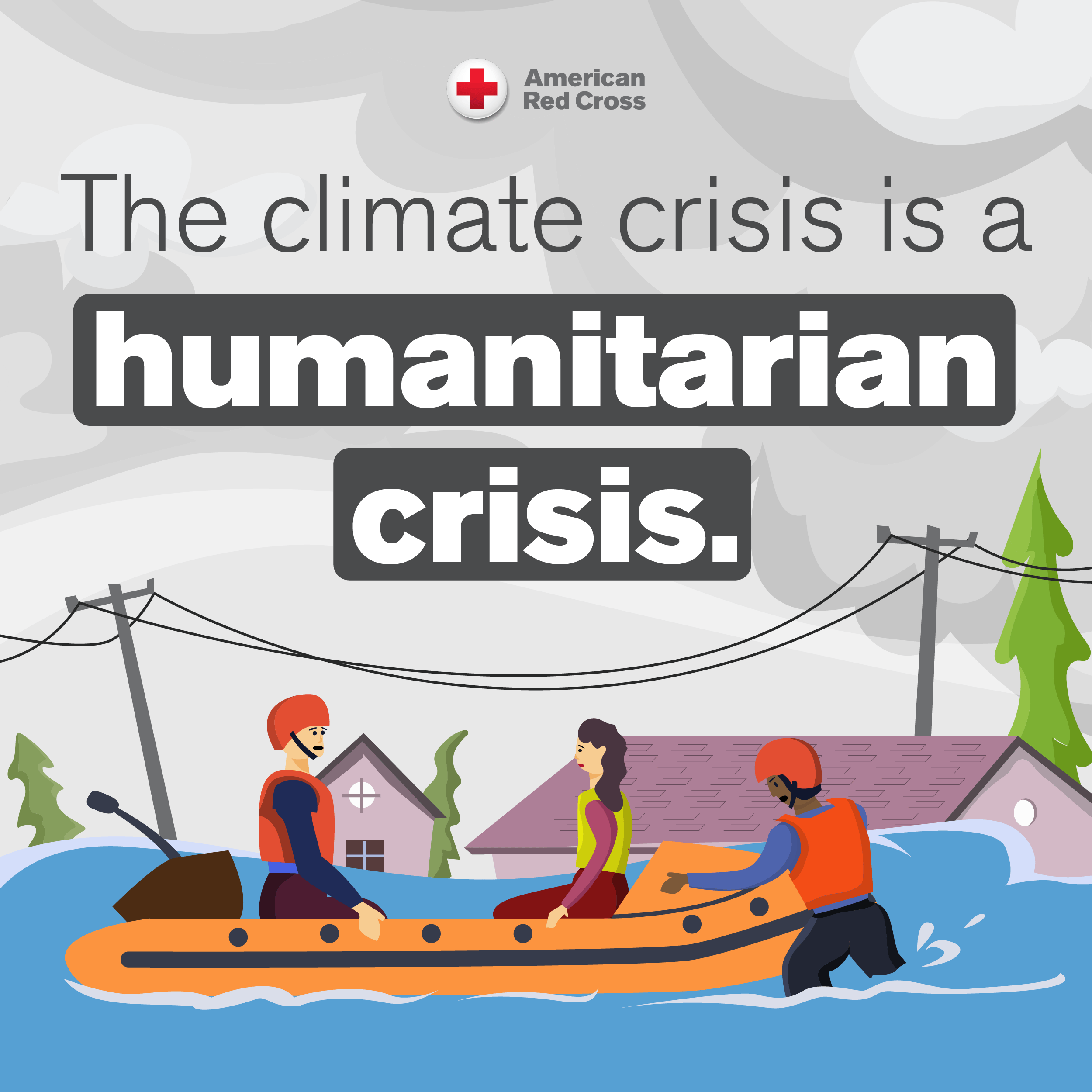
    Red Cross graphic – The Climate crisis is a humanitarian crisis.

    HOW TO PREPARE

    Get ready for disasters by making a plan to stay safe, gathering important supplies and knowing how you’ll stay connected. Follow these steps to prepare for emergencies:

    1. Depending on the emergency, you may need to stay where you are or go somewhere else to stay safe. If you may need to leave, think about where you will go, how you will get there, where you will stay and what you’ll take with you. Plan well in advance if you’ll need help leaving or use public transportation.
    2. Next, gather and organize critical supplies — like food, water and medicine — into a go-kit and a stay-at-home kit. Your go-kit should include three days of supplies that you can take with you. Your stay-at-home kit should have two weeks of food and water, and a one-month supply of medications, if possible.
    3. Customize your kit to meet your household’s specific needs. If you have young children, don’t forget formula and diapers. If you have pets, include leashes, carriers, food, bowls, litter and a litterbox.
    4. Make a plan to reconnect with loved ones if you are separated or if the phone or internet is down. Write down important phone numbers on a contact card and carry it with you.
    5. Finally, download the free Red Cross Emergency app for real-time weather alerts and expert advice in both English and Spanish. And don’t forget to sign up for free emergency alerts from your local government to get critical information during local emergencies.
    Red Cross graphic – The climate crisis impacts…hurricanes, floods, heatwaves, wildfires, drought.

    CLIMATE CRISIS EFFECTS

    This year, experts forecasted active wildfires and hurricanes — predictions that are proving to be true. In July, Hurricane Beryl broke records as the earliest Category 5 storm ever recorded and in early August, Hurricane Debby brought massive flooding to much of the East Coast, including parts of Chester County in our region. So far in 2024, 1.5 million more acres of land have been burned by wildfires compared to all of 2023. Plus, 2024 is on track to be the hottest year on record according to experts. Altogether in 2024, the U.S has experienced 15 climate disasters, each with losses of over a billion dollars — nearly double the average from the last 40 years.

    Over the past year in Southeastern Pennsylvania, we responded to 663 local disasters, most of which were home fires, providing relief and recovery support to more than 2,500 people. Since July 1, we have already supported 240 families – 615 people total – in response to local home fires.

    When these disasters happen, the Red Cross is there providing food, shelter and comfort to ensure no one faces such a difficult time alone. To help families better cope with this worsening climate crisis, the Red Cross is also enhancing our support for those who need it most and increasing our capacity to respond to non-stop disasters.

    “The best defense during an emergency is to be prepared, and that’s true for both our individual families and our entire community,” said Graham. “During National Preparedness Month, consider donating to help people affected by disasters big and small, or making an appointment to give blood. If you have the time, take a first aid class or put on a red vest and join us as a volunteer.”

    Visit redcross.org/philly or call 1-800-RED CROSS (1-800-733-2767) to learn more today. Follow us on X, Facebook and Instagram for 30 days of Preparedness tips!

  • Remnants of Tropical Storm Debby cause flooding in Avondale, Chester County

    By Alana Mauger

    Red Cross disaster volunteers staff the shelter at the Garage Community and Youth Center in Avondale, Chester County. Photo by Dianne Heard / American Red Cross

    The American Red Cross, in partnership with the Chester County Office of Emergency Management (OEM), opened a shelter overnight Thursday, Aug. 8 for residents who were evacuated from Avondale Apartments because of flooding.

    Heavy rainfall from the remnants of Tropical Storm Debby caused White Clay Creek to overflow its banks, and soon water rushed into the first floor of apartments. Power was cut to both buildings for safety, displacing more than 100 residents.

    Having experienced the creek’s flooding before, many residents evacuated to The Garage Community and Youth Center nearby, which welcomed them with open arms. The Red Cross had previously staged shelter cots at the center for this very purpose. Within a few hours Red Cross disaster workers transitioned The Garage’s reception center into a shelter.

    Forty-four people stayed in the shelter Thursday night, with the Red Cross and community partners providing a place to rest, meals, snacks, hygiene and comfort items, emotional support and other services.

    With the water receding and power restored on Friday afternoon, residents who live on the second and third floors were able to return to their apartments. However, the eight first-floor apartments could not be reoccupied for at least a few more days. Thirteen people stayed in the shelter overnight Friday.

    Thanks to the generosity of Kennett Area Community Services (KACS), the remaining displaced residents moved into hotel rooms on Saturday afternoon and the shelter closed.

    Severe weather like Tropical Storm Debby is part of the climate crisis that has seen the Red Cross respond to nearly twice as many large disasters across the country as it did a decade ago. In 2023 alone, the U.S. experienced an all-time high of 28 billion-dollar plus disasters that ravaged communities and forced hundreds of thousands of people to flee from severe storms, floods and wildfires. Visit our website to learn about our work.

    News Coverage

  • Tips for staying safe during extreme heat

    By Zain Ahmad

    Red Cross graphic – Evacuate your home! If it becomes too hot, go to an air-conditioned place like a library, mall or public cooling center.

    According to the U.S. Centers for Disease Control and Prevention (CDC), extreme summer heat is increasing. Climate projections indicate that extreme heat events will be more frequent and intense in coming decades. The American Red Cross has information to help keep everyone safe during summer heat.

    Dangers of extreme heat

    Exposure to extreme heat poses significant health risks and even heat related health emergencies and deaths, all of which have increased over the years. The main health conditions directly related to heat include heat stroke and heat exhaustion. Older people, those with chronic medical conditions and  young children are specifically prone to heat-related health problems. Hot temperatures also contribute to heart attacks and strokes.

    The increased heat can also cause wildfires, which are also more common. Southeastern Pennsylvania was even affected by the smoke from Canadian wildfires last year.

    Red Cross graphic – You need to drink at least 12 cups of water per day during a heat wave.

    Safety tips

    With rising incidence of the heat wave around the nation, here is how to keep yourself safe from the heat:

    • Stay in air conditioned buildings if possible. Find out about any cool places in your area, such as a library or a shopping center. If you do not know of any near you, then contact your local health department and find a cooling center near you.
    • Install air conditioners in your home. A fan is not enough as it gives the body a fake sensation of comfort and does not reduce body temperature.
    • Stay well hydrated. Drink more water than usual. If you have health conditions that limit fluid intake, then check with your doctor about the amount of water that you can drink
    • Never leave children or pets in a parked vehicle. Inside of the parked cars can quickly get heated to 120 F.
    • Avoid any outdoor activities especially from 10 a.m. to 4 p.m., if possible. This will reduce your risk for any heat-related conditions
    • Wear loose and light colored clothings. Take cool showers or baths.
    • If by any chance you have to wear a mask, be sure to wear one that has breathable fabric, such as cotton. Polyester is not a breathable fabric.
    • Be sure to check on your neighbors, family, or friends who may not be safe from the heat.
    • As for pet safety, make sure pets have cool water and shade. Check on them frequently to find out if they are feeling well.
    Red Cross graphic – Don’t use an electric fan during warm weather. Using a fan when the indoor temperature is over 95 degrees F may cause your body to gain heat instead of losing it.

    Following these simple tips will keep yourself and your family safe from the heat. Visit our website or download our free First Aid app for more tips.

  • Get informed during PA Severe Weather Awareness Week

    By Alana Mauger

    The American Red Cross joins the National Weather Service (NWS) in observing Severe Weather Awareness Week in Pennsylvania April 15-19, 2024. The educational campaign aims to inform the public about how to prepare for and respond to severe weather events like thunderstorms, flash flooding and tornadoes.

    National Weather Service video – Thunderstorm Types

    Severe Thunderstorms

    A thunderstorm is considered severe if it produces wind gusts of at least 58 miles an hour or hail stones that are about the size of a quarter. These storms are usually accompanied by heavy rain, lightening and possible tornadoes.

    NWS issues watches and warnings to alert the public about severe weather risks.

    • A severe thunderstorm watch is issued when conditions in the atmosphere are favorable for thunderstorms with damaging winds and large hail to develop in a geographic region. If a watch is issued for your area, consider rescheduling outdoor activities and check for updates throughout the day.
    • A severe thunderstorm warning means a severe thunderstorm is happening or is about to happen at your location soon. Warnings typically last less than an hour and may list specific towns that are in the storm’s path. If a severe thunderstorm warning is issued for your area, seek shelter inside immediately and go to an interior room on the lowest level. If you’re driving, pull over to the side of the road until the storm passes.

    Outlooks, Watches and Warnings

    Watches and warnings can be issued for any severe weather event and apply to the flash flooding and tornado sections below.

    In addition to watches and warnings, NWS issues a convective outlook 1-8 days ahead of severe weather to predict the risk for broad regions. Categories of risk include general thunderstorms, marginal, slight, enhanced, moderate and high. The higher the risk, the greater potential for intense and widespread severe storms.

    NOOA graphic – A Flood Warning is issued when flooding is happening or will be happening. Some roads will be flooded. Move to higher ground. Never drive through flooded roads. A Flood Watch is issued when flooding is possible. Stay tuned to radio/TV, follow weather.gov and be ready to seek higher ground.

    Flash Flooding

    Unfortunately, more people are killed by flash floods than by other storm-related weather hazard, with most deaths caused by driving on flooded roads. A flash flood is flooding that happens quickly. During a flash flood, streams, creeks or manmade drainage systems rise rapidly and crest within a few hours as a result of heavy rain. They’re so dangerous because the water rises quickly and can catch people off guard and trap them in dangerous situations.

    If you encounter a flooded road, TURN AROUND, DON’T DROWN! Don’t drive or walk through flooded areas. It takes only 6 inches of water to knock you off your feet, and 16 inches of water to move a vehicle. Get to higher ground outside of the area prone to flooding and stay informed by monitoring weather alerts. Pay attention to flood warnings and watches.

    National Weather Service video – Get Weather Ready During a Tornado

    Tornadoes

    A tornado is a violently rotating column of air in contact with the ground. Wind speeds inside a tornado can range from just under 100 to 300 MPH and can travel as fast as 70 MPH. While Pennsylvania is at a lower risk for tornadoes than areas in the mid-west, they do occur here. In fact, the commonwealth averages around 15 tornadoes per year.

    If a tornado warning is issued for your community, seek shelter in a basement or interior room on the lowest floor. Closets, bathrooms, and other interior rooms without windows offer the best protection. Avoid windows and get under something sturdy or cover yourself with a mattress. If you’re at a school, hospital or shopping center, follow directions to a pre-designated shelter area.

    If you’re in a vehicle, buckle your seat belt, and try to drive to the closest sturdy shelter. If your vehicle is hit by flying debris while you are driving, pull over and park. Stay in the car with the seat belt on. Put your head down below the windows, cover your head with your hands and a blanket, coat or other cushion if possible.

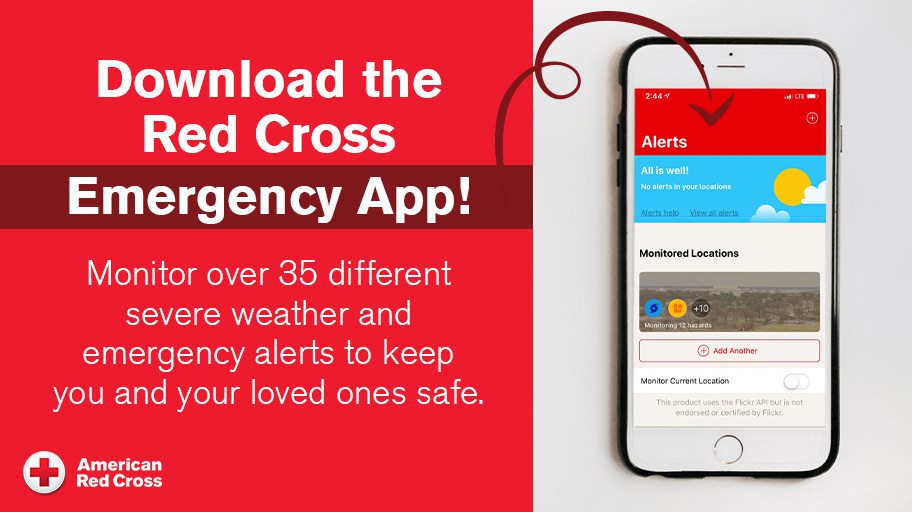
    Red Cross graphic – Download the Red Cross Emergency App! Monitor over 35 different severe weather and emergency alerts to keep you and your loved ones safe.

    Stay Informed

    The Red Cross provides a free Emergency App for real-time alerts and proactive planning. This app has been delivering timely and reliable storm emergency information to affected communities since 2015 and was updated last year with new features that provide modern accessibility, customization, and proactive planning guidance. Download it from any app store or visit our website.

    Climate Crisis

    The climate crisis has led the Red Cross to respond to nearly twice as many large disasters compared to a decade ago. In 2023 alone, the U.S. experienced an all-time high of 28 billion-dollar plus disasters that ravaged communities and forced hundreds of thousands of people to flee from severe storms, floods and wildfires.

    With the growing frequency and intensity of disasters driven by the climate crisis, the Red Cross is racing to adapt its services and grow its disaster response capacity across the country. Visit our Climate Crisis webpage to learn more.

  • World Water Day: ‘Leveraging Water for Peace’

    By George Edwards

    UN graphic – UN Water 22 March World Water Day: 2024 Water for Peace. Enduring peace relies on water.

    Since 1993, the United Nations has instituted a call to observe World Water Day every March 22nd. World Water Day is dedicated to highlighting the importance of freshwater and advocating for the sustainable management of freshwater resources with the goal of attaining clean water and sanitation for all by 2030. Each year focuses on a theme related to water issues, and 2024’s specific focus is “Leveraging Water for Peace”.

    We sometimes take water for granted, but water is the most basic element of life, and it has the potential to foster cooperation or exacerbate conflict among nations and communities. According to the United Nations, over 2 billion people worldwide live in countries experiencing high water stress, and about 4 billion people face severe water scarcity during at least one month of the year.

    It is surprising that agriculture consumes around 70% of the world’s freshwater. But inefficient practices have jeopardized food production, leading to food shortages and increased prices. Common farming techniques extract groundwater at rates faster than it can be replenished, leading to a rapid decline in water tables. In addition to food shortages and droughts, unsustainable water use can collapse aquatic ecosystems, rapidly depleting fish populations.

    Poor water quality is also a significant problem that can cause societal unrest. Lack of access to clean water and sanitation facilities can lead to the spread of diseases, such as cholera, dysentery, and typhoid. The World Health Organization also estimates that 829,000 people die each year from diarrhea due to unsafe drinking-water, sanitation, and hand hygiene.

    Given the critical importance water use and sanitation play in our lives it’s worth considering ways to help conserve our most vital resource.

    Here are some things to consider:

    • Be conscious of your water usage: Turn off the faucet while brushing your teeth or shaving, fix leaks as soon as you can, and be mindful of the amount of the you spend showering. Shortening your shower by just a few minutes can save gallons of water each time.
    • Fix Leaks Promptly: Repair dripping faucets, leaking toilets, and other plumbing leaks as soon as you notice them. A small drip can waste a significant amount of water over time.
    • Full Loads Only: Only run the washing machine and dishwasher when they are fully loaded to maximize efficiency.
    • Efficient Appliances: Use water-efficient appliances and fixtures, like low-flow showerheads or dual-flush toilets, which can reduce water consumption substantially.
    • Smart Gardening: Water plants early in the morning or late in the evening to reduce evaporation, purchase a rain barrel to collect rain for watering your garden, and use mulch around plants to retain soil moisture.
    • Cover Swimming Pools: When not in use, covering your pool will reduce water loss due to evaporation.

    World Water Day can serve as a great opportunity to reflect and consider ways to make a difference through smart consumption of water in your daily routine. Remember, small actions will accumulate successfully over time, and go a long way to help other in need.

  • 2023 trends: Red Cross responds to growing climate-driven humanitarian needs

    By Dave Skutnik

    Red Cross graphic – 1 in 7 people have been directly impacted by the climate crisis in the last 10 years. Source: IFRC

    In 2023, the intensifying climate crisis took a devastating toll on people in the U.S. who turned to the American Red Cross for help coping with a record number of billion-dollar disasters.

    So far this year, an all-time high of 25 billion-dollar disasters ravaged communities across the country, with the American Red Cross Southeastern Pennsylvania Region deploying volunteers to 18 different national disasters to help with relief efforts. And these back-to-back disasters led to a series of blood drive cancellations, which further strained the national Red Cross blood supply that was already dwindling from summer travel and back-to-school activities.

    “The climate crisis is causing more humanitarian needs for families in the Delaware Valley and across the country, from the deadly flash flood in Bucks County over the summer to devastating wildfires in Hawaii,” Jennifer Graham, Regional CEO for the American Red Cross of Southeastern Pennsylvania said. “This holiday season, please remember those who need support in the face of emergencies — and join us to provide care and comfort by making a financial donation or by giving blood or platelets.”

    In addition to responding to these climate-driven disasters across the country, here at home Red Cross volunteers respond to an average of 2-3 home fires every day. So far in 2023, the Red Cross of Southeastern Pennsylvania has responded to more than 700 home fires, leaving more than 2,200 people displaced across Philadelphia, Bucks, Chester, Delaware and Montgomery counties. The Red Cross provides these families with temporary shelter and helps with longer term disaster recovery services.

    Help during the holidays by visiting redcross.org to make a financial donation or an appointment to give blood or platelets. You can also register for volunteer opportunities in our area.

    Red Cross graphic – Actions we’re taking to address the climate crisis: 1. Enhancing large scale disaster response services. 2. Strengthening local partnerships to mitigate health, hunger and housing challenges. 3. Growing our disaster teams to provide more relief. 4. Expanding our financial assistance programs.

    INCREASING SUPPORT AMID THE CLIMATE CRISIS

    With the growing frequency and intensity of disasters driven by the climate crisis, the Red Cross is racing to adapt its services and grow its disaster response capacity across the country. As part of this national work in 2023, the Red Cross distributed $108 million in financial assistance directly to people after disasters of all sizes, including major disasters such as Hurricane Idalia, the Hawaii wildfires and a spate of tornadoes across multiple states.

    Due to increased needs from the climate crisis, the Red Cross has expanded financial assistance programs for major extreme weather disasters — including to help families bridge critical recovery gaps, such as security deposits for new housing and costs for home repairs.

    Across the country, the Red Cross is delivering this vital financial assistance on top of its immediate relief efforts — including safe shelter, nutritious meals and emotional support — which have been provided on a near-constant basis for this year’s relentless extreme disasters. In fact, this year’s onslaught of large disasters drove an increase in emergency lodging provided by the Red Cross with partners — with overnight stays up more than 50% compared to the annual average for the previous five years.

    During 2023, Red Cross volunteers from Southeastern Pennsylvania deployed more than 200 times to help with these large disasters across the country, including floods in California, wildfires in Hawaii, tornadoes in Alabama, Mississippi, Arkansas and Missouri, Typhoon Mawaar in Guam, Hurricane Idalia in Florida, flooding in Vermont and many more.

    Red Cross graphic – There for the moments that matter.

    RESPONDING TO ADDITIONAL EMERGING NEEDS

    Beyond the climate crisis, people stepped up through the Red Cross to address other emerging needs for communities, including:

    • BLOOD DONATIONS: As the nation’s largest blood supplier, the Red Cross is grateful for the millions of donors who rolled up a sleeve throughout the year for patients in need. To further improve people’s health outcomes, the Red Cross has been working with community partners to introduce blood donation to a new and more diverse generation of blood donors — which is critical to ensuring that a reliable blood supply is available to the 1 in 7 hospital patients who need a lifesaving blood transfusion. The holidays can be a challenging time to collect enough blood for those in need. To book a time to give, visit RedCrossBlood.org, download the Red Cross Blood Donor App or call 1-800-RED CROSS. As a thank-you, all who come to give blood, platelets or plasma Dec. 1-17 will receive a $10 Amazon.com Gift Card by email. Terms apply. See rcblood.org/Amazon. Plus, those who come to give Dec. 18-Jan. 5 will get a legendary long-sleeved Red Cross T-shirt, while they last!

    • LIFESAVING TRAINING: This year, the Red Cross expanded its training to empower people to act during current-day crises — which is vital considering that nearly half of U.S. adults report being unprepared to respond to a medical emergency. This included launching the new “Until Help Arrives” online training course last spring for opioid overdoses, severe bleeding, cardiac arrest and choking emergencies, and partnering with professional sports leagues through the Smart Heart Sports Coalition to help prevent tragedies among student athletes by offering CPR training and increasing access to AEDs.

    • MILITARY FAMILIES: Red Cross workers helped service members on U.S. military installations and deployment sites worldwide — including in Europe, the Middle East and Southeast Asia. As part of our support this year, Red Cross volunteers delivered emergency communications messages connecting more than 87,000 service members with their loved ones during times of family need, while also engaging members in morale and wellness activities during deployments.

    • INTERNATIONAL: As part of the world’s largest humanitarian network, the American Red Cross supported international response efforts to disasters such as this year’s massive earthquakes in Türkiye and Syria, the drought and hunger crisis in Africa, and flooding in Pakistan and Bangladesh. This has included providing millions in cash assistance, food, shelter, basic supplies, medical care and mental health services. As devastating conflicts persist in other areas of the world, the global Red Cross Movement continues to provide aid for people suffering, including those in Ukraine and in Israel and Gaza, as part of its neutral, humanitarian mission.

    Visit redcross.org/philly for more information about how the American Red Cross Southeastern Pennsylvania Region helped people in Philadelphia and beyond in 2023.

  • Red Cross focuses on worsening extreme weather during National Preparedness Month

    By Alana Mauger

    Red Cross graphic: The climate crisis is a humanitarian crisis.

    September is Disaster Preparedness Month, and the American Red Cross is urging everyone to prepare for a national trend of worsening severe weather. In fact, as an organization, we have responded to nearly twice as many large disasters across the country as we did a decade ago.

    As rapidly intensifying, weather-related events pose serious challenges to our humanitarian work and the people we serve, the Red Cross has announced an ambitious national plan to take urgent action. With more climate-driven disasters upending lives and devastating communities, we’re racing to adapt our services and grow our disaster response capacity across the country. At the same time, we’re funding new international programs on climate response and preparedness, as well as minimizing our own environmental footprint.

    Locally in Southeastern Pennsylvania, we’re recruiting and training more Red Cross volunteers to respond both in our region and across the country. Currently, 11 of our local volunteers are deployed to assist people in Hawaii, Southern California, Washington and Florida, as well as virtually, and this summer, our volunteers have also helped people impacted by extreme weather in Guam, Texas, Vermont, Oklahoma, Mississippi and Arkansas.

    For National Preparedness Month, you can individually take three lifesaving actions — get a kit, make a plan and be informed — to help protect yourself against local emergencies.Follow safety tips now at redcross.org/prepare. We also invite you to check our Red Cross Philly Blog throughout the month for a series of volunteer-written articles about specific preparedness topics.

    Red Cross graphic — Actions we’re taking to address the climate crisis: enhancing large-scale disaster response services; strengthening local partnerships to mitigate health, hunger and housing challenges; growing our disaster teams to provide more relief; expanding our financial assistance programs.

    ADAPTING TO THE CLIMATE CRISIS

    In the first half of 2023 alone, the nation experienced an above-average 15 billion-dollar disasters. That’s all on top of extreme heat in communities across the U.S. — which have made July the country’s hottest single month on record. What’s more, the U.S. is just now entering its typical peak time for hurricanes and wildfires.

    As extreme weather disasters increase, more people need help from the Red Cross in the U.S. As such, we’re taking bold and thoughtful actions to adapt our services and grow our capacity. For example, the Red Cross is:

    • Enhancing large-scale disaster response services by bolstering the aid provided in emergency shelters and extending casework support to help people with the most recovery needs.
    • Expanding financial assistance to help more families with unmet needs and bridge the gap between immediate disaster relief and long-term recovery assistance.
    • Strengthening local partner networks in targeted areas that face a high risk of extreme weather and existing societal inequities with a focus on increased access to health and mental health services, nutritious food and safe housing for local families.
    • Growing our disaster workforce to deepen disaster readiness. This includes fortifying the critical infrastructure and technology that enables 24/7 response to disasters across the country.
    Red Cross graphic: New Tee, Sept. 1-18 – Give Blood, Give Hope.

    CLIMATE AND WEATHER IMPACT THE NATIONAL BLOOD SUPPLY

    The Red Cross has seen a significant shortfall in blood and platelet donations over the last month, making it hard to keep pace with the need for blood products. Blood and platelet donations that go uncollected due to climate-related events, such as hurricanes, wildfires and extreme heat, can put further strain on the national blood supply. As extreme weather events are worsening, the Red Cross is seeing that translate into more blood drive cancellations. In 2022, over 1,300 blood drives were canceled due to weather — about 23% higher than the average of the prior nine years.

    In thanks for helping ensure the nation’s blood supply is prepared for all emergencies, from disasters to medical emergencies, all who come to give blood, platelets or plasma Sept. 1-18 will receive a limited-edition Red Cross T-shirt, while supplies last. Those who come to give throughout September will also receive a coupon for a free haircut by email, thanks to Sport Clips Haircuts. Details are available at rcblood.org/racetogive. Donors can schedule an appointment to donate using the Red Cross Blood Donor App, by visiting RedCrossBlood.org or by calling 1-800-RED CROSS (1-800-733-2767).