Category: Climate

  • Red Cross urges heat safety as Philadelphia prepares for historic summer events

    By Alana Mauger

    Video: How to stay safe in extreme heat: Tips from the American Red Cross. Watch on You-Tube.

    Thousands of people will flock to Philadelphia this summer for historic events, matches and celebrations. Large crowds, combined with high summer temperatures, can create dangerous conditions, especially during long periods of standing, walking and outdoor activities.

    “Philadelphia will be filled with incredible energy and excitement as we welcome visitors for these major events, but extreme heat can quickly turn dangerous if people aren’t prepared,” said Jennifer Graham, CEO, American Red Cross Southeastern Pennsylvania Region. “We’re urging everyone — whether you’re a lifelong resident or first-time visitor — to stay hydrated, take breaks in cooler areas and download our free Red Cross Emergency and First Aid apps so this summer remains both memorable and safe.”

    Why Extreme Heat is a Serious Risk

    Extreme heat is the leading cause of weather-related deaths in the United States. Last year ranked among the warmest on record globally, and forecasters expect above-average temperatures across much of the U.S. again this summer. Dense crowds, prolonged outdoor exposure, long transit times and limited access to shade amplify the risk of heat-related illness. 

    Stay Safe During Extreme Heat

    The American Red Cross urges everyone to take three critical actions to stay safe when temperatures are high:

    1. Stay Hydrated – Drink one cup of water every hour, even if you don’t feel thirsty.Avoid sugary, caffeinated and alcoholic beverages.
    2. Stay Cool – Spend timein air-conditioned spaces whenever possible. If your home is too hot, go to a mall, library or cooling center. At outdoor events, take breaks in shaded areas and rest frequently.
    3. Stay Connected – Check in on friends, family and neighbors, and ask for help if needed. Don’t forget your pets; ensure they always have access to fresh water and shade.

    Know the Signs of Heat-Related Illness

    Heat-related illness occurs when your body can’t cool down properly. It’s critical to recognize the symptoms early and respond quickly.

    • Heat Cramps – Symptoms: Heavy sweating and muscle pain. What to do: Stop activity, move to a cool place and sip water slowly. Seek medical attention if cramps last more than an hour or if you have underlying health conditions.
    • Heat Exhaustion – Symptoms: Heavy sweating, weakness, cool and clammy skin, muscle cramps, dizziness, fainting, nausea or vomiting. What to do: Rest in a cool place, loosen clothing, apply cool wet cloths and sip water. Seek medical help if symptoms persist, worsen or include vomiting.
    • Heat Stroke (medical emergency) – Symptoms: High body temperature, rapid heartbeat, confusion, headache, dizziness, fainting, nausea or vomiting. What to do: Call 9-1-1 immediately. Move the person to a cooler area, remove excess clothing and use cool cloths or a bath to lower body temperature. Do not give fluids.

    While anyone can become ill during extreme heat, higher risk groups include:

    • Older adults and young children
    • Pregnant women
    • People with chronic medical conditions or disabilities
    • People taking certain medications
    • Athletes, outdoor workers and those without access to air conditioning

    Information at Your Fingertips

    No matter your summer plans, download our free Red Cross Emergency and First Aid apps. The Emergency App provides real-time weather alerts, open Red Cross shelter locations and safety guidance, while the First Aid App offersstep-by-step instructions for handling common emergencies, including heat-related illness. Find both apps in your preferred app store by searching for “American Red Cross.”

    Learn more about extreme heat and heat safety at redcross.org/HeatCheck or CruzRojaAmericana.org/CuidadoConElCalor.

  • Green Scene: Ozone season, air quality and climate

    Horizontal green graphic with 2 yellow spiral suns and white line art clouds and the words: Green Scene

    By Alana Mauger

    You have probably noticed air quality alerts popping up more frequently on your Red Cross Emergency app. Those alerts are a sure sign that ozone season is here. In the Greater Philadelphia area, episodes of elevated pollution are becoming more common in early spring, offering a preview of the conditions that typically intensify from May through September. 

    During spring and summer, warmer temperatures and sunlight create the perfect conditions for ground-level ozone, which is a key ingredient in smog. During this time, communities are more likely to experience Air Quality Action Days, when pollution reaches levels that can impact public health. 

    As the climate crisis continues to intensify extreme heat and wildfire impacts, ozone season is no longer just about awareness—it’s about being prepared and protecting yourself and your community.

    Understanding the Air Quality Index (AQI). Good is AQI 0-50, no health impacts expected. Moderate is AQI 51-100, very sensitive people may wish to limit outdoor exertion. Unhealthy for Sensitive Groups is AQI 101-150, sensitive people should limit outdoor exertion. Unhealthy is AQI 151-200, everyone should limit exertion outdoors. Very Unhealthy is AQI 201-300, sensitive people should avoid all outdoor activity. Hazardous is AQI 301-500, everyone should avoid all outdoor activity.
    National Weather Service graphic – Understanding the Air Quality Index (AQI).

    Ozone Season

    Early May kicks signals the beginning of ozone season, when hot weather bakes pollution from vehicles and other sources into harmful ozone in the air. This invisible pollutant damages lung tissue, makes it harder to breathe, increases susceptibility to respiratory infections and poses heightened risks for children, older adults and people with chronic conditions.

    In recent years, communities across Pennsylvania have also experienced particle pollution from wildfire smoke, sometimes traveling hundreds of miles and creating hazardous air conditions with little warning. 

    The Climate Connection

    The climate crisis is making air quality challenges more frequent and severe: 

    • Hotter, longer summers increase ozone formation; 
    • Drier conditions fuel larger wildfires, spreading smoke across regions; and 
    • Changing weather patterns can trap pollution closer to the ground. 

    What used to be occasional poor air quality days are becoming longer and more common episodes, affecting both urban and rural communities. Poor air quality can worsen existing health conditions, disrupt daily life and compound other climate-driven disasters like extreme heat—placing additional strain on families and local systems. 

    Air Pollution Science - Particulate Matter: Airborne particles such as smoke, dust, dirt, soot, and salt. The sources of these particles are numerous - including vehicles, factories, fires, and any other natural or human activity resulting in the addition of particulates into the air. Ground Level Ozone: Ground level ozone is not directly emitted into the air, but forms when nitrogen oxides (NOx) emissions react with other volatile organic compounds (VOCs) in the presence of heat and sunlight. Emissions from industrial facilities and electric utilities, motor vehicle exhause, and chemical solvents are some of the major sources of NOx and VOCs
    National Weather Service graphic – Air Pollution Science

    Information is Power

    Locally, the Delaware Valley Regional Planning Commission (DVRPC) administers an Air Quality Partnership (AQP), which provides a real-time air quality index, issues air quality advisories and educates the public about air quality issues. AQP’s website also provides clean driving tips and lots of educational materials for children and adults.

    For those outside of the Philly area, the U.S. Environmental Protection Agency (EPA) provides current air quality conditions by zip code via its AirNow website..

    Protect Your Health

    During ozone season , small actions can make a big difference in reducing your exposure and protecting your health.

    • Limit outdoor activity — On poor air quality days, reduce time outside, especially strenuous activity, and plan outings for morning or evening when pollution is lower.
    • Keep indoor air clean — Close windows and run air conditioning on recirculate to keep polluted air out.
    • Use a HEPA purifier — A HEPA air purifier can help reduce smoke and fine particles indoors, especially in rooms you use most.
    • Wear a high-quality mask — If you must be outside during smoky or high-pollution conditions, wear a well-fitting N95 or KN95 mask.
    • Cut back on your personal pollution — Combine trips, avoid idling, and limit use of gas-powered equipment to help prevent air quality from worsening.
    Poor air quality can be dangerous. According to the EPA, poor air quality causes 60,000 deaths in the U.S. each year.
    National Weather Service graphic – Poor air quality can be dangerous.

    This ozone season, stay informed by bookmarking and consulting trusted resources, like AirNow and AQP. Share alerts with others and check in on vulnerable neighbors to help keep your community safe. Simple steps—like combining trips and limiting idling—can reduce pollution, while supporting broader climate and health efforts helps address long-term air quality challenges.

  • Hurricane Preparedness Week: A simple plan can make all the difference

    By Alana Mauger

    As warmer weather arrives each year, hurricane season follows close behind. And while forecasts may vary, one thing never changes: it only takes one storm to turn an ordinary day into a life-changing event.

    Hurricane Preparedness Week (May 3–9) reminds us that preparation isn’t something you do when a storm is already forming; it’s something you build, step by step, long before the skies begin to change.

    This year’s campaign walks through seven simple ideas. Taken together, they tell a much bigger story—not just about storms, but about readiness, confidence, and protecting what matters most.

    Start By Understanding Your Risk

    Hurricanes feel like a coastal problem—something that happens somewhere besides Southeastern PA. But we only need to look back to Hurricane Ida in 2021 to understand the reality is much broader. Flooding rains, powerful winds, and even tornadoes can travel hundreds of miles inland, impacting communities that may not expect it.

    Preparedness begins with a simple question: What could happen where I live?

    Maybe it’s flooding from heavy rain. Maybe it’s extended power outages from high winds. Maybe it’s realizing your home sits in an evacuation zone. Understanding those risks is the foundation for every decision that follows.

    NOAA graphic - Hurricane Preparedness: Know Your Risk - Water and Wind. Consider your threats: storm surge, flooding from heavy rain, strong winds, tornadoes, rip currents. Determine if you live in a flood-prone area. Find out if you live in an evacuation zone. Identify your home's structural risks (mobile homes & basements can be especially vulnerlable).
    Hurricane Preparedness – Know Your Risk: Water & Wind. Consider your threats: storm surge, flooding from heavy rain, strong winds, tornadoes, rip currents. Determine if you live in a flood-prone area. Find out if you live in an evacuation zone. Identify your home’s structural risk (mobile homes & basements can be especially vulnerable).

    Preparation Happens Before the Headlines

    The National Atmospheric and Oceanic Administration (NOAA) emphasizes the need to be prepared before a storm is even on the map. When a hurricane is approaching, time—and crowds—move quickly. Store shelves empty, gas stations fill up and decisions become rushed. Preparing in advance changes that experience.

    Instead of scrambling, prepared families already have:

    • A stocked supply kit with essentials
    • A plan for where to go and how to get there
    • Important documents organized and accessible

    Preparation doesn’t eliminate uncertainty, but it can help reduce panic.

    Hurricane Preparedness - Prepare Before Hurricane Season. Develop an evacuation plan. Assemble disaster supplies: food, water, batteries, charger, radio, cash. Get an insurance checkup and document your possessions. Create a communication plan with a hand-written list of contacts. Strengthen your home.
    Hurricane Preparedness – Prepare Before Hurricane Season. Develop an evacuation plan. Assemble disaster supplies: food, water, batteries, charger, radio, cash. Get an insurance checkup and document your possessions. Create a communication plan with a hand-written list of contacts. Strengthen your home.

    Information is Your Strongest Tool

    In the middle of a storm threat, information is all around us, but beware—but not all of it is helpful.

    That’s why understanding how hurricane forecasts work is so important. Knowing the difference between a watch and a warning and focusing on likely impacts, and not just storm category, can shape smarter decisions.

    A storm doesn’t have to be “major” to cause major damage. Flooding, especially, often tells the real story. When you know how to interpret forecasts, you’re no longer reacting—you’re anticipating.

    Hurricane Preparedness - Understand Forecast Information. Rely on forecasts from the National Hurricane Center and your local NWS office. Know your alerts & the difference between a Watch and Warning. Focus on potential impacts, regardless of storm size or category. Know that deadly hazards occur well outside of the Forecast Cone.
    Hurricane Preparedness – Understand Forecast Information. Rely on forecasts from the National Hurricane Center and your local NWS office. Know your alerts & the difference between a Watch and Warning. Focus on potential impacts, regardless of storm size or category. Know that deadly hazards occur well outside of the Forecast Cone.

    When a Storm Threatens, Decisions Matter

    There’s a moment before every storm when preparation turns into action. This is when the planning you’ve done pays off. You know your evacuation route. Your supplies are ready. You’re not trying to figure things out; rather, you’re following a path you’ve already created.

    Whether it’s securing your home, gathering your family or leaving early, these decisions don’t have to feel overwhelming. They become clear, deliberate steps forward.

    Hurricane Preparedness - Get Moving When a Storm Threatens. Protect your home: cover windows, secure doors and loose items. Determine sheltering options and consider your pets. Ready your go-bag, meds and supplies, charge phone, fill up/charge vehicle. Help your neighbors, especially the elderly & other vulnerable people. Follow evacuation orders if given.
    Hurricane Preparedness – Get Moving When a Storm Threatens. Protect your home: cover windows, secure doors and loose items. Determine sheltering options and consider your pets. Ready your go-bag, meds and supplies, charge phone, fill up/charge vehicle. Help your neighbors, especially the elderly & other vulnerable people. Follow evacuation orders if given.  

    Safety Means Staying Put When It Counts Most

    When the storm arrives, the outside world can quickly become dangerous and unpredictable. The safest choice is often the simplest: stay inside, stay informed and stay sheltered.

    Having a designated safe space, a way to receive alerts and the discipline to avoid unnecessary travel can make a significant difference. Preparedness isn’t just about leaving when necessary—it’s also about knowing when to shelter in place.

    Hurricane Preparedness - Stay Protected During Storms. Stay in your safe places from water and wind. Have a way to get weather alerts and forecast updates. Keep in mind that impacts can be felt far from the coast. Listen to local officials and avoid travel unless ordered to evacuate.
    Hurricane Preparedness – Stay Protected During Storms. Stay in your safe places from water and wind. Have a way to get weather alerts and forecast updates. Keep in mind that impacts can be felt far from the coast. Listen to local officials and avoid travel unless ordered to evacuate.

    Risks Don’t End When the Storm is Over

    When the winds die down, it’s easy to feel like the danger has passed. But in many ways, the recovery phase brings its own challenges. Floodwaters can hide hazards. Power lines can be down. Basic services may be unavailable. NOAA reminds us that caution is just as important after a storm as before it.

    Returning home safely, checking on neighbors, and taking recovery one step at a time is part of the preparedness journey.

    Hurricane Preparedness - Use Caution After Storms. If you evacuated, only return home when directed that it's safe to do so. Remain vigilant, as hazards remain: heat, downed power lines, floodwaters, and more. Clean up safely: don't push yourself, and check on neighbors. Only use generators outdoors, 20+ feet from your home. Prepare for the likelihood that help and communications may not be available.
    Hurricane Preparedness – Use Caution After Storms. If you evacuated, only return home when directed that it’s safe to do so. Remain vigilant, as hazards remain: heat, downed power lines, floodwaters, and more. Clean up safely: don’t push yourself, and check on neighbors. Only use generators outdoors, 20+ feet from your home. Prepare for the likelihood that help and communications may not be available.

    Take Action Now

    Hurricane Preparedness Week ends with a powerful reminder: take action today. Not tomorrow. Not when a storm is forming. Right now.

    Preparedness doesn’t happen all at once. It happens in small, manageable steps:

    • Reviewing your emergency plan
    • Checking supplies
    • Signing up for alerts
    • Talking with your family about what to do

    Our simple actions add up, and when a storm does come, these actions can make all the difference.

    Hurricane Preparedness - Take Action Today. Determine your risk from water and wind. Begin preparing now, before a storm. Learn how to understand hurricane forecasts and alerts. Learn what to do before, during, and after a storm.
    Hurricane Preparedness – Take Action Today. Determine your risk from water and wind. Begin preparing now, before a storm. Learn how to understand hurricane forecasts and alerts. Learn what to do before, during, and after a storm.

    A Season of Preparedness

    Hurricane season begins on June 1st of every year, whether we’re ready or not. But readiness is something we control. It’s intentional, thoughtful and achievable. At the end of the day, hurricane preparedness isn’t just about weather. It’s about being ready to protect your home, your family and your future no matter what the forecast brings.

  • Earth Day and the climate crisis: Why reducing single‑use plastic matters

    Horizontal green graphic with 2 yellow spiral suns and white line art clouds and the words: Green Scene

    By Alana Mauger

    Earth Day is a powerful reminder that protecting our planet is inseparable from protecting people. As the climate crisis accelerates, the American Red Cross is taking urgent action in response to a changing world where extreme weather is disrupting lives and entire communities at an unprecedented pace. From intensifying storms and extreme heat to record floods and widespread wildfires, there is no time to lose.

    While much of this work happens on the frontlines of disaster response, sustainability also starts with everyday actions like reducing our reliance on single‑use plastic water bottles.

    The Hidden Cost of Single‑Use Plastic Bottles

    Single‑use plastic water bottles contribute significantly to pollution, greenhouse gas emissions and long‑term environmental damage. Plastic production and disposal consume fossil fuels, generate emissions and threaten water systems—all resources that are already under strain from climate‑driven disasters.

    Reducing plastic waste helps protect clean water, lowers emissions and supports healthier ecosystems, all of which are essential to community resiliency and health. When scaled across a large organization like the Red Cross, small operational changes can have a meaningful impact, especially in large facilities like our Spring Garden Campus.

    Clear Plastic Water Bottles With Blue Lids
    Reducing single‑use plastic from daily routines is a small action that adds up to a powerful collective impact. Public domain image by MART PRODUCTION.

    Expanding Access to Water Refill Stations

    Water refill stations are available in every Red Cross facility across Southeastern Pennsylvania; this includes our Spring Garden Campus, West Chester office, Red Cross House and six Blood Donation Centers in our footprint. SEPA’s refill stations are part of a national effort that has seen more than 280 stations installed in Red Cross facilities around the country. Investments like these reduce our reliance on disposable plastic bottles and help build a culture where reuse is the norm, not the exception.

    We can look to the Blood Donor Services team in Missouri for inspiration. At a recent University of Missouri blood drive, water coolers were used for donor hydration instead of single-use plastic water bottles. As a result, the Red Cross collected over 2,700 units of blood without using a single bottle. Their success demonstrates how thoughtful planning can significantly reduce waste while supporting Red Cross mission delivery and the safety of our blood donors.

    This April, Red Cross employees and volunteers are being encouraged to take a water bottle reduction pledge in honor of Earth Month. By taking the pledge, they’re committing to bringing reusable water bottles to their work or service locations.

    Why This Work Matters

    With deep roots in local communities, unparalleled global partnerships, and a legacy of responding to evolving challenges, the Red Cross is uniquely positioned to make a lasting impact amid the largest humanitarian crisis of our time. No single organization can solve the climate crisis alone. Transformational change will take time, collaboration and continuous learning. But by acting now—both on the frontlines and in our own workplaces—we can reduce harm, strengthen resilience and better support the people and communities who depend on us.

    This Earth Day, let’s remember that small actions matter. By eliminating single-use water bottles from our households, we can help protect our planet and the millions of lives we serve.

  • Red Cross urges preparedness as Winter Storm Fern brings snow, ice and extreme cold

    By Alana Mauger

    Blue graphic will illustration of a snowman in the bottom right corner and the words: Red Cross Graphic - What should you do during a blizzard? Don't drink caffeine or alcohol, which can cause dehydration. Check on friends, neighbors or relatives who live along. Avoid overexerting yourself while you shovel.
    Red Cross Graphic – What should you do during a blizzard? Don’t drink caffeine or alcohol, which can cause dehydration. Check on friends, neighbors or relatives who live alone. Avoid overexerting yourself while you shovel.

    As Winter Storm Fern stretches across the country this weekend, millions of people are bracing for snow, ice and dangerously cold temperatures. Heavy snowfall is expected in the Greater Philadelphia area, making travel difficult to impossible and raising the risk of stranded motorists and extended road closures.

    In Southeastern Pennsylvania and across the nation, Red Cross shelter teams are on standby, and supplies are being moved into place. More than 745 trained Red Cross responders are working with partners to support communities in the storm’s path. We’re also prepositioning blood products at hospitals to help ensure patients continue to have access to lifesaving care.

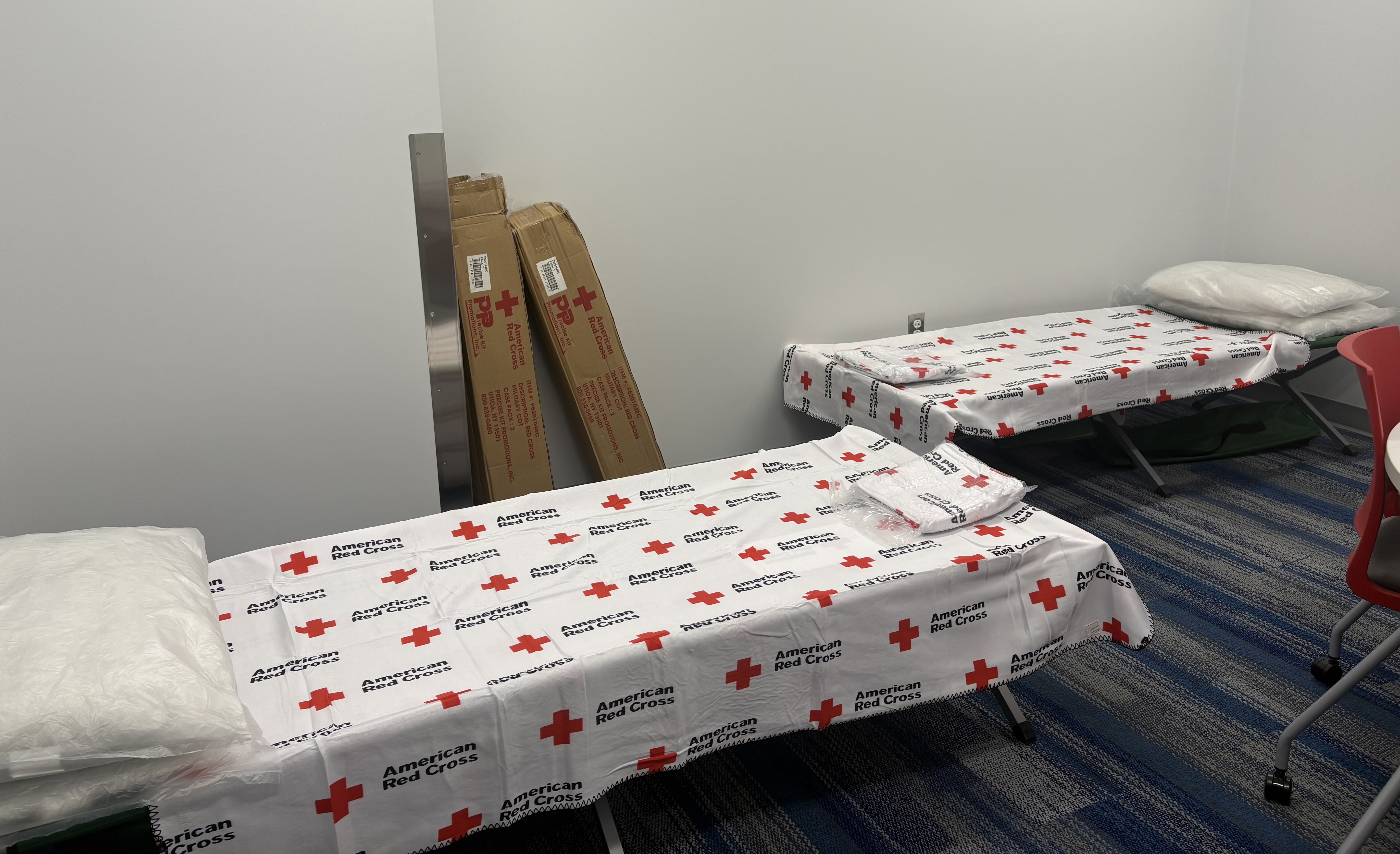
    Locally, Red Cross logistics and operations teams set up shelter cots for our Biomedical laboratory employees who process blood and provide critical support to our community health care partners around the clock. They also fulfilled cot requests from several first responder agencies to help ensure essential personnel can continue their work safely during the storm.

    Sleeping areas are set up at our Spring Garden Campus in Philadelphia for Biomedical laboratory employees who perform critical functions. Photo by Heidi Dampman / American Red Cross

    Extreme Cold Temperatures

    In addition to snow and ice, Winter Storm Fern will bring extreme cold, with single‑digit temperatures and below‑zero wind chills expected across many states.

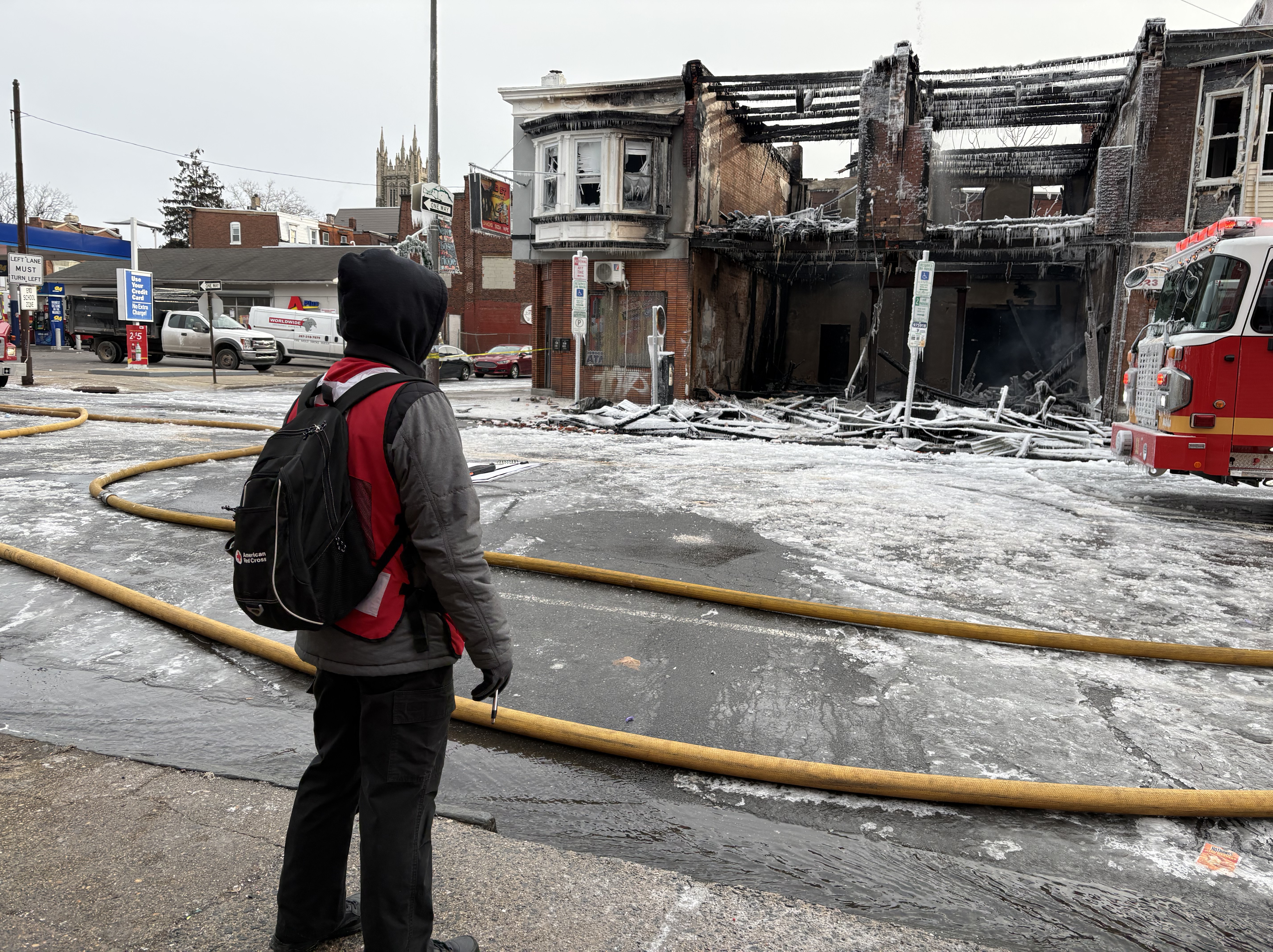
    As temperatures fall, the Red Cross typically sees an increase in home fires. Already today, local disaster volunteers assisted 19 people affected by home fires in North and West Philadelphia and are supporting a reception center operated by the Philadelphia Office of Emergency Management.

    Heating equipment remains a leading cause of home fires, with space heaters posing the greatest risk. If you must use a space heater, never leave it unattended. For more tips, revisit our home heating safety article.

    Disaster Action Team volunteer Evan Holland observes the aftermath of a multi-family home fire on Delancey Street in West Philadelphia on Jan. 24, 2026. Photo by Ed Robold / American Red Cross

    Take Action Now

    The Red Cross urges everyone to take a few simple steps before the snow begins to fall:

    • Get access to weather info and alerts. Download the free Red Cross Emergency app for real‑time weather alerts, open Red Cross shelter locations and emergency safety guidance. Also sign up for your county’s emergency alerts: Ready Bucks, Ready ChesCo, Delco Ready,  Ready Montco and Ready Philadelphia.
    • Gather supplies in case the power goes out. Assemble non‑perishable food, drinking water, medications, blankets, warm clothes, flashlights, batteries, phone chargers, power banks, a snow shovel and rock salt. Check out our survival kit checklist for additional ideas. Keep your phone and power banks fully charged ahead of the storm.
    • Learn how to prevent cold-related emergencies. Frostbite and hypothermia can become life‑threatening quickly. Pay attention to the wind chill, dress in layers, wear a hat and gloves and avoid staying outside too long. Download our free First Aid app for step‑by‑step instructions for a variety of situations, including hypothermia and frostbite.
    Light blue and white graphic with the words: What is wind chill? How cold people and animals feel outside and how the wind and cold feel on exposed skin.
    Red Cross graphic – What is wind chill? How cold people and animals feel outside and how the wind and cold feel on exposed skin.

    Revisit our winter storm safety and winter pet safety articles to brush up on tips to help keep your loved ones safe.

    Severe Blood Shortage

    The Red Cross blood supply remains at critically low levels. Winter Storm Fern is already causing widespread blood drive cancellations, leaving hundreds of donations uncollected locally and across the country. We encourage eligible donors to schedule an appointment now to give blood or platelets after the storm by visiting RedCrossBlood.org.

    Square graphic with red background and white illustrated snowflakes. Words read: Weather Alert! Blood & Platelet Donors Needed.
    Red Cross graphic – Weather Alert! Blood & Platelet Donors Needed.
  • Green Scene: How a simple roof choice supports climate goals

    By Christal Harte

    Aerial view of the new white roof at the Red Cross Spring Garden Campus in Philadelphia.

    When the roof at the American Red Cross Southeastern Pennsylvania’s Spring Garden Campus needed replacement, the leadership team didn’t just look for a quick fix. Instead, they asked a bigger question: How can this project align with our long-term sustainability goals? The answer led to the installation of a new “white roof”—a choice that blends practicality with climate-conscious leadership.

    Why Choose a White Roof?

    “Our previous roof was completely black and retained a lot of heat,” explained Clifton Salas, Chief Operating Officer. “When we reviewed our options, we decided to install a white roof that reflects sunlight instead. It’s a small but meaningful way to reduce our environmental footprint while addressing a critical facility need.”

    The decision was guided by sustainability goals as well as the recognition that cooling costs can add up across a large facility. While the exact savings from this single project haven’t yet been fully measured, Salas noted that the roof replacement was part of a broader set of energy efficiency projects already yielding cost reductions.

    Part of a Larger Climate Strategy

    The white roof installation fits within the Red Cross’s broader sustainability program, which ties local facilities work to national climate adaptation strategies. In fact, the Philadelphia chapter participates in the Energy Star program with the city, reporting annually on its impact. “This project reinforces our commitment to being responsible stewards of resources,” Salas said.

    Impact on People and the City

    For staff and volunteers inside the building, the change is largely invisible. “Most people don’t even know the project was completed,” Salas said with a smile. “But behind the scenes, we know it will make a difference in energy savings over time.”

    On a city-wide scale, the project contributes to Philadelphia’s efforts to address the urban heat island effect—the phenomenon where dense, dark-surfaced areas become significantly warmer than surrounding rural spaces. “It’s a small part, but it’s something the Red Cross can influence,” Salas added.

    Lessons Learned and Looking Ahead

    The project itself was no more challenging than replacing the roof with a traditional black surface. Maintenance has remained consistent, though staff have had to adjust to one unexpected detail: ice on the white roof is harder to spot during cold mornings. “That’s been our biggest lesson learned,” said Salas. “Going forward, we’ll plan for additional walkways to reduce hazards.”

    The Southeastern Pennsylvania region isn’t stopping here. “Moving forward, when we replace roofs at other facilities, we’ll choose white roofing where it makes sense,” Salas confirmed. With opportunities for donor-funded support, the Red Cross hopes to expand sustainable building practices and inspire similar efforts among community partners.

    Looking to the Future

    Projects like the white roof underscore how even essential infrastructure updates can support larger missions of sustainability and resilience. While the impact may not be flashy, it demonstrates a steady commitment to the environment, fiscal responsibility, and community well-being.

    And for anyone who wants to reflect on the importance of caring for the planet, I recommend a family classic: Wall-E (2008). In the animated film, a small robot tends to an abandoned, polluted Earth, reminding us of both the fragility of our planet and the power of small actions to spark change. Just as Wall-E teaches viewers that every step toward a cleaner future matters, the Red Cross’s white roof is a quiet but important act of stewardship for generations to come.

  • Green Scene: Tips for a more sustainable remote work experience

    By Alana Mauger

    Photo of a green typewriter with piece of paper that reads Eco-friendly.
    Eco-friendly paper in typewriter. Public domain photo by Markus Winkler.

    The COVID-19 pandemic paved the way for more remote and hybrid work opportunities. According to Pew Research Center, approximately 41% of U.S. jobs can be done remotely, and 28% of employees globally work from home at least some of the time.

    This shift seems like a win for sustainability. By eliminating daily commutes, fully remote workers can cut greenhouse gas emissions by up to 54%, and two-to-four-day hybrid workers by 29%. However, the reality is a bit more complex.

    Greenhouse gas emissions have returned to pre-pandemic levels. While fewer people are commuting to work, they’re allocating those resources toward other activities that emit just as much carbon. For example, there’s a 26% increase in personal trips taken today as compared to pre-2020, and increased data streaming – especially for video calls – uses more energy.

    As remote work becomes more common, the responsibility for sustainability is shifting from organizations to individuals. Recognizing this, the American Red Cross Southeastern Pennsylvania Green Team offers practical tips to help remote workers keep sustainability top of mind when working from home.

    Energy efficiency

    • Replace outdated devices. Look for products that have an ENERGY STAR rating, which can save 10-50% on energy use compared to standard models.
    • Optimize lighting. Set up your workspace in an area with lots of natural light to reduce the need for artificial light during your workday. If natural light isn’t enough, switch to LED lights, which use 75% less energy than incandescent lighting.
    • Be mindful of temperature settings. Adjustments of just one or two degrees can reduce energy consumption without sacrificing comfort. Consider installing a programmable thermostat that can automatically set temperatures for different times of day.
    • Invest in smart power strips. They can automatically cut power to devices that go into standby mode.
    • Practice good battery maintenance. Once devices like laptops, cell phones and tablets are fully charged, unplug their chargers to improve battery life and efficiency.  

    Document and digital management

    • Go paperless. The paper industry is the fifth largest consumer of energy worldwide. Consider using digital documents and cloud-based storage for your work. If you must print, choose more sustainable options. For example, print on both sides of the page, use recycled paper and eco-friendly ink and print in draft mode for internal documents.
    • Clean up digital clutter. Who’s guilty of storing thousands of emails in their inbox? By organizing and deleting unneeded emails and unsubscribing from unwanted newsletters, you can reduce the energy used for data storage on servers.
    • Switch to digital notetaking and planning tools. This eliminates the need for physical notebooks, which means using less paper.
    • Optimize video conferencing. It takes a lot of data and energy to stream a video call. Consider switching off your camera when it’s not needed and encouraging audio-only meetings when possible.

    Office supplies and purchases

    • Reduce. Reuse. Recycle. Be thoughtful about purchases so you don’t buy things you don’t need or already have. Avoid buying products with excess packaging when possible. Consider purchasing supplies that are gently used or repurposed. Know your local recycling guidelines and keep a dedicated recycling bin in your workspace.
    • Source eco-friendly products. Did you know you can reduce energy consumption by up to 70% by using recycled paper compared to paper made from raw materials? Consider purchasing eco-friendly products when possible. In addition to recycled paper, examples include biodegradable pens, paper straws, refillable ink cartridges and more.
    • Support green suppliers and local businesses. Purchasing from companies that prioritize eco-friendly practices and products can help encourage wider market shifts toward sustainability. By supporting local businesses, you’re reducing emissions from shipping and transportation costs while bolstering the local economy.
  • Green Scene: How much a light bulb makes a difference

    By Zain Ahmad

    photo of a hand holding an LED light bulb in front of a blurred green background.
    Example of an LED light bulb. Photo by Alana Mauger / American Red Cross

    When looking for ways to cut household energy costs, most people overlook something as simple as a light bulb. But switching from conventional (incandescent and fluorescent) to LED lighting can make a noticeable difference on your monthly bill— and it’s one of the easiest changes to make.

    LEDs are designed to be energy-efficient from the ground up. Unlike incandescent bulbs that release 90% of their energy as heat, LEDs use up to 90% less energy and last up to 25 times longer. That translates into efficiency in terms of electricity consumption.Hence, just a few bulb replacements can significantly drop your monthly electricity bill. 

    Functionally, LEDs produce light by passing current through a microchip, which illuminates tiny light sources called LEDs (Light-Emitting Diodes). This casts light in a given area with higher luminescence.This process not only reduces heat waste but also increases energy efficiency. On average, an LED bulb consumes 14 watts in contrast to a conventional bulb which consumes 100 watts of.

    Today’s LED lights come in various styles and color temperatures, offering flexibility for different spaces. Whether you prefer warm or cool tones, dimmable or bright, there’s likely an LED that fits your taste —and installs easily into existing sockets.

    Durability is another major win. According to the U.S. Department of Energy, LEDs last “three to five times longer than CFLs(compact fluorescent lamp) and 30 times longer than incandescent bulbs.” That means fewer replacements, less hassle, and more savings over time.

    The EPA (Environmental Protection Energy) strongly endorses the use of LED lights. Currently in the U.S. , 70% of generated electricity is generated by fossil fuels, and approximately 22% of the electricity is used for lighting. The EPA expects that switching to LED lights can reduce the electricity consumption by 33%; and thus eventually decrease greenhouse gas emissions. This can favorably affect the longstanding problem of climate change.

    The bottom line? LED bulbs aren’t just a modern upgrade—they’re a smart, long-term investment that pays off in energy savings, ease of use, and environmentally-friendly.

    Links

  • Heat Check: Up your prevention and first aid IQ

    By Maureen Zug

    Red Cross video – How to stay safe in extreme heat: Tips from the Red Cross.

    Did you know that extreme heat leads to an increase in deaths during the summer months in the United States? Fortunately, the American Red Cross has launched a new online resource called Heat Check, which provides prevention and health safety tips.

    Who is at risk?

    Anyone can be at risk when the temperature and humidity rise. However, certain groups are especially vulnerable and should take extra precautions in extreme heat. These groups include seniors, babies and small children, those on medications or with chronic health conditions, pregnant women, the disabled, those without air conditioning or who are unhoused, athletes and people using drugs or alcohol. Heat Check offers a comprehensive list of individuals at risk of heat-related injuries and provides practical tips for preventing heat stroke and heat exhaustion.

    Since Heat Check is a Red Cross resource, it also includes links to the Red Cross Emergency App, fact sheets, posters, and other informational materials, all available free of charge in both English and Spanish.

    Do Not Forget!

    Your pets are also affected by extreme weather. Keep them hydrated, shaded, and off hot pavements to avoid paw burns, as cement or asphalt can reach temperatures of 150 degrees or more during a heat wave.

    One final reminder: never leave young children, the elderly, disabled individuals or pets unattended in a hot car, even for a few minutes. In the heat, a closed car can become an oven.

    Spread the word about Heat Check and the Emergency App to your family and friends. As Red Crossers, we are all on a mission to prevent disasters and save lives!

  • Heat Action Day 🔥 – #BeatTheHeat

    By Vaishnavi Kalakota

    IFRC graphic – Extreme heat is deadly. Extreme heat kills people every year. Protect yourself from the heat.

    As climate change intensifies, so does the threat of extreme heat, a silent, deadly force that claims more lives annually than hurricanes, floods, and tornadoes combined. That’s why Heat Action Day (June 2) is so important.

    This global initiative raises awareness and encourages everyone to take lifesaving actions before and during heat waves. This year’s spotlight is on recognizing and responding to heat stroke, a medical emergency that can cause brain damage, organ failure, or death if untreated.

    Know the signs of heat stroke

    • Body temp over 103°F (39.4°C)
    • Red, hot, dry, or damp skin
    • Rapid, strong pulse
    • Loss of consciousness
    • Headache, dizziness, confusion

    What to do: Call 911 immediately; move the person to a cooler place, and use cool cloths or a bath to bring down body temperature. Do not give them anything to drink.

    Red Cross-Red Crescent Climate Centre graphic – How to recognize the signs of heat stroke: high body temperature; red, hot and dry skin; may show signs of confusion; rapid strong pulse; throbbing headache; may lose consciousness. Call for emergency help, and take action to cool the person down until help arrives.

    Get prepared – There’s an app for that:

    Download the Red Cross First Aid app to learn how to handle heat emergencies and other health crises right from your phone.

    📲 redcross.org/apps

    Learn more & join the movement

    Let’s #BeatTheHeat together. Spread the word. Take action. Save lives. 🌎🔥