By Will Verdeur
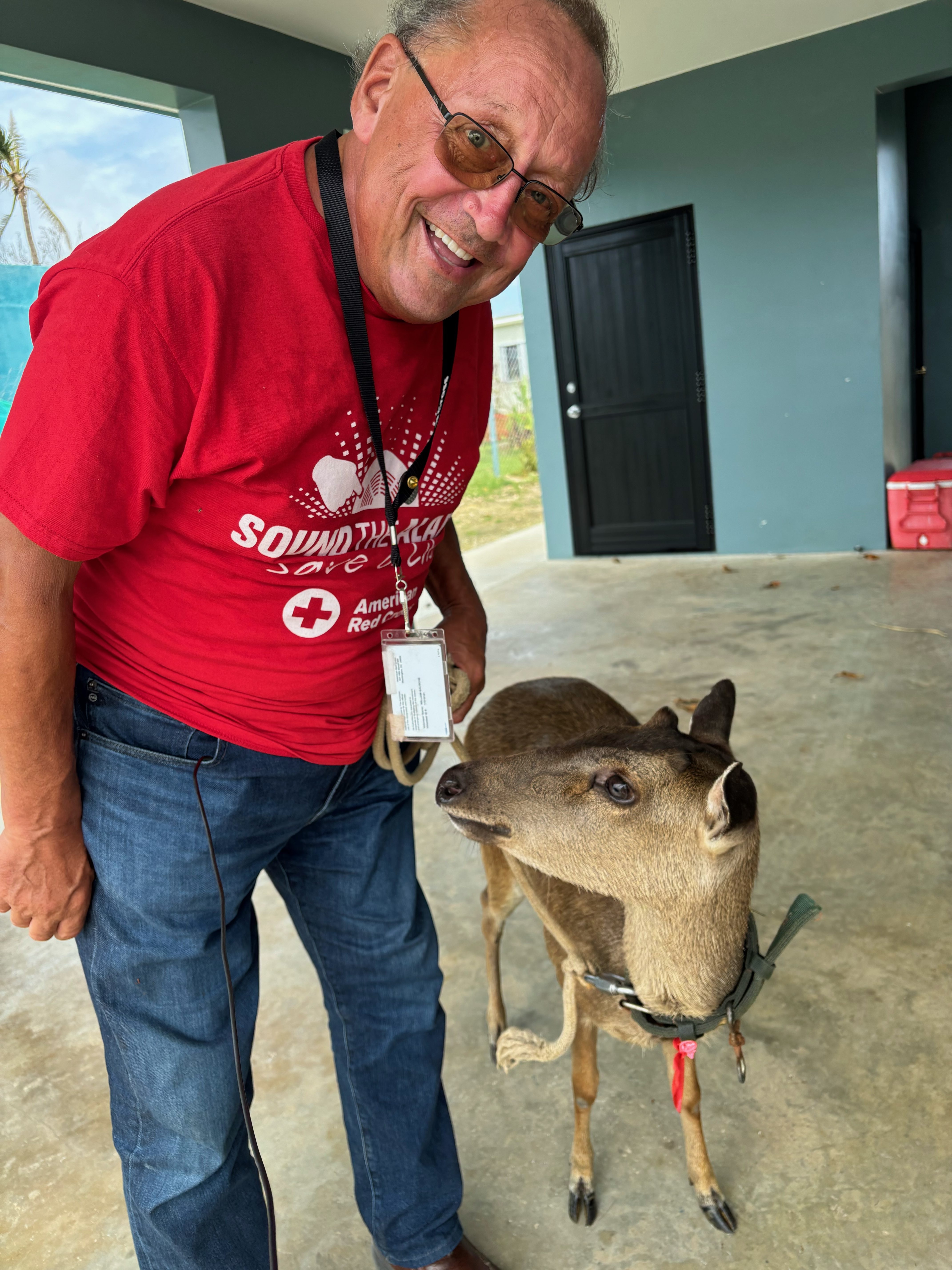
He remembers the image.
The fire had completely devastated the house, and the family, which had two or three small children, sat on the curb beside it. Their entire life had become a pile of ashes.
As Bill Gausch started walking toward them, however, he overheard one of the children turn and say, “Mommy, the Red Cross is here.”
“There was just like a little glimmer of hope you could see,” he recalls, a feeling that maybe things would be okay.
Why does Bill Gausch get out of bed at 2 a.m. in the dead of winter to respond to emergencies? He says it’s because he remembers that incident. “It’s really very powerful for me.”
A retired director for a Fortune-500 company, Gausch, 74, has been volunteering with the American Red Cross of Southeastern Pennsylvania for three years. In that time he has been on at least 15deployments by his own estimate. These deployments have taken him all across the country, to Florida, Mississippi, California and beyond.
This summer, Gausch spent three weeks on his farthest excursion yet: Saipan, capital of the Northern Marianna Islands, just north of Guam. Gausch traveled to the distant U.S. territory to assist people impacted by Super-Typhoon Bavi, a Category-5 hurricane that struck the eastern Pacific in early July.
Driven by an intrepid desire to be present on the front lines wherever disaster strikes, and a passionate commitment to serving others in their moments of greatest need, Gausch’s journey to Saipan is only one of many extraordinary experiences he has had during his volunteer service with the American Red Cross. After a successful career, Gausch is glad to fill his retirement with service. “The opportunity to give back is very compelling and very fulfilling,” he says.
Gausch’s July deployment was not his first trip to Saipan. In May, he deployed with fellow volunteers to respond to Typhoon Sinlaku, another major storm that struck the same region only months before Bavi.
Both times he endured a grueling odyssey, flying over 30 hours one way with layovers in Washington and Tokyo. On both deployments Gausch worked as a disability integration specialist, primarily helping to replace durable medical goods such as wheelchairs, walkers and canes that had been lost or damaged in the storm. He also helped procure resources necessary for accommodating children with autism and other special needs who may struggle when housed in Red Cross shelters.
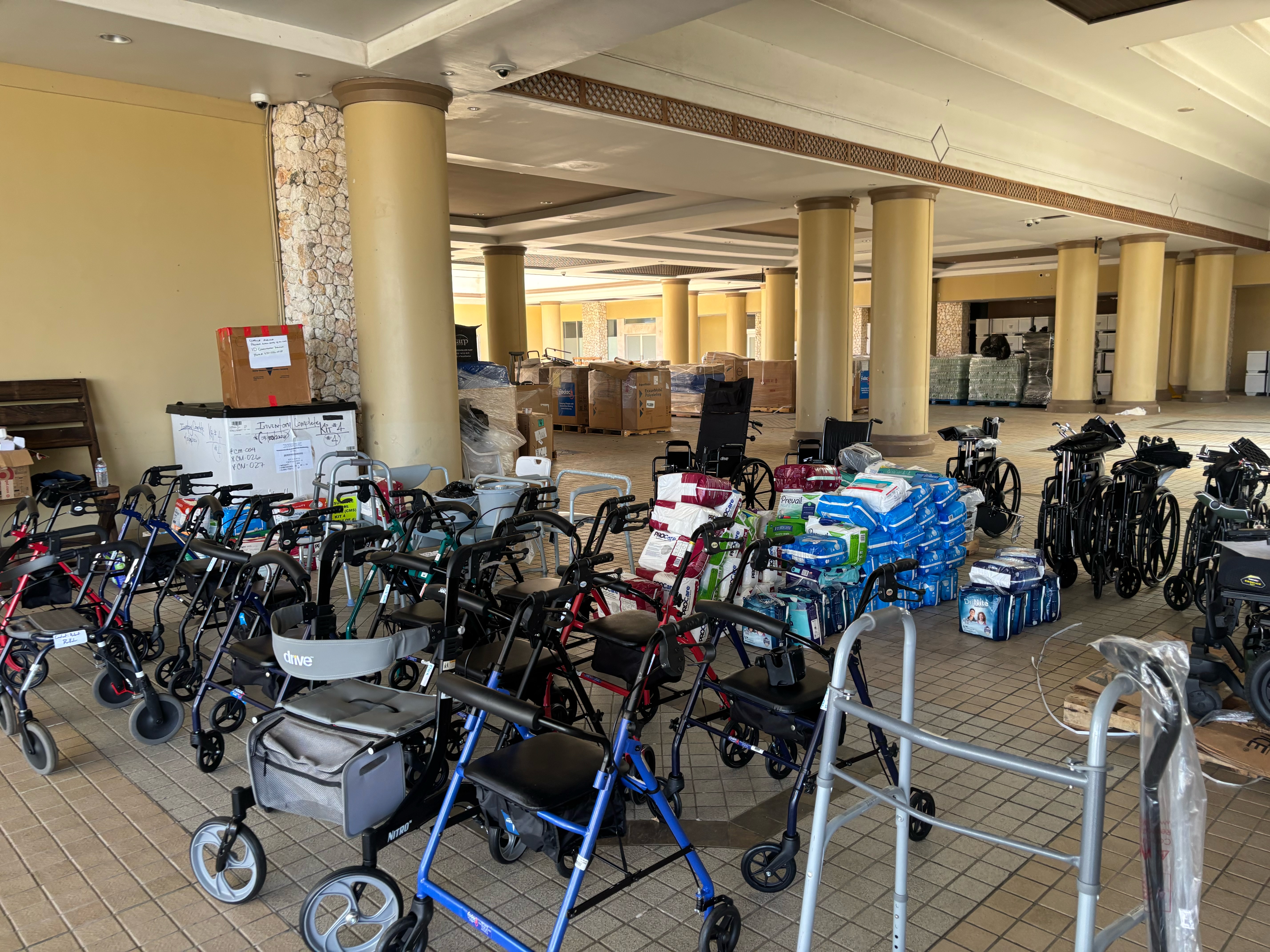
In May, during his first deployment to Saipan, Gausch worked as one of three disability integration specialists operating across seven different shelters. He found that logistical challenges posed by sheer distance prevented the equipment from arriving as needed.
In fact, the equipment Gausch requested in May didn’t arrive until his second deployment two months later. In all, the disability integration team was able to procure and distribute
$25,000 worth of durable medical equipment for impacted individuals over the course of the two deployments.
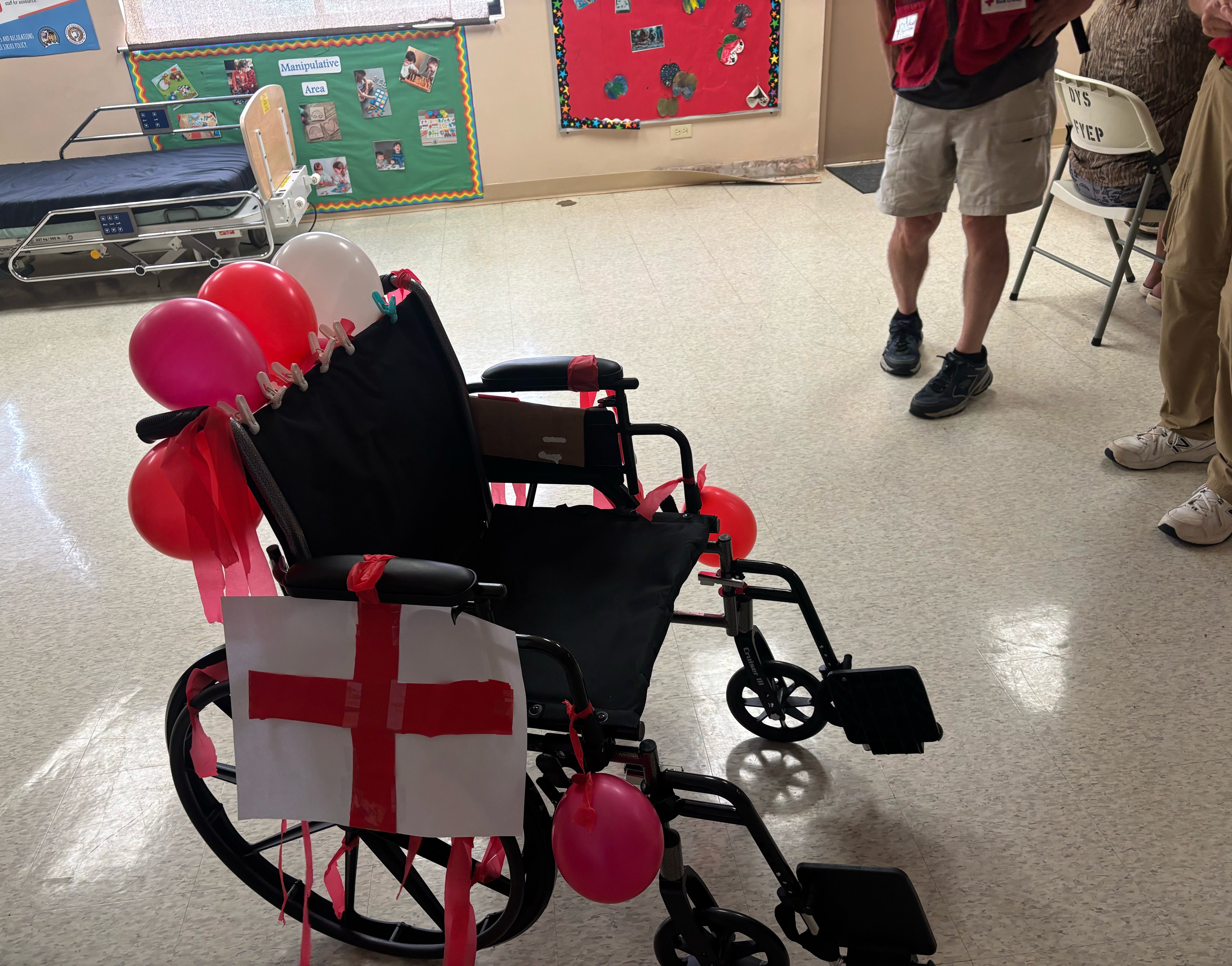
One particular piece of equipment sticks in Gausch’s memory, and it was one he didn’t need to have shipped across the Pacific. In May, Gausch learned of a man who had lost a wheelchair during typhoon Sinlaku. He set right to work trying to secure a replacement.
Gausch’s first instinct took him to the island’s only hospital. The thought of how people typically leave emergency rooms in wheelchairs made him suspect he might be able to find one there. Unfortunately, the emergency room didn’t have one, so they sent him to the hospital’s pharmacy. As it happened, the pharmacy didn’t have one either.
Gausch didn’t give up. “I started Googling medical supply outlets on Saipan,” he says. He drove all over the island hunting for a wheelchair, going to every outlet he could find.
It was difficult to find places, however, because, as Gausch recalls, the island does not have street addresses. After hours of searching, Gausch eventually visited every location suggested by his Google search and still hadn’t found a wheelchair.
Almost at the point of giving up, he drove past a pharmacy and decided to give it a try. As luck would have it, they had one.
“He was in tears when he got it,” Gausch recalls. He cites this incident as the moment he most felt he was making a difference.
Even by the end of his first deployment, Gausch says only 25 to 30% of the island had power, and the water was still unsafe to drink. Most homes had tin roofs and outdoor kitchens, which Gausch recalls had been completely destroyed. “You really had to see it to believe how bad the damage was,” he says.
Even still, he recalls that the impacted communities demonstrated a remarkable level of resilience and generosity in the face of such devastation. Gausch marveled that people who had just lost everything would be checking in with him to see if he was okay.
In one instance, Gausch recalls that while he was trudging through a neighborhood, sweating in the the July heat, a man invited him into his still-damaged home, offered him water and oranges and let him sit in front of an electric fan. Memorably, he then introduced Gausch to his pet deer, whom he’d raised since infancy.
“I can’t say enough about the spirit of the people of those islands,” he says.
Gausch was also impressed with the Red Cross’ ability to coordinate and execute across such vast distances. “Even with how far away we were,” he says, “they were able to get most of everything we needed, in a timely fashion.”
“It’s got to be one of of the smoothest things,” he adds, reflecting on his many deployments both locally and farther afield. “That’s their area of expertise: how to maintain calm and control in chaotic situations.”
Looking ahead, Gausch shows no sign of slowing down. He is pioneering a new program meant to better integrate the Red Cross Delaware Valley Chapter with local fire departments, and he is ready and willing to continue deploying.
“We provide an immediate need at somebody’s most vulnerable times,” he says. “That’s what we’re there to do.”
Leave a Reply