By Alana Mauger
Heat waves with high humidity. Thunderstorms with heavy rain. Flash flood warnings and watches. Rinse, repeat. It’s summer in Southeastern Pennsylvania, and the American Red Cross wants to help keep everyone safe from flash flooding.
According to the National Weather Service, flash flooding is most often caused by heavy rainfall from thunderstorms and can occur anywhere – along neighborhood streams and creeks as well as on city streets and highway underpasses. Flash flooding is especially dangerous because of how quickly it occurs. People are often caught off guard and may become trapped on roadways and in buildings by fast moving or rising water.
The Red Cross offers four common sense ways to make sure you’re prepared in the event of a flash flood:
- Be Informed – Listen to local radio, NOAA radio or local television stations for the latest information and updates. Pay attention to weather conditions in your area and listen to the advice of local officials.
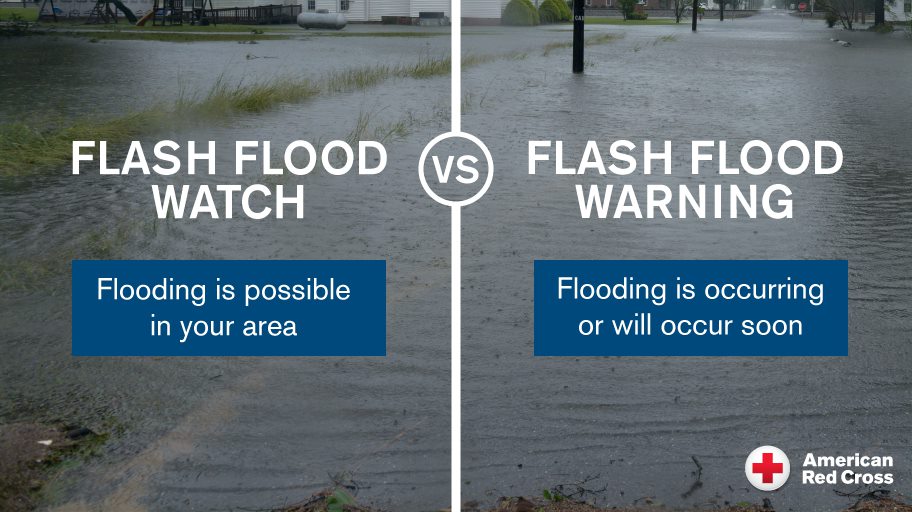
- Be Educated – Know the difference between a flash flood watch and a flash flood warning. A flash flood watch means that a flood is possible in your area. A flash flood warning means flooding is already occurring or soon will be. If there’s a flash flood warning for your area, stay at or seek higher ground immediately and follow any evacuation orders.
- Be Prepared – Check your emergency kit and replenish any missing items. Keep it nearby.
- Be Safe – Turn around; don’t drown. NEVER drive through water. If you are caught on a flooded road and water is rising around you, get out of the car quickly and move to higher ground. Most cars can be swept away by less than two feet of moving water. Also, stay away from flood water if you’re walking. Never cross a flowing stream where water is above your ankles. And of course, keep children and pets out of the water.
Visit the Flood Safety section of the Red Cross website to learn more or download the free Red Cross Emergency App from any app store.
Leave a Reply