The city’s most important infrastructure isn’t always visible. This summer, volunteers, emergency managers and community partners helped strengthen the systems that keep Philadelphia prepared.
By Jennifer Graham, CEO, American Red Cross Southeastern Pennsylvania
Back in June, I arrived at the American Red Cross Southeastern Pennsylvania headquarters at Seventh and Spring Garden streets before dawn. It was 5:30 a.m., and dozens of volunteers were already preparing for a long day ahead.
Some were serving breakfast and packing lunches. Others were charging emergency communications radios, organizing supplies, reviewing assignments and preparing transportation for teams headed across Philadelphia. The city was preparing to welcome tens of thousands of visitors for a series of major events, from international soccer matches and fan fests to celebrations connected to America’s 250th anniversary.
As I walked through the building, I met volunteers from every walk of life. Retirees. Working professionals. Students. Neighbors. Some had adjusted work schedules. Others had given up weekends with family. None of them expected recognition. Most people attending the events that day would never know they were there. Yet their work was helping support the city.
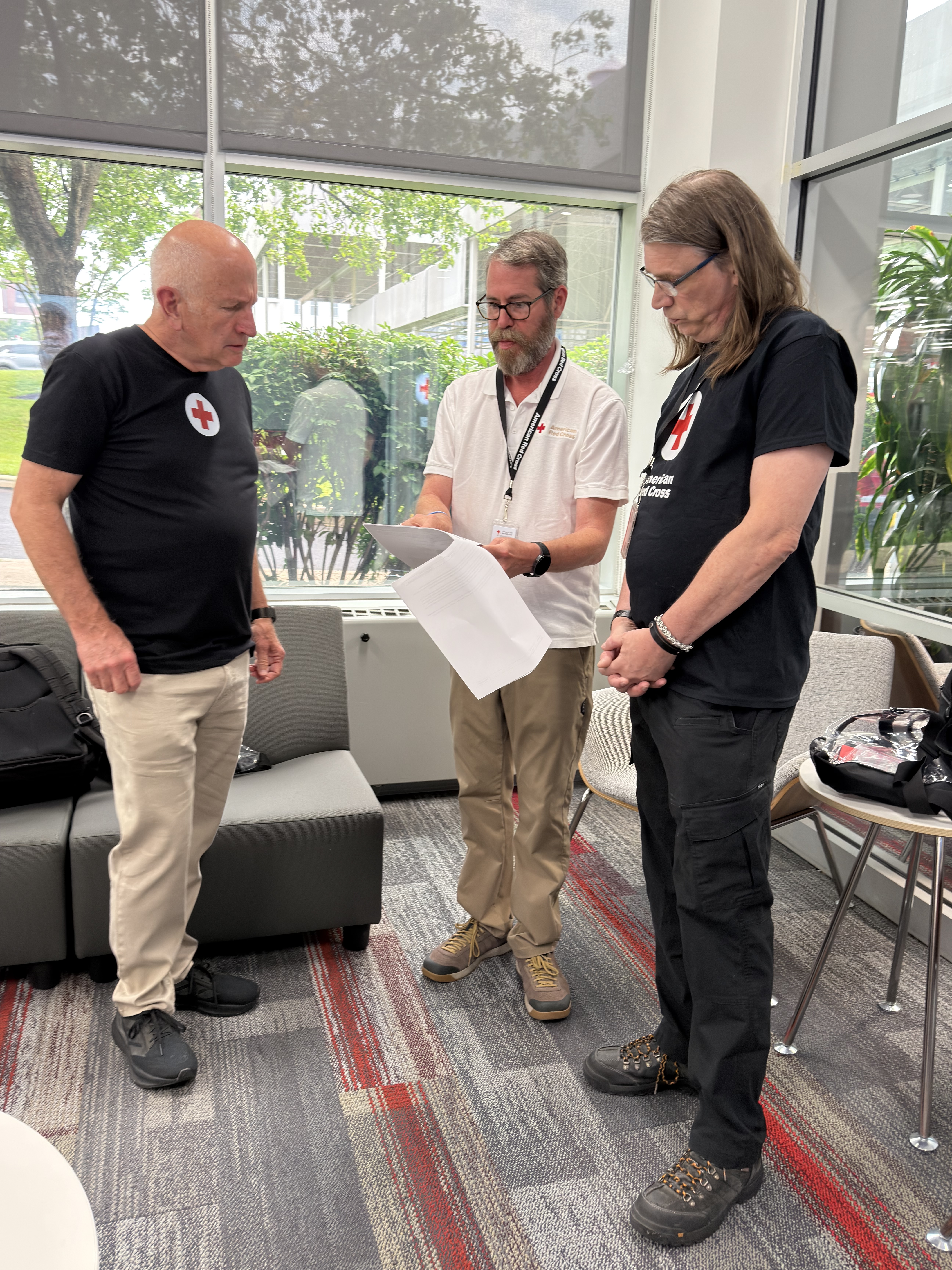
American Red Cross volunteers get briefed on the day’s assignments heading out into the field.
When we talk about infrastructure, we often think about roads, bridges, transit systems, utilities and public buildings. Those investments are essential. They allow a city to move people, goods and services safely and efficiently.
But after spending this summer working alongside the Philadelphia Office of Emergency Management and many local, state and federal partners, I was reminded that cities depend on another form of infrastructure as well: people.
The networks of trained volunteers, emergency managers, nonprofit organizations, public servants and community partners who stand ready to support one another are every bit as important to a city’s resilience as the physical systems we can see. This summer offered a powerful example.
For 45 consecutive days, American Red Cross volunteers supported preparedness and coordination efforts tied to some of the region’s largest events. Volunteers filled hundreds of shifts and contributed nearly 10,000 hours. Behind the scenes, they supported stand-by evacuation centers and shelters, feeding operations, emergency communications, transportation logistics and volunteer coordination—ready to assist should conditions change unexpectedly.
Red Cross teams maintained a presence in emergency coordination efforts, working alongside city agencies and partner organizations to help ensure information and resources could be shared quickly and effectively.
Top: Government Operations volunteers Bruce Swift and Sandy Capoferri at the Philadelphia Emergency Operations Center (EOC) on June 19. Submitted photo. Bottom: Disaster Action Team Responder LeRoy Whitehead inside the mobile emergency operations center (EOC) at Lemon Hill on June 14. Photo by Aurora Reardanz / American Red Cross
At the same time, the Red Cross continued its everyday mission across Southeastern Pennsylvania. While supporting major events, we responded to home fires and local disasters, provided emergency assistance to families in crisis, collected lifesaving blood donations, trained the community in lifesaving skills like CPR and first aid and supported military service members, veterans and their families.
Much of that work happened quietly. And that is exactly how successful preparedness should look.
The best emergency management efforts are often the ones people never notice. Visitors arrive safely. Events run smoothly. Communities gather and celebrate. Potential challenges are anticipated before they become problems.
But those outcomes do not happen by accident. They are the result of months, and sometimes years, of planning, relationship-building and coordination. Organizations learn how to work together long before they need to. Trust is established before challenges arise. Communication systems are tested. Volunteers are trained. Responsibilities are defined.
By the time crowds fill stadiums and public spaces, an enormous amount of unseen work has already taken place. Building resilience before emergencies occur strengthens communities and reduces vulnerabilities when unexpected events happen. In that way, preparedness is fundamentally an infrastructure investment. Not an investment in concrete or steel, but an investment in human capacity.
Red Cross volunteers at a stand-by family reception center on July 4, 2026. Photo courtesy of Philadelphia Office of Emergency Management.
For me, one of the most inspiring examples from comes from two volunteers who spent much of their summer coordinating our volunteer workforce. Together, they recruited volunteers, managed schedules, organized assignments and helped ensure teams had the information and support needed to be successful. Over the course of the summer, they coordinated 325 volunteer shifts.
Most people attending events throughout Philadelphia never met them. But their impact was everywhere. Their dedication underscores an important truth about cities: the people who make communities function are not always the people in the spotlight. They are often the people working behind the scenes, solving problems, building connections and helping systems operate effectively.
Philadelphia has always been shaped by civic participation. Long before terms like “resilience” and “preparedness” became part of public policy discussions, neighbors here were organizing block by block, supporting one another and stepping forward when their communities needed help. That spirit remains one of the city’s greatest strengths.
The biggest lesson I took away from this summer is that preparedness is not a moment. It is a continuous commitment: a commitment to planning before problems occur, investing in partnerships before they are tested and maintaining readiness even when the spotlight is elsewhere.
It is also a commitment to recognizing that a city’s greatest asset is not its infrastructure alone, but the people who make that infrastructure work. Most will never receive public recognition for their contributions, but they demonstrated something worth remembering: behind every resilient city is a community of people showing up every day to make it stronger.
We invite you to put on a red vest and join us. Visit redcross.org/volunteer to find out how you can support our community.
Gene Maxey was recognized for his exemplary volunteer service during a DAT Summit on May 18, 2025. Photo by Dan Porter / American Red Cross
Every Disaster Action Team (DAT) volunteer has a reason they keep showing up.
For Gene Maxey, it started with retirement—and the realization that slowing down was not going to come naturally.
For years, Gene had worked as a steamfitter, construction manager, and supervisor, often putting in 12- to 14-hour days.
“I wasn’t used to retirement,” Gene says.
So he went looking for a way to stay active, stay involved, and do something meaningful with his time.
About eight years ago, he found the American Red Cross Disaster Action Team.
Starting Close to Home
Gene originally joined DAT in Montgomery County, where he lived. At the time, calls might come only once every couple of weeks.
Gene enjoyed the work, but soon realized he wanted to be more involved.
“I had an interest in increasing the frequency of my responses and being available more,” he says.
That interest eventually brought him to Philadelphia.
Gene became the Philadelphia DAT Coordinator, helping organize teams responding to multiple incidents in a single day.
“Some days you’d never make it home,” he remembers.
Soon afterward, Gene also became a Duty Officer, taking emergency calls, forming teams, and helping make sure trained volunteers were ready to respond.
What began as a way to stay busy after retirement became something much larger.
Seeing What the Red Cross Can Do
After years of responding, some experiences stand out.
For Gene, one involved a large fatal fire. The response required more than a typical DAT team.
The Red Cross brought Disaster Health Services, Disaster Mental Health, Spiritual Care, and other resources together to support the people affected.
“The ability for the American Red Cross to scale up and provide resources and help those people that were affected was really amazing,” Gene says.
That scalability remains one of the things he values most about the organization.
On an ordinary day, DAT volunteers may be helping one family after a fire or flood.
During a larger disaster, those same volunteers are connected to an organization capable of opening shelters, feeding large groups, distributing supplies, and helping communities begin recovering.
“You’re joining an organization from the ground up,” Gene says, “and then through education and experience, you’re able to perform for the people that expect us to perform.”
When a Community Comes Together
Gene has also seen firsthand that disaster response is rarely the work of only one organization.
He remembers responding to a fire in Philadelphia’s Bridesburg neighborhood involving a large family with several children.
As Red Cross volunteers worked to help the family, the neighborhood began showing up too.
The American Legion opened its doors. Neighbors brought blankets and clothes. Food arrived. Community members asked the Red Cross team what they could do to help.
“I think the Red Cross is the beacon that drives people to it,” Gene says.
For Gene, moments like that demonstrate what can happen when people recognize that someone in their community needs help.
No Experience? That’s Okay.
Gene understands why disaster response might sound intimidating to a prospective volunteer.
You may have never stood outside a burned home.
You may have never spoken with someone who was suddenly displaced.
You may have no idea what happens when the phone rings with your first response.
Gene’s message is simple: You will be trained.
“We’re going to train you,” he says. “We’re going to give you all the tools to get people out of harm’s way.”
At its core, Gene describes the work with one word: humanitarian.
“We’re a humanitarian organization,” he says. “If a human is affected by something, the American Red Cross is there to get you out of harm’s way.”
Volunteers receive the training, tools, and support they need to learn.
The work is not always convenient. Calls happen in the cold. They happen in the rain. They happen in the middle of the night.
But Gene believes perspective matters.
The volunteer may leave a warm home for a few hours. The family they are responding to may have just lost theirs.
“You going out in the rain and snow in the middle of the night is a blessing,” he says.
You Give, But You Receive Too
After eight years, Gene believes volunteering has taught him just as much as he has given.
DAT volunteers meet families from different backgrounds and circumstances. They see real-life challenges up close. Those experiences build perspective.
“You’re not just giving,” Gene says. “You’re receiving too.”
Asked what DAT has taught him, Gene’s answer is straightforward.
“Compassion for those that have been affected. Willingness to help others when people need help.”
Gene began volunteering because he wanted to stay involved after retirement.
Eight years later, he continues showing up because there are still people who need someone to show up for them.
You do not have to arrive knowing how to respond to a disaster. You can arrive willing to learn. The Red Cross can help teach you the rest.
Submitted by Debbie Tevlin, SEPA Disaster Action Team Regional Program Lead
American Red Cross volunteers Griff Schrack and Linda Szypula served on a microburst storm response team. Photo by Debbie Tevlin / American Red Cross
As the July microburst storm operation comes to a close, we want to take a moment to reflect on the impact made by our Disaster Action Team (DAT) volunteers.
From the earliest days of the response through the recovery operation, DAT duty officers and responders played a critical role in helping the affected communities. The team responded to disaster calls, conducted damage assessments, completed intake activities, coordinated resources and staffed Multi-Agency Resource Centers (MARCs). At every stage of the response, DAT teammates consistently stepped up.
During the operation, the American Red Cross served 134 people (39 families comprised of 78 adults and 56 children). DAT volunteers provided immediate emergency assistance that may include financial assistance, health and emotional care, referrals to community resources and ongoing recovery support. In partnership with the Philadelphia Office of Emergency Management, Red Cross teams staffed three MARCs, where they engaged with more than 300 residents and distributed 327 cleanup kits.
Red Cross volunteers Barbara McGarvey and Dinae Norris distribute cleanup kits at the Wynnfield Library on July 20th. Submitted photo
The response was strengthened by collaboration across Disaster Cycle Services: information and planning, detailed damage assessment, intake, financial and statistical Information, staffing, mass care, external relations and leadership. This collaboration ensured that duty officers and responders had the resources and support needed to serve clients effectively.
The numbers tell only part of the story. Behind every case opened, every cleanup kit distributed and every resource provided were DAT volunteers who answered the call when their communities needed them most.
To those who answered the call, THANK YOU! Your efforts reflect the strength of the Red Cross mission in action and the vital role DAT volunteers play in helping communities prepare for, respond to and recover from disasters.
About the Storm
On July 11, 2026, a series of severe microbursts moved through Philadelphia, producing straight-line winds of up to 70 mph and causing significant damage across West and South Philadelphia. The storms downed trees and power lines, flooded streets and homes, damaged vehicles and buildings and left thousands without power. The widespread impacts prompted a city disaster emergency declaration and a coordinated recovery response involving local, state, federal and nonprofit partners, including the American Red Cross.
Editor’s Note: We invited Red Cross Club graduating high school and college seniors to share their experiences with us. The information is compiled and presented by Cindy Grell, Ellen Ginda and Alana Mauger.
The Red Cross Club at Radnor High School began in early 2025 when then-juniors Haeun Cho and James Frank and set out to create new opportunities for students to engage with the mission of the American Red Cross. Throughout the spring, they gathered resources, built support from school leadership and developed plans for the club’s first full year. During the 2025-2026 school year, the club explored a range of Red Cross programs and activities, including CPR education, home fire safety and preparedness, Service to the Armed Forces initiatives and community service projects.
Haeun Cho
2026 Radnor High School graduate Haeun Cho. Submitted photo
From helping establish the Red Cross Club to mentoring students from other schools interested in creating clubs of their own, Haeun Cho embraced every opportunity to expand the impact of the Red Cross mission.
“I am so grateful to have been a part of the Red Cross organization. Through my experience, I was able to get certified for CPR, learn more about home fire safety and humanitarian rights, and even get to help others from different areas establish their own Red Cross Clubs to serve their communities.”
This fall, Haeun will attend University of Michigan as a nursing major. She looks to the Red Cross mission to continue guiding her service efforts.
“I hope to continue to embody the organization’s values such as voluntary service and unity by continuing to serve the community in many ways, such as blood drives. I am so beyond excited to continue my journey with the Red Cross!”
James Frank
2026 Radnor High School graduate James Frank. Submitted photo
As one of the club’s founders, James Frank helped transform an idea into a thriving organization that engaged students in service, preparedness and leadership opportunities.
“My past few years with the Red Cross have truly taught me so much. From CPR certifications to food drives to educational campaigns, I have learned not only lifesaving skills and ideas, but what it means to be a part of something larger,” he said.
For James, the opportunity to serve both the broader community and fellow students was especially meaningful.
“Being able to serve the regional community and help those at our own school has truly been an amazing experience, and I am so grateful for the opportunities the Red Cross has provided me.”
This fall, James will attend the University of Pennsylvania, where he plans to study biology on a pre-med track and continue serving others through the university’s Red Cross Club.
Meredith Gelles
2026 Radnor High School graduate Meredith Gelles. Submitted photo
While CPR training and preparedness activities were a major part of the club’s work, service projects also gave students opportunities to connect directly with their communities.
For Meredith Gelles, one of the most memorable experiences was the club’s Veterans Day food drive.
“It was a great way to get involved with the Red Cross’ mission and values as well as my community.”
Meredith will attend the University of Pittsburgh this fall and pursue a pre-med track.
Malaika Virk
2026 Radnor High School graduate Malaika Virk. Submitted photo
Malaika Virk says that participating in a CPR course through Radnor High School’s Red Cross Club opened numerous opportunities for her.
“I was so inspired that I went to EMT school and am currently working on getting fully certified,” she said.
This fall, Malaika will attend Temple University as a biology major on a pre-med track.
Annie Zhong
2026 Radnor High School graduate Annie Zhong. Submitted photo
For Annie Zhong, CPR training she took through Radnor’s Red Cross Club stood out as a favorite.
“Getting together with friends and classmates to learn skills that could genuinely help in an emergency felt really meaningful and made me more conscious of the responsibility people have to act in critical situations,” she said.
This fall, Annie is enrolled in Drexel University’s BS/MD program on her way to pursuing a career in healthcare.
SEPA Red Cross Clubs
During the 2025-26 academic year, the SEPA region supported 33 Red Cross Clubs – 28 in high schools and five in colleges and universities. More than 950 students participated across Bucks, Chester, Delaware, Montgomery and Philadelphia counties.
Senior Volunteer Engagement Specialist Ellen Ginda, who works closely with the students, explains that while each Red Cross Club is different, they all “have the goal of bringing the Red Cross’s humanitarian mission to their schools.” The student leaders choose how to reach that goal, which often includes hosting blood drives, organizing fundraisers and collecting in-kind donations, like toys, books, food and more!
Over the past academic year, SEPA’s Red Cross Clubs hosted more than 20 blood drives, organized 11 fundraisers and coordinated 11 donation collections. In addition, nearly 150 students were trained and certified in CPR/AED/First Aid.
Volunteer blood transportation specialists take blood collected at mobile drives to a processing center and deliver completed blood products to hospitals. Photo by Brad Zerivitz / American Red Cross
Amid the excitement and volunteer opportunities generated by the city’s major events this summer, the American Red Cross remains focused on the work it does every day — collecting and delivering lifesaving blood and responding to local disasters like home fires. To ensure these essential services continue uninterrupted, teams have developed contingency plans to address road closures and heavy traffic that could affect volunteers’ ability to reach critical locations.
One of the team’s highest priorities is maintaining the uninterrupted flow of blood products from the Red Cross Spring Garden Campus to area hospitals.
According to Jim Leahy, program specialist for operations and logistics, the Red Cross began pre-stocking blood at Philadelphia trauma centers ahead of the first major event to help ensure blood products are already there when needed.
Jim’s team is responsible for transporting blood collected at mobile drives throughout Southeastern Pennsylvania, New Jersey and Delaware to the Spring Garden Campus in North Philadelphia for processing. From there, they deliver blood products — including red cells, platelets and plasma — to hospitals across the region and sometimes beyond.
While many deliveries follow a schedule, others are urgent. Patients with rare blood types may require a specific unit of blood, making timely transportation critical.
“We have five to 10 volunteers on the road at any given time,” Jim said.
During an emergency, it’s the blood already on hospital shelves that helps save lives. Photo by Brad Zerivitz / American Red Cross
Given the volume of blood collected in the region and the large number of hospitals served, approximately 180 volunteer blood transportation specialists are supplemented by 22 paid drivers. To help minimize delays and frustrations caused by event-related traffic, Jim has assigned paid drivers to routes near the South Philadelphia sports complex and the Lemon Hill area of Fairmount Park through mid-July.
At the same time, all Red Cross drivers — and everyone carrying out the mission in the field — carry documentation identifying them as essential workers, helping ensure they can reach their destinations when needed.
Beyond avoiding areas impacted by major events, operations have remained largely unchanged.
“Everything is operating status quo,” Jim said.
Some Blood Transportation Specialist volunteers have also stepped up to serve as shuttle drivers for disaster volunteers supporting 13 summer events. These teams are strategically positioned throughout the city on key event days, ready to provide sheltering and reunification services if needed.
Blood Transportation Specialist Stephen Kelly prepares to transport a team of field volunteers to Parkway Central Library on July 2, 2026. Photo by Alana Mauger / American Red Cross
Stephen Kelly is one of those volunteers. He made several shuttle trips on July 2nd, when the Red Cross was supporting preparedness operations for Wawa Welcome America events near the Philadelphia Museum of Art.
“I live close close by and was available. So when the call went out, I signed up,” he said.
In his usual volunteer role as a blood transportation specialist, Stephen drives blood from the Spring Garden Campus to area hospitals at least once per week. You can usually find him on a mid-day hospital run to locations across Southeastern Pennsylvania and New Jersey, “wherever the need is.” He also signs up to deliver blood products all the way to Hershey!
Stephen has been in the role for about 3 years, starting after he retired.
“I was looking for something to do, and I’m always around here,” he said, adding that he has given blood at the Spring Garden Campus for years and his Laborers’ Local Union 57 is just down the street.
And while he says that traffic is a little more congested with all of the city’s happenings, for the most part, it’s been business as usual.
Whether transporting blood to hospitals, supporting disaster response operations or adapting to unusual logistical challenges, Red Cross volunteers and staff continue to move the mission forward, ensuring communities can count on the organization’s lifesaving services every day, regardless of what is happening in the city around them.
Volunteer Jeanne Vissa talks about her role as a Blood Transportation Specialist. Video by Alana Mauger.
Amateur radio operators (from left) Lee Erickson and Delancey Cheeks are pictured during their first Red Cross summer events shift on June 14 at the Spring Garden Campus. Photo by Debbie Tevlin / American Red Cross
By Jenny Farley and Alana Mauger
As Philadelphia hosts a summer filled with major sports events, festivals and large public gatherings, American Red Cross volunteers are preparing for something they hope never happens: a communications emergency.
Across the city, teams of volunteers are standing by to assist community partners if an emergency occurs during these historic events. Among those volunteers are members of the Red Cross Disaster Services Technology (DST) team, many of whom are licensed amateur (ham) radio operators.
On June 22, as thousands of soccer fans gathered for a match between Iraq and France, Red Cross DST Lead Cliff Hotchkiss and his team assembled at the Spring Garden Campus to prepare for the evening ahead. Their mission was simple but important: ensure reliable communications remained available if emergency responders and Red Cross teams needed them.
Amateur (Ham) Radios as a Communication Backup
While cell phones and internet-based systems handle most day-to-day communications, amateur radio provides a critical backup when traditional networks become overloaded, damaged or are unavailable.
“With the amount of crowds that we have in the city, it is not unlikely that the cell phone systems would get overloaded, and there might be interruption in cellular communication,” Hotchkiss said.
He said if cell phones went down, radios could be used to link the Red Cross groups around the city, including those at pre-staged family resource centers, the Spring Garden Campus, the Philadelphia Emergency Operations Center (EOC) as well as the Red Cross warehouse in Norristown if supplies were needed.
Hotchkiss shepherded his team through testing their radios, listening to a briefing, and going through a logistical run-through of the likely night ahead. He also had another role.
Shown from left to right are amateur radio operators and Red Cross volunteers Tom Barrett, Mark Pricskett, Richard Van Sleet, Cliff Hotchkiss and Aaron Bradshaw. The group is prepared to help with emergency communications during the summer events in Philadelphia. Photo by: Jenny Farley/American Red Cross.
“Net Control” Serves as the Host of the Night
On nights like this, think of Hotchkiss as the air traffic controller. When people are communicating on a radio, you don’t want everyone talking at once because it can get confusing. That’s where Hotchkiss comes in, operating in a position called “net control,” something he can do on his radio from home.
He said, “It’s kind of like, for lack of a better description, the host of the communication.”
Everyone reports to “net control” so that a bunch of people aren’t talking over one another.
“Acting as net control can be a real challenge. It takes a lot of practice and a lot of precision to do that,” he said.
Volunteers on Hotchkiss’ team of highly skilled amateur radio operators briefly sat at tables set up in the atrium at the Spring Garden Campus on June 22nd. Many of them were meeting each other for the first time.
All of them were working their first Red Cross event. Like Hotchkiss, they shared an appreciation for amateur radio and had earned the license required to operate them.
Amateur radio operator Sam Rausch checks in to Net Control from Central Parkway Library during his first Red Cross summer events shift on June 14. Photo by Eileen Raul / American Red Cross
Blood Donor Uses His Ham Radio Skills to Help the Red Cross
Volunteer Tom Barrett used to regularly donate blood until he had colon cancer and had to stop donating because of his medications. When he was a kid he wanted to be a paramedic, inspired by the 1970’s TV show “Emergency.”
He ended up in the music industry, teaching music theory and working for two publishers.
He also trained with the Delaware County Medical Reserve Corps and took first aid classes offered by the Red Cross.
Barrett got into amateur radio about 9 years ago and was ready to use his talents for the Red Cross.
“I already had the skills. This was an opportunity that came up and I’m happy to help,” he said.
Tom Barrett started volunteering for the Red Cross when he heard from the Amateur Radio Emergency Service (ARES) that there was a need. “They came to us asking if we had volunteers willing to help so some of us did,” he said. Photo by: Jenny Farley/American Red Cross.
Paramedic Learned About Amateur Radio from His Dad’s Military Service
Aaron Bradshaw works as an emergency room tech and paramedic whose father was a radio operator in the military.
“Ever since then I just started picking it up and getting into it,” he said. Bradshaw met Hotchkiss through the Philadelphia Amateur Radio Emergency Service (ARES) group.
“He started mentioning stuff about the Red Cross and then I started looking into it and I was like ‘oh that will be interesting. I’ll give it a try.’ And here I am.”
Barrett and Bradshaw tested their radios out to make sure they were working before they headed to the shuttle that took them to their assigned location at South Philadelphia High School.
Red Cross volunteer Aaron Bradshaw is carrying his amateur radio equipment which could be used to communicate in an emergency. Bradshaw said, “When I got my amateur license about two years ago I wanted to get more involved in radio-like communication activities.” Photo by: Jenny Farley/American Red Cross
Self-Described “Tech Person” Puts His Radio to Work
Mark Pricskett and Richard Van Sleet stayed behind with their radios in a room at the Spring Garden Campus to provide communications support from there.
Pricskett had “always wanted to volunteer for the Red Cross and thought ham radio would be a good fit because of the technology.” He said, “I’m a tech person and I thought that’s where I could do my best stuff.”
One of the things he finds most intriguing about radio is that it is constantly evolving. He said, “Radio is no longer just on the radio anymore. It involves communication with the computer. There’s all kinds of different devices to communicate with that come under the radio heading, so it’s always changing.”
Shown from left to right: Richard Van Sleet, Cliff Hotchkiss and Mark Pricskett go over the communication plan at Red Cross headquarters at the Spring Garden Campus in Philadelphia. All three volunteers are licensed amateur radio operators. Photo by: Jenny Farley/American Red Cross.
Radio to the Rescue
So, what does an amateur radio operator do during an emergency?
Hotchkiss said, “One of the mottos of ARES is when all else fails, there is amateur radio.”
Radio can be used to communicate when phones aren’t an option.
Hotchkiss described an example of radio communication saving lives during Hurricane Helene in western North Carolina in September 2024.
He knew an amateur radio operator who lived in a neighborhood that became unreachable in the storm when the bridge to the community was destroyed.
“They were completely isolated. There was no way you could get to them,” he said. “Amateur radio played a really major part because all of the cell phones were wiped out for weeks.”
The radio operator was able to relay messages that led to his elderly neighbors getting the help and medical supplies they needed.
Amateur radio operator Alex Haddad prepares to leave the Spring Garden Campus for his field assignment at South Philly High School on June 25. Photo by Debbie Tevlin / American Red Cross
Emergency Preparedness Goes Hand-in-Hand with Radio
Richard Van Sleet just started volunteering for the Red Cross two months ago and was on his first assignment. After he retired he got interested in emergency preparedness and radio seemed like a natural fit.
“It’s kind of like the ultimate. If everything else goes bust ham radio will work. That’s how I got interested in it as an emergency communication.”
In his job as “net control,” Hotchkiss is required to keep a record of all radio messages so that in a post-emergency review, people can study what becomes the public record of what happened.
Except for the stormy weather, the night went relatively “smoothly” according to Barrett. He said they checked in with the team at the Spring Garden Campus every 30 minutes and fortunately “nothing happened.”
Being on standby to act in case of emergency is something Red Crossers know how to do well.
Van Sleet shared a sentiment that most in Hotchkiss’ group of radio warriors may have been thinking.
“You prepare for these things but you actually hope nothing will happen. If that’s not the case, I think we’re ready,” he said.
Amateur radio operator Chris Kelleher checks in to Net Control during his shift at South Philly High School on June 27. Photo by Sean Snyder / American Red Cross
Editor’s Note: We invited Red Cross Club graduating high school and college seniors to share their experiences with us. The information is compiled and presented by Cindy Grell, Ellen Ginda and Alana Mauger.
Francesca Giardini
Francesca Giardini is part of the Red Cross Club at Immaculata University, which formed in spring 2025. The group partnered with the school’s Student Nursing Association to hold multiple campus blood drives; hosted a CPR training, to which they invited Red Cross Club students from nearby Downingtown East High School; partnered with the university’s emergency management and planning program on disaster preparedness exercises; and raised money for the Red Cross by selling candygrams and more.
During her time as a Red Cross Club member, Francesca says she found “the importance and joy” of giving back to her community and helping others.
“I was actively making a difference for other people, whether that be through fundraising or a volunteer event,” she said. “I thoroughly enjoyed my experience as a Red Cross Club member and hope to continue volunteering for the Red Cross in the future.”
Francesca graduated with a bachelor’s degree this past spring and plans to take a gap year before starting graduate school to further her studies in ecology.
“My time as a Red Cross Club member has shown me the importance of positively contributing to my community so I will continue that mission through helping people in need that I meet regardless of their background,” she said.
2026 Immaculata University graduate Francesca Giardini participates in an emergency preparedness exercise. Submitted photo
Evan Szilier
The Red Cross Club at B. Reed Henderson was among the first established in Southeastern Pennsylvania, and it’s still going strong thanks to the leadership of 2026 graduate Evan Szilier. Over the past year, the club held several bake sale fundraisers and worked with a local business to sponsor a creative food truck fundraiser.
Evan says he has enjoyed all of Red Cross Club activities with his classmates.
“It’s really awesome to see everyone gathered together once a month around a common goal,” he said.
This summer, Evan is serving as an ocean rescue lifeguard for Beach Haven Beach Patrol before heading off to study business administration at the University of North Carolina (UNC) Chapel Hill in the fall.
“I plan to carry the Red Cross mission with me by always looking for a new way to get involved,” he said. “Whether it’s teaching CPR courses at UNC next year or continuing to help out with new high school chapters, I am always looking for a new way to make an impact.”
2026 B. Reed Henderson High School graduate Evan Szilier. Submitted photo
SEPA Red Cross Clubs
During the 2025-26 academic year, the SEPA region supported 33 Red Cross Clubs – 28 in high schools and five in colleges and universities. More than 950 students participated across Bucks, Chester, Delaware, Montgomery and Philadelphia counties.
Senior Volunteer Engagement Specialist Ellen Ginda, who works closely with the students, explains that while each Red Cross Club is different, they all “have the goal of bringing the Red Cross’s humanitarian mission to their schools.” The student leaders choose how to reach that goal, which often includes hosting blood drives, organizing fundraisers and collecting in-kind donations, like toys, books, food and more!
Over the past academic year, SEPA’s Red Cross Clubs hosted more than 20 blood drives, organized 11 fundraisers and coordinated 11 donation collections. In addition, nearly 150 students were trained and certified in CPR/AED/First Aid.
Summer event series volunteers and staff pause for a group photo before their various shifts.
Summer event series volunteers and staff pause for a group photo before their various shifts.
Summer event series volunteers and staff pause for a group photo before their various shifts.
Summer event series volunteers and staff pause for a group photo before their various shifts.
Summer event series volunteers and staff pause for a group photo before their various shifts.
Summer event series volunteers and staff pause for a group photo before their various shifts.
Summer event series volunteers and staff pause for a group photo before their various shifts.
By Alana Mauger
Hundreds of American Red Cross volunteers from Southeastern Pennsylvania are stepping up this summer as Philadelphia welcomes visitors from around the world for a season of major events, matches and celebrations. From June 14 to July 14, 2026, up to 60 volunteers will be on the ground each day to support 13 large-scale events across the city.
“Our goal is to strengthen community safety and resilience while making sure the Red Cross is ready to respond if large-scale support is needed,” said Jennifer Graham, CEO, American Red Cross Southeastern Pennsylvania. “We’re working closely with our partners to anticipate and prepare for whatever needs emerge.”
To do that, Red Cross volunteer teams are strategically positioned throughout the city on key event days, ready to jump into action if needed.
Positioned for Rapid Response
During soccer matches, volunteers are staffing family resource centers at South Philadelphia High School and Parkway Central Library alongside the Office of Emergency Management (OEM) and other city agencies. These volunteer teams bring expertise in sheltering and client care. An amateur radio (ham) operator is also embedded with each team to support emergency communications.
Family resource center volunteers on standby at South Philly High School on June 14. Pictured (from left) Sheltering Supervisor Hal Cohen, Amateur Radio Operator Alex Haddad, Disaster Spiritual Care Service Associate Sharon White and Sheltering Service Associate Valarie Kania. Submitted photo
With teams and resources already in place before they’re needed, the centers can open in mere moments and serve as places of refuge for people evacuating.
“If something were to happen, our teams are prepositioned to receive people, begin gathering their contact info and take inventory of their immediate needs,” explained volunteer Debbie Tevlin, who is heading up the Red Cross operations team for the event series.
And because government operations volunteers maintain a presence in the city’s Emergency Operations Center on key days, the Red Cross can quickly spring into action. These volunteers are part of the external relations team and serve as liaisons between Red Cross and city leadership.
Government Operations volunteers Bruce Swift and Sandy Capoferri at the Philadelphia Emergency Operations Center (EOC) on June 19. Submitted photo
In addition to the resource centers and city EOC, volunteer teams are stationed inside a mobile EOC near fan events at Lemon Hill to help law enforcement with family reunification on match days. They’re also serving in that capacity during several large Wawa Welcome America events around the city.
Disaster Action Team responder LeRoy Whitehead was part of the first Red Cross team to staff the mobile EOC at Lemon Hill on June 14th. He was impressed by what he saw.
“We were in a massive trailer with multiple rooms, and there were 15 gigantic screens showing feeds from cameras everywhere. Every part of the part of the fan fest grounds was covered,” he shared.
LeRoy and his teammate Aurora Reardanz were given space directly behind officers from the Philadelphia Police Department so they could readily assist with family reunification.
“We were called into action for a brief moment,” he said, but thankfully police officers quickly located the missing child’s family. “It was nice to be ready, to be there right in the mix. It made me proud to be part of the Red Cross.”
LeRoy said he was most impressed by the way representatives from the different regional and national agencies worked collaboratively together, especially when they had to shut down the festivities early because of impending storms.
“People put their egos aside to protect and serve the community,” he said.
Disaster Action Team Responder LeRoy Whitehead inside the mobile emergency operations center (EOC) at Lemon Hill on June 14. Photo by Aurora Reardanz / American Red Cross
Behind the Scenes Support
The Spring Garden Campus serves as the home base for Red Cross summer event operations. From here, a dedicated group of volunteers and staff coordinate logistics, transportation, technology, meals, emergency communications and other key support functions.
Disaster Action Team specialist Terri Whiteford worked the first summer events ambassador shift on June 14th. As an ambassador, she delivered a warm welcome, distributed swag – including a T-shirt, sunglasses and a personal care kit with sunscreen, bug spray and hand sanitizer – provided directions and made sure everyone knew their assignments.
“We’ve got a lot of guests in Philadelphia right now, and I’m really pleased the city reached out to the Red Cross because we’re really good at this,” she said.
Ambassador Terri Whiteford (right) gives shuttle driver John Timalonis (left) a swag bag before his shift on June 14 at the Spring Garden Campus. Photo by Alana Mauger / American Red Cross
As a huge soccer fan, Disaster Action Team responder Bonnie Baker couldn’t wait for her first of many shifts as ambassador lead on June 25th. She played soccer in college, coached her daughter’s club team and is even a certified referee! Bonnie said she was compelled to get involved with the summer events in some way, and the ambassador lead role seemed like a good fit.
“I really love the opportunity to meet other volunteers at the Red Cross, and everyone has been so welcoming,” she said.
Field teams start and end their shifts at the Spring Garden Campus without the hassle of parking thanks to volunteer drivers who shuttle the teams to and from their assigned locations across the city.
But before they leave, mass care volunteers provide meals and pack coolers with food and drinks for the day and evening shifts ahead. Feeding team member Mike Kucenic said it’s their job to “bring smiles.”
Mass care feeding team volunteers (from left) Mike Kucenic, Kevin Savage and Karen Westermann prepare to feed field volunteers before their shift. Photo by Alana Mauger / American Red Cross
Roles like shuttle driver and ambassador open opportunities to volunteers who don’t typically work in disaster services. For example, several blood transportation specialists have picked up shuttle shifts, and volunteers across the organization are welcoming and onboarding field workers as ambassadors.
That’s what led Kim Majczan to sign up for an ambassador shift on June 25th. She usually volunteers as an ambassador of a different kind – one that helps ensure blood donors have a positive experience at mobile blood drives.
“I wanted to meet volunteers from other areas. I also wanted to see this building,” she said, referring to the Spring Garden Campus.
Assistant director of operations Debbie Tevlin briefs ambassadors Kim Majczan (left) and Bonnie Baker (right) at the start of their shifts onJune 25. Regional mass care manager Healther Gale and deputy job director Marty Westermann are also pictured. Photos by Alana Mauger / American Red Cross
In addition to serving as the base of operation, the Spring Garden Campus is a backup Red Cross shelter location in the event that disaster workers need to be brought in from outside the Philadelphia area. Local volunteers and staff are covering on-call shelter shifts through July 22nd to ensure everything is ready if needed.
Volunteers Power the Mission
Volunteers are the backbone of the American Red Cross and make up 90% of the organization’s humanitarian workforce. They carry out direct service roles, like responding to disasters, helping at blood drives, providing services to military families and teaching community preparedness. They also support the Red Cross internally in functional areas like operations, communications and financial development.
Together, this wide range of volunteer contributions enables the Red Cross to reach more people and provide timely, compassionate care when it matters most. Visit our website to learn about the many volunteer opportunities in Southeastern Pennsylvania.
Nurses have been at the core of delivering the American Red Cross mission since Clara Barton—an amateur nurse herself—founded the organization in 1881. While today’s nurses don’t operate field hospitals or treat soldiers, they remain a vital part of Red Cross disaster services, blood programs and health and safety training.
In Southeastern Pennsylvania (SEPA), nurses are key members of the Red Cross Disaster Health Services (DHS) team. These volunteers help individuals and families cope in the aftermath of disasters. They can provide first aid treatment for minor injuries, monitor the wellbeing of people staying in Red Cross shelters and help replace prescription medications, eyeglasses and other medical items.
SEPA’s DHS team is led by volunteer and registered nurse Kate Byrnes, who was featured in March as part of our “Lead Like Clara” series. Byrnes describes the role of DHS as one of “health maintenance”—helping ensure people safe, comfortable and supported while they’re in Red Cross care. She’s also the lead for staff health, which means addressing health concerns that arise from Red Cross workers (both paid staff and volunteers) during disaster operations.
Kate Byrnes deployed to the wildfires in Maui in 2023. Submitted photo
In an article on redcross.org, American Red Cross Chief Nurse Linda Fahey shared that DHS volunteers contributed more than 156,000 hours of service nationally last year.
“Every day over the past year, they made a difference while providing care under some of the most challenging circumstances—from the Texas floods and widespread fires across the West to a typhoon in Alaska, and, most recently, a typhoon in the Northern Mariana Islands, more than 3,700 miles from Hawaii,” she said.
In addition to supporting disasters, Fahey writes that more than 180 employed Red Cross nurses provide “direct clinical care within Therapeutic and Cellular Services,” and others serve as volunteer nurses in military treatment facilities around the world, as well as in leadership positions across the organization.
Fahey also reminds us that nurses never work alone.
“Our interdisciplinary teams—including physicians, EMS professionals, social workers, psychologists, mental health counselors and many other health professionals—are essential partners in this mission,” she writes.
American Red Cross Chief Nurse Linda Fahey checks the blood pressure of a shelter resident during the 2023 relief response after tornadoes hit Arkansas. Red Cross photo by Kevin Shttlehan
This collaboration is evident in SEPA, where the Disaster Mental Health (DMH) team is also led by a registered nurse, volunteer Randy Miller, who we interviewed last year for World Mental Health Day. A retired psychiatric nurse and a certified grief and loss educator, Miller says her team’s role with the Red Cross is to provide support strategies, not therapy.
“We talk about resilience, and if they’re still struggling after those few initial calls, we will refer them to support in their community,” she shared. “The thing that is often most helpful is just being present, being a good listener and allowing people to share their story.”
Randy Miller walks with a couple impacted by a home explosion in the Port Richmond section of Philadelphia on Jan. 1, 2023. Submitted photo
SEPA’s DHS and DMH teams are part of a larger Client Care Team that also includes Disaster Spiritual Care (DSC) and Recovery Casework. This integrated approach ensures individuals receive comprehensive support tailored to their needs.
Regional Client Care Manager Maureen Smith Streeter oversees these services, which begin within 72 hours after the Disaster Action Team responds to a local emergency, such as a home fire.
“In the first contact by the case manager, we’re checking on the client’s wellbeing and immediate needs,” she explained. “Each case looks different as we walk with the client through their recovery planning.”
Smith Streeter describes her team’s approach as using an “arsenal of resources” to assist families, including DHS and DMH support, financial assistance and referrals to community partners such as food banks and clothing closets.
On average, the team works with individuals for 2-3 weeks following a disaster, providing critical short-term support while helping connect them to the resources they need for long-term recovery.
Byrnes, Fahey and Miller are among the more than 20,000 nurses involved in the Red Cross today. They continue the mission of the women and men who have served under the Red Cross banner for more than 130 years.
90% of the work of the Red Cross is done by volunteers, including nurses and other health professionals. Visit our website to learn more about the roles of Red Cross nurses and how you can get involved.
Red Cross graphic – Volunteer with us! We’re looking for licensed health professional volunteers.
Volunteers were front and center April 12th as the American Red Cross Southeastern Pennsylvania Region gathered to celebrate them at Rivercrest Golf Club and Preserve in Phoenixville, Chester County. Planned by a team of staff and volunteers, the event brought people together to enjoy lunch, take part in fun contests and celebrate award recipients recognized for outstanding volunteer accomplishments in fiscal year 2025. The celebration highlighted what makes the Red Cross possible every day—its incredible volunteers, who make up nearly 90% of the organization’s workforce.
To open the event, Regional CEO Jennifer Graham tied the National Volunteer Month celebration to another important Philadelphia celebration this year.
“As Philadelphia marks its 250th anniversary, we’re reminded of this region’s long tradition of service, civic leadership and people stepping forward when it matters most,” she said. “For 250 years, our communities have been defined by neighbors helping neighbors — and that spirit lives on in you,.”
The American Red Cross has been part Philadelphia’s legacy for 116 years.
“From disasters big and small, to blood drives, preparedness, support to military families and community activities of all kinds, generations of our volunteers have answered the call. Today, you carry that history forward — not just honoring it, but strengthening it,” she said.
Congratulations to the following award recipients:
Exceptional Volunteer Award for Communications: Zain Ahmad
Zain Ahmad (second from left) is pictured with Red Cross CEO Jennifer Graham (second from right), Delaware Valley Chapter Board Member John Susanin (far left) and Philadelphia Chapter Board Member Kenneth Wong (far right).
Zain Ahmad began writing for the Red Cross Communications team when he was only 14. From the start, he distinguished himself as an excellent writer and enthusiastic volunteer. He averages 3 to 4 articles per quarter, positioning him among our most active team members. His pieces are well-written and submitted on deadline. Communications is only one facet of Zain’s Red Cross portfolio; he’s also part of the Preparedness team, and he most recently joined the region’s Green Team.
Exceptional Volunteer Award for Service to the Armed Forces & International Services: Diane Cikoski
Diane is the heart of the region’s Service to the Armed Forces Hero Care Casework team. As the longest‑tenured member, she supports every new volunteer as both a trainer and trusted mentor. Her unmatched care and empathy for military families are reflected in a 100% client satisfaction score, with many clients mentioning her by name.
Exceptional Volunteer Award for Operations: Mary Noll
Mary Noll (second from left) is pictured with Red Cross CEO Jennifer Graham (second from right), Delaware Valley Chapter Board Member John Susanin (far left) and Philadelphia Chapter Board Member Kenneth Wong (far right).
Mary Noll’s dedication to the Red Cross has left a lasting impact. Over many years, she has served in countless roles across the region, state and country, earning a reputation for her deep knowledge, adaptability and reliability. Beyond her strong work ethic, Mary is loyal, creative, collaborative and always focused on the bigger picture. There is so much more that could be said about Mary, but one thing is clear: she is truly deserving of this recognition. Her tireless dedication to the Red Cross has made the Operations team stronger.
Exceptional VolunteerAward for Financial Development& Volunteer Services: John Finnegan
John Finnegan (second from left) is pictured with Red Cross CEO Jennifer Graham (second from right), Delaware Valley Chapter Board Member John Susanin (far left) and Philadelphia Chapter Board Member Kenneth Wong (far right).
John Finnegan has been a dedicated Red Cross volunteer since 2019, consistently going above and beyond his roles, including his current Volunteer Services position as Regional Engagement Lead. Working closely with service lines, departmental leads and divisional partners, John strengthens volunteer engagement, aligns efforts with the Red Cross mission and helps identify emerging trends to support retention and success. He has also served as a Financial Development volunteer for the past year and a half, through which he has personally thanked over 250 donors through calls, handwritten notes, regional thank‑a‑thons.
Exceptional Biomedical Transport Volunteers: Dave and Paula Tansey
Paula and Dave Tansey (second and third from left) are pictured with Red Cross CEO Jennifer Graham (second from right), Delaware Valley Chapter Board Member John Susanin (far left) and Philadelphia Chapter Board Member Kenneth Wong (far right).
Since becoming Transportation Specialists in November 2024, Dave and Paula Tansey have shown exceptional dedication and reliability. Volunteering multiple times each week, the husband-wife duo handle a wide range of routes and pickups — often together — ensuring blood products are delivered safely and efficiently. Paula also serves as a Blood Donor Ambassador, while Dave coordinates pickups to maximize their shared impact. Their teamwork, flexibility and positive presence make them invaluable to our mission.
Exceptional Biomedical Volunteer in Bucks County: Carla Venditti
Carla Venditti (second from left) is pictured with Red Cross CEO Jennifer Graham (second from right), Delaware Valley Chapter Board Member John Susanin (far left) and Philadelphia Chapter Board Member Kenneth Wong (far right).
For over 20 years, Carla Venditti has been a cornerstone of the Red Cross in Bucks County, serving as a Blood Donor Ambassador and Scheduling Leader. With extraordinary dedication, she mentors volunteers, supports scheduling and Adopt‑a‑Drive efforts, and strengthens communication across sites. Carla’s leadership, technical insight and unwavering commitment continue to inspire everyone around her.
Exceptional Biomedical Volunteer in Chester County: Elizabeth Stewart
Elizabeth Stewart sets a welcoming tone at the West Chester Blood Donation Center, where she supports donors and staff alike. She assists with registration, monitors donor safety and steps in wherever needed. Since 2023, Liz has consistently gone above and beyond by covering extra shifts and mentoring new volunteers.
Exceptional Biomedical Volunteer in Delaware County: Paul Reusille
Paul Reusille (second from left) is pictured with Red Cross CEO Jennifer Graham (second from right), Delaware Valley Chapter Board Member John Susanin (far left) and Philadelphia Chapter Board Member Kenneth Wong (far right).
Since joining the Red Cross in 2021, Paul Reusille has contributed over 1,000 volunteer hours as a Blood Donor Ambassador. He brings compassion, humor and exceptional service to every donor interaction and is always willing to stay late or step in where needed. Paul’s reliability and positive attitude make him a valued and appreciated member of of the Biomedical team.
Exceptional Biomedical Volunteer in Montgomery County: Michael Freedman
Michael Freedman (second from left) is pictured with Red Cross CEO Jennifer Graham (second from right), Delaware Valley Chapter Board Member John Susanin (far left) and Philadelphia Chapter Board Member Kenneth Wong (far right).
Michael Freedman has been a dedicated volunteer since 2023, contributing an impressive 478 hours primarily at the Horsham Blood Donation Center. He consistently supports donors, staff and fellow volunteers with enthusiasm and care, often mentoring new volunteers and uplifting teams with his positivity. His commitment and compassion make him an invaluable part of the Red Cross mission.
Exceptional Biomedical Volunteer in Philadelphia: Brenda McLahan
Brenda McLahan(second from left) is pictured with Red Cross CEO Jennifer Graham (second from right), Delaware Valley Chapter Board Member John Susanin (far left) and Philadelphia Chapter Board Member Kenneth Wong (far right).
Brenda McLahan has been a dedicated Blood Donor Ambassador since 2003, serving faithfully for 22 years. A welcoming presence at the Philadelphia Blood Donation Center every Wednesday, she delivers outstanding service with warmth, professionalism and reliability. Brenda’s consistency, positive attitude, leadership and unwavering committment make her a cherished member of the Biomedical team.
Exceptional Disaster Cycle Services Volunteer for Bucks County: Chris Robold
Chris Robold (second from left) is pictured with Red Cross CEO Jennifer Graham (second from right), Delaware Valley Chapter Board Member John Susanin (far left) and Philadelphia Chapter Board Member Kenneth Wong (far right).
Chris Robold has embraced the Regional Logistics Lead role with clarity and a can‑do attitude. He has also been a key leader in Bucks County’s Home Fire Campaign, supporting smoke‑alarm installations, Sound the Alarm events and improved supply processes. Through collaborative, ego‑free leadership, Chris has built a trusted volunteer team and strengthened daily operations and disaster response across Southeastern Pennsylvania.
Exceptional Disaster Cycle Services Volunteer for Chester County: Donna Zacker
Donna Zacker (second from left) is pictured with Red Cross CEO Jennifer Graham (second from right), Delaware Valley Chapter Board Member John Susanin (far left) and Philadelphia Chapter Board Member Kenneth Wong (far right).
Donna Zacker is an exceptional volunteer whose leadership strengthens the Southeastern Pennsylvania Region. As RC Care Application Lead and Regional Client Care Manager Volunteer Partner, she trains and supports responders, tracks progress and helps keep the workforce prepared. She supports disaster operations across services, provides valuable reporting and insights and continues serving as a Client Care Caseworker and Mass Care Shelter Resident Transition Lead—elevating readiness region‑wide.
Exceptional Disaster Cycle Services Volunteer for Delaware County: John Gebhardt
John Gebhardt (second from left) is pictured with Red Cross CEO Jennifer Graham (second from right), Delaware Valley Chapter Board Member John Susanin (far left) and Philadelphia Chapter Board Member Kenneth Wong (far right).
John Gebhardt previously received an exceptional volunteer award as a Blood Donor Ambassador, and his impact has grown since joining the Regional Preparedness Team in 2023. John has led preparedness programs that reached over 8,000 students, supported community trainings and mentored new volunteers. As Delaware County Home Fire Campaign Lead, he has guided more than 40 installations, helped install over 1,000 smoke alarms and led major Sound the Alarm efforts across the region.
Exceptional Disaster Cycle Services Volunteer for Montgomery County: Sean Snyder
Sean Snyder has made a significant impact as the Disaster Action Team (DAT) Training Coordinator by creating clear, welcoming and meaningful training for volunteers. Through his warm teaching style and thoughtful, accessible approach, he helps new volunteers master complex DAT processes with confidence before their first call. Sean’s focus on meeting volunteers where they are strengthens connections, improves retention and fosters a region‑wide culture of learning and support, making him an invaluable part of the Disaster Cycle Services team.
Exceptional Disaster Cycle Services Volunteer for Philadelphia: IrvinDiaz
Irvin Diaz (second from left) is pictured with Red Cross CEO Jennifer Graham (second from right), Delaware Valley Chapter Board Member John Susanin (far left) and Philadelphia Chapter Board Member Kenneth Wong (far right).
If you need someone now, you call Irvin Diaz. A consistently dependable DAT responder, he quickly expanded into Mass Care and Logistics and proved there’s very little he can’t do. As a cross‑trained Strike Team member, Irvin is a versatile, natural leader who welcomes new volunteers, keeps teams engaged and always steps up. Irvin truly embodies dedication, reliability and the Red Cross mission.
Red Cross Spirit Award: Debbie Tevlin
Debbie Tevlin (second from left) is pictured with Red Cross CEO Jennifer Graham (second from right), Delaware Valley Chapter Board Member John Susanin (far left) and Philadelphia Chapter Board Member Kenneth Wong (far right).
Debbie Tevlin has dedicated over 13 years to theDisaster Action Team (DAT), Mass Care and Preparedness, making a lasting impact across Southeastern Pennsylvania (SEPA). This past year, she played a key role in the transition to the chapter model and created a mentorship approach that supports both new and experienced DAT responders.
Debbie also helped develop and now leads a Mass Care Strike Team, which is a rapid‑response team ready to open shelters and provide client care within four hours of an event. Debbie keeps responders connected through her weekly DAT Chat, a creative Sunday update that informs and engages the team.. She is SEPA proud and is always advocating for the best ways to deliver compassionate client care.
Rising Star Award: Michael Long
Mike Long (second from left) is pictured with Red Cross CEO Jennifer Graham (second from right), Delaware Valley Chapter Board Member John Susanin (far left) and Philadelphia Chapter Board Member Kenneth Wong (far right).
Mike Long has been a Blood Transportation Specialist since last June. One of the team’s Saturday shifts delivers blood to Jersey Shore hospitals – and as you can imagine, this means a lot of traffic on a summer Saturday. Mike took on this shift five times during the busiest summer months. The team often jokes with new volunteers about this route because you’re sitting in traffic both ways, but Mike’s response was simple: ‘The hospitals still need the blood.” He continues to sign up for this Saturday shift even in the off months, and we’re all hoping he enjoys a much easier commute.
Helping Hand Award: Edward Elisio
Edward Elisio is a Blood Transportation Specialist who is always willing to share his expertise with new volunteers. Many new team members like to schedule a ride‑along with an experienced volunteer to see a full hospital delivery in action, especially with the rollout of the Red Cross Delivers app. Whenever someone asks, Ed is always ready to say yes – making him an invaluable mentor and a great support to the growing Biomedical Services team.
1,000+ Volunteer Hours
Red Cross volunteers with 1,000 or more hours of service in FY25 are pictured withRed Cross CEO Jennifer Graham, Delaware Valley Chapter Board Member John Susanin and Philadelphia Chapter Board Member Kenneth Wong.
Twenty-three Red Cross Southeastern Pennsylvania volunteers logged 1,000 hours or more in fiscal year 2025, together contributing an astounding 37,749 hours of service. That’s the equivalent of 18 years of full-time work! Congrats to the following volunteers: Kathleen Byrnes, Jayne Cabnet, Hal Cohen, Larry Daly, Joe Hughes, Mary Hughes, Cara Keiper, Fred Lehman, Gene Maxey, Randy Miller, Mary Noll, Karen Nielsen, Erica Paulson, Ed Robold, Charline Scott, Kenneth Soondar, Danelle Stoppel, Debbie Tevlin, Janice Thomas, Steve Thomas, Marty Westermann, Janice Winston and Donna Zacker.
Deployed Volunteers
Eighty-one Disaster Cycle Services volunteers were recognized for deploying in 2025. These volunteers make an extraordinary sacrifice — leaving their families, friends and routines for weeks at a time — to be there for people on their worst days. Their willingness to put others first, wherever and whenever it’s needed, is a powerful expression of compassion and truly embodies the Red Cross mission. Thank you to the following volunteers:
One Deployment: Marguerite Ambrose, Richard Barnett, Helen Berman, Wendy Boone, Sandra Capoferri, Justin Cohen, Jean DelFerro, William Dobnak, Harold Eder, Cathy Evans, George Fallon Jr, Mark French, Allison Gifford, Linda Glavin, Diane Grenz, Melinda Guarracino, Daphne Hanford, Evan Holland, Ashley Hulsey, Rony Joseph, Justin Krishnamurti, Lawrence Leitner, Cody Lewis, Sashi Mohanty, Roberta Musheno, Mindy Oppenheimer, Erica Paulson, Joel Realberg, Ruth Reber, Myrna Rivera, Robert Schmidt, Griffin Schrack, Danelle Stoppel, Bruce Swift, Stephen Thomas, John Timalonis, Regina Torian, Cheryl Wade, Debi Warrington, Kevin Wiley, Pual Williams, Janice Winston and David Wisch.
2-4 Deployments: Melanie Boerner, Kathleen Byrnes, Jayne Cabnet, Laurence Daly, Irvin Diaz, Stephanie Drabble, Michele Fisher, William Gausch, Dianne Heard, Joseph Hughes, Mary Hughes, Valerie Kania, Michael Kucenic, Roy Landes, Jennifer Lynch, Randy Miller, Katrina Mulherin, Michael Musheno, Karen Nielsen, Dinae Norris, Daniel O’Deens, Eileen Rall, Christopher Robold, Edward Robold, Linda Scheuermann, Charline Scott, Kenneth Soondar, Molly Soondar, Carol Sprang, Richard Strayves, Debbie Tevlin, Kwame Tyndale, Martin Westermann, Bob Zacker and Donna Zacker.
5+ Deployments: Hal Cohen (5), Fred Lehman (5) and Janice Thomas (9).
Recognition and Appreciation Committee
The Red Cross offers a special “thank you” to members of the Southeastern Pennsylvania Recognition and Appreciation Committee: Anne Arnold, Terri Boylan, Lynn Cohen, Casey Deephouse, Romina Farazneh, Ellen Ginda, Mary Harper, Susan Kalkhuis-Beam, Tyrone Knight, Allison Mafodda and Mimi Yong.