Category: Preparedness

  • Forget the Ties. Give Dad Tools this Fathers Day

    DadAndMe
    Dad and I circa 1983

    There’s something special about a daughter’s relationship with her father. I speak from experience as I’m my father’s only daughter and I’ve also had the privilege of watching the relationships evolve between my husband and our two daughters.

    My Dad meets his first Granddaughter for the first time. 9/9/09
    My Dad meets his first granddaughter, 2009
    savvydad
    My Dad with his second granddaughter, 2014.

    I would be remiss if I didn’t mention that, as a mom and daughter… watching my dad with his granddaughters is also amazing.

    Daddy knows all, can fix all and can explain all. This is an undeniable fact for daughters as lucky as me. My Dad was and is always there for me, especially in times of emergency. When I broke my big toe as a preschooler, Daddy was there to make it better and find a way to keep my plaster cast dry in the bath tub. When I fell and all but broke my nose at a neighbor’s house in kindergarten, Daddy arrived in the minivan to pick me up… complete with my brother blaring a vocal siren through the neighborhood. It was my Dad who taught me how to swim as a child, how to treat my chronic nosebleeds in middle school and later how to drive stick in a city full of hills. My Dad braided my hair, reattached Barbie’s limbs when they fell off, packed my lunches, participated in prom and wedding dress shopping, and wiped my tears… happy or sad. He patched me up when I needed it and even saved my life a few times with a swift back blow when I was choking.

    rco_blog_img_FathersDay
    My high school graduation, 1996.

    My Dad also taught me the importance of being prepared. As a family, we talked through emergency plans for escaping a fire in the house, how to deal with strangers and what to do if we became separated. My dad always has a flashlight handy and always made sure I had a quarter in my pocket for the payphone… just in case. It’s all part of the role Dad’s play in our lives.

    They are our protectors, our planners, our role models, our rocks…. at least for me. As I think about all of the things my Dad has done and will do for me, I realize I’m looking to my husband to fill some big shoes as a Dad… and so far, he’s spilling over. I know he will look out for our girls just as my Dad has and will always for me. Already, he’s mastering the reattachment of Disney Princess limbs and the art of pig tails. He knows how to stop a tantrum and when one’s temperature needs to be checked. My girls’ Daddy has all the answers they need right now and I know they will look up to him as much as I look up to my Dad. I’m realizing, as Father’s Day approaches, that it’s never too late to make sure your Father, or the Father of your children is as prepared as they can be. I’m lucky to work with the American Red Cross where I’ve learned a lot about preparedness. I’ve been trained in first aid, CPR and know how to use an AED. I know what to do in the event of many emergencies… fire, weather or health related, but I’m not the only one who cares for my daughters. They deserve to have two parents prepared for anything. So, this year…. maybe my daughter’s gift to their Daddy is a gift that could save their lives, or mine. How about a CPR or First Aid class? Maybe a preparedness kit for the car or a fire extinguisher for the kitchen? Forget the ties this year and give your Dad, or the Father of your children a different kind of tool this Father’s Day.

    My Husband with our daughters, 2012
    My Husband with our daughters, 2012


    Need more ideas? Here are 5 last minute Father’s Day gift ideas from the Red Cross.


  • You Give Us 140 Characters… We’ll Help Keep you Safe

    I didn’t really start using Twitter until being deployed with the Red Cross to the Boston Marathon disaster a year ago. I was never a fan. Now, it’s not only part of my day but a large part of my response to disasters.

    rco_blog_img_PETEWINE This weekend I was a #DigiVol (Digitally Deployed Volunteer) for the @Redcross (American Red Cross). We were 1,200 miles away from the disaster zone, but still helping to make a difference. It was a short but wild adventure.

    As tornadoes and thunderstorms bore down on the Midwest, our job was to take to social media and promote preparedness and safety. Our intention was to engage people to help calm and guide them.

    For my shift, I was handed the keys to @RedcrossNETexas (The Official Twitter of NE Texas and SW Arkansas) and sent out on my mission. Watching weather radar, media outlets, and other posts from tornado chasers, I promoted the Red Cross Tornado App and gave tips on how to prepare and respond to the storm. My partners for the day, @Telesara (Sara Smith) and @Mindy_Hart (Mindy Hart) were also from Philadelphia.

    I went for quite a spin around the block with the account. Hashtags — symbols placed in front of a word to help Twitter organize different topics — were flying. Some were obvious… #helpme, #scared, #missing, #disaster, and some were not. For example, #NoRotation came to designate clouds not moving in a twisting funnel.

    We engaged scared people by telling them it was alright to be scared and guiding them on what to do next. All the while, we watched the destruction start to hit national news. It’s a very scary, hopeless feeling. You just want to do more. At the end of the shift, Sara and I guided a young middle school student on how to find her uncle amidst a destroyed town using #safeandwell, the Red Cross database to help let loved ones know you are okay.

    Later, I was listening to a storm chaser on a radio feed talking to the National Weather Service (NWS) in RDCC Terminal (1280x721)Little Rock, AR. He was with a pastor from the Antioch Baptist Church in Conway, AR. They were opening a shelter there to provide immediate cover for victims who had just lost their homes. Another round of bad weather was on the way. The phones were down and they couldn’t get in touch with the Red Cross. They needed our help. The NWS wasn’t able to get in touch with Red Cross yet either.

    I told Sara what I’d heard. She said she saw the Red Cross communicator near Conway online. I gave her all the information, and we relayed it to Arkansas from Philly. A few minutes later, a Handheld Amateur Radio Operator (HAM) with our team in Arkansas was on the air advising people in Conway that they’d gotten the message and were sending them Red Cross teams and supplies. We had made a difference to immediate disaster victims from 1,200 miles away.

    Now, a day later, the Digital Volunteers of @RedCrossPhilly are still watching over the people of the Midwest. We stand ready, waiting to respond, to help them recover, using the best communications methods at our disposal.

    In person, at the scene of the disaster, or in the virtual world of cyberspace, our mission remains the same: Help alleviate the suffering of victims of disaster.

    Posted by Volunteer @PWine_1_1 (Peter Wine)

  • Check Out Our New Flood App


    I don’t know if our Red Cross friends have noticed, but this part of the world is damp. Sometimes, it’s too damp. Southeastern Pennsylvania experiences several torrential rainfall events a year, and while this makes our local flora lush and green, we also live with the threat of flooding, especially in low-lying areas.

    The Red Cross of Southeastern Pennsylvania is committed to helping people in our area be prepared for disasters all kinds. Recently, we have been developing applications for iPad, iPhone and Android to help people act safely and responsibly in the event of an emergency. Our newest app, provided in both English and Spanish, deals with the most common disaster in the United States: flooding.

    Floods are extremely dangerous because they occur quickly and with little warning. A road can become impassible in a matter of seconds. A house can be submerged in the same amount of time. The flood app will have location based NOAA flood and flash flood warnings to let users know when they are in danger and should evacuate. It will offer one touch “I’m safe” messaging to family and friends, as well as inform users of critical steps to take in order to stay safe. The app provides the locations of Red Cross shelters, resources for recovery and opportunities to learn more about helping friends and neighbors when the water get too high. These include interactive quizzes and badges you can earn and share on social networks. It even provides a flashlight, strobe light and alarm to make others aware of your location

    Everyone who lives in Southeastern Pennsylvania should download this app. When the unexpected occurs, we are filled with questions. What should we do? Where should we go? What should we remember to bring? What dangers should we worry about and anticipate? The Red Cross is doing a tremendous service by making the answers to these questions as accessible as a smart phone. The flood app will save lives, it will provide essential information in real time and it will assist people to recover when the waters recede.

    Here’s wharco_blog_img_FloodAppt the National Office of the Red Cross has to say:

    The Flood App is the latest in a series of Red Cross emergency preparedness apps that put lifesaving information right in the hands of people whenever and wherever they need it. These apps allow people to make critical, lifesaving decisions.

    All Red Cross apps can be found in the Apple App Store and the Google Play Store for Android by searching for American Red Cross or by going to redcross.org/mobileapps.

    Apps are not a substitute for training. Go to redcross.org/takeaclass to take a First Aid and CPR class so you’ll know what to do in case emergency help is delayed.

  • New Red Cross Pet App is Appsolutely Essential


    peticon
    Allergies and travel schedules have made it difficult for our family to have a pet, but that may be for the best. A few years ago, my youngest son brought home the classroom goldfish for the ten day Christmas Break. Merlin (we quickly renamed our guest) arrived looking a bit dull and tired in a plastic bag filled with water.

    rco_blog_img_PetFirstAid

    Horrified, we ran out to the pet store and purchased several items the owner assured us were essential for goldfish health and happiness. By the end of Merlin’s ten day visit to our home, he was living in a fish tank with a filter, a plant, sparkly turquoise bottom filler and a replica of the Taj Mahal with its own stereo system. I tell this story to illustrate how I completely understand pet inspired devotion. That’s why it’s disturbing to imagine that a pet can be at serious risk during a disaster or harmed by ordinary household items.

    emergency-pet-app-infoThe Red Cross has created an essential app to help families manage risk and harm to their pets. First, there are many household dangers to pets. We all know it’s bad when our dog eats our baby brother’s shoe, but what about the house plant in the corner. The app helps homeowners identify and manage these risks for dogs and cats. It also lets pet owners know what to do if their pets lick or eat something that’s toxic.

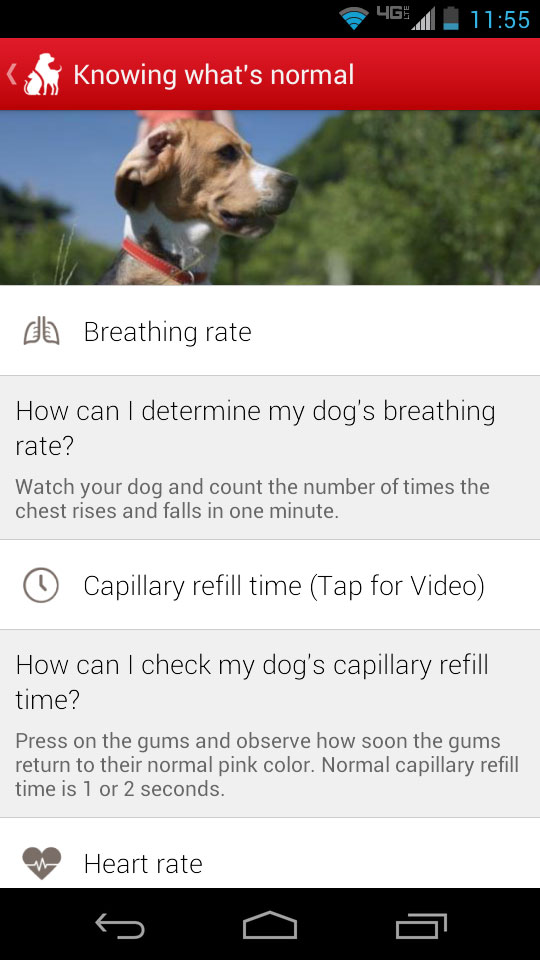
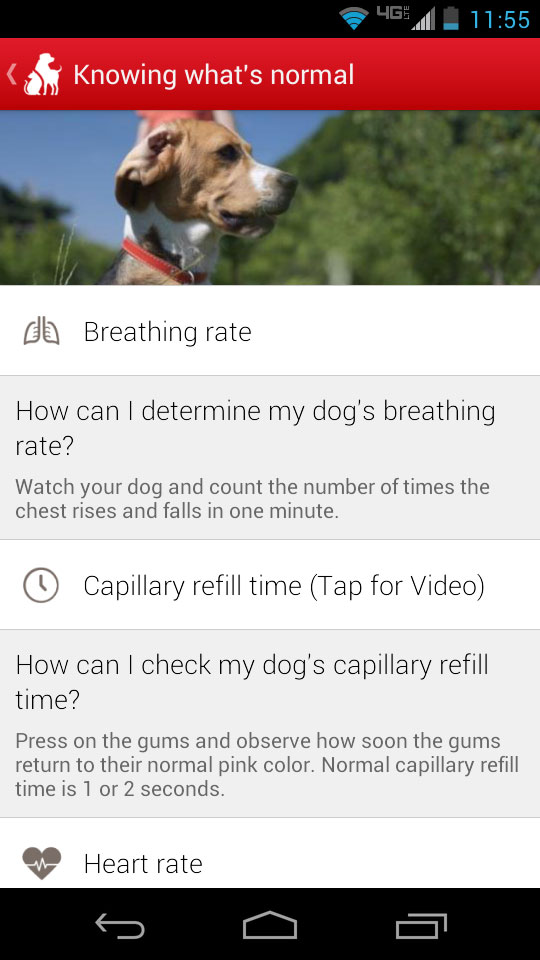
    Pet owners whose families have suffered a disaster can use the app to find a place to go after a fire or flood by locating nearby pet friendly hotels. Often, concern about what to do with their pets prevents people from evacuating. This app helps alleviate those concerns. Jen Leary, founder of the local pet disaster rescue organization Red Paw Emergency Relief, downloaded the app and says the pet friendly hotel and vet locator portion of the Red Cross app is a “game changer” for her volunteers in the field. She had already used it within minutes of downloading to assist more than one family affected by disaster.lean-know-whats-normal-dog

    But if you have a pet, you definitely need to consider downloading it. The 99 cents seems like a small price to pay for an app that has so many great, potentially lifesaving features. Plus the 99 cents goes to support all Red Cross services, including disaster relief. To do that, click here or search Red Cross on iTunes or Google Play. And help ensure you’re prepared to care for you pets like any other member of your family.

    I’m not sure what the app could have done for Merlin, but it seems obvious that if you are the proud family member of a dog or cat, this is information you need to have. It may save the life of a dear friend.

  • March Brings Winter Storm to Philadelphia Region

    photo 2Posted 2/28/14 3pm

    Officially, winter does not end until March 19th and the winter season is really hanging on this year.
    The Philadelphia region is gearing up for yet another major winter storm, complete with snow and possible ice accumulations.

    The American Red Cross
    Southeastern Pennsylvania stands ready to respond to whatever comes our way. Supplies and staff are ready in case shelters are needed. Red Cross workers will be in contact with emergency management officials throughout the region leading up to, during and after the storm. The Regional Disaster Coordination Center at Red Cross headquarters in Philadelphia will continue to answer calls 24-hours a day and dispatch volunteers to respond to the everyday disasters the Red Cross handles even when there isn’t a winter storm.

    For now, the American Red Cross Southeastern Pennsylvania urges residents in the area to prepare now for the weather ahead. Be sure to have enough water and food on hand in case you cannot leave your home for an extended time. Here are some links to more tips on how to prepare and respond during the storm:

    Winter Safety Tips including what items to have in your home and vehicle before a storm hits.

    Tips on protecting your pets during a winter storm, please don’t forget your pets.

    Tips to prevent or thaw frozen pipes in your home.

    rco_blog_img_MarchSnow

    Take time to download and learn more about the Red Cross mobile Apps. The first aid app, in particular could come in handy during and after a snowstorm. Any of the disaster apps like the hurricane app will provide you with shelter information, if needed.

    As always, look for up to date information about responses, shelters and even tips by following our official twitter feed:  @redcrossphilly

  • Red Cross opens shelters amid major power outages and massive ice storm

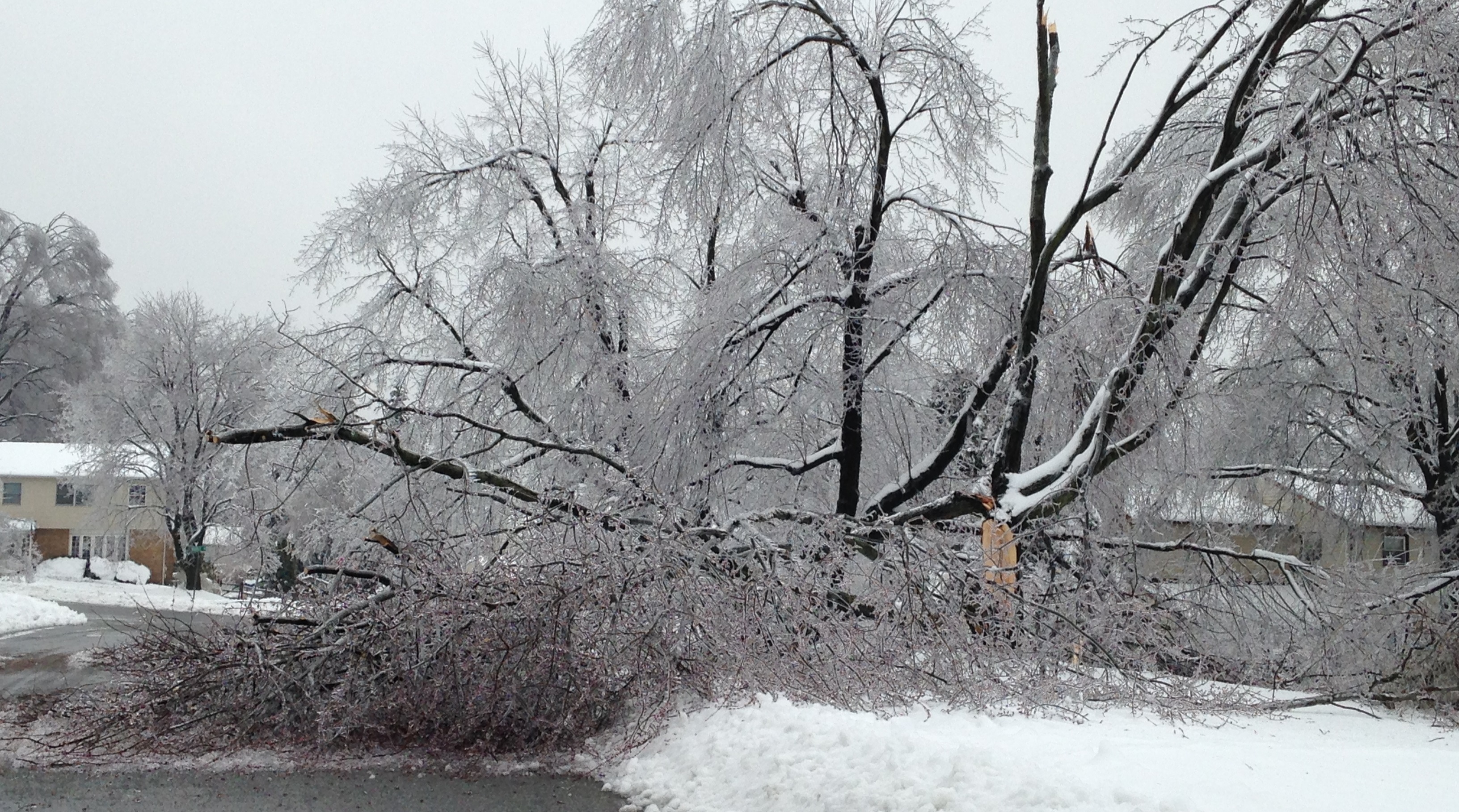
    IMG_8101
    UPDATE
    As of 2/11 at 12pm all Red Cross shelters in Southeastern Pennsylvania in response to the ice storm have closed.

    Supplies and resources remain in place throughout the region and volunteers are on stand-by to respond if needed following the next storm.

    rco_blog_img_LionvilleShelter

    Follow @redcrossphilly@dcschrader@telesara for immediate updates for all Red Cross activities in Southeastern PA.

    Always an option: If people don’t wish to go to a Red Cross shelter and prefer a hotel and they have pets, we encourage them to download the American Red Cross Pet First Aid app. It includes a feature that will locate the nearest pet friendly hotels to them.

    They can find it at redcross.org/mobileapps or by searching Red Cross on the iPhone App and Google Play stores.

    The Red Cross asks that you do NOT drop off supplies at the shelters. It creates major logistical problems. If folks wish to help, they can make a financial donation at redcrossphilly.org

    As power is restored, please take a moment to read these tips, or print this handy sheet to make sure you know what food is safe and more about how to safely get back to normal following a power outage.

    CLICK HERE to learn more about what you will find at a Red Cross Shelter.

    CLICK HERE for VIDEO about the Red Cross response as of 5PM 2/5.

    VOLUNTEER ICE STORM
    An American Red Cross volunteer meets with two people at the Lionville Middle School shelter in Chester County. photo credit: Sara Smith/American Red Cross
  • Behind the Scenes of the launch of Red Cross Pet First-Aid App

    Peticon

    Today (January 16, 2014)  is a very exciting day for the American Red Cross. It launched its Pet First Aid App for iPhone and Android. It is particularly exciting for the American Red Cross Southeastern Pennsylvania because the content and information in the app was provided by Dr. Debbie Mandell, an emergency room veterinarian at the Ryan Veterinary Hospital at the University of Pennsylvania here in Philadelphia. Dr. Mandell also serves as a pet advisor to the American Red Cross.

    In order to launch the app, the Red Cross held what’s called a Satellite Media Tour at a studio in Philadelphia, featuring Dr. Mandell, a Red Cross national spokesperson, two pet first-aid CPR manikins, and Mana, the best behaved dog ever known to attend a media event. Basically, TV and radio stations across the country did interviews with them, one after the other.

    emergency pet app info

    I got to work on this project because of my position with the Red Cross here in Philadelphia. We did site surveys at Penn Vet’s ER, but we couldn’t logistically work out a way to showcase pet emergency care; the unpredictability of a pet emergency room could make for great TV or awful TV. We couldn’t take the chance on the latter.

    laura and dr. mandell
    Dr. Debbie Mandell (L) of Penn Vet and Laura Howe of the American Red Cross, and Mana the dog, during media interviews about Red Cross Pet First-Aid app.

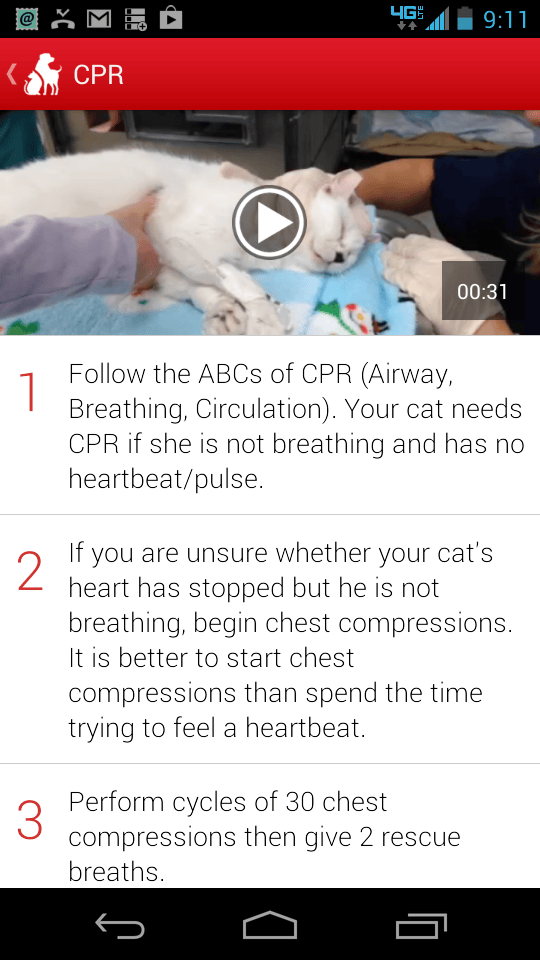
    So for about six hours this morning, Dr. Mandell, the spokesperson, and Mana sat in a studio saying the same things over and over about the Pet First-Aid app. They explained for what seemed like a thousand times, the app’s many features, did pet CRP demonstrations, and showed what items should be in every family’s pet first-aid kit.

    One thing in particular stands out to me from the series of interviews this morning. Dr. Mandell really did a geat job emphasizing the dangers in your home that you may not be aware of. She mentioned certain plants and flowers are toxic to cats and dogs. I had no idea. The Red Cross Pet First-Aid app identifies those plants for you and what to do if your pet eats or licks any of those plants.

    My two dogs died a few years ago, so I don’t have any pets, but I can still use the app. It is useful for me to help potential Red Cross clients with pets, who need a place to go after a fire or flood, find nearby pet friendly hotels. Often, concern about what to do with their pets prevents people from evacuating. This app helps alleviate those concerns. Jen Leary, who runs the local pet disaster rescue organization Red Paw, downloaded the app and says the pet friendly hotel and vet locator portion of the Red Cross app is a “game changer” for her volunteers in the field.

    But if you have a pet, you definitely need to consider downloading it. The 99 cents seems like a small price to pay for an app that has so many great, potentially lifesaving features. Plus the 99 cents goes to support all Red Cross services, including disaster relief. To do that go to redcross.org/mobileapps or search Red Cross on iTunes or Google Play. And help ensure you’re prepared to care for you pets like any other member of your family.

    Cat CPRlean-know-what's-normal-dog

  • Learning by teaching others

    rco_blog_img_CR

    Thanksgiving week marked the end of my rotation working in preparedness education as an AmeriCorps member.  Working that rotation was a friendly reminder for why I wanted to follow a career in medicine.  What really pushed me towards medicine was that medicine gives me the opportunity to interact with such a diverse group of people, and I encountered this during my time in the preparedness education rotation.

    While working in preparedness education, I was given the opportunity to travel throughout Southeastern Pennsylvania to present the various courses Red Cross offers at schools and community centers.  Some classes I taught were about fire safety, others were about disaster preparedness, and my favorite one was teaching a hygiene class to kindergartners.

    What I enjoyed most about teaching classes was the diversity of the participants.  I find that the diversity brought an element of surprise to teaching because I never knew the people I’d encounter when walking into a classroom.  This made each day of work exciting because I knew I would have the opportunity to meet new people.

    Although it was my job to be teaching others, I often found myself learning skills that I hope to take advantage of when I go into the medical field.  Working in preparedness education has really improved my ability to teach others and has also greatly improved my public speaking.  It has also taught me the importance of being able to adapt to different situations; I often found myself drifting away from my script to better explain the course.

    I hope my time working in preparedness education had a positive impact on Southeastern Pennsylvania.  It is sad to be leaving that department, but I am excited knowing that the other departments have just as much to offer!

  • Fire Safety Month Begins!

    Does your home have a working fire alarm?  Do you have an escape plan in the event of a fire?  Did you remember to turn off the stove?

    Growing up in the suburbs near Trenton, New Jersey, I found questions like this a nuisance because fires in my area were a rare event.   It was not until I began school at Temple University that I started to appreciate why my school engraved fire safety tips into our minds.  During my years at Temple, I would often hear a sound unfamiliar to me when I lived in the suburbs; the sound of a fire truck siren.  To my surprise, it was not uncommon to see a fire truck racing down Broad Street three, four times a week.  Now, working at the Red Cross as an AmeriCorps NPRC member, I’ve seen first-hand the effects of fires on the people of Philadelphia and the importance of fire safety.

    Firefighters and damage 3


    September was National Preparedness Month, and one of the things we all need to prepare for is fires.  Fire is an unforgiving chemical process that will continue to spread and be fatal if not accounted for.  Of the 74,000 disasters Red Cross responded to this past year, 93 percent of them were fire related.  In fact, fire kills more Americans each year then all the natural disasters combined.  As National Fire Safety Month begins, it is essential for everyone to take steps to help protect their homes and the people they care about.

    Common house hold items are often a source of fire; anything from the stove in the kitchen to the space heater used to warm up the house during those cold winter nights are all potential fire hazards.  Even things we cannot see like the wiring behind the wall can cause fires.  It is important to learn more about these items in order to prevent fires from occurring.

    The most important way to help save lives in the event of a fire is that first alert to a problem.  This is why it is essential to install and maintain all smoke alarms throughout the house.  Smoke alarms can help notify people a fire is occurring and help them escape before the fire spreads to all available exits in the house. The next thing you must do is have and practice your escape plan. In fact, the Red Cross recommends having at least two ways out of every room in your house.  At Temple, that meant investing in a fire ladder for myself. My second way out was through a third story window, so I had a ladder ready, just in case.

    Preparing and planning for fires can protect what you love most.  Please take the time to visit http://www.redcross.org/prepare/disaster/home-fire to learn more about fires in order to prevent them and prepare for them in the event that a fire does occur in your home.

  • Family Planning: The Red Cross Method

    Make a Plan Photo

    If there is a disaster, do you have a plan in place for your household? You’ve spent some time getting your emergency kit together. You have the water and non-perishable food. You have the battery operated weather radio. You have the first aid kit and the blankets. Now what? Where will you go?

    Last year, several hours before Superstorm Sandy hit the East Coast, I got a call from my brother. He lives about four miles away, in a similar neighborhood, but his house is in a creek valley. In fact, an inlet from the Wissahickon Creek runs right behind his house, and he worries about flooding when there is a storm with the potential for enormous amounts of rain. He was a nervous wreck on the phone. “Can we come over?” he asked. This was a fairly big ask. I have three teenagers; he has three children under seven. That’s a lot of children in one house. “Sure,” I replied with some trepidation. My newly “Red Cross Aware” self had made some fairly extensive preparations for the storm. My plan had not considered my brother’s family. In fact, we had never talked about the possibility of sheltering them before. I paused on the phone, trying to figure out a good way to say that my emergency planning did not include another family of five. Then, I said, “You are welcome, but please bring some water and food in case we lose power for a significant amount of time.”  “Huh. . .?” he replied.

    It had not occurred to him that in leaving his house to shelter elsewhere, he would need supplies. He did not think that the place he might choose to shelter, while safe from flooding, would be equally vulnerable to blackouts, lack of heat and water pump failure. He had not made a plan, and he was not prepared. After thinking it through, he chose to drive his family south to his mother-in-law’s house near Washington D.C. The storm looked as if it would mostly miss the western shore of the Chesapeake Bay, and he decided they would be safer there for a couple days.

    This last minute plan worked out well for them. The roads south were still open and clear of traffic, and they were able to find the shelter they needed in a safe area.  Even so, it turned out they could have stayed. The Philadelphia Area was incredibly lucky, and our house lost power for a very short time.

    Still, I invite you, dear reader, to consider how things could have turned out very differently: the storm might have taken a different path, stranding his car somewhere in Delaware; or State Troopers might have made him turn back somewhere along the way; or he might have come over to our house with his family and experienced a prolonged blackout with dwindling supplies. In other words, it’s important to make a plan.

    Make a plan photo 2The American Red Cross has great suggestions for things to consider as you make a plan for your family in case of disaster. For instance, it had not occurred to me how my family members, now perpetually separated from one another during the day, might be apart when a disaster strikes. How would we find one another? According to the Red Cross, I should meet with my family to discuss the potential for separation, choose meeting places nearby and far away, and designate a person for everyone to call outside of the disaster area, and possibly out of state. If you might have to evacuate, like my brother, make sure you plan where you will go, who you will shelter with, and what you will need when you leave your house. Clearly, he and I need to talk. I need to take into account that I have family members nearby that may need to evacuate.

    And it goes without saying . . .please, all the brothers and sisters and cousins and everyone, get that emergency kit together. It could make an enormous difference.

    — Submitted by Sarah Peterson, Communications Volunteer