Category: Black History Month

  • Sickle cell warrior Cameron Williams inspires his community to step up and donate blood

    By Jenny Farley

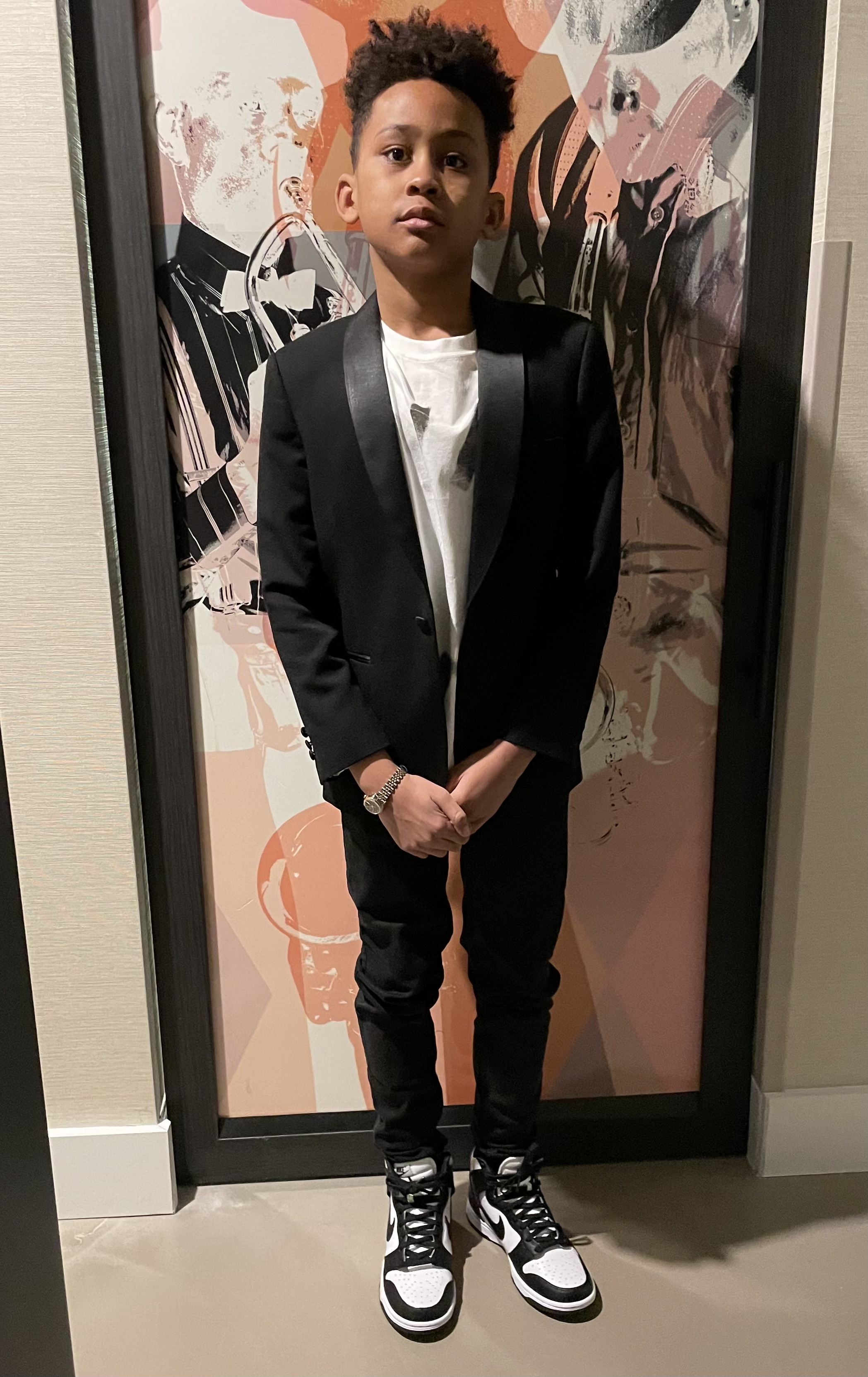
    Head to toe photo of 14-year-old Cameron Williams in front of an abstract painting. He is wearing a black coat and pants, white T-shirt and black and white sneakers.
    Sickle cell warrior Cameron Williams, 14, often has to battle through pain to play the sports he loves. Submitted photo

    Cameron Williams is a diehard Philly sports fan and an athlete who loves playing football, basketball and running track. He’s also an inventor.

    At just 14 years old, he recently worked on a group project in school for his “Money Matters” class, where he came up with the idea for compression undergarments that heat up.

    “It was phenomenal actually,” his mom Qamra Williams said.

    Cameron’s teacher told the class to design a project useful to the public. He got an “A.”

    For Cameron, developing clothing that heats up came from his own experience being cold, something that for him can be more than uncomfortable – it can hurt.

    “I chose that because I know how it feels to play in the cold or play in the snow and we wanted to fix that,” he said.

    Cameron has sickle cell disease, the most common inherited blood disorder in the United States. Patients may suffer intense pain (crisis), have organ damage or need hundreds of blood transfusions throughout their life.

    Blood donors who are Black or African American are much more likely to be a match for the blood most commonly needed.

    Photo of a young Cameron Williams in a hospital bed with a stuffed bear beside him. He is wearing a blue short and is half covered with a white blanket. A vase of flowers and another wrapped gift sit beside him on a table.
    Cameron Williams is shown during one of his hospital stays. His mom Qamra said, “Most people, or most children who have sickle cell are in the hospital 10 times a year, in and out for long stays. I think the past maybe 8 months or so has been the worst for Cameron.” Submitted photo

    Cameron’s mom Qamra is an operating room nurse at a Level 1 trauma center and will graduate in September with a master’s degree in health care administration.

    In nursing school she remembers studying about sickle cell disease while pregnant with Cameron. It was still a shock to get the diagnosis after he was born, but she’s grateful his condition is not worse.

    “We’ve been blessed. Cameron is not as sick as a lot of other children with sickle cell,” she said. “He’s gotten one blood transfusion in his entire life.”

    Pain from sickle cell disease can knock him out of his much loved activities though, and that’s frustrating.

    “I miss out on a lot of things I need to do,” he said.

    On the day we spoke Cameron was having a “rough day” from the pain in his arm, which prevented him from going to basketball practice the day before a game.

    When asked what he wants people, especially kids, to know about sickle cell disease he said, “I can’t control it.” But there’s something you can do to help.

    “Donating blood is important. It helps people with sickle cell,” he said.

    As a member of the Montgomery chapter of the community organization Jack and Jill of America Inc., Qamra volunteered to host a blood drive with the American Red Cross to help collect blood for people with sickle cell disease like her son Cameron. The blood drive was held at the Super Giant Community Center in Willow Grove the day after Valentine’s Day.

    Qamra and Cameron planned to be there. But, proving that a sickle cell crisis can happen at any moment, Cameron spent the day of the blood drive and the days leading up to it with a fever, in terrible pain at a hospital. His mom stayed by his side to help him through it.

    Donor after donor arrived at the blood drive with a mission – helping Cameron know how much he and his family are loved and how willing they were to donate blood to support him.

    Photo of Dana Walters wearing a red T-shirt that reads Be a Sickle Cell Fighter, donate blood.
    Dana Walters is a member of the Jack and Jill of America, Inc. Montgomery County chapter. She volunteered at the blood drive to help support Qamra and Cameron Williams, who she considers family. Dana said, “We are very thankful that the Red Cross is able to collect the blood from those that donate. They’re wonderful.” Photo by Jenny Farley/American Red Cross

    Dana Walters and several other volunteers from Jack and Jill of America, Inc. spent the blood drive helping Red Cross volunteers hand out t-shirts, restock snacks for donors and check on how they were feeling after giving blood.

    Dana has an aunt who has sickle cell disease and is close to the Williams family. She considers Cameron her nephew.

    “When he’s in the hospital, he’s receiving heavy pain medication and we’re just hoping that he feels better soon,” she said.

    Michele Edwards put her fear of needles aside to donate blood at the drive to support Qamra and Cameron. Michele’s son is friends with Cameron and the families have been close for years.

    “They go through a lot with that disease and I just wanted to make sure that I was available to help any way that I can. This is my first time. I’m doing it for Cam,” she said.

    2 photos. In the left photo is Michele Edwards laying a donation table as Stephanie Chinofsky prepares to draw blood. In the right photo, Lamont Terrell lays on a blood donation cot while he gives blood.
    Left: Michele Edwards donated blood for the first time at the Red Cross blood drive in Willow Grove. She is pictured with phlebotomist Stephanie Chinofsky. Michele had a message for friend Qamra and her son Cameron: “Just keep staying strong. You have a big support system and we’re here for you. We love you.”  Right: Lamont Terrell made a Power Red donation at the blood drive in support of his daughter’s friend Cameron. He said, “Unfortunately, there aren’t any cures for sickle cell so by being able to give blood it really makes me feel proud that I’m doing something to help someone else.” Photos by Jenny Farley/American Red Cross

    Lamont Terrell has been a blood donor for nearly 25 years and his daughter is also friends with Cameron. While making a power red donation, he talked about the movie plans the kids had before Cameron ended up in the hospital and they had to cancel.

    “Seeing her friend suffering really just brought it to life why it’s so important to always give back, in particular by giving blood,” he said.

    Cameron’s dad Maurice Williams came to the drive with his son Hampton, Cameron’s little brother. Maurice donated blood and said Cameron’s pain was down to a “level 6” that day, on a scale of 1 to 10.

    “Each day he’s getting better. He’s a strong kid. He’s doing everything he needs to do to get out of the hospital.”

    Maurice had a message for people who are thinking about donating blood but haven’t done it yet.

    “Do it as soon as possible. You never know how your donation may help somebody else in need, especially kids with sickle cell.”

    Photo of Maurice Williams on a blood donation cot with Hampton Williams sitting beside him on a chair.
    Maurice Williams donated blood to support his son Cameron who has sickle cell disease. Cameron was in the hospital when this photo was taken. Maurice said, “It’s frustrating as a parent to watch your child suffer and not be able to do anything to help.” Maurice is shown with his son Hampton, Cameron’s little brother. Photo by Jenny Farley/American Red Cross

    For more information on becoming a blood donor, download the Red Cross blood donor app, visit RedCrossBlood.org or call 1-800-RED CROSS. That’s 1-800-733-2767.
  • A lifelong call to serve led volunteer Christal Harte to the Red Cross

    In celebration of Black History Month, we invited colleagues to share their thoughts and stories as proud Red Crossers that make up our inclusive team in Southeastern Pennsylvania. Please note, the views expressed in this post are of the author and not necessarily those of the American Red Cross. Learn more about our culture of mission, impact and inclusion.

    By Christal Harte

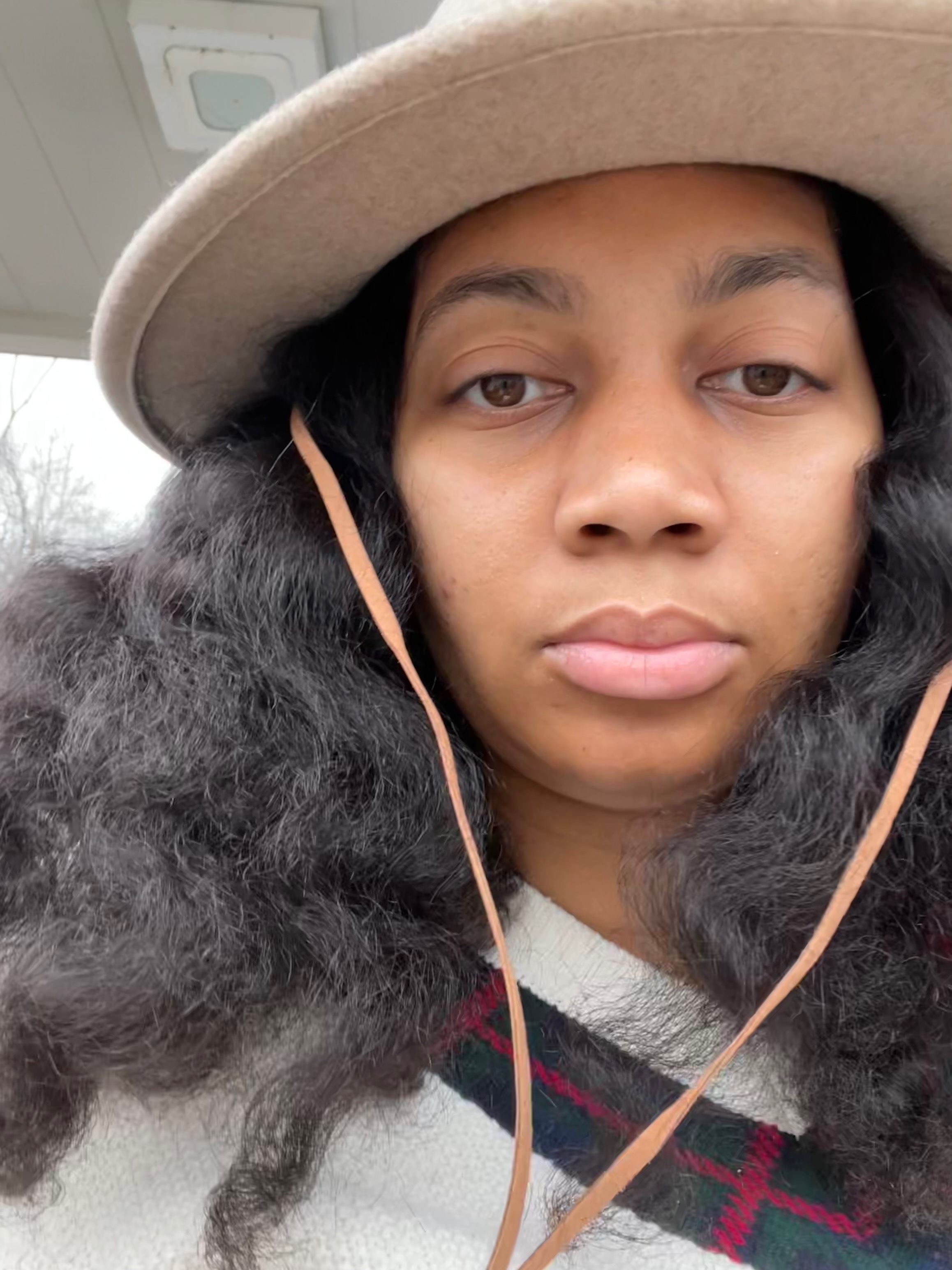
    selfie of Red Cross volunteer Christal Harte
    Christal Harte is a volunteer writer with Red Cross Southeastern Pennsylvania’s communications team. Submitted photo

    Since I was a child, it was always impressed upon me how important it is to serve. I can’t pinpoint exactly when it began, but I can look back and see clear threads in my life pointing toward service. In fifth grade, I volunteered to help kindergarteners learn to read. In junior high, I spent my free periods supporting the dean with various activities. In high school, I volunteered with the I Have a Dream Foundation in New York City, working with elementary-aged children to support their math and literacy skills.

    I walk through life acutely aware that we render service to one another no matter our occupation or education, and that everyone deserves dignity and respect. Even in college, I chose a path of service, majoring in InternationalService with dreams of going abroad to serve others in different cultures and communities and to extend the right hand of friendship that America had to offer. I spent time in the Peace Corps before eventually making my way back stateside.

    After the housing market crash and financial crisis of 2008, I worked a string of jobs—each fun in its own way. In February 2017, I was let go from a startup due to lack of continued funding. I’m a pragmatic optimist, and I saw that moment as an opportunity to rediscover myself and spend time serving. I went straight to the Red Cross website to look for roles where help was needed.

    I started as a volunteer on the Disaster Action Team, which has a training program that prepares you to respond to local crises, with opportunities to support nationally when the need arises. From there, I supported several initiatives under Lisa McGee, then the Workforce Engagement Manager for the State of New Jersey. I did administrative work and helped deploy disaster teams to local fires, providing ground support to people in need.

    Later, I came across a posting to write blogs for the Red Cross. By then, my life had changed—I was married and had two children (now three). Even as life grew busier and I served in my church and community, I didn’t want to let go of my Red Cross work. Writing allowed me to stay connected, learn more about the organization and its people, and share their stories.

    I’ve always loved to write—from poetry to songs to stories. Being part of the Red Cross and contributing in a way others can learn from is deeply satisfying. It brings me joy to serve while maintaining a busy home and work life.

    In high school, an actor named Henry Winkler—best known as “The Fonz” from Happy Days—came to speak to our class about one way he served: donating blood. He shared why he donates and why others should too, simply saying, “You donate blood, you save a life.” That stayed with me. He found a way to serve, and over time, I have found mine.

    There’s a movie called Pay It Forward about a young boy who starts a simple idea: do something kind for three people and ask them to “pay it forward” to three more. The story shows how small, ordinary acts of service can ripple outward and change lives in ways we may never fully see. That’s what volunteering with the Red Cross feels like to me. You may not always witness the long-term impact of what you do, but every shift, every hour, every act of care matters to someone.

    If you’ve ever felt a quiet nudge to give back, I encourage you to listen to it. Find a place to plug in—whether it’s the Red Cross or another organization close to your heart. Your way of serving may look different from mine, but it is no less meaningful. Sometimes all it takes is one step, one yes, and one small act to begin a journey of service that can bless both others and yourself.

  • Black History Month: Committed to meaningful service

    In celebration of Black History Month, we invited colleagues to share their thoughts and stories as proud Red Crossers that make up our inclusive team in Southeastern Pennsylvania. Please note, the views expressed in this post are of the author and not necessarily those of the American Red Cross. Learn more about our culture of mission, impact and inclusion.

    By Carla Moore

    Carla Moore and Mary Harper stand with two men dressed like Mummers.
    Carla Moore (left) with Service to the Armed Forces volunteer Mary Harper at Philadelphia Vet Fest on Aug. 5, 2025. Submitted photo

    Hello! My name is Carla Moore, and I am a Program Specialist for Service to the Armed Forces in Southeast Pennsylvania (SEPA). In my role, I focus on casework and service delivery for veterans and their families. My days are spent managing emergency messages for service members and overseeing critical care casework for those in need. The toughest part of my job is witnessing veterans struggle with mental health challenges and homelessness. This work requires deep compassion and dedication to build trust and meaningful connections with clients and volunteers. 

    The best part of my job is celebrating small victories—delivering food to pantries, making successful referrals, and knowing that even small actions can make a difference. I value being part of an organization that acknowledges individuals, cultures, and communities. Recognizing Black history and culture inspires me to strive for greatness, and I hope it encourages others as well. With the changing social climate, honoring this time of year has become even more important to me. 

    I joined the Red Cross because I wanted to be part of an organization committed to sincere, impactful work. I am grateful to be in a space that embraces diversity and provides opportunities to grow. I’ve always aspired to a career in humanitarian service, and I feel confident that I have finally arrived. 

  • Coming full circle: My journey with the Red Cross

    In celebration of Black History Month, we invited colleagues to share their thoughts and stories as proud Red Crossers that make up our inclusive team in Southeastern Pennsylvania. Please note, the views expressed in this post are of the author and not necessarily those of the American Red Cross. Learn more about our culture of mission, impact and inclusion.

    By Tyrone Knight

    A headshot of Red Cross volunteer Tyrone Knight against a blue background.
    Tyrone Knight is a volunteer duty officer with the American Red Cross. Submitted photo

    At 68 years old, I can honestly say I’ve had a full and meaningful life and the American Red Cross has played a significant role in that journey. Growing up as a poor kid in North Philadelphia, I was searching for my future. After high school, I joined the Army as a private and retired 21 years later as a Major. During my military service, I saw and appreciated the vital emergency communications mission the Red Cross provides to service members and their families.

    In January 1997, I began working for the Red Cross in Armed Forces Emergency Services as an Assistant Station Manager at Fort Bragg, NC. Six months later, I deployed to Bosnia as part of Red Cross Operation Joint Guard Team-8 supporting US troops participating in the NATO-led peacekeeping mission (SFOR) in Bosnia and Herzegovina enforcing the Dayton Peace Accords. That assignment taught me the power of partnership and morale—we even hosted a Super Bowl party for the troops at Eagle Base, Bosnia,

    A year later, I returned home to the Southeastern Pennsylvania Region to work in Emergency Services as a Disaster Specialist in Logistical Operations. I served as Hurricane Watch Officer during Hurricane Floyd and helped prepare for Y2K—a big deal at the time. In 2001, I left the Red Cross to work for the Department of Defense, where I spent 22 years before retiring as Foreign Military Sales, Branch Chief at Aberdeen Proving Grounds.

    I always knew I’d come back to the Red Cross. In 2023, after retiring and moving back to Media, PA, I attended a Juneteenth celebration and saw a Red Cross table staffed by warm, friendly volunteers. That moment brought me full circle. Today, I serve as a Regional Duty Officer, and a member of Volunteer Services, Regional Volunteer Recognition Committee.

    As a Duty Officer, I’m often the first point of contact for people who need help. I help people in crisis navigate their emergency with calm, professionalism, and compassion. I joined the Volunteer Recognition Committee because I’m constantly amazed by what this organization accomplishes through the power of volunteers. I want to celebrate that.

    I’m proud to be back with the Red Cross. It’s important work, and it’s in my blood.

    Newspaper clip of Tyrone Knight collecting Super Bowl trivia answers during his service at Eagle Base in Bosnia.
    Newspaper clip from Tyrone Knight’s service at Eagle Base in Bosnia. Submitted photo
  • From blood recipient to donor: Officer Ashley Hoggard pays it forward

    By Jenny Farley

    Retired Philadelphia Police Officer Ashley Hoggard lost 6 pints of blood when he was shot in the line of duty on June 14, 2009. Today, he donates blood, platelets and plasma. Submitted photo

    Growing up in Philadelphia, Ashley Hoggard knew he wanted to be a cop. Almost four years into his career, he got shot in the line of duty on June 14, 2009, two weeks before his 27th birthday. The bullet nearly killed him.

    “It ripped my lung in half. I died three times that night. I was in a coma. I lost six pints of blood in the time it took my partner to get me to the hospital and they were operating on me,” he said.

    Blood transfusions helped save his life.

    On that summer night, Officer Hoggard was responding to a call to assist other police officers around 2:47 a.m. He remembers crowded bars were letting out, people were rowdy, and three shootings were happening at the same time when he was hit.

    “It seemed like it was going on forever, but it really happened in a matter of seconds.”

    The last thing he remembers is saying a prayer.

    A nurse later told Officer Hoggard she had never seen someone lose that much blood and live. He spent 27 days in the trauma and intensive care units (ICU) at Temple Hospital.

    Over the next several years, he endured 15 surgeries. Doctors tried to repair the nerve damage on his left side and restore feeling in his dominant hand. In one grueling nine-hour operation, surgeons removed the bullet that nearly ended his life.

    “I worked 12 years with the bullet still lodged in my body.”

    When Officer Hoggard was a child he learned he had O negative blood, the universal blood type. After getting shot, he received so many blood transfusions that his blood type actually changed from O negative to O positive. O positive blood is the most transfused blood type.

    One day while watching a commercial for St. Jude’s Children’s Hospital, he was deeply moved by the sight of sick children.

    “It broke my heart. I was just sitting there watching these children fight. I got up, and then I started donating blood.”

    Now Officer Hoggard donates as often as possible. When he’s donating, he thinks about the people he’s helping.

    “I started donating platelets and I started donating plasma and stuff like that.” He said, “I try to give as much as I can.”

    He also makes Power Red donations, where a donor can give two units of red blood cells during one donation. Plasma and platelets get returned to the donor along with saline during that process.

    Officer Hoggard tells people about what he’s been through in the hopes it will inspire them to donate blood. He said before he was shot, he never took his life for granted, but he may have taken the “little things” for granted.

    “The fact that you can just wiggle your fingers right now. Or the fact that you could drink wine and read a book, or you can drive with one finger,” he said. “I never knew one bullet would cause that much damage.”

    After retiring from the Philadelphia Police Department after 18 years, he went to work for the Fraternal Order of Police Lodge 5. He runs the Injury Division.

    “This is the best job I have ever had. I love what I do. I love the people I work with.”

    He doesn’t take anything in life for granted now.

    “People are scared of death. I died three times in one night and the good Lord brought me back. The best way to beat death is how you live.”

    For Officer Hoggard, that means living each day striving to be a better person than the day before and continuing to donate blood.

    “The night I got shot, I needed six pints of blood just to stay alive. It came from six different strangers. Six people that I never met. Six people that I can’t even say thank you to. They saved my life.”

    To make an appointment to donate blood, visit RedCrossBlood.org, use the Red Cross donor app or call 1-800-RED CROSS. That’s 1-800-733-2767.

  • ACES Veterans Museum honors Black military service

    By Maureen Zug

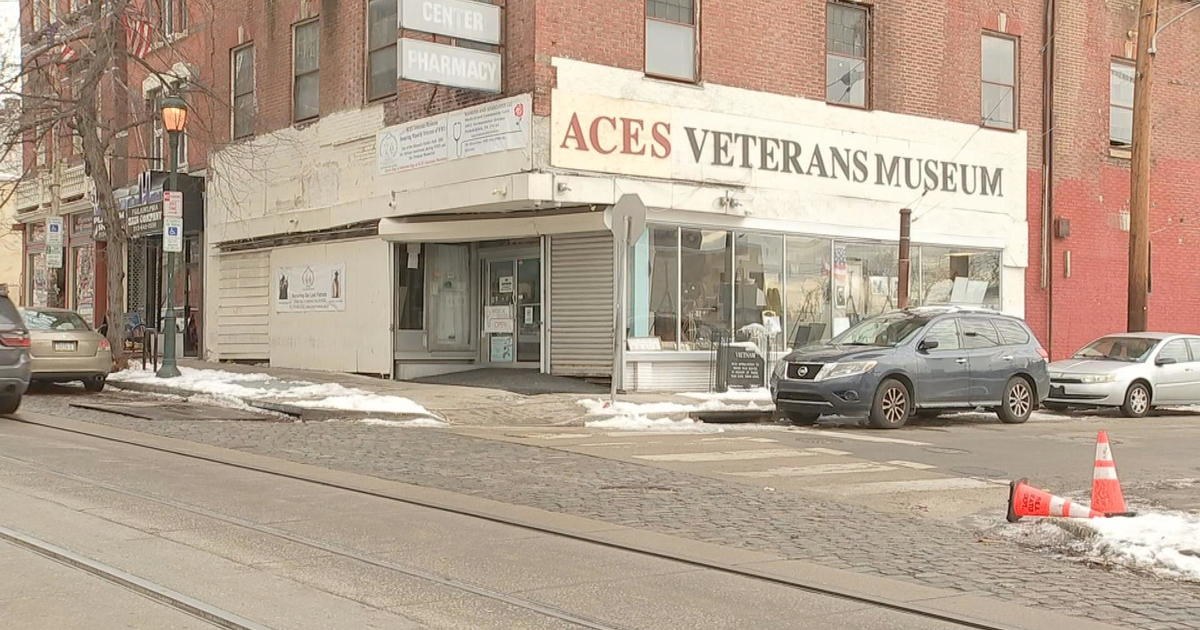
    ACES Veterans Museum. Submitted photo

    Since February commemorates Black History Month, our blog is spotlighting the ACES Veterans Museum in the Germantown neighborhood of Philadelphia. The location of the museum is significant because the historic Parker Hall Building served as a USO canteen for Black military members during World War II. Due to the segregation practices of the era, Black servicemen and women were restricted from whites-only USO locations. After World War II, the building was then converted into a neighborhood grocery store and mixed office space. The building finally fell into disrepair and had been vacant from 2010 until it reopened as the ACES Veterans Museum in the Winter, 2023.

    Dr. A.V. Hankins, museum president, connects with history

    As one of the office occupants at 5801 Germantown Ave., physician A.V. Hankins ran her medical practice in the building until it closed. Interestingly, Dr. Hankins is a military veteran herself. She later found out about Parker Hall’s connection to history in serving the Black members of the military during World War II. Though community and veteran groups fundraising, Dr. Hankins was able to realize her dream of honoring not only Black Veterans, but also Asian, Latino and Native American vets, acknowledging all people of color who have served.

    In an interview, Dr. Hankins explained, “When we created ACES, we wanted to include all minorities to make sure that the story was told.” Notably, the Museum has become a community hub for vets from the Vietnam era as well as Gulf Wars up to the present day.

    Dr. A. V. Hankins (left) with Red Cross volunteer Mary Harper at the ACES Veterans Museum. Submitted photo

    The Red Cross/Service to the Armed Forces connection

    For over a year, Services to the Armed Forces (SAF) volunteer Mary Harper has provided Red Cross support to the ACES Veterans Museum. Her introduction to the museum came nearly by accident as she walked throughout her historic Germantown neighborhood. Mary reached out and has provided access to veterans programming at Philadelphia Veterans Affairs Hospital and Veterans Multi-Service Center.

    Mary has also participated in museum activities as the face of the Red Cross. She has a close working relationship with Dr. Hankins to provide visibility for the Red Cross’ Hero Care Network services and a linkage to other like-minded folks in the Philadelphia-area veterans community.

    “ACES has achieved (institutional) certification. It has a Red Cross ID card in its collection,” Mary shared. “When (Red Cross) regional headquarters moved from Chestnut Street to the Spring Garden Campus, other Red Cross artifacts were donated to the museum.”

    Why not visit the ACEs Museum during Black History Month and learn the stories of men and women who served our country with such distinction? Be on the lookout for further Red Cross collaborations with ACES Museum in the near future

    Visit acesveteransmuseum.com to learn more about ACES mission, collections, and to hear Dr. Hankins speak about the museum. You can also check out documentaries “Women’s Postal Corp” and “First to Fight: The Black Tankers of WWII.” These showcase the outstanding contributions of Black veterans in World WarII.

  • Red Cross celebrates local HBCUs during Black History Month

    By Maureen Zug

    The Southeastern Pennsylvania Region of the American Red Cross celebrates the positive impact students and alumni of Historically Black Colleges and Universities (HBCUs) make in helping ensure a diverse blood supply.

    That blood supply supports patients battling sickle cell disease during February, Black History Month, and throughout the year. That’s why the Red Cross decided years ago to reach out and propose a partnership which leverages the strengths and commitments of Black college and university students.

    For more than 100 years, HBCUs have been rooted in a tradition of community service to others. Blood drives hosted by HBCUs help ensure that students, alumni and community members have a place to donate blood, while also helping to meet the transfusion needs of black and brown patients.

    There are currently 107 HBCUs in the United States; we have three HBCU-designated schools in our region. Let’s take a look:

    Cheyney University

    Cheyney University students sign in to give blood at a Red Cross blood drive on Feb. 23, 2023. Photo by James Jones/American Red Cross.

    On February 25, 1837, Cheyney University of Pennsylvania became the nation’s first Historically Black College and University (HBCU). The University was established through the bequest of Richard Humphreys, a Quaker philanthropist who bequeathed $10,000 — one-tenth of his estate — to design and establish a school to educate free people of African descent.

    First known as the African Institute, the school was soon renamed the Institute for Colored Youth. In its early years, it provided training in trades and agriculture, later adding teacher training courses. Other liberal arts and science degree programs were added in the Twentieth Century.

    In 1902, the Institute was relocated to George Cheyney’s farm, a 275-acre property just 25 miles west of Philadelphia in Delaware County. The name “Cheyney” became associated with the school in 1913, though the school’s official name changed several times during the 20th century. The school finally became Cheyney University in 1983 and has a current enrollment of 706 students.

    Delaware State University

    The Delaware College for Colored Students, now known as Delaware State University, was established May 15, 1891, by the Delaware General Assembly under the provisions of the Morrill Act of 1890 by which land-grant colleges for Blacks came into existence in states maintaining separate educational facilities.

    With the appointment of an inaugural six-member Board of Trustees, that governing body used part of the initial $8,000 state appropriation to purchase a 95-acre property north of the state capital of Dover to establish the new college.

    Because there was already a private Delaware College (now the University of Delaware) located in Newark, Delaware, to avoid confusion new state legislation was passed and enacted in early 1893 to change the Black school’s name to the State College for Colored Students. That would be the institution’s name for the next 54 years.

    Initially, Delaware State University had a strong emphasis on the normal school instruction (preparation for school teaching) mechanical arts, domestic science, and agricultural studies. As the Twentieth Century progressed, the university added more academic subjects and researched-based disciplines for which it is known today.

    In 1993, Delaware Governor Tom Carper changed the name of the institution from its former name to Delaware State University. Currently, there are 6,218 students enrolled in undergraduate and graduate programs at the three DSU campuses: Dover (main campus), Georgetown and Wilmington.

    Lincoln University

    Lincoln University students staff a sickle cell blood drive on Sept. 22, 2023. Submitted photo

    Lincoln University is located in southern Chester County, four miles north of Oxford, Pennsylvania. Founded in 1854, the university is the oldest existing Black institution of higher learning (degree-granting) in the United States.

    Although Cheyney University was founded prior to the establishment of Lincoln U, it was not initially a degree-granting institution. To this day, the two universities banter about which school claims the honor of being the oldest school in the United States.

    The university was founded by John Miller Dickey, a white senior pastor of the Oxford Presbyterian Church. Before founding Lincoln University, Dickey had been involved in anti-slavery activities and was concerned for the welfare of African Americans.

    In 1850, he contributed decisively to the liberation of two sisters, Rachel and Elizabeth Parker, who had been kidnapped in Oxford for sale into slavery. Dickey also supported the American Colonization Society and felt that emancipated Africans should return to the African continent as missionaries.

    In 1852, Dickey made unsuccessful attempts to place James Ralston Amos, an African American and the treasurer of the fund for the “Negro Church” building established by Richard Allen in 1794, into Princeton University Seminary and also at a religious academy managed by the Presbyterian Synod of Philadelphia.

    Frustrated by a failed effort to secure admission for a Black student in a white institution, Dickey sought a solution in establishing an institution for Black men.

    The institution Dickey established was originally chartered by the state of Pennsylvania as Ashmun Institute, named in honor of the first governor of Liberia. After the Civil War and in recognition of the role that President Abraham Lincoln played in the emancipation of the enslaved, Ashmun Institute was renamed Lincoln University. The educational curriculum was originally conceived to include not only all aspects of liberal arts but also law, medicine and theology. Financial problems and declining enrollment,

    however, necessitated the closing of the seminary as well as the schools of law and medicine. The university’s charters of 1854 and 1866 restricted admission to male students.

    However, in 1953, the university amended its charter to permit coeducation. In 1972, Lincoln University became a state-related institution within Pennsylvania’s Commonwealth System of Higher Education and was placed on the same basis for state aid as Temple University and the University of Pittsburgh and Pennsylvania State University. Lincoln University has a total population of 2,631 students enrolled.

    ARC Provides Leadership Opportunities and Scholarships

    Student leaders who plan and organize Red Cross blood drives at HBCUs are eligible for scholarships which support undergraduate students in qualifying majors. This program is known as the HBCU Ambassador Program and receives generous funding support from Delta Airlines. Visit the HBCU Ambassador Program webpage on RedCrossBlood.org to learn more.

  • A mother speaks out on her son’s sickle cell diagnosis to help others

    By Jenny Farley

    Tiara Thomas with her son Ethyn, who was diagnosed with sickle cell disease soon after his birth. Submitted photo.

    In the days after Tiara Thomas gave birth to her son Ethyn, she learned devastating news.

    “The realization of having to be scared all the time, be on edge all the time, knowing that my child will never have a normal life,” she said.

    The routine heel stick performed on newborns at the hospital revealed Ethyn had the most common genetic blood disorder in the United States — sickle cell disease. It affects 1 out of every 365 Black or African American births.

    “He can never do some of the things that a normal child does. It was just very upsetting.”

    In people who have sickle cell disease, red blood cells are hard and shaped like a crescent, instead of being soft and round. The blood cells can’t adequately carry oxygen throughout the body, which can lead to extreme pain, organ damage, anemia and sometimes even strokes. Many patients will need several blood transfusions throughout their life.

    “The Red Cross has meant everything because, if my son has to get a transfusion, and even if it’s not my son, there are so many other people in the world that need these transfusions.”

    Ethyn is a toddler now and like all toddlers, Tiara said sometimes he can be a “handful,” but most of the time he is “laid back or playful.”

    He loves music and starts dancing when he hears it. He also loves books he can touch and feel.

    At times it’s hard to know if he is in pain. Whenever he gets a fever, Tiara has to rush him to the emergency room to make sure he’s not having a complication that could threaten his life. Sometimes he has to be admitted.

    When she thinks about the biggest challenge moms of kids who have sickle cell disease face, Tiara said unfortunately there are too many to choose from.

    “One of the biggest, for sure, would be the fear of not knowing when my son could possibly take his last breath due to this disease.”

    She’s speaking out about her son’s diagnosis to help other people who suffer from sickle cell disease and to get the word out about what everyone can do to help – most importantly donate blood. “Please donate, please.”

    Tiara works as a community health worker at Crescent Foundation, an organization that helped her when her son was first diagnosed. “They have been a blessing to me and my son. I love working there.”

    Crescent Foundation helps people learn about sickle cell disease and get the resources they need to thrive.

    “They know how passionate I am about this cause and how dedicated I am.”

    Discovering your child has a genetic disease can be overwhelming.Tiara said when she found out it hurt “unbearably” and she “cried like a baby for weeks.” A community of supporters, like the American Red Cross and Crescent Foundation, can help.

    “You’re not in it alone, you’ll get through it.”

    One in 3 African American blood donors are a match for people with sickle cell disease. To help make sure patients get the blood they need, the Red Cross is working with partners in Black communities to increase the number of blood donors who are Black.

    Tiara said, “As African Americans, we have been in some trying times. Unfortunately, that’s always been our case. However, these last few years, we’ve seen us come together. And I feel like we should do the same when it comes to this call because this is another form of protecting our community.”

    To schedule an appointment to donate blood, visit RedCrossBlood.org, use the Blood Donor App or call 1-800-RED CROSS.

  • Give blood in honor of Black History Month

    Red Cross Biomedical Communications

    Red Cross graphic: Black Excellence Is in Our Blood

    During Black History Month this February, the American Red Cross honors the significant achievements of Black Americans and the vital role blood donations from individuals who are Black play in meeting the transfusion needs of patients and those with sickle cell disease. Right now, the Red Cross is experiencing an emergency blood shortage, and donors are urged to give blood or platelets as soon as possible to help alleviate the shortage and ensure lifesaving medical procedures are not delayed. 

    With the theme “Black Excellence Is in Our Blood,” the Red Cross honors the vibrant legacies of trailblazers whose collaborative spirit of excellence continue to shape the organization’s humanitarian mission:

    Frederick Douglass, a prominent Black abolitionist and author who escaped slavery, supported Clara Barton’s efforts to establish the American Red Cross. Having been impressed by Barton’s aid to soldiers who were Black during the Civil War and her desire to improve the protection of the wounded during wartime, Douglass signed the original Articles of Incorporation for the Red Cross in 1881. February is designated as Black History Month to honor Douglass’ birthday on Feb. 14.

    Howard University, one of the nation’s top historically Black colleges and universities, formed its Red Cross Unit in March 1917 under the leadership of Red Crosser Hallie E. Queen. Determined to aid the war effort, students met daily to make 1,000 hospital supplies before the semester ended, and coordinated entertainment for Black soldiers stationed at Fort Meade. Howard University carries on this tradition today through its Red Cross Club, which hosts blood drives and completes community service projects.

    Dr. Charles R. Drew, a surgeon and pioneer of modern blood banking, was named the first medical director of the Red Cross National Blood Collection Program in 1941. His work with the Red Cross helped save the lives of hundreds of thousands of soldiers and civilians during World War II. Dr. Drew’s efforts to increase the blood supply led to the use of bloodmobiles and other collection, preservation and distribution processes still used today.

    Commemorate Black History Month by rolling up a sleeve to give blood or platelets. Use the Red Cross Blood Donor App, visit RedCrossBlood.org/OurBlood or call 1-800-RED CROSS (1-800-733-2767) to schedule an appointment today. All who come to give blood, platelets or plasma Feb. 1-29, 2024, will receive a $20 Amazon.com Gift Card by email. Join the Red Cross in elevating Black Excellence during Black History Month: Discover and support Black-owned businesses on Amazon! Terms apply. Visit rcblood.org/heart for details.

  • Profile: Jawanda Hargrove – So much to live for, so much to share

    By Nancy Degnan

    Jawanda Hargrove shared her story with news media during Sickle Cell Awareness Month. Photo by Alana Mauger

    Jawanda Hargrove has a full life taking care of her son, enjoying her family, and going to work each day. When you meet Jawanda, you find a caring person with great expression.

    “I have a job, a son and a family. I have a life I want to be here for and I am passionate about it; it is my life.”

    The “it” that Jawanda references is sickle cell disease.

    At eight months old, Jawanda was diagnosed with sickle cell disease. As her hands and feet began to swell, her parents took her to be treated and received the news. Jawanda is thankful for her ability to attend school and graduate with her class due to diligent parents and the support of Children’s Hospital of Philadelphia (CHOP). CHOP creates a packet about sickle cell disease that helped to educate Jawanda’s community beyond her parents and her home.

    “CHOP helped me medically and socially,” Jawanda shared.

    With all the challenges presented to Jawanda, she is always appreciative.

    Blood transfusions saved my life

    An exciting next step was happening for Jawanda as she prepared to bring new life into the world. As a sickle cell disease patient, she knew she was immediately considered high risk.

    “I had a normal pregnancy, until it wasn’t,” Jawanda said.

    Jawanda’s son was born seven weeks premature. While Jawanda’s son was in the neonatal unit receiving care, Jawanda went into a sickle cell disease crisis. Her hemoglobin plummeted, and she was in the hospital for four days. Blood transfusions saved Jawanda’s life.

    Going above and beyond

    “If you were to look at me, I do not present as sick,” says Jawanda.

    Sickle cell disease causes red blood cells to be hard and crescent-shaped – like a sickle – instead of soft and round, making it difficult for blood to flow smoothly and carry oxygen adequately to the rest of the body. Patients can experience complications such as severe pain, anemia, infections, stroke and organ damage. Blood transfusions are the primary treatment for individuals living with sickle cell disease.

    For Jawanda, educating the medical professionals and the public about sickle cell disease is key to ensuring the disease state is recognized. Jawanda plays an active role in providing education about sickle cell disease and has compassion for others that are living with the disease. She takes time out of her busy schedule to humanize patients with the disease by talking with health care professionals (first year residents) at Penn Hospital as a person, not a patient. Her hope is when a sickle cell disease patient presents at the emergency room or hospital, they will be met with a prepared medical staff with awareness of the symptoms leading to quick action – the need for life giving blood.

    When asked what she would say to someone giving blood, Jawanda replied, “Thank you for saving lives.” She also noted the importance of having blood donations from the African American population because patients who require regular blood transfusions are best served when blood donors are more closely matched to their own.

    Editor’s Note: In commemoration of Black History Month, the American Red Cross is joining organizations across the country to focus on the importance of health and wellness in our Black communities. Throughout February, we’ll be sharing information about our Sickle Cell Initiative, stories from those impacted by sickle disease and ways that community residents can help.